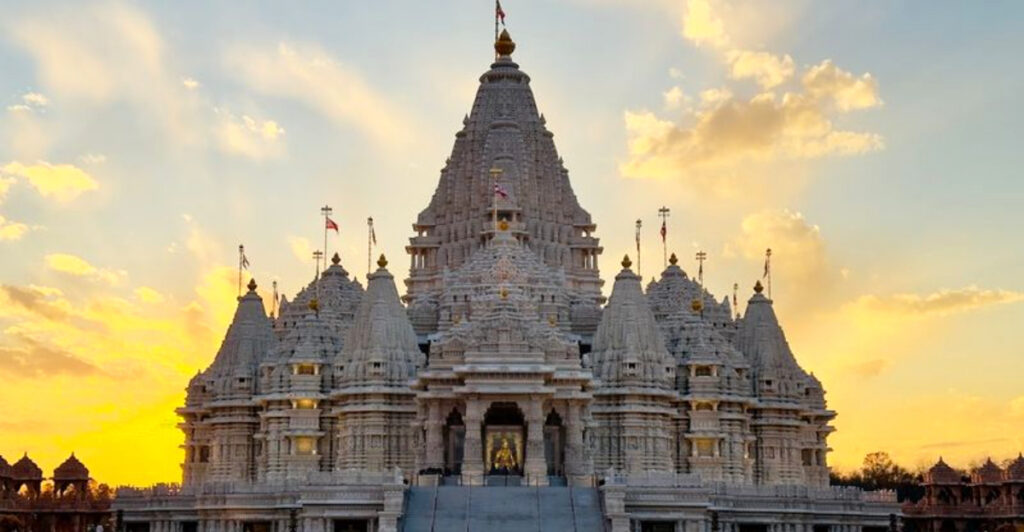
Most people think of New Jersey as highways, diners, and the shore. So when you tell someone there is a massive, hand-carved marble temple sitting on 183 acres in a quiet corner of the state, they usually do not believe you at first.
But there it is, rising out of the Central Jersey landscape like nothing else in the Western Hemisphere, drawing visitors from Albany, from across the country, and from around the world. This is not a small roadside attraction or a modest cultural center.
The complex took over a decade to build, involved thousands of volunteers and skilled artisans, and features stonework so detailed it stops people mid-step. Free to enter, open to all backgrounds and beliefs, and rated 4.8 stars across nearly 20,000 reviews, this place has quietly become one of the most talked-about destinations on the East Coast.
Keep reading, because this one is genuinely worth your time.
Where It All Begins: Address, Location, and Getting There
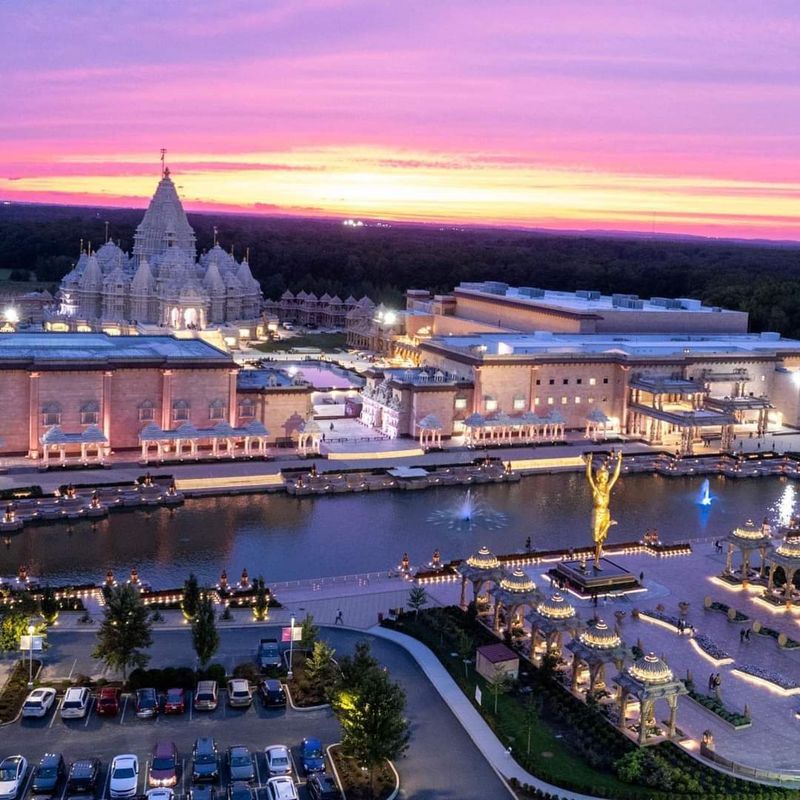
Right off the main road in a small township most travelers have never heard of, BAPS Swaminarayan Akshardham sits at 112 N Main St, Windsor, NJ 08561. The address sounds modest, but nothing about what you find there is modest in any way.
Windsor is a quiet community in Robbinsville Township, Mercer County, Central New Jersey. It is roughly 45 minutes from Philadelphia and about an hour from New York City, making it a very reachable day trip from either direction.
Parking is free and plentiful, which is a genuine relief for anyone who has dealt with crowded lots at popular attractions. The campus spans approximately 183 acres, so give yourself plenty of time after you arrive.
On weekends and holidays, advance timed reservations are strongly recommended through the official website at usa.akshardham.org. Weekday visitors can typically walk in without a reservation.
Plan to arrive early on busy days to secure a good spot in the lot.
A Decade in the Making: The Story Behind the Temple
Few buildings in the United States carry a construction story quite like this one. Work on the complex began in 2011 and continued for over twelve years, with the main structures opening to the public in 2023.
The project was built by the Bochasanwasi Akshar Purushottam Swaminarayan Sanstha, known as BAPS, a global Hindu organization rooted in the Swaminarayan tradition. Thousands of volunteers and highly skilled artisans contributed their time and talent to bring the campus to life.
What makes the story even more remarkable is that much of the work was done through seva, which means selfless service, a core value in the BAPS tradition. Artisans from India carved intricate panels and sculptures that were then assembled on-site in New Jersey.
Stone was sourced from multiple countries, including marble, sandstone, limestone, and granite. The result is a structure that reflects not just craftsmanship, but a genuine collective devotion that took shape over more than a decade of sustained effort.
The Architecture Up Close: What Makes It So Striking
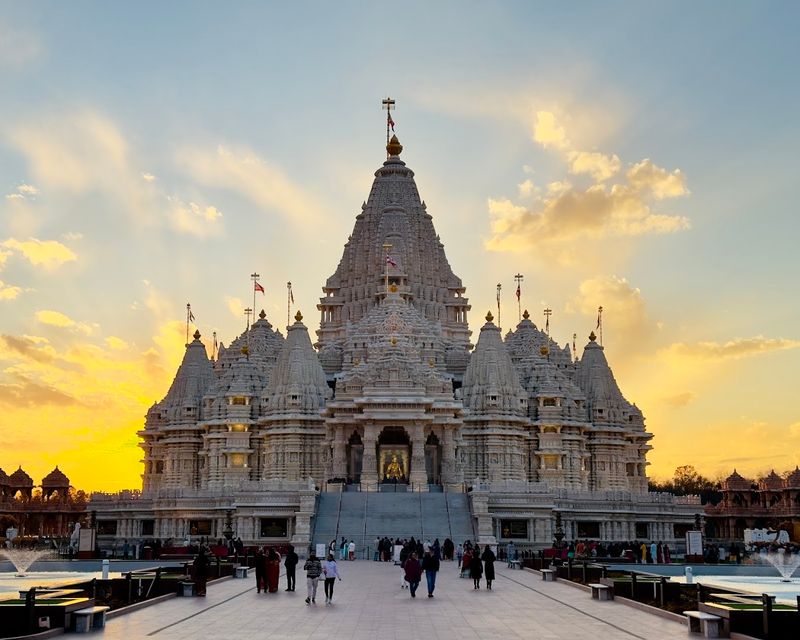
The central Mahamandir, or main shrine, is the visual anchor of the entire campus. It features twelve sub-shrines, nine shikhars, which are the tall spire-like towers that rise above the roofline, and an elliptical dome that draws the eye from almost any point on the grounds.
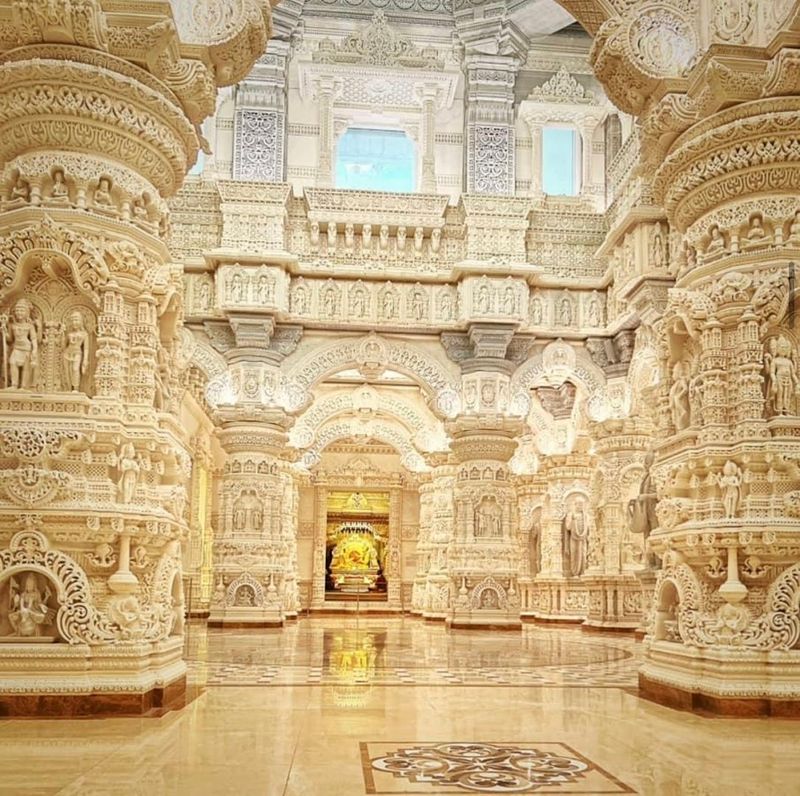
Every surface tells a story. The exterior walls are covered in thousands of individual carvings depicting deities, dancers, musicians, and scenes from Indian cultural and spiritual traditions.
No two panels look identical, and the level of detail rewards a slow, unhurried walk around the perimeter.
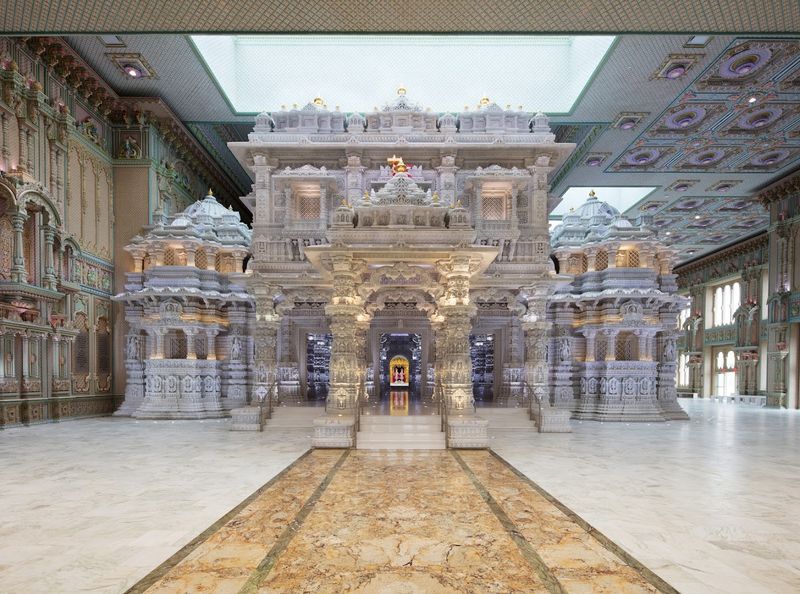
The floor inside the temple is made of marble, and here is a detail that surprises many first-time visitors: the floor, steps, and railings are warm underfoot, even though the material is stone. That thoughtful design choice makes the barefoot requirement feel much more comfortable than expected.
The all-white marble inner chambers are consistently described as one of the most visually striking spaces visitors have ever stood inside.
The Brahma Kund: A Stepwell With a Global Story
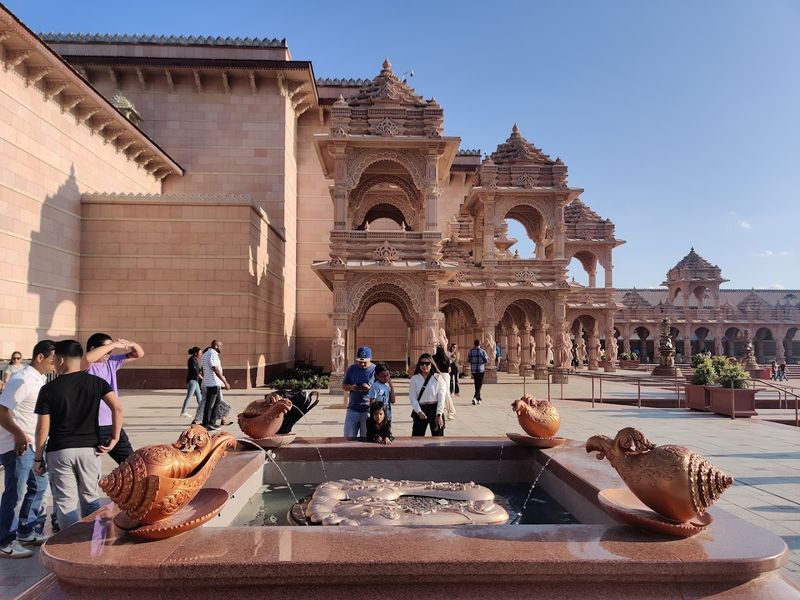
One of the most quietly fascinating features of the campus is the Brahma Kund, a traditional stepwell built in the style of ancient Indian architecture. Stepwells have existed across the Indian subcontinent for thousands of years, serving both practical and ceremonial purposes.
What sets this one apart is the water inside it. The Brahma Kund contains water gathered from hundreds of rivers, lakes, oceans, and other bodies of water from around the world.
That detail alone gives the structure a meaning that goes well beyond its visual appeal.
The geometric stone steps descend in a symmetrical pattern toward the water level, and the craftsmanship on the surrounding walls matches the quality found throughout the rest of the complex. Visitors often linger here longer than they expect to, drawn in by the calm of the space and the scale of the stonework.
It is a feature that does not get enough attention in most trip reports, but it absolutely deserves a few extra minutes of your visit.
Who Is Welcome Here: An Open Door Policy Worth Noting
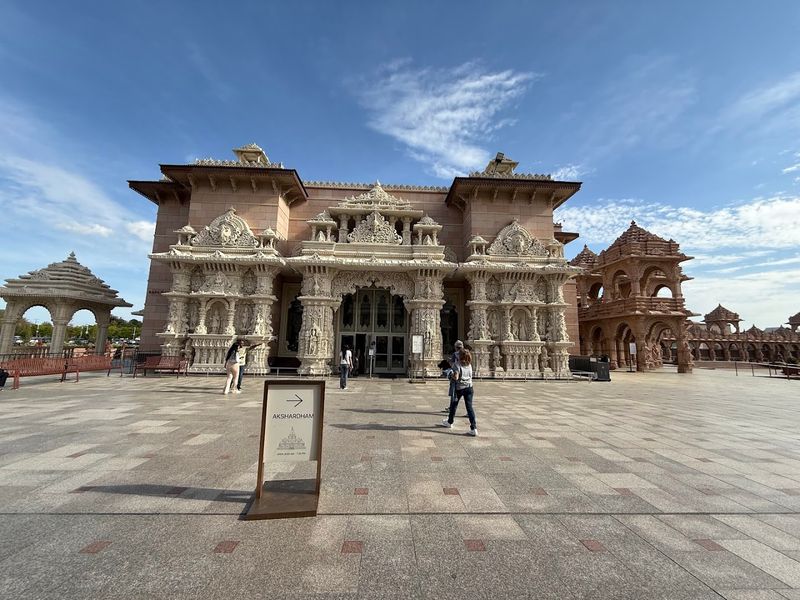
One of the first things that stands out about a visit to Akshardham is how genuinely welcoming the atmosphere feels for people of every background. The temple does not ask about your religion, your beliefs, or your reason for coming.
Visitors have arrived as tourists, as architecture enthusiasts, as families looking for a meaningful day out, and as people simply curious about the culture. All of them are treated with the same warmth by the staff and volunteers on site.
Guided tours are available, and the guides take time to explain the significance of the carvings, the rituals, and the history behind what you are seeing.
The campus also includes small exhibition areas that provide historical and cultural context, with text translated into English as well as several other languages. Entry is completely free of charge, though donation boxes are available for those who wish to contribute.
That open-door spirit, combined with the sheer scale of what has been built here, makes the experience feel genuinely rare in the best possible way.
Dress Code and Temple Rules: What You Need to Know Before You Go
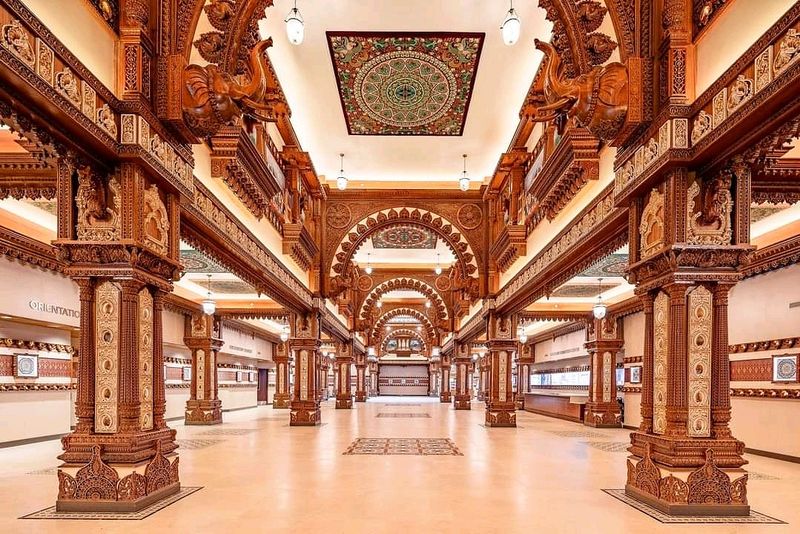
A few practical rules apply at Akshardham, and knowing them in advance makes the visit run much more smoothly. The most important one is the dress code: shoulders and legs must be covered when entering the temple buildings.
If you arrive in shorts or a sleeveless top, the staff will provide a wrap for you to use, so it is not a dealbreaker, but wearing appropriate clothing from the start saves time and keeps things simple. Shoes must be removed before entering the main temple, and a designated area is set up for storing them safely.
Photography is allowed throughout the outdoor areas and grounds, and there are genuinely excellent angles for photos at almost every turn. Inside the main temple building, photography and video recording are not permitted, which is a rule worth respecting without complaint.
The interior is a place of active worship, and that boundary is a reasonable one. Following the guidelines keeps the experience positive for everyone on the campus.
Exhibitions and Theaters Inside the Complex
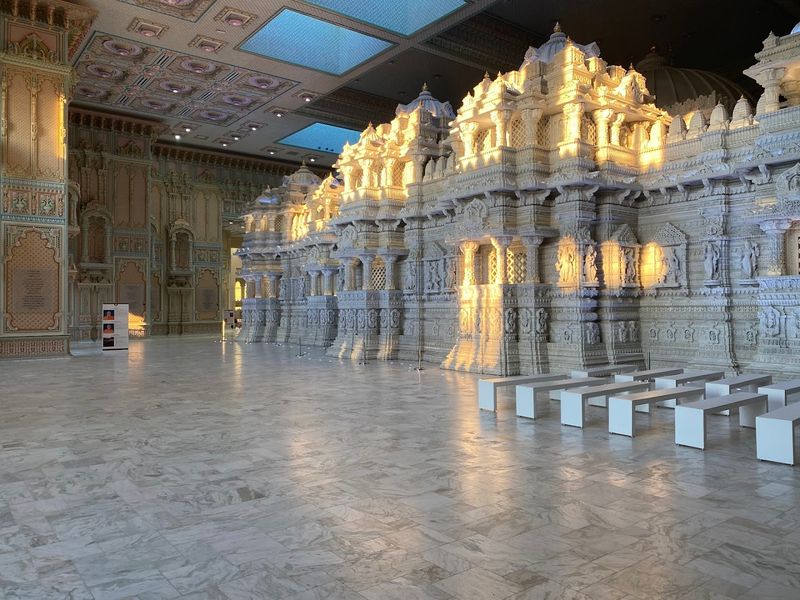
Beyond the main temple building, the campus includes several interior exhibition spaces and theater areas that add real depth to the visit. These spaces walk visitors through the history of the construction, the traditions of the BAPS organization, and the cultural context behind what they have just seen outside.
The theaters use a combination of displays, artifacts, and multimedia presentations to tell the story of Swaminarayan and the values of devotion and selfless service that drove the building of this complex. The content is presented in a way that is accessible to visitors with no prior knowledge of Hindu traditions, making it genuinely educational rather than exclusively devotional.
Informational panels are written primarily in English, with some translations available in Spanish, Chinese, and other languages. Visitors who take the time to go through the exhibitions typically come away with a much richer understanding of what they experienced outside.
Budget an extra 30 to 45 minutes if you want to do the exhibitions justice rather than rushing through them on the way to the exit.
Best Times to Visit and How Long to Plan For
The complex is open Wednesday through Monday from 9 AM to 7:30 PM, and it is closed on Tuesdays. That Tuesday closure catches a surprising number of visitors off guard, so double-check before making the drive.
For the best experience, late afternoon into early evening is widely considered the prime window. As the sun drops lower, the light hits the white marble at a different angle and the whole campus takes on a different quality.
Attending the evening arti prayer ceremony, which takes place around 7 PM, is something many visitors describe as a highlight of the entire trip.
Plan for at least two to two and a half hours if you want to see the main temple, walk the grounds, visit the exhibitions, and grab a meal. Four hours is not unusual for visitors who want to take their time and attend the evening ceremony.
On weekends and holidays, book a timed reservation in advance through usa.akshardham.org to avoid any issues at the gate.
Why This Place Belongs on Every New Jersey Itinerary
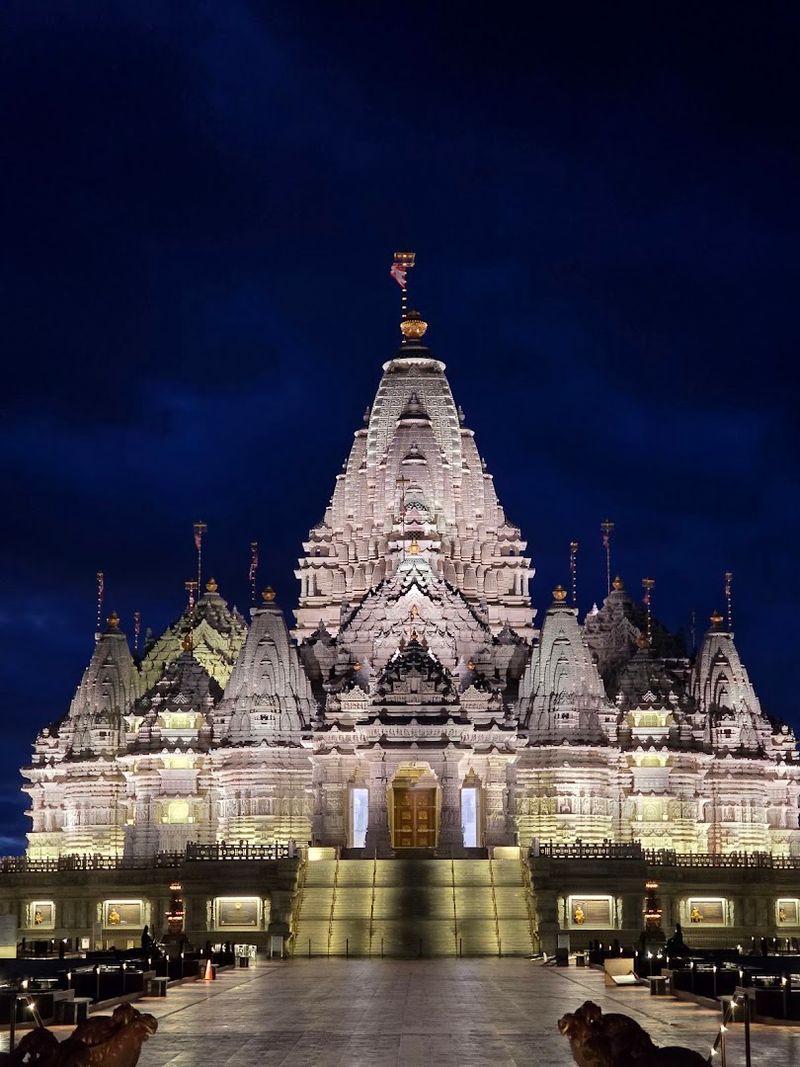
There are not many places in New Jersey, or in the entire country for that matter, where you can spend a few hours and come away genuinely changed by what you saw. Akshardham is one of them, and the 4.8-star rating across nearly 20,000 reviews is not an accident.
People drive from four hours away to see it. Families bring children and spend the whole day.
Visitors with no connection to Hinduism or Indian culture show up out of curiosity and leave with a new appreciation for both. The combination of free entry, world-class architecture, cultural education, good food, and a genuinely welcoming atmosphere is difficult to find anywhere, let alone in a small township off a New Jersey state road.
Whether this is your first visit or you are already planning a return trip, BAPS Swaminarayan Akshardham at 112 N Main St, Windsor, NJ 08561 is the kind of place that earns its reputation honestly, one carved stone panel and one generous volunteer at a time.
Share this story