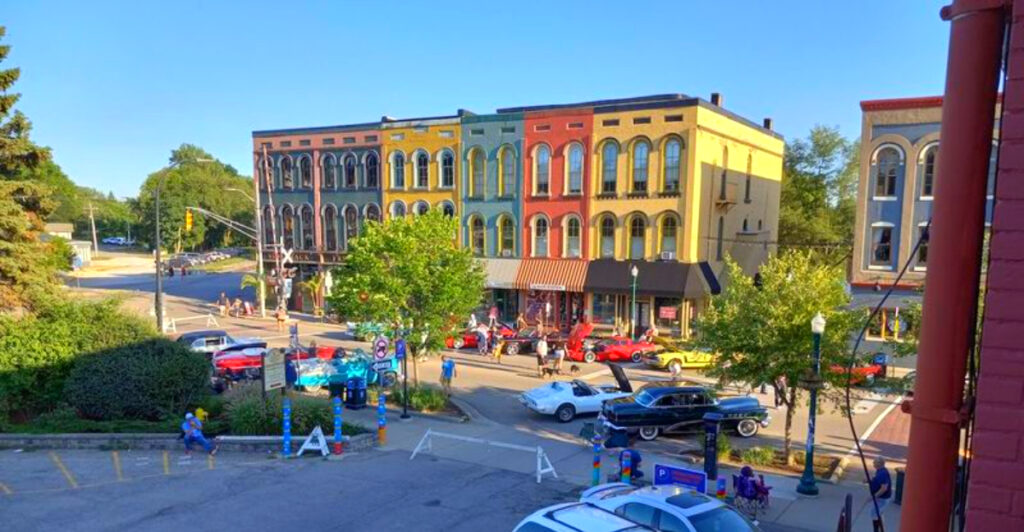
There is a small stretch of street in southeastern Michigan where the brick storefronts still look the way they did when horse-drawn wagons rolled past them, and where the Huron River quietly moves along like it has always been there, completely unbothered by the modern world nearby. The buildings here have stories pressed into their walls, and the neighborhood itself carries a kind of personality that newer commercial strips simply cannot fake.
I visited on a crisp autumn afternoon, and by the time I had walked half a block, I already knew this place was something worth writing about. Depot Town in Ypsilanti, Michigan is the kind of historic district that does not need to try hard to impress you.
The architecture does the talking, the local shops add the warmth, and the whole area pulls you in with a charm that feels completely unscripted and genuinely earned.
Where History Has a Street Address
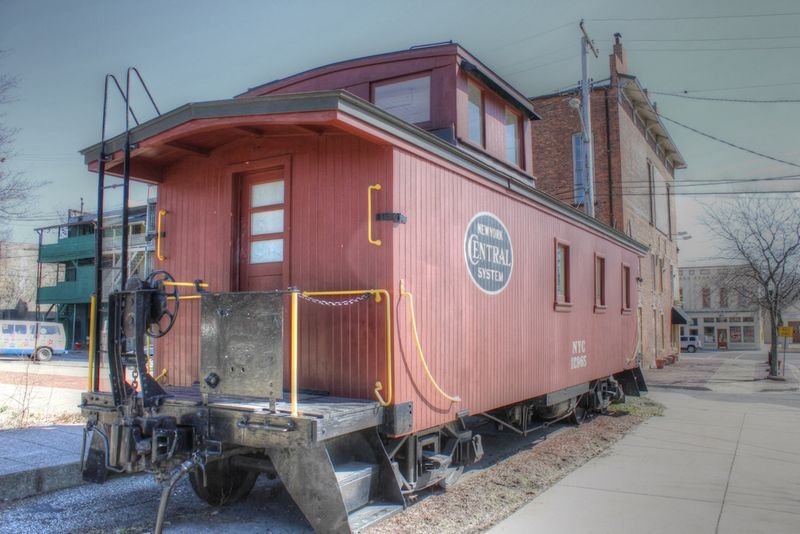
Depot Town sits along East Cross Street in Ypsilanti, Michigan, running from the Huron River to North River Street, with a small section extending into the 300-block of North River Street.
The full address area puts you in the heart of Washtenaw County, just a short drive east of Ann Arbor, in a city that has been quietly holding onto its 19th-century bones with impressive dedication.
The neighborhood takes its name from the old Michigan Central Railroad depot that once anchored the area, and that same depot building still stands today, giving the whole district an anchor point that ties everything together historically.
Ypsilanti itself was platted in 1823 and named after a Greek military hero, which means even the city’s origin story has a flair for the dramatic. Depot Town is where that long, layered history becomes something you can actually walk through.
The Railroad Depot That Started It All
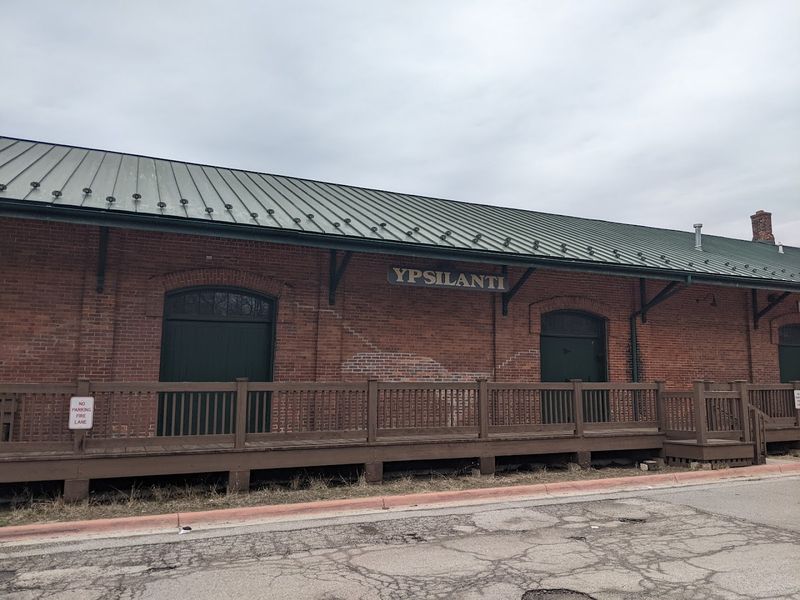
The old Michigan Central Railroad depot is the reason this neighborhood exists in the first place, and it is still one of the most striking buildings you will see on the block.
Built in 1860, the depot served as a critical stop along one of the earliest railroad lines in Michigan, connecting travelers and goods across the region during a time when the railroad was the fastest technology most people had ever encountered.
The building has since been repurposed and has served various community functions over the years, but its original Italianate architecture remains largely intact, with the kind of craftsmanship that modern construction rarely bothers to replicate.
Standing next to it, you get a real sense of how much activity and energy once passed through this single structure. It is a quiet building now, but it carries the weight of a very busy past in every weathered brick.
Brick by Brick: The Architecture That Defines the Block
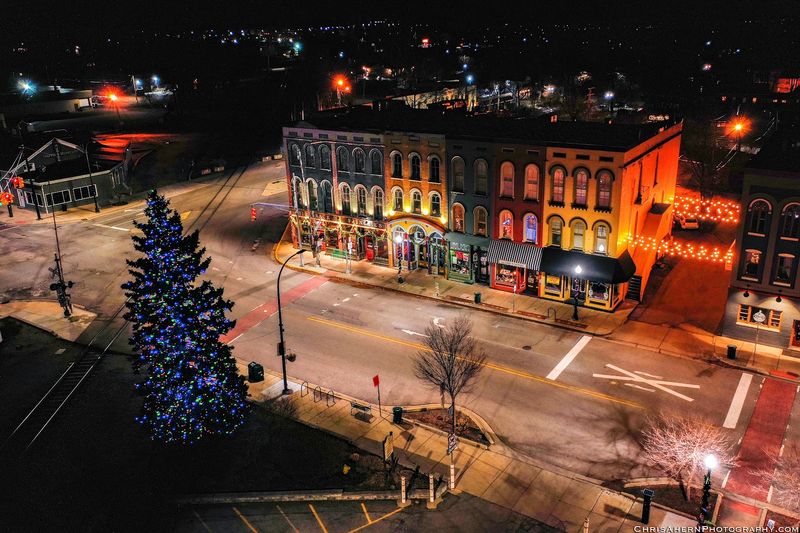
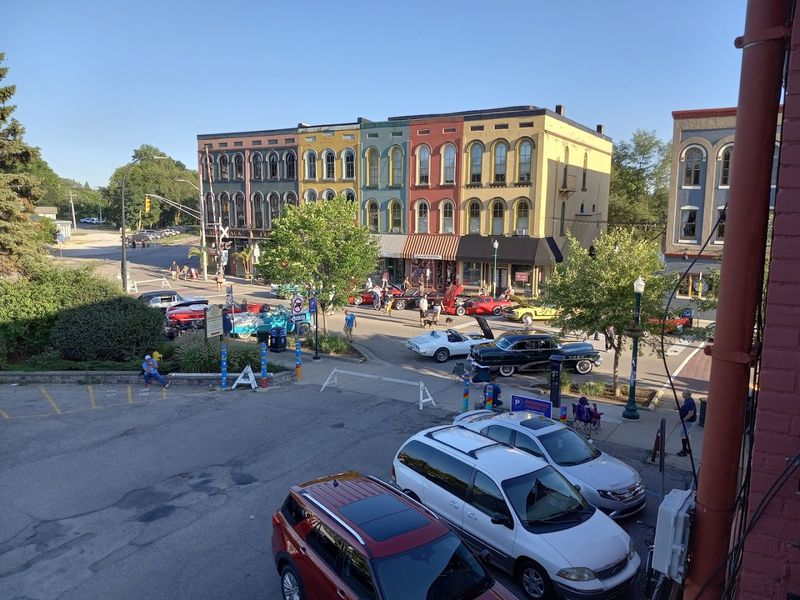
One of the first things you notice walking through Depot Town is how consistent and well-preserved the building facades are, a row of 19th-century commercial structures that line East Cross Street with a kind of visual rhythm you rarely find in small Michigan cities.
Most of the buildings date to the mid-to-late 1800s and feature Italianate details like decorative cornices, tall narrow windows, and ornate brickwork that was clearly designed to impress.
Unlike so many historic districts that have had their storefronts modernized beyond recognition, Depot Town has managed to keep much of its original character intact, which makes the whole street feel like a set that has been carefully maintained rather than rebuilt from scratch.
The scale of the buildings is also notably human, low enough to feel approachable and wide enough to feel substantial. That balance is part of what makes this stretch so photogenic and so satisfying to explore on foot.
The Huron River as a Backdrop
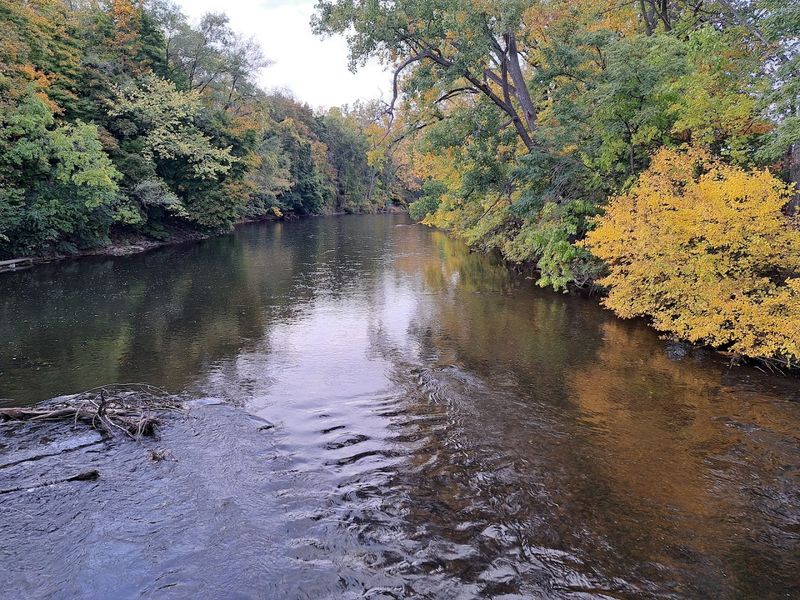
The Huron River forms the western edge of Depot Town, and its presence gives the neighborhood a natural boundary that also happens to be genuinely beautiful.
From certain spots along the district, you can see the water moving steadily past, and in autumn especially, the combination of the river, the old brick buildings, and the surrounding trees creates a scene that looks almost too picturesque to be real.
The river has always been part of this area’s identity. Early settlers chose this location partly because of the water access, and the mills and industries that grew up nearby depended on the Huron for power and transportation.
Today the river is more of a scenic companion than an industrial workhorse, and visitors often take a few minutes to stand near the bank and simply take in the view. It is the kind of natural detail that quietly elevates an already interesting neighborhood into something memorable.
Local Shops That Feel Like Discoveries
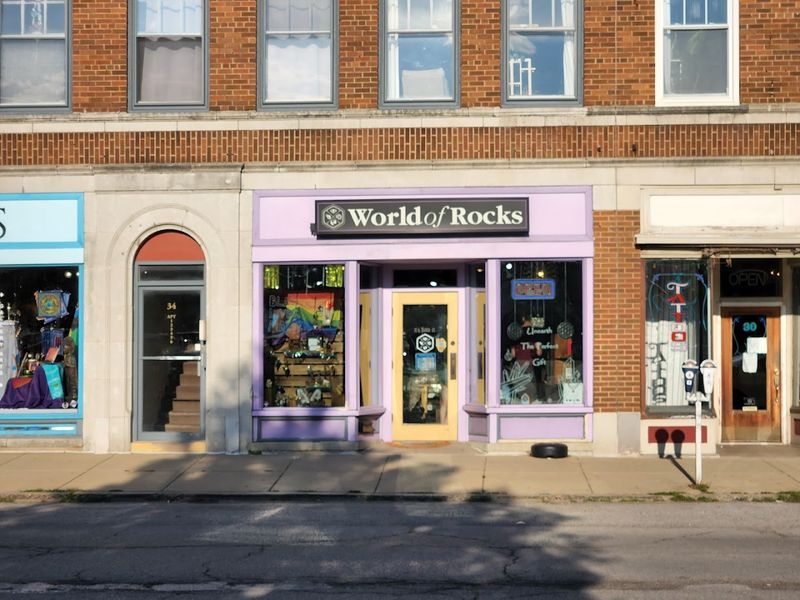
Part of what keeps Depot Town feeling alive rather than just historically preserved is the mix of independent businesses that have set up shop in these old storefronts.
You will find a range of locally owned stores, from vintage and antique shops to specialty retailers and small service businesses, each one adding its own personality to the block without overwhelming the historic character of the buildings they occupy.
Browsing through the shops here feels genuinely different from a mall or a chain retail strip. The inventory tends to be curated, the owners are often present and happy to talk, and the whole experience has a sense of discovery that more predictable shopping environments simply cannot offer.
There is something satisfying about finding an interesting object in a shop that has been selling interesting objects in the same building for over a century. The continuity of commerce in Depot Town is part of its quiet charm.
Food and Flavor Along East Cross Street
The dining options in Depot Town are not flashy, but they are exactly the kind of places that regulars return to week after week because the food is solid and the atmosphere feels right.
Several restaurants and cafes have made their homes in the historic storefronts along East Cross Street, and the variety is better than you might expect from such a compact area.
One of the pleasures of eating here is that the dining rooms often retain original architectural features, exposed brick walls, old wood floors, and high tin ceilings that turn an ordinary meal into something that feels a little more special just by virtue of the surroundings.
The neighborhood draws a mix of longtime Ypsilanti residents, Eastern Michigan University students, and visitors from Ann Arbor and beyond, which gives the local food spots a lively, unpretentious energy. Casual dress, good conversation, and decent coffee are pretty much guaranteed on any given afternoon.
Eastern Michigan University’s Influence on the Neighborhood
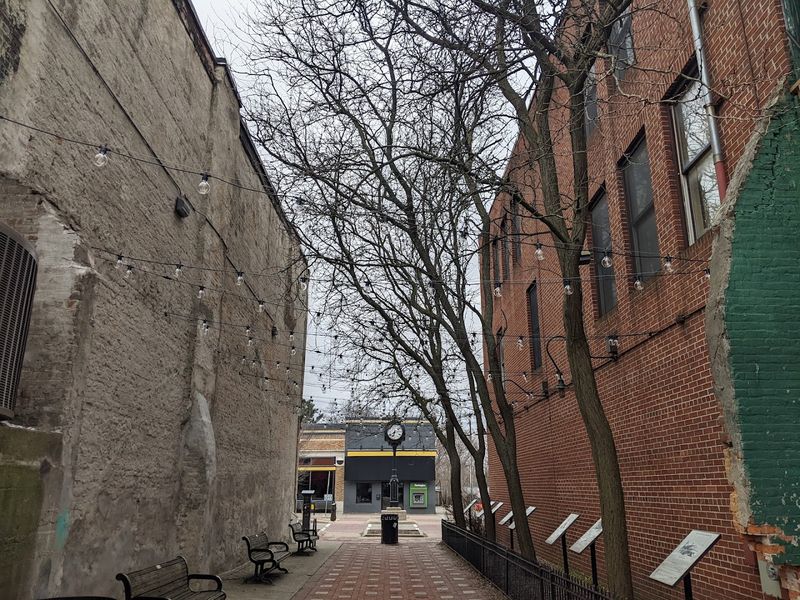
Eastern Michigan University, founded in 1849 and located just a short distance from Depot Town, has always had a relationship with the surrounding neighborhoods, and Depot Town is no exception.
The university brings a steady stream of students, faculty, and visitors into the city, and that energy filters into the historic district in ways that keep it from feeling like a museum piece.
Student-friendly businesses, art-related events, and a general appreciation for creativity and culture have all found a foothold in Depot Town over the years, giving the area a younger edge that coexists comfortably with its historical identity.
The mix of age groups and backgrounds you encounter on East Cross Street on any given day is part of what makes the neighborhood feel genuinely active rather than curated for tourism. EMU’s presence ensures that Depot Town has a built-in audience that actually lives nearby and treats it as a real part of daily life.
Annual Events That Bring the Block to Life
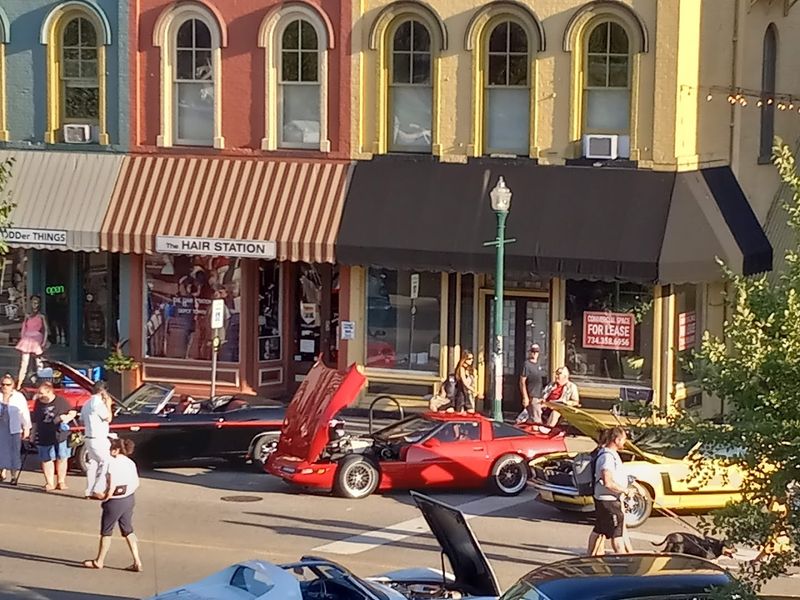
Depot Town has a well-established tradition of hosting community events throughout the year, and these gatherings are one of the best ways to experience the neighborhood at its most energetic.
The Ypsilanti Heritage Festival, held annually in Depot Town, is one of the longest-running festivals in Michigan and draws thousands of visitors over its multi-day run each August, filling the streets with music, food vendors, crafts, and a sense of collective celebration.
Other events throughout the year include car shows, holiday markets, and various community gatherings that use the historic streetscape as a natural backdrop, which it handles beautifully.
Attending one of these events is a completely different experience from visiting on a quiet weekday. The streets fill up, the storefronts open wide, and the whole neighborhood takes on a festive quality that reminds you why people have been gathering in public spaces like this one for well over a century.
The Historic Water Tower and Ypsilanti’s Iconic Skyline
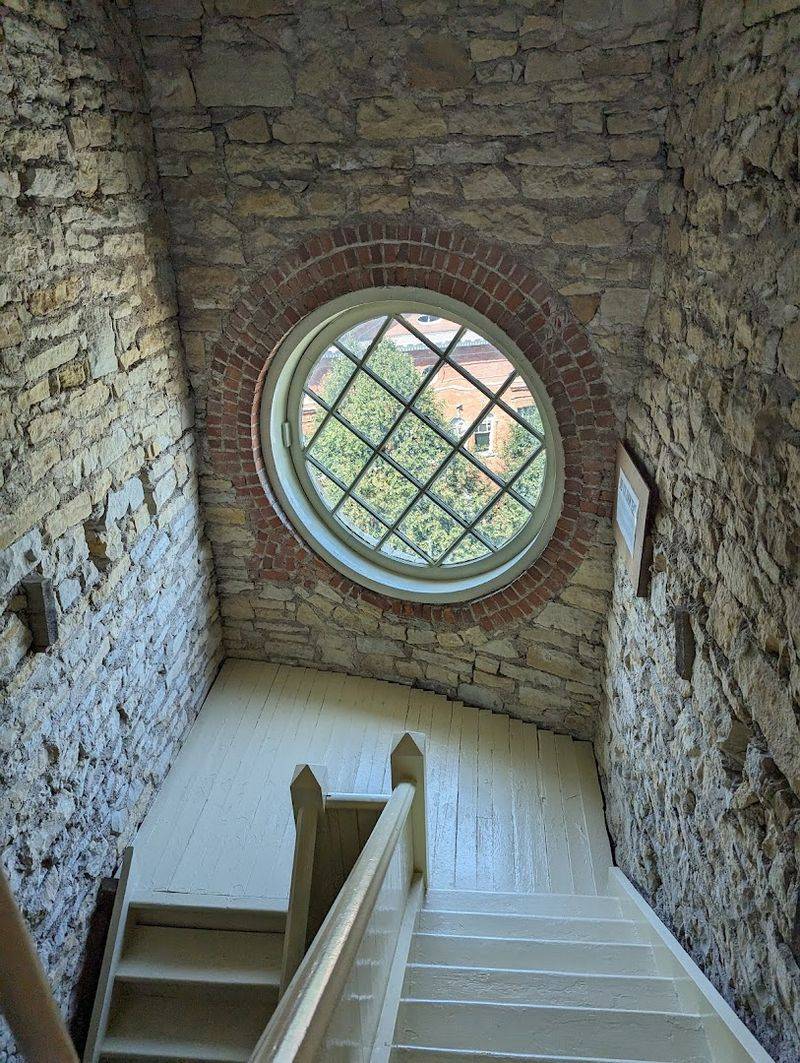
While not located directly in Depot Town, the Ypsilanti Water Tower is visible from parts of the neighborhood and serves as one of the most recognizable landmarks in the entire city.
Built in 1890, the tower is a striking piece of Victorian engineering, standing about 147 feet tall with a distinctive rounded top that has made it a beloved and occasionally teased local icon.
The water tower is listed on the National Register of Historic Places, and its presence on the Ypsilanti skyline reinforces just how seriously this city takes its architectural heritage.
Spotting it from East Cross Street is one of those small visual rewards that comes with exploring a city that has held onto its historic structures rather than replacing them. It is a reminder that Ypsilanti’s commitment to preservation extends well beyond Depot Town itself, making the whole city feel like a coherent chapter in Michigan’s history.
Walking the Neighborhood: A Practical Guide
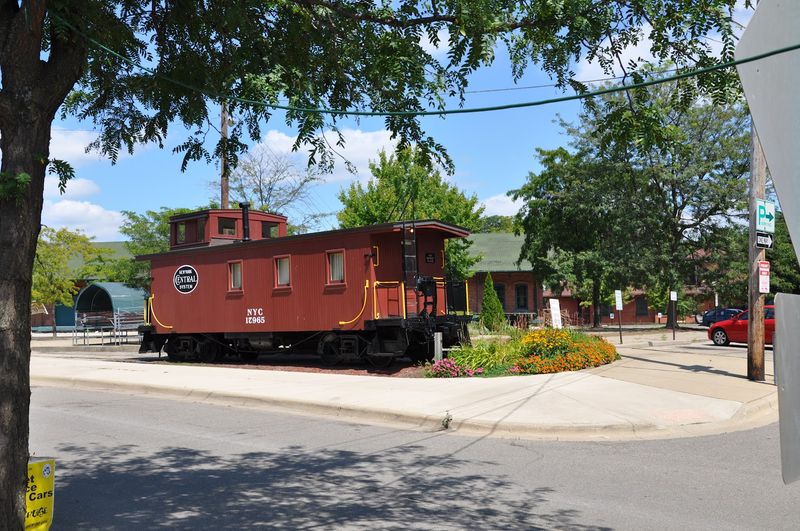
Depot Town is compact enough to explore entirely on foot, which is honestly the best way to take it in because you can move at your own pace and stop whenever something catches your eye.
The main stretch along East Cross Street from the Huron River to North River Street takes maybe ten minutes to walk end to end at a casual pace, but most visitors spend considerably longer because the shops, architecture, and general atmosphere invite lingering.
Parking is available nearby, and the neighborhood is accessible enough that you do not need to plan extensively to visit. A weekend afternoon works particularly well, especially when the weather is mild and the storefronts are open.
Bringing a camera is genuinely worthwhile here. The light on the brick facades in the late afternoon is particularly good, and the small architectural details on the upper floors of the buildings reward anyone who bothers to look up from street level.
Preservation Efforts That Kept This Place Intact
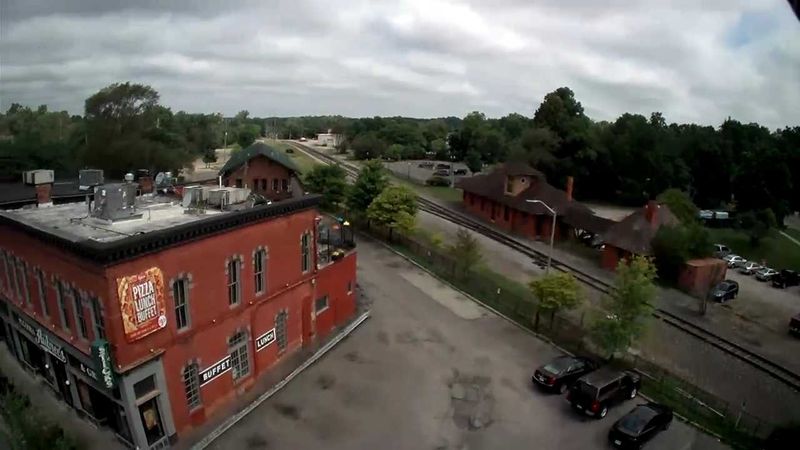
The fact that Depot Town looks the way it does today is not an accident. It is the result of sustained preservation efforts by local organizations, city planners, and community members who recognized the value of what they had before it disappeared.
Ypsilanti has a strong historic preservation culture, supported in part by organizations like the Ypsilanti Historical Society, which has worked for decades to document and protect the city’s architectural and cultural heritage.
Depot Town itself has benefited from its designation as a historic district, which provides certain protections against the kind of unsympathetic development that has erased similar neighborhoods in other Michigan cities.
The result is a streetscape that feels genuinely old rather than nostalgically recreated, a distinction that matters enormously to anyone who has visited a historic district that has been polished into something unrecognizable. Here, the patina is real, and that authenticity is worth protecting.
Why Depot Town Deserves a Spot on Your Michigan Road Trip
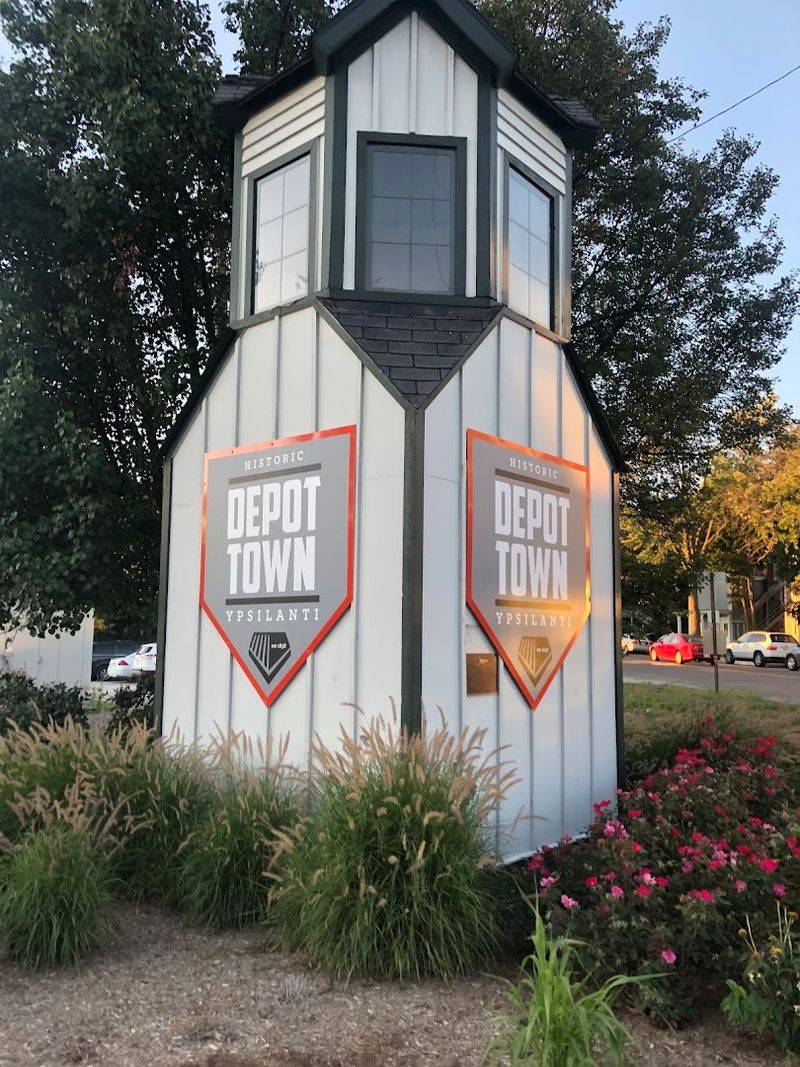
Michigan has plenty of historic districts, but Depot Town earns its place on any serious road trip itinerary because it combines genuine history, a walkable scale, active local businesses, and a riverside setting in a way that few comparable neighborhoods can match.
It is close enough to Ann Arbor to pair easily with a visit to that city, but distinct enough in character that it never feels like an afterthought or a suburb of somewhere more famous.
The neighborhood rewards curiosity. The more you look at the buildings, read the signs, and talk to the people who work and live there, the more layers you find beneath what initially appears to be a simple old commercial block.
Depot Town is the kind of place that stays with you after you leave, not because it overwhelmed you with attractions, but because it was quietly, confidently itself from the moment you arrived to the moment you reluctantly walked back to your car.
Share this story