There is a stretch of riverfront in Detroit where the water tells stories most history books barely mention. Beneath today’s paved walkway, colorful chairs, and views of the Canadian skyline, this river once hummed with very different activity.
During Prohibition, from 1920 to 1933, the narrow channel between Detroit and Windsor, Ontario, became one of the busiest smuggling corridors in North America. Some estimates suggest it accounted for roughly 75 percent of all illicit liquor entering the United States – a staggering number for what now looks like a peaceful urban park.
Today, families stroll, kids ride the carousel, and cyclists glide past benches overlooking the water. But knowing what once moved beneath those same waves makes every visit feel like a quiet conversation with a wilder, secretive past.
Where History Meets the Waterfront
The Detroit RiverWalk stretches along the Detroit River in the heart of Detroit, Michigan, running roughly three miles from the Ambassador Bridge area eastward toward the Belle Isle bridge approach.
The official address associated with the RiverWalk places it along East Riverfront Drive, Detroit, MI 48207, right behind the General Motors headquarters at the Renaissance Center.
The walkway sits at a latitude of approximately 42.33 degrees north, hugging the southern edge of the city where the United States and Canada are separated by only about a mile of water.
What strikes you immediately upon arriving is how open and accessible everything feels. The path is flat, wide, and paved, making it welcoming for walkers, cyclists, rollerbladers, and wheelchair users alike.
Parking is available both free and paid nearby, and the area is well-patrolled by foot and bike police, which keeps the atmosphere relaxed and safe.
For a city with Detroit’s complex reputation, this riverfront manages to feel genuinely inviting from the very first step you take onto it.
The River That Became a Smuggler’s Highway
Few waterways in American history carry as much hidden drama as the Detroit River, and the Prohibition era was its most chaotic chapter by far.
Between 1920 and 1933, when the manufacture and sale of certain beverages was banned across the United States, the Detroit River transformed almost overnight into what became known as the Detroit-Windsor Funnel.
Estimates from historical records suggest that this corridor alone accounted for about 75 percent of all illicit liquor smuggled into the United States during that period, a figure that still seems almost impossible to believe when you are standing on the peaceful RiverWalk today.
The river was ideal for smugglers because it was narrow, well-known to local boaters, and directly connected to Canada, where production of certain goods continued legally throughout Prohibition.
Local knowledge gave smugglers a serious edge over federal agents who were often unfamiliar with the river’s currents, hidden coves, and seasonal ice patterns.
The water itself became a kind of accomplice, hiding its secrets just below the surface.
Whiskey Sixes on Ice
One of the most remarkable tricks used by smugglers along this riverfront involved waiting for winter to do their work for them.
When the Detroit River froze solid, rum runners drove vehicles directly across the ice from Windsor, Ontario, to the Michigan shoreline, bypassing boats entirely and moving large quantities of contraband with speed that boats could not match in warmer months.
These vehicles were often lighter cars nicknamed “whiskey sixes,” chosen specifically because their weight was less likely to crack the ice beneath them during a crossing.
Drivers would sometimes remove the doors from their cars before crossing, a precaution that gave them a better chance of escaping if the ice gave way suddenly.
The ingenuity behind these winter runs says a lot about how determined and resourceful the smuggling networks were along this stretch of river.
Federal agents on the shore could sometimes see the vehicles moving across the ice but lacked the means to intercept them before they disappeared into the city streets of Detroit.
Boats, Planes, and Every Method in Between
Rum runners along the Detroit River were nothing if not creative, and they never limited themselves to a single method of moving their cargo across the water.
During warmer months, boats of every size made the crossing, from small rowboats carrying a few cases at a time to larger vessels that could move significant quantities in a single trip under cover of darkness.
Some operations even used airplanes to deliver shipments, which was a genuinely bold move for the 1920s and shows just how profitable and well-organized the trade had become.
The variety of methods made it extremely difficult for federal authorities to predict where or how the next shipment would arrive, and enforcement resources were simply too stretched to cover every possible crossing point effectively.
Local boatmen who had spent years fishing and ferrying goods on the river had an intimate knowledge of every sandbar, current, and fog pattern that gave them a natural advantage over law enforcement patrols.
The river rewarded those who knew it best.
Ecorse and the Community That Kept Watch
Not every story from the Prohibition era along this river involves gangsters and dramatic chases. Some of the most fascinating details come from the small communities that quietly supported the smuggling trade from the shoreline.
Ecorse, Michigan, a small town just south of Detroit along the river, became one of the busiest hubs for rum running activity during the Prohibition years.
At its peak, dozens of boats were moored daily at the Ecorse municipal dock, and the town’s economy was quietly shaped by the trade moving through it.
Perhaps the most telling detail is that local schoolboys often served as lookouts along the riverbank, watching for the approach of law enforcement and signaling warnings to the smugglers waiting on the water.
That level of community involvement tells you something important about how normalized the trade had become in certain neighborhoods, where it was seen less as lawbreaking and more as practical economic survival.
The river did not just pass through these communities. It defined them.
The Purple Gang and the Price of Control
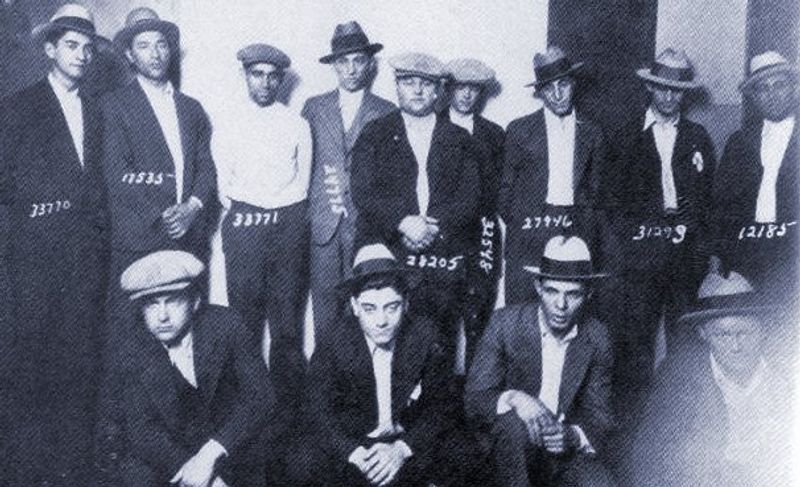
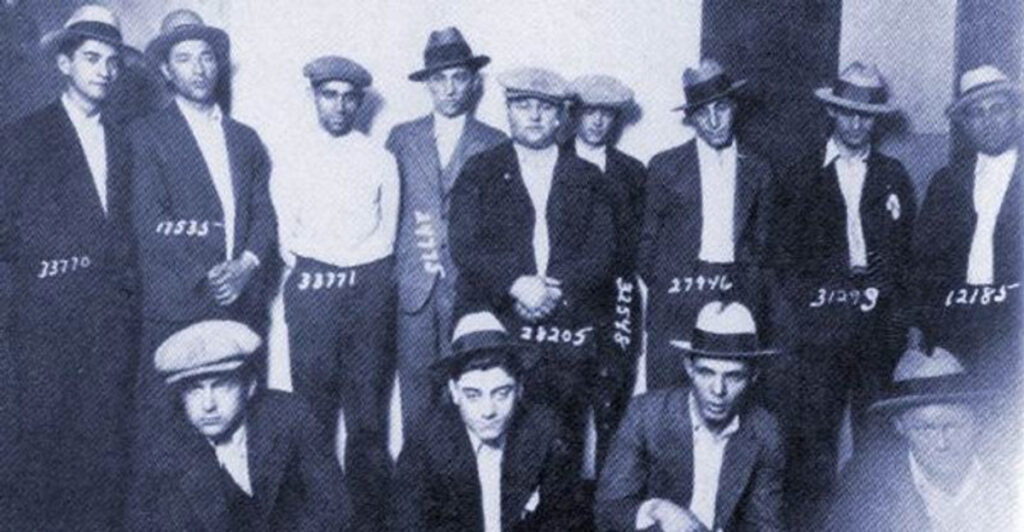
The smuggling trade along the Detroit River was not just a collection of independent operators working on their own. Organized criminal networks moved quickly to control the most profitable routes, and few were more feared than Detroit’s Purple Gang.
The Purple Gang, a group that rose to prominence in Detroit during the 1920s, used force and intimidation to dominate key smuggling corridors along the river, eliminating competition and establishing control over distribution networks that stretched deep into the city.
Their influence meant that the riverfront was not just a place of commerce. It was also a place where territorial disputes could turn dangerous quickly, and where the line between business and violence was frequently crossed.
Federal agents attempting to disrupt the trade faced not only the challenge of a difficult geography but also the resistance of organized networks that had money, local connections, and a willingness to protect their operations aggressively.
The river’s calm surface concealed an entire underworld that operated with remarkable efficiency for over a decade before Prohibition finally ended in 1933.
The Prohibition Navy That Couldn’t Keep Up
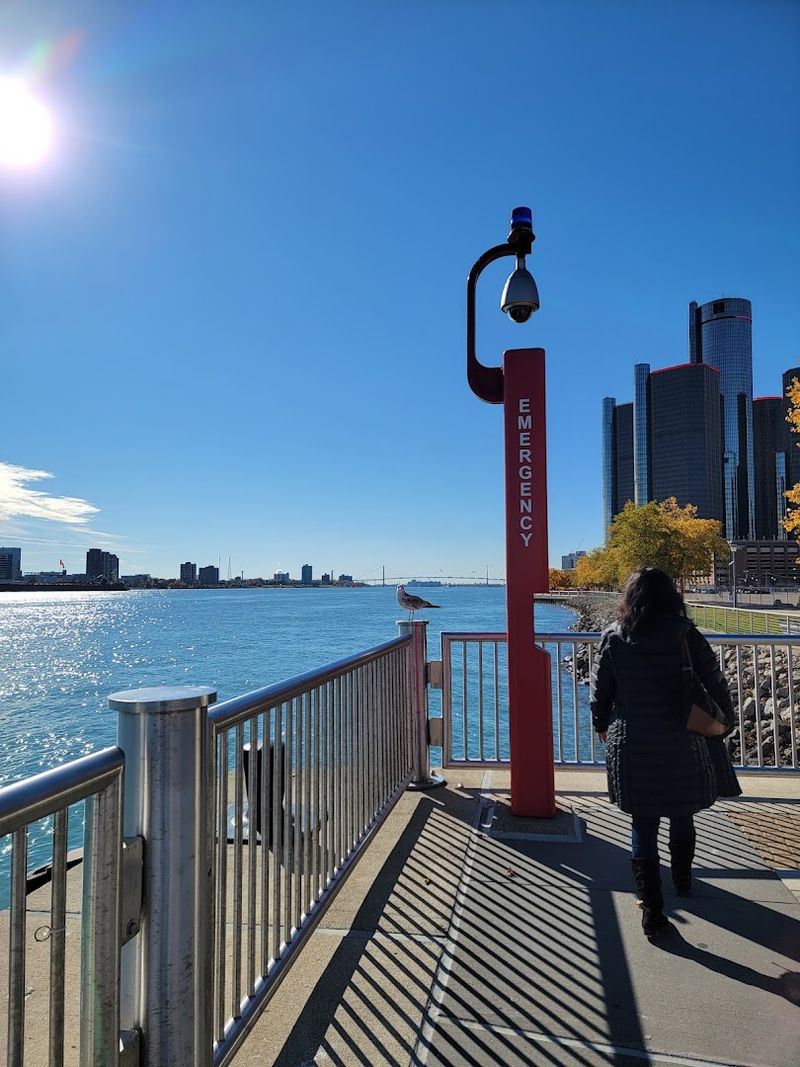
Federal authorities were not passive in the face of the smuggling epidemic along the Detroit River. They fought back with a fleet of armed patrol boats that became known informally as the Prohibition Navy.
These speedboats were deployed specifically to intercept rum runners crossing from Windsor, and at times they managed to seize significant shipments and arrest operators caught in the act.
The problem was scale. The river stretched for miles, and the sheer number of crossing attempts on any given night meant that even a well-staffed patrol could only catch a fraction of the traffic moving across the water.
Smugglers also quickly learned the patrol schedules and adapted their crossing times accordingly, using fog, darkness, and their superior local knowledge to stay one step ahead of enforcement.
There were genuine confrontations on the water, with armed boats pursuing each other across the river in scenes that would feel at home in a Hollywood script.
Despite all of this effort, the flow of contraband across the Detroit River never truly stopped until the law itself changed.
The RiverWalk Today: A Complete Transformation
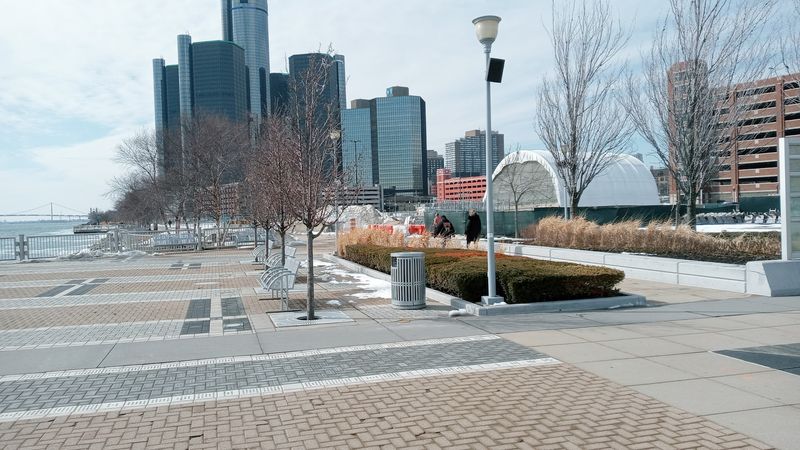
The contrast between the Detroit RiverWalk’s turbulent past and its present-day character is genuinely striking. Today, the path is one of the most well-maintained and welcoming urban riverfronts in the entire Midwest.
The roughly three-mile paved route runs flat and smooth along the water’s edge, making it accessible to virtually everyone. Families push strollers, cyclists cruise past, rollerbladers weave through foot traffic, and joggers keep a steady pace alongside the gentle current.
Colorful Adirondack-style chairs are scattered throughout the walkway, and benches face the river at regular intervals, giving visitors plenty of spots to sit and take in the view of Windsor, Ontario, directly across the water.
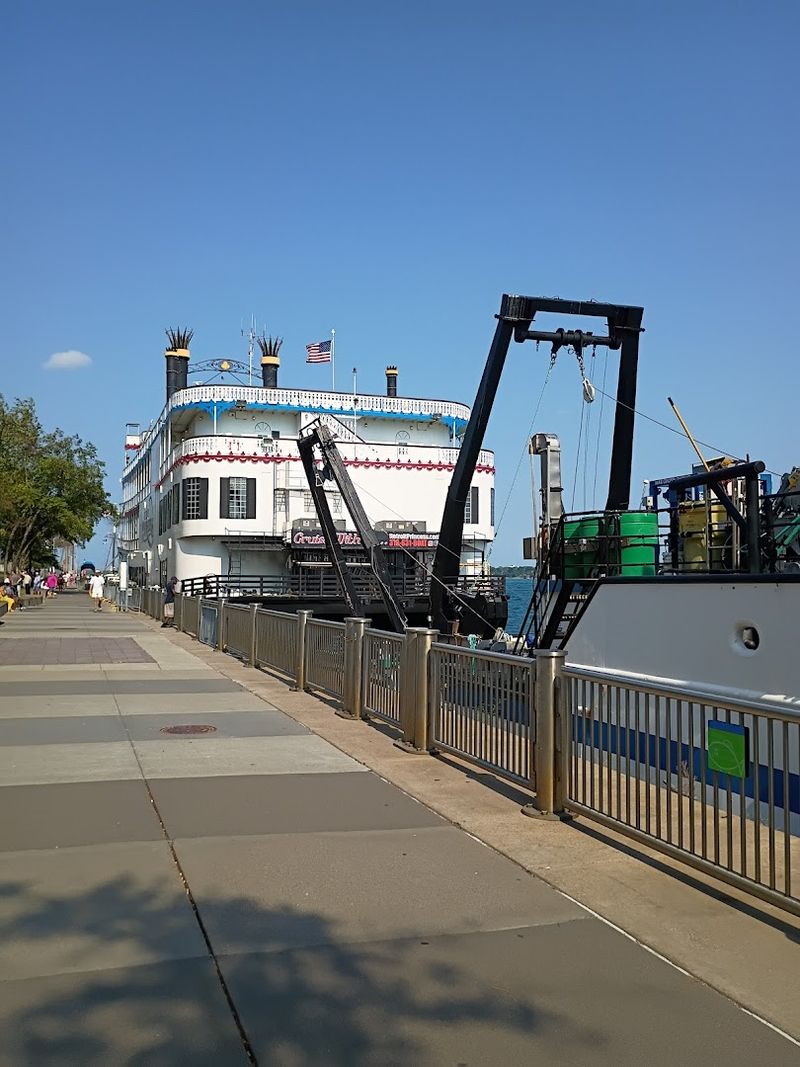
The Detroit Princess, a riverboat anchored near the walk, adds a postcard-worthy touch to the scenery and draws plenty of attention from first-time visitors who spot it from the path.
Clean restrooms are available near the food court area, and the entire walkway is regularly maintained, which keeps the experience pleasant regardless of the season.
This is a riverfront that has genuinely earned its 4.7-star reputation.
Activities Along the Water’s Edge
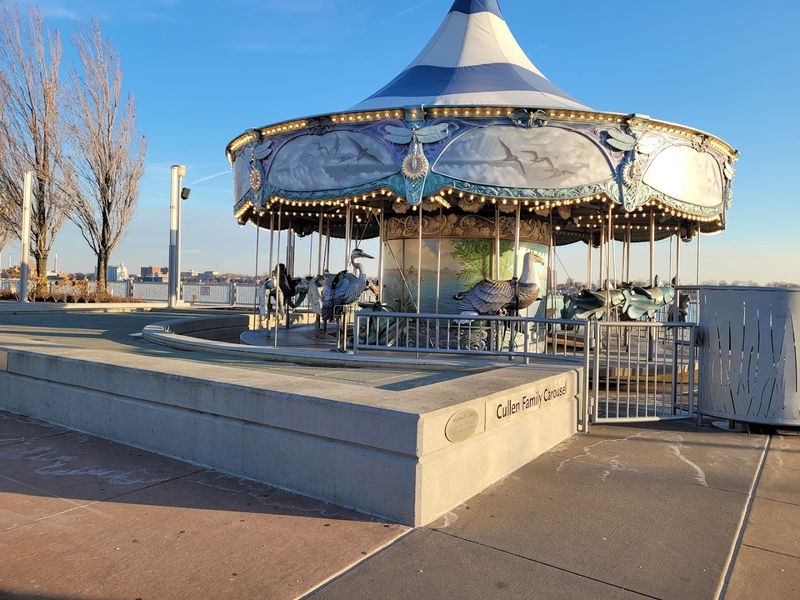
One of the things that keeps people coming back to the Detroit RiverWalk is the range of activities available along the route, which goes well beyond a simple stroll by the water.
A merry-go-round near the western end of the walk is a favorite with younger visitors, and a fountain nearby gives kids a chance to cool off during warmer months. Food stands along the route serve snacks and drinks, making it easy to spend a full afternoon without needing to leave the waterfront.
Electric scooters are available for rent along the path, which turns out to be a genuinely fun way to cover more ground quickly, especially for visitors who want to see the full length of the walk without tiring out.
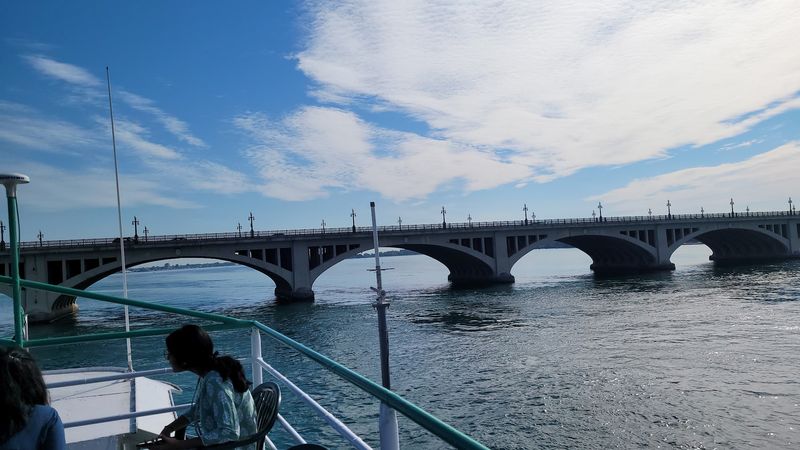
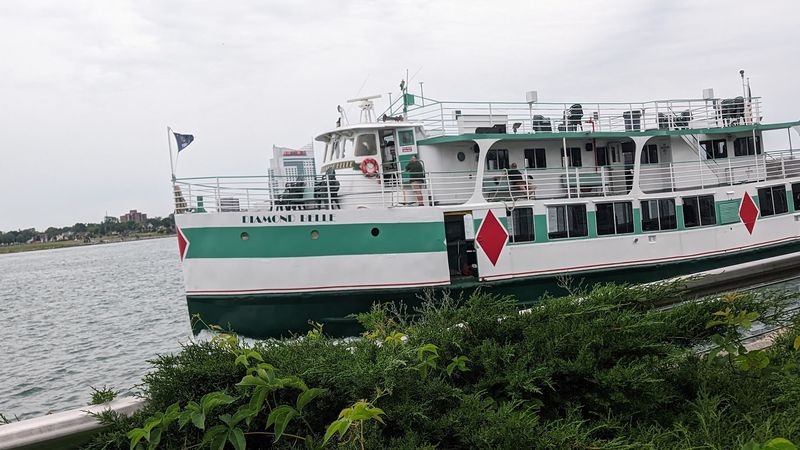
Boat rides that run between the Canadian and American sides of the river add an extra layer of adventure, with a roughly 30-minute experience that offers a completely different perspective on the water that once served as a smuggling highway.
The farmers market held nearby on a weekly basis pulls in locals and tourists alike, adding a lively community energy to the whole area.
Views That Make You Stop Walking
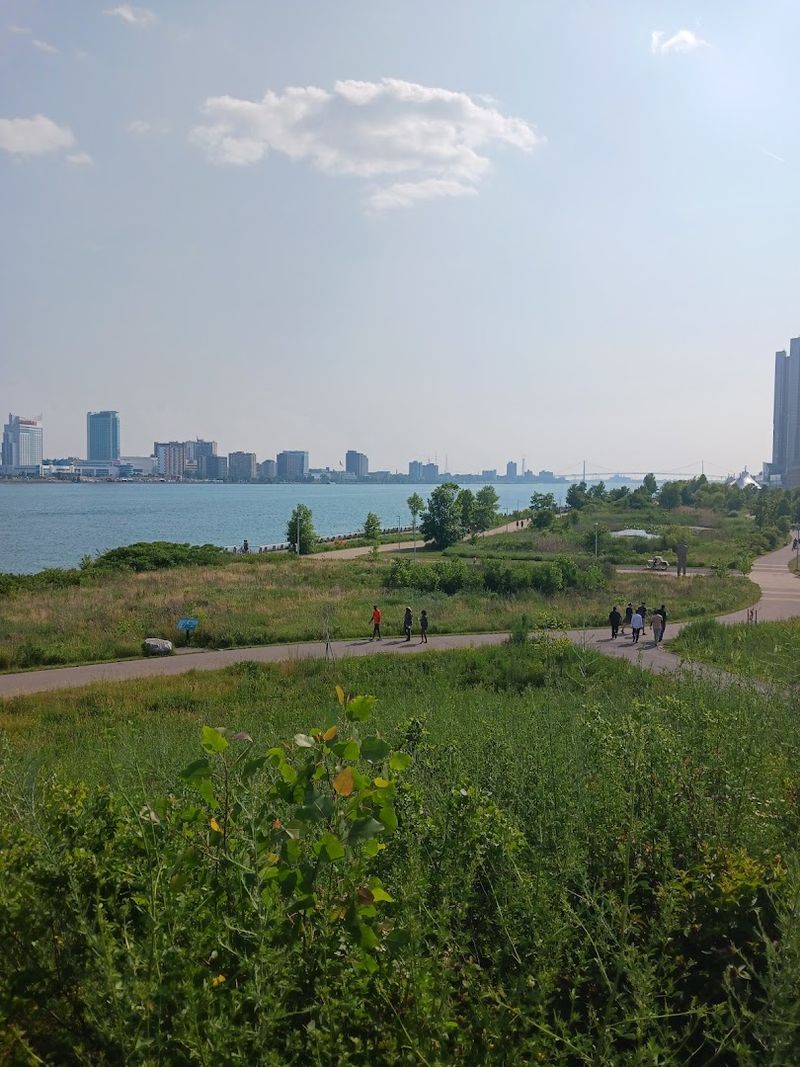
There are spots along the Detroit RiverWalk where you simply have to stop moving, pull out your phone or camera, and take a moment to absorb what you are looking at.
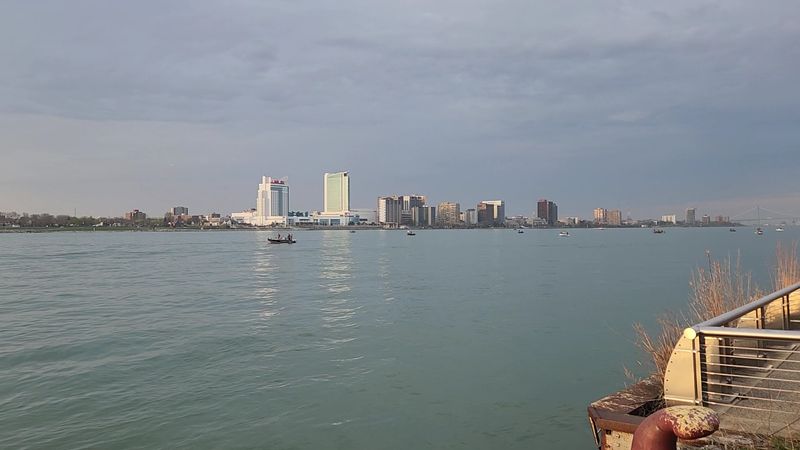
The view across the river to Windsor, Ontario, is surprisingly dramatic for an urban waterfront. The Canadian skyline sits close enough to feel almost touchable on clear days, and the constant movement of boats, freighters, and personal watercraft across the water keeps the scene animated at all hours.
At night, the experience shifts entirely. The soft glow of streetlights reflects off the surface of the river, the sound of water moving against the riverbank fills the air, and the city noise fades just enough to make the whole setting feel unexpectedly peaceful.
Detroit’s own skyline, visible from various points along the walk, offers a dramatic backdrop that reminds you of the city’s architectural ambition and resilience.
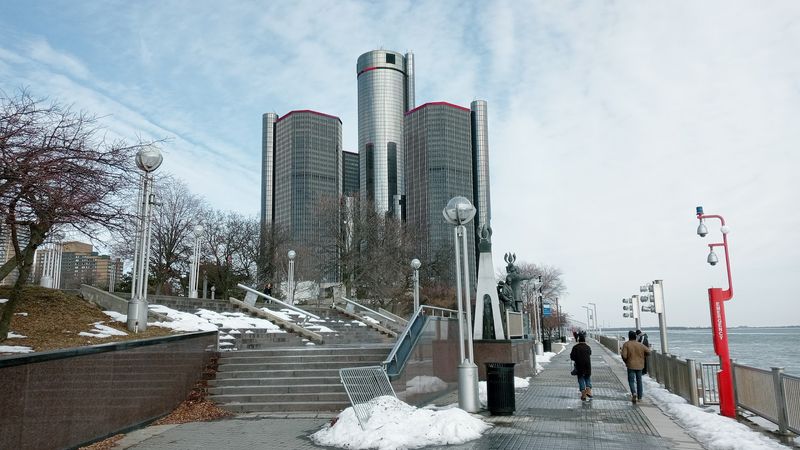
The Renaissance Center’s glass towers catch light in a way that photographs beautifully from the riverbank, especially during the golden hour just before sunset.
Some views simply do the talking for themselves.
Planning Your Visit to the RiverWalk
A visit to the Detroit RiverWalk rewards a little bit of planning, though the barrier to entry is genuinely low. The walkway is free to use, open year-round, and accessible from multiple entry points along the riverfront.
Parking is available in both free and paid lots nearby, and the area behind the General Motors headquarters at the Renaissance Center is one of the most convenient access points for first-time visitors arriving by car.
Warmer months bring the most activity to the RiverWalk, with food vendors, boat rides, scooter rentals, and the farmers market all operating at full capacity from late spring through early fall.
Winter visits offer a quieter, more reflective experience, and on cold clear days the view across the frozen or partially frozen river carries a certain historical echo that feels especially fitting given what once crossed that same water during Prohibition winters.
The RiverWalk is well-suited for all ages, from young children enjoying the carousel to older visitors who simply want a clean, safe, and scenic place to walk and think.
The river has always rewarded those who take the time to know it.
Share this story