Some college campuses are so stunning that even people who never attended them feel the urge to wander their paths. From cliffside ocean views to Gothic stone towers and cherry blossom-lined walkways, American universities offer some of the most breathtaking scenery in the country.
Whether you are a future student, a curious traveler, or simply someone who appreciates great architecture and green spaces, these campuses are worth every step. Pack comfortable shoes and get ready to explore 20 of the most beautiful college campuses the United States has to offer.
Stanford University — Palo Alto, California
Palm trees line the road like a royal welcome, and that is exactly how Stanford University greets every visitor. Palm Drive stretches toward the heart of campus with a grandeur that makes you feel like you have arrived somewhere truly special.
The red-tiled roofs glowing under the California sun set the tone before you even step foot on the main quad.
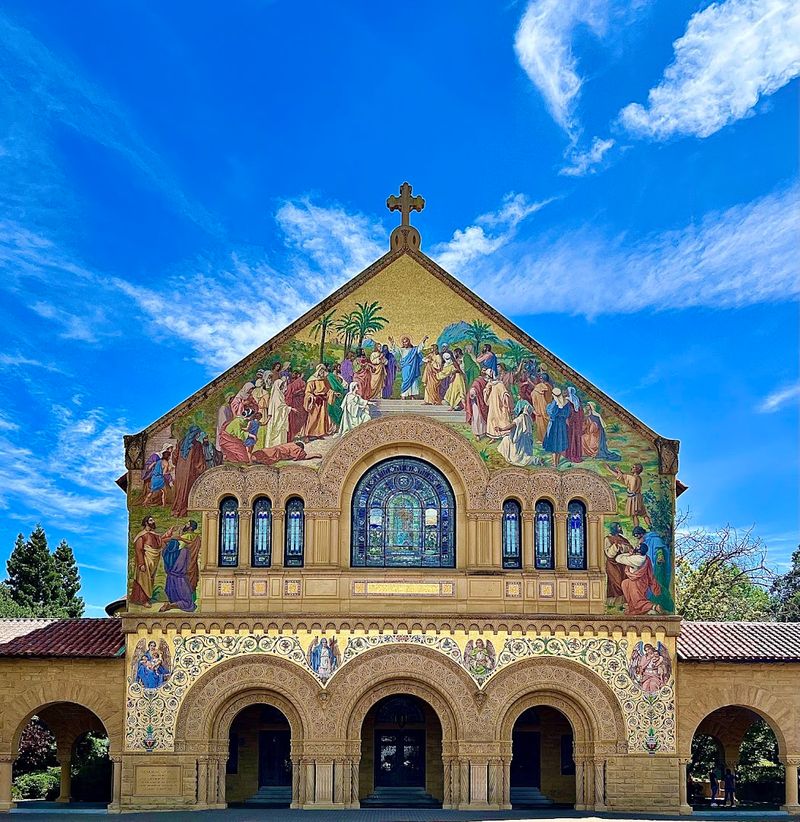
Memorial Church stands at the center of it all, covered in shimmering golden mosaics that catch the light in ways that stop people mid-stride. Built in the Romanesque and Mission Revival style, the architecture gives the campus a Mediterranean warmth that feels both timeless and welcoming.
Strolling past the sandstone arches and blooming gardens, it is easy to forget you are at one of the most academically competitive schools in the world.
Fun fact: Stanford sits on over 8,000 acres, making it one of the largest university campuses in the United States. The Rodin Sculpture Garden adds a dose of world-class art to the outdoor experience.
Whether you visit for the architecture, the gardens, or just the vibe, Stanford delivers a campus experience that is genuinely hard to top.
University of Virginia — Charlottesville, Virginia
Thomas Jefferson did not just write the Declaration of Independence — he also designed one of the most celebrated university campuses in American history. The Academical Village at the University of Virginia is a UNESCO World Heritage Site, which puts it in the same category as the Taj Mahal and the Great Wall of China.
That is quite a resume for a college campus.
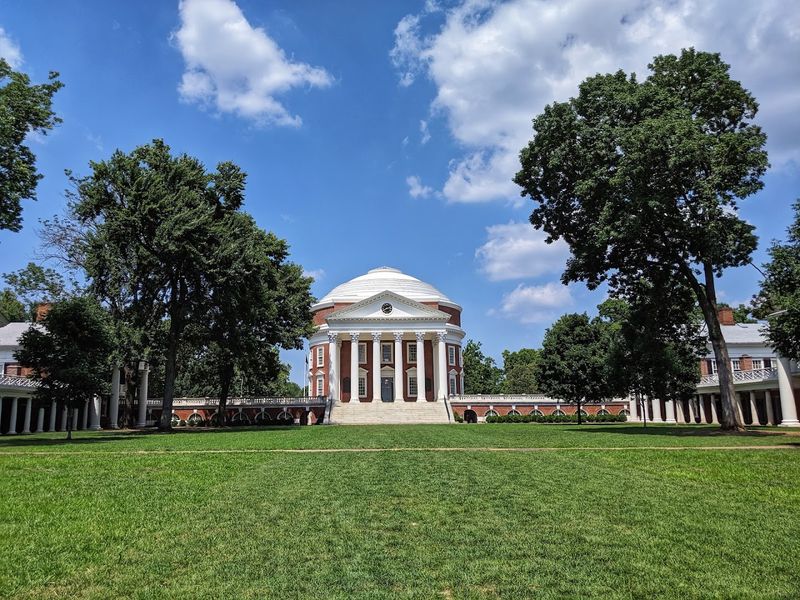
The iconic Rotunda anchors the space, its white dome and classical columns reflecting Jefferson’s deep love of Roman architecture. Colonnaded walkways called “ranges” connect the buildings in a layout that Jefferson believed would encourage learning through community.
Walking the Lawn on a crisp morning, with students chatting on pavilion steps, feels like stepping into a living history lesson.
The gardens tucked behind the pavilions are secret treasures — each one uniquely designed and maintained by faculty residents. Serpentine brick walls curve around these private green spaces, adding an elegant quirk to the grounds.
Visitors are welcome to explore most of the Lawn area freely, and guided tours are available throughout the year. UVA proves that great design and great education can share the same address beautifully.
Pepperdine University — Malibu, California

Imagine sitting in a classroom with the Pacific Ocean shimmering just outside the window — that is a Tuesday at Pepperdine University. Perched on the hills above Malibu, this campus might have the most jaw-dropping natural setting of any university in the country.
The combination of Mediterranean Revival architecture and endless ocean horizon creates a backdrop that honestly feels unfair to the rest of academia.
White stucco buildings with terracotta rooftops sit against rolling green hills, and the contrast with the deep blue Pacific below is nothing short of cinematic. The Adamson House nearby adds historical charm, while the campus fountains and flower-lined paths give the whole place a resort-like feel.
Students here often joke that the hardest part of studying is keeping your eyes on the textbook.
Pepperdine hosts the famous Waves Weekend each fall, when the campus fills with alumni and visitors who come as much for the scenery as for the festivities. Sunsets from the upper campus are legendary — the kind that make you pause whatever you are doing just to watch.
If you visit only one California campus on this list, make it this one. The view alone is worth the drive up the Pacific Coast Highway.
Berry College — Mount Berry, Georgia
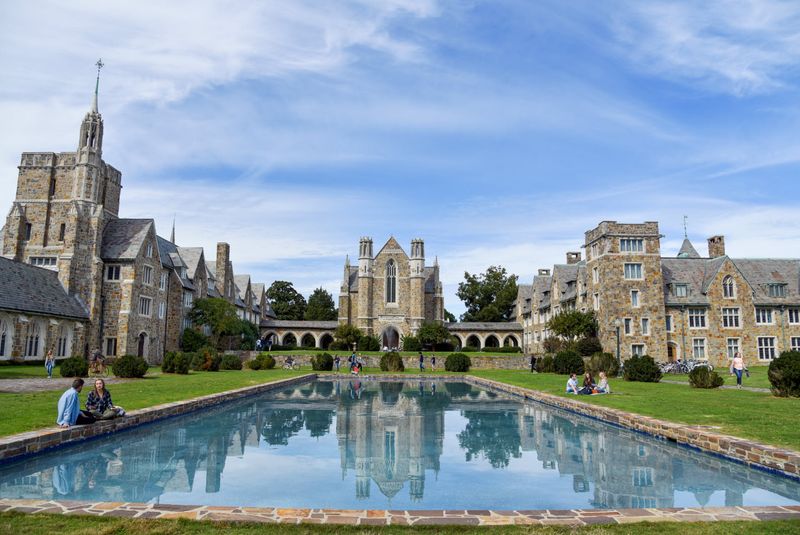
Berry College holds a record that most people find hard to believe: it has the largest contiguous college campus in the world, stretching over 27,000 acres of forests, meadows, and streams. To put that in perspective, the entire country of Monaco could fit inside Berry College’s campus with room to spare.
That is not a campus — that is practically a small nation dedicated to higher education.
Georgian-style stone buildings rise naturally from the landscape, looking as though they grew there rather than were constructed. The Ford Buildings, built with support from Henry Ford himself, are among the most photographed spots on campus.
Deer roam freely across the grounds, and spotting a flock of wild turkeys near the main quad is not at all unusual.
The Old Mill on campus is a favorite stop for visitors, with a working water wheel that has been turning since the 1930s. Berry’s commitment to blending education with nature is built into the school’s founding philosophy, and you can feel it in every quiet trail and open pasture.
Hiking paths wind through the woodlands, offering peaceful escapes just steps from the academic buildings. Berry College is where Georgia’s natural beauty and classic collegiate charm meet without compromise.
Scripps College — Claremont, California
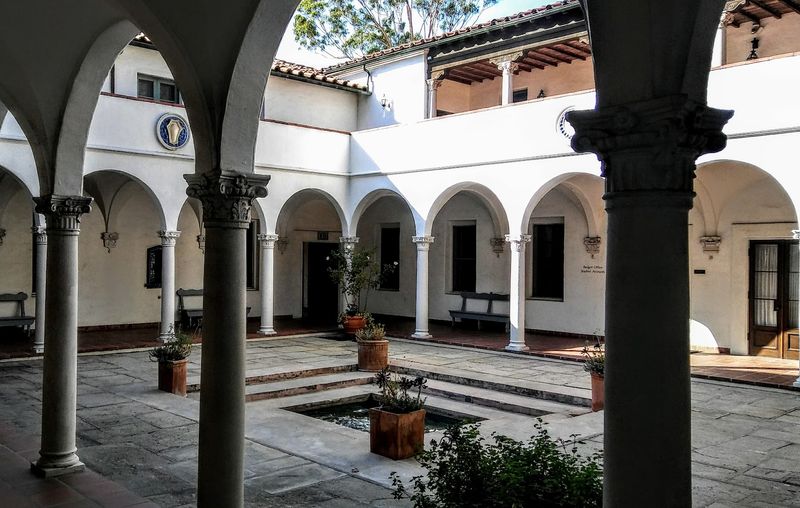
Wisteria drapes over arched walkways like something out of a classic painting, and at Scripps College, that is just an ordinary spring afternoon. Tucked into the quiet college town of Claremont, Scripps is one of the most visually refined campuses in California, with Spanish Colonial Revival architecture that feels both elegant and intimate.
It is small in size but enormous in beauty.
Iris Court and Sicilian Court are two of the campus’s most beloved outdoor spaces, each one carefully landscaped with fountains, flowering plants, and shaded benches perfect for reading or simply breathing in the surroundings. The architecture throughout campus maintains a consistent warmth — terracotta tiles, creamy stucco walls, and rounded arches create a visual harmony that larger universities rarely achieve.
Scripps is part of the Claremont Colleges consortium, meaning students here share resources with four neighboring schools while still enjoying the close-knit atmosphere of a small liberal arts college. The campus gardens are tended with serious care, and the annual Scripps Garden Party transforms the grounds into a celebration of bloom and community.
Art installations are scattered throughout, adding unexpected creative touches to already photogenic corners. Scripps proves that a smaller footprint can still leave a very large impression.
University of Notre Dame — South Bend, Indiana

Gold does not usually belong on a university rooftop, but Notre Dame pulls it off with legendary confidence. The Golden Dome of the Main Building has been a symbol of this Indiana university since 1882, and it still stops visitors cold the first time they see it gleaming against a blue sky.
Whether you are a football fan, an architecture lover, or a first-time visitor, the Dome is an unforgettable sight.
Gothic architecture defines much of the campus, with stone buildings, arched windows, and intricate detailing that give Notre Dame a timeless, almost European character. The Basilica of the Sacred Heart sits just beside the Main Building and is considered one of the finest examples of Gothic church architecture in North America.
The two buildings together create a campus core that feels genuinely sacred, regardless of your background.
Beyond the architecture, Notre Dame’s grounds include a beautiful lake, wooded paths, and carefully maintained gardens that soften the stone grandeur with natural color. The Grotto, a replica of the famous shrine in Lourdes, France, is a quiet candlelit space tucked near the lake where students and visitors often pause to reflect.
Notre Dame’s campus is the rare kind that feels both grand and deeply personal at the same time.
Duke University — Durham, North Carolina
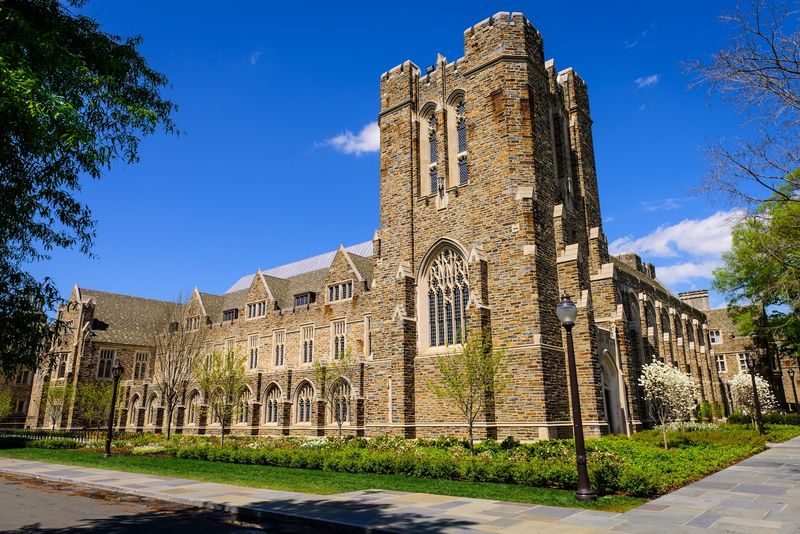
Standing beneath Duke Chapel’s 210-foot tower, you could easily convince yourself you had been teleported to Oxford, England. Duke University’s West Campus is a masterpiece of neo-Gothic architecture, built almost entirely from locally quarried stone that gives the buildings a rich, earthy tone unlike anything else in the American South.
The chapel alone took six years to build and remains one of the most visited landmarks in North Carolina.
The forested setting surrounding the academic buildings adds a dramatic natural frame to the already impressive stonework. Duke Forest, which covers over 7,000 acres adjacent to campus, offers hiking and biking trails that feel worlds away from the lecture halls.
In autumn, the tree canopy turns brilliant shades of orange and red, making the Gothic towers look even more striking by contrast.
Sarah P. Duke Gardens sits right on campus and draws over 400,000 visitors each year — that is not a typo.
The 55-acre garden features terraced lawns, a Japanese garden, and seasonal blooms that transform the space throughout the year. Duke proves that a campus can be both an intellectual powerhouse and a genuinely beautiful place to spend an afternoon.
The combination of stone architecture, dense forest, and manicured gardens makes it one of the most complete campus experiences anywhere in the country.
College of William & Mary — Williamsburg, Virginia
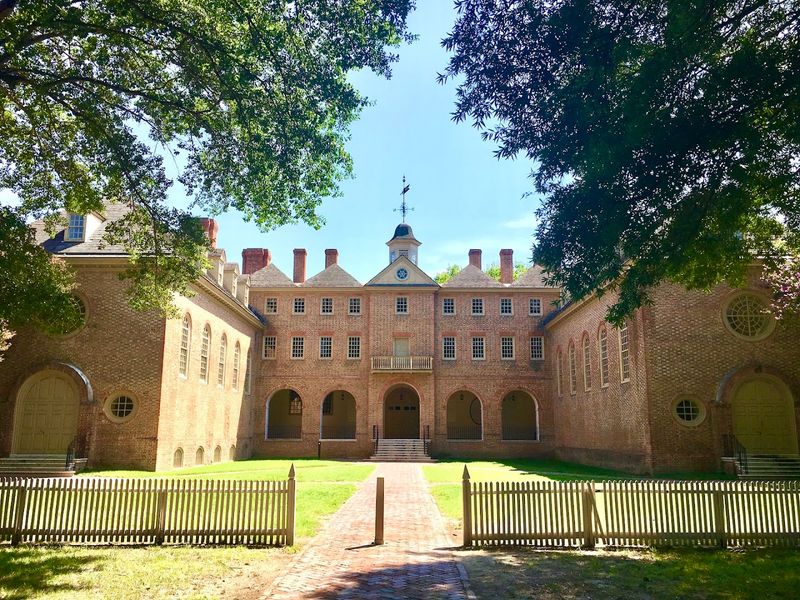
The Sir Christopher Wren Building has been standing since 1695, which means it was already 81 years old when the United States declared independence. As the oldest college building in America, it anchors the College of William and Mary campus with a quiet authority that no modern structure could replicate.
Walking past it feels less like sightseeing and more like touching history with your own hands.
The campus blends seamlessly with Colonial Williamsburg, the living history museum that surrounds it, creating a setting where past and present coexist in genuinely comfortable harmony. Red brick buildings with white trim line shaded paths, and the overall aesthetic feels like a postcard from early America.
The Sunken Garden, a beloved open green space framed by symmetrical buildings, is a favorite gathering spot for students and visitors alike.
William and Mary is the second-oldest university in the country, and its campus carries that age gracefully — every corner has a story worth knowing. The Crim Dell Bridge, a small wooden footbridge arching over a wooded pond, has become one of the most photographed spots on campus.
Legend says that couples who cross it together will stay together, which keeps the foot traffic steady year-round. History, romance, and colonial charm make this campus genuinely unforgettable.
Sewanee: The University of the South — Sewanee, Tennessee
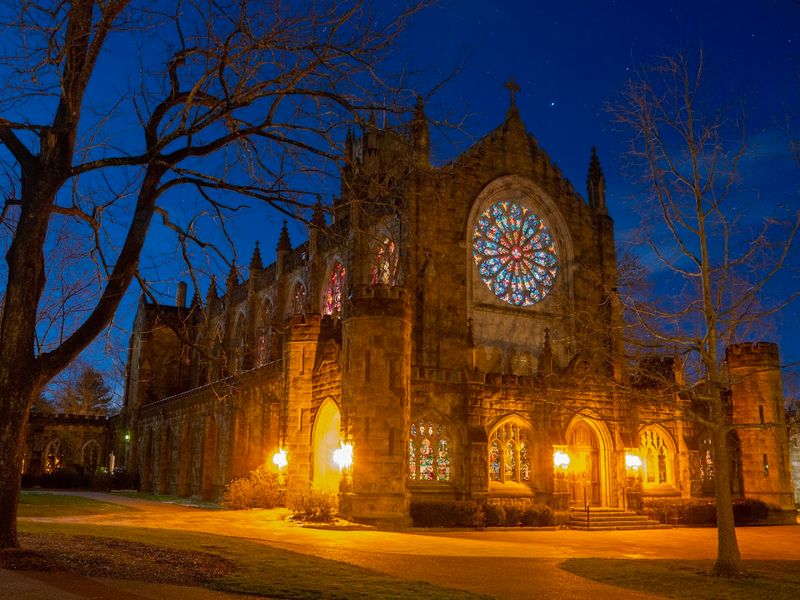
Perched 2,000 feet above sea level on the Cumberland Plateau, Sewanee feels less like a university campus and more like a hidden kingdom carved from Tennessee stone. The Gothic architecture here is not decorative — it is structural and serious, with buildings that look as though they were quarried directly from the surrounding plateau and assembled by people who had forever to get it right.
The effect is breathtaking.
Sewanee owns roughly 13,000 acres of land, most of it forested and crisscrossed with hiking trails that students treat like a personal backyard. The Domain, as the surrounding land is called, includes caves, waterfalls, and sweeping overlooks of the Tennessee Valley that rival anything a national park has to offer.
On a clear day, the views from Proctor’s Hall stretch for miles in every direction.
All Souls’ Chapel on campus is a stunning piece of Gothic craftsmanship, with stained glass windows and stone detailing that invite you to slow down and appreciate the artistry. The academic gowns that Sewanee students wear to class add an old-world theatrical touch that fits the campus perfectly.
Sewanee is the kind of place that makes you feel slightly more intelligent just by walking its grounds, which is probably exactly what the founders intended.
University of Colorado Boulder — Boulder, Colorado
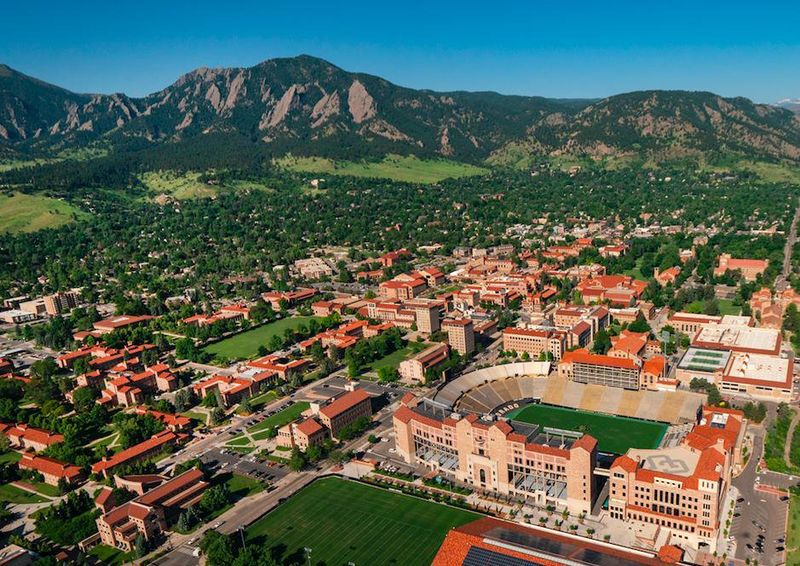
Few campuses in the world can claim the Rocky Mountains as their backdrop, but the University of Colorado Boulder makes that claim with total confidence. The Flatirons — those dramatic slabs of tilted sandstone that define Boulder’s skyline — loom behind campus like a permanent reminder that you are somewhere extraordinary.
Students here do not just study with mountain views; they hike, climb, and ski them on weekends.
CU Boulder’s architecture follows a distinctive Tuscan Vernacular Revival style, featuring sandstone buildings with red tile roofs that echo the earth tones of the surrounding landscape. The effect is a campus that looks as though it was designed specifically to complement its natural setting rather than compete with it.
Norlin Quad, the grassy heart of campus, is surrounded by these warm-toned buildings and fills with students the moment the Colorado sun comes out.
The campus sits at around 5,400 feet elevation, which means the air is crisp, the sky is impossibly blue, and sunsets behind the mountains are the kind that make even seasoned travelers reach for their cameras. Fiske Planetarium, located right on campus, offers public shows that pair perfectly with the already sky-obsessed vibe of Boulder.
CU Boulder is proof that a great university does not need to choose between academic excellence and jaw-dropping natural beauty.
University of Washington — Seattle, Washington
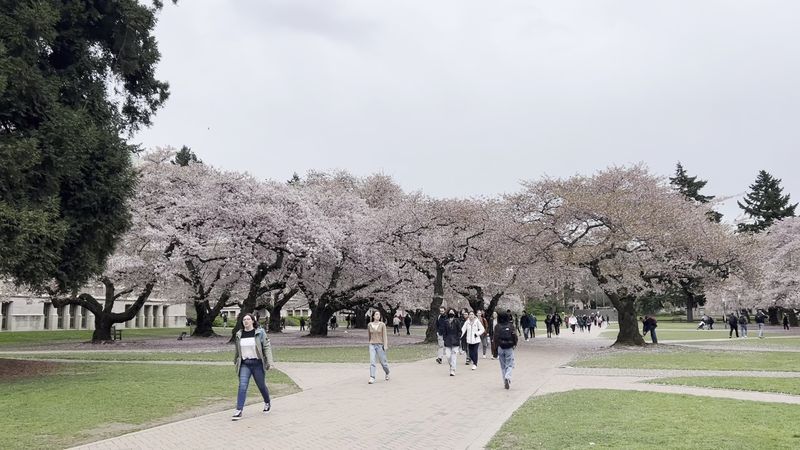
Every spring, the University of Washington transforms into one of the most photographed places in the Pacific Northwest, and the reason is simple: cherry blossoms. The famous quad erupts in a canopy of pink and white blooms so dense that students study beneath them like they are sitting inside a cloud.
It is the kind of seasonal spectacle that makes people plan their entire visit around a two-week window in March.
Suzzallo Library is the crown jewel of the campus year-round, with its Gothic facade, arched windows, and an interior reading room so grand that it has been compared to a cathedral. Harry Potter fans often recognize the aesthetic immediately, though the library predates the books by several decades.
The attention to architectural detail throughout UW’s campus is consistent and impressive, from the Drumheller Fountain to the historic Red Square plaza.
The campus sits along the shores of Union Bay, giving it a Pacific Northwest waterfront quality that adds another layer of scenic appeal to the already impressive grounds. Mount Rainier occasionally appears on the horizon on clear days, adding a volcanic cameo to the view.
Seattle’s lush, rain-fed greenery keeps the campus deeply verdant even outside of cherry blossom season. UW manages to be beautiful in every season, which is a genuinely rare achievement.
Yale University — New Haven, Connecticut
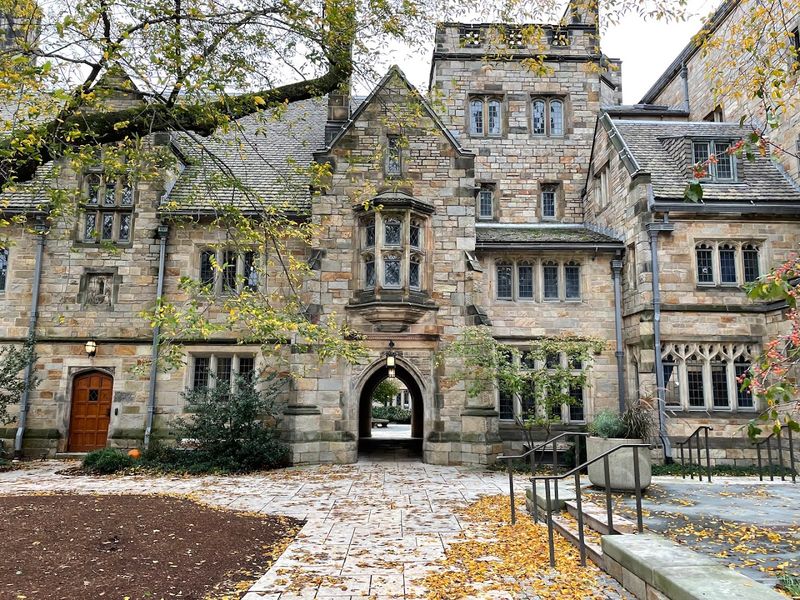
Yale’s campus looks like someone took the best parts of a medieval European city and reassembled them in Connecticut, complete with gargoyles, stone archways, and courtyards that seem designed for deep thought and dramatic movie scenes. The Gothic buildings are so detailed and well-preserved that architecture students travel from around the world specifically to study them.
New Haven may not be the flashiest city, but Yale makes it one of the most architecturally rich destinations on the East Coast.
The residential college system at Yale means that most of the campus is organized into self-contained communities, each with its own courtyard, dining hall, and distinct character. Sterling Memorial Library anchors the academic core with a nave-like reading room that makes studying feel genuinely ceremonial.
Walking from one college to another means passing through a series of stone gates and covered archways that keep revealing new visual surprises.
Harkness Tower, rising 216 feet above the Old Campus, chimes the hours with a set of bells that have become one of New Haven’s most beloved sounds. The Cross Campus lawn offers a rare open green space surrounded by Gothic facades, perfect for a break between architectural admiration sessions.
Yale’s campus rewards slow exploration — the more time you spend wandering, the more details you discover hiding in plain sight.
Wesleyan University — Middletown, Connecticut
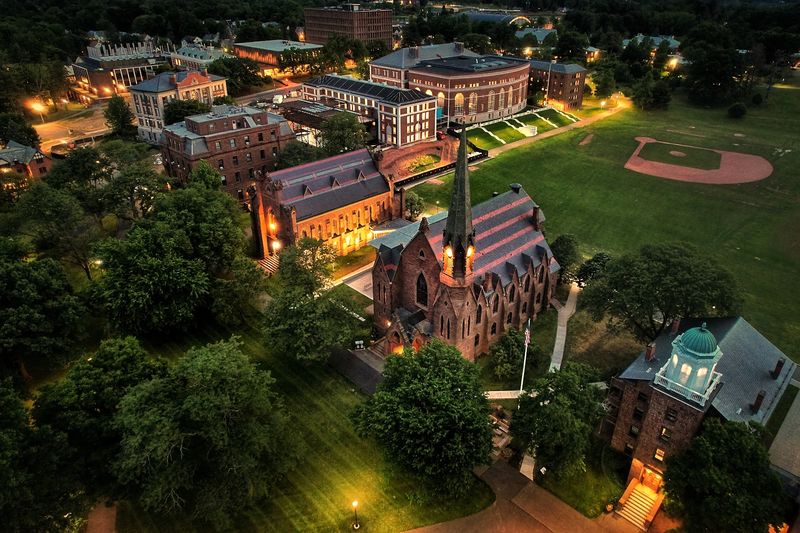
Wesleyan University carries its age with the kind of quiet confidence that only comes from nearly two centuries of existence. Founded in 1831, the campus features a collection of Greek Revival and Victorian buildings that line Foss Hill and the central Andrus Field area with a charm that is distinctly New England and entirely its own.
The brick and brownstone buildings feel warm rather than imposing, which is a balance many older campuses struggle to strike.
Foss Hill itself is one of those campus landmarks that means something different to everyone who goes there. Students sled down it in winter, lounge on it in spring, and gather on it for concerts and community events throughout the year.
The hill sits at the center of campus life in a way that no building ever quite could, which says something meaningful about Wesleyan’s outdoor culture.
The Center for the Arts complex adds a striking modern contrast to the historic buildings, featuring work by architect Kevin Roche that is bold without being jarring. Wesleyan’s tree-lined paths and carefully maintained lawns give the campus a serene, walkable quality that makes it easy to spend hours just exploring.
The mix of architectural periods creates a layered visual story that rewards curious visitors. Wesleyan is the kind of campus that feels simultaneously historic and alive.
Furman University — Greenville, South Carolina
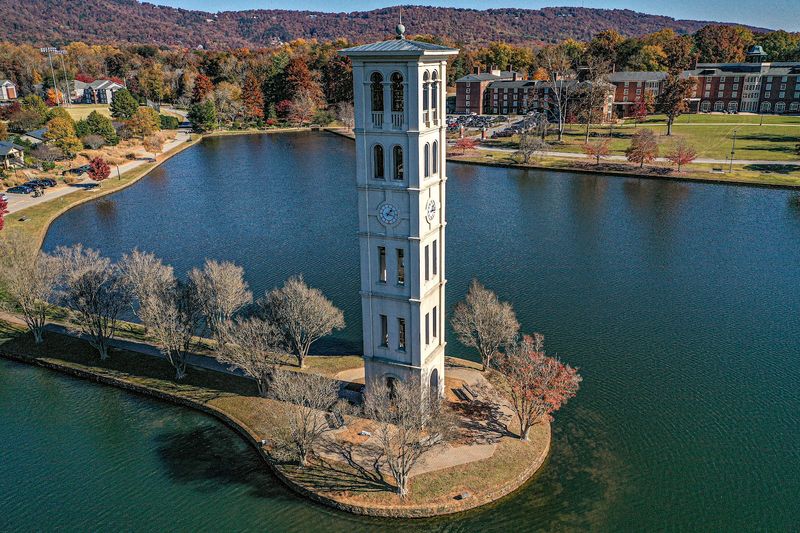
A 30-acre lake sits at the heart of Furman University’s campus like a mirror reflecting everything beautiful about this South Carolina gem. The Bell Tower rises at one end of the lake, perfectly symmetrical and perfectly reflected in the still water on calm mornings — it is the kind of image that ends up on university calendars for a reason.
Furman consistently ranks among the most visually stunning campuses in the American South, and the lake is a huge part of why.
Ivy-covered buildings line the lakeside paths, and the overall palette of the campus — brick, green ivy, blue water, and open sky — creates a color combination that feels effortlessly composed. Students kayak and paddle on the lake, making it more than just a pretty backdrop.
The Rose Garden near the amphitheater adds seasonal bursts of color that contrast beautifully with the more formal academic architecture nearby.
The campus was purpose-built in the 1950s when Furman moved to its current location, which means the entire layout was designed with intention and cohesion from the start. That planning shows in every sightline and every pathway.
Blue Ridge Mountains peek above the tree line on clear days, adding a distant but dramatic frame to the already picturesque grounds. Furman is the kind of campus that makes you want to slow down and actually look around.
Bryn Mawr College — Bryn Mawr, Pennsylvania
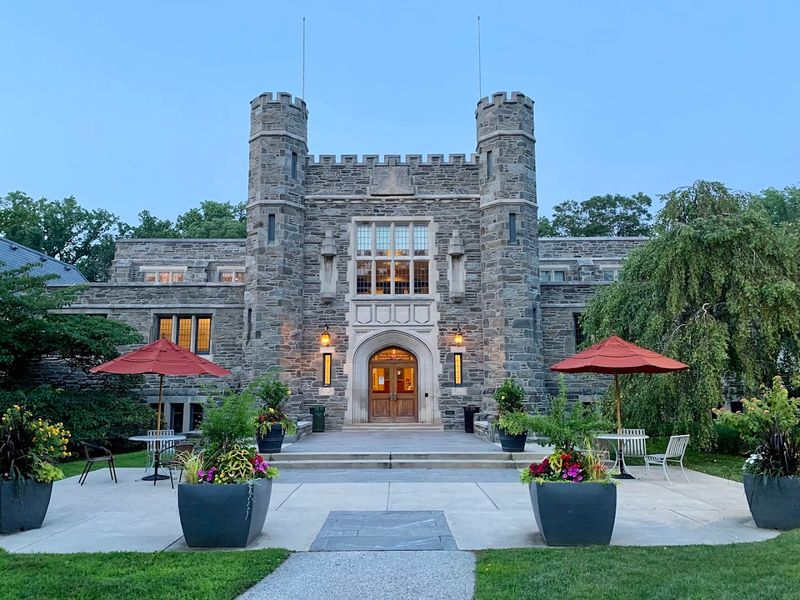
There is something almost theatrical about walking through Bryn Mawr College for the first time — the Collegiate Gothic stone buildings rise with such confident elegance that the campus feels like a stage set for a story worth telling. Located just outside Philadelphia, this historic women’s college has been turning heads since 1885, and its architecture has aged the way good things do: with character and grace.
The stonework throughout campus is detailed and deliberate, full of carved ornaments and arched doorways that reward a close look.
Thomas Great Hall is one of the most dramatic interior spaces on any college campus in Pennsylvania, with its vaulted ceiling and stained glass windows creating an atmosphere that is equal parts academic and awe-inspiring. The campus grounds are equally impressive outdoors, with rolling green lawns and mature trees that frame the Gothic buildings in a way that feels almost painterly.
Cloisters and covered walkways add a monastic quality to certain corners of campus.
The Rock, a large boulder near the center of campus, has been a beloved student landmark for generations — painted and repainted with messages, art, and announcements in an ongoing tradition that gives the stone a living, evolving personality. Bryn Mawr is proof that beauty and academic rigor not only coexist but actually enhance each other.
Every corner of this campus earns its reputation.
Wellesley College — Wellesley, Massachusetts
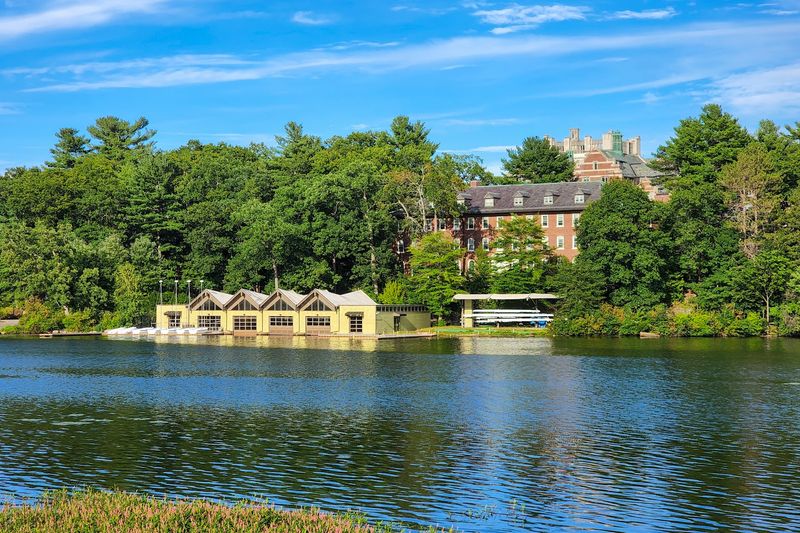
Lake Waban wraps around the edge of Wellesley College’s campus like a natural moat, giving this Massachusetts liberal arts college one of the most serene waterfront settings in all of New England. The lake reflects the surrounding trees and historic buildings in a way that changes with every season — icy and still in January, sparkling and alive in June.
It is the kind of campus feature that makes you stop mid-walk just to take it in.
The academic buildings at Wellesley draw from a variety of architectural traditions, from Collegiate Gothic to Romanesque Revival, creating a campus that feels layered and rich rather than uniform. Galen Stone Tower rises above the boathouse at the lake’s edge, a romantic stone structure that has become one of the most iconic images associated with the college.
The Wellesley Botanic Gardens add another dimension of beauty, with curated plant collections that span continents.
The Alumnae Hall and the Margaret Clapp Library anchor the academic core with a gravitas that suits a college of Wellesley’s reputation. Paths wind through wooded areas and past garden spaces, making every walk across campus feel like a small discovery.
Wellesley has produced senators, secretaries of state, and heads of government — but its campus makes you feel that inspiration starts long before graduation. The grounds here are genuinely nourishing in ways that go beyond the academic.
Dartmouth College — Hanover, New Hampshire
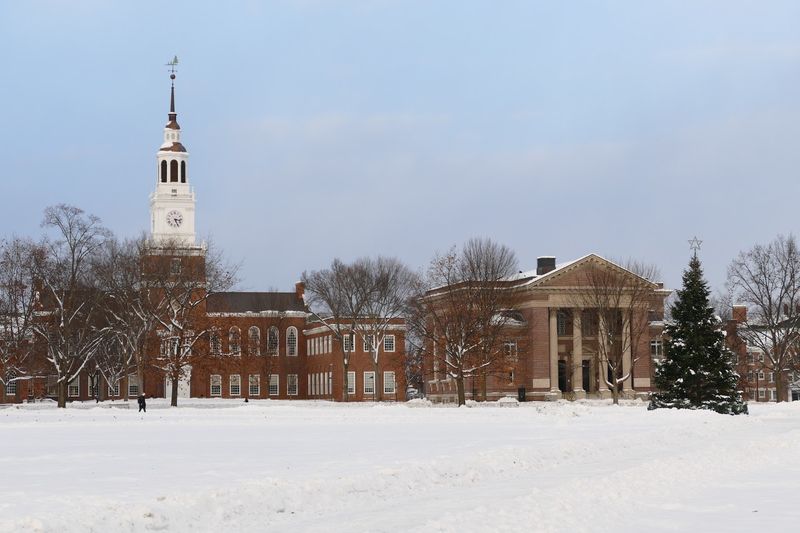
Hanover, New Hampshire is a small town, but Dartmouth College makes it feel like the center of the universe — at least aesthetically. The Dartmouth Green, a broad open common at the heart of campus, is flanked by Georgian and Colonial buildings that have barely changed in appearance since the 18th century.
On a crisp fall afternoon with the leaves turning gold and orange, this place looks like the definition of New England collegiate perfection.
Baker-Berry Library anchors the north end of the Green with its tall tower and clock that chimes across campus throughout the day. The interior murals by Jose Clemente Orozco, painted in the 1930s, are a world-class art collection hiding inside a college library — a detail that perfectly captures Dartmouth’s habit of exceeding expectations quietly.
The Hopkins Center for the Arts adds a performing arts dimension to the campus that keeps things culturally vibrant year-round.
The surrounding Connecticut River Valley and the White Mountains just to the north give Dartmouth’s outdoor setting a grandeur that matches its architectural dignity. Winter here is genuinely beautiful — snow-covered buildings and frozen pathways give the campus a postcard quality that students actually enjoy rather than just endure.
Dartmouth is a place where the landscape and the institution feel equally matched in ambition and character.
Cornell University — Ithaca, New York
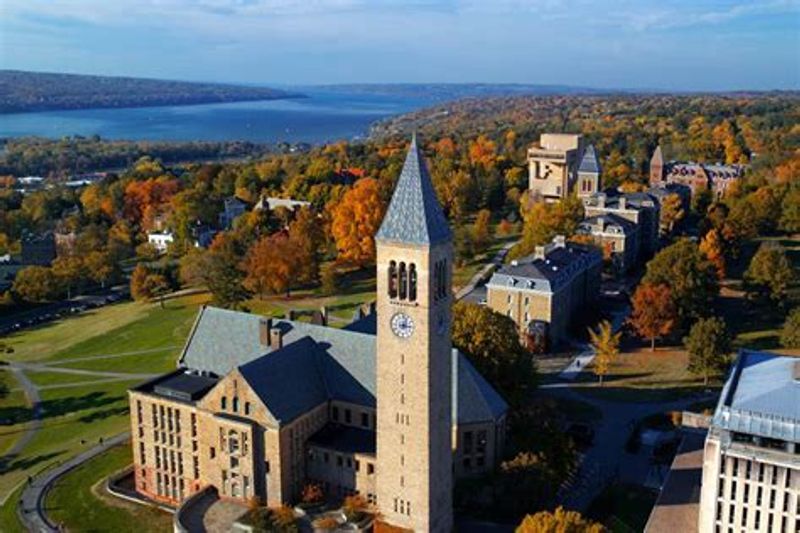
Cornell University sits on a hill above Cayuga Lake in New York’s Finger Lakes region, and the views from the central campus are the kind that make prospective students choose the school before they even check the course catalog. Founded in 1865 with the radical idea that any person could study any subject, Cornell built its campus with a similar openness — spreading across a dramatic landscape of gorges, waterfalls, and rolling hills that give the grounds a geological personality unlike any other university in the country.
Cascadilla Gorge and Fall Creek Gorge cut through the campus like natural sculptures, with trails that wind past waterfalls and swimming holes that students actually use during warmer months. The combination of Victorian-era buildings, modern research facilities, and raw natural landscape creates a campus that feels simultaneously historic and dynamic.
McGraw Tower, which rises above the Arts Quad, plays carillon music that drifts across the gorges and hillsides throughout the day.
Uris Library’s reading room is one of the most beautiful study spaces in the Ivy League, with its ornate Gothic interior and stained glass windows creating an atmosphere that makes academic effort feel worthwhile. The Libe Slope, a grassy hillside leading down from the main campus, offers one of the most spectacular views of Cayuga Lake available from any American university.
Cornell is genuinely one-of-a-kind.
University of Chicago — Chicago, Illinois
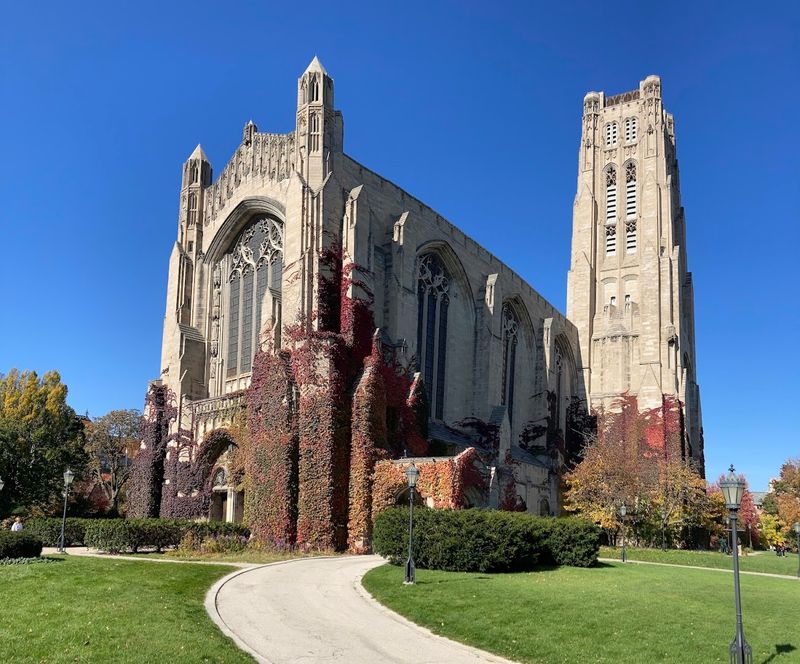
The University of Chicago looks like it was designed by someone who loved Gothic architecture so much they decided to build an entire neighborhood in its honor. The Collegiate Gothic campus, with its stone quadrangles, pointed arches, and gargoyle-adorned towers, creates an academic atmosphere so intense that the school has famously joked its motto should be “Where fun goes to die” — a quip that students wear as a badge of honor.
The architecture here is not just beautiful; it is purposeful and slightly intimidating in the best way.
Harper Memorial Library anchors the main quad with a presence that commands attention, its Gothic tower rising above the surrounding stone buildings with scholarly authority. The quads themselves are among the most architecturally consistent outdoor spaces in urban American academia — walking through them feels like stepping into a place where ideas have weight and permanence.
Bond Chapel, a small Gothic jewel tucked between larger buildings, offers a quiet contrast to the grand scale of the surrounding structures.
Hyde Park, the South Side Chicago neighborhood where the university sits, adds a cultural richness to the campus experience that extends well beyond the stone walls. The Smart Museum of Art and the Oriental Institute are both located on campus and open to the public.
The University of Chicago rewards visitors who are willing to look closely — every surface seems to have something carved into it worth noticing.
Miami University — Oxford, Ohio
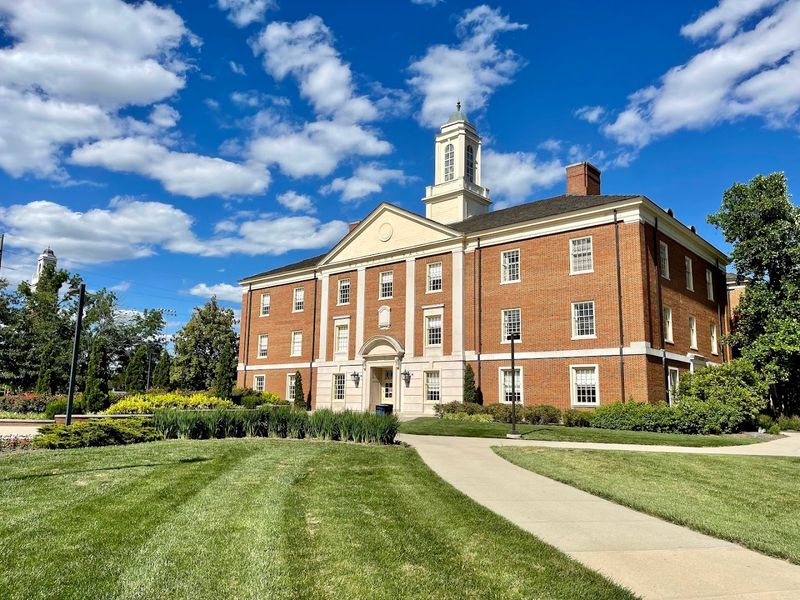
Do not let the name fool you — Miami University is very much in Ohio, not Florida, and it has been turning out beautiful campus scenery since 1809. Oxford, Ohio is a small college town that exists almost entirely in service of this university, which means the campus and the community have grown together in a way that feels genuinely harmonious.
The red brick buildings and wide-open quadrangles give Miami a classic Midwestern collegiate charm that never feels dated.
The historic core of campus, centered around Upham Hall and the surrounding quads, is filled with mature trees whose canopies create natural tunnels of shade in summer and brilliant color in fall. Miami’s campus is often described as quintessentially collegiate, and the description fits — it looks like the mental image most people carry when they think of what a traditional American university should look like.
The Bishop Woods area at the edge of campus adds a wooded, natural buffer that transitions campus into the surrounding Ohio landscape.
Miami has a long tradition of architectural pride, and the consistent use of red brick and limestone trim throughout the historic district creates a visual unity that newer campuses rarely achieve. The campus is highly walkable, with most major buildings within a short stroll of each other.
In every season — whether blanketed in snow or carpeted in autumn leaves — Miami University delivers a campus experience that feels both timeless and genuinely inviting.
Share this story