There is a place in north-central Oklahoma where marble floors, hand-painted ceilings, and secret passageways all share the same roof, and most people have never heard of it. An oil baron with a fortune that once rivaled John D.
Rockefeller built a 43,561-square-foot palace in a small city, filled it with fine art from around the world, and then watched his empire crumble around him. The story behind these walls is equal parts ambition, heartbreak, and jaw-dropping craftsmanship.
Every room holds a detail that makes you stop mid-step and say, out loud, to no one in particular, that you absolutely cannot believe this place is real.
Where the Mansion Stands: Address, Location, and Setting
The E. W.
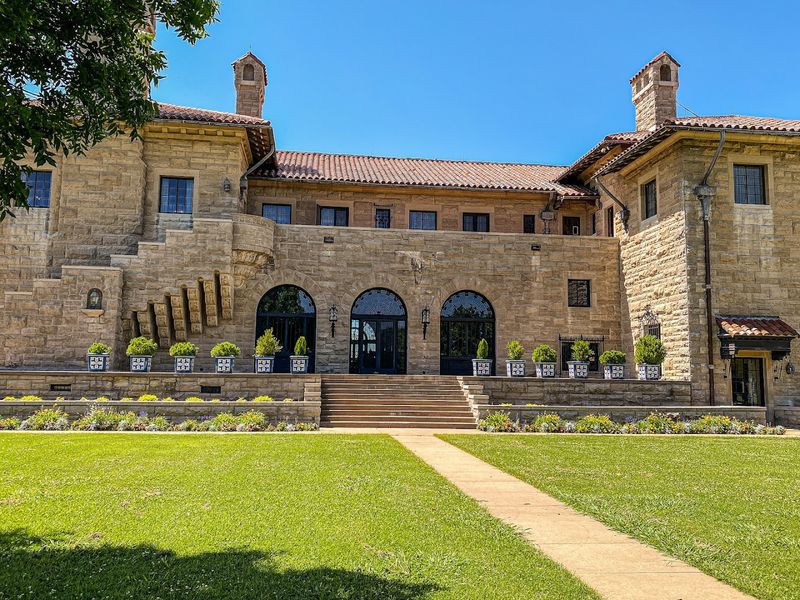
Marland Mansion sits at 901 Monument Road in Ponca City, Oklahoma, a city of roughly 24,000 people in Kay County, about 100 miles north of Oklahoma City. The address alone gives nothing away.
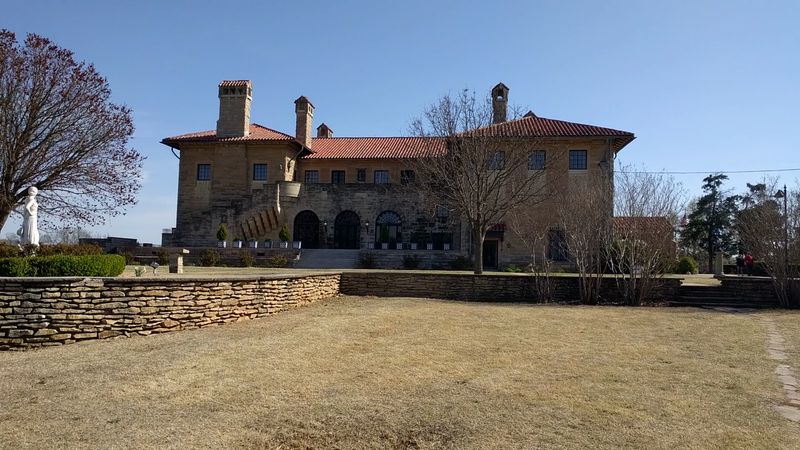
You turn off the main road, follow a tree-lined drive, and suddenly a 43,561-square-foot Renaissance Revival palace appears in front of you like something conjured from a different century.
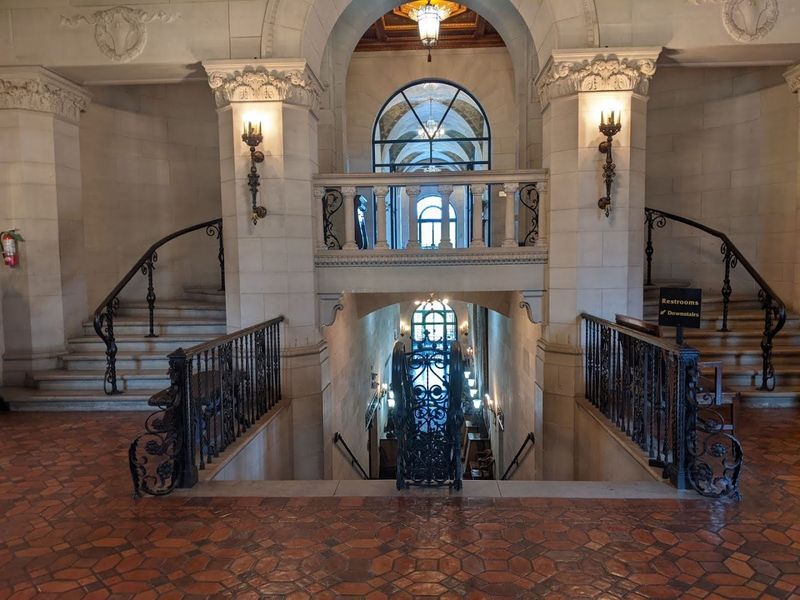
The mansion was built between 1925 and 1928, and it cost roughly 5.5 million dollars at the time, which translates to well over 90 million dollars today. It sits on a large estate with manicured grounds, a chapel, a separate cottage, reflecting pools, and statuary scattered throughout the property.
The building itself is four stories tall and contains 55 rooms, including 10 bathrooms, multiple fireplaces, a ballroom, and a basement level that houses the Petroleum Hall of Fame. From the outside, the structure reads as elegant but restrained.
Once you cross the threshold, every assumption you brought with you quietly dissolves, and the real spectacle begins to reveal itself room by room.
The Man Behind the Marble: E. W. Marland’s Remarkable Rise
Ernest Whitworth Marland arrived in Oklahoma Territory in 1908 with almost nothing in his pockets and a theory about where oil might be hiding underground. Within two decades, he had built one of the largest oil empires in American history, controlling roughly 10 percent of the world’s oil production at his peak.
That is not a typo.
Marland founded what eventually became Conoco, established the iconic 101 Ranch connection, and turned Ponca City into a boomtown that attracted workers, artists, and entrepreneurs from across the country. He funded hospitals, parks, and public buildings throughout the region, and his generosity toward the Ponca people earned him deep respect in the community.
Then, in a story that reads like a cautionary tale with a complicated ending, J. P.
Morgan’s banking interests orchestrated a hostile takeover that stripped Marland of his company and most of his fortune by the early 1930s. He later served as Oklahoma’s governor from 1935 to 1939, proving that losing a fortune does not have to mean losing everything that matters.
Architecture That Earns a Second Look, and a Third
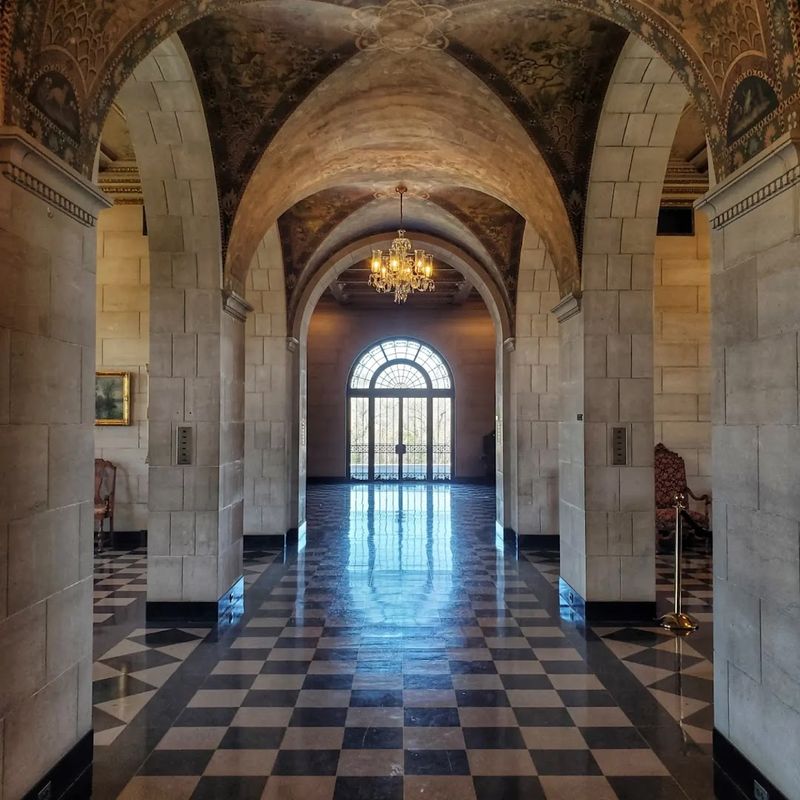
The mansion was designed by architect John Duncan Forsyth in a Renaissance Revival style that draws clear inspiration from the Davanzati Palace in Florence, Italy. Marland was not simply building a big house.
He was constructing a statement about culture, refinement, and ambition in a state that many outsiders still thought of as frontier territory.
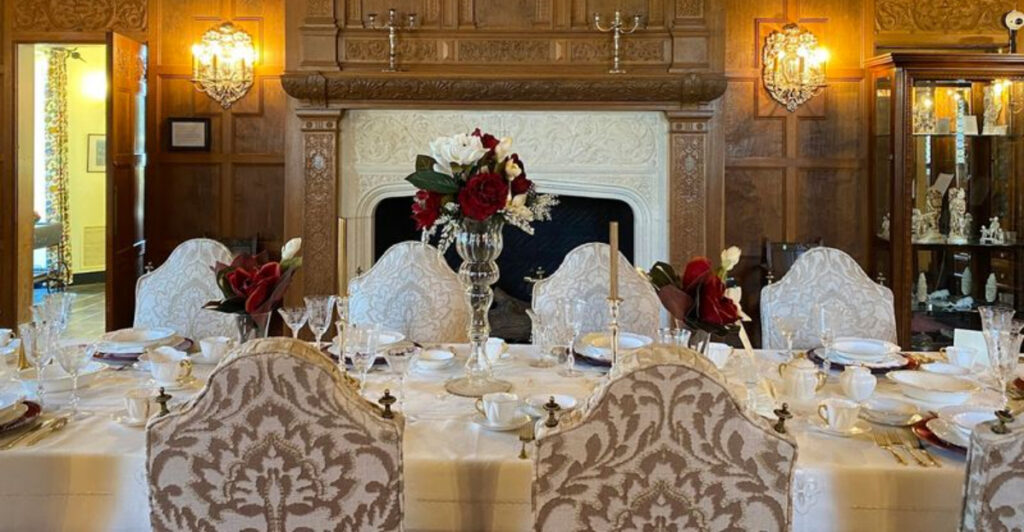
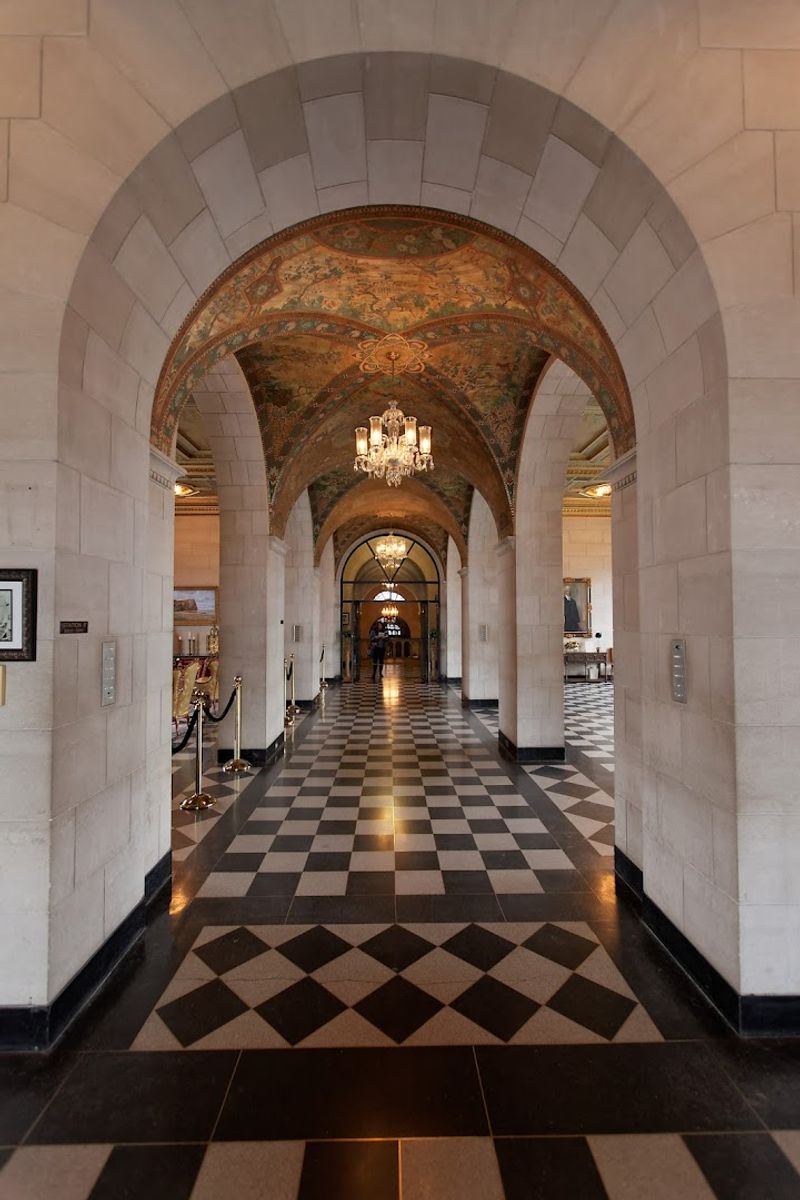
Italian craftsmen were brought to Ponca City specifically to execute the plasterwork, tile installations, and decorative details that required skills not readily available in Oklahoma at the time. The result is a building where every transition between rooms feels intentional, where archways frame views like paintings, and where the ceiling in one room is completely different in character from the ceiling in the next.
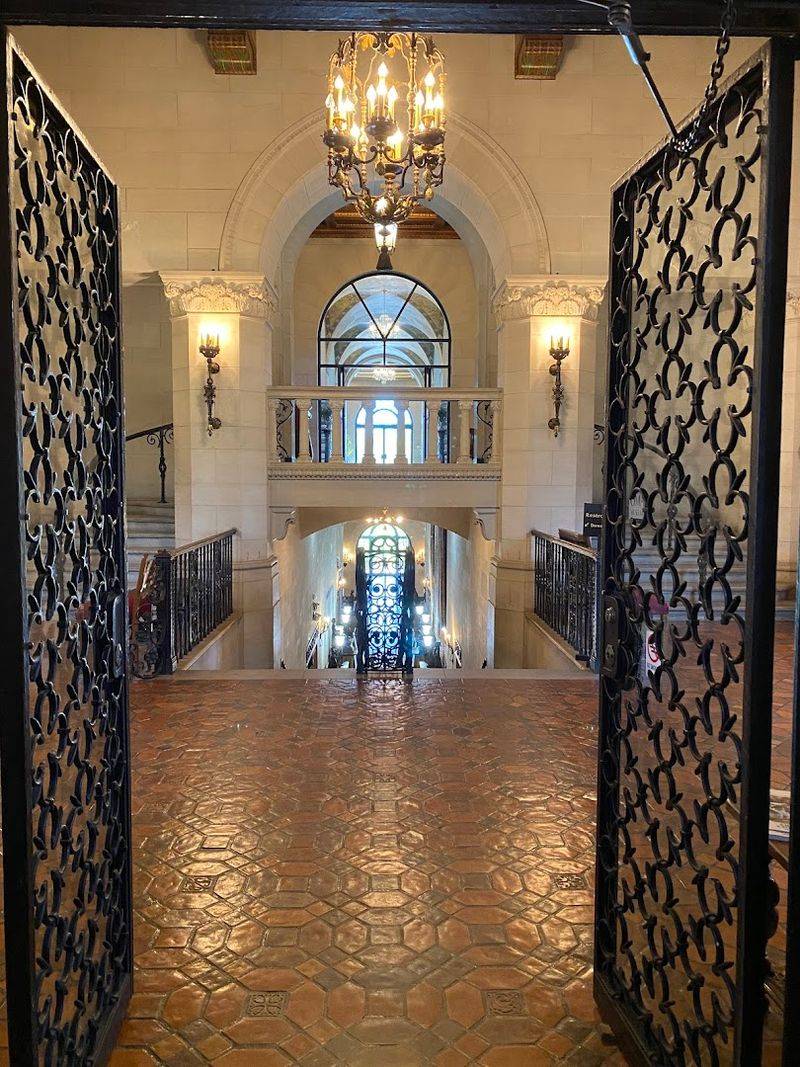
The exterior stonework, the leaded glass windows, and the wrought iron details all contribute to a cohesion that feels rare in American residential architecture of any era. What strikes you most is not any single element but the way all the elements work together, creating an atmosphere of considered elegance rather than simple extravagance.
The building rewards slow looking in a way that few structures can honestly claim.
Technology Hidden in Plain Sight: Innovations Ahead of Their Time
Most people touring the mansion for the first time are focused on the art and the architecture, which means the building’s technical achievements tend to sneak up on them. The Marland Mansion was one of the first private residences in Oklahoma to feature a working elevator, central air conditioning, and a sophisticated heating system, all installed in the late 1920s when such amenities were essentially unheard of in residential construction.
The elevator still exists within the mansion and remains a point of genuine fascination for visitors. The air conditioning system was engineered specifically for the building, a custom solution at a time when even commercial buildings rarely had climate control of any kind.
The heating infrastructure ran through the walls in ways that the tour guides explain with visible enthusiasm, because the engineering is genuinely clever.
There is also an intercom system and a built-in vacuum system that were considered cutting-edge at the time of construction. These are not decorative flourishes.
They are evidence that Marland thought of his home as a living, functioning environment rather than simply a showpiece. That practical intelligence, layered beneath all the beauty, gives the mansion a personality that purely ornamental spaces tend to lack.
Fine Art Everywhere You Turn: The Collection Inside the Walls
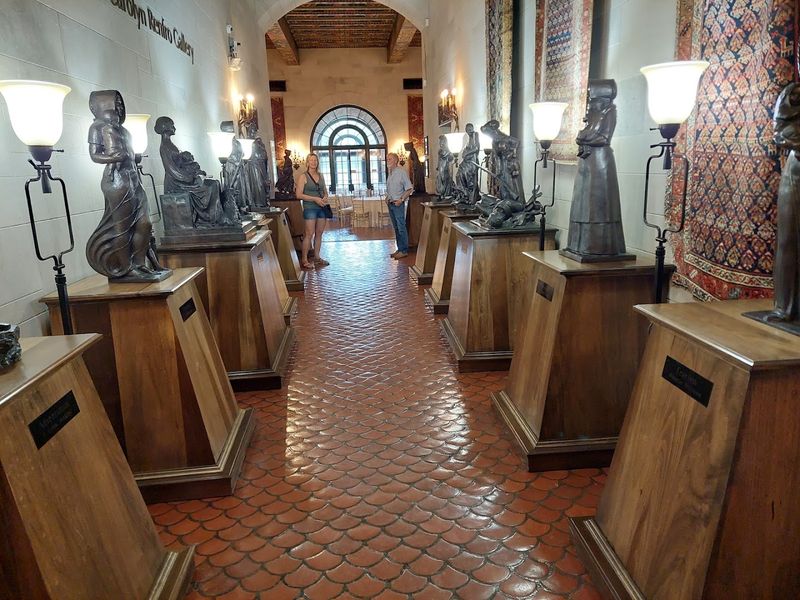
Marland spent heavily on art throughout his life, and the mansion reflects that passion in ways that surprise even visitors who consider themselves art-savvy. The collection spans paintings, sculpture, decorative objects, and architectural embellishments that blur the line between art and building material.
You are essentially walking through a curated gallery that also happens to be someone’s home.
One of the most talked-about pieces is the large portrait of Lydie Marland, E. W.’s second wife and adopted daughter, which hangs prominently in the mansion.
The portrait contains a detail that tour guides love to point out: the artist apparently painted a serpent near Lydie’s feet, a subtle editorial comment embedded in an official family portrait. Whether the Marlands noticed or simply chose not to acknowledge it remains an open question.
Beyond individual pieces, the overall density of artistic detail is what leaves a lasting impression. Carved wood panels, hand-painted ceiling medallions, custom tilework, and imported textiles all compete for your attention in the best possible way.
The art does not feel like decoration applied to a finished space. It feels like the space was built around the art, which, in many cases, is exactly what happened.
The Guided Tour Experience: Why You Should Not Skip It
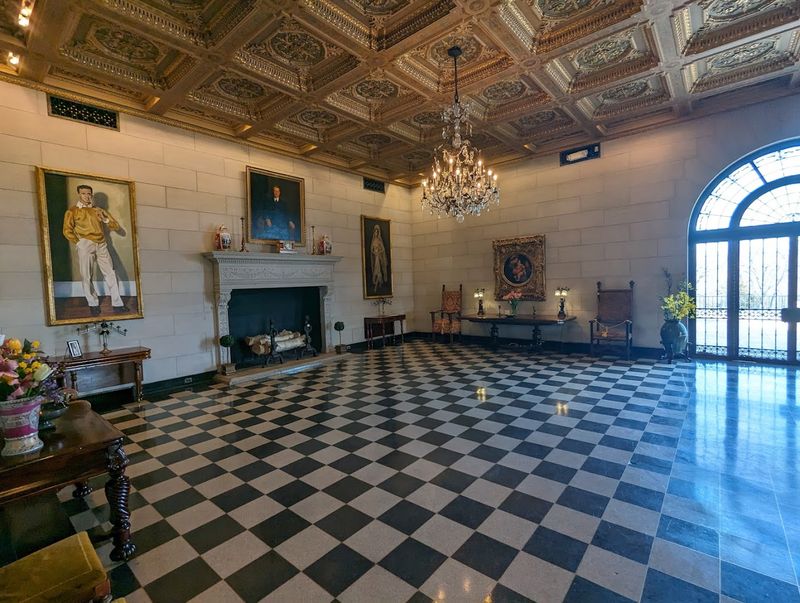
Self-guided tours are available at the mansion, and they cost the same as the guided option, which makes the guided tour one of the clearest value decisions you will make all day. The guides at the Marland Mansion carry a depth of knowledge about the family, the architecture, and the history of Ponca City that transforms a beautiful building into a fully realized story.
Guided tours grant access to additional rooms that are not open during self-guided visits, including the chapel and Lydie Marland’s separate cottage on the grounds. These spaces add significant context to the family’s life and the property’s overall character.
The chapel in particular is a quietly moving space that feels distinct from the grandeur of the main house.
The guides answer questions with genuine engagement rather than scripted deflection, and they share stories that are not printed on any placard. The tour typically runs about two to two and a half hours, which sounds long but consistently feels short to people who arrive with even a passing curiosity about the place.
Plan your visit on a weekday if possible, as the mansion occasionally closes on weekends for private events like weddings, and the website does not always reflect those closures in real time.
The Grounds and Gardens: Beauty Beyond the Front Door
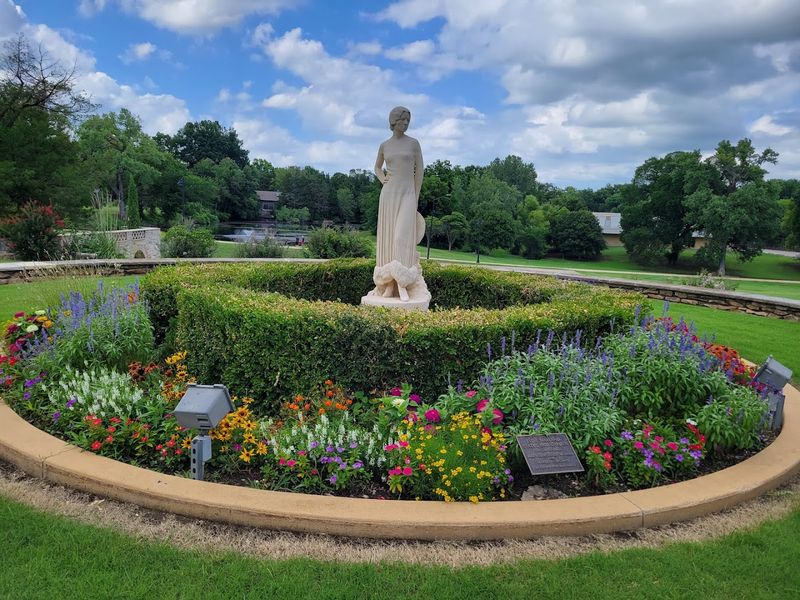
The estate grounds deserve at least as much time as the interior, though most visitors naturally gravitate toward the mansion itself and underestimate what is waiting outside. The property features formal garden areas, stone statuary, reflecting pools, and wide lawns that feel more European estate than Oklahoma prairie, which was absolutely the intended effect.
Ducks wander the grounds with a confidence that suggests they know they live somewhere special. The statuary placed throughout the property includes pieces that Marland commissioned specifically for the estate, and they are positioned to create visual moments as you move from one area to another.
The grounds also include the remnants of what was once a grand swimming pool, which has not been restored to its original state but remains an evocative presence.
The separate cottage where Lydie lived for a period is accessible during guided tours and adds a quieter, more personal dimension to the visit. The chapel, a small but beautifully crafted structure on the grounds, is another highlight that many visitors cite as unexpectedly moving.
On a clear day, the combination of architecture, sculpture, water, and open sky creates a setting that photographs well from almost any angle, though the real experience is one that a camera can only partially capture.
The Petroleum Hall of Fame: Oil History in the Basement
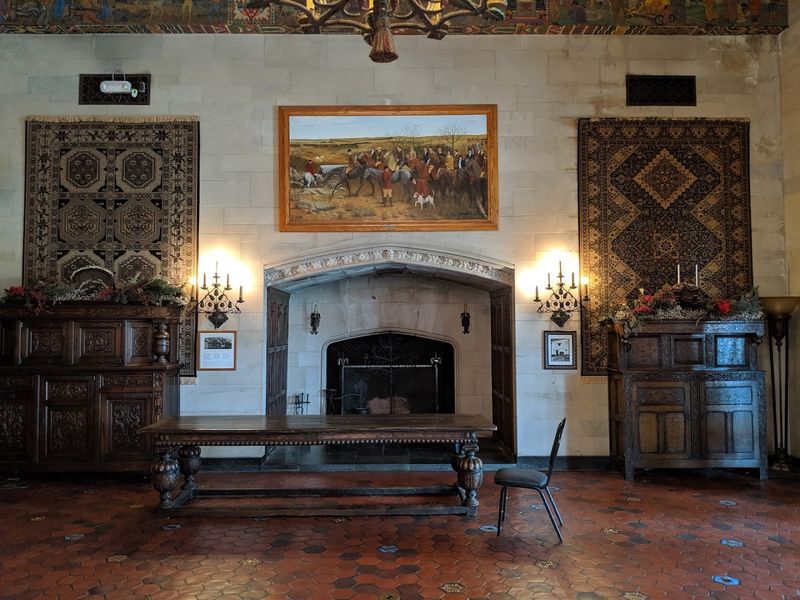
The basement level of the mansion houses the Petroleum Hall of Fame, which is either a fascinating bonus or the main event depending on your particular interests. The exhibit honors the men and women who shaped the American oil industry during its most consequential decades, and the connection to Marland himself makes the location feel entirely appropriate.
The displays include photographs, biographical information, and artifacts related to the early Oklahoma oil boom, a period that transformed not just the state but the entire national economy. Marland’s own story sits at the center of this history, and seeing his name among the inductees while standing in the basement of the empire he built carries a certain weight that the exhibit text alone cannot fully convey.
Some visitors walk through quickly, treating it as a preamble to the mansion floors above. Others spend considerable time reading through the individual profiles, finding connections to their own family histories or professional backgrounds.
The Hall of Fame is free with mansion admission, and the staff on the basement level are typically happy to provide additional context about specific inductees or the broader history of Oklahoma’s oil industry. It is a more substantive experience than its location might initially suggest.
The Complicated Love Story at the Heart of the Estate
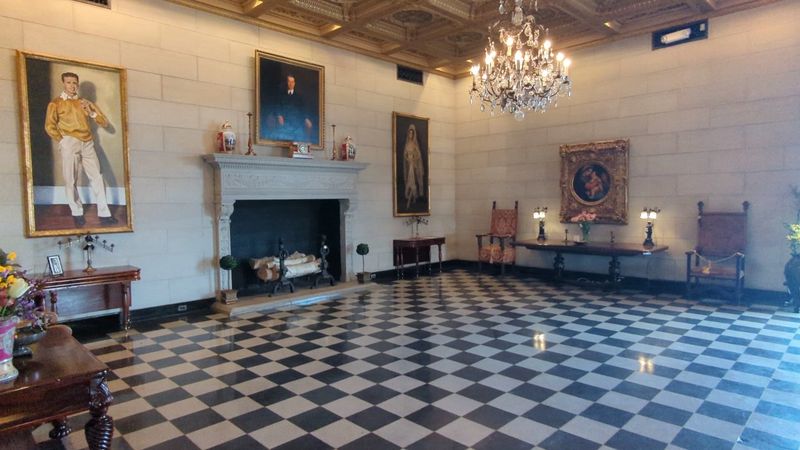
The Marland family story is not a simple one, and the guides do not pretend otherwise. E.
W. Marland adopted two children, Virginia and George Roberts, after their parents passed away.
He later married Lydie, his adopted daughter, in 1928, a decision that scandalized much of the country at the time and remains one of the most discussed aspects of the family’s history.
Lydie had previously been engaged to George, the other adopted child, before that relationship ended. The web of relationships within the Marland household was complicated in ways that no amount of marble or gilded plasterwork could smooth over.
Tour guides navigate this history with care, presenting the facts and allowing visitors to form their own conclusions.
What makes the story particularly affecting is that Lydie outlived E. W. by many decades, and her presence in the mansion’s history is felt throughout the property.
Her portrait, her cottage, and the spaces designed specifically for her create a sense of a real person rather than a historical footnote. The emotional texture of the family’s story gives the mansion a depth that purely architectural landmarks rarely achieve, turning a tour into something closer to a genuine human narrative.
Practical Tips for Planning Your Visit
The mansion is open Monday through Saturday from 10 AM to 5 PM, with the last self-guided tour beginning at 3:30 PM. It is closed on Sundays.
The address is 901 Monument Road, Ponca City, Oklahoma 74604, and the phone number is 580-767-0420. The website, marlandmansion.com, has current information about admission prices and special events.
Admission runs approximately 10 dollars per adult, with reduced rates for children and seniors. Ponca City residents get in free, which is a genuinely nice community gesture.
The mansion occasionally closes for private events, most often weddings, and these closures are not always reflected on the website or social media pages. Calling ahead before making a long drive is a practical precaution worth taking.
Plan for at least two hours if you take the guided tour, which is the strongly recommended option. Comfortable shoes matter more than you might expect, because the tour covers multiple floors and the full grounds.
Summer visits can be warm inside the mansion since the current cooling system relies partly on fans rather than modern air conditioning. A morning arrival on a weekday tends to offer the most relaxed experience, with smaller crowds and more time to linger in the rooms that earn it.
The Mansion as a Wedding and Event Venue
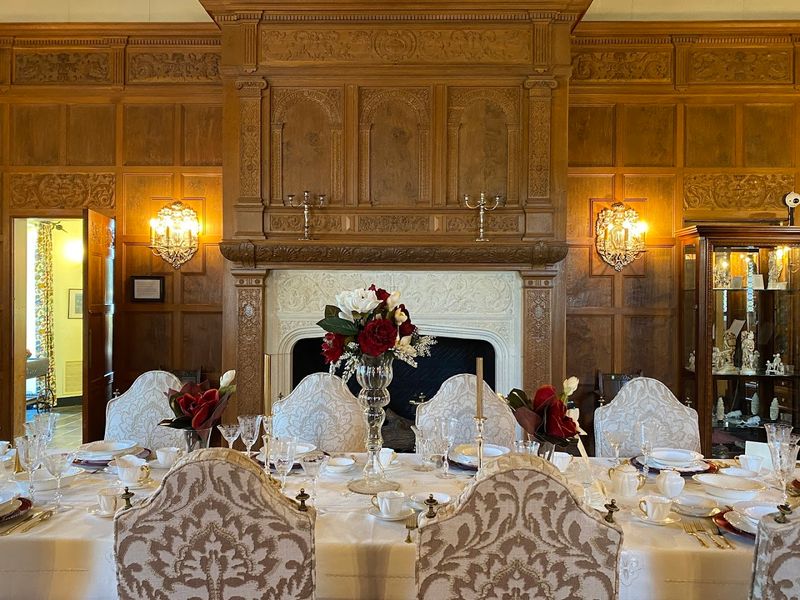
The Marland Mansion has become one of the most sought-after wedding venues in the region, and it is not hard to understand why. The combination of Renaissance Revival architecture, formal gardens, the chapel, and multiple grand interior spaces creates a backdrop that requires almost no additional decoration to feel extraordinary.
Couples book the property well in advance, and the events staff, led by coordinators who know the space with genuine intimacy, handle logistics with the kind of attentiveness that turns a stressful planning process into something manageable. The chapel on the grounds is particularly popular for ceremonies, offering a sense of history and craftsmanship that purpose-built event venues rarely replicate.
The mansion’s versatility as an event space extends beyond weddings to corporate gatherings, photography sessions, and seasonal events like the annual Oktoberfest celebration held on the grounds. For photographers specifically, the property offers an almost overwhelming variety of settings within a single location, from grand staircases and gilded rooms to garden paths and stone statuary.
The one practical note for regular visitors is that event bookings do occasionally close the mansion to the public, so confirming your visit date by phone remains the most reliable way to avoid an unnecessary detour.
Why This Place Deserves a Spot on Your Oklahoma Road Trip
Oklahoma has no shortage of roadside surprises, but the Marland Mansion occupies a category largely by itself. A 43,561-square-foot palace filled with Italian craftsmanship, a resident art collection, a hidden elevator, and a family story that reads like a novel is not the kind of thing you stumble across in most mid-sized American cities.
Ponca City sits conveniently along US-77, making it an accessible stop between Oklahoma City to the south and the Kansas border to the north. The drive through north-central Oklahoma has its own quiet appeal, and arriving at the mansion after miles of open prairie creates a contrast that amplifies the experience considerably.
The 4.8-star rating across nearly 800 reviews is not an accident. It reflects a place that consistently delivers more than visitors expect, where the staff genuinely care about the property’s history, and where the combination of architecture, art, family drama, and Oklahoma oil boom history creates something that lingers long after you have driven away.
Whether you are a history enthusiast, an architecture admirer, or simply someone who appreciates a good story told well, the Marland Mansion earns every mile of the trip without reservation.
Share this story