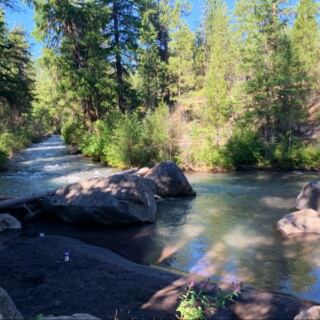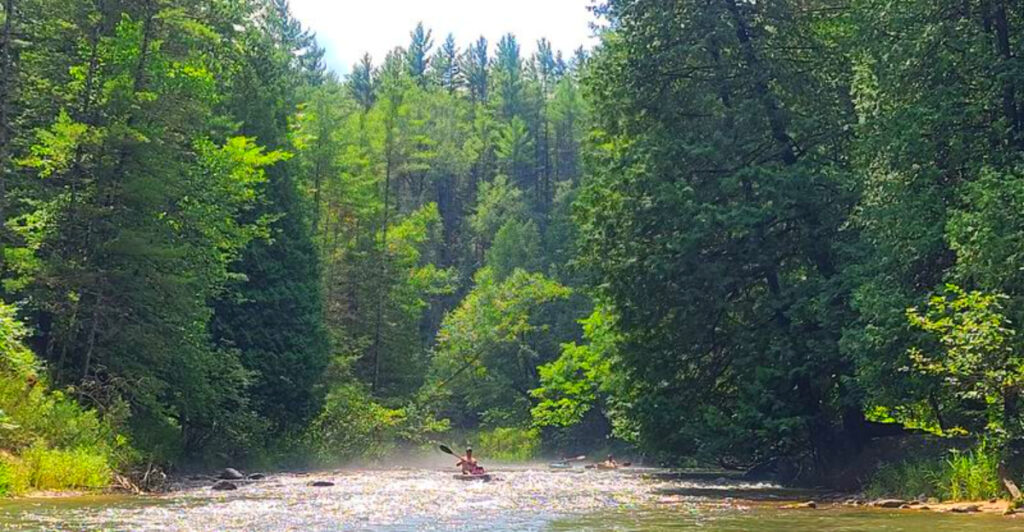
The Pine River has earned a reputation as one of Michigan’s premier paddling destinations, and it takes only a few minutes on the water to understand why. Flowing through the forests of northern Michigan, this National Wild and Scenic River combines fast-moving currents, striking scenery, and a sense of adventure that appeals to both first-time paddlers and experienced river enthusiasts.
Along the way, kayakers and canoeists pass hardwood forests, rolling sand hills, and stretches of undeveloped shoreline that feel remarkably untouched. The river’s lively character sets it apart from many of Michigan’s calmer waterways, creating an experience that is as exciting as it is scenic.
For anyone looking to explore the state’s natural beauty from the water, the Pine River remains one of the most rewarding places to start.
Where the Pine River Begins: Location and Access Points
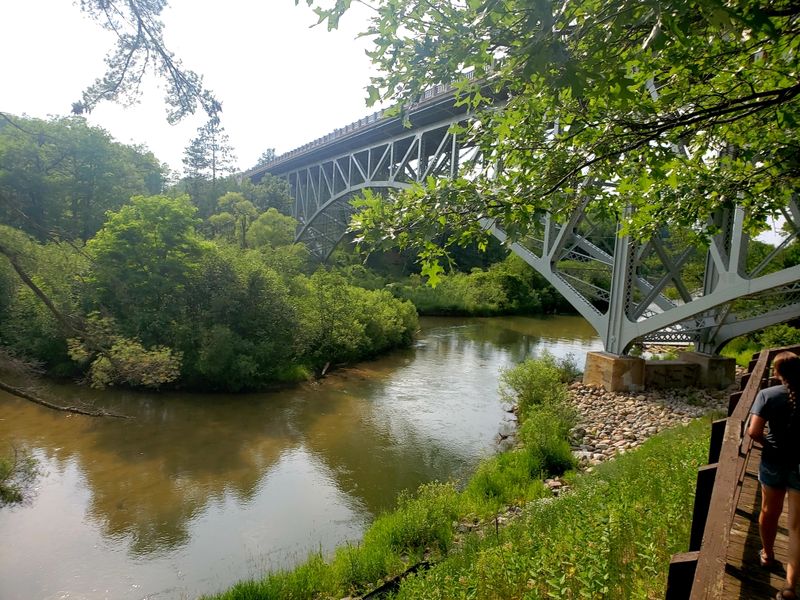
The Pine River flows through Lake County and Wexford County in northern Michigan’s Lower Peninsula, winding for roughly 38 miles through the heart of the Pere Marquette State Forest. Despite feeling wonderfully remote, it is surprisingly easy to access, which is one reason the river remains a favorite destination for paddlers year after year.
Most visitors begin their trip at Peterson Bridge near Wellston, one of the river’s most popular launch sites. From there, the Pine quickly delivers the scenery and fast-moving water that have made it famous.
Many paddlers finish at Low Bridge several miles downstream, creating a manageable route that combines exciting current, beautiful forest views, and plenty of opportunities to stop and explore.
Both access points offer parking and are serviced by local outfitters that provide rentals and shuttle transportation. That means even first-time visitors can enjoy the river without worrying about complicated logistics.
The combination of easy access and wild surroundings gives the Pine River a rare balance: it feels like a true wilderness adventure without requiring expert-level planning.
Before launching, paddlers should check current river conditions and obtain any required permits. Water levels can change throughout the season, affecting both the speed of the current and the overall difficulty of the trip.
The River’s Personality: Fast, Winding, and Always Surprising
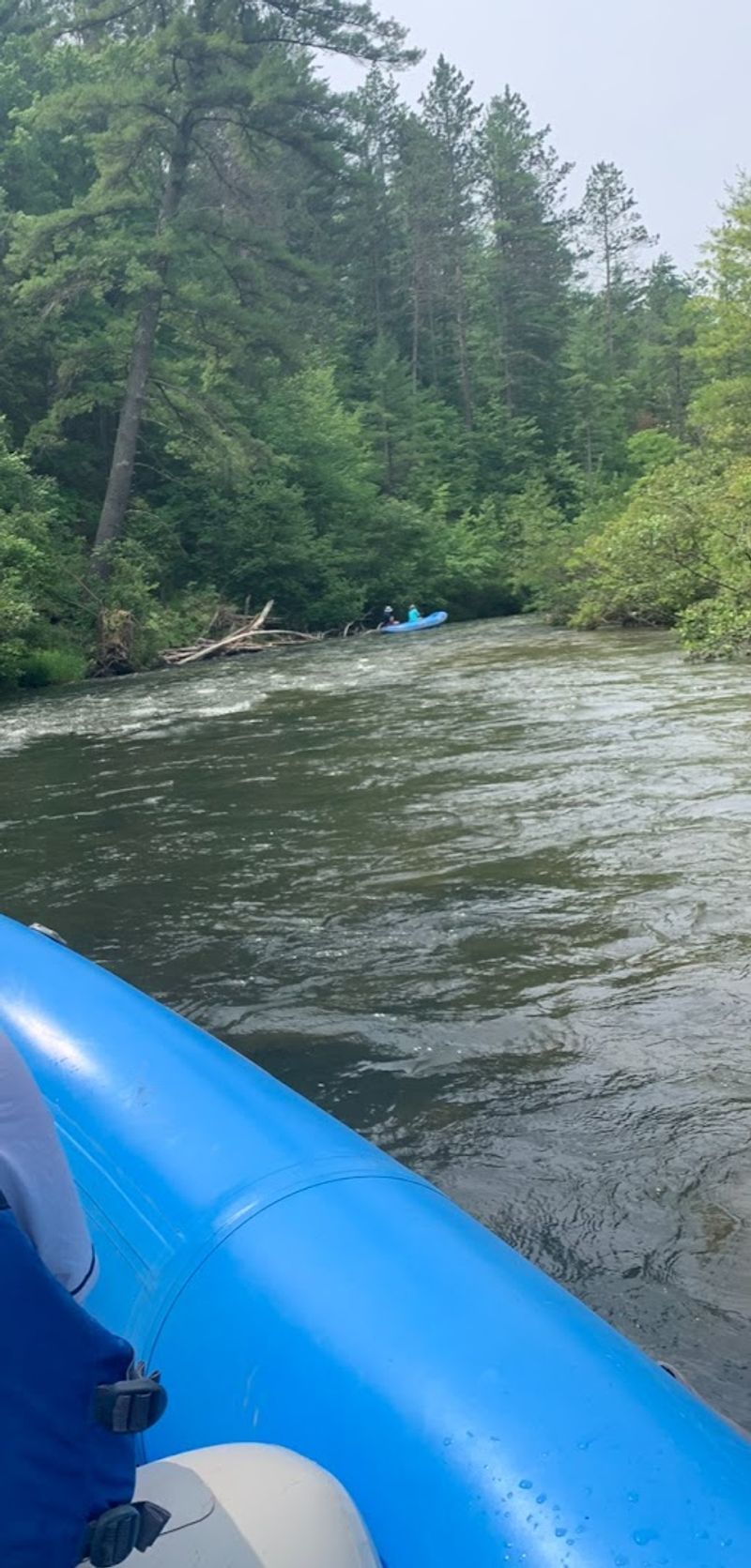
The Pine River flows through Lake County and Wexford County in the Lower Peninsula of Michigan, and it is one of the most accessible wild rivers in the state for paddlers of all experience levels. Despite its remote feel, getting on the water is surprisingly straightforward.
The river runs through the Pere Marquette State Forest, which helps preserve its undeveloped shoreline and natural character. Tall trees line both sides of the river in many stretches, creating a shaded corridor that feels far removed from highways and towns.
The most popular put-in point is at Peterson Bridge, located near Wellston, Michigan, in Lake County. Many paddlers finish their trip at Low Bridge, which sits a few miles downstream and offers parking, restrooms, and a convenient takeout spot.
The stretch between Peterson Bridge and Low Bridge is widely considered the classic Pine River experience. It delivers a mix of fast current, scenic beauty, and manageable distance that works well for half-day adventures.
Parking at both Peterson Bridge and Low Bridge costs around five dollars per day, and paddlers are required to purchase a DNR river access permit, which runs about ten dollars for two people. The entry fee is a small price for what awaits on the water.
Outfitters near Wellston can shuttle your group to the put-in and pick you up at the takeout, making the logistics surprisingly simple. For many visitors, that ease of access is part of what turns a first-time trip into a yearly tradition.
The Water Clarity That Stops Paddlers Mid-Stroke
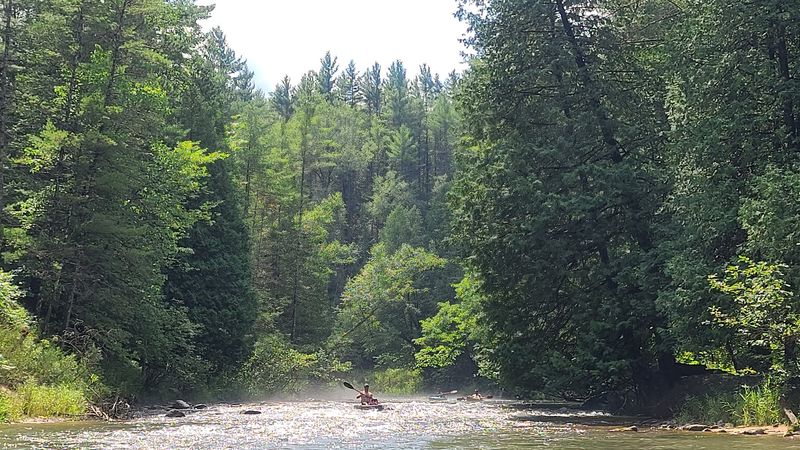
One of the first things you notice when your kayak glides over the Pine River is how shockingly clear the water is. The riverbed is visible in most sections, covered in clean gravel, sand, and smooth stones that catch the light in ways that make the water look almost tropical.
The temperature is another story entirely. Even in July, the Pine River runs cold, fed by groundwater and shaded by a thick forest canopy.
Water shoes are a smart choice if you plan to wade or portage any sections, because the cold hits fast.
That coldness is part of what keeps the water so clean and the trout population so healthy. Brown trout and rainbow trout are abundant throughout the river, and watching them dart beneath your hull in that crystal water is one of those small moments that sticks with you long after the trip ends.
More Than Just Trees
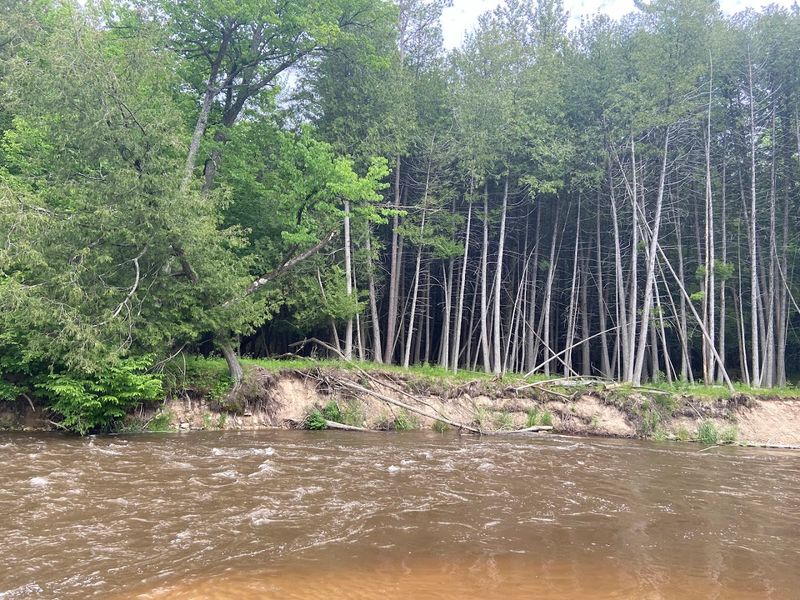
The Pine River corridor is a wildlife corridor in every sense of the phrase. The dense forest on both banks creates habitat for a surprising variety of animals, and paddlers who move quietly have a real chance of spotting some remarkable creatures.
Great blue herons are practically a guarantee. They stand in the shallows like statues, then lift off with that slow, prehistoric wingbeat just as your bow gets too close.
White-tailed deer appear regularly along the banks, especially in the early morning and late afternoon hours.
Otters, turtles, kingfishers, and bald eagles have all been spotted by paddlers on the Pine. The river also holds healthy populations of brown and rainbow trout, which you can watch holding in the current below your kayak.
Bringing a pair of polarized sunglasses makes spotting fish through the water surface significantly easier and more enjoyable.
The Sand Dune Along the River: A Climb Worth Every Step
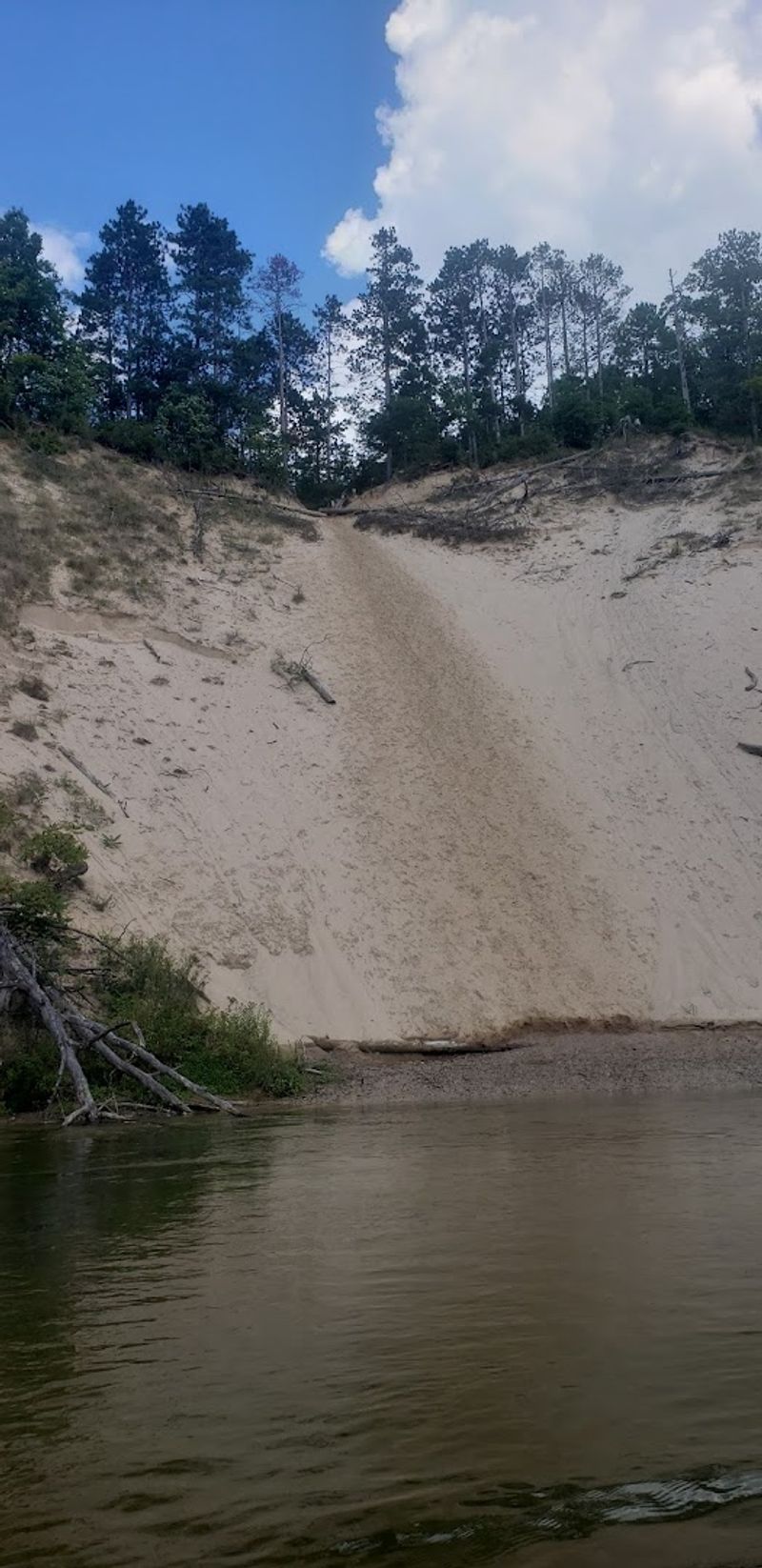
Midway through a typical paddle on the Pine River, you will come across one of the more unexpected features of the trip: a large sand dune rising steeply from the riverbank. Most paddlers pull over and climb it, and almost all of them are glad they did.
The dune reaches roughly 200 feet above the river, according to aerial measurements taken by paddlers who have flown drones over the area. The climb is short but steep, and the reward at the top is a panoramic view of the forest canopy, the river cutting below, and miles of undisturbed northern Michigan wilderness.
It is one of those views that makes you feel genuinely small in the best possible way. Bring water for the climb, wear shoes with grip, and give yourself at least 20 minutes to soak in the view before heading back down to your kayak.
How Long Does the Trip Take? Planning Your Paddle Time
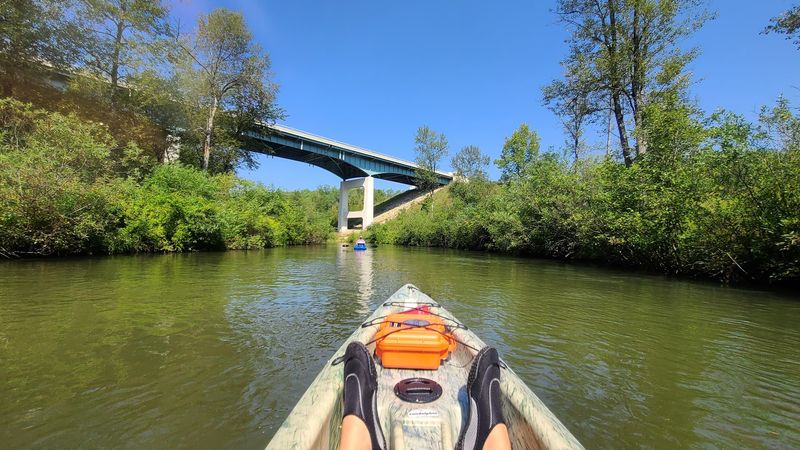
A standard paddle from Peterson Bridge to Low Bridge covers a stretch of river that takes most groups about three hours to complete without stopping. That estimate assumes a steady pace and does not account for wildlife watching, dune climbing, or just floating in a calm pool and staring at the sky.
Realistically, most groups take four to five hours when they factor in all the things worth stopping for. There are camping spots along the riverbank for paddlers who want to split the trip into two days, which is a popular option for groups who want to slow down and really absorb the experience.
The river runs at different speeds depending on recent rainfall and the time of year, so spring trips tend to move faster than summer ones. Always check current conditions with a local outfitter before heading out, especially if your group includes less experienced paddlers.
Outfitters and Rentals: Getting on the Water Without the Hassle
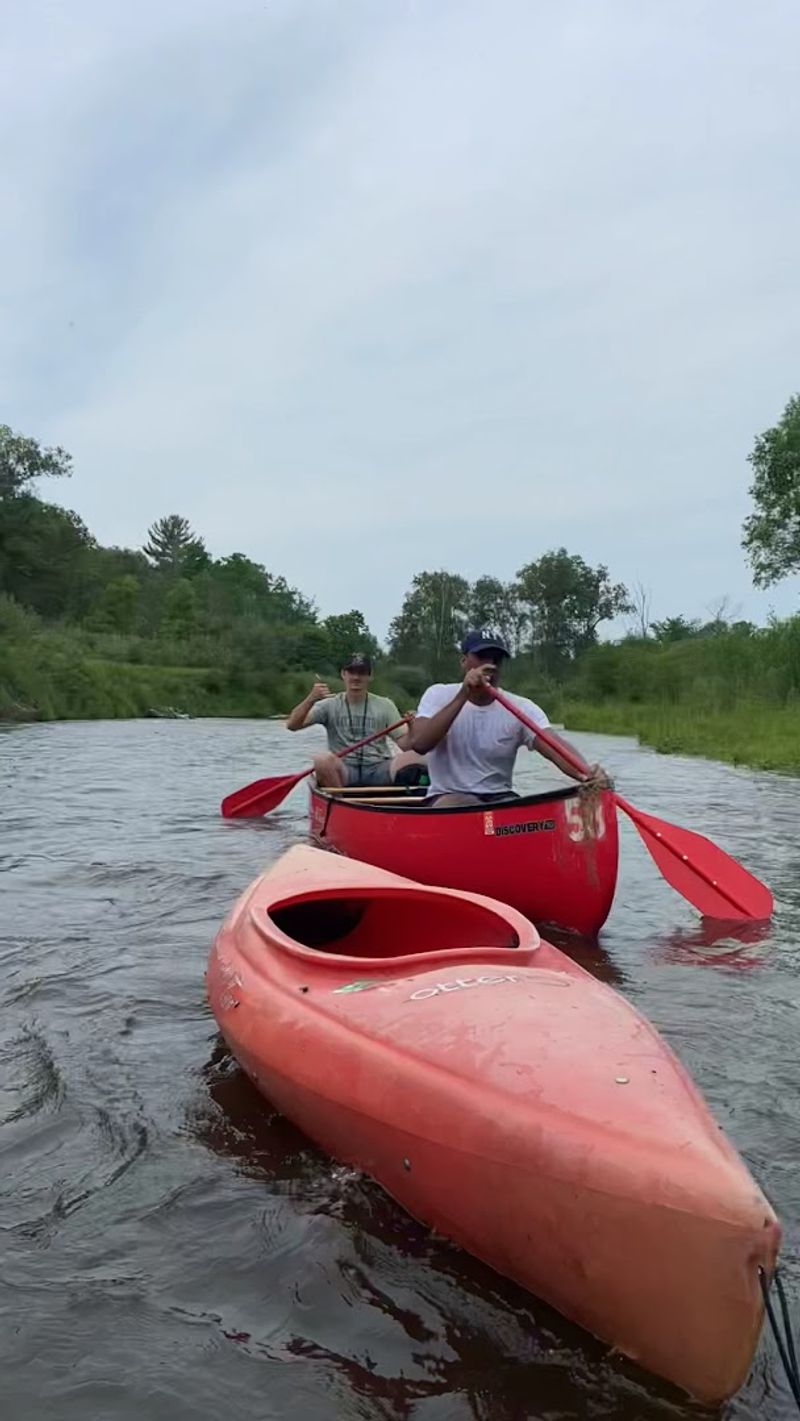
Not everyone shows up to the Pine River with a kayak strapped to the roof of their car, and that is perfectly fine. Several outfitters near Wellston and the surrounding area offer canoe and kayak rentals, shuttle services, and guided trips that take most of the logistical stress out of the day.
Rental outfitters typically drop paddlers off at the upstream put-in and pick them up at the downstream takeout, which means you never have to worry about shuttling vehicles between launch points. Equipment is provided, and staff can give you a quick orientation on the river conditions and what to expect along the route.
Booking ahead is strongly recommended, especially on summer weekends when demand spikes. A few outfitters also offer camping packages that bundle river access with overnight spots along the banks.
Calling ahead to confirm availability and current permit requirements will save you a headache on arrival day.
Best Time of Year to Paddle the Pine River
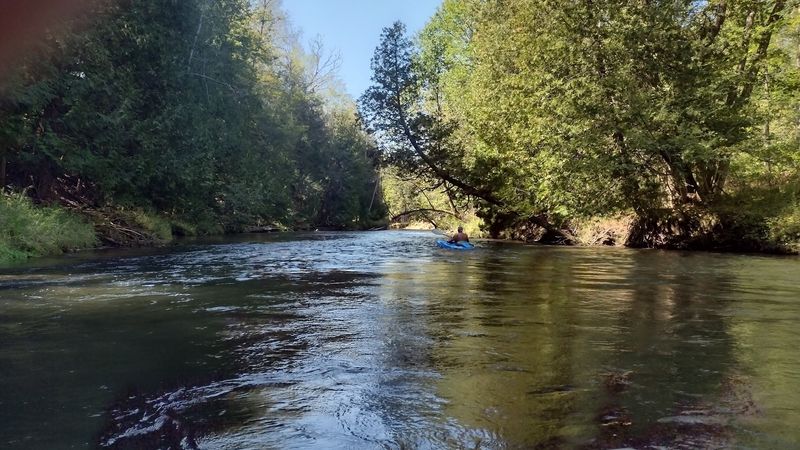
Spring is the most thrilling time to paddle the Pine River, full stop. Snowmelt and spring rains push the water levels up and the current moves with real energy, turning the already lively river into something that demands your full focus and rewards it generously.
Summer is the most popular season, and for good reason. Water levels are more predictable, the forest is in full green bloom, and the warm air makes the cold water feel refreshing rather than punishing.
Weekends in July and August fill up fast, so weekday trips offer a noticeably quieter experience.
Fall is arguably the most beautiful time on the river, even if fewer people know it. The hardwood forest along the banks turns gold, red, and orange in late September and October, and the reduced crowds make it feel like a private showing of Michigan at its most stunning.
The paddling season typically runs from May through October.
Safety on the Pine: What Every Paddler Should Know
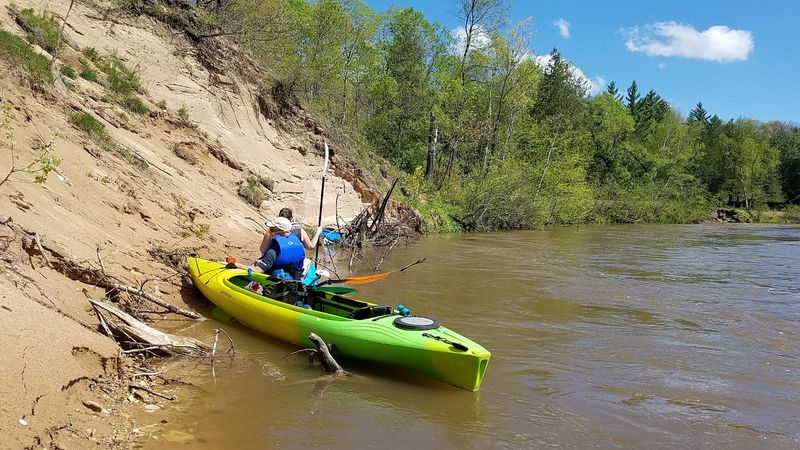
The Pine River is beautiful, but it is not a river that forgives carelessness. The current in certain sections moves fast enough to flip a canoe or kayak if a paddler misjudges a turn, and strainers (submerged logs and branches that block the current) appear without much warning.
Wearing a personal flotation device is non-negotiable on the Pine River. The rapids and tight bends create conditions where even strong swimmers can find themselves in trouble quickly.
Every person in your group should have a properly fitted PFD on before the boat hits the water.
Helmets are worth considering for less experienced paddlers, especially in spring when water levels are higher. Keeping your gear secured inside dry bags protects your valuables from splashes and unexpected swims.
The river rewards paddlers who come prepared and punishes those who treat it casually, so take the safety briefing from your outfitter seriously.
Camping Along the Pine River: Sleeping Under the Stars
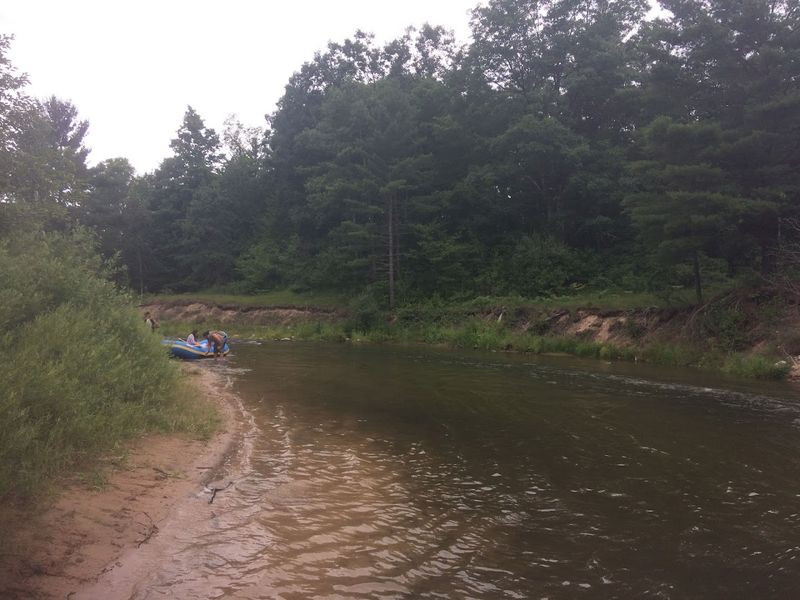
One of the Pine River’s best-kept secrets is how well it works as a multi-day paddling and camping destination. Designated campsites sit along the riverbanks at intervals that work well for a two-day trip, and waking up next to the sound of moving water is a genuinely hard thing to beat.
The Canoe Country Campground near Wellston is one of the most convenient base camps for Pine River paddlers, offering direct river access and basic amenities. The Pere Marquette State Forest, which surrounds much of the river corridor, also provides dispersed camping options for paddlers who want a more backcountry feel.
Campfires are a staple of the overnight Pine River experience, and the night sky in this part of Michigan is remarkably dark and clear, away from major city light pollution. Packing light, keeping food secured, and leaving your campsite cleaner than you found it keeps this corridor beautiful for the next group coming through.
Share this story