There is a place in northern Michigan where the trees grow so tall and so old that standing among them feels like being inside a natural monument built over centuries. The trunks rise straight and thick, their canopy closing overhead like a vaulted ceiling, and the forest floor stays hushed no matter how many people wander through.
Ancient white pines here have been standing since before the American Revolution, and a few of them have quietly watched more than 360 years of seasons come and go. This is not your average roadside nature trail.
The park holds one of the last old-growth pine forests in the entire state of Michigan, and it comes with a logging museum, lakeside trails, a woodland chapel, and campsites that put you to sleep under a roof of stars filtered through pine needles. Keep reading, because this place is worth every mile of the drive.
Finding the Park: Address, Location, and What to Expect at the Gate
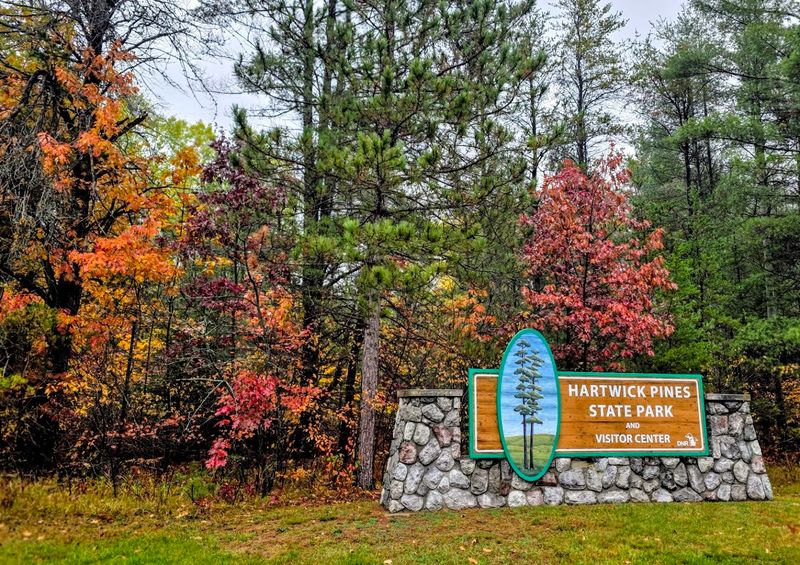
Hartwick Pines State Park sits at 3612 State Park Dr, Grayling, MI 49738, right in the heart of northern Michigan’s lower peninsula. The park is easy to reach from I-75, which makes it a natural stopping point for road trippers heading north.
The park is open daily from 8 AM to 10 PM, and the phone number for the main office is 989-348-7068. A Recreation Passport is required to enter, which is the standard Michigan DNR vehicle permit.
The entry process is straightforward, and staff are known for being friendly and helpful to first-time visitors. The park covers roughly 9,672 acres in total, making it one of the largest state parks in Michigan’s lower peninsula.
Plan to spend at least a half day here, though a full day gives you enough time to see everything without rushing.
The Old-Growth Forest Trail: Walking Among Trees That Predate the Nation
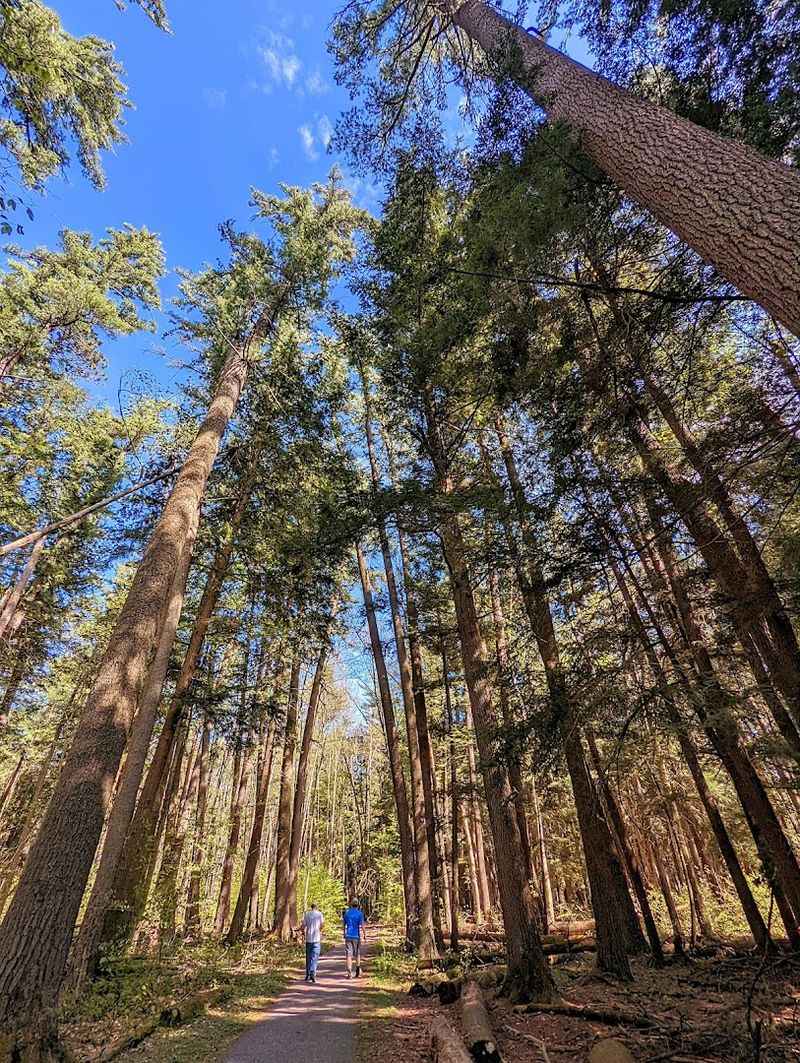
The crown jewel of the park is its 49-acre old-growth forest, preserved almost entirely by accident when a land purchase in the 1920s saved it from the logging industry that cleared nearly every other pine stand in Michigan.
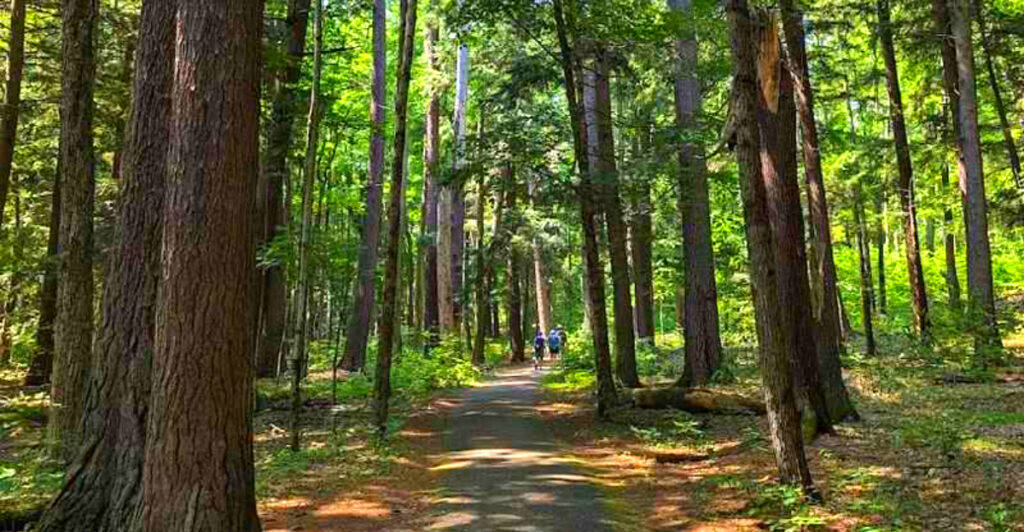
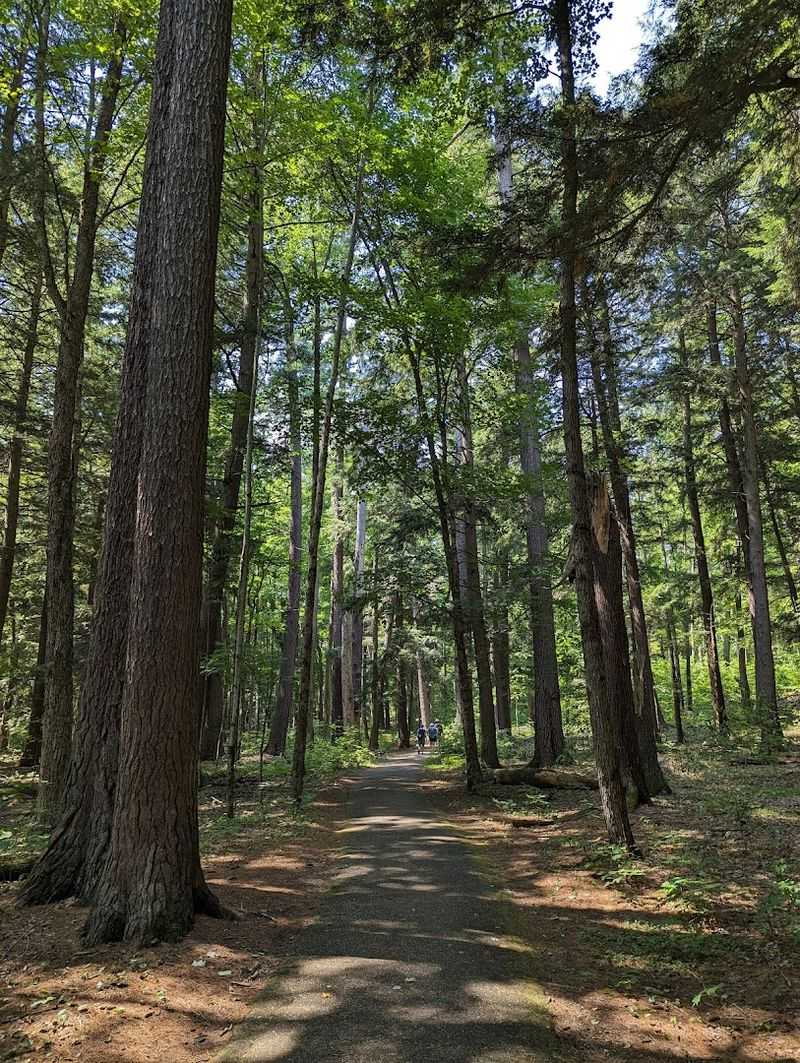
The Old Growth Forest Trail is a 1.25-mile paved loop that winds directly through this ancient woodland. Some of the white pines here are over 360 years old, and the canopy stretches more than 100 feet overhead in places.
Even on a hot summer afternoon, the shade under those trees is deep and cool.
The paved surface makes this trail accessible to wheelchairs and strollers, which is a thoughtful touch that opens the experience to visitors of all ages and abilities. Honestly, no camera does full justice to the scale of these trees.
You just have to stand next to one and let the size sink in.
The Logging Museum: Michigan’s Timber History Told Through Tools and Timber
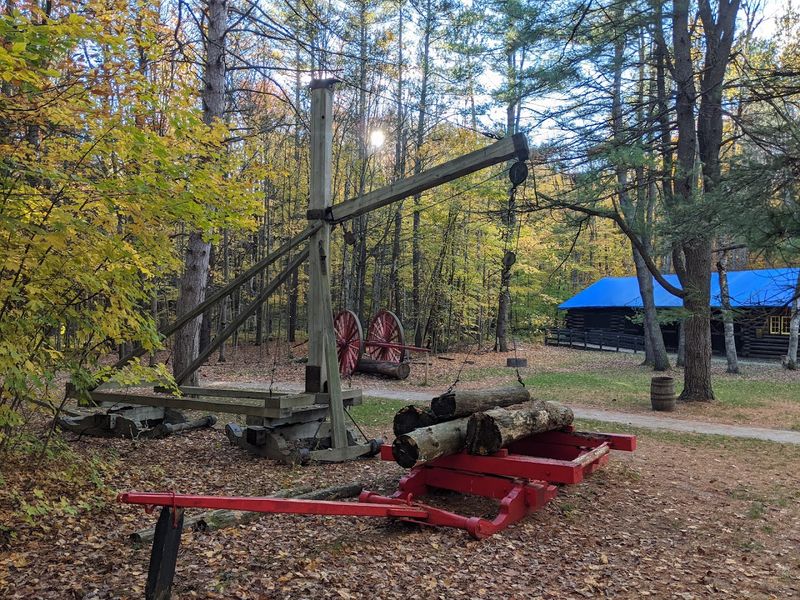
Before the old-growth forest was saved, Michigan’s logging industry was one of the most aggressive in American history, and the park’s logging museum tells that story with real depth and honesty.
The museum is housed in the Michigan Forest Visitor Center and features authentic tools, reconstructed logging camp buildings, and exhibits that trace the rise and fall of the white pine timber trade in the 19th century. A steam-powered sawmill on the grounds occasionally runs during special events, drawing crowds who want to see how raw logs became the lumber that built half of the Midwest.
The visitor center is currently under renovation and is expected to reopen around May 2026, so check ahead before planning your visit around that specific attraction. Even with renovations underway, the outdoor exhibits and the surrounding forest context make the logging history feel immediate and tangible rather than dusty and distant.
The Forest Chapel: A Quiet Wooden Church Hidden Among the Pines
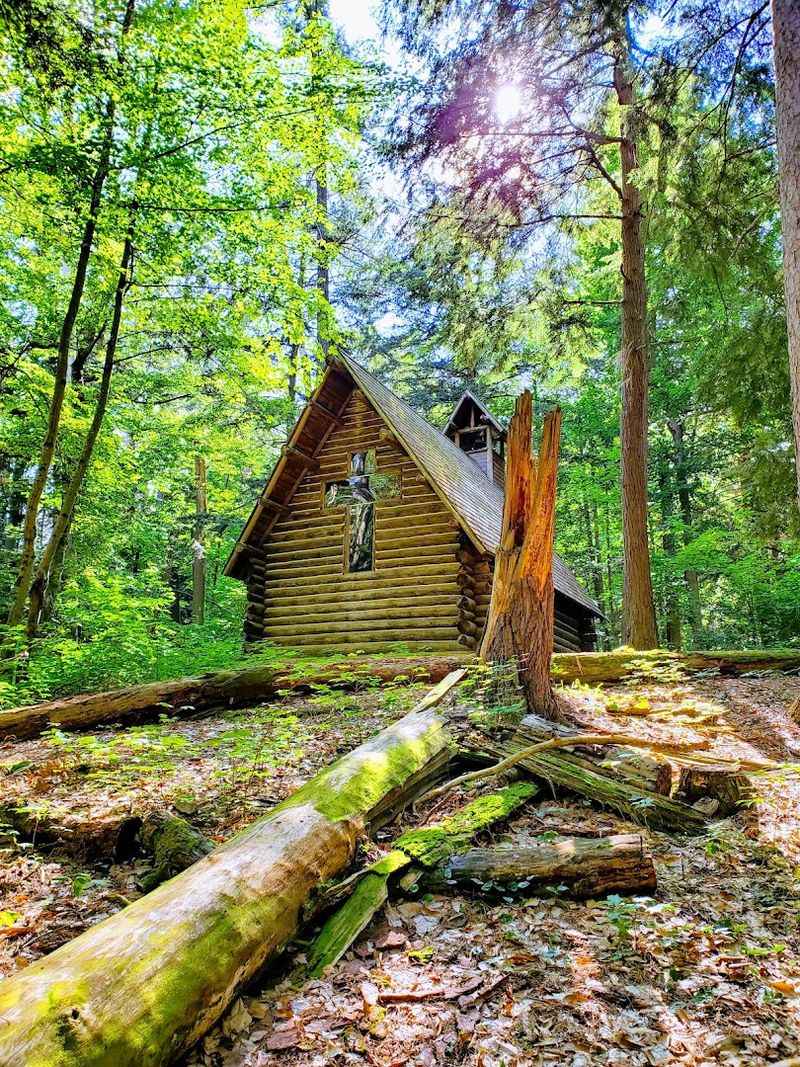
Tucked along the Old Growth Trail is one of the park’s most quietly beloved features: a small log chapel nestled among the pines. It is a simple, non-denominational structure that feels completely at home in the middle of a centuries-old forest.
The chapel was built as a place for reflection, and it delivers on that promise without any fuss. The interior is modest, with wooden pews and plain windows that frame the trees outside.
Visitors often stop here for a few quiet minutes before continuing along the trail.
Weddings have been held in this chapel, and it is easy to understand why. There is something about the combination of old wood, old trees, and filtered green light that makes the space feel genuinely sacred without trying too hard to be.
It is one of those small park details that stays with you long after you have driven home.
Glory Lake and Bright Lake: Two Hidden Gems Along the Campground Trails
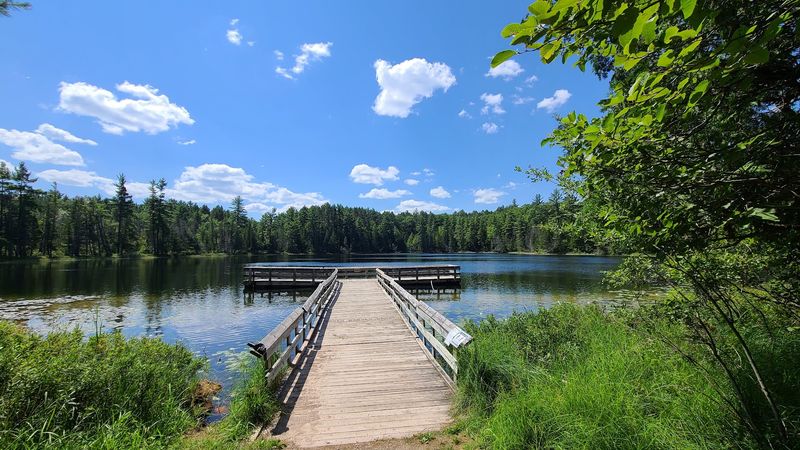
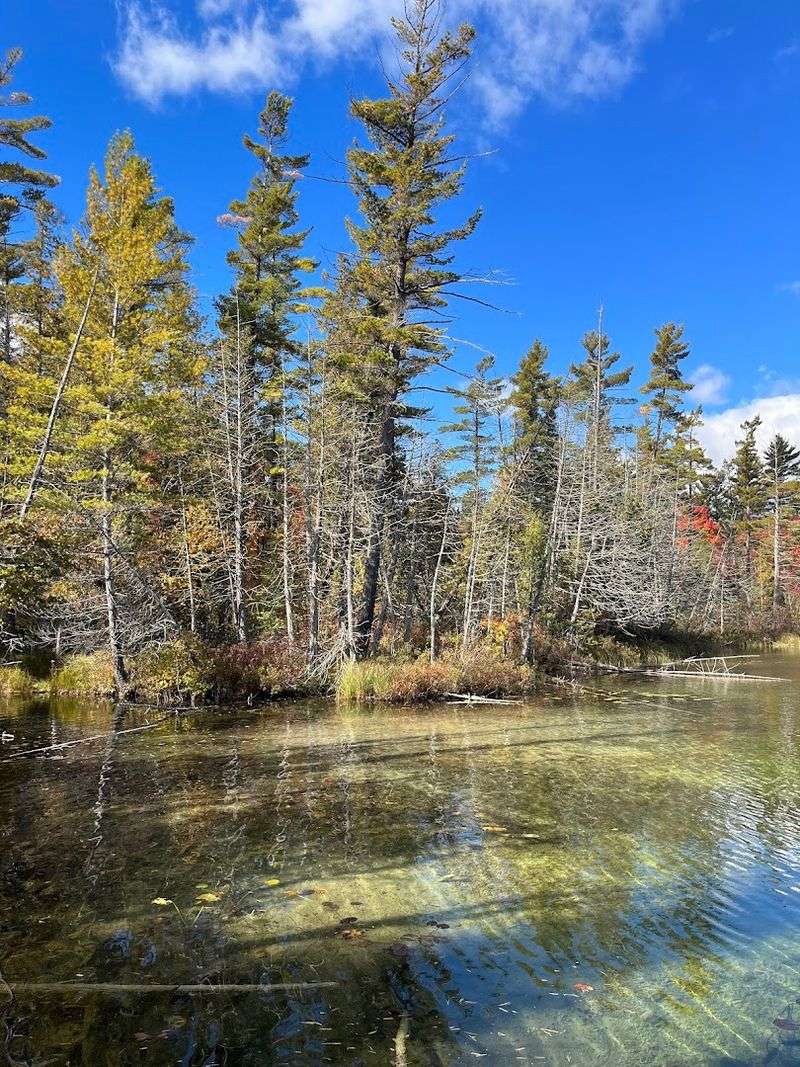
Not everyone who visits Hartwick Pines heads straight for the old-growth trail. The trails that branch out from the campground area lead to two smaller lakes that deserve their own appreciation: Glory Lake and Bright Lake.
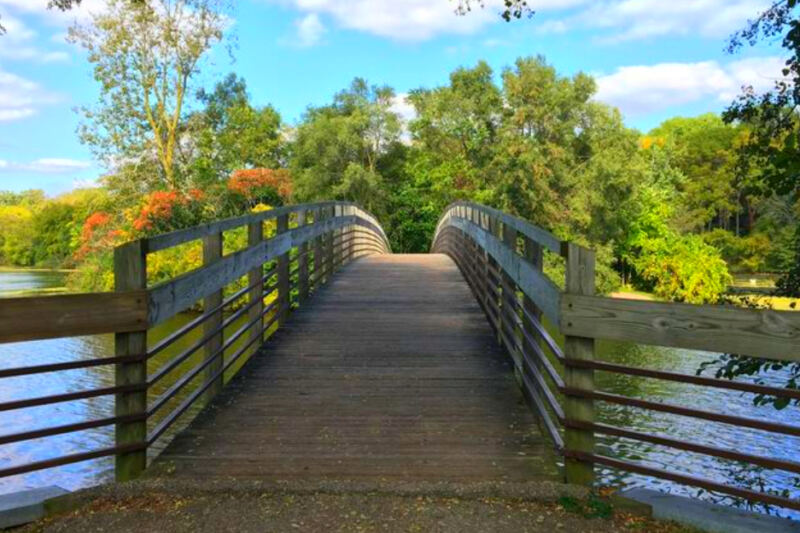
The trail connecting the campground to these lakes winds through a mix of forest types, crossing wooden bridges and raised boardwalks over marshy sections. Anglers use the dock at one of the lakes, and the whole route has a relaxed, exploratory feel that suits families well.
The trail is not paved like the Old Growth Loop, so expect a more natural surface underfoot. It rewards the extra effort with peaceful lakeside views and a sense of genuine solitude that can be harder to find on the main trail.
Early mornings here are particularly still, with mist sitting low over the water and birds working through the trees on either side of the path.
The Au Sable River Foot Trail: Moss, Elevation, and Ancient Pines Along the Water
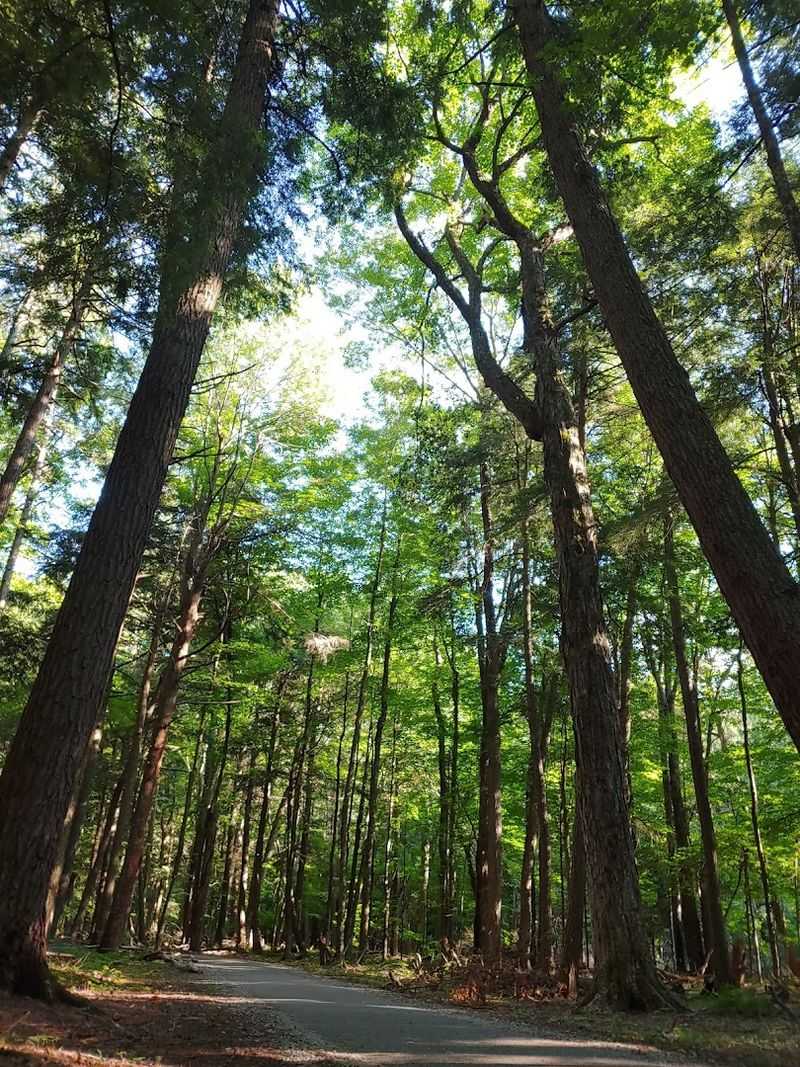
The Au Sable Foot Trail offers a completely different experience from the Old Growth Loop. At roughly three miles in length, it takes about two hours at a comfortable pace and rewards hikers with two crossings of the Au Sable River.
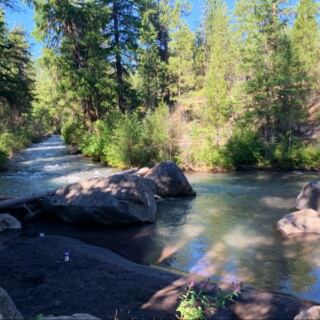
The trail moves through varied terrain, including sections with light elevation changes, thick moss carpeting the ground, and groves of ancient pines that feel worlds away from the main parking area. The river crossings are the highlight for many hikers, with the water running clear and cold beneath the footbridges.
The Au Sable River is legendary among Michigan anglers for its trout fishing, so even a walk along its banks carries a certain quiet prestige. The trail is not the most demanding hike in the state, but it delivers a full forest experience with enough visual variety to hold your attention for every one of those three miles.
Camping at Hartwick Pines: Sleeping Under a Canopy of Trees
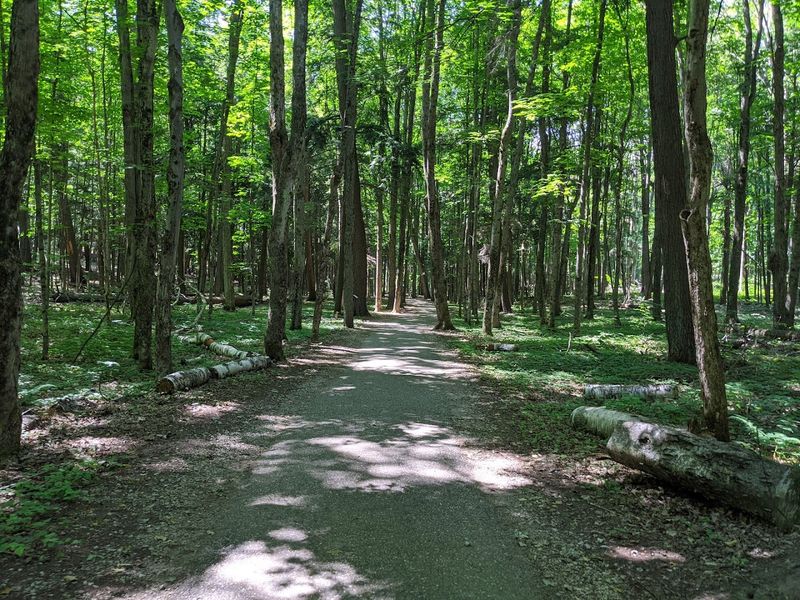
The campground at Hartwick Pines is a genuine highlight for people who want more than a day visit. Sites range from full hookup spots to electric-only sites to more primitive options, giving campers a range of choices depending on how rustic they want to go.
The electric-only sites tend to be the most private, surrounded by trees on multiple sides in a way that makes the full hookup area feel comparatively open. Bathrooms and shower facilities are kept clean, and the campground maintains a quiet atmosphere that is noticeably different from louder, more crowded parks.
A camp host runs a small library shed stocked with books, movies, and kids’ crafts, which is one of those small thoughtful touches that elevates a campground from functional to genuinely enjoyable. Fall camping here is especially popular, when the aspens and maples surrounding the pines add bursts of gold and orange to an already impressive landscape.
Year-Round Access: Snowshoeing and Cross-Country Skiing Through Ancient Pines
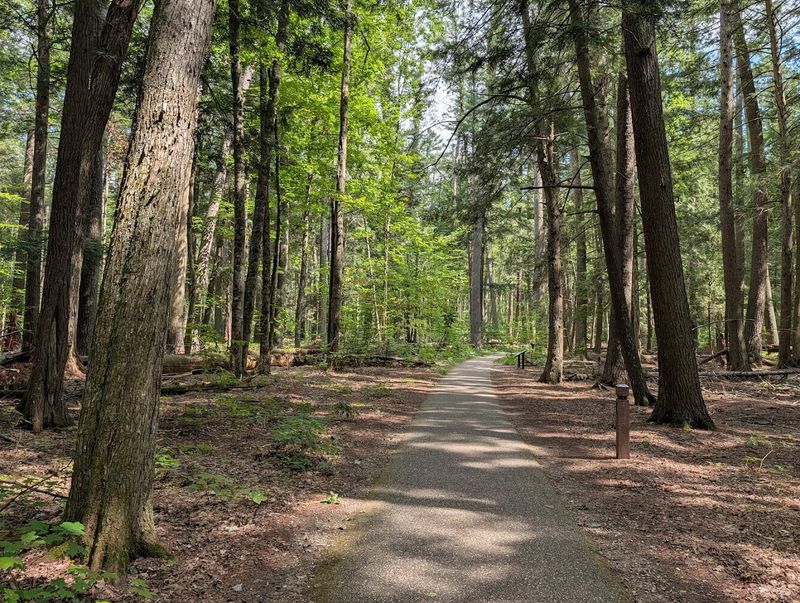
Hartwick Pines does not shut down when the snow arrives. The paved Old Growth Trail stays open for snowshoeing, and the park’s broader trail network becomes a cross-country skiing destination that draws visitors from across the region.
Skiing through an old-growth pine forest in winter is a different experience from the summer version. The bare deciduous trees let more light through, but the pines stay fully dressed in green, and their branches collect snow in thick white layers that occasionally shed in small cascades when the wind picks up.
The winter version of the park tends to be quieter than summer, which suits visitors who prefer their nature undiluted by crowds. One important note: the paved trail can develop icy patches in winter, so traction devices or snowshoes are a smart addition to your gear list if temperatures have been fluctuating.
The park remains open year-round, making it a four-season destination worth returning to repeatedly.
Wildlife and Black Squirrels: The Surprising Creatures You Might Spot
Wildlife watching at Hartwick Pines carries a fun surprise for first-time visitors: black squirrels. These melanistic gray squirrels pop up along the trails and around the campground with enough frequency that spotting one feels like a small reward for paying attention.
Beyond the squirrels, the park’s mix of old-growth forest, younger woodland, and lakeside habitat supports a solid variety of bird species, white-tailed deer, and the usual cast of northern Michigan forest creatures. Birdwatchers will find the forest interior especially productive in the early morning hours.
The old-growth section of the park is particularly rich for wildlife observation because the layered canopy and thick understory create habitat complexity that younger forests simply cannot match. Bringing a pair of binoculars is worth the extra weight in your bag.
The forest rewards patience, and the longer you stay quiet and still, the more activity you notice happening all around you.
The Gift Shop and Visitor Center: Taking a Piece of the Forest Home
Not every park gift shop is worth a second glance, but the one at Hartwick Pines has earned a loyal following. Visitors regularly mention picking up items there as a way of bringing something tangible back from an experience that is otherwise hard to describe to people who have not made the trip.
The shop stocks books about Michigan’s natural history, nature-themed gifts, and park-specific merchandise that you will not find at a generic souvenir stand. It is a good spot to grab something for a friend who could not make the trip.
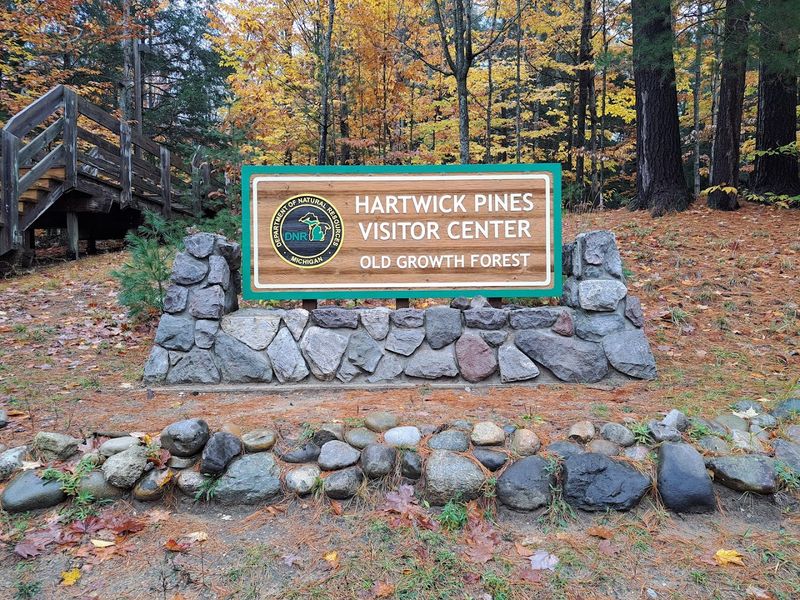
The visitor center attached to the shop is currently undergoing renovation, with completion expected around May 2026. When fully operational, it provides educational context about the old-growth forest, the logging era, and the park’s conservation history.
Even in its current transitional state, the surrounding exhibits and the forest itself do most of the storytelling work without needing a single display panel.
Best Times to Visit: Planning a Trip That Matches the Season
Summer brings the biggest crowds to Hartwick Pines, particularly on weekends when the campground fills quickly. Arriving on a weekday or booking a site well in advance makes the summer experience considerably smoother and more relaxed.
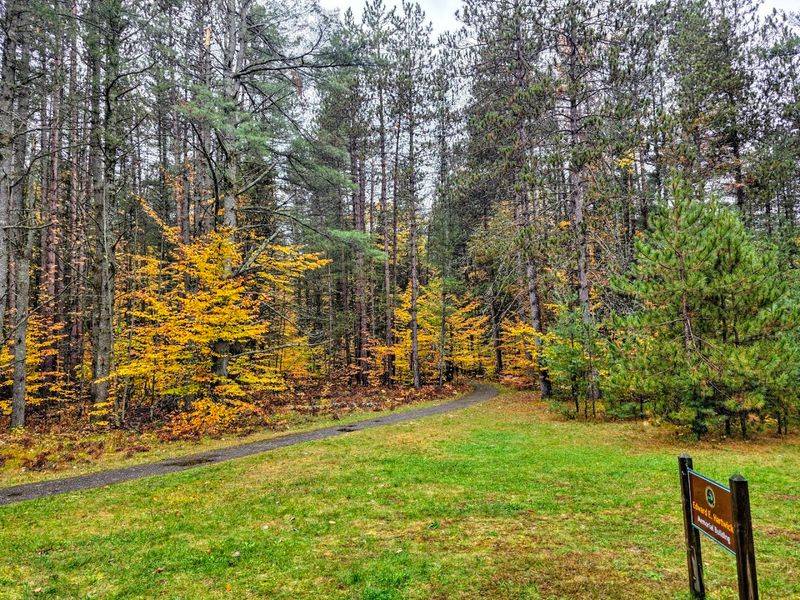
Fall is arguably the most visually dramatic time to visit. The old-growth pines stay green while the surrounding aspens, maples, and birches turn gold and red, creating a striking contrast that photographers chase every October.
The air is crisp, the bugs are gone, and the trails feel genuinely peaceful.
Spring brings its own rewards: the forest floor wakes up with wildflowers, migrating birds move through in waves, and the park has a fresh, just-washed quality after the snowmelt. Winter visits require a bit more preparation but offer a version of the park that most people never see.
Each season here has a distinct personality, and none of them disappoint a visitor who comes prepared.
Why Hartwick Pines Stays With You Long After You Leave
Some parks are pleasant and forgettable. Hartwick Pines is neither.
The combination of genuinely ancient trees, thoughtfully maintained trails, and a campground that respects the natural setting creates an experience that holds up in memory long after the drive home.
The fact that this forest survived at all is remarkable. Nearly every comparable stand of old-growth pine in Michigan was cleared by the late 1800s.
What remains here is not a recreation or a restoration. These are the original trees, still standing, still growing, still doing exactly what they have been doing for three and a half centuries.
That kind of continuity is rare enough in nature, and rarer still in a state that was once almost entirely logged over. A walk through the old-growth section of Hartwick Pines is a quiet reminder that some things, when protected at the right moment, can endure far longer than anyone expects them to.
Share this story