America’s state parks are some of the most jaw-dropping places you’ll ever visit, and the best part is they’re hiding in plain sight. From roaring waterfalls and ancient forests to glowing red deserts and star-filled skies, these parks pack serious natural beauty into every trail and overlook.
Whether you’re a seasoned hiker or just someone who loves a great view, there’s a state park out there ready to blow your mind. Pack your bags and get ready to explore 15 of the most stunning state parks across the country.
Fall Creek Falls State Park — Tennessee
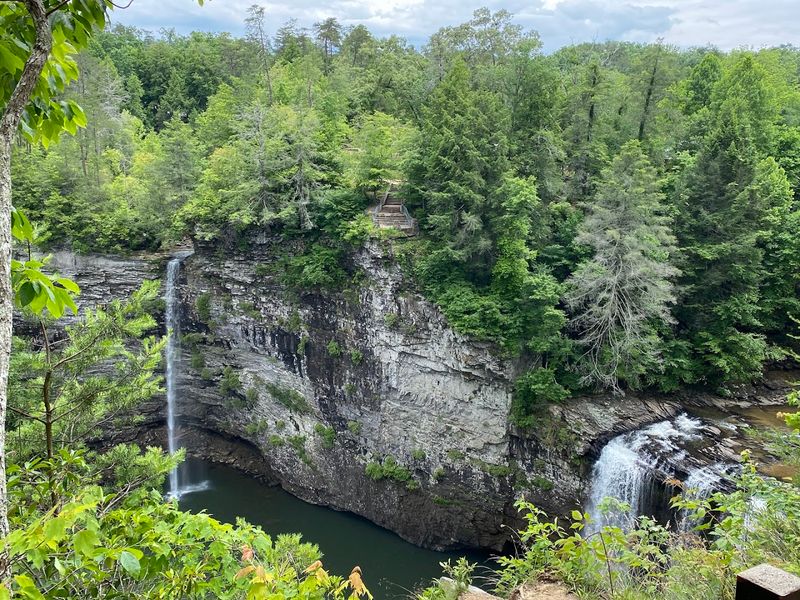
Standing at the edge of Fall Creek Falls, you hear it before you see it — a thunderous roar that grows louder with every step down the trail. At 256 feet, this is one of the tallest waterfalls east of the Mississippi, and it earns every bit of that reputation.
The view from the overlook is the kind that makes you forget to breathe.
Beyond the main falls, the park is packed with surprises. There are multiple gorges, cascading streams and scenic overlooks scattered throughout thousands of acres of lush Tennessee forest.
Zipline tours add a thrilling twist for those who want a bird’s-eye perspective of the hollow below.
Fall Creek Falls is equally stunning in every season. Spring brings rushing water, summer keeps the forest thick and green, autumn sets the hillsides ablaze with color, and winter turns the falls into an icy spectacle.
Camping, fishing and paddleboating on the lake round out the experience perfectly. This is a park that rewards every type of visitor, from thrill-seekers to those who just want a peaceful afternoon by the water.
Letchworth State Park — New York
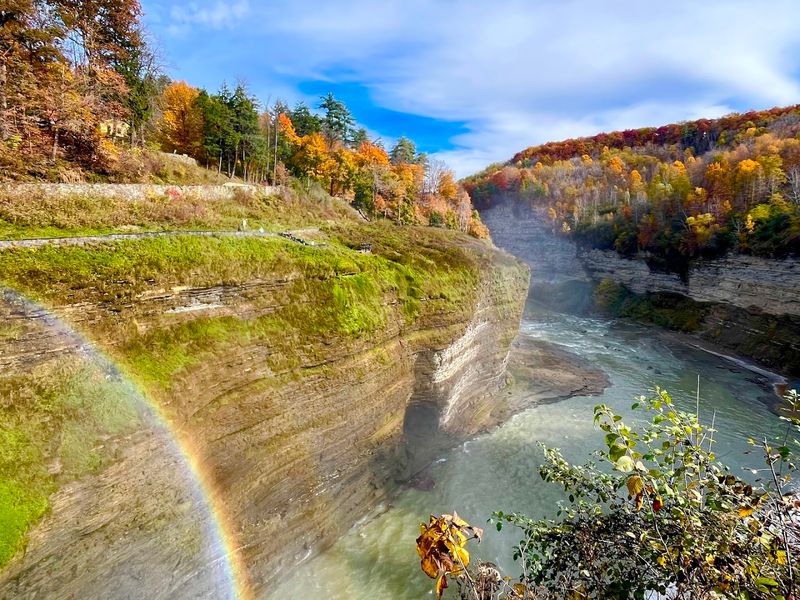
People call it the Grand Canyon of the East, and once you spot that gorge, you’ll understand why. Letchworth State Park stretches nearly 17 miles along the Genesee River, which has carved a dramatic canyon lined with towering cliffs, roaring waterfalls and forests that explode with color every fall.
It’s genuinely one of the most breathtaking landscapes in the entire Northeast.
Three major waterfalls — Middle, Upper and Lower Falls — are the park’s crown jewels, each one worth a stop on its own. The trail network weaves through forests and along cliff edges, offering overlooks that feel almost too cinematic to be real.
Hot air balloon rides above the gorge are a fan favorite and offer a perspective that photos simply cannot capture.
Whether you’re into white-water rafting, horseback riding or a quiet picnic with a view, Letchworth delivers. The park draws visitors year-round, but autumn is especially magical when golden and red leaves frame every waterfall and overlook.
It’s the kind of place that turns a casual weekend trip into a full-on memory you’ll talk about for years.
Watkins Glen State Park — New York
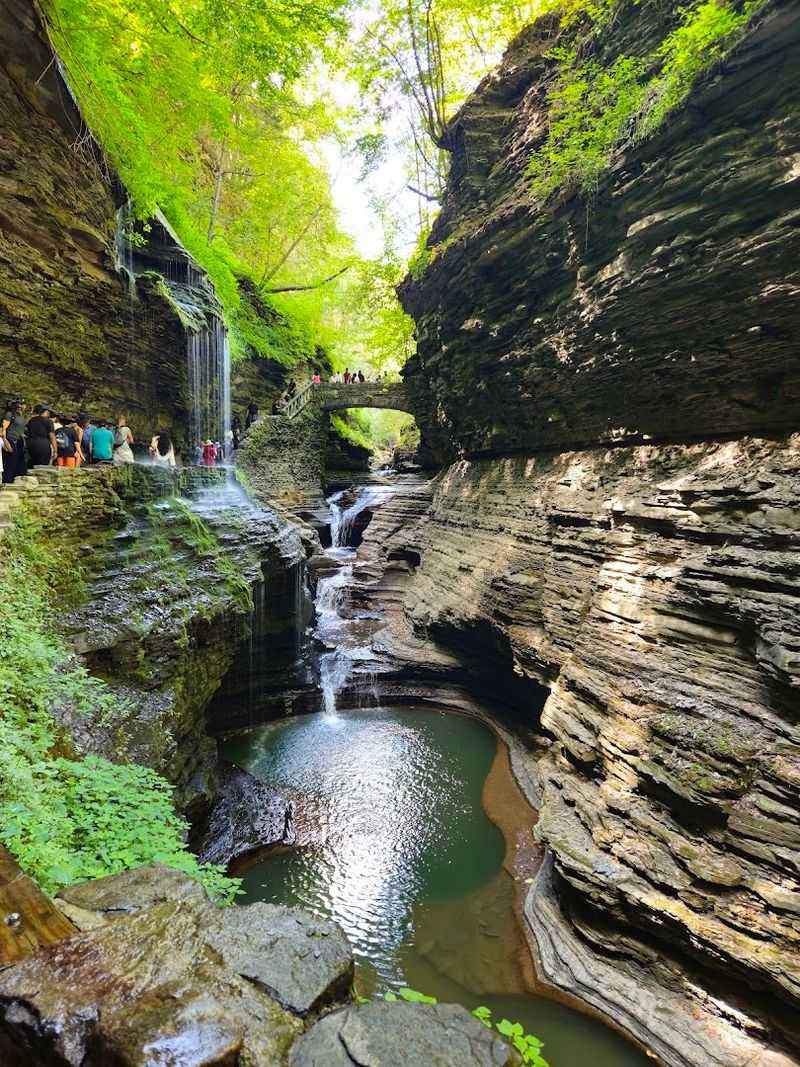
Carved by glaciers and shaped by centuries of flowing water, Watkins Glen is a geological masterpiece hiding in the heart of New York’s Finger Lakes wine country. The gorge trail winds through a narrow canyon past 18 waterfalls in just under two miles — a density of natural beauty that’s almost hard to believe until you’re standing in the middle of it.
Stone bridges and carved pathways hug the canyon walls, built so close to the falls that you’ll feel the mist on your face as you walk. The famous Cavern Cascade lets hikers walk directly behind a waterfall, which is exactly as cool as it sounds.
Photographers absolutely love this place, and it’s easy to see why — every turn reveals a new frame-worthy shot.
The gorge trail is the main event, but the park also has rim trails with elevated views of the whole canyon. The nearby town of Watkins Glen adds a fun bonus with wineries, restaurants and Seneca Lake just steps away.
Plan to arrive early on summer weekends since the park fills up fast. A weekday morning visit offers the gorge nearly to yourself, which feels like a private wonder of the world.
Valley of Fire State Park — Nevada
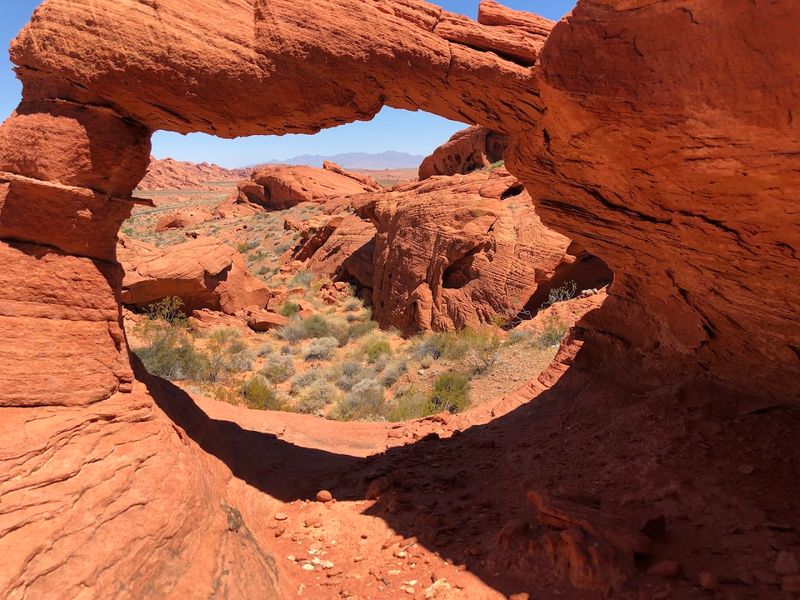
Less than an hour from the neon lights of Las Vegas sits one of the most otherworldly landscapes on the planet. Valley of Fire State Park earns its name at sunrise and sunset, when ancient red sandstone formations ignite with shades of orange, crimson and gold that look almost too vivid to be natural.
Nevada’s oldest state park is a full sensory experience.
The rock formations here are made from Aztec sandstone shaped over 150 million years ago, and scattered throughout them are petroglyphs left by the Anasazi people thousands of years before. Elephant Rock, Arch Rock and the famous Fire Wave are just a few of the sculptural wonders waiting around every bend.
Short hikes connect most of the highlights, making the park accessible even for casual visitors.
Sunrise and sunset are the golden hours here — literally. The rocks glow with an intensity that makes everything look like it’s on fire, and the contrast against a deep blue Nevada sky is stunning.
Summer temperatures soar, so early morning visits are strongly recommended. Bring plenty of water, wear sunscreen and take your time.
Valley of Fire rewards the curious and patient with views that feel straight out of another planet.
Silver Falls State Park — Oregon
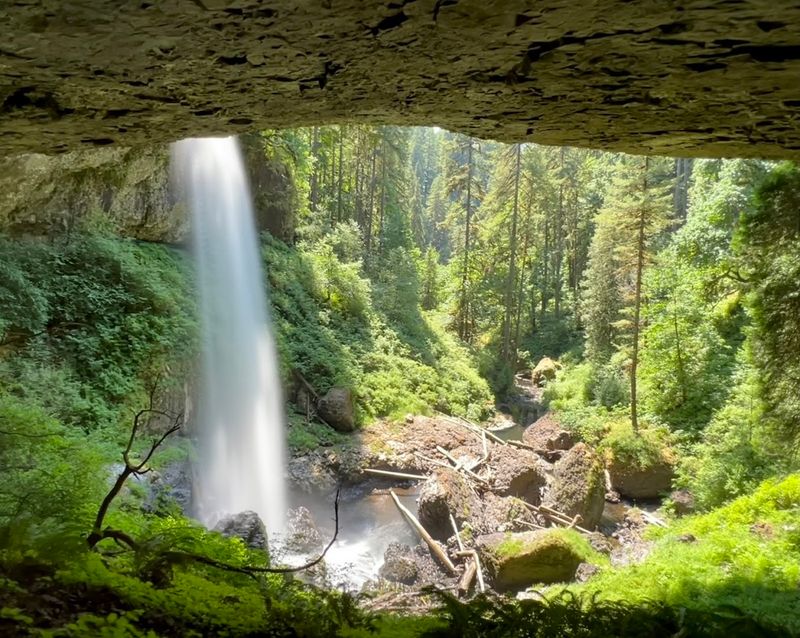
Imagine walking behind a waterfall. Now imagine doing it ten times in one hike.
That’s exactly what Silver Falls State Park in Oregon offers on its legendary Trail of Ten Falls, a loop trail that passes behind multiple cascades and through some of the most lush, green forest you’ll ever set foot in. It’s one of those hikes that feels genuinely magical.
South Falls is the showstopper at 177 feet tall, but every waterfall along the trail has its own personality — some wide and thundering, others narrow and elegant. The trail weaves through old-growth Douglas fir and bigleaf maple trees, and in autumn, the golden leaves add another layer of beauty to an already spectacular scene.
Birdsong, rushing water and cool forest air make the whole experience deeply refreshing.
The park covers over 9,000 acres and includes camping, picnic areas and a historic lodge built in the 1930s by the Civilian Conservation Corps. It’s a popular spot, so weekday visits tend to be quieter and more peaceful.
Waterproof shoes are a smart call since trail sections near the falls can get slippery. Silver Falls is Oregon’s most visited state park for good reason — it earns that title on every single trail.
Starved Rock State Park — Illinois
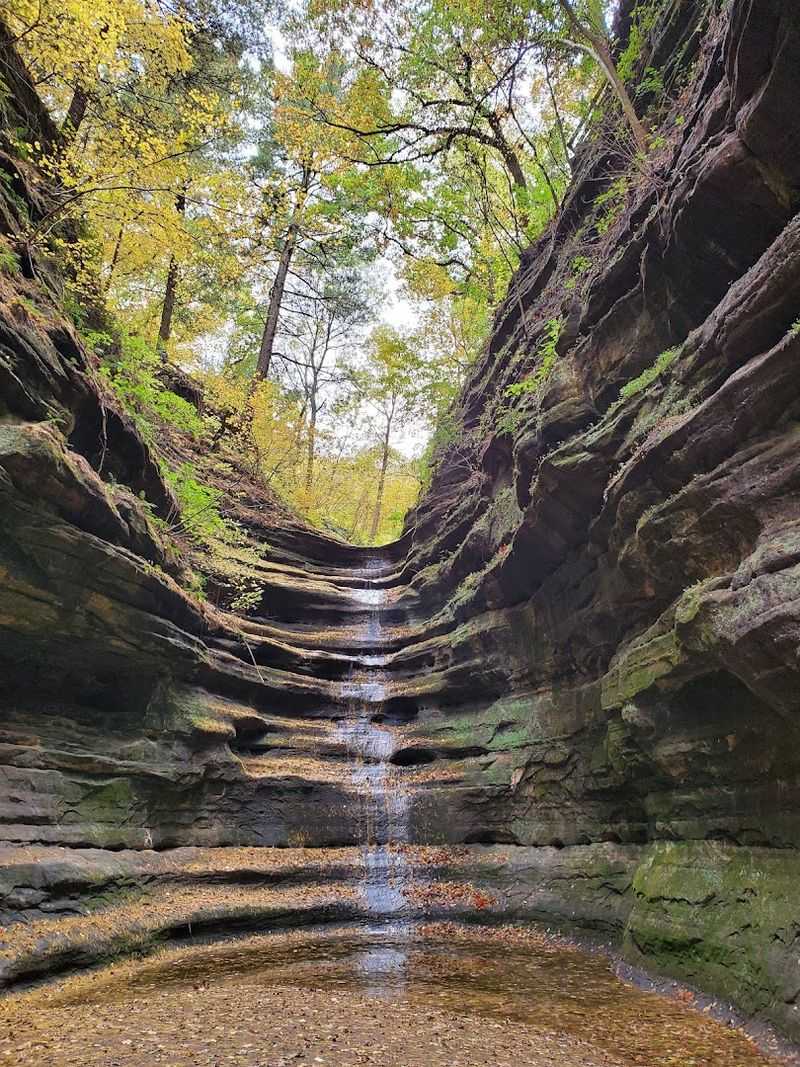
Illinois might not be the first state that comes to mind when you think of dramatic scenery, but Starved Rock has a habit of changing that opinion fast. Carved by glacial meltwater thousands of years ago, the park’s 18 canyons are lined with towering sandstone walls, seasonal waterfalls and dense forest that feels like it belongs in a completely different part of the country.
The canyons are the real stars of the show. Each one has its own character — some narrow and cathedral-like, others wide with cascading waterfalls that freeze into stunning ice formations during winter.
Autumn is peak season when blazing foliage blankets the bluffs and overlooks above the Illinois River. The views from the main overlook are genuinely jaw-dropping for a Midwestern landscape.
Over 13 miles of well-maintained trails connect the canyons, making it easy to explore multiple highlights in a single day. The historic Starved Rock Lodge, built in the 1930s, adds a cozy touch with a fireplace-filled great room perfect for warming up after a cold-weather hike.
Starved Rock is one of those parks that surprises you with just how much beauty it quietly holds. First-time visitors almost always leave already planning their return trip.
Weeki Wachee Springs State Park — Florida

Only in Florida will you find a state park where you can watch a live mermaid show, spot a wild manatee and then go kayaking down a crystal-clear river all in the same afternoon. Weeki Wachee Springs has been delighting visitors since 1947, and its quirky charm is as fresh today as it was back then.
This place is genuinely one of a kind.
The spring pumps out 117 million gallons of crystal-clear, 74-degree water every single day, creating one of the most pristine natural rivers in the state. Kayaking and paddleboarding along the Weeki Wachee River puts you eye-level with manatees, otters and colorful freshwater fish gliding beneath you.
The water is so clear it looks fake — until a manatee casually surfaces next to your kayak.
The underwater mermaid performances, held in a natural spring theater, are a beloved Florida tradition that somehow manages to be both kitsch and genuinely impressive at the same time. Buccaneer Bay waterpark is attached to the park for those who want slides and splash pads alongside the nature.
Weeki Wachee works beautifully as a full-day family adventure with something truly different around every corner. Book mermaid show tickets in advance during busy summer months.
Big Basin Redwoods State Park — California
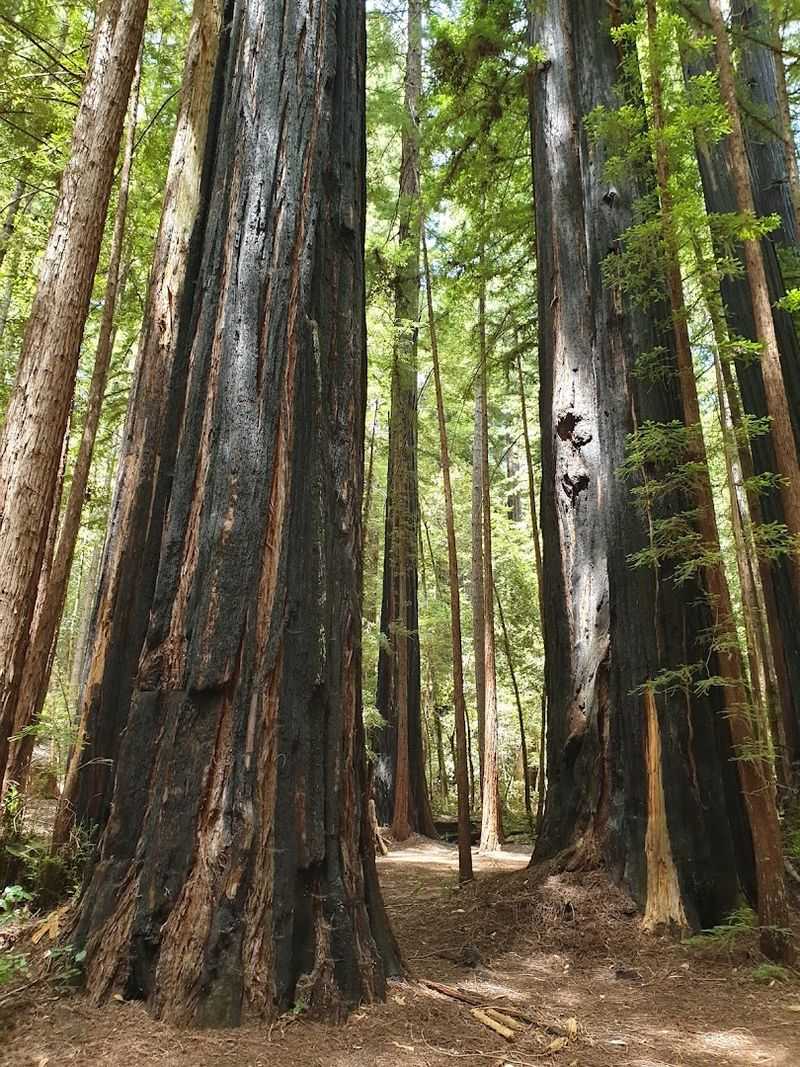
Walking among the ancient redwoods at Big Basin feels less like a hike and more like stepping into a living cathedral. California’s oldest state park, established back in 1902, protects old-growth coast redwoods that have been growing for over a thousand years.
Some of these trees are so wide that five people holding hands can’t wrap around them.
The park’s trails wind through a layered forest of ferns, mosses and towering redwoods that block out most of the sky overhead. Sempervirens Falls and Berry Creek Falls add waterfalls to the mix, giving hikers even more reasons to keep moving through the trails.
Wildlife sightings — including banana slugs, black-tailed deer and Steller’s jays — are common and always a highlight for younger visitors.
Big Basin suffered significant damage in the 2020 CZU Lightning Complex fires, but recovery efforts are underway and many areas have reopened with new trail access. Seeing the forest’s resilience firsthand — with new growth pushing through charred trunks — adds a powerful and emotional layer to any visit.
The redwoods were here long before us and will outlast us too. Big Basin reminds you of that in the most humbling and beautiful way possible.
Cherry Springs State Park — Pennsylvania
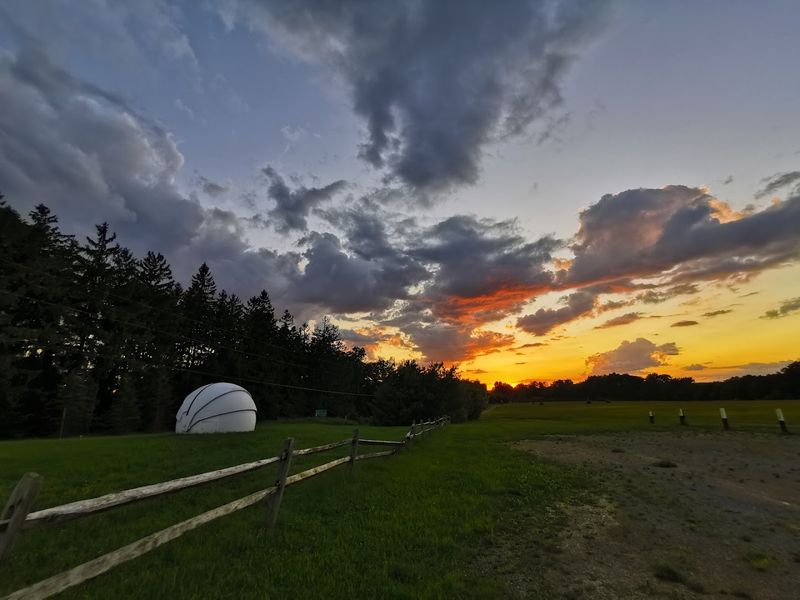
Here’s a wild fact: on a clear night at Cherry Springs State Park, the Milky Way is so bright it can cast a faint shadow on the ground. That’s not a typo.
Nestled in a remote corner of north-central Pennsylvania, Cherry Springs is one of the best Dark Sky Parks on the entire East Coast, drawing astronomers and photographers from hundreds of miles away.
The park sits at 2,300 feet elevation in the middle of the Susquehannock State Forest, far from any major city lights. The designated Astronomy Observing Field is kept completely dark — no white lights allowed — and on clear nights the sky overhead is an absolute riot of stars, planets and cosmic detail.
First-time stargazers often stand speechless for a solid minute before they can even form words.
Beyond the night sky, Cherry Springs offers peaceful daytime hiking through quiet forest trails. The park is small and intentionally low-key, which is exactly what makes it special.
Bring a red-light flashlight, a reclining chair and a warm blanket for nighttime observing. Star parties hosted by astronomy clubs are held regularly and are welcoming to beginners.
If you’ve never truly seen the night sky before, Cherry Springs will change your perspective permanently.
Pikes Peak State Park — Iowa
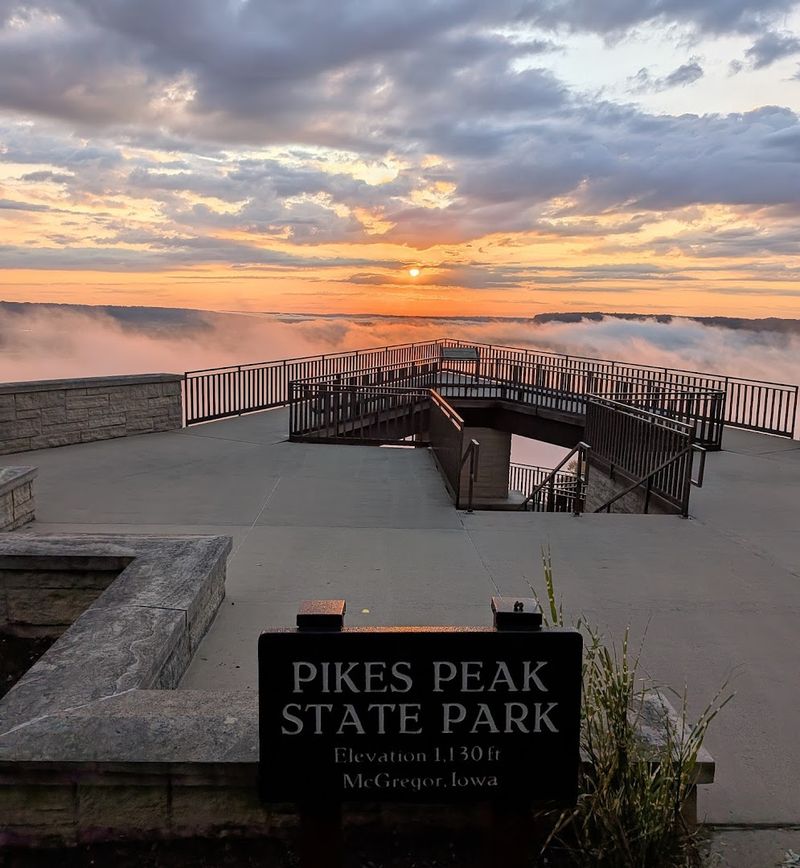
Most people associate Pikes Peak with Colorado’s famous 14,000-foot mountain, but Iowa has its own version — and it’s spectacular in a completely different way. Pikes Peak State Park in northeastern Iowa sits atop high limestone bluffs above the Mississippi River, offering some of the most breathtaking river views in the entire Midwest.
It’s the kind of hidden gem that feels like your own personal discovery.
The views from the bluff top stretch for miles across the Mississippi floodplain, with the river winding lazily through forests and farmland below. In autumn, the hillsides covering both the Iowa and Wisconsin banks erupt in fall color, making the overlooks even more dramatic.
The park’s trails wind through dense forest and past geological features including a large effigy mound built by Native Americans over a thousand years ago.
Point Ann Overlook is the park’s crown viewpoint and earns every bit of praise it receives. Wildflowers bloom across meadows in spring, and bald eagles are commonly spotted soaring along the river corridor in winter.
The park is quiet and unhurried, which makes it perfect for anyone who wants to escape the crowds without sacrificing scenery. Pikes Peak, Iowa, may be Iowa’s best-kept secret — and locals are absolutely fine keeping it that way.
Tallulah Gorge State Park — Georgia
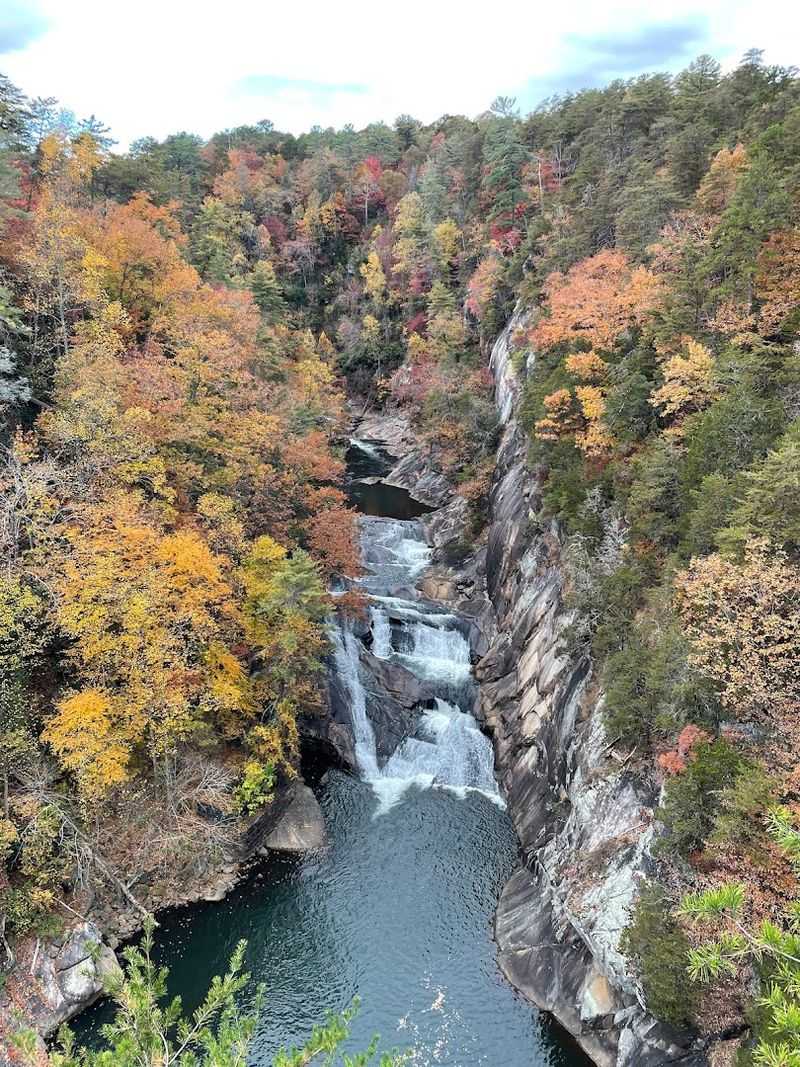
Two miles long and nearly 1,000 feet deep, Tallulah Gorge is one of the most spectacular natural canyons in the eastern United States — and Georgia keeps it tucked away like a well-guarded secret. The Tallulah River carved this dramatic chasm through quartzite rock over millions of years, creating a landscape of sheer cliffs, roaring waterfalls and wild river rapids that genuinely takes your breath away.
The suspension bridge strung across the gorge is a highlight that gets pulses racing. Standing 80 feet above the canyon floor, swaying gently with the wind, you get a perspective of the gorge that no overlook can fully replicate.
Boardwalk trails along the rim offer easier access to multiple viewpoints, while a permit-based trail descends into the gorge itself for a closer look at the river and falls below.
Karl Wallenda famously tightrope-walked across this gorge in 1970, which tells you something about just how dramatic this canyon is. Waterfall flows are best in spring and after significant rainfall.
The park’s beach area along the reservoir offers a calmer experience for families who want swimming and picnicking alongside the drama. Tallulah Gorge rewards visitors who take their time exploring every viewpoint, trail and overlook the park has to offer.
Mt. Blue State Park — Maine
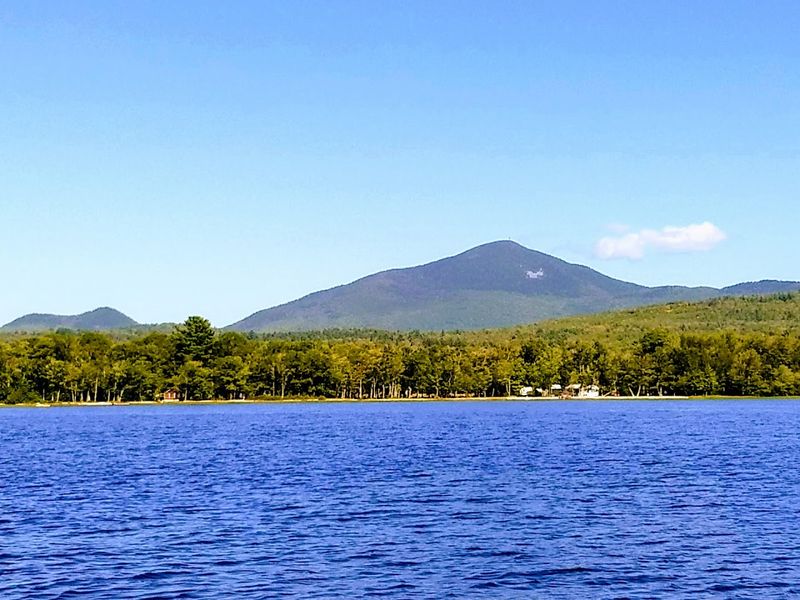
Maine’s largest state park doesn’t need to shout to impress — it simply lets the scenery do the talking. Mt.
Blue State Park spreads across over 8,000 acres of western Maine wilderness, anchored by Webb Lake, forested mountains and a network of trails that reward every level of hiker. It’s the kind of place where quiet is the point, and the natural world fills every second of it.
The hike up Mount Blue itself offers panoramic summit views that stretch across the rugged Mahoosuc Range and surrounding lakes. On a clear day the vista feels limitless, with rolling forest and glittering water in every direction.
The trail is moderately challenging and takes most hikers about two to three hours round-trip, making it very manageable for families with older kids.
Webb Lake is the social hub of the park, with a sandy beach, canoe rentals and one of the most peaceful swimming spots in the state. The campground sits right alongside the lake and books up fast during summer, so reservations well in advance are essential.
Fall foliage season transforms the whole park into a patchwork of red, orange and gold. Mt.
Blue may not have the fame of Acadia, but it has the soul of everything that makes Maine special.
Cape Henlopen State Park — Delaware
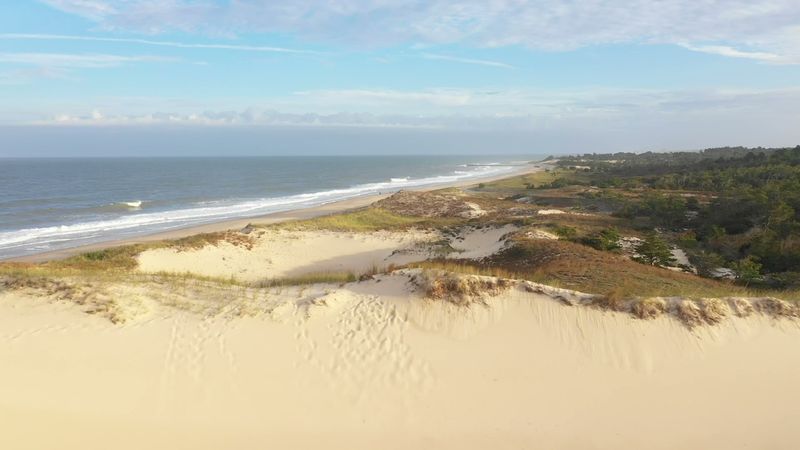
Delaware may be the smallest state in the union, but Cape Henlopen punches well above its weight when it comes to natural beauty. Sitting where Delaware Bay meets the Atlantic Ocean, this park serves up wide sandy beaches, rolling dunes, maritime forest and a surprisingly rich history — all within a compact and easily walkable area.
It’s a full coastal experience packed into one remarkable park.
The Great Dune, rising 80 feet above sea level, is the park’s most iconic natural feature and offers sweeping views of the coastline in both directions. Shorebirds, osprey and migratory songbirds make Cape Henlopen a serious destination for birdwatchers, especially during spring and fall migration.
The fishing pier is one of the longest on the Delaware coast and stays busy year-round with anglers casting for flounder and striped bass.
World War II observation towers still stand in the park, remnants of Fort Miles which protected the Delaware Bay during the war. The towers are open for tours and add a fascinating historical dimension to what is already a beautiful natural destination.
Bike trails loop through the park, and the beach is calm and family-friendly. Cape Henlopen proves that Delaware’s coastline is absolutely worth the trip, even if most visitors are just passing through.
Devil’s Den State Park — Arkansas
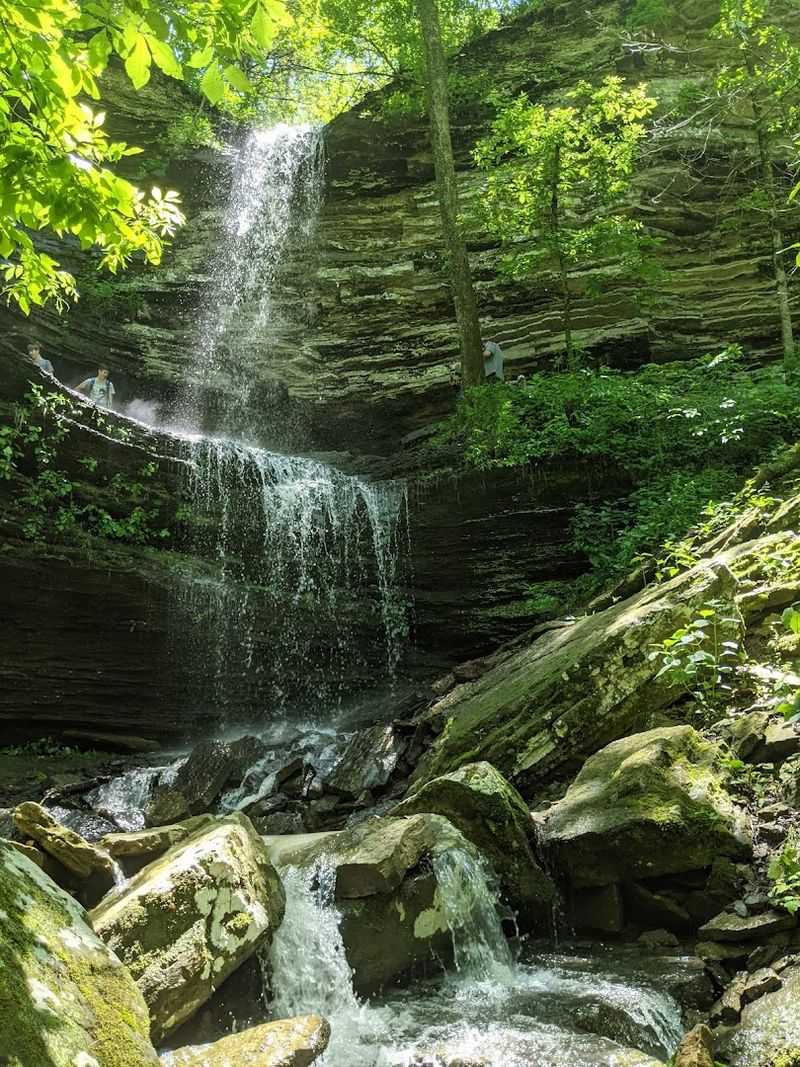
The name sounds ominous, but Devil’s Den State Park is one of the most enchanting places in the entire South. Tucked into the Boston Mountains of the Ozarks, this park is defined by dramatic sandstone formations, cool shaded hollows and a clear creek that winds through the valley floor like it has nowhere important to be.
It’s rugged, beautiful and completely absorbing.
The park’s signature feature is a series of crevices and small caves formed in layered sandstone bluffs — a geological quirk that gives the park its devilish name. Hikers can squeeze through narrow rock passages and explore the shadowy crevices on the Devil’s Den Trail, which is short but packed with character.
Lee Creek flows through the park and creates natural swimming holes that are irresistible on a hot Arkansas afternoon.
Mountain bikers have their own dedicated trail system here, which is considered some of the best single-track riding in the state. The historic CCC-built facilities, including stone cabins and a rustic lodge, give the park a timeless atmosphere that makes it feel frozen in the best possible era.
Camping alongside the creek is deeply peaceful, and wildlife sightings — including white-tailed deer and box turtles — are common. Devil’s Den is one of those parks that gets better with every visit.
Jedediah Smith Redwoods State Park — California
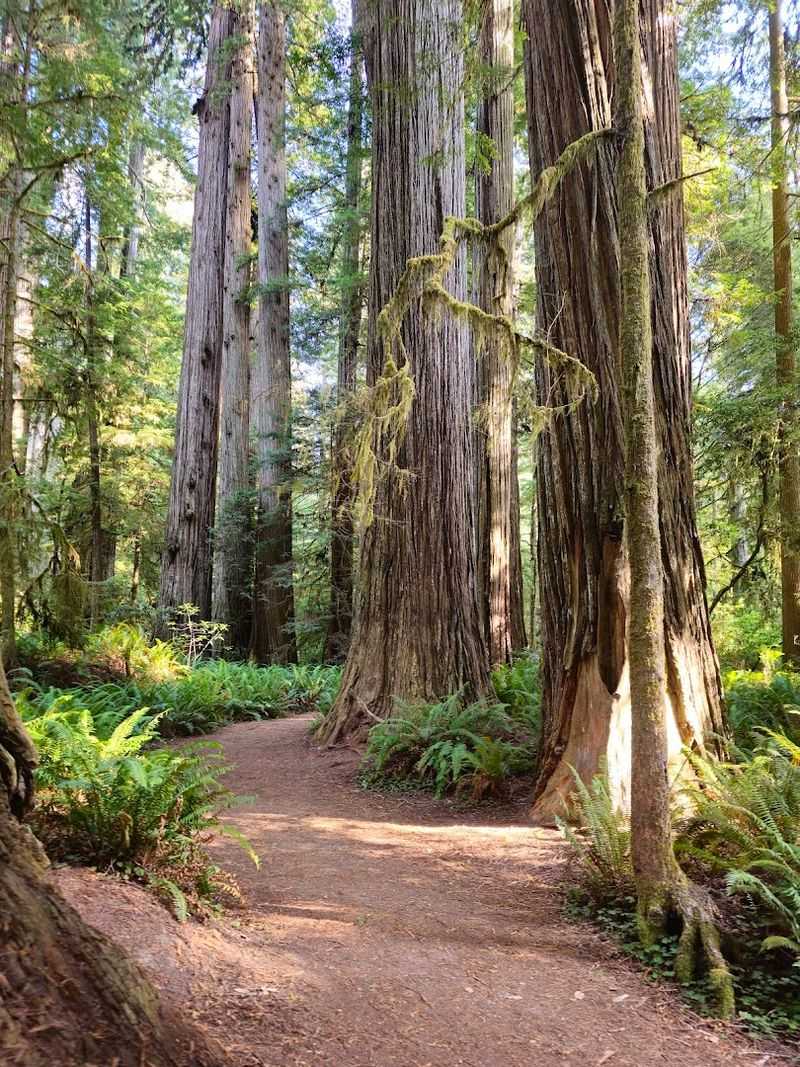
Some of the tallest living things on Earth are rooted quietly in the northwest corner of California, and Jedediah Smith Redwoods State Park is where you go to stand among them. Part of the Redwood National and State Parks complex, this park protects old-growth coast redwoods that have been growing for over 2,000 years.
Walking here doesn’t just feel peaceful — it feels ancient.
Howland Hill Road, a narrow unpaved route through the heart of the park, is one of the most stunning drives in the United States. Massive redwood trunks line both sides so closely that sunlight barely reaches the forest floor, creating a green-filtered twilight even on bright days.
Stopping along the road to simply stand in the silence is one of those experiences that recalibrates your entire sense of scale.
The Smith River — the last major undammed river in California — runs through the park with remarkable clarity, its blue-green water perfect for swimming and fishing in summer. The Stout Grove Trail offers an easy half-mile loop through some of the most impressive redwood groves in the entire park system.
Campgrounds here book months in advance, so plan early. Jedediah Smith is a place that humbles you completely, and you leave feeling grateful for every quiet, towering moment of it.
Share this story