Some places on Earth seem too strange and beautiful to be real — and caves are proof of that. Hidden beneath mountains, jungles, and ocean floors, these underground worlds hold rivers, forests, glittering crystals, and glowing creatures that most people never get to see.
From the jungles of Vietnam to the glacial lakes of Patagonia, the planet’s caves are full of jaw-dropping surprises. Pack your curiosity, because these 15 caves will completely change the way you think about what lies beneath your feet.
Sơn Đoòng Cave — Vietnam (World’s Largest Cave)
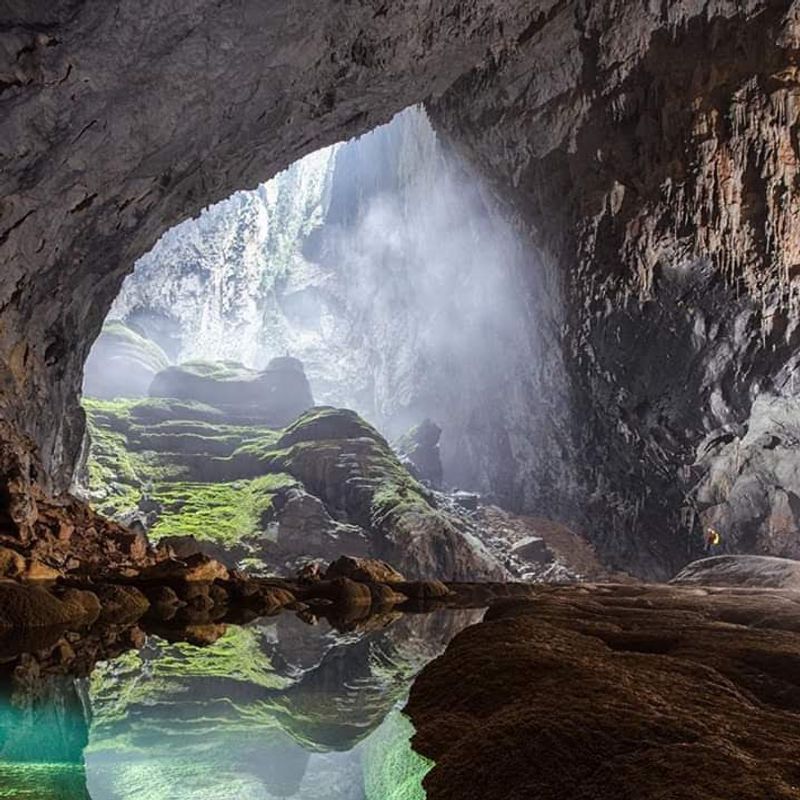
Clouds actually form inside this cave. Sơn Đoòng, located in Phong Nha-Kẻ Bàng National Park in central Vietnam, is so enormous that it creates its own weather system — complete with mist, rain, and fog swirling through its chambers.
The cave was only discovered in 1991 by a local farmer and wasn’t fully explored until 2009.
The main passage stretches over five kilometers long and reaches heights of 200 meters in some spots. Entire sections of jungle grow inside, nourished by sunlight streaming through collapsed ceiling openings called dolines.
Towering stalagmites rise up like ancient skyscrapers from the cave floor.
Only a small number of visitors are allowed each year, and all trips require a licensed guide through Oxalis Adventure Tours. The multi-day expedition involves jungle trekking, river crossings, and camping underground.
It’s physically demanding but absolutely unforgettable. Seeing a jungle thriving inside a cave genuinely makes you question everything you thought you knew about what caves could be.
Waitomo Glowworm Caves — New Zealand
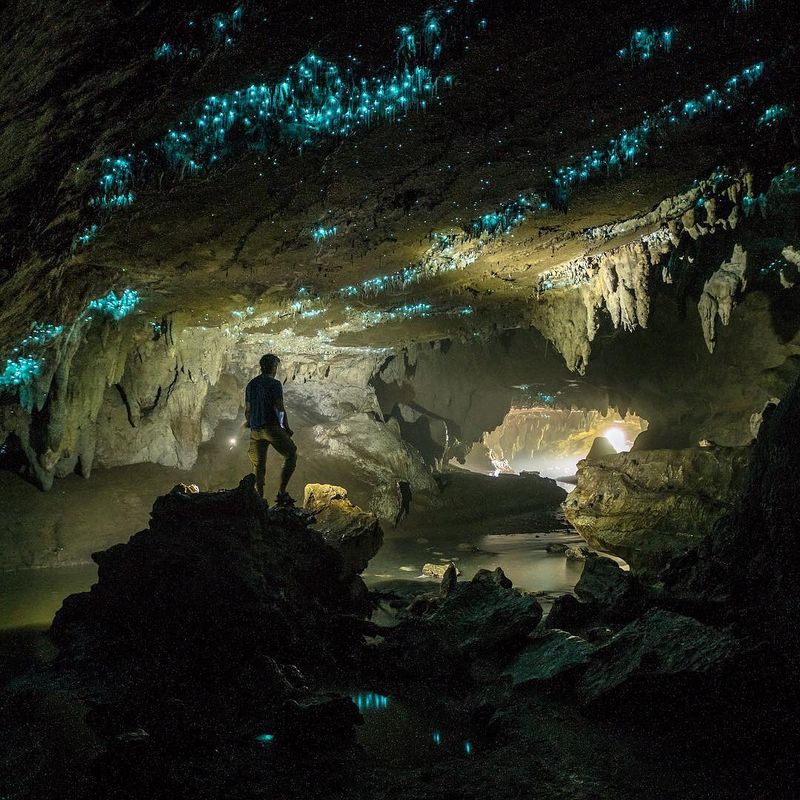
Imagine lying back in a small wooden boat while thousands of tiny blue lights blink above you like a living galaxy. That’s exactly what happens inside the Waitomo Glowworm Caves on New Zealand’s North Island.
The glowworms are actually the larvae of a fungus gnat called Arachnocampa luminosa — a species found nowhere else on Earth.
Each tiny creature produces a blue-green glow to attract prey, and when thousands of them cluster on the cave ceiling, the effect is genuinely breathtaking. Visitors travel through the caves on guided boat tours, drifting silently so as not to disturb the glowworms.
Talking loudly or using camera flash can cause the creatures to dim their lights.
The cave system was first explored by local Maori and European settlers in the 1880s and has been a tourist destination ever since. Beyond the boat tour, visitors can explore limestone formations, underground waterfalls, and walking passages.
Waitomo is proof that nature’s most spectacular light shows don’t always happen at night under open skies — sometimes they happen 30 meters underground in complete silence.
Škocjan Caves — Slovenia
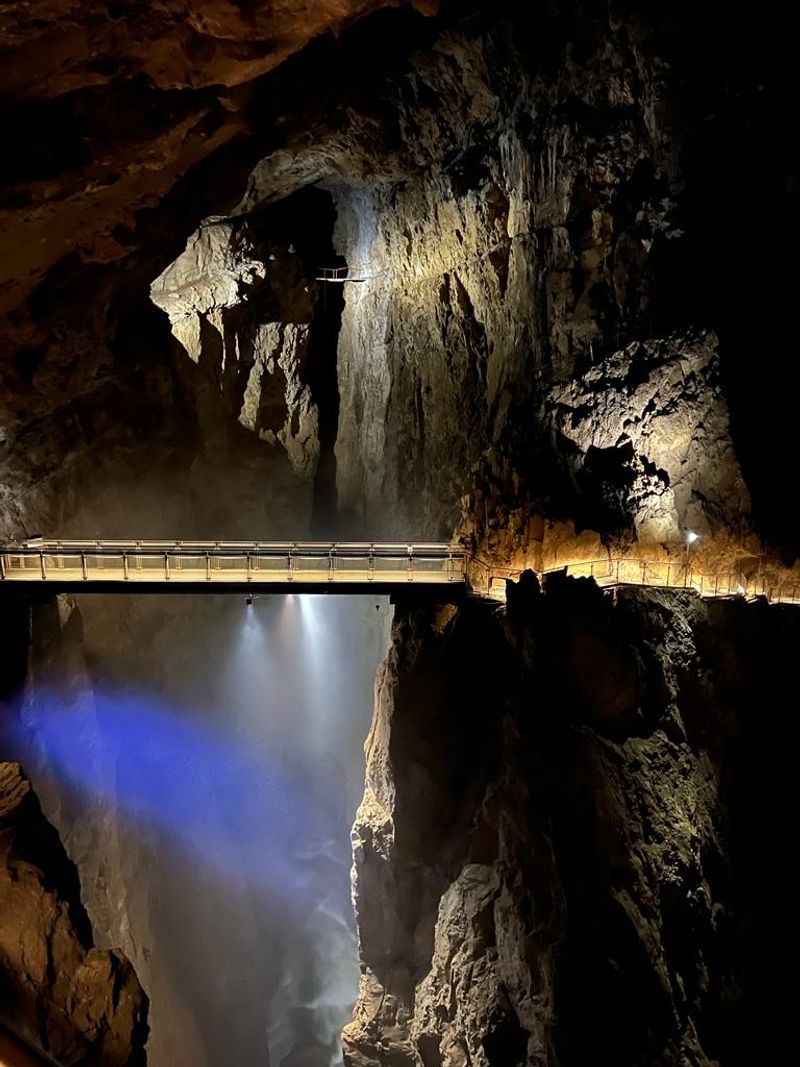
Standing on a narrow suspended bridge with a roaring underground river crashing 150 meters below you is not something most people expect from a cave tour. Yet that’s exactly what awaits at Škocjan Caves in southwestern Slovenia.
This UNESCO World Heritage Site is one of the most dramatic cave systems in all of Europe.
The Reka River carves through the cave’s interior, creating a stunning underground canyon with walls that soar to incredible heights. Enormous chambers with names like the Murmuring Cave and the Silent Cave transition from thunderous river noise to ghostly quiet within just a few steps.
The cave system stretches over six kilometers and has been a sacred site for local communities for thousands of years.
Unlike many tourist caves, Škocjan feels raw and genuinely wild. The walkways and bridges are well-maintained, but the scale of everything around you makes you feel very small.
The cave is home to rare cave-dwelling species and holds some of the most impressive stalactite formations in the world. Visiting feels less like a guided tour and more like stumbling into a scene from an adventure novel.
Carlsbad Caverns — New Mexico, USA
The Big Room at Carlsbad Caverns is so large that the US Capitol building could fit inside it with room to spare. Located in the Chihuahuan Desert of southeastern New Mexico, this national park contains over 119 known caves carved from an ancient reef of limestone that formed millions of years ago beneath a shallow sea.
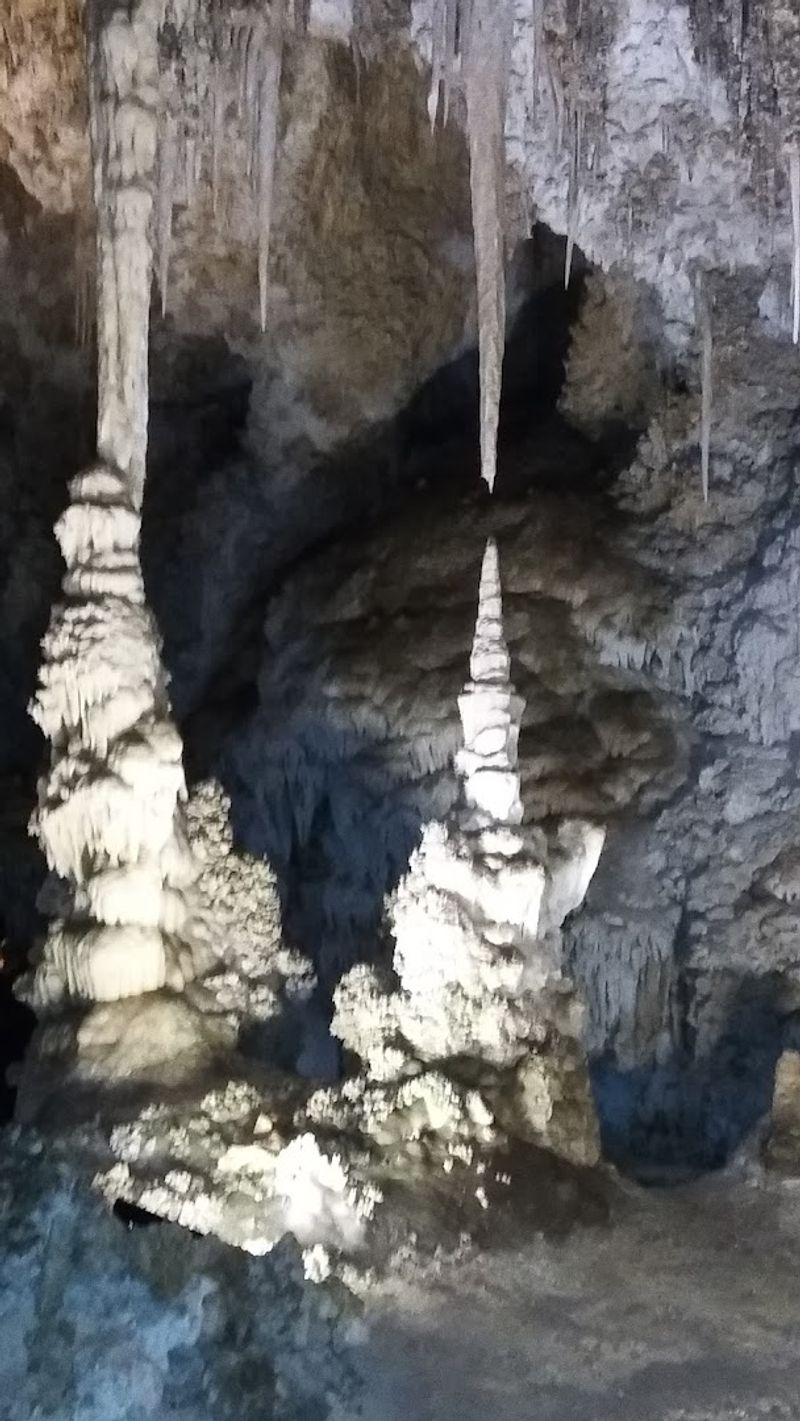
Visitors can reach the main cavern either by elevator or by walking a steep, winding natural entrance trail that descends 75 stories underground. Once inside, the formations are staggering — curtains of translucent stone, massive columns, cave popcorn, and delicate stalactites that took thousands of years to grow just a few inches.
The park’s self-guided tour lets you wander at your own pace, which makes the experience feel surprisingly personal.
Every summer evening, hundreds of thousands of Mexican free-tailed bats spiral out of the cave entrance in a swirling column that lasts for hours. Watching this happen from the outdoor amphitheater is one of the most underrated wildlife spectacles in North America.
Carlsbad Caverns manages to be both scientifically fascinating and visually stunning — a rare combination that keeps visitors coming back year after year.
Mammoth Cave — Kentucky, USA
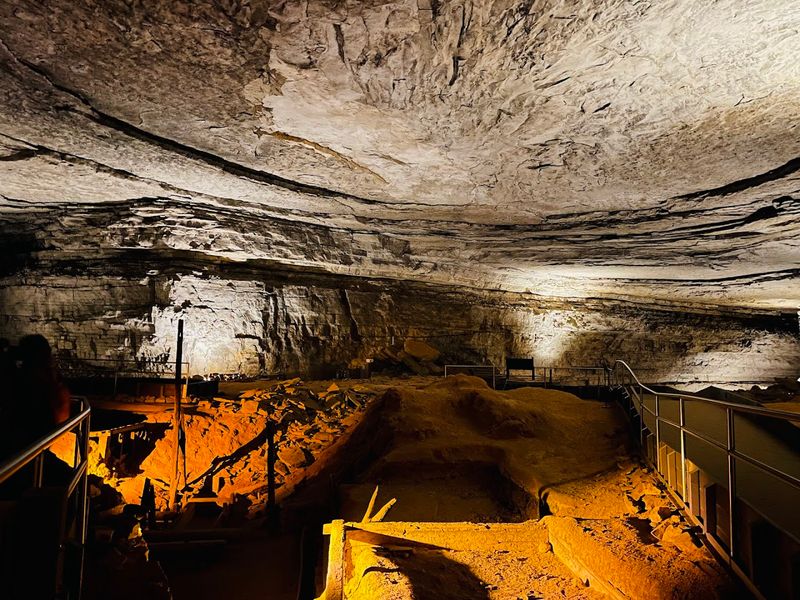
No cave system on Earth has more mapped passages than Mammoth Cave — over 670 kilometers of explored tunnels, and scientists believe there’s still more to find. Located in south-central Kentucky and protected as a national park and UNESCO World Heritage Site, Mammoth Cave has been a place of human activity for at least 5,000 years.
Native Americans explored these passages long before European settlers arrived, leaving behind artifacts, mummified remains, and even ancient torches. During the 1800s, the cave was mined for saltpeter — an ingredient in gunpowder — and later became a tuberculosis treatment site, where patients lived underground hoping the cool, stable air would help them heal.
History literally layers the walls here.
Today, the park offers dozens of guided tours ranging from easy, lit pathways to wild caving adventures that require crawling through tight passages with only a headlamp. The cave maintains a constant temperature of about 12 degrees Celsius year-round, making it a refreshing escape in summer and surprisingly warm in winter.
Whether you’re a casual visitor or a serious spelunker, Mammoth Cave has a tour designed to knock your socks off underground.
Jewel Cave — South Dakota, USA
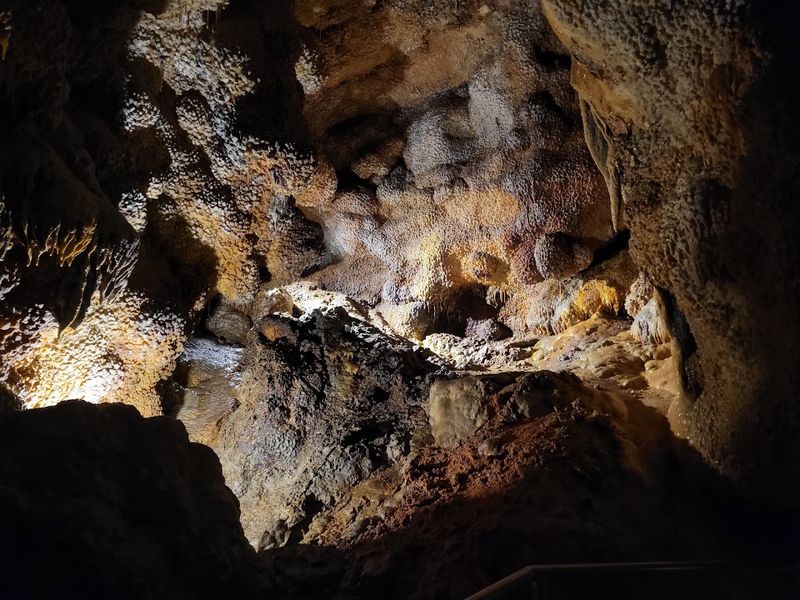
Every wall in Jewel Cave looks like it was decorated by a very patient and very talented jeweler. Named for the sparkling calcite crystals that line its passages, Jewel Cave in South Dakota’s Black Hills is the third-longest cave system in the world, with over 330 kilometers of mapped passages — and explorers keep finding more.
What makes Jewel Cave truly unique, beyond its size, is the rare boxwork formations covering many of its ceilings. Boxwork looks like a honeycomb of thin mineral fins sticking out of the rock, and Jewel Cave has some of the finest examples found anywhere on the planet.
Scientists believe these formations are incredibly ancient, predating the cave itself.
The National Park Service offers several tour options, from the paved Scenic Tour for casual visitors to the rugged, unpaved Wild Caving Tour for those who want a more hands-on underground experience. Because the cave breathes — air moves in and out through its entrance depending on pressure differences — early explorers actually discovered it by feeling a cold wind blowing from a small crack in the hillside.
That underground breath is what led to the discovery of one of Earth’s most dazzling hidden spaces.
Reed Flute Cave — China
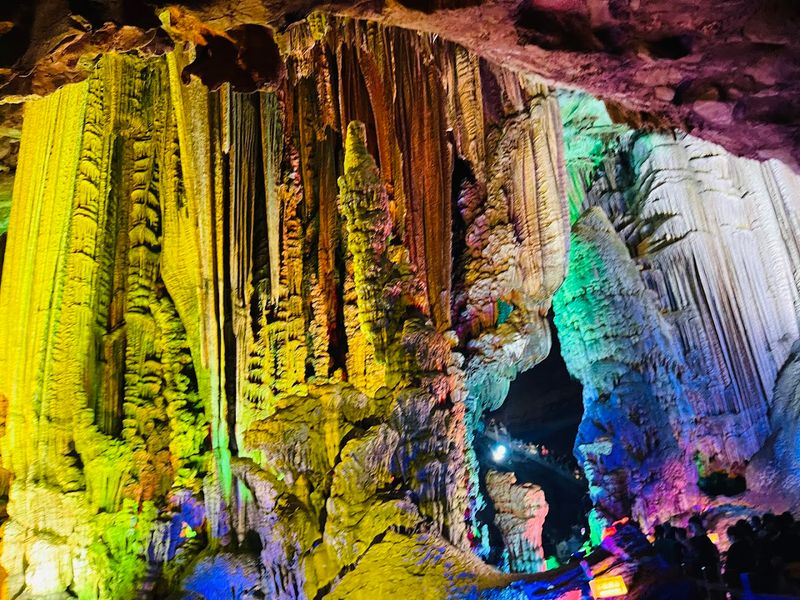
Walking through Reed Flute Cave feels like stepping inside a neon-lit fantasy world — except everything you’re seeing is completely natural rock shaped over millions of years. Located near Guilin in Guangxi, China, this limestone cave stretches 240 meters deep and has been a popular attraction for over 1,200 years.
Tang Dynasty visitors even carved poems on its walls.
The cave gets its name from the reeds that grow near its entrance, which locals once used to make flutes. Inside, a winding path leads through chambers packed with stalactites, stalagmites, and stone pillars, all dramatically lit with colored lights that shift from purple to blue to gold.
The lighting is theatrical, and some travelers find it a bit over the top — but most people just enjoy the spectacle.
One highlight is the Crystal Palace of the Dragon King, a massive chamber with an underground pool that perfectly mirrors the formations above it, doubling the visual drama. Reed Flute Cave sees millions of visitors each year, so going early in the morning helps beat the crowds.
Even if you’ve seen other caves before, the sheer density of formations packed into this space makes it feel genuinely different from anything else on this list.
Blue Grotto — Capri, Italy
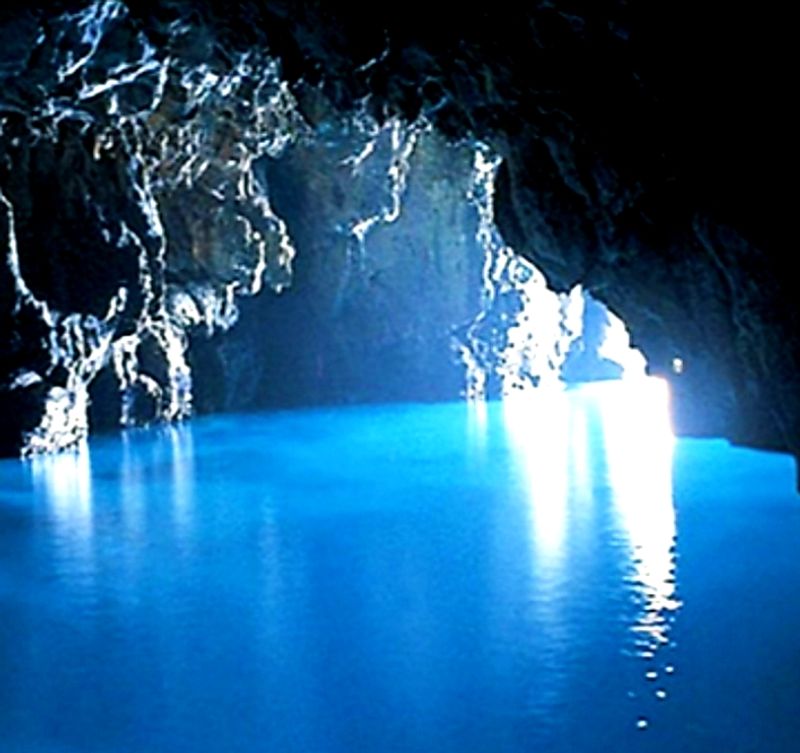
There’s a moment, as your small rowboat ducks through the low entrance of the Blue Grotto, when the entire world turns electric blue. The light doesn’t come from lamps or screens — it pours in through an underwater opening in the cave wall and scatters through the water, bathing everything in an unearthly cerulean glow.
It’s one of the most purely magical optical effects found anywhere in nature.
The Blue Grotto sits along the rocky coastline of Capri, a small island off the southern Italian coast near Naples. Ancient Romans knew about it — Emperor Tiberius reportedly used the cave as a private swimming spot and decorated it with statues, some of which were later found on the cave floor.
The grotto was largely forgotten by outsiders until the 1800s, when a German painter rediscovered it and sparked international interest.
Visits are short — usually just a few minutes inside — because the boats must time their entry around tides and wave conditions. The entrance is only about a meter high, so passengers lie flat in the boat while the rower pulls through on a chain.
Brief as it is, the Blue Grotto leaves an impression that lasts far longer than the visit itself.
Eisriesenwelt Ice Cave — Austria
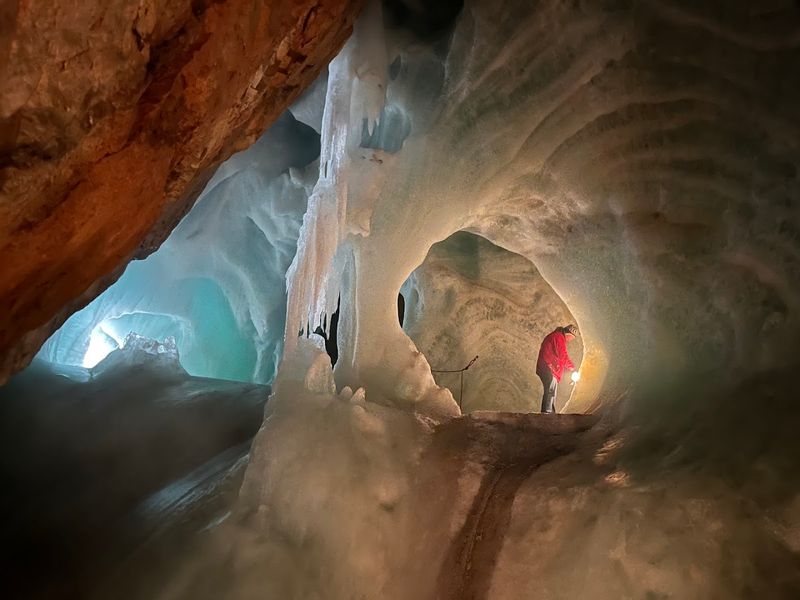
Buried inside the Tennengebirge Mountains of Austria lies the largest ice cave in the world — and it stays frozen year-round, even when summer temperatures outside climb well above zero. Eisriesenwelt, which translates to “World of the Ice Giants,” contains over 42 kilometers of passages, though only the first kilometer is open to visitors.
That first kilometer is more than enough to leave you completely speechless.
The cave forms its stunning ice features through a clever trick of physics. Cold air flows in during winter and gets trapped, freezing the water that seeps through the limestone.
The resulting formations include massive ice columns, frozen waterfalls, and glittering walls that reflect the glow of carbide lanterns carried by tour guides. There’s no electric lighting inside — the lanterns give the experience an adventurous, almost old-fashioned feel.
Reaching the cave requires a cable car ride up the mountain followed by a 15-minute hike, so wear warm layers even in summer — temperatures inside hover around freezing. The cave is open from May through October, as heavy snowfall blocks access in winter.
Tours last about an hour and include a short film at the top before you descend back into the sunlight, blinking and slightly chilly but thoroughly amazed.
Fingal’s Cave — Scotland
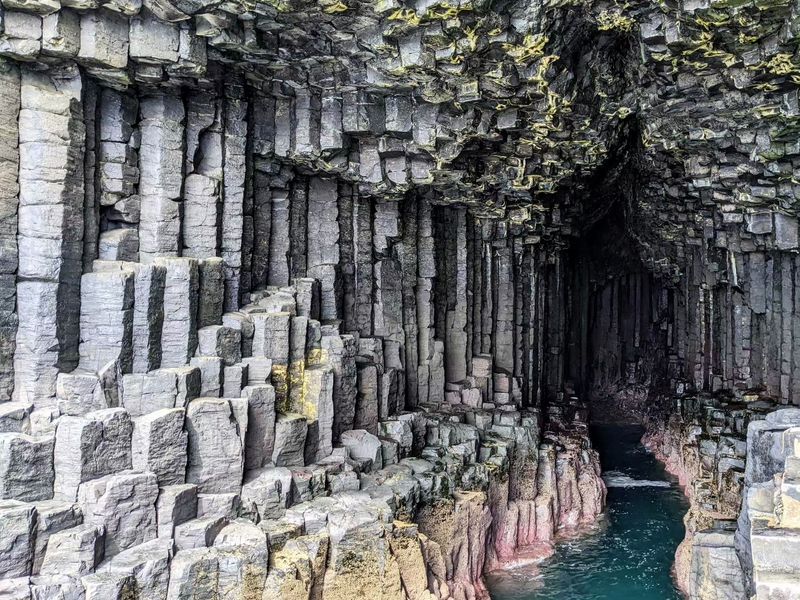
Composer Felix Mendelssohn visited Fingal’s Cave in 1829 and was so moved by the sound of waves echoing through its basalt columns that he wrote an entire concert overture inspired by it. That’s the kind of place Fingal’s Cave is — it doesn’t just impress the eyes, it gets inside your head.
Located on the tiny, uninhabited island of Staffa off the west coast of Scotland, the cave is accessible only by boat.
What makes Fingal’s Cave visually unlike any other cave on Earth is its geology. The walls are made entirely of hexagonal basalt columns — six-sided pillars of volcanic rock formed when ancient lava cooled slowly and contracted into geometric shapes.
The same formation appears at the Giant’s Causeway in Northern Ireland, which sits directly across the water, hinting at a shared volcanic past.
The columns stack so precisely that the cave looks almost engineered, like something built by hand rather than shaped by nature. Celtic mythology named the cave after the giant Fionn mac Cumhaill, claiming he built it as a causeway.
Walking along the rocky ledge at the cave’s edge with waves crashing below and basalt columns rising around you is one of those experiences that’s genuinely hard to describe to anyone who hasn’t been there.
Sistema Sac Actun — Mexico
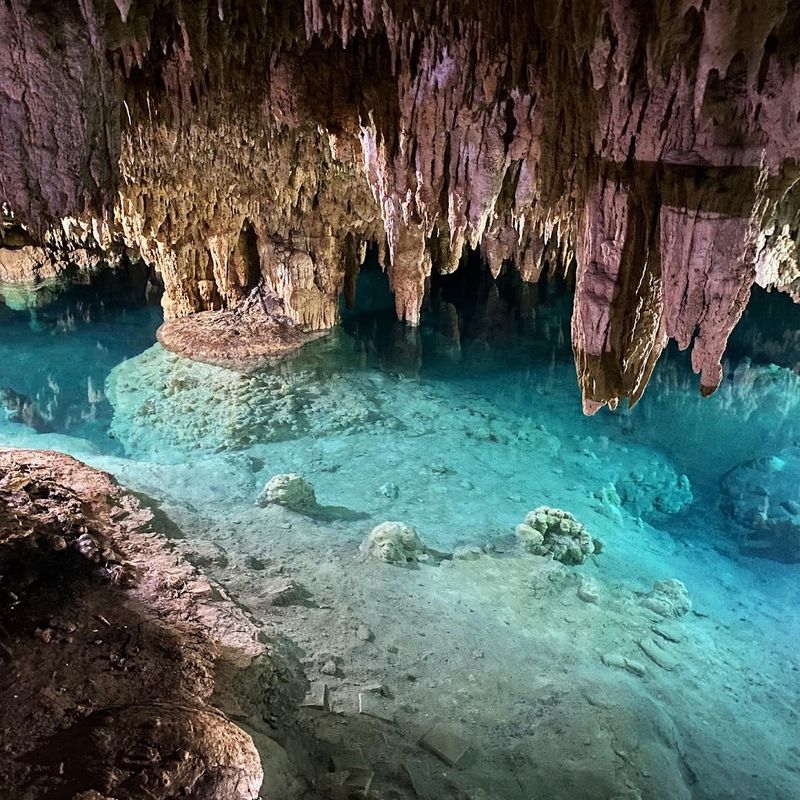
Stretching beneath the jungles of Mexico’s Yucatan Peninsula is the longest known underwater cave system in the world — Sistema Sac Actun, with over 370 kilometers of mapped, flooded passages. Most of it has never been seen by human eyes.
What has been explored reveals a breathtaking underwater landscape of crystalline water, ancient limestone formations, and passages so clear that visibility can stretch 100 meters or more.
The system is fed by rainwater filtering through the limestone, creating cenotes — natural sinkholes that serve as windows into the underwater world below. The ancient Maya considered cenotes sacred, believing they were portals to the underworld.
Archaeologists have discovered human remains, pottery, and even the bones of extinct megafauna like giant sloths inside the flooded passages, preserved perfectly by the still water.
Certified cave divers can explore certain sections of the system through dive operators based in Tulum and Playa del Carmen. Snorkeling in open cenotes connected to the system gives non-divers a taste of the experience.
The water temperature stays around 25 degrees Celsius year-round, making it comfortable despite the darkness. Few places on Earth combine archaeology, biology, geology, and pure visual wonder quite so effortlessly as this hidden aquatic labyrinth.
Hang Pygmy — Vietnam
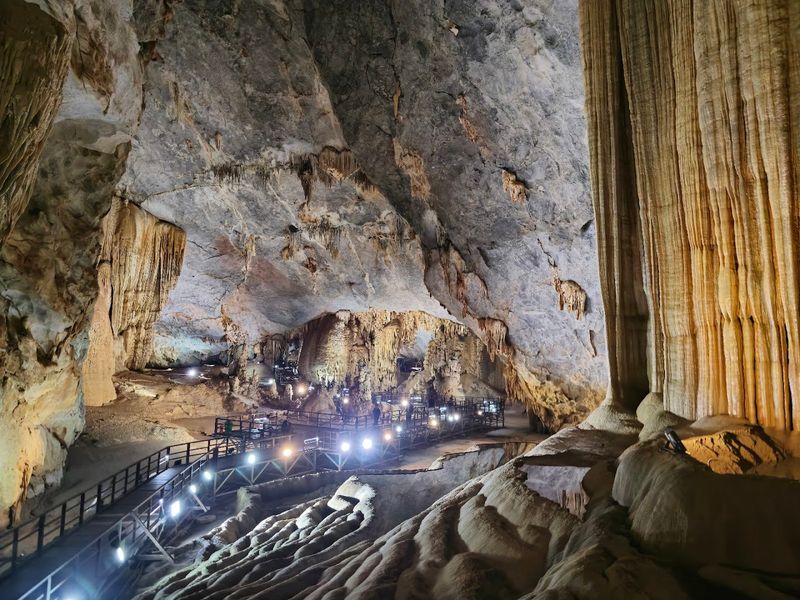
Hidden deep in the jungles of Phong Nha-Kẻ Bàng National Park, Hang Pygmy is one of those caves that barely registers on most travelers’ radar — and that’s precisely what makes it special. While its more famous neighbor Sơn Đoòng grabs all the headlines, Hang Pygmy quietly sits among the largest cave entrances on Earth, with a mouth wide enough to swallow a small village whole.
Reaching Hang Pygmy is not a casual afternoon outing. The journey requires a multi-day trek through dense jungle terrain, river crossings, and camping in the wilderness.
Tour operators like Oxalis Adventure run guided expeditions that combine the cave visit with stunning jungle scenery and encounters with local wildlife. The remoteness is part of the appeal — arriving feels like a genuine discovery.
Inside, the cave opens into enormous chambers with underground rivers carving through the limestone floor. Stalactites and stalagmites crowd the ceilings and walls, and the air carries that particular cool, mineral-tinged freshness that only exists deep underground.
The cave hasn’t been extensively developed for mass tourism, which means the formations are pristine and the atmosphere is raw. Hang Pygmy rewards the effort it takes to get there with a cave experience that feels completely untouched by the modern world.
Batu Caves — Malaysia
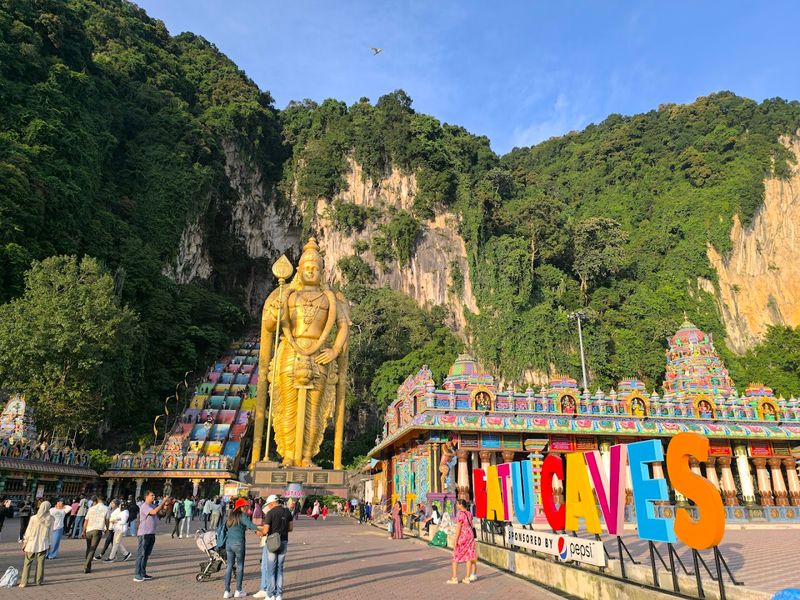
At the base of a 272-step staircase painted in every color of the rainbow stands a 42-meter-tall golden statue of the Hindu deity Lord Murugan — and that’s just the entrance. Batu Caves, located about 13 kilometers north of Kuala Lumpur, is one of the most visited Hindu shrines outside of India and one of the most visually striking cave sites anywhere in the world.
The caves are carved into a 400-million-year-old limestone hill, and the main Cathedral Cave soars 100 meters high, with natural openings in the ceiling that let sunlight pour in dramatically. Hindu temples and shrines fill the cave interior, decorated with colorful statues, offerings, and sacred imagery.
The combination of ancient geology and living religious culture creates an atmosphere unlike anything else on this list.
Every year during the festival of Thaipusam, over a million Hindu devotees climb the stairs in a massive religious procession, many carrying elaborate ceremonial structures called kavadis. It’s one of the largest Hindu festivals in the world and transforms the cave into a sea of color, music, and devotion.
Even on a regular day, the energy at Batu Caves is electric. Monkeys wander freely on the steps, temples glow with incense smoke, and the cave itself watches over it all like a giant stone cathedral.
Marble Caves — Chile (Patagonia)
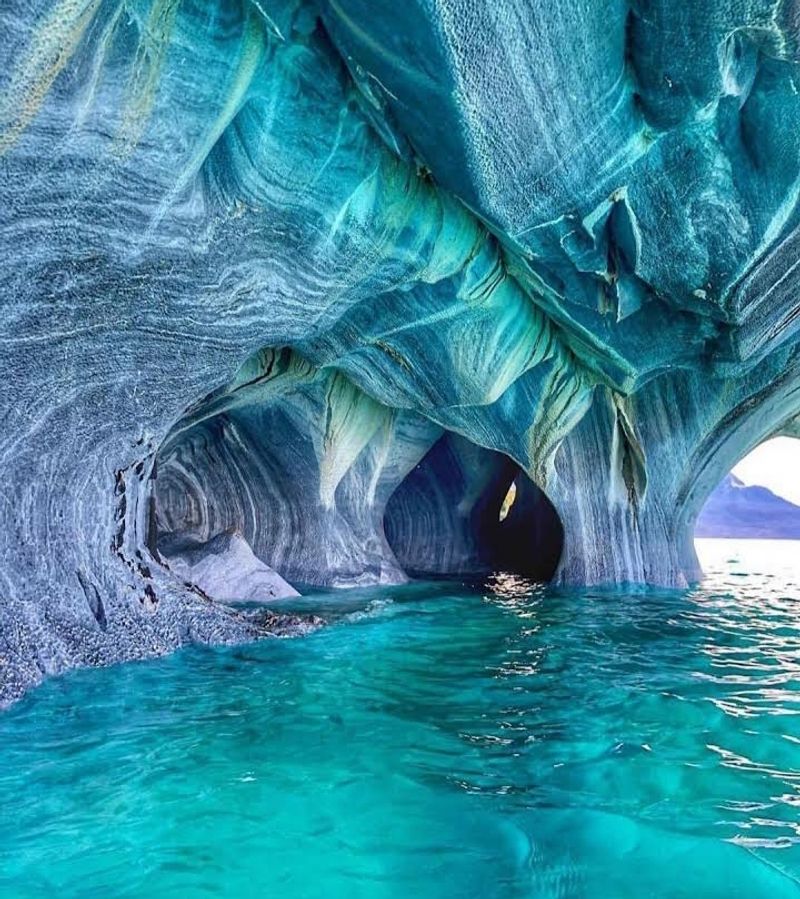
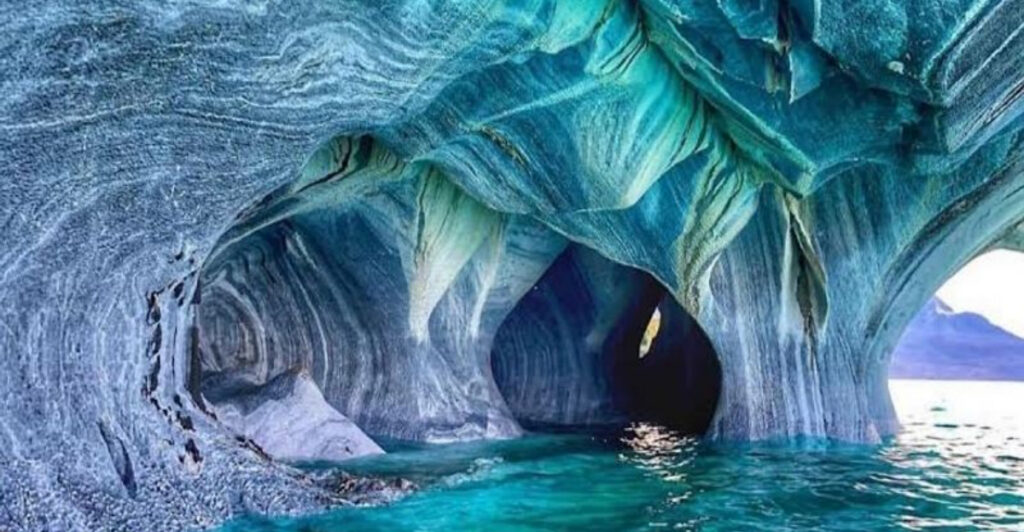
Nature spent 6,000 years sculpting the Marble Caves of Chilean Patagonia, and the result looks less like geology and more like abstract art. Located on the shores of General Carrera Lake — one of the deepest lakes in South America — these cave formations are carved from solid marble by constant wave action, creating chambers of swirling blue, white, and grey that shift with the color of the water below.
The water in General Carrera Lake gets its vivid turquoise color from glacial sediment, and when sunlight hits the lake surface inside the caves, it bounces off the water and onto the polished marble walls, creating a constantly moving light show. The colors change with the seasons as water levels rise and fall, so no two visits look exactly the same.
Winter visits tend to produce the most intense blue tones.
Access to the Marble Caves requires a boat tour from the small village of Puerto Río Tranquilo, and the journey across the lake itself is scenic enough to justify the trip. The Patagonian region is remote and the roads are rough, but travelers who make it here consistently describe the experience as one of the most beautiful things they’ve ever seen.
It’s the kind of place that makes you realize nature doesn’t need any help being extraordinary.
Share this story