There is a place in Oklahoma where cold, crystal-clear springs bubble up from the earth, bison roam freely near shimmering lakes, and the air smells faintly of minerals that have drawn visitors for over a century. It sits quietly in the Arbuckle Mountains, tucked between rolling prairies and dense woodland, and it does not charge you a single dollar to walk through its gates.
The trails are easy enough for families but rewarding enough to keep you coming back year after year. By the time you finish reading, you will want to pack a bag and head straight there.
Where It All Begins: Location and First Impressions
The address of Chickasaw National Recreation Area is 901 W 1st St, Sulphur, OK 73086, and the moment you turn off the main road, the landscape shifts in a way that feels almost theatrical. The town of Sulphur, Oklahoma sits right at the edge of the park, and the two blend together so naturally that you barely notice where one ends and the other begins.
The park is managed by the National Park Service and covers over 9,800 acres of the Arbuckle Mountains region in south-central Oklahoma. It is the kind of place that surprises first-time visitors who expect flat, dry terrain and instead find flowing streams, wooded trails, and two full-sized lakes.
Rangers at the visitor center are genuinely enthusiastic and knowledgeable, ready to point you toward the best spots based on how much time you have. The park earns its 4.8-star rating honestly, with well-maintained facilities, clean restrooms, and a level of natural beauty that feels almost out of place this far from the coasts.
First impressions here tend to become lasting ones.
The Bison Herd: Oklahoma’s Most Unexpected Neighbors
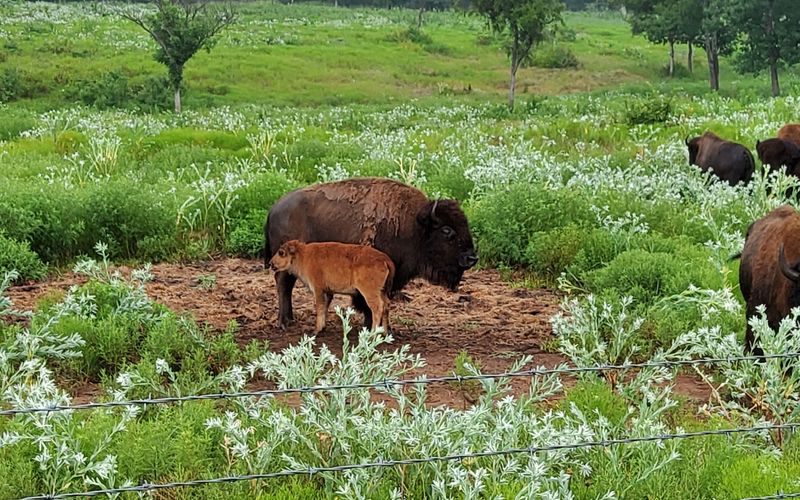
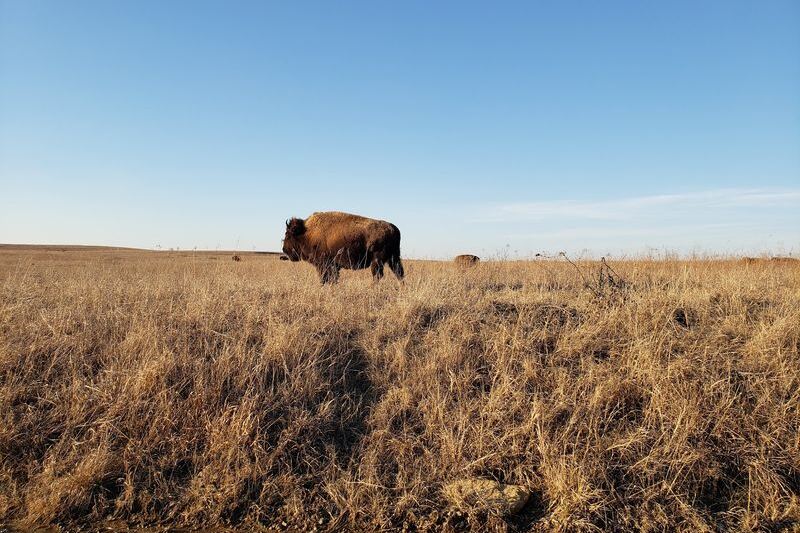
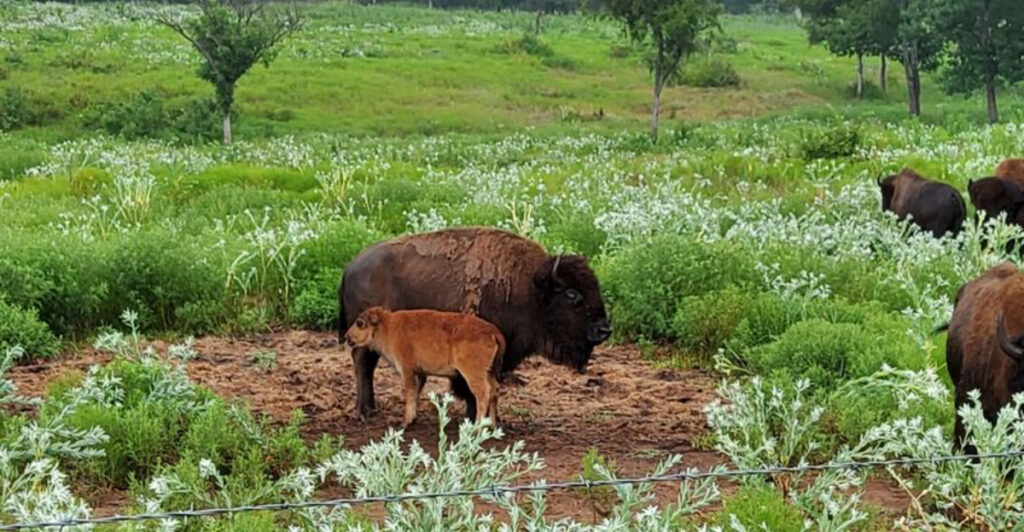
Most people do not expect to see bison in Oklahoma outside of a history book, but the free-roaming herd at this park will change that assumption fast. The animals graze on open prairie land near the lake overlook area, and on a calm morning, you can watch them move slowly across the grass with a kind of unhurried dignity that is hard to describe.
The herd is small compared to Yellowstone, but that actually makes the experience feel more personal. There is no massive crowd jostling for position, and the animals are close enough that you can see the texture of their thick coats and the slow sweep of their tails.
Park rangers ask visitors to keep a safe distance, and that rule is worth following because these are wild animals with their own agenda. The best viewing spot is near the bison overlook area, where a short walk from the parking area gives you a clear sightline across the prairie.
Catching them at golden hour, when the light turns warm and the lake glimmers behind them, is the kind of moment that makes you reach for your camera whether you planned to or not.
Little Niagara: The Crown Jewel of the Travertine District
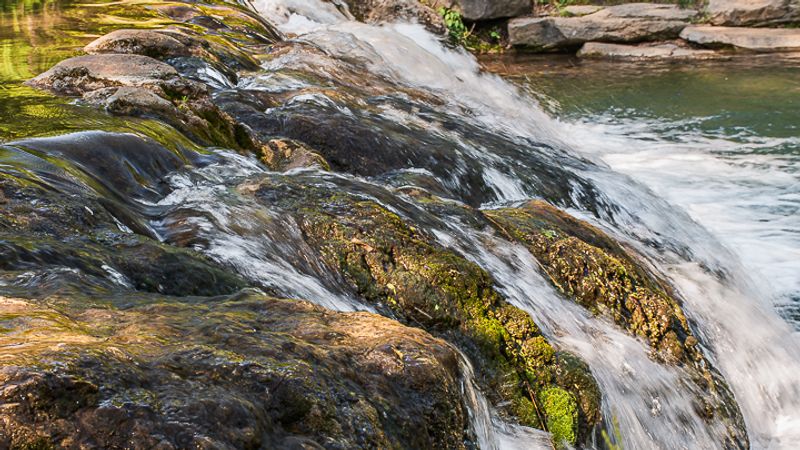
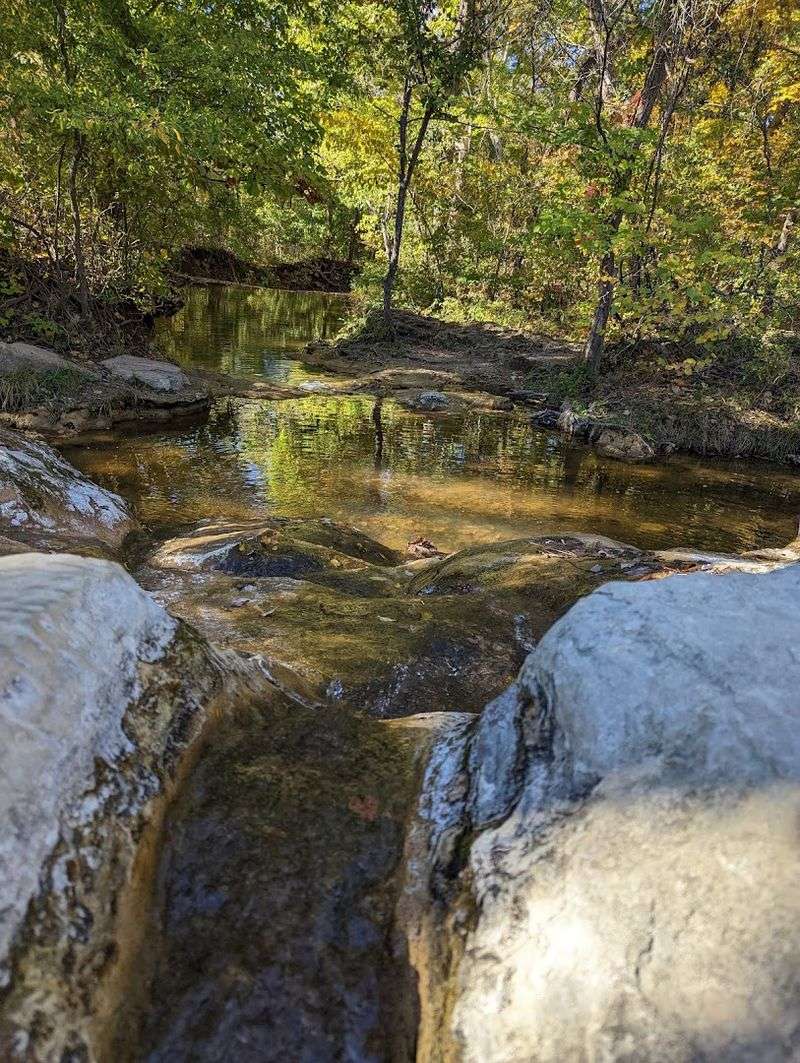
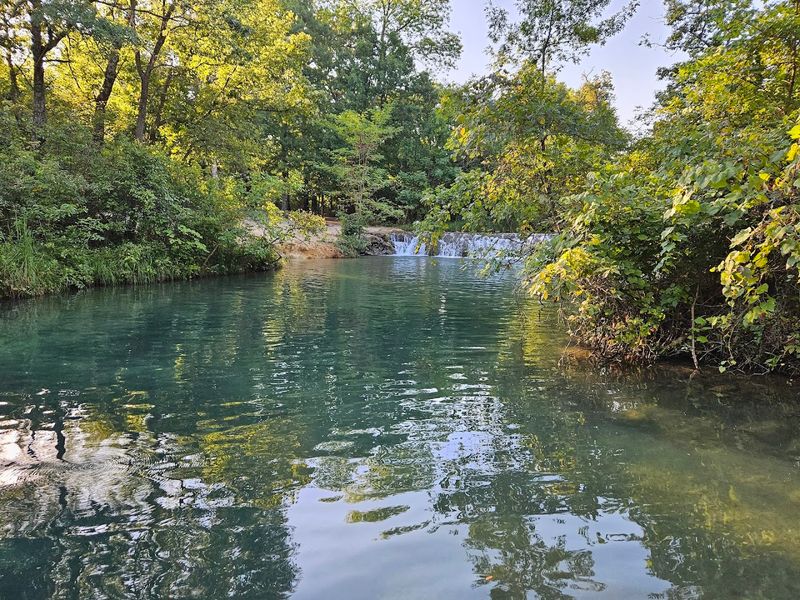
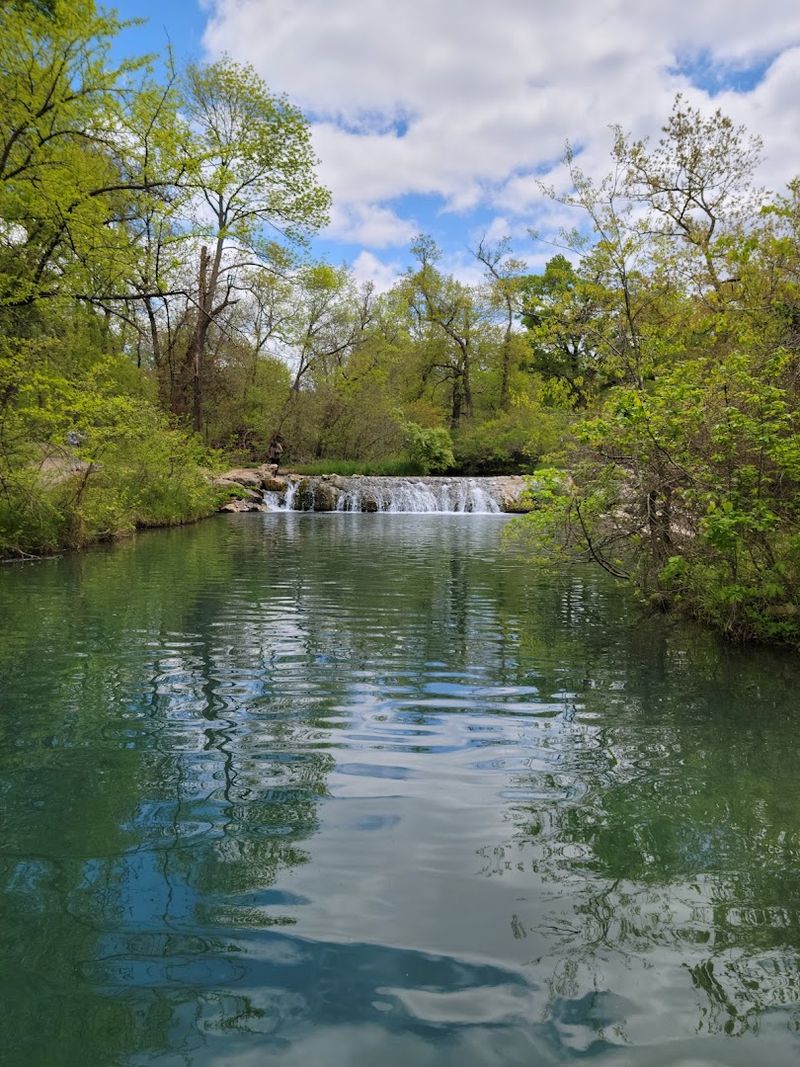
The name is a little bold, but once you see it, you understand why locals and repeat visitors talk about Little Niagara with such affection. The water runs over smooth travertine rock in wide, shallow sheets, forming natural pools that are cold enough to make you gasp and clear enough to see every pebble on the bottom.
Families set up along the banks with coolers and lawn chairs, kids hop from rock to rock, and the whole scene has a relaxed, unhurried energy that feels genuinely restorative. The water stays cold year-round because it comes from underground springs, so even on a sweltering Oklahoma summer afternoon, a quick dip feels like a full reset.
Water shoes are a smart call here because the rocks can be slippery, and the bottom is uneven in places. The area gets crowded on summer weekends and holidays, but visiting in the morning or during fall shoulder season gives you a much quieter experience.
The surrounding trees provide solid shade, which makes the whole stretch feel like a natural air-conditioned retreat tucked into the hillside.
Mineral Springs: Bubbling History You Can Actually Taste
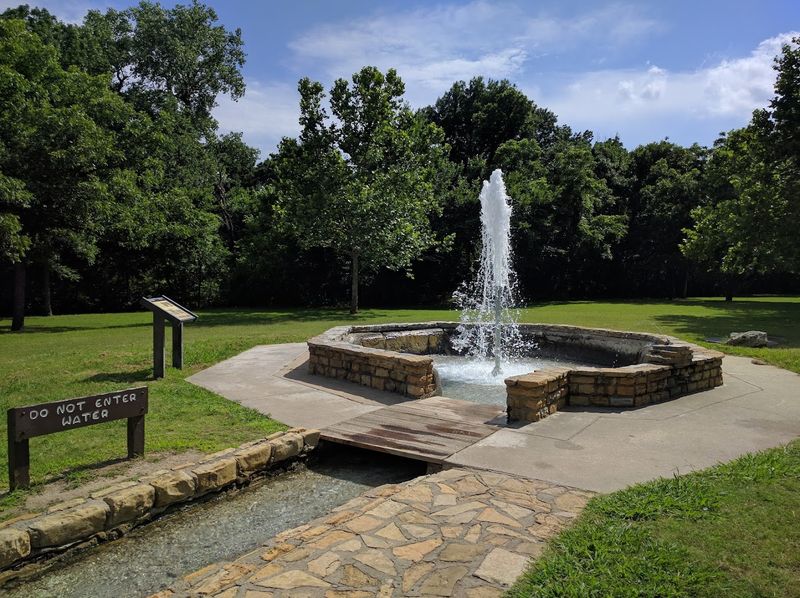
Long before the National Park Service arrived, the Chickasaw Nation and other Indigenous peoples recognized the healing properties of the springs in this area, and the town of Sulphur literally takes its name from the sulfur-rich water that still flows here today. The springs have been drawing visitors since the late 1800s, when people traveled from across the region to soak and drink the mineral-rich water.
There are multiple named springs throughout the park, each with a slightly different mineral composition and taste. Some are fizzy with natural carbonation, others have a distinctly earthy flavor that takes a moment to appreciate, and a few are surprisingly pleasant straight from the source.
Filling a reusable bottle at one of the designated springs is a quirky highlight that most visitors remember long after the trip.
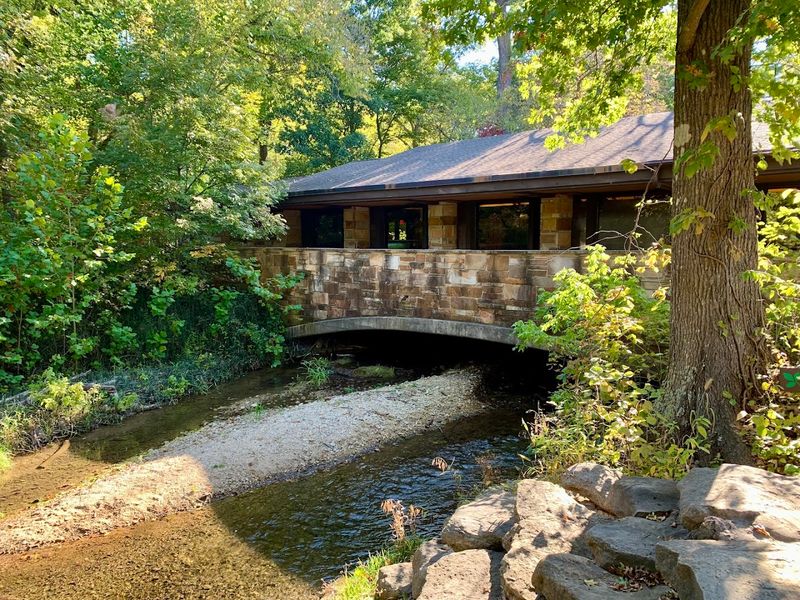
The Travertine Nature Center sits along a trail that passes several of these springs, and the walk itself is lovely, with stone bridges and CCC-era stonework that adds a sense of historical texture to the surroundings. The Civilian Conservation Corps built much of the infrastructure here in the 1930s, and their craftsmanship has held up remarkably well over the decades.
Hiking Trails: Easy Paths With Big Payoffs
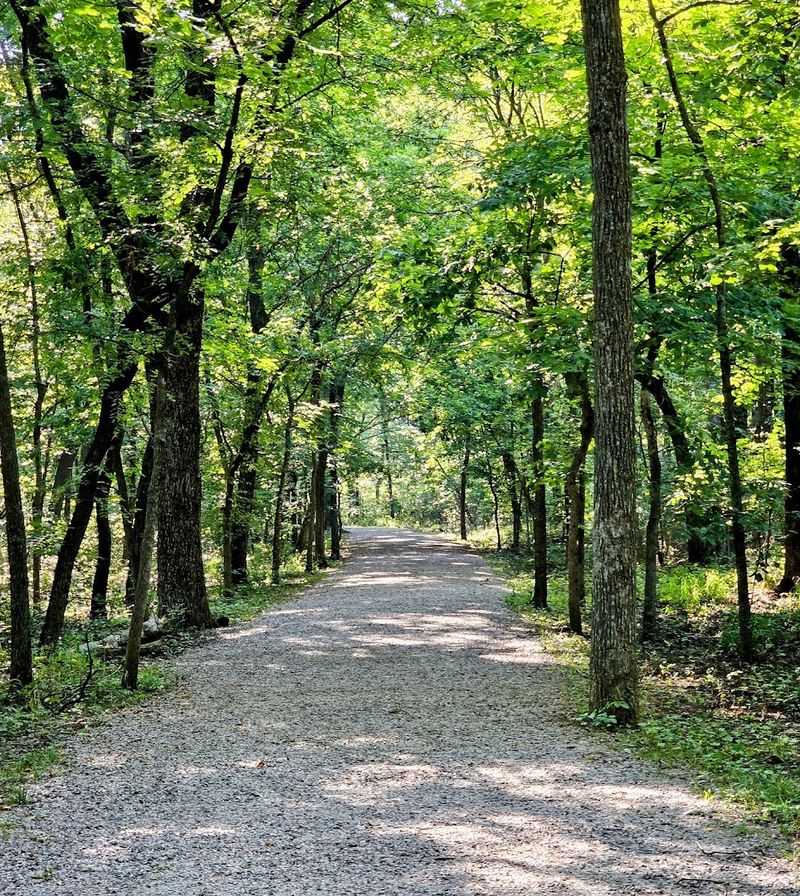
The trail system here is genuinely accessible, which is one of the things that makes this park so popular with families and casual hikers who do not want a grueling workout but still want to feel like they earned their views. Most of the main trails are relatively flat, well-marked, and easy to follow even without a detailed map.
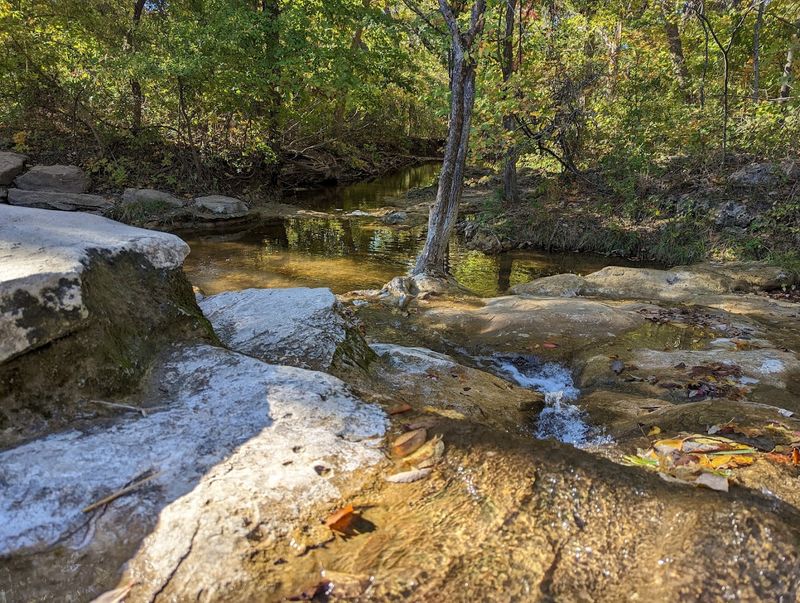
The Travertine Creek trail winds alongside the creek itself, crossing small bridges and passing through patches of woodland that feel almost enchanted in the early morning light. The longer loop around the full recreation area adds more mileage and a few elevation changes, but nothing that requires technical gear or serious training.
One practical tip worth mentioning: the trailhead signage does not always clearly indicate total distance, so downloading the NPS app or grabbing a paper map from the visitor center before you set out saves confusion later. Wildlife sightings are common on the trails, from white-tailed deer grazing near the path edges to the occasional armadillo shuffling through the underbrush.
The trails stay in excellent condition year after year, which says a lot about how well this park is maintained by its staff and rangers.
Lake Arbuckle and Lake of the Arbuckles: Water Sports Central
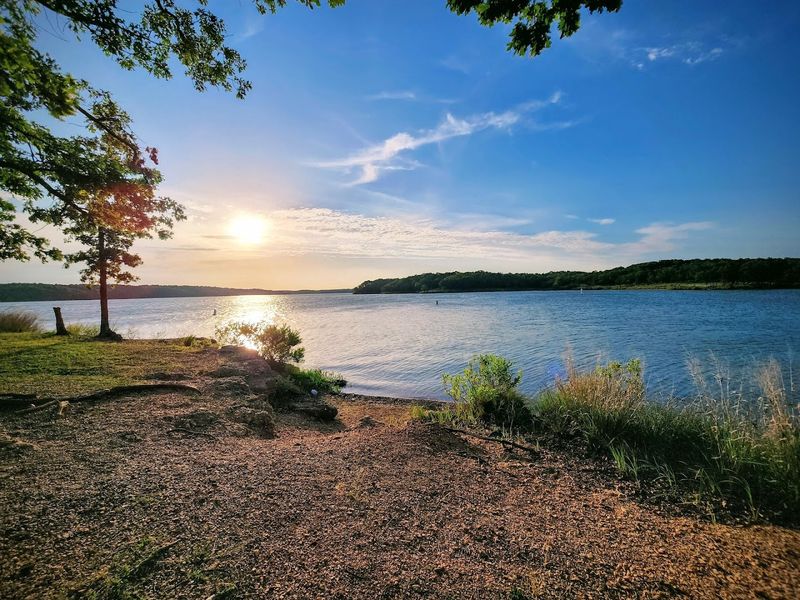
Two lakes anchor the recreation area and give the park a completely different personality from its spring-fed creek section. Lake of the Arbuckles and Lake Arbuckle are both open for swimming, boating, kayaking, and fishing, and they draw a crowd that is just as comfortable on the water as on dry land.
Kayaking is particularly popular, and the calm surface of the lake on a weekday morning is the kind of quiet that reminds you why people seek out places like this in the first place. Anglers come for bass, catfish, and crappie, and the fishing is productive enough that you will see plenty of people set up along the banks with rods in hand at all hours of the day.
The lake areas have designated swim zones with sandy entry points, and the water is generally clean and well-monitored. Boat ramps are available for those who bring their own watercraft, and the surrounding shoreline offers picnic areas with tables and grills.
Watching the sun drop behind the tree line over the lake at the end of a full day in the park is a genuinely satisfying way to close out any visit here.
Camping at the Park: Sleeping Under Genuine Dark Skies
Spending the night here transforms the experience entirely, and the park offers several distinct camping areas that cater to different styles of outdoor sleeping. The Central Campground and Buckhorn Campground are the most popular, with paved pads, access to clean restrooms and showers, and enough space between sites to feel comfortable without being isolated.
Reservations are strongly recommended, especially for summer weekends, and the standard fee runs around 22 dollars per night, which is reasonable for a National Park Service campground with full facilities. Loop A offers a more primitive experience for those who want to trade electrical hookups for a quieter, more rugged night under the stars.
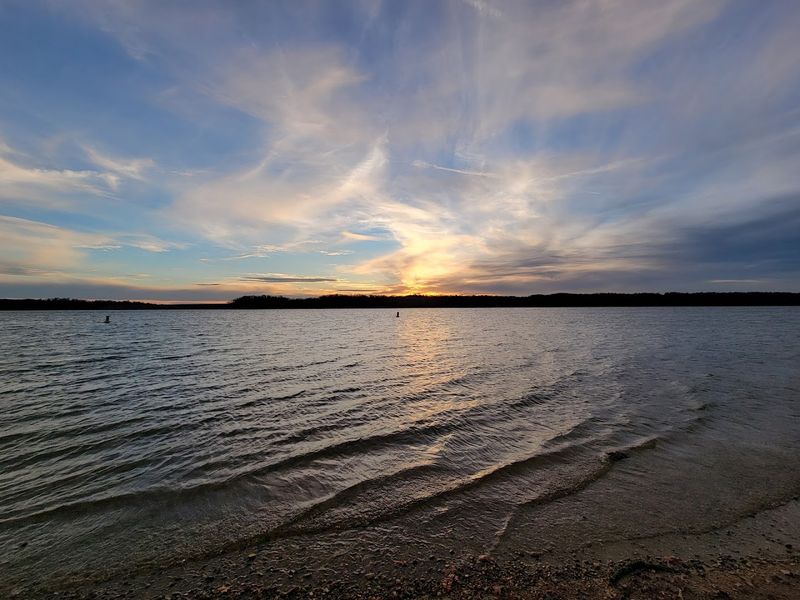
The sky out here gets genuinely dark once the campground lights dim, and stargazing from a camp chair after a full day of hiking and swimming has a way of putting everything in perspective. The park is clean in a way that reflects real effort from both staff and visitors who take the leave-no-trace ethos seriously.
Waking up to birdsong and the faint sound of the creek nearby is the kind of morning that makes you wonder why you do not do this more often.
The Chickasaw Cultural Center: A Story Worth Slowing Down For
Just outside the park boundaries in Sulphur sits one of the most impressive cultural institutions in the entire state of Oklahoma, and it deserves far more attention than it typically gets from visitors who come primarily for the outdoor activities. The Chickasaw Cultural Center tells the story of the Chickasaw Nation with depth, artistry, and a level of production quality that rivals any major museum.
The exhibits walk visitors through thousands of years of Chickasaw history, from pre-contact life through the forced removal along the Trail of Tears and into the modern era of tribal sovereignty and cultural revival. The architecture itself is stunning, drawing on traditional Chickasaw design elements in a way that feels both respectful and forward-looking.
Plan for at least two to three hours here because rushing through it means missing the details that make it genuinely moving. The outdoor spaces include recreated village structures, gardens, and performance areas that host cultural events throughout the year.
Combining a morning at the springs with an afternoon at the Cultural Center gives a single day trip a satisfying mix of natural beauty and human history that you simply cannot get anywhere else in the region.
Wildlife Beyond the Bison: What Else Roams the Park
The bison get most of the attention, but the park supports a surprisingly rich variety of wildlife that rewards patient and observant visitors. White-tailed deer are spotted so frequently along the trails and near the campgrounds that they barely seem to notice the humans walking past them anymore.
Armadillos are a genuinely delightful surprise for visitors from outside the region. They shuffle through the leaf litter with a kind of determined obliviousness, rooting around for insects with their pointed snouts, and they are bold enough that you can sometimes watch them for several minutes before they wander off.
The park also supports a healthy population of wild turkeys, various hawk species, and enough songbirds to keep birdwatchers happy for an entire morning.
Rangers occasionally lead guided nature walks where they point out plant species, track signs, and even catch small non-venomous snakes for visitors to observe up close, which tends to be a hit with kids and a mild adrenaline moment for everyone else. The mix of eastern woodland and western prairie habitat in this part of Oklahoma creates an unusually diverse ecosystem that supports species from both biomes in the same relatively small area.
Best Times to Visit: Timing Your Trip Right
Summer is the busiest season by a wide margin, and while the park is genuinely fun during those months, the crowds at Little Niagara and along the main trails can feel overwhelming on holiday weekends. Rangers have been known to direct traffic in the parking areas during peak days, which tells you everything you need to know about how popular this place gets.
Spring and fall are the sweet spots. Spring brings blooming vegetation, moderate temperatures, and a freshness to the air that makes every trail feel newly discovered.
Fall strips the leaves from the trees to reveal the underlying rock formations and gives the water a different kind of clarity that photographers tend to love.
Winter visits are surprisingly rewarding for those willing to bundle up. The crowds drop dramatically, the park takes on a quieter, more contemplative character, and you can walk the trails at your own pace without navigating around other groups.
The springs flow year-round regardless of season, so the signature natural features of the park are always accessible. Weekday visits during any season are noticeably less crowded than weekends, which is worth keeping in mind when planning your trip.
Practical Tips for a Smooth Visit
There is no general admission fee to enter the park, which makes it one of the best free outdoor destinations in the entire state of Oklahoma. Camping fees apply, and some special programs or events may have their own costs, but simply showing up and spending the day exploring costs nothing.
Water shoes are highly recommended for anyone planning to wade in the streams or swim near Little Niagara. The travertine rocks are beautiful but genuinely slippery, and more than a few visitors have learned that lesson the hard way.
Bringing a reusable water bottle lets you fill up at the mineral springs for a truly local experience.
Cell service is inconsistent in parts of the park, so downloading offline maps or picking up a paper trail map at the visitor center before heading out is a smart move. The gift shop near the visitor center is small but worth a browse, with locally relevant items and educational materials about the park’s natural and cultural history.
Arriving early on summer mornings, ideally before 9 a.m., gives you a solid head start before the parking areas fill up and the swimming spots get crowded.
Why This Place Stays With You Long After You Leave
There is a particular quality to this park that is hard to pin down but easy to feel. It sits at the intersection of two very different landscapes, where eastern woodland meets western prairie, and that collision produces something that feels genuinely unique rather than just generically pretty.
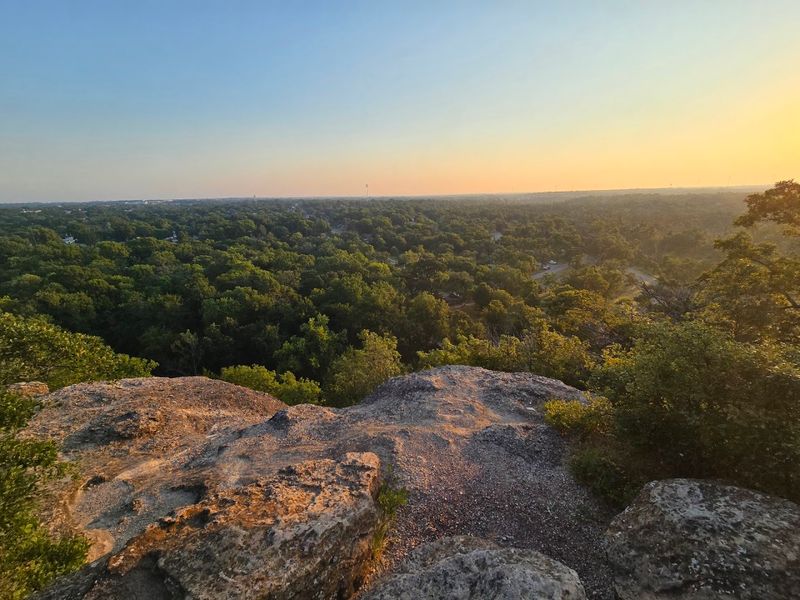
The natural springs create a lush, green corridor through otherwise dry terrain, the lakes give the park a sense of openness and scale, and the bison herd adds a layer of wildness that most day-trip destinations simply cannot offer. Bromide Hill provides an elevated lookout with views that stretch far across the surrounding countryside, and standing up there makes the whole place feel even larger than it already is.
People come back here year after year, sometimes for decades, because the park manages to feel both familiar and fresh at the same time. The Civilian Conservation Corps stonework, the mineral springs, the crystal water, and the free-roaming animals all combine into an experience that is quietly extraordinary.
Oklahoma has many beautiful places, but this one earns its reputation as something genuinely special in a way that no amount of marketing could manufacture on its own.
Share this story