Somewhere along a quiet stretch of highway in northern Michigan, tucked behind a curtain of towering white pines, sits one of the most quietly remarkable places I have ever visited. I almost drove past it.
A small sign, a gravel lot, and a modest cabin exterior gave me zero hints about what waited inside. But once the tour guide opened the door and I stepped into a world built entirely by one man’s hands, using only materials pulled from the forest floor, I knew I had stumbled onto something worth talking about.
This is a place where every chair, every table, every candlestick holder, and every inch of flooring tells a story of patience, love, and extraordinary skill. No power tools were used.
No shortcuts were taken. Just one man, his forest, and decades of devotion carved into wood.
By the time you finish reading, you will want to add this stop to your next Michigan road trip without a second thought.
Finding the Shrine: Location and First Impressions
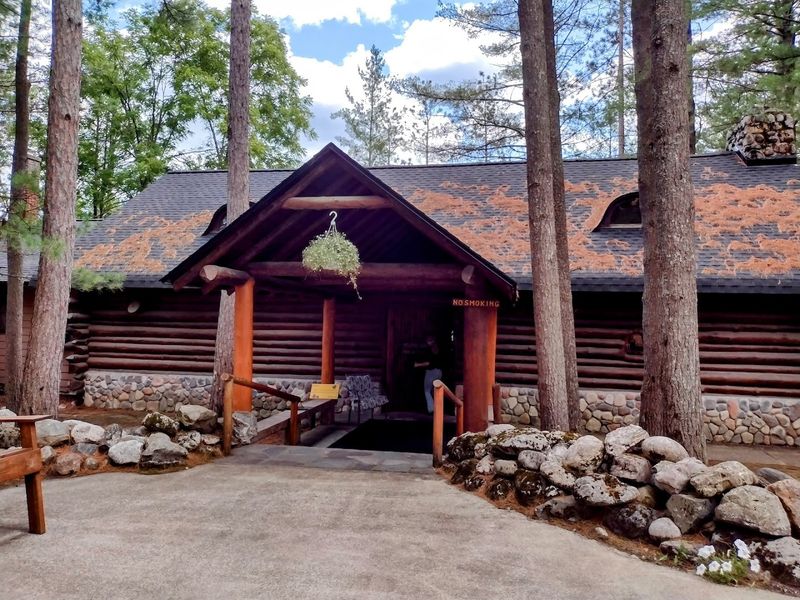
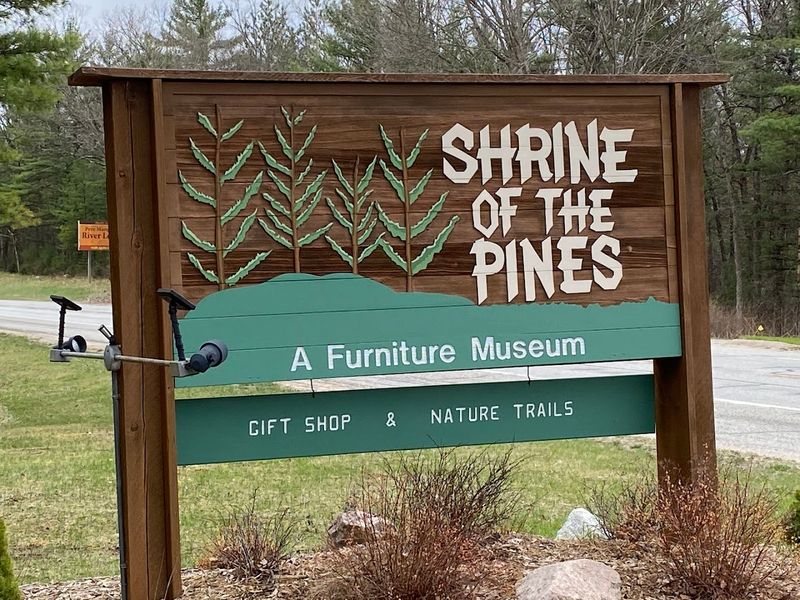
The Shrine of the Pines sits at 8962 M-37, Baldwin, Michigan 49304, right along a forested stretch of highway in Lake County. The surrounding landscape is dense with pines that block out most of the sky, giving the area a cathedral-like hush before you even reach the front door.
From the outside, the building looks like a sturdy log cabin, charming but understated. Nothing about the exterior prepares you for what is inside.
The parking area is small and unpretentious, and the whole property feels like it belongs to the forest rather than to a tourist circuit.
I arrived on a weekday morning and was greeted almost immediately by a knowledgeable guide who seemed genuinely excited to share the story of the place. The admission cost is remarkably affordable, making it an easy yes for anyone passing through the Baldwin area on their way up north.
The Man Behind the Work: Raymond Overholzer’s Story
Raymond Overholzer was not a trained carpenter or a professional artist. He was a former trapper and outdoorsman who fell so deeply in love with the white pine forests of Michigan that he decided to dedicate the second half of his life to honoring them through woodcraft.
After the logging industry had stripped much of Michigan’s old-growth forest, Overholzer felt a personal responsibility to preserve what remained. He began collecting fallen pine stumps and roots from the Pere Marquette State Forest nearby, refusing to cut a single living tree.
From the 1930s until his passing in 1952, he worked almost entirely alone, using hand tools and an extraordinary eye for natural form. Every piece of furniture, every decorative element, and every structural feature of the Shrine was shaped by his hands.
His story is one of quiet determination, and hearing it told by the tour guide adds a depth to the visit that no museum placard could fully capture.
What “No Power Tools” Actually Means When You See the Results
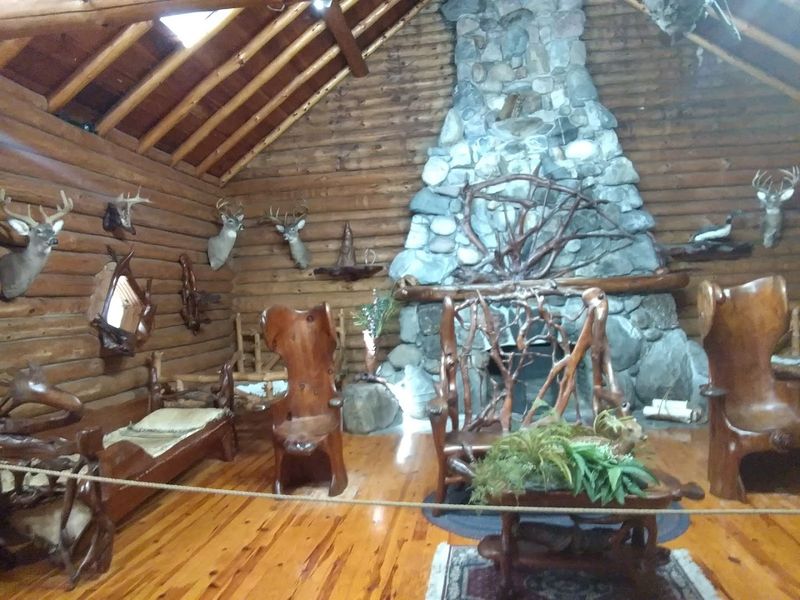
Before my visit, I thought the “no power tools” detail was a nice historical footnote. Once I was standing inside the Shrine, it became the most staggering fact in the room.
Every curve, every joint, every smoothed surface was achieved with chisels, hand planes, and sandpaper alone.
Overholzer worked by hand for roughly two decades to fill the space with over 200 pieces of furniture and decorative objects. The precision is almost hard to accept.
Chairs with perfectly matched armrests, tables with seamlessly fitted tops, candleholders carved from single pieces of root, all done without electricity.
What makes it even more impressive is that many pieces follow the natural contours of the wood rather than forcing the material into a predetermined shape. Overholzer let the pine tell him what it wanted to become.
That philosophy shows in every piece, and it gives the collection a warmth and organic character that factory-made furniture simply cannot replicate.
The Furniture Collection: Over 200 One-of-a-Kind Pieces
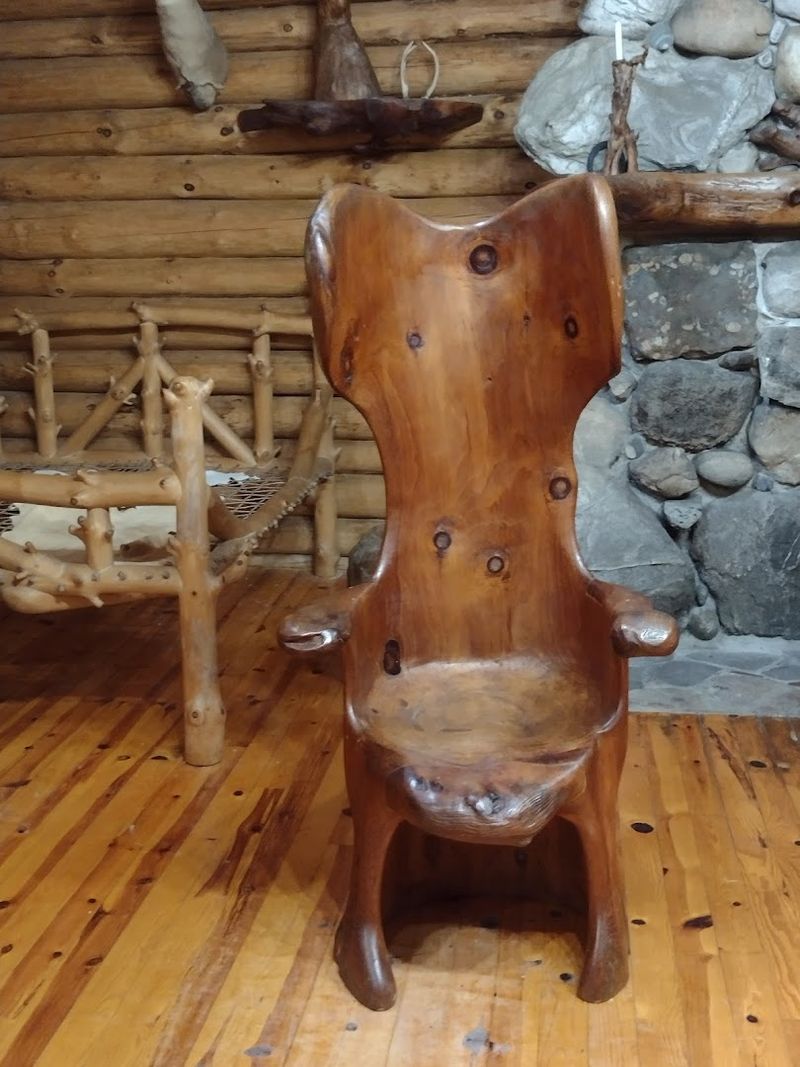
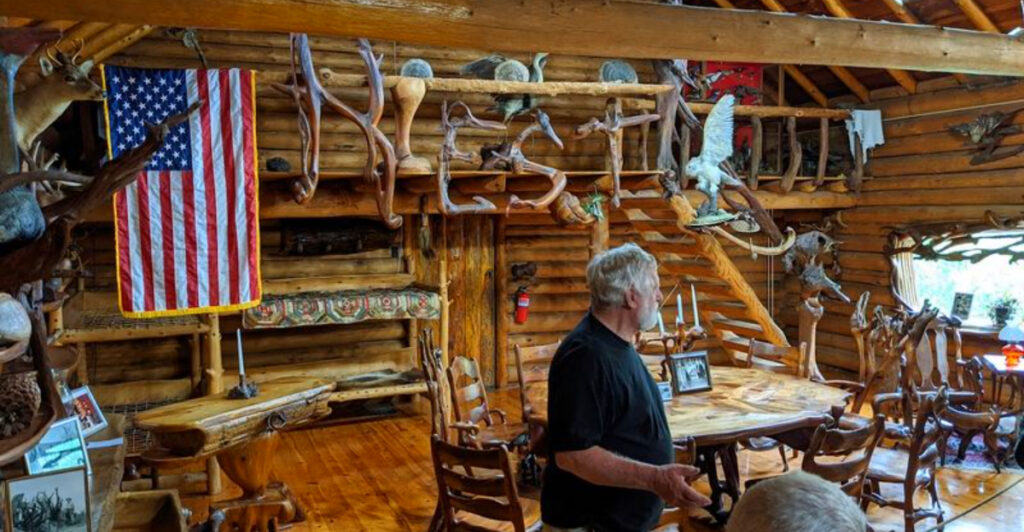
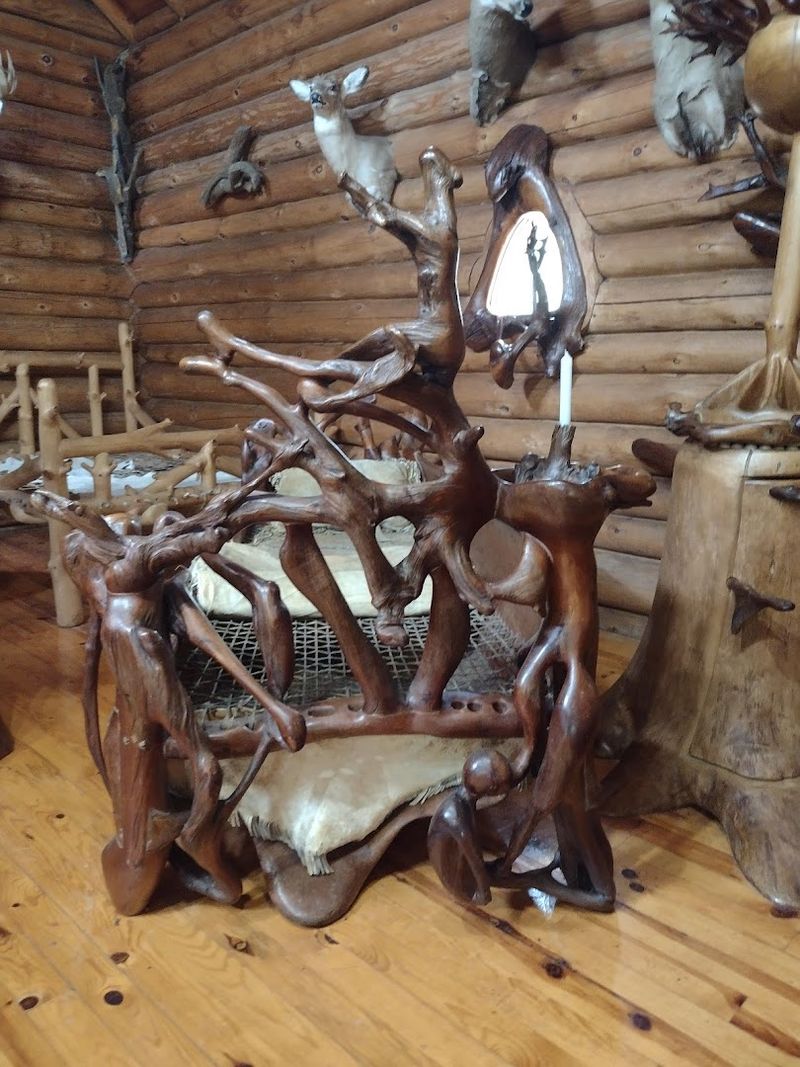
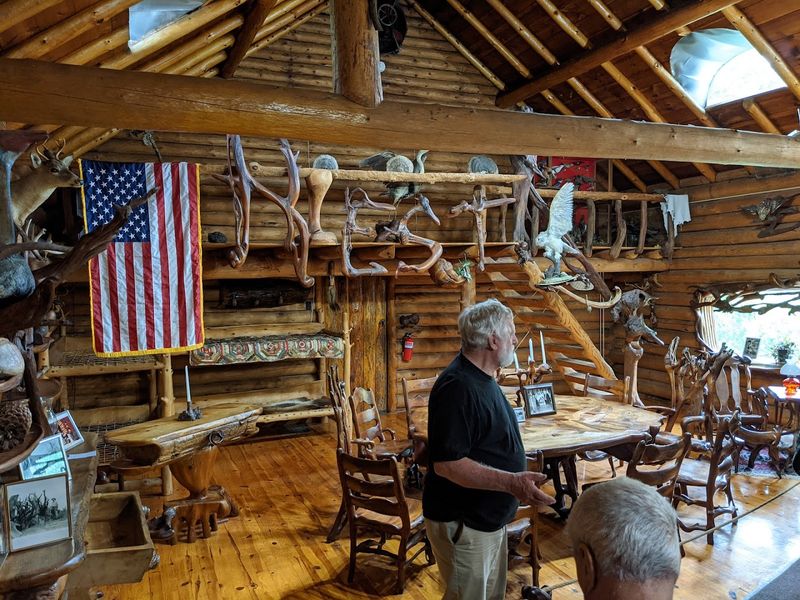
More than 200 individual pieces of furniture fill the Shrine, and no two are alike. Chairs made from gnarled root clusters sit next to tables whose legs are single pine trunks still wearing their natural bark.
Stools rise from what once were pine stumps rooted deep in the Michigan soil.
The variety is surprising. Overholzer crafted rocking chairs, dining sets, beds, dressers, and decorative pieces, all from reclaimed pine.
Some pieces are relatively simple in form but stunning in material. Others are so complex in their joinery and carving that they look like they belong in a fine arts museum rather than a cabin in the woods.
Each piece has a history, and the tour guide connects those histories to specific moments in Overholzer’s life. That context transforms the collection from a display of objects into a timeline of one man’s relationship with his craft.
Spending time with each piece, really looking at it, rewards the patient visitor in a way that a quick walk-through never could.
The Log Cabin Structure Itself Is a Work of Art
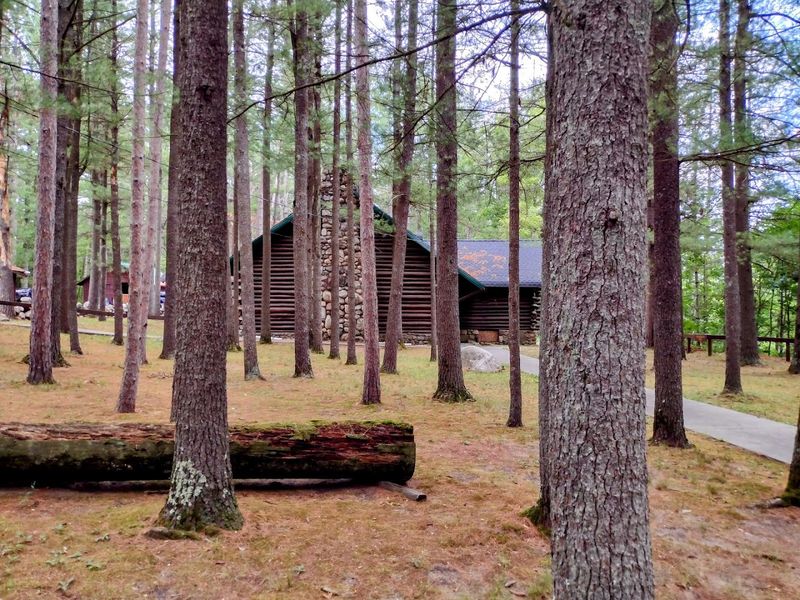
Most visitors come for the furniture, but the building itself deserves its own moment of appreciation. Overholzer constructed the cabin by hand as well, using massive white pine logs fitted together with careful joinery.
The walls are thick, the corners are tightly joined, and the whole structure feels like it was grown from the forest floor rather than built on top of it.
The logs used in construction came from trees that had already fallen, consistent with Overholzer’s commitment to not harming the living forest. The scale of some of these logs is genuinely surprising.
White pine trees in Michigan’s old-growth areas grew to enormous sizes before the logging era, and the Shrine preserves that scale in its walls and structural beams.
Natural light filters through small windows, keeping the interior dim and intimate. The smell of pine is constant and pleasant, a detail that sounds minor but shapes the entire sensory experience of the visit.
The cabin feels like a living part of the forest, not a building that was placed in front of it.
The Spiritual Atmosphere of the Space
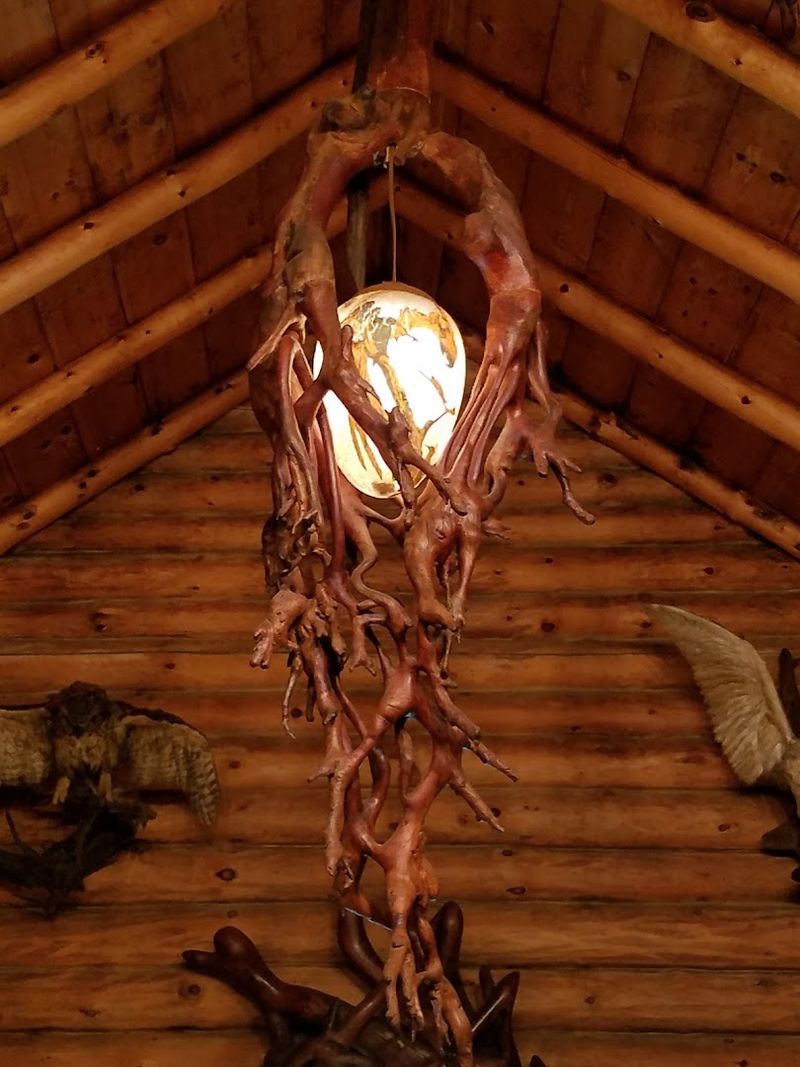
The word “shrine” is not accidental. From the moment you cross the threshold, the space carries a reverent quality that is hard to articulate but impossible to miss.
The low light, the smell of old pine, the silence of the surrounding forest, and the density of hand-crafted objects combine to create something that feels closer to a place of worship than a museum.
Overholzer himself spoke of his work in spiritual terms. He viewed the white pine forest as sacred, and his labor as a form of thanksgiving for the beauty he found there.
That intention seems to have soaked into the walls of the Shrine over the decades.
Visitors tend to speak quietly inside, almost instinctively. There is no recorded audio tour, no interactive screen, no background music.
Just the guide’s voice, the creak of the floorboards, and the remarkable objects surrounding you. For anyone who finds modern museums a bit overwhelming, the Shrine offers a genuinely calming alternative that lingers in the memory long after you leave.
The Pere Marquette State Forest Setting
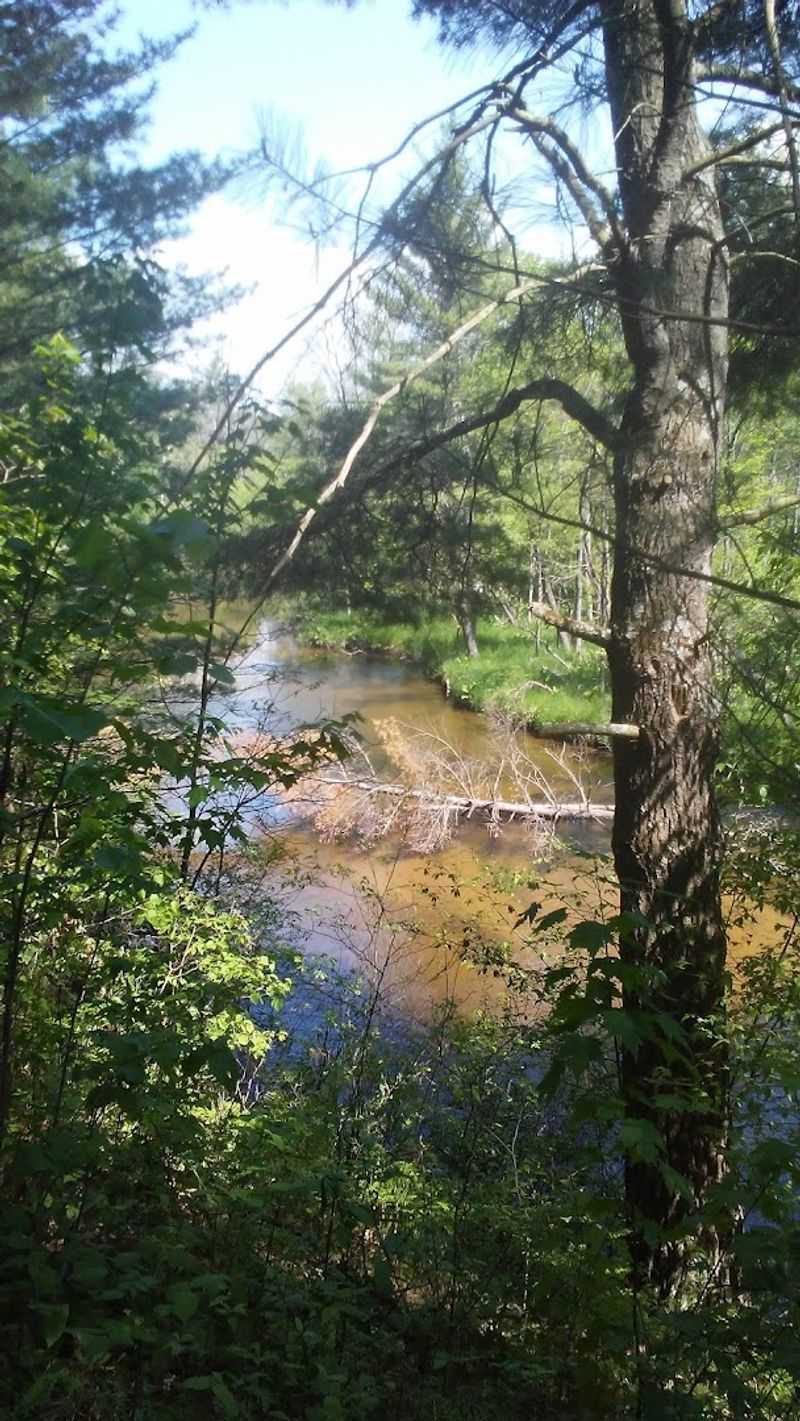
The Shrine does not exist in isolation. It sits on the edge of the Pere Marquette State Forest, one of Michigan’s largest and most beautiful stretches of protected woodland.
The forest that surrounds the property is the same forest that inspired Overholzer’s life work, and visiting gives you a direct connection to that landscape.
Old-growth white pines in this region can reach diameters of several feet, and a few surviving examples near the Shrine help visitors understand what Overholzer was working to honor. Seeing a seven-foot-diameter pine stump in person reframes everything you thought you knew about the scale of the original Michigan forest.
The road leading to the Shrine is itself a pleasant drive through forested terrain, and the surrounding area offers opportunities for hiking, fishing on the Pere Marquette River, and general exploration of one of Michigan’s quietest and most scenic corners. The Shrine is a destination, but the landscape around it is very much part of the experience.
Taking the Guided Tour: What to Expect
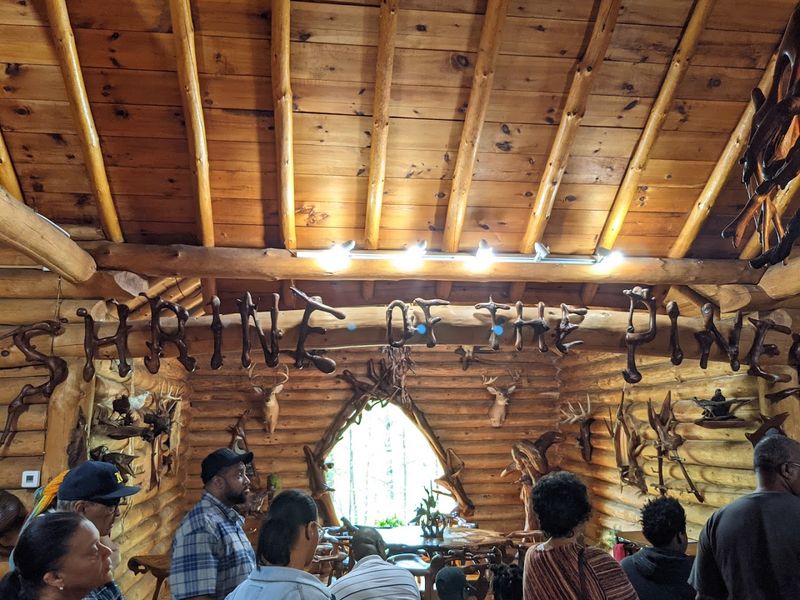
Every visitor to the Shrine gets a personal guided tour, and that detail alone sets it apart from most small museums. The guides are deeply familiar with Overholzer’s biography, the construction of the building, and the story behind individual pieces in the collection.
Tours typically last around an hour, though the pace is relaxed and the guide adjusts based on what the group finds most interesting. Families with young children, woodworking enthusiasts, and history buffs all tend to connect with different parts of the story, and a good guide finds the thread that works for each group.
Because the Shrine is staffed by a very small team, calling ahead before your visit is a genuinely good idea. The place runs on dedication rather than a large operation, and showing up without checking could occasionally result in a closed door.
A quick phone call to +1 231-745-7892 takes less than two minutes and saves a wasted trip. The tour itself is absolutely worth the planning.
Best Time to Visit and Seasonal Considerations
The Shrine of the Pines is a seasonal attraction, generally open from May through October. Winter visits are not possible, so timing matters more here than it might at a year-round attraction.
Checking current hours before making the trip is always a smart move, since the small staff means schedules can shift.
Summer is the most popular season, when Michigan’s northern roads fill with families heading to lakes and campgrounds. Visiting on a weekday morning in June or early July usually means a quieter experience with more personal attention from the guide.
Late September and October bring the added bonus of fall color in the surrounding forest, which frames the cabin beautifully.
Spring visits, once the Shrine reopens, offer a particularly fresh version of the forest setting, with new growth brightening the understory beneath the pines. Whatever season you choose, arriving with a relaxed schedule and no time pressure makes the experience significantly more enjoyable.
Rushing through the Shrine would be doing it a disservice.
A Destination Worth the Drive from Anywhere in Michigan
Baldwin sits in Lake County, roughly two and a half hours north of Grand Rapids and about three hours from Detroit. It is not a quick detour from a major city, but the drive through central Michigan’s forested interior is genuinely pleasant and makes the destination feel earned.
Travelers coming from Big Rapids can reach the Shrine in under 30 minutes, making it an easy addition to a weekend in that area. Those driving north on US-131 can connect to M-37 and reach Baldwin without much deviation from a standard northern Michigan route.
The affordable admission price, the personal guided tour, and the one-of-a-kind collection make the mileage feel like a very reasonable trade. Most visitors seem to leave saying the same thing: they wish they had known about this place sooner.
The Shrine of the Pines is the kind of destination that turns a road trip from a simple drive into something genuinely memorable, a story you find yourself telling for years afterward.
Share this story