A road trip through the American West is one of the greatest adventures you can take. From towering canyon walls to glittering city lights, the landscapes shift dramatically mile by mile.
Whether you’re cruising Route 66 or exploring side roads, the detours are often the best part of the journey. Pack your bags, fill up the tank, and get ready for an unforgettable ride through some of the most breathtaking places in the country.
1. Grand Canyon (Arizona)
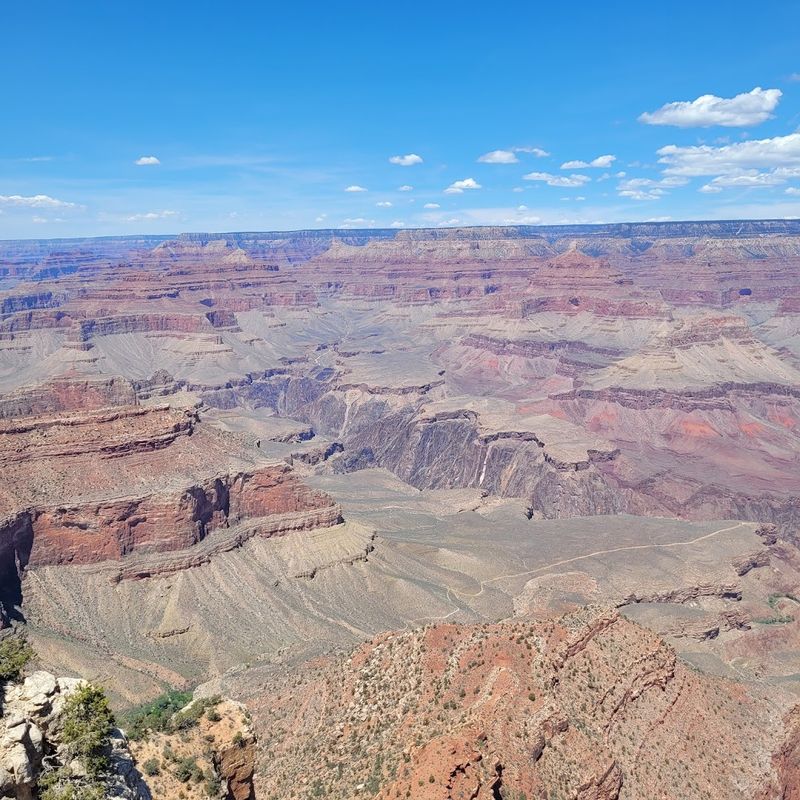
Standing at the rim of the Grand Canyon for the first time is the kind of moment that stops you cold. Words genuinely fail to capture how massive and ancient this place feels.
The canyon stretches 277 miles long and reaches depths of over a mile, carved by the Colorado River over millions of years.
Located just a short detour from Route 66, it fits naturally into any western road trip itinerary. South Rim is the most accessible entry point and stays open year-round.
Sunrise and sunset visits reward travelers with dramatic lighting that transforms the canyon walls into a painting of red, orange, and purple hues.
Hiking trails range from easy rim walks to challenging backcountry routes. Even a one-hour stroll along the Rim Trail delivers unforgettable views.
Book lodging or camping permits well in advance, especially during summer months.
2. Monument Valley (Arizona/Utah)
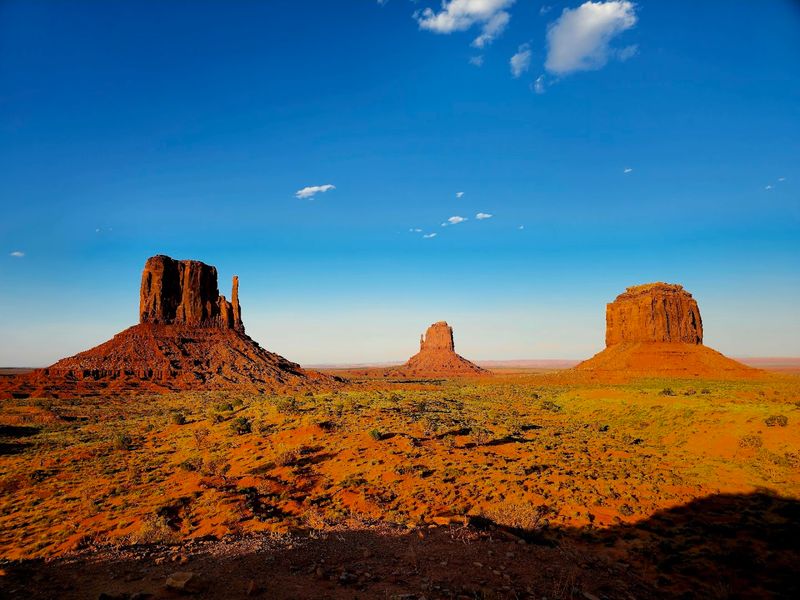
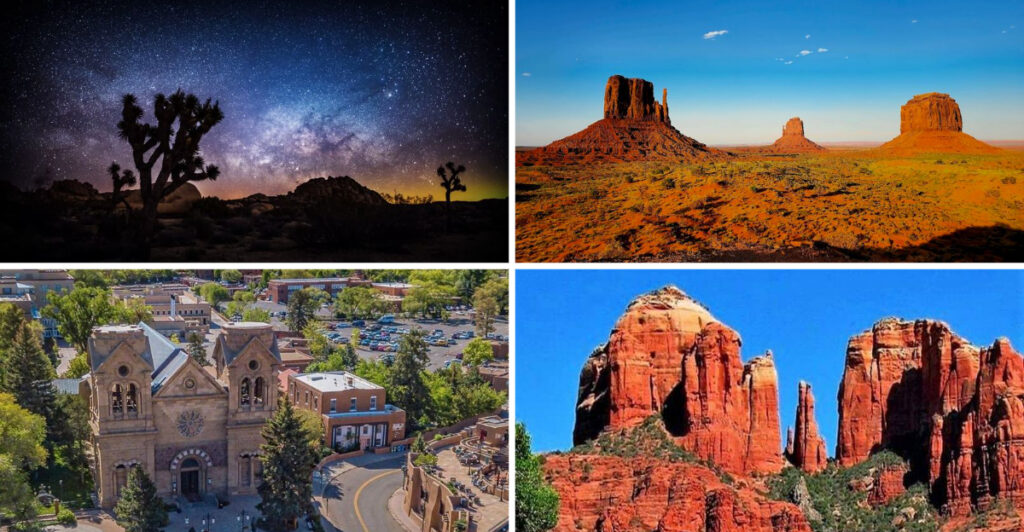
Few landscapes on Earth are as instantly recognizable as Monument Valley. Those towering sandstone buttes have appeared in dozens of classic Western films, making the scenery feel both familiar and surreal when you finally see it in person.
John Ford Point, named after the legendary director, is one of the most photographed spots in the entire American West.
Straddling the Arizona and Utah border within the Navajo Nation, the valley is managed by the Navajo people, and guided tours led by local Navajo guides add meaningful cultural context to the visit. The 17-mile Valley Drive is unpaved but manageable for most vehicles and takes about two hours to complete.
Camping under the stars here is an experience unlike any other. The open desert sky, free from city light pollution, makes for extraordinary stargazing after the tour buses have gone home for the evening.
3. Antelope Canyon (Arizona)
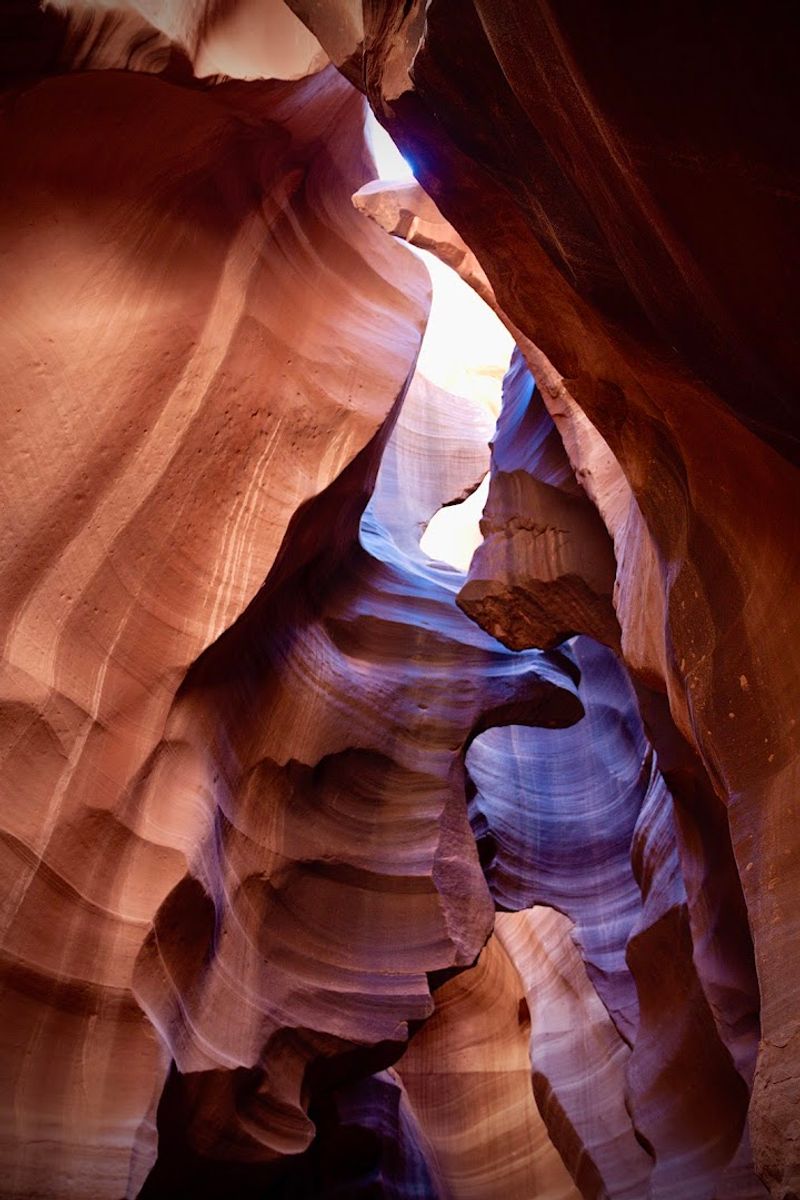
Antelope Canyon looks like something from another planet. Smooth, wave-like walls of red and orange sandstone twist upward in narrow corridors, and when sunlight beams down from above, the whole canyon glows.
Photographers travel from all over the world specifically to capture these light shafts, which typically appear between late morning and early afternoon.
Located near Page, Arizona, the canyon is split into two sections known as Upper Antelope Canyon and Lower Antelope Canyon. Both are located on Navajo land and require a guided tour to enter.
Upper Antelope is wider and more accessible, while Lower Antelope offers more dramatic formations for adventurous visitors willing to climb ladders.
Booking tours in advance is strongly recommended, especially during peak spring and summer months when spots fill up fast. Entry fees are modest, and the experience is absolutely worth every penny spent getting there.
4. Petrified Forest National Park (Arizona)
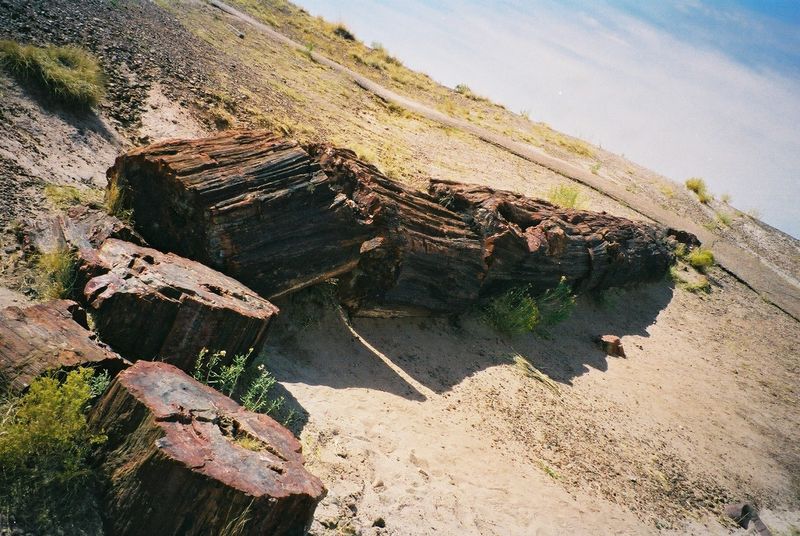
Driving through Petrified Forest National Park feels like traveling back in time about 225 million years. Ancient trees that once towered over a tropical landscape have slowly turned to solid crystal and stone, leaving behind brilliant logs of red, purple, and yellow scattered across the desert floor.
It is genuinely one of the most unusual natural sights in the country.
The park sits right along Interstate 40, making it one of the easiest detours on any Route 66 road trip. A 28-mile scenic drive winds through both the petrified wood fields and the colorful Painted Desert, offering stunning views without requiring serious hiking.
Several short trails lead visitors up close to the fossilized logs.
Admission is affordable, and the park is open year-round. The visitor center provides excellent background on the science and history behind the petrification process, which is fascinating even for younger travelers along for the ride.
5. Las Vegas (Nevada)
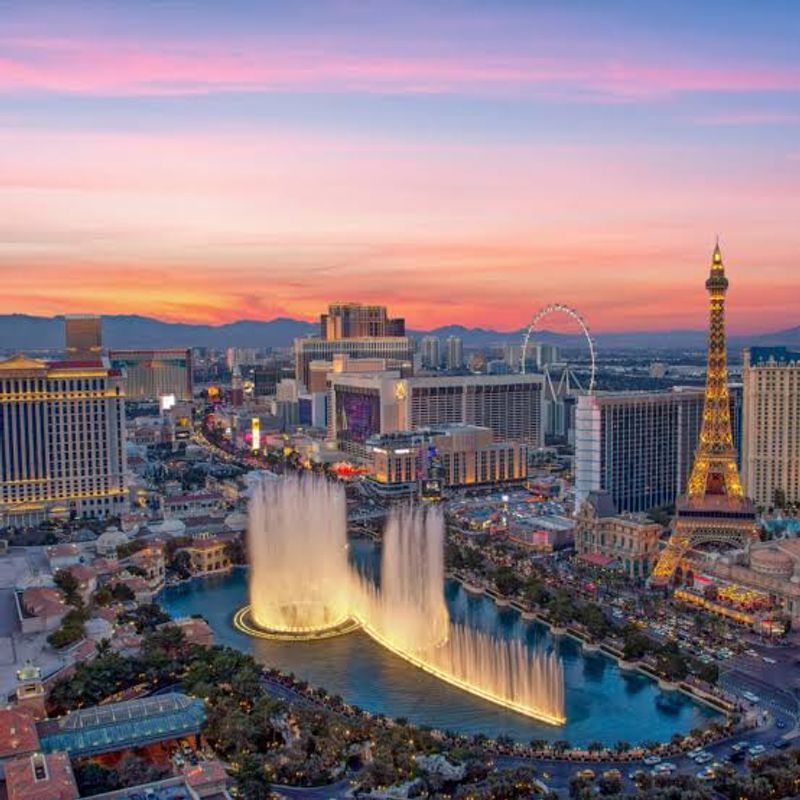
Las Vegas is unlike anywhere else on the planet. The Strip blazes with neon light and spectacle around the clock, and even travelers with zero interest in gambling find themselves completely absorbed by the energy of the place.
World-class restaurants, live entertainment, rooftop pools, and dazzling architecture make it a destination that suits almost every type of traveler.
From Kingman, Arizona, Las Vegas is roughly a 90-minute drive north on US-93, making it a natural overnight detour from Route 66. Prices for hotels fluctuate wildly depending on the weekend, so booking midweek often saves significant money.
The Fremont Street Experience in downtown Las Vegas offers a more historic, walkable alternative to the busy Strip.
Beyond the casinos, the surrounding desert holds real gems. Red Rock Canyon is just 17 miles west of the Strip and offers hiking, climbing, and dramatic scenery that feels a world away from the neon glow behind you.
6. Hoover Dam (Nevada/Arizona)
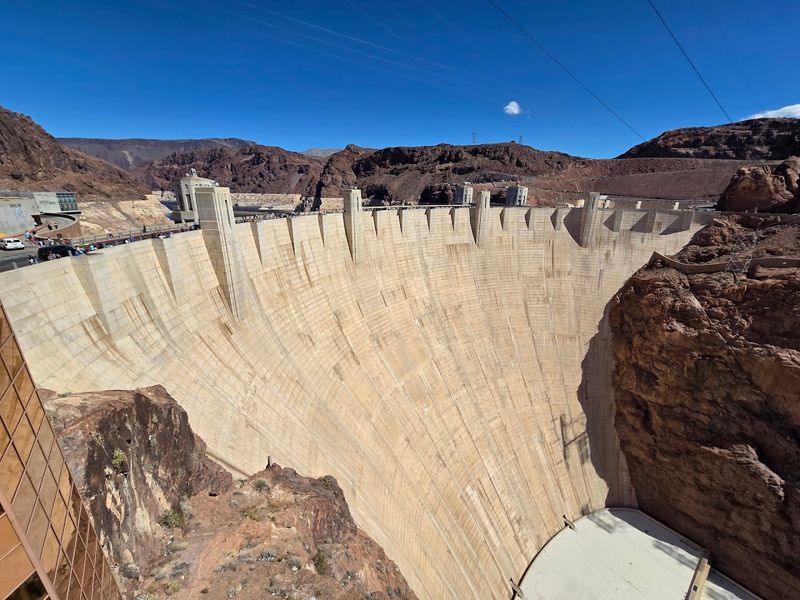
Built during the Great Depression, Hoover Dam remains one of the most impressive feats of engineering in American history. Completed in 1935, it stands 726 feet tall and took roughly 21,000 workers to construct.
The dam transformed the desert Southwest by providing water and electricity to millions of people across several states.
Sitting on the Nevada and Arizona border, just 30 miles southeast of Las Vegas, it makes an easy and worthwhile half-day stop. The free parking structure on the Nevada side gives quick access to the walkway across the dam.
Paid tours take visitors inside the structure, through the tunnels, and down to the powerplant floor, which is genuinely impressive to see up close.
Lake Mead, the massive reservoir created by the dam, is visible from multiple viewpoints nearby. Watching the sheer scale of the water held back by this concrete structure makes the engineering achievement feel even more extraordinary than it reads in history books.
7. Santa Fe (New Mexico)
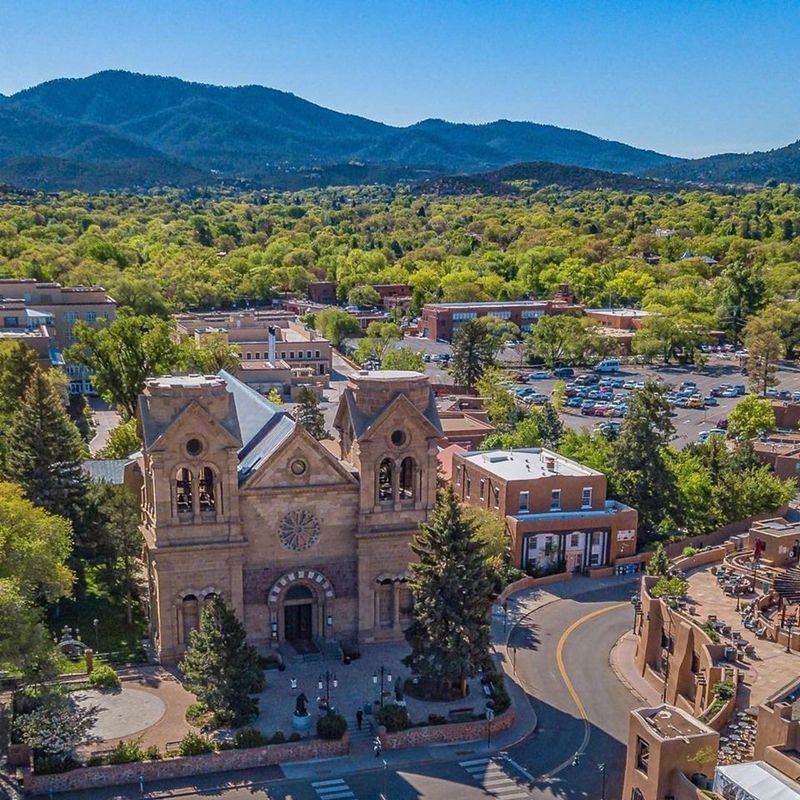
Santa Fe carries a quiet, unhurried energy that is completely its own. As the oldest state capital in the United States, the city has been continuously inhabited for over 400 years, and that history shows in every adobe building, every art gallery, and every bite of traditional New Mexican cuisine.
The blend of Native American, Spanish colonial, and modern American culture creates something genuinely unique.
Located about 60 miles east of Albuquerque on I-25, Santa Fe is a natural addition to any southwestern road trip. Canyon Road is famous for its concentration of art galleries, where local and internationally recognized artists display their work in historic adobe studios.
The Georgia O’Keeffe Museum downtown celebrates the painter who made the New Mexico landscape famous worldwide.
The food alone is worth the detour. Green chile cheeseburgers, posole, and tamales served at local restaurants carry flavors you simply cannot find anywhere else in the country.
8. Sedona (Arizona)
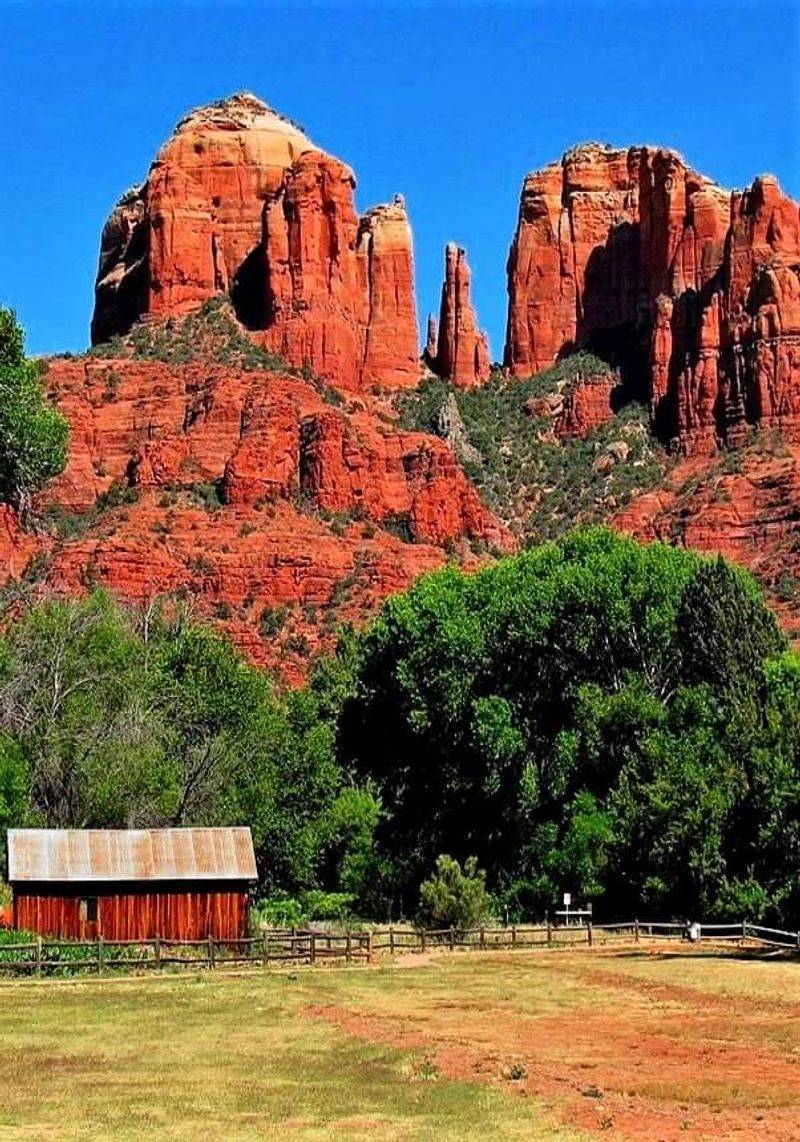
Sedona hits you the moment you arrive. The red rock formations rise suddenly from the surrounding desert, glowing deep amber and rust in the afternoon light, and the effect is almost dreamlike.
Cathedral Rock, Bell Rock, and Courthouse Butte are among the most photographed formations, each offering accessible trails that bring you right to their base.
Located about 30 miles south of Flagstaff on State Route 89A, Sedona is an easy and rewarding detour from Route 66. The scenic drive through Oak Creek Canyon on the way in from Flagstaff is stunning on its own.
Tlaquepaque Arts and Shopping Village near the center of town offers locally crafted jewelry, pottery, and art in a beautiful Spanish colonial-style courtyard.
Beyond hiking, Sedona is well known for its wellness culture, with numerous spas and yoga retreats tucked among the rocks. Whether you come for the scenery or the serenity, the town delivers on both without much effort required from the visitor.
9. Cadillac Ranch (Texas)
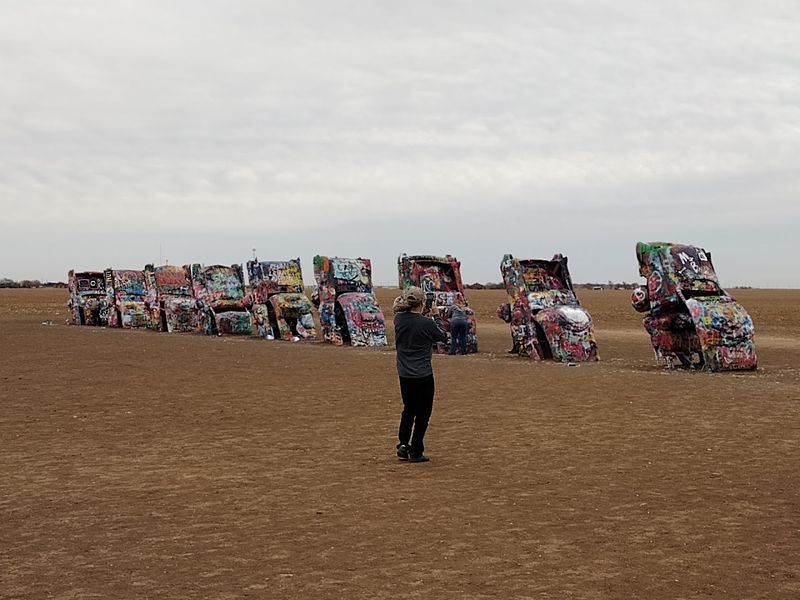
Cadillac Ranch is delightfully weird, and that is exactly the point. Ten vintage Cadillacs, spanning model years from 1949 to 1963, are buried nose-first in a flat panhandle field just west of Amarillo, Texas.
The installation was created in 1974 by the art group Ant Farm as a commentary on American car culture, and it has been a beloved roadside attraction ever since.
Visitors are actually encouraged to bring spray paint and add their own layer to the cars, which means the color scheme changes constantly. Cans of spray paint can be picked up at nearby hardware stores for just a couple of dollars.
The field is open every day, free of charge, from sunrise to sunset.
It is pure, unapologetic Route 66 energy. No gift shop, no admission booth, just a bunch of painted cars sticking out of the ground in the middle of the Texas plains.
Few stops on the entire trip generate more genuine smiles than this one.
10. Joshua Tree National Park (California)
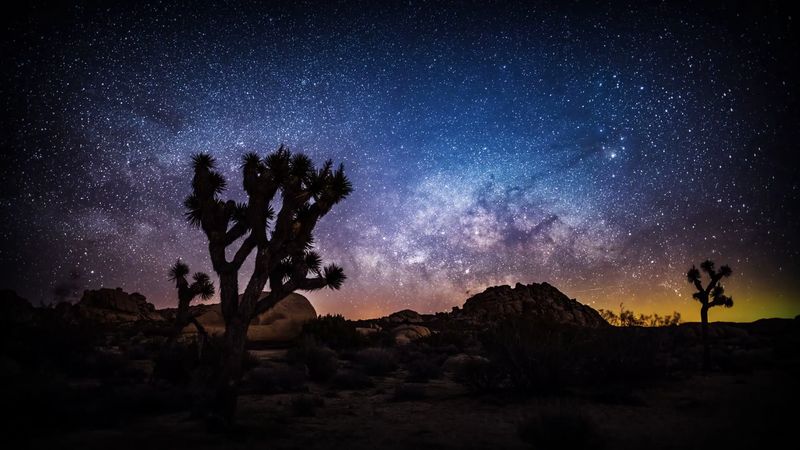
Joshua Tree National Park sits at the intersection of two distinct desert ecosystems, the Mojave and the Colorado, which gives it a landscape unlike anything else in California. The park’s namesake trees, with their spiky, otherworldly silhouettes, look like they belong on a science fiction movie set.
Boulders the size of houses are scattered throughout, drawing rock climbers from around the world.
Located about 130 miles east of Los Angeles on Interstate 10, the park works well as a detour heading west toward the Pacific. Multiple entrance stations provide easy access, and the park road connects many of the best viewpoints and trailheads.
Skull Rock and Cholla Cactus Garden are two short stops that pack serious visual impact.
Stargazing here is among the best in Southern California due to the park’s dark sky designation. On a clear night, the Milky Way is visible with the naked eye, making an overnight camping trip here genuinely unforgettable and well worth the extra planning.
11. Santa Monica Pier (California)
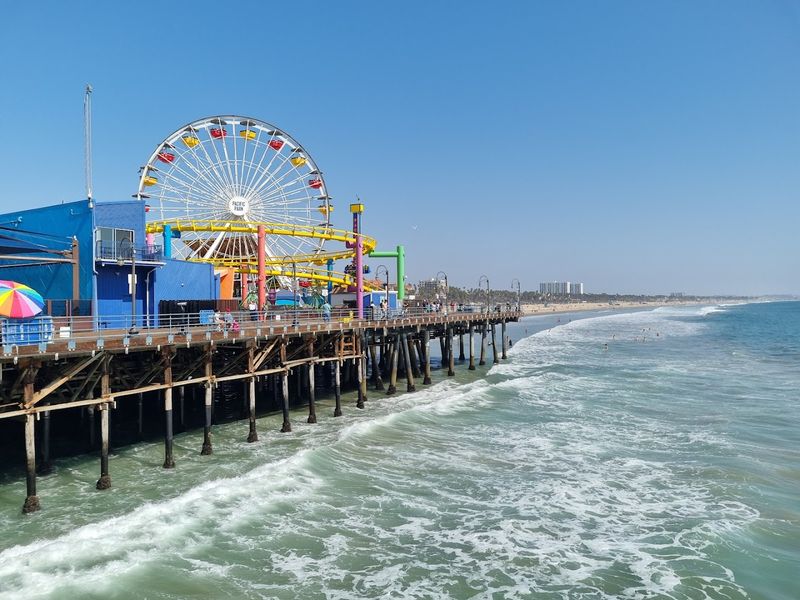
Reaching Santa Monica Pier after thousands of miles of desert highway feels like a proper reward. The pier marks the symbolic western terminus of Route 66, and a small sign near its entrance commemorates the historic end of the trail.
Standing there with the Pacific Ocean stretching out ahead of you, the journey suddenly feels complete in the most satisfying way.
The pier itself is a lively destination with a small amusement park, an aquarium beneath the boardwalk, seafood restaurants, and street performers entertaining crowds throughout the day. The Ferris wheel is solar-powered and has become one of the most recognizable images of the California coast.
Sunset from the pier is spectacular, with the sky turning pink and gold over the water.
The surrounding Santa Monica neighborhood is walkable and vibrant, with great food, shopping, and beach access just steps away. After weeks of desert driving, the cool ocean breeze feels like the perfect way to close out a legendary American road trip.
Share this story