There is a place in Michigan where the streets are lit by period-correct yellow stop signs, Model T cars rumble past historic homes, and costumed interpreters demonstrate crafts that most of us have only read about in textbooks. Henry Ford had a bold idea back in the early 20th century: gather the actual buildings, tools, and homes of the people who shaped America, and put them all in one place so future generations could walk through history rather than just read about it.
The result is Greenfield Village, a sprawling open-air museum that sits right next to the Henry Ford Museum in Dearborn, Michigan. With more than 80 historic structures spread across 80 acres, this is the kind of place where you can ride in a genuine 1914 Ford Model T, watch a blacksmith work the forge, and eat lunch from an 1850s recipe, all in the same afternoon.
Keep reading to find out exactly what makes this place so worth the trip.
Where the Village Begins: Address, Location, and First Impressions
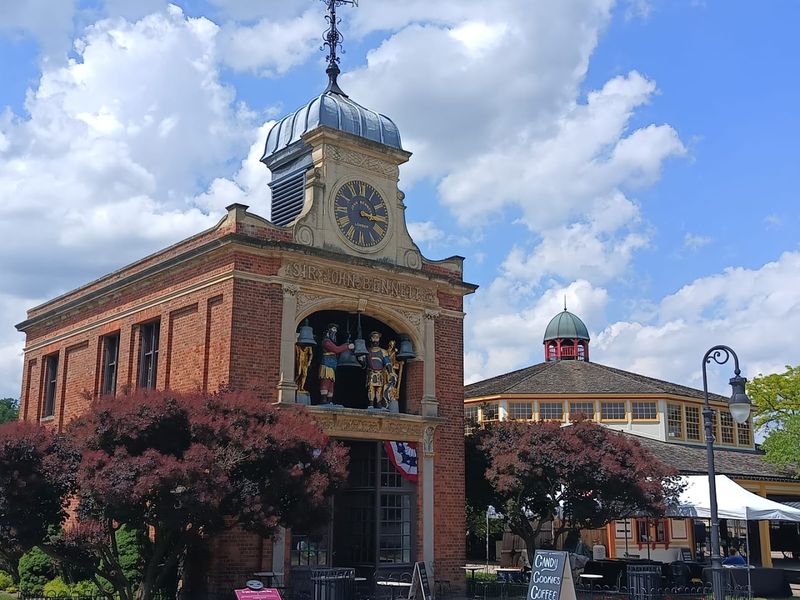
The moment you pull up to 20900 Oakwood Blvd, Dearborn, MI 48124, something shifts. The parking lot is modern enough, but once you pass through the entrance gates, the 21st century quietly steps aside.
Greenfield Village sits on 80 acres in Dearborn, Michigan, and is part of the larger Henry Ford campus, which also includes the Henry Ford Museum of American Innovation right next door. The village itself is organized into distinct neighborhoods, each representing a different slice of American history, from a working farm district to a Main Street area that feels plucked straight from the 1890s.
Buying tickets online ahead of your visit saves you money compared to the gate price, so that is worth doing before you go. The village is open seasonally, so checking the official website at thehenryford.org before planning your trip is a smart move.
First impressions here tend to be lasting ones.
Henry Ford’s Vision: The Story Behind the Village
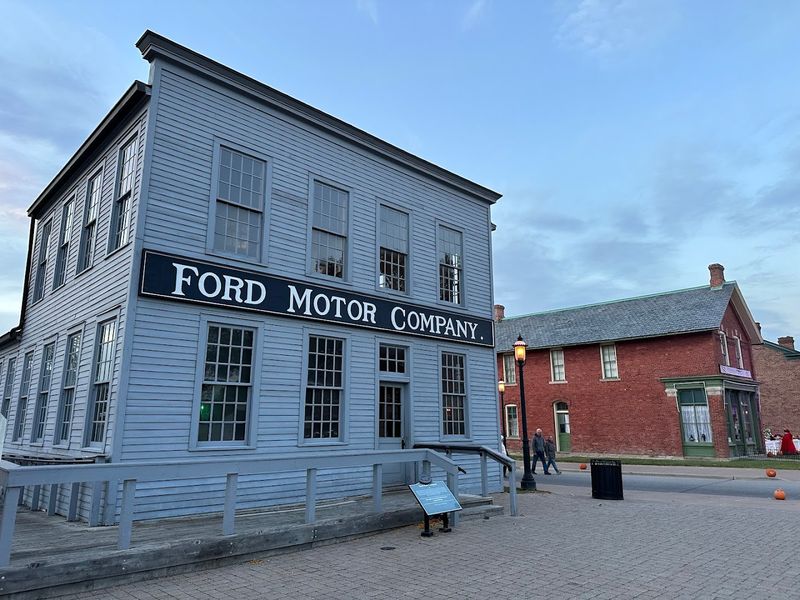
Henry Ford was not just a car guy. He was obsessed with preserving the everyday objects and places that told the real story of American progress, not the polished version found in traditional museums, but the gritty, hands-on reality of working people.
Ford began assembling Greenfield Village in the late 1920s, officially opening it on October 21, 1929, which happened to be the 50th anniversary of Thomas Edison’s invention of a practical incandescent light bulb. That date was no accident.
Ford deeply admired Edison and wanted the opening to honor him directly.
To build the village, Ford physically relocated historic structures from across the country, moving them piece by piece to this single site in Dearborn. He included his own birth home, Edison’s Menlo Park laboratory complex, and the Wright Brothers’ home and bicycle shop from Dayton, Ohio.
The whole project reflects Ford’s belief that history belongs to everyone, not just those who can afford to travel far to find it.
Famous Homes and Landmarks You Can Actually Walk Through
Few museums in the country let you stand inside the actual workshop where the Wright Brothers built their first bicycles, but Greenfield Village does exactly that. The Wright Brothers’ home and cycle shop were moved here from Dayton, Ohio, and they look exactly as they did when Orville and Wilbur were tinkering away inside them.
Thomas Edison’s Menlo Park laboratory complex is another highlight that genuinely stops visitors in their tracks. This is the real space where Edison and his team developed the phonograph and worked on early electric lighting systems.
Standing inside it feels less like a museum visit and more like an unannounced drop-in on a 19th-century inventor.
Henry Ford’s own birth home is also on the grounds, a simple white farmhouse that gives you a surprisingly personal window into his early life. Each of these structures comes with a knowledgeable costumed interpreter ready to share stories that no textbook quite captures the same way.
The Model T Rides: Rolling Through History at 15 Miles Per Hour
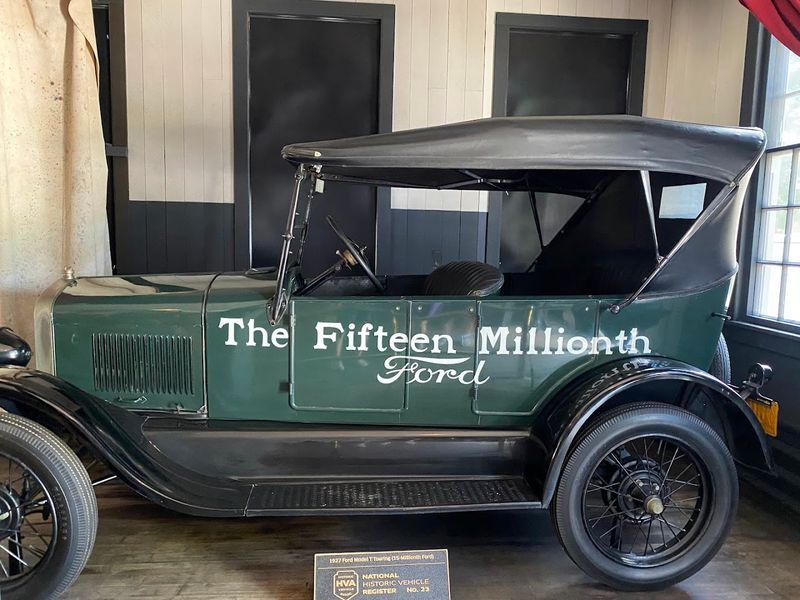
Riding in an actual 1914 Ford Model T is one of those experiences that sounds mildly interesting until you are actually sitting in one, bouncing along brick streets with a driver explaining the hand-crank throttle and the two-pedal transmission system.
The ride lasts about ten minutes, which is just long enough to feel genuinely transported. Everything around you during the ride is period correct: the street lamps, the building facades, even the yellow stop signs that predate the modern red ones.
It is a surprisingly immersive detail that most visitors do not notice until their driver points it out.
The Model T rides are available for an additional fee on top of general admission, and they tend to be popular, so arriving earlier in the day gives you the best chance of a short wait. The drivers are enthusiastic historians who clearly love what they do, and their commentary turns a short car ride into a genuinely memorable ten minutes of living history.
The Steam Train: A Ride Around the Entire Village
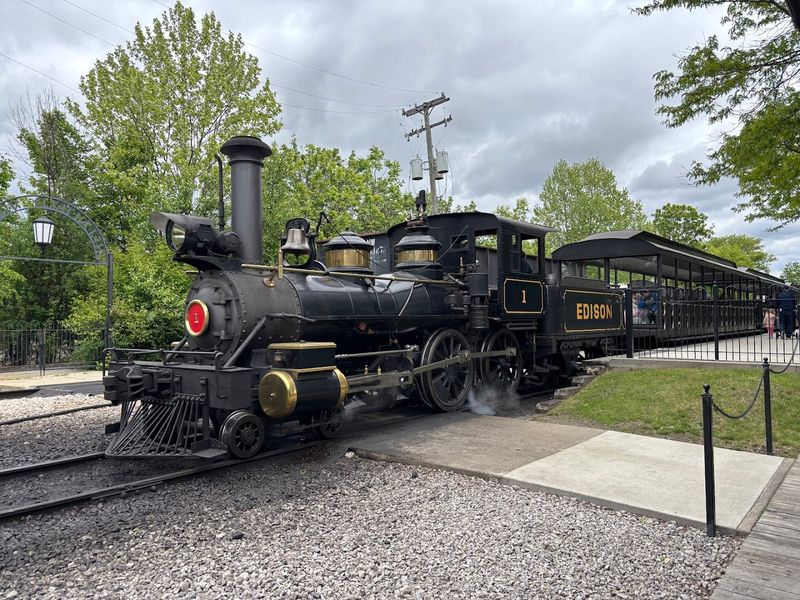
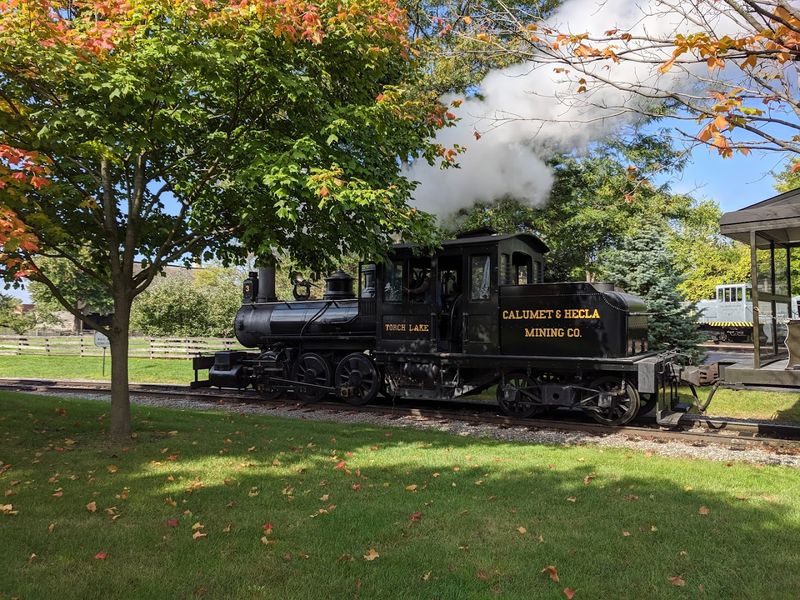
The steam-powered train that loops around Greenfield Village is more than just a novelty ride. It is genuinely one of the best ways to get your bearings when you first arrive, and the narration during the journey gives you a solid overview of what you are about to explore on foot.
The train makes three stops around the perimeter of the village, and you can hop on and off at each one, which is a practical bonus if you have family members who need a break from walking. The locomotive itself is a historic piece of equipment, not a reproduction, which adds a layer of authenticity that you can feel in every rumble and whistle blast.
A ride pass that covers the train, Model T, horse-drawn carriage, antique bus, and the 1913 wooden carousel runs around nineteen dollars, making it one of the better value add-ons available at the village. Families with young children tend to find the train a particular crowd-pleaser from start to finish.
Costumed Interpreters and Live Demonstrations
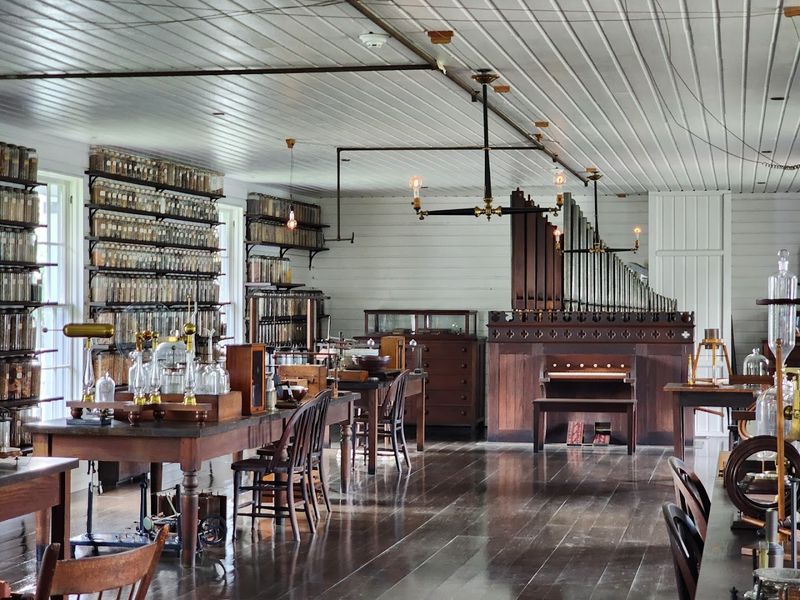
The costumed interpreters at Greenfield Village are not background decoration. They are the heartbeat of the whole experience, and the depth of knowledge they carry is genuinely impressive once you start asking questions.
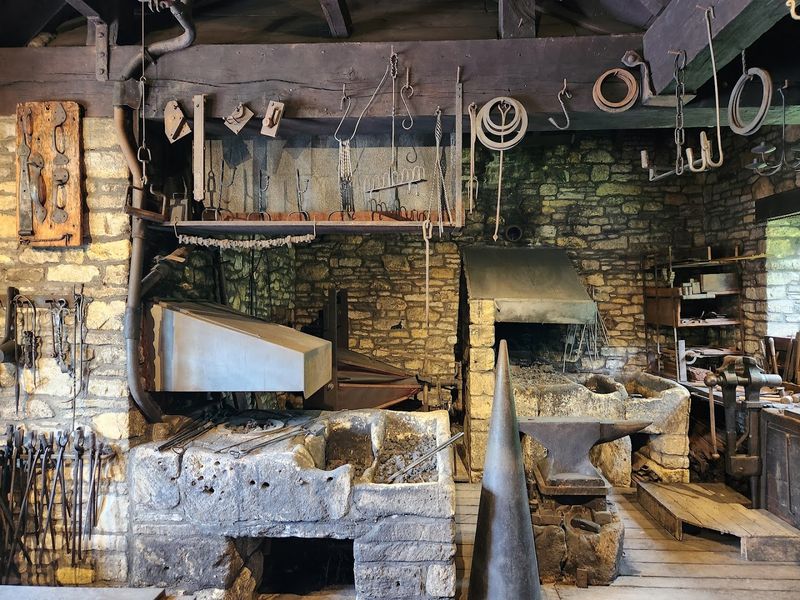
At the blacksmith shop, you can watch a smith work the forge and shape hot metal the way it was done in the 1800s. In other buildings, interpreters demonstrate glassblowing, tinsmithing, pottery, and weaving, all using period-accurate tools and techniques.
The breadmaking and butter-churning demonstrations are particularly popular with younger visitors who have never seen either process done by hand.
What makes these interactions special is that the interpreters do not just recite facts. They engage in actual conversation, answer off-script questions, and sometimes share small personal details about the historical figures whose workplaces they inhabit.
A visit to Edison’s laboratory complex with a knowledgeable guide talking through the invention process is the kind of thing that sticks with you long after you have driven home.
The 1913 Carousel and Other Classic Rides
There is something quietly joyful about riding a carousel that has been spinning since 1913. The wooden horses at Greenfield Village are hand-carved originals, and the whole machine operates with the kind of unhurried charm that modern amusement parks simply cannot replicate.
The carousel sits within the village grounds and is included in the ride pass, which also covers the steam train, Model T, antique bus, and horse-drawn carriage. Riding all five in a single day turns into its own mini-adventure, especially for families with kids who have never experienced transportation options from the early 20th century.
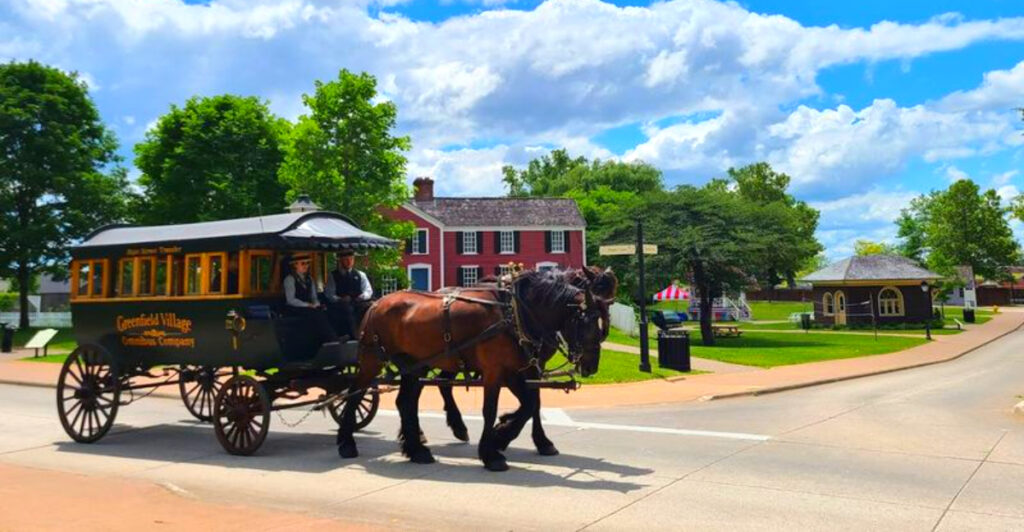
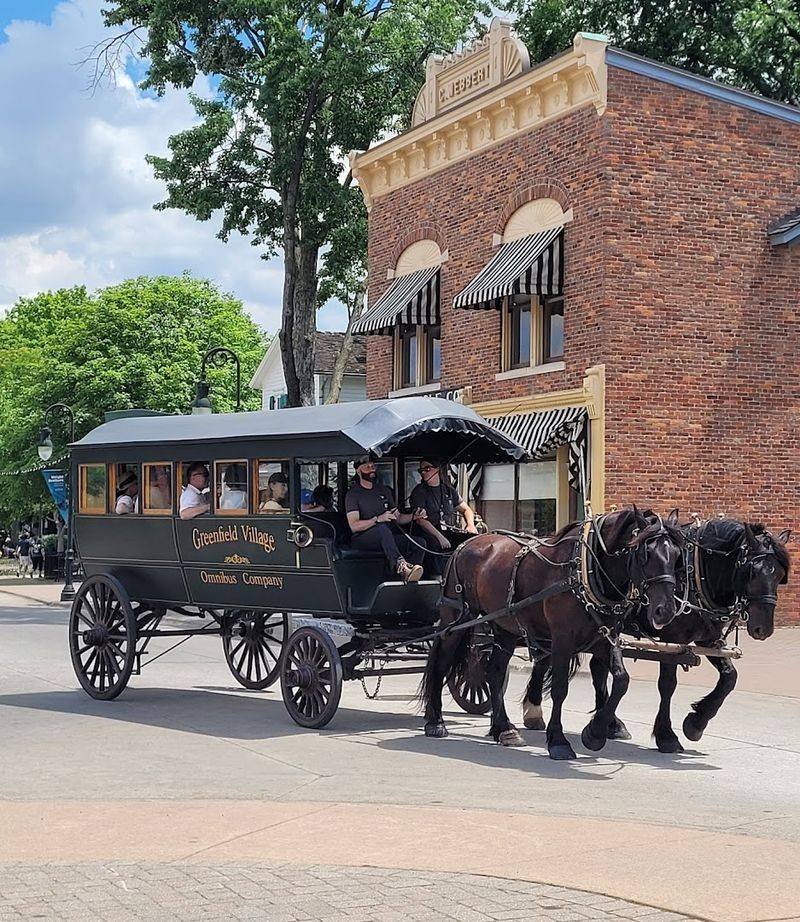
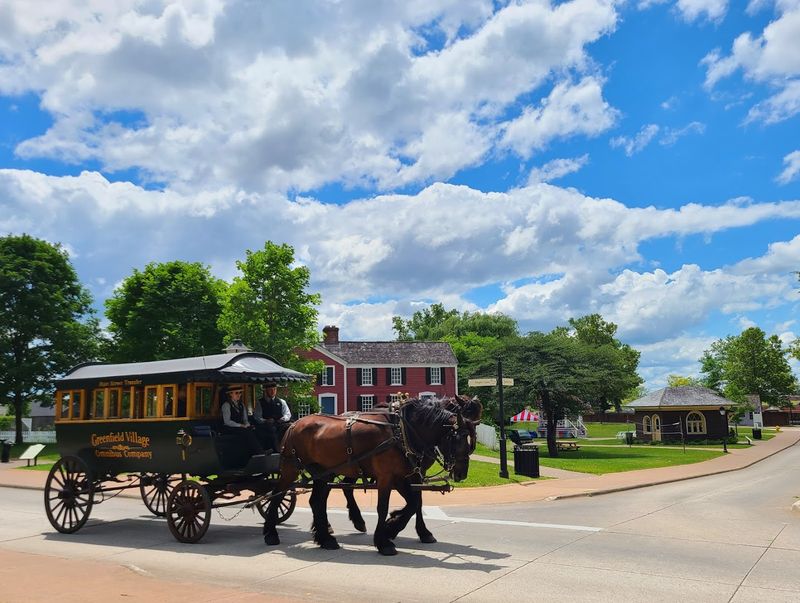
The horse-drawn carriage ride is another highlight worth mentioning on its own. The carriages move through the village streets at a pace that encourages you to actually look around rather than rush to the next exhibit.
It is the kind of slow, deliberate experience that feels almost radical in a world where everything moves fast, and most visitors find it unexpectedly relaxing.
Food and Dining: Eating Like It’s 1850
Lunch at the Eagle Tavern inside Greenfield Village is one of those unexpected highlights that visitors mention long after the trip is over. The menu draws from actual 1850s recipes, and the food arrives in pottery dishes with accompaniments like pickles, fresh bread, butter, and blackberry jam, all of which feel completely at home in the candlelit setting.
A typical meal might include something like bacon-wrapped pork with new potatoes and a slice of peach pie, or tomato soup followed by blueberry pie. The whole experience is less about fine dining and more about atmosphere, and the atmosphere is genuinely hard to beat when you are surrounded by period-correct furnishings and soft candlelight.
For lighter snacks, frozen custard is available elsewhere on the grounds and is widely considered one of the best bites of the day. Café prices can run a little high for casual items, so packing a water bottle and a few snacks is a practical tip worth keeping in mind before you arrive.
Seasonal Events: Halloween, Christmas, and Everything Between
Greenfield Village has a reputation for transforming itself completely depending on the time of year, and the seasonal events are some of the most talked-about experiences the museum offers. Halloween Nights fill the village with storytellers, costumed characters, carved pumpkins tucked into tree branches, and a spooky train ride that leans into the theatrics with cheerful, campy energy.
The Christmas season is where many repeat visitors say the village truly outdoes itself. Crackling fires, carolers performing on village streets, roasted chestnuts, and horse-drawn carriage rides through festively decorated buildings create an atmosphere that feels genuinely old-fashioned in the best possible way.
Spring and summer bring their own programming, including vintage baseball games played by period rules, garden events, and special craft demonstrations timed to agricultural seasons. Checking the events calendar on the official website before booking your visit is highly recommended, since the experience can vary significantly depending on when you go and what programming lines up with your trip.
Practical Tips for Making the Most of Your Visit
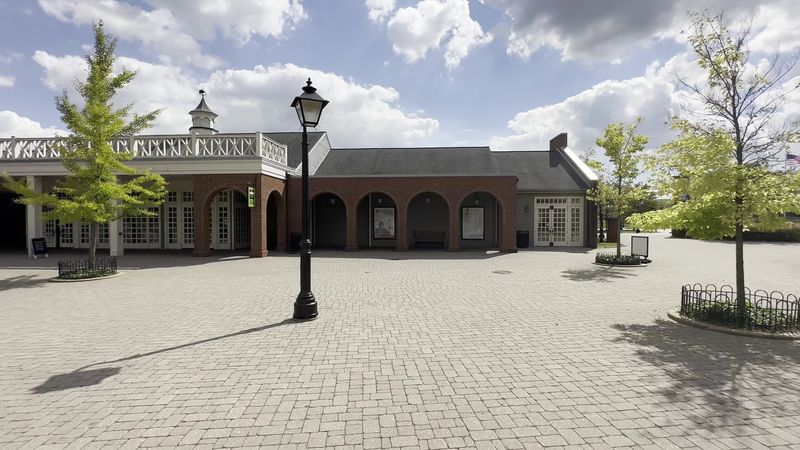
The single most repeated piece of advice from experienced visitors is simple: wear comfortable walking shoes. The village covers 80 acres, most of it on foot, and the brick and cobblestone paths are charming but unforgiving on tired feet by mid-afternoon.
Mobility scooters are available for rent on-site, which is a genuine lifesaver for visitors who have difficulty walking long distances. The village also offers a shuttle service during certain special events, so checking ahead for those options is worthwhile if accessibility is a concern for anyone in your group.
Buying tickets online in advance saves money compared to purchasing at the gate, and arriving on a weekday morning tends to mean shorter waits for popular rides. The buildings do not have air conditioning since they are historic structures, so bringing a water bottle with ice is a smart call during summer visits.
A full day is the recommended minimum, and even then, many visitors find they have not seen everything.
Why Greenfield Village Keeps Pulling People Back
A museum that earns a 4.8-star rating from more than 5,700 visitors is clearly doing something right. What stands out most in the feedback from people who have visited Greenfield Village is not any single exhibit or ride, but the cumulative effect of spending a full day inside a place where history feels genuinely alive rather than archived.
Many visitors describe coming back year after year, sometimes as members, and still discovering something new on each visit. The combination of iconic landmarks, interactive demonstrations, seasonal programming, and classic rides creates a layered experience that works differently for a curious eight-year-old than it does for a history-loving adult, and somehow satisfies both.
The village sits at a rare intersection of education and entertainment that very few attractions manage to hold together as well as this one does. Whether you make the trip once or find yourself renewing a membership, Greenfield Village has a way of making the past feel like somewhere you genuinely want to spend the afternoon.
Share this story