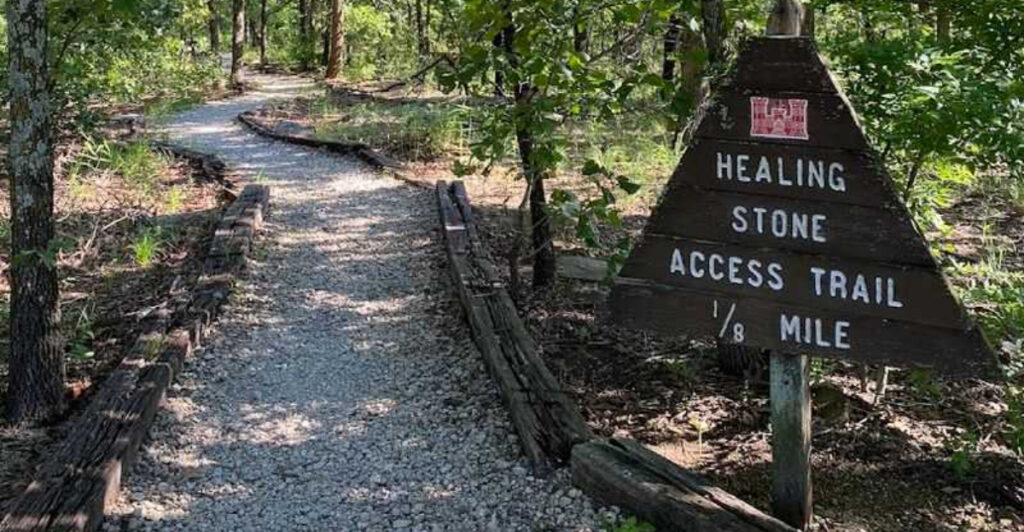
There is a rock in northeastern Oklahoma that people have been visiting for generations, not just to look at, but to touch, pray over, and leave small offerings beside. The trail to reach it is only one-eighth of a mile long, but what waits at the end feels much bigger than the walk itself.
Families bring their sick loved ones, solo hikers come for quiet reflection, and curious travelers stop in simply because they heard the story and had to see it for themselves. If a short hike leading to a centuries-old mystery sounds like your kind of afternoon, keep reading, because this one is worth every step.
Where to Find the Healing Rock Trail
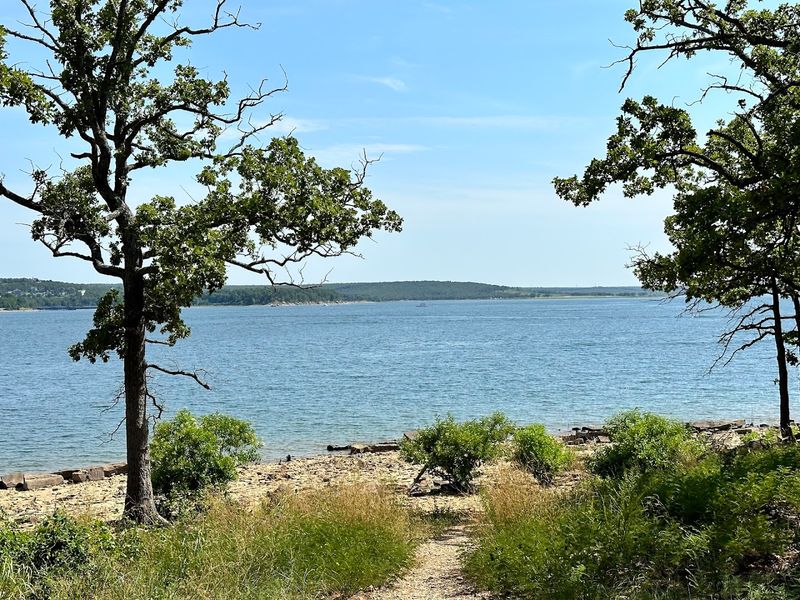
The trailhead for Healing Rock Trail sits at 14004 Lake Rd in Skiatook, Oklahoma 74070, right along the edge of Skiatook Lake in Osage County. The address puts you near a small station building, and most visitors park near that structure at the trail entrance.
A heads-up worth knowing: the parking lot is connected to the neighboring facility, so if that building is closed, you may need to park just outside the gate and walk in. This is especially common on winter Sundays or holidays, so plan a few extra minutes just in case.
The trail itself is rated 4.6 stars across nearly 100 reviews, which tells you that most people who make the trip leave genuinely happy. The path runs one-eighth of a mile in one direction, making the round trip a very manageable quarter mile total.
Even so, the experience feels surprisingly full for such a short distance, and the lake view waiting past the rock is a bonus that many first-timers do not expect.
The Story Behind the Sacred Stone
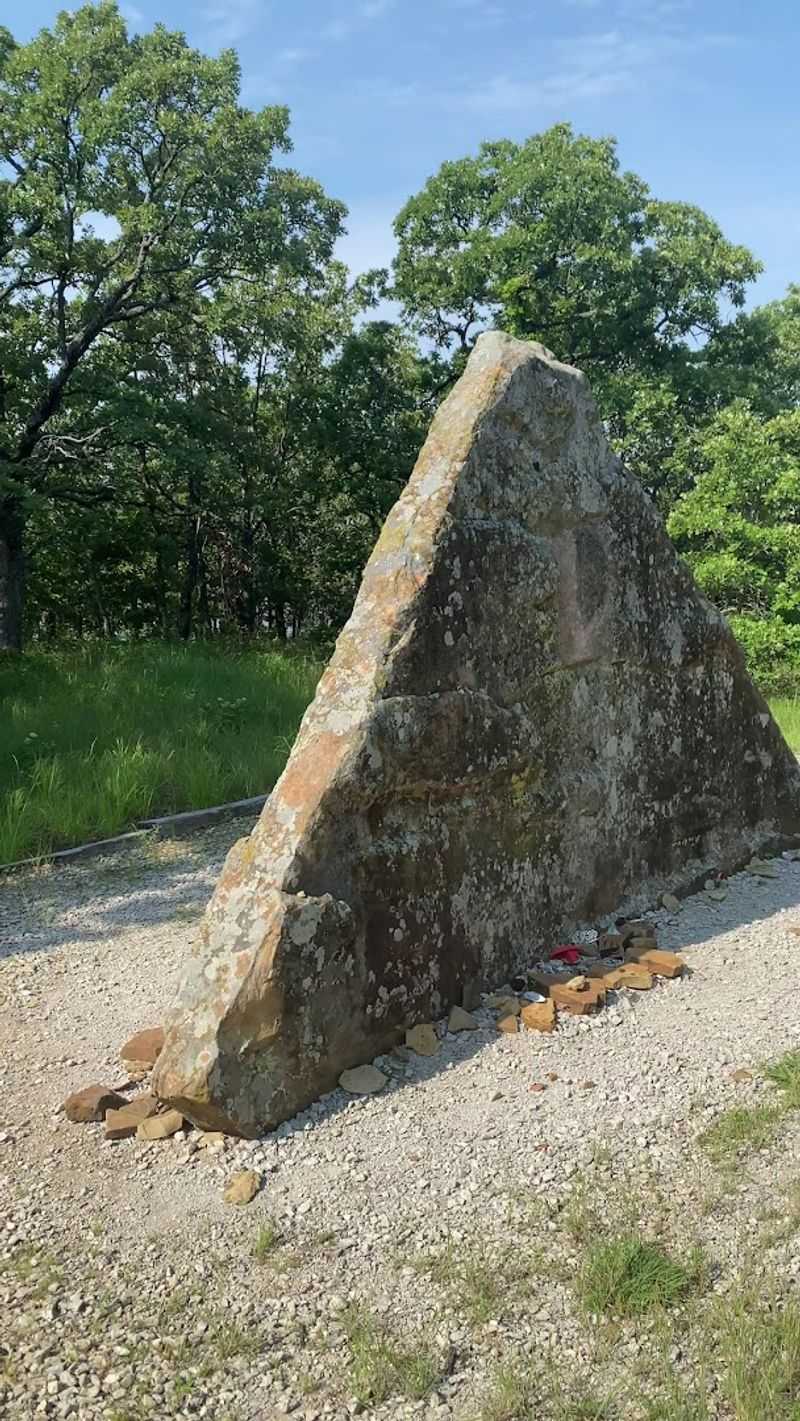
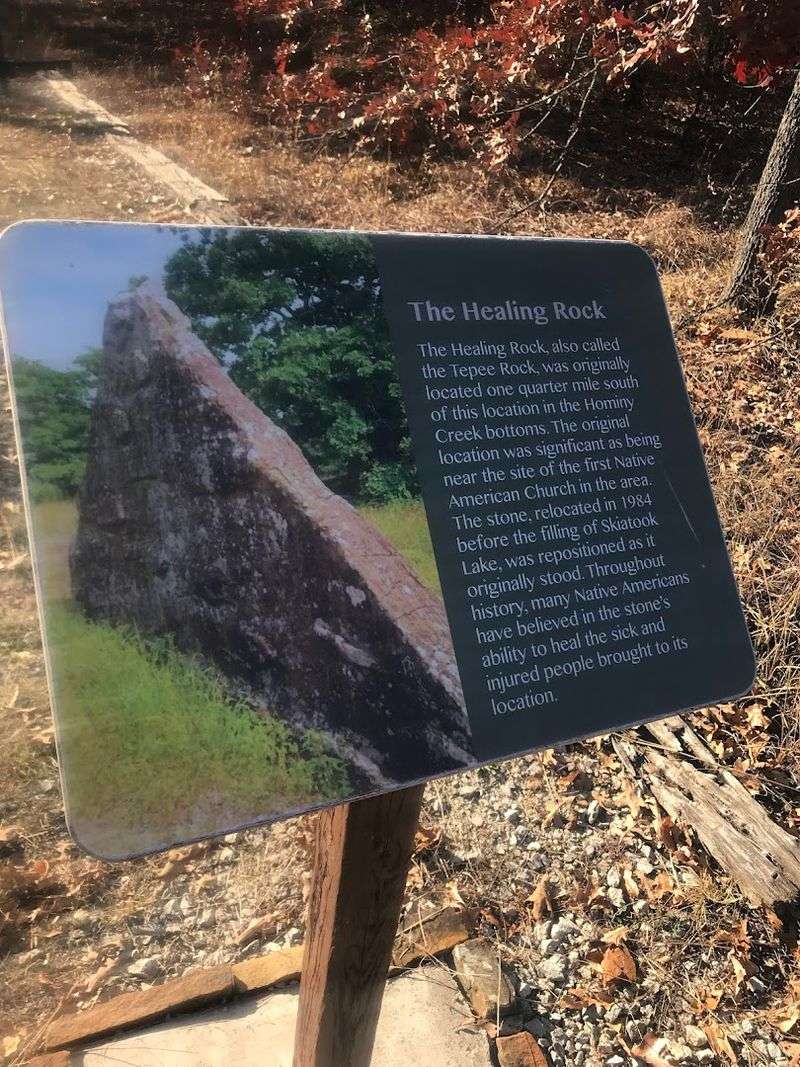
Long before the trail had a name or a parking lot, the rock at its center was already considered sacred. Native American communities in this part of Oklahoma regarded the stone as a place of healing, and people would travel to it seeking relief from illness, grief, or hardship.
The rock is notably large, which surprises many first-time visitors who expect something more modest. Its surface carries a quiet energy that is hard to put into words, and that feeling is clearly something people respond to, given how many return visits the trail receives each year.
One detail worth knowing is that the rock is not in its original location. At some point it was moved to its current spot along the trail.
Some visitors feel this affects the spiritual atmosphere slightly, while others say the energy remains completely intact. Either way, the history attached to this stone stretches back far longer than the trail around it, and that history alone makes the stop feel meaningful and worth the detour.
What the Trail Itself Actually Looks Like
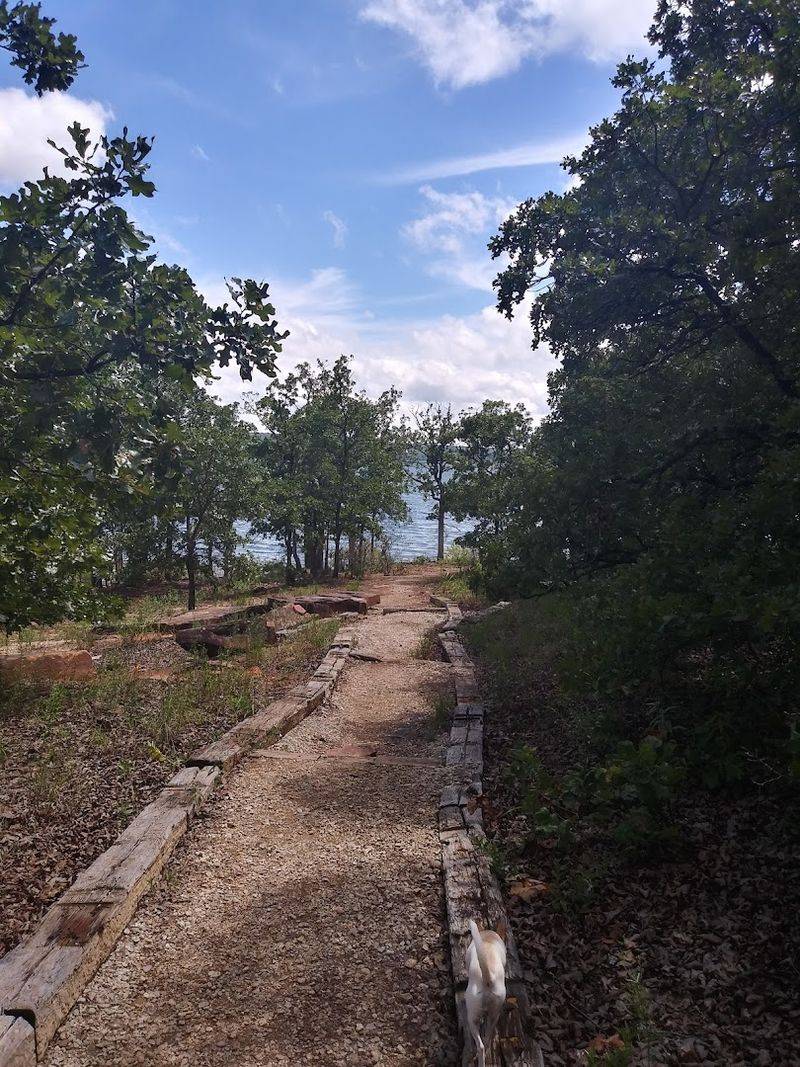
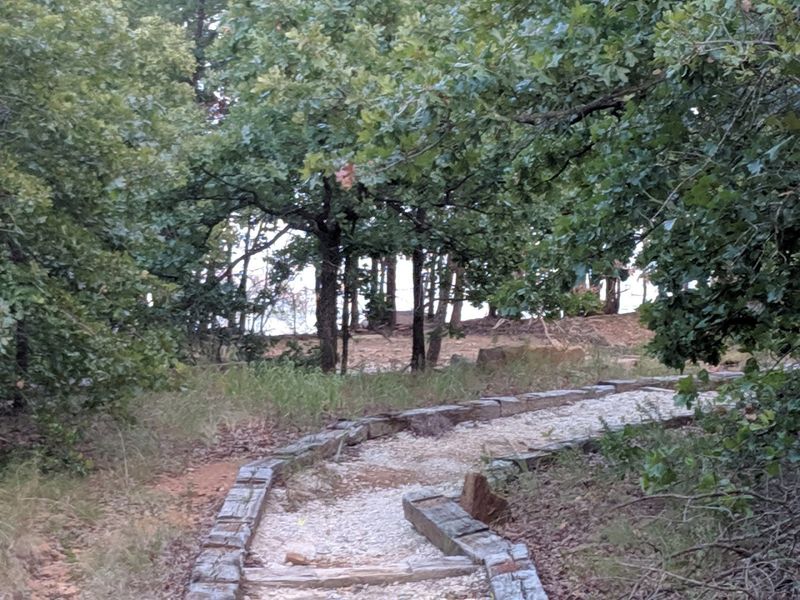
The path to the healing rock is made of compacted gravel, which keeps it stable and easy to walk even after rain. The grade is gentle, sloping slowly downward toward the lake, and the surface stays consistent the whole way with only a few small steps along the route.
Trees line both sides of the trail, giving it a shaded, calm atmosphere that feels noticeably cooler than open ground on warm days. Birds are easy to spot and hear, and the trail is quiet enough that wildlife sightings are genuinely common.
Past visitors have spotted lizards, bumblebees, small mammals, and all kinds of insects going about their day in the surrounding brush.
The gravel continues past the rock and leads all the way down to the water’s edge, where the lake opens up and the view becomes much wider. Fall is a particularly rewarding time to visit, since the surrounding trees turn brilliant shades of orange and red that frame the path beautifully.
The whole trail is well-maintained and feels cared for, which makes the short walk feel more like a purposeful journey than a simple stroll through the woods.
How Accessible and Easy the Hike Really Is
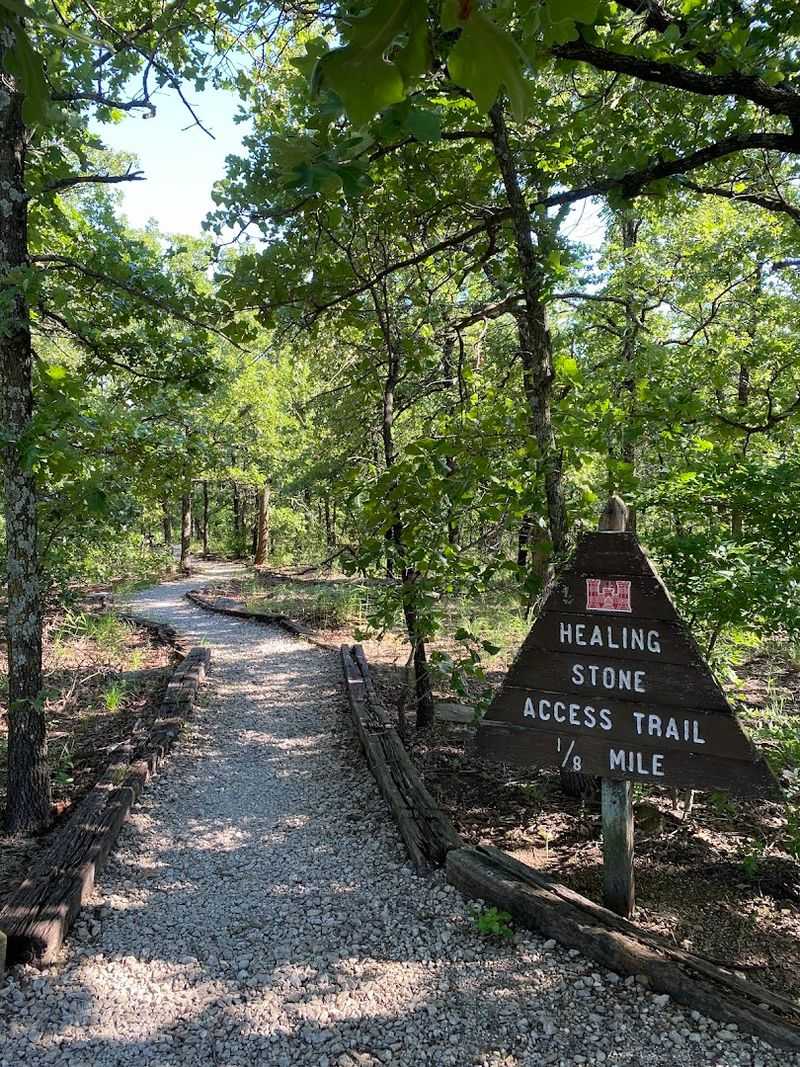
One of the best things about this trail is that almost anyone can do it. The one-eighth mile distance and gentle slope make it suitable for young children, older adults, and anyone who does not consider themselves a regular hiker.
The gravel surface keeps footing predictable, and there are no steep climbs or technical sections to worry about.
That said, the trail is not wheelchair accessible. The gravel and slight grade make it difficult to navigate with a standard wheelchair, and strollers would also be challenging depending on the terrain that day.
Carrying small children in a carrier or backpack is the most comfortable option for families with babies or toddlers.
Most visitors complete the walk to the rock and back in under thirty minutes, and that includes time spent at the rock itself. If you continue down to the water’s edge, add another ten to fifteen minutes.
The trail requires no special gear, no fitness level, and no experience, just comfortable shoes and a willingness to slow down for a few minutes. That accessibility is a big part of why the trail draws such a wide variety of people from all corners of Oklahoma and beyond.
The Offerings People Leave Behind
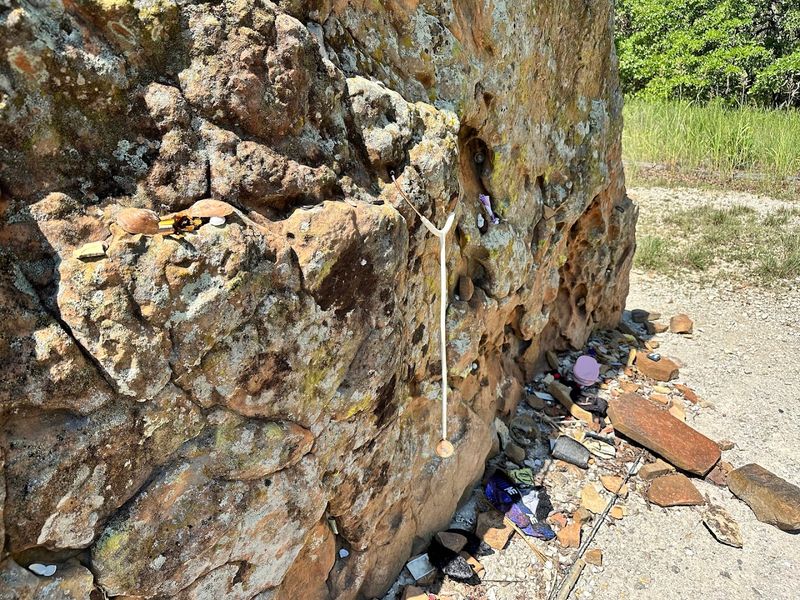
One of the most striking things about arriving at the healing rock is seeing what others have left there. The base of the stone and the surrounding area are covered in small offerings: coins, crystals, feathers, flowers, handwritten notes, and other personal tokens that visitors bring as gestures of respect or hope.
Nearby, stacks of smaller stones called cairns dot the landscape, built one by one by people who wanted to mark their visit or add something to the place. The overall effect is surprisingly moving.
Each little object represents someone who made the trip with something on their mind, whether that was a prayer, a wish, or simply gratitude.
Bringing your own small offering is entirely optional, but many visitors find it adds something meaningful to the experience. There is no formal rule about what to bring.
Common choices include smooth stones, small crystals, or any personal item that holds significance for you. The tradition of leaving something behind connects each new visitor to the long line of people who have stood at this same rock over the years, which gives the spot a layered, communal feeling that is hard to find anywhere else.
The Lakeside View Past the Rock
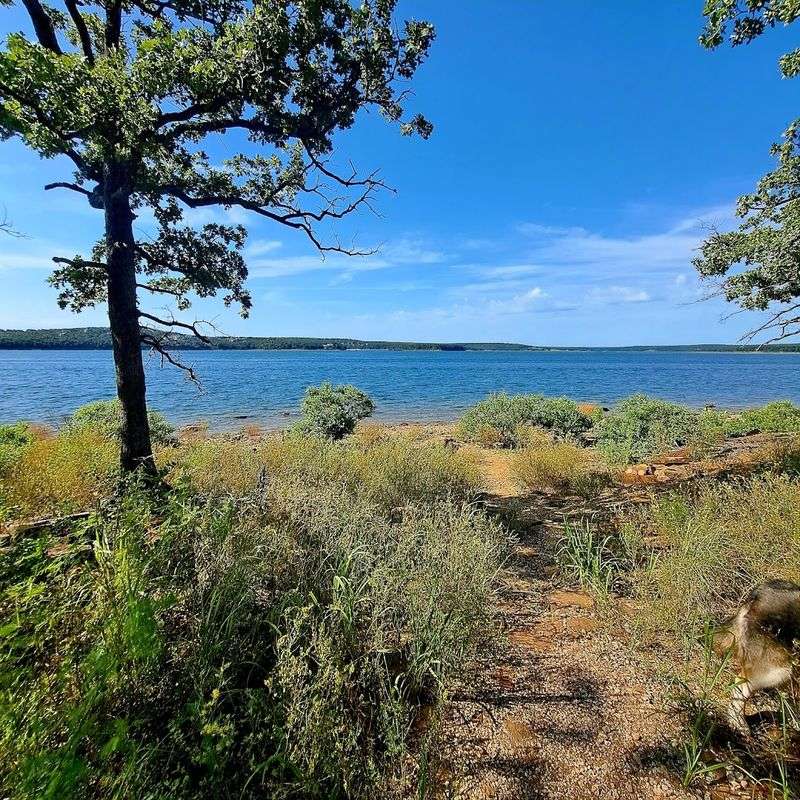
The rock gets most of the attention, but the trail does not end there. Follow the gravel path a little further and you arrive at the edge of Skiatook Lake, where the trees open up and the water stretches out in front of you.
It is a genuinely lovely spot that many first-time visitors miss entirely because they turn around at the rock.
The shoreline here does not have a formal beach, but there is shade from nearby trees and enough space to sit and watch the water for a while. Boats pass by in the distance, and the lake surface tends to be calm enough to reflect the sky on clear mornings.
The combination of the wooded trail, the sacred rock, and the lake view at the end gives the whole experience a satisfying arc.
Getting to the water’s edge requires walking just a short distance past the rock, so it adds minimal time to your visit. Sunset and sunrise visits are particularly worth planning for, since the light on the water at those hours is genuinely stunning.
The lake view alone would make this trail worth a stop, even without the fascinating history attached to the stone just a few steps back up the path.
Best Times to Visit the Trail
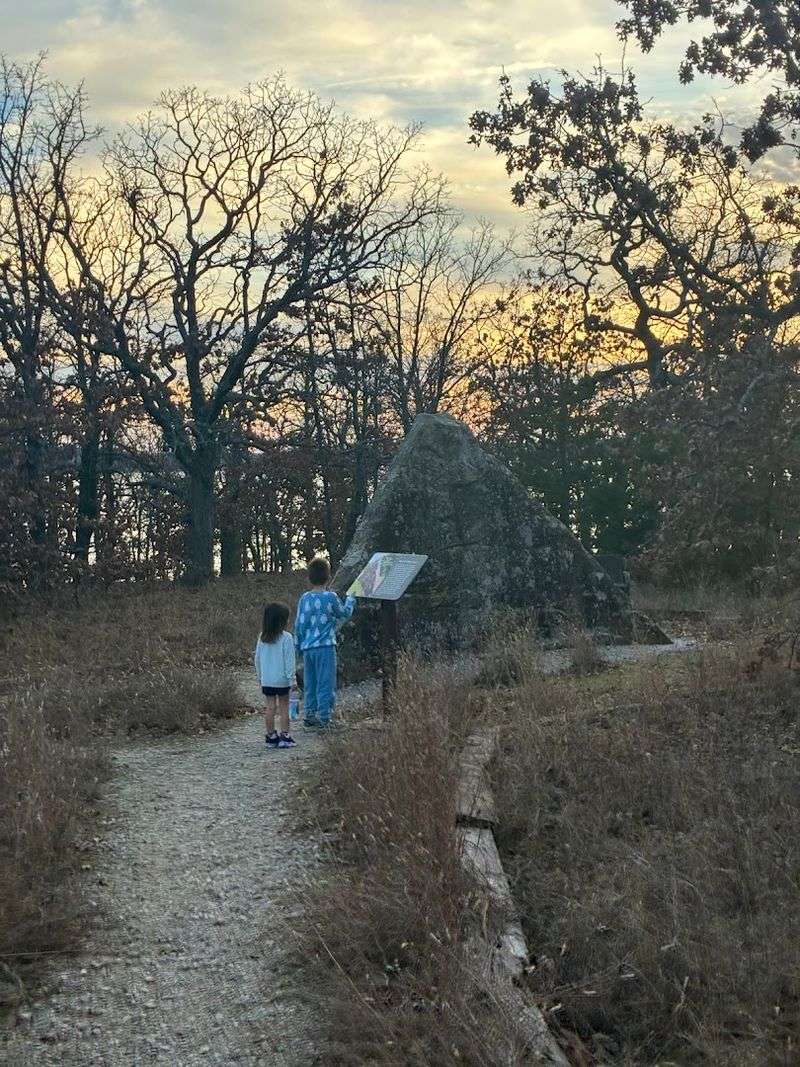
The trail is open every day of the week from 7 AM to 8 PM, which gives visitors a wide window to plan their trip. Early morning visits tend to be the quietest, with the best wildlife activity and the softest light filtering through the trees.
Late afternoon visits offer warm golden tones that make the rock and the surrounding landscape look especially atmospheric.
Fall is widely considered the best season to visit. The trees along the trail turn vivid shades of orange, gold, and red, adding a visual layer to the experience that summer visits simply cannot match.
Spring is also pleasant, with fresh green growth and active birdlife making the walk feel lively and full of energy.
Summer visits are perfectly fine but can feel warm, especially in the middle of the day. The tree cover along the trail helps, but arriving early or in the evening is a smart move during July and August.
Winter visits are quieter and more solitary, and while the parking lot may occasionally be closed, parking outside the gate and walking in is straightforward. Whatever season you choose, the trail rewards the effort with a sense of calm that feels rare and genuinely refreshing.
The Spiritual and Emotional Atmosphere at the Rock
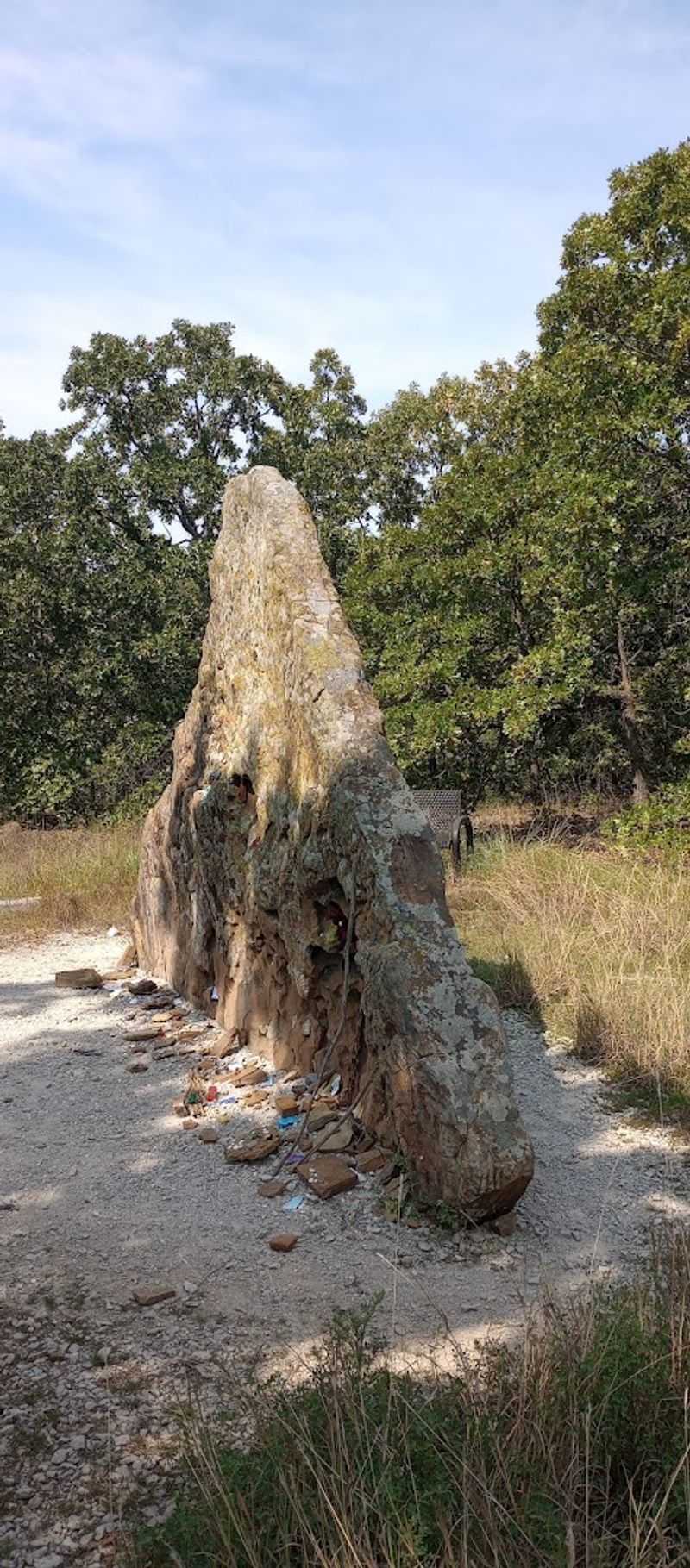
There is something about standing next to the healing rock that slows you down in a way that is hard to explain. The surrounding trees block out most outside noise, and the combination of the offerings left by previous visitors, the age of the stone, and the quiet of the trail creates an atmosphere that feels genuinely set apart from everyday life.
Many visitors describe the spot as spiritual, even those who did not arrive with any particular expectation. The rock draws people dealing with illness, loss, or stress, and while no one can make medical claims about a stone, the peace that the place provides is real and well-documented by the people who visit regularly.
One story that circulates among regular visitors involves a woman who brought her sick companion to the rock after conventional treatments had not helped. The outing itself became a cherished memory filled with small joys: chasing lizards, watching bees, and reaching the water’s edge for the first time.
That kind of experience, where the journey becomes as meaningful as the destination, captures exactly what makes this trail different from a standard nature walk in Oklahoma.
Wildlife You Might Spot Along the Way
The short length of the trail does not limit the wildlife activity along it. The dense tree cover and proximity to Skiatook Lake create a habitat that attracts a surprisingly varied cast of creatures throughout the year.
Lizards are among the most commonly spotted, often seen sunning themselves on rocks or darting across the gravel path.
Bumblebees work the flowering plants along the trail edges, and insects of all kinds are visible on warm sunny days. Small mammals, including mice and squirrels, occasionally appear near the undergrowth.
Birdwatchers will find the trail rewarding as well, with the lake nearby attracting waterfowl and the surrounding trees hosting songbirds that are active throughout the morning hours.
The best strategy for wildlife spotting is to walk slowly and keep conversation low. The trail is short enough that rushing through it means missing most of what makes it interesting.
Children especially enjoy hunting for lizards and watching bees move from flower to flower, which turns the walk into something more engaging than just a quick trip to see a rock. The wildlife presence gives the trail a lively, natural energy that complements the quieter, reflective mood near the stone itself.
Tips for Making the Most of Your Visit
A few practical notes can make the difference between a smooth visit and an avoidable headache. The parking situation is the most common point of confusion.
The main lot is connected to a neighboring facility, and when that facility is closed, the lot may be locked. Parking outside the gate and walking in is easy and adds only a minute or two to your trip.
Bringing a small offering to leave at the rock is a tradition that many visitors find adds to the experience. Smooth stones, crystals, or any small personal item work well.
There is no pressure to participate, but the practice connects you to the long history of the place in a tangible way.
Wear comfortable walking shoes since the gravel path is easy but not perfectly flat. Bring water on warm days, especially if you plan to walk past the rock to the lake.
A camera or fully charged phone is worth having because the light through the trees, the cairns near the rock, and the lake view all make for genuinely good photos. The trail is free to visit, takes under an hour from start to finish, and leaves most people feeling calmer than when they arrived, which is a rare and underrated thing to find anywhere in Oklahoma.
Share this story