There is a stretch of Central Florida where the air smells like earth and water, where herons stand perfectly still at the edge of a marsh, and where alligators sun themselves so close to the trail that you can count the scales on their backs. This is not a theme park or a manicured garden.
It is a vast, working wetland that just happens to be one of the most spectacular wildlife destinations in the state. Every year, as nesting season arrives, the whole place transforms into a living, breathing spectacle of feathers, eggs, and flight.
Photographers, birders, hikers, and curious families all find something here that is genuinely hard to find anywhere else in Florida.
The Address, Location, and What to Expect at the Gate
Orlando Wetlands Park sits at 25155 Wheeler Rd, Christmas, FL 32709, tucked into a quiet corner of Orange County that most tourists completely miss on their way to the theme parks.
The park is open Tuesday through Sunday from 7 AM to 6 PM and is closed on Mondays. Entry is completely free, parking is free, and there is no reservation required.
The first thing you notice when you pull in is the generous gravel lot and the well-kept visitor center nearby. A friendly volunteer is usually nearby to point you toward the trails or the tram schedule.
The whole setup feels welcoming without being flashy, which somehow makes it even better. You can reach the park by phone at +1 407-568-1706 or visit the official site at orlando.gov for updates before your trip.
A Man-Made Marsh That Fooled Everyone
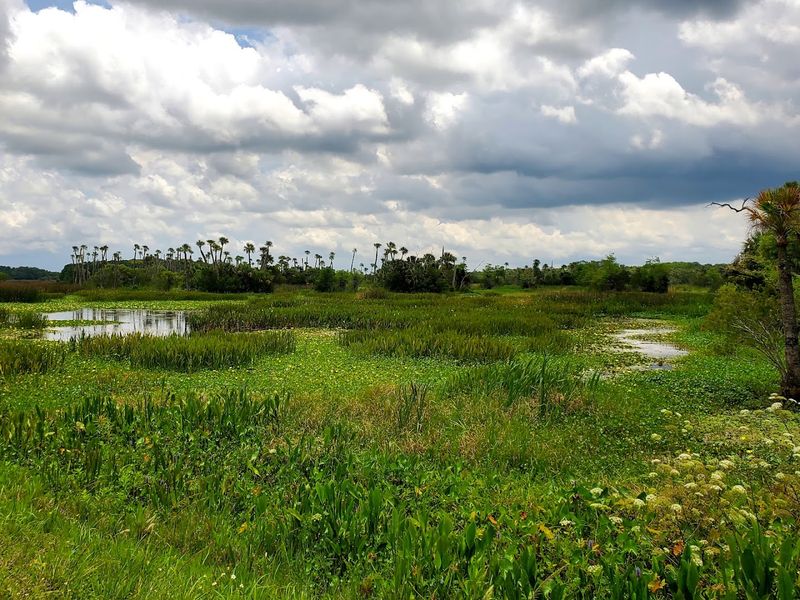
Here is a fact that genuinely surprises most first-time visitors: the entire wetland is man-made. The City of Orlando built it in the late 1980s as a natural water reclamation system, using the marsh to filter treated wastewater before it returns to the environment.
What started as an engineering solution became something far more remarkable. Over the decades, the land attracted hundreds of wildlife species, and the ecosystem developed into a fully functioning natural habitat that looks and feels completely wild.
The 1,650 acres of marsh, lakes, and upland forest now support one of the most diverse collections of birds and reptiles in Central Florida. Walking through it, there is no obvious sign that any of this was designed by city planners.
Nature, it turns out, does not care much about the origin story. It just moves in and makes itself at home.
Nesting Season and Why Photographers Go Wild
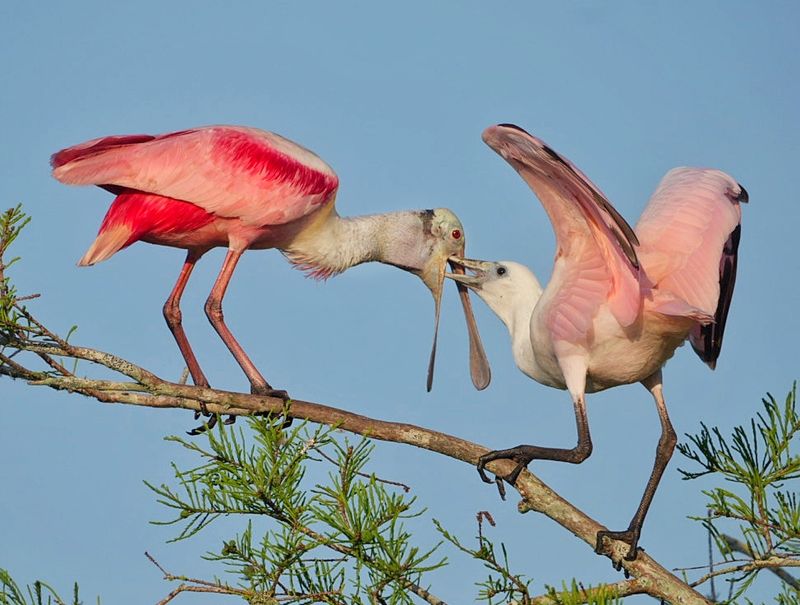
Nesting season at Orlando Wetlands is the main event. Typically running from late winter through early spring, this is when the park becomes almost impossibly photogenic.
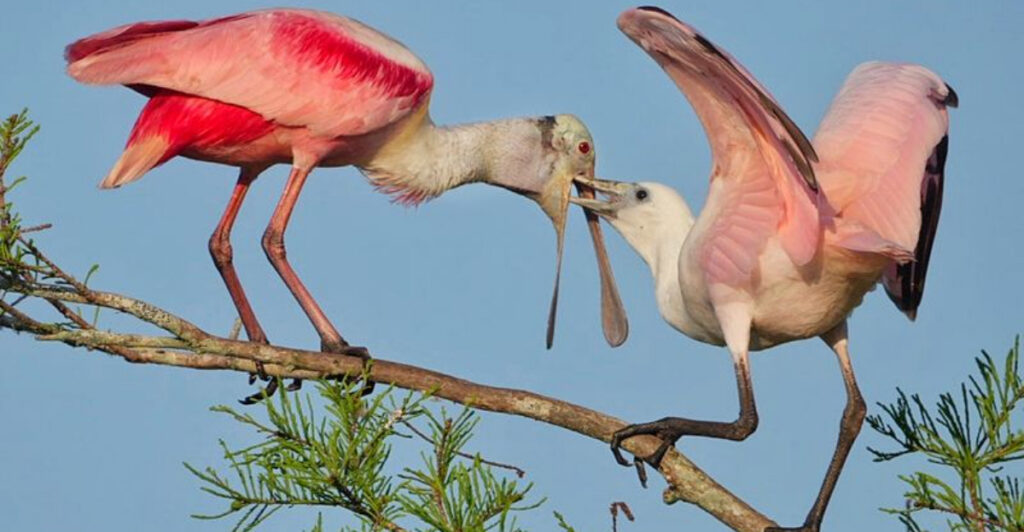
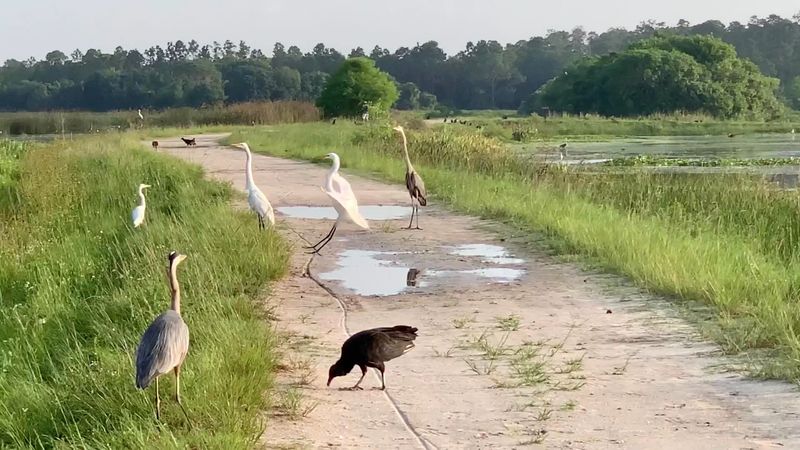
Roseate spoonbills, wood storks, great blue herons, snowy egrets, and tricolored herons all crowd into the rookery trees, building nests, laying eggs, and feeding chicks. The noise, the color, and the sheer density of birds packed into a single area is something that photographs struggle to fully capture.
Wildlife photographers travel from across the country specifically for this window of time. The light in the early morning hours hits the pink plumage of the spoonbills in a way that makes every shot look professionally staged.
Bring a telephoto lens if you have one, but even a smartphone camera can catch something remarkable here. The birds are close, the backgrounds are clean, and the action never stops.
The Alligator Situation (It Is Very Real)
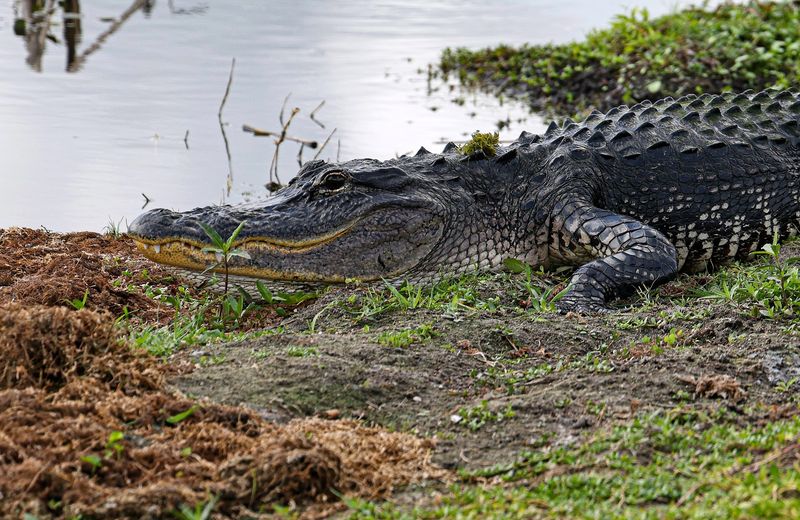
Let me be straightforward about this: there are a lot of alligators here. Not the distant, blurry kind you sometimes spot from a highway bridge.
These are large, unhurried reptiles resting just a few feet from the walking trails, completely unbothered by the humans passing by.
Along the Lake Searcy Loop in particular, it is common to walk past a dozen or more gators in a single outing, especially during cooler months when they come out to warm themselves in the sun. The experience is thrilling and a little humbling.
The park staff and volunteers are clear about the rules: stay on the trail, keep your distance, and never feed the wildlife. These are not tame animals, and the respect goes both ways.
For photographers, the gators are an extraordinary subject. For first-timers, they are a reminder that this is a genuinely wild place, not a zoo.
The Trail System and How to Plan Your Route
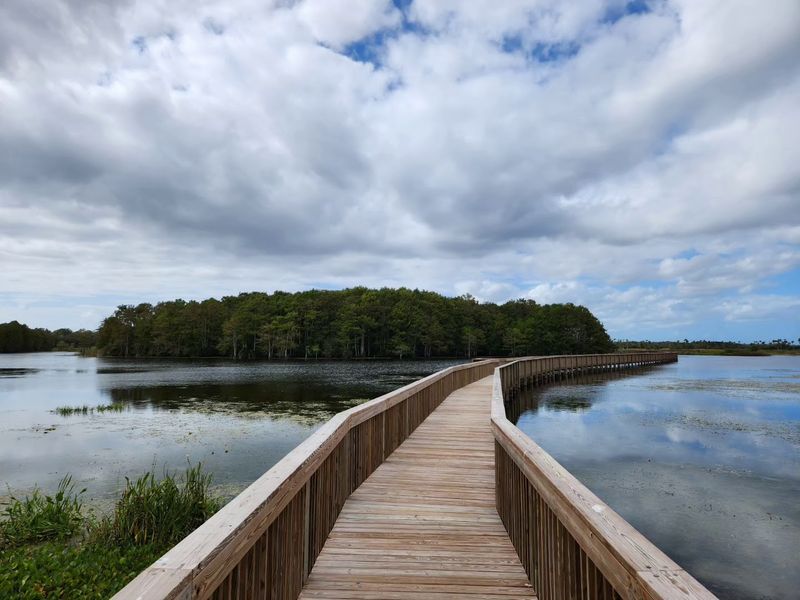
The trail network at Orlando Wetlands covers roughly 20 miles in total, with the full perimeter loop coming in at around 6 miles. The paths are wide, flat, and well-maintained, running along earthen berms between marshes and open water.
Most of the trails are exposed to the sun, so early morning visits are strongly recommended, especially from April through October when the Florida heat becomes a real factor. Bring more water than you think you need.
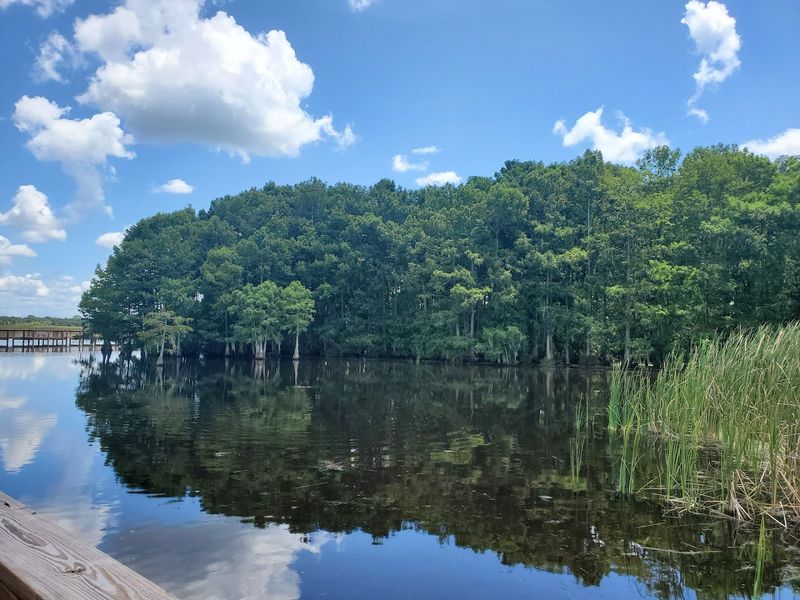
There is also a wooded trail on the property that provides welcome shade and a completely different atmosphere from the open marsh sections. Tall trees, small bridges, and a quieter birdlife make it a nice contrast.
Hikers, cyclists, and casual walkers all share the same paths, which keeps the energy friendly and relaxed. The terrain is accessible enough that most visitors of any fitness level can enjoy a solid portion of the park.
The Free Tram Tours That Deserve More Credit
One of the most underrated features of this park is the free tram tour, available on weekends and operated by knowledgeable volunteers who clearly love what they do.
The tour runs for about an hour and covers a solid portion of the park, with the guide narrating the ecology, pointing out wildlife, and explaining how the water reclamation system actually works. It is genuinely educational without ever feeling like a lecture.
The tram is a smart option for visitors who want an overview before committing to the full trail loop, or for families with younger kids who might not manage six miles on foot. Donations are accepted and go directly toward keeping the trams running.
The guides tend to know exactly where the spoonbills are nesting, which marsh has the most active gators, and what rare species have been spotted recently. That local knowledge alone is worth the ride.
Inside the Visitor Center and What You Will Find There
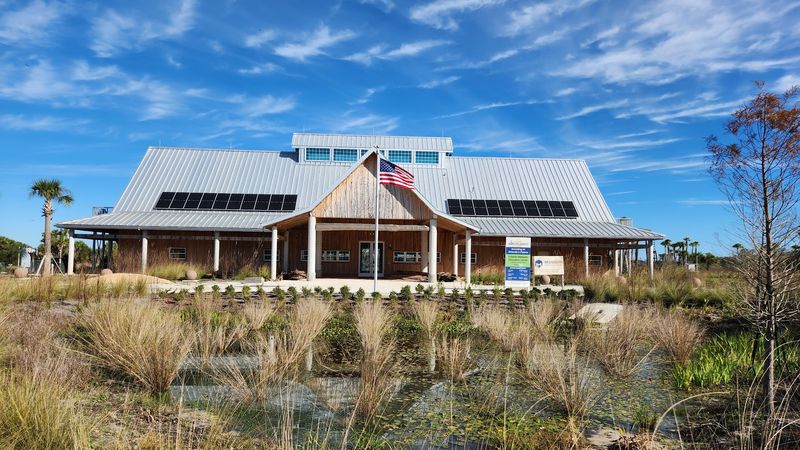
The visitor center at Orlando Wetlands finally opened in April 2025 after a long period of construction, and it was well worth the wait. The building is clean, well-organized, and packed with exhibits that explain both the science of wetland filtration and the ecology of the surrounding habitat.
There is a short film that walks visitors through how the wetlands function as a water treatment system, which is surprisingly fascinating even for people who did not come for the engineering lesson. The displays on local birds and reptiles are detailed and visually engaging.
A gift shop and small snack selection round out the experience, which is handy if you forgot to pack enough food or want to take something home. The staff and volunteers inside are consistently described as warm, helpful, and genuinely enthusiastic.
Starting your visit here before hitting the trails gives the whole experience more context and makes the wildlife sightings feel even more meaningful.
The Boardwalk and Its Surprising Length
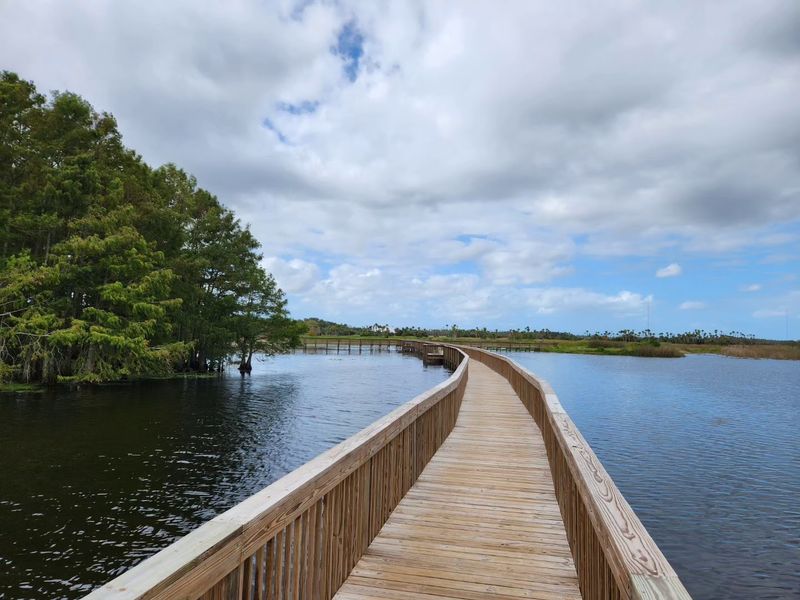
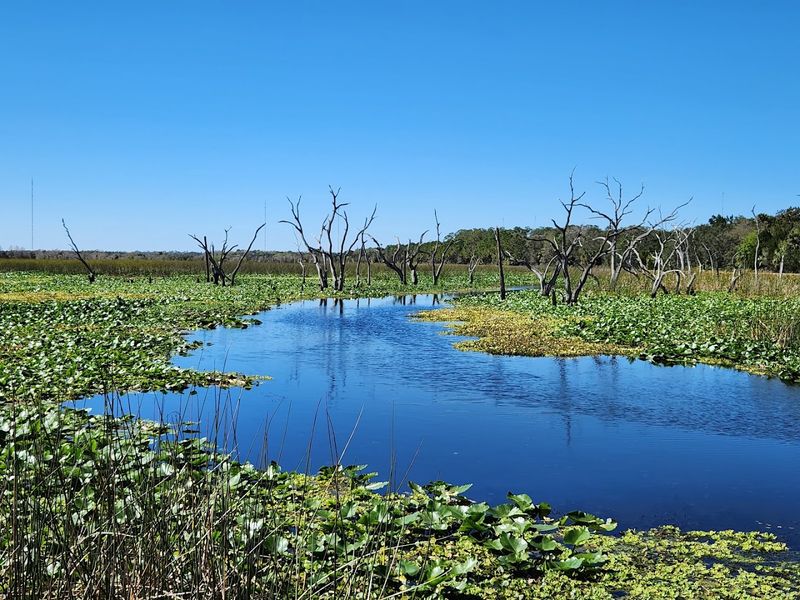
The boardwalk at Orlando Wetlands is longer than most visitors expect, and that is meant as a genuine compliment. It stretches out over the marsh, giving you an elevated view of the water below where turtles, fish, and wading birds move through the shallows.
From the boardwalk, the perspective shifts completely. Instead of looking across the marsh from a berm trail, you are looking directly into it, and the wildlife below seems less aware of your presence.
It is a quieter, more intimate way to experience the wetland.
Early morning light on the water from the boardwalk produces some of the best photography conditions in the entire park. The reflections, the mist, and the stillness before the day heats up create a mood that is genuinely hard to replicate.
If you only have time for one feature of the park beyond the main trail, the boardwalk earns that spot without much competition.
Birds Beyond the Spoonbills: A Birder’s Checklist
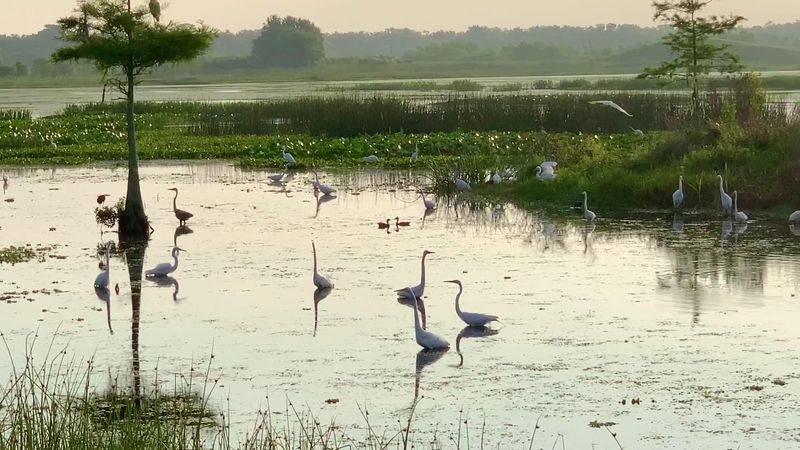
The roseate spoonbills get most of the attention, and honestly, they deserve it. But the bird diversity at Orlando Wetlands goes well beyond those pink showstoppers.
On a single visit, it is realistic to spot great blue herons, tricolored herons, snowy egrets, little blue herons, osprey, sandhill cranes, anhingas, cormorants, and a rotating cast of migratory species depending on the season. One reviewer documented 62 species in a single three-hour visit, including a Vermillion Flycatcher.
Bringing binoculars makes a significant difference, especially for the smaller or more distant species. The park is large enough that dedicated birders can spend an entire day working through the different habitat zones and still feel like they missed something.
Winter and early spring tend to offer the highest species counts, when migratory birds are present alongside the year-round residents. A field guide or birding app on your phone is a solid addition to your kit.
Otters, Turtles, and the Wildlife You Might Not Expect
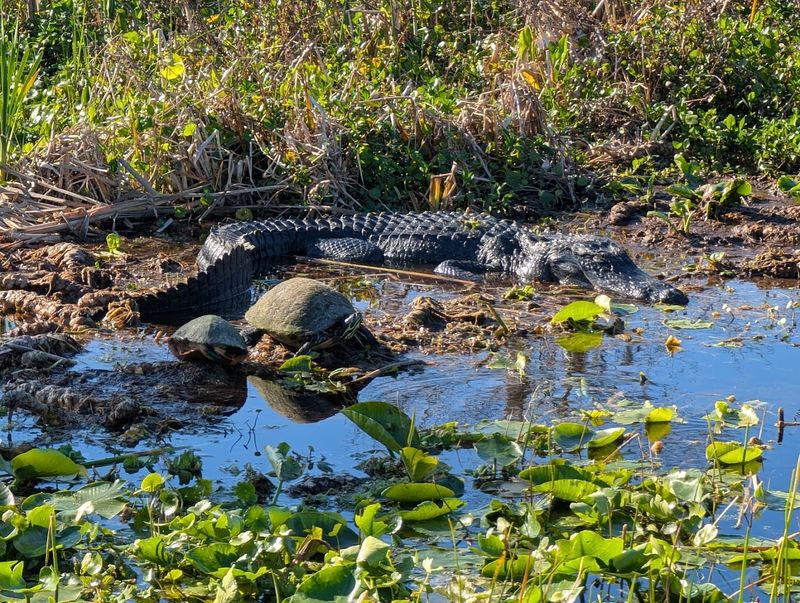
Most people come expecting gators and birds, and they are not disappointed on either front. But Orlando Wetlands has a few wildlife surprises that tend to catch visitors off guard in the best possible way.
River otters appear occasionally along the quieter stretches of water, usually early in the morning before foot traffic picks up. They are quick and unpredictable, so a sighting feels genuinely lucky.
Turtles are far more reliable, often stacked on logs in the sun along the berm trails.
Snakes are present in the park as well, which the staff mentions matter-of-factly as a reminder to stay on the designated paths. The ecosystem supports both venomous and non-venomous species, and they are generally not interested in human company as long as you give them space.
The variety of life packed into this single property is one of the main reasons repeat visitors keep finding reasons to come back.
Practical Tips for Your First Visit
A few preparation details can make the difference between a great day and a rough one at this park. Sunscreen is non-negotiable on the open berm trails, where there is almost no shade for long stretches.
A wide-brimmed hat helps considerably.
Bring more water than you think you need, especially if you are planning the full perimeter loop or visiting between April and October. The Florida heat on an open marsh with no tree cover is serious business.
Bug spray is worth packing, particularly in the warmer months when mosquitoes are active near the water. Long sleeves are a practical choice for the same reason, even when it feels warm at the start of the day.
The tram tour runs roughly between 10 AM and 2 PM on weekends, so plan your arrival around that if you want to catch a ride. Arriving at 7 AM on a weekend morning gives you the best of everything.
Picnic Areas and Places to Rest Along the Way
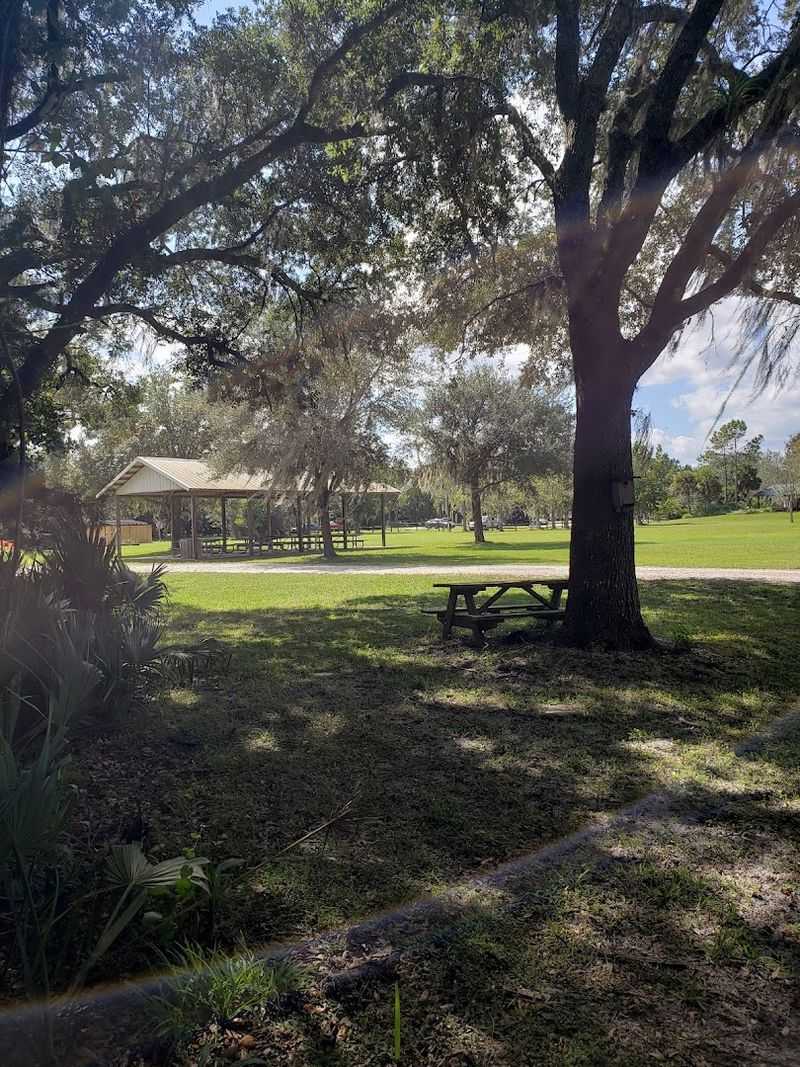
The park includes designated picnic areas where visitors can take a break, eat lunch, and enjoy the surroundings without having to leave the property. The spots are simple but well-placed, offering a chance to sit down after a long stretch of trail walking.
There are also benches and rest areas scattered throughout the park at regular intervals, which makes the longer trail options more manageable for families or visitors who prefer a slower pace. The placement feels thoughtful rather than random.
Packing your own food is the practical move here, since the gift shop carries snacks and drinks but is not a full food service. A proper lunch packed in a cooler bag lets you stay as long as you want without needing to rush back to the car.
The combination of free entry, free parking, and a bring-your-own setup makes this one of the most affordable full-day outdoor experiences in Central Florida.
Fort Christmas Historic Park: A Half-Day Add-On
One of the quiet bonuses of visiting Orlando Wetlands is its proximity to Fort Christmas Historic Park, which sits just down the road and makes for a natural second stop on the same day trip.
Fort Christmas is a reconstruction of the original 1837 military fort built during the Second Seminole War, and the surrounding museum covers the history of the region in a way that adds real context to the landscape you just walked through at the wetlands.
The town of Christmas, Florida itself is a quirky and charming detour, known for its festive name and its small-town character that feels genuinely different from the tourist corridors further west.
Combining both stops makes for a well-rounded day that covers natural history, wildlife, and Florida heritage without ever feeling rushed. The drive between the two is just a few minutes, which keeps the logistics simple.
The Bigger Picture: Conservation in Action
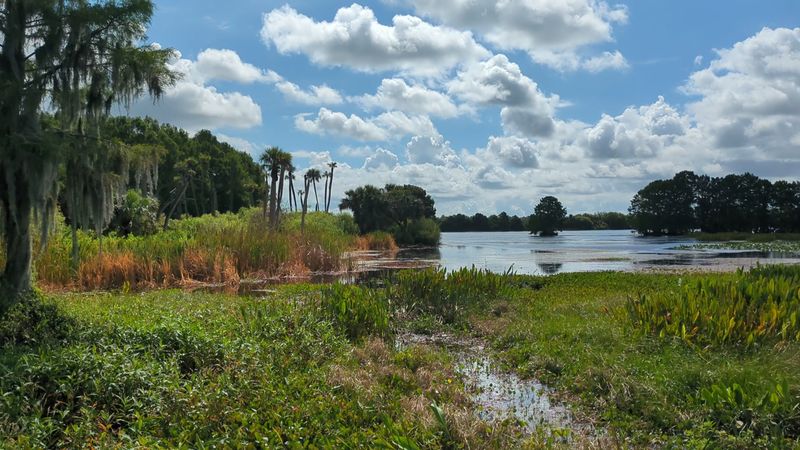
Orlando Wetlands is not just a pretty place to take photos. It is an active demonstration that conservation and infrastructure can work together in ways that benefit both people and wildlife.
The City of Orlando manages the property as part of its water reclamation system, meaning the wetland is literally cleaning the city’s water supply while simultaneously supporting hundreds of species and welcoming thousands of visitors every year. That is a genuinely impressive balancing act.
The presence of educational exhibits, trained volunteers, and guided tours all reflect a commitment to helping visitors understand what they are looking at and why it matters. The park does not just show you nature; it explains why protecting it has practical value beyond the scenic.
Leaving the park, it is easy to feel like you have seen something that works the way things should: beautiful, purposeful, free, and built to last well beyond any single nesting season.
Share this story