Between roughly 1870 and 1900, a small group of American industrialists amassed fortunes larger than many national treasuries – and built homes to match. Italian marble, gold-leaf ceilings, grand ballrooms, and gardens inspired by French estates defined this era of excess.
Remarkably, many of these mansions still stand and are open today as museums, hotels, or historic landmarks. Whether you love history, architecture, or simply glimpsing how the elite lived in 1895, these 15 estates offer a vivid look at one of America’s most extravagant chapters.
Each tells a story of wealth, ambition, and the world it was built to impress.
1. The Breakers (Newport, Rhode Island)
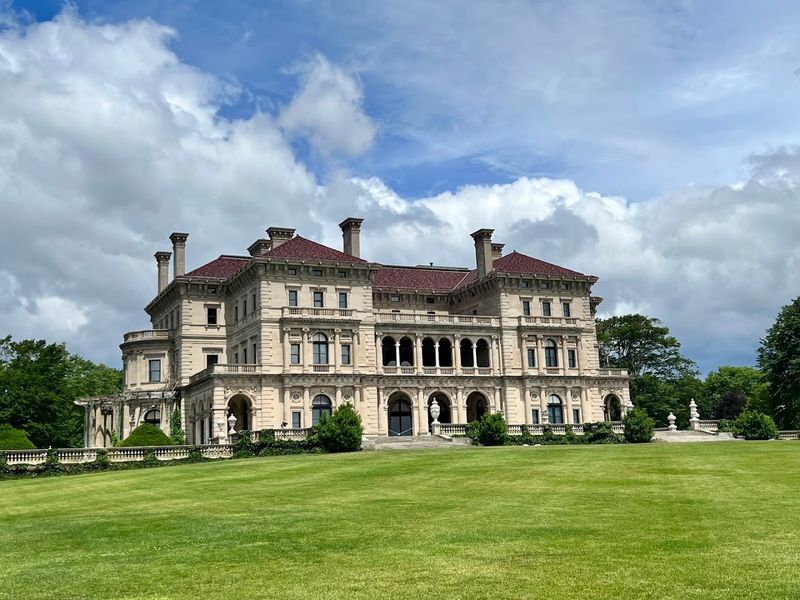
Cornelius Vanderbilt II did not build a vacation home in 1895. He built a declaration.
The Breakers, his 70-room Newport estate, was designed by architect Richard Morris Hunt to mirror the grand palaces of 16th-century Italy, and it succeeded on every level.
The mansion sits directly on the Atlantic coastline, and its exterior alone covers roughly an acre of ground. Inside, the Great Hall rises 45 feet and features columns of rare alabaster.
The dining room seats 34 guests beneath a ceiling decorated with painted panels and gilded plasterwork.
Today, The Breakers is managed by the Preservation Society of Newport County and draws more than 400,000 visitors each year, making it the most visited historic house in the United States. Guided tours cover both the formal state rooms and the working service areas below, giving visitors a complete picture of how the estate functioned on a daily basis.
The contrast between the family quarters and the staff quarters alone makes the tour worth taking.
2. Biltmore Estate (Asheville, North Carolina)
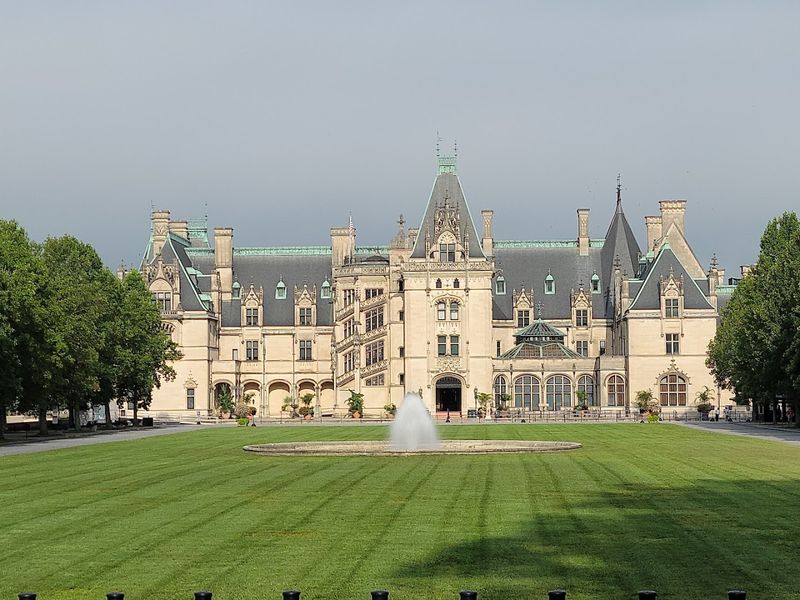
No American home has ever topped 250 rooms, and George Vanderbilt made sure of that when he completed Biltmore Estate in 1895. Designed by Richard Morris Hunt and modeled after the chateaux of France’s Loire Valley, the house took six years and nearly a thousand workers to build.
Frederick Law Olmsted, the landscape architect behind New York’s Central Park, designed the surrounding grounds. The estate originally covered 125,000 acres, though today it spans about 8,000.
The gardens include a four-acre walled garden that still produces seasonal blooms throughout the year.
Biltmore remains privately owned by the Vanderbilt family’s descendants and operates as a full-scale tourism destination, complete with a working winery, hotels, restaurants, and year-round programming. The house tour alone covers dozens of rooms, including a 70,000-volume library, a 10,000-square-foot banquet hall, and a fully equipped basement that housed a bowling alley and indoor swimming pool.
For American Gilded Age architecture, this is the benchmark against which all others are measured.
3. Marble House (Newport, Rhode Island)
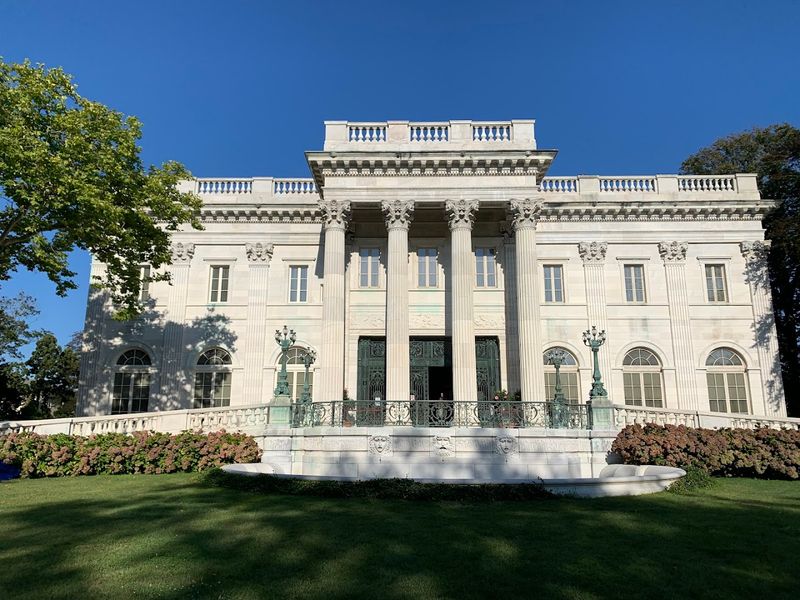
William K. Vanderbilt gave his wife Alva a birthday gift in 1892 that most people could not imagine: a $11 million marble mansion in Newport.
The construction cost alone used 500,000 cubic feet of marble sourced from quarries in the United States, Europe, and Africa.
Architect Richard Morris Hunt modeled the design after the Petit Trianon at Versailles. The Gold Ballroom inside is covered in genuine gold leaf and bronze, making it one of the most ornate rooms in any American home.
Alva Vanderbilt later divorced William and married Oliver Belmont, leaving Marble House behind, but she returned to it years later with a new purpose.
After returning ownership of the estate, Alva used the Chinese Tea House on the property’s cliff walk to host fundraising events for the women’s suffrage movement between 1909 and 1914. That detail transforms Marble House from a monument to excess into a place where significant political history also happened.
Tours today cover both the opulent interiors and the suffrage story.
4. The Elms (Newport, Rhode Island)
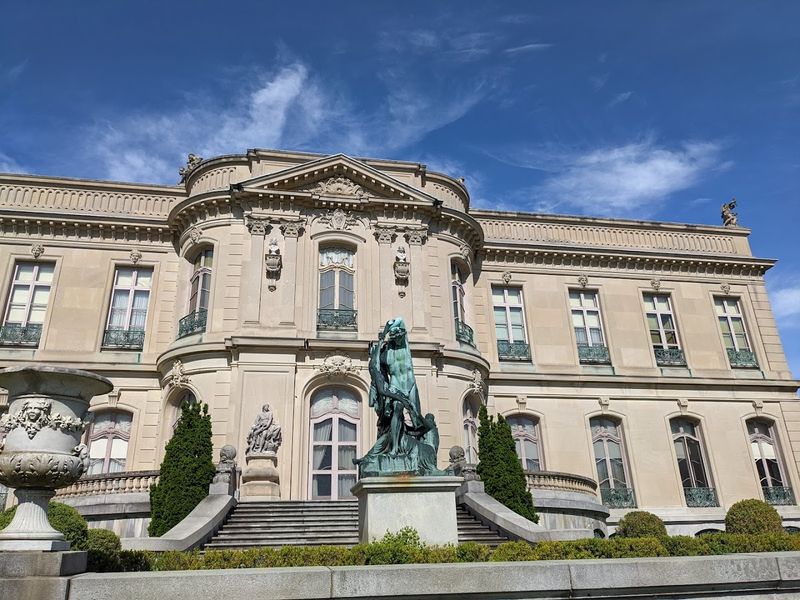
Coal merchant Edward Julius Berwind built The Elms in 1901, modeling it after the Chateau d’Asnieres near Paris. He hired architect Horace Trumbauer, who produced one of the most balanced and carefully proportioned estates in all of Newport.
The house itself is impressive, but The Elms is particularly known for its servant tour, which takes visitors through the working infrastructure that kept the estate running. The coal-powered systems, underground tunnels, and service corridors reveal exactly how much labor was required to maintain a Gilded Age household of this scale.
Berwind employed roughly 40 full-time staff members to manage the property during the summer season. The Preservation Society of Newport County acquired The Elms in 1962, just before it was scheduled for demolition, and has since restored it to its early 20th-century condition.
The contrast between the formal reception rooms upstairs and the utilitarian service areas below gives visitors a grounded, realistic view of how wealth operated in that period. Few Newport estates offer this kind of dual perspective as effectively.
5. Vizcaya Museum and Gardens (Miami, Florida)
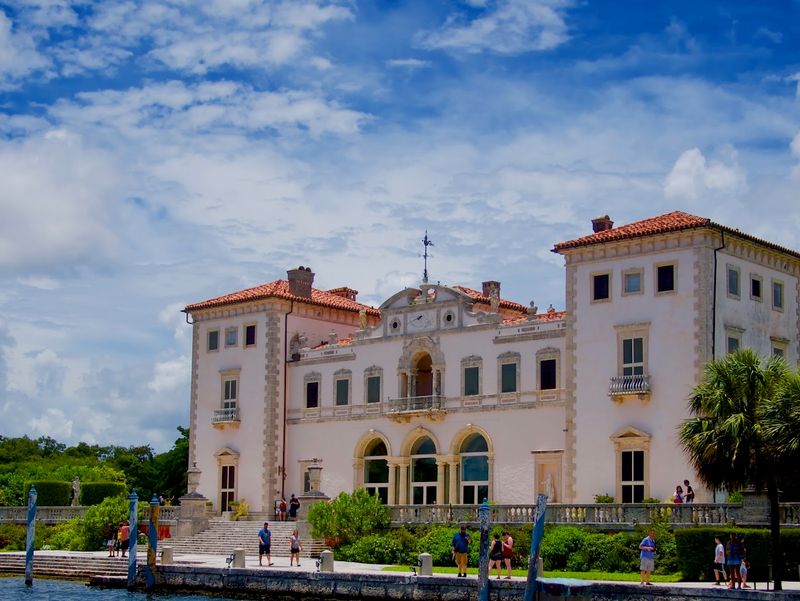
James Deering, vice president of International Harvester, spent roughly $22 million between 1914 and 1922 building a Mediterranean estate on the shore of Biscayne Bay. The result was Vizcaya, a 34-room Italian Renaissance villa filled with European antiques spanning four centuries.
Deering worked with architect F. Burrall Hoffman and designer Paul Chalfin to assemble a collection of authentic furnishings sourced from palaces and villas across Europe.
The goal was not to replicate a historic estate but to create the impression that one had existed on the site for centuries. Artificial aging techniques were applied to parts of the structure to support that illusion.
The formal gardens cover ten acres and include fountains, grottos, and sculptural elements arranged in the Italian style. A stone barge anchored just offshore serves as a breakwater and doubles as a sculptural landmark.
Vizcaya became a National Historic Landmark in 1994 and draws hundreds of thousands of visitors annually. It also functions as an active venue for cultural events and scientific research related to its coastal ecosystem.
6. Hearst Castle (San Simeon, California)
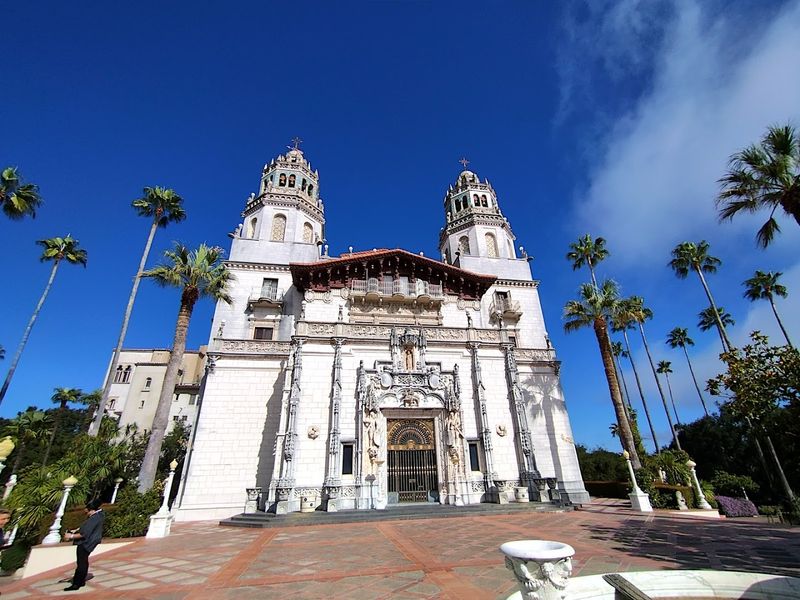
William Randolph Hearst did not just collect art. He collected buildings, shipping entire medieval ceilings and Spanish monastery facades from Europe and reassembling them in California.
His hilltop estate at San Simeon, built between 1919 and 1947, contains 165 rooms spread across four houses on a 250,000-acre ranch.
Architect Julia Morgan worked alongside Hearst for 28 years on the project, adapting designs continuously as his tastes and ambitions expanded. The Neptune Pool, which holds 345,000 gallons of water and is flanked by columns imported from ancient Roman temples, remains one of the most photographed outdoor spaces in California.
At its peak, Hearst Castle hosted a rotating cast of Hollywood celebrities, politicians, and international dignitaries. Guests were expected to dress for dinner and follow a specific set of house rules.
The estate was donated to the state of California in 1957 and is now managed as a state historic monument. Tours are divided by theme, covering everything from the main house to the gardens and pools, so repeat visits are genuinely worthwhile.
7. Lyndhurst Mansion (Tarrytown, New York)
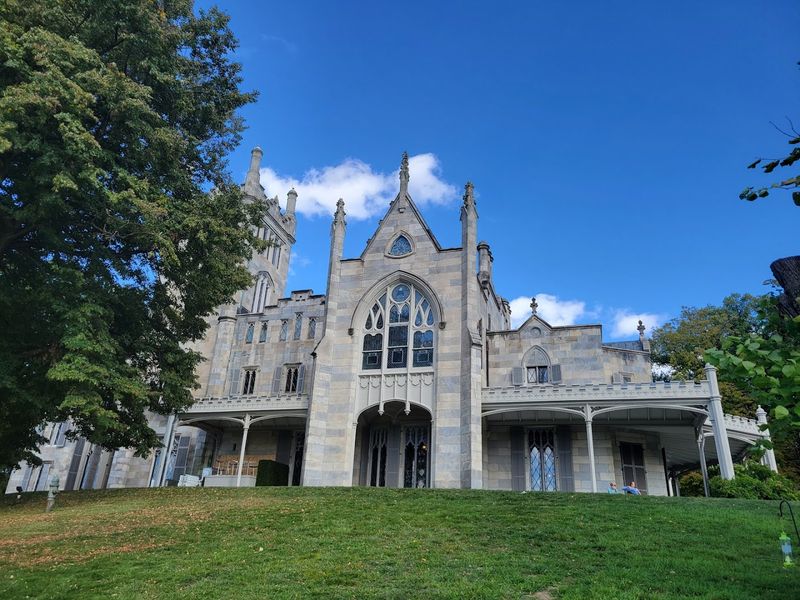
Jay Gould, one of the most controversial railroad financiers of the 19th century, purchased Lyndhurst in 1880 and used it as his primary country retreat until his passing in 1892. The Gothic Revival mansion had already been standing since 1838, originally designed by architect Alexander Jackson Davis for former New York mayor William Paulding.
Davis later expanded the house in 1865 for a subsequent owner, and Gould further modified the interiors to suit his collection of paintings, sculpture, and decorative art. The property includes a greenhouse complex that was once the largest private greenhouse in the United States, covering nearly 37,000 square feet of glass.
Lyndhurst passed through the Gould family for decades and was eventually donated to the National Trust for Historic Preservation in 1961. The mansion retains most of its original 19th-century furnishings, making it one of the more authentically preserved Gilded Age interiors in the Northeast.
Its position on a bluff above the Hudson River also provides sweeping views that explain exactly why wealthy New Yorkers coveted this stretch of the valley.
8. Oheka Castle (Huntington, New York)
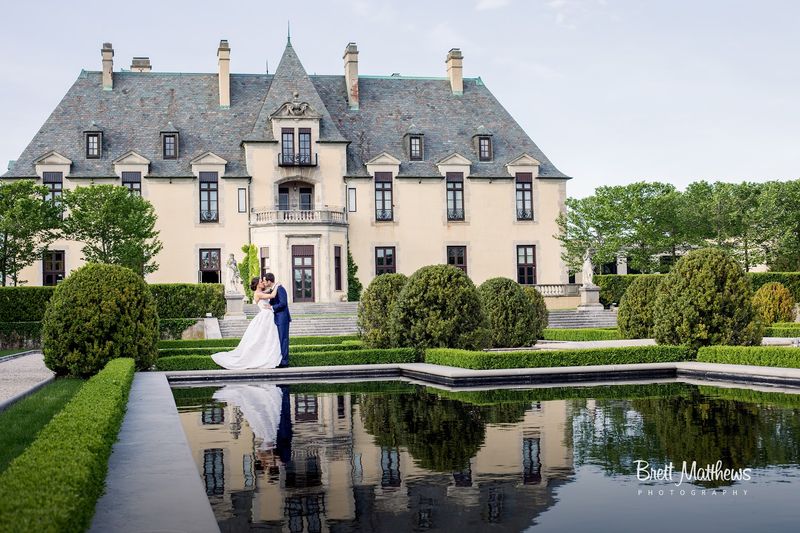
Otto Hermann Kahn built his Long Island estate in 1919 with a straightforward goal: create the second-largest private residence in American history. At 109,000 square feet, Oheka Castle succeeded.
Kahn was a prominent investment banker and arts patron who used the estate to entertain cultural and political figures throughout the 1920s.
The French chateau design was executed by architects Delano and Aldrich, who also designed several buildings in Manhattan. The formal gardens were laid out in the French style and required a staff of nearly 60 groundskeepers to maintain during the estate’s active years.
Kahn reportedly had the hilltop on which the castle sits artificially elevated by 40 feet to improve drainage and views.
After Kahn’s passing in 1934, the property changed hands multiple times and fell into serious disrepair. A major restoration effort beginning in the 1980s brought it back to its original condition.
Today, Oheka operates as a hotel and event venue, but it also offers public tours that cover the history of the estate and its Jazz Age social life. It has appeared as a filming location in several music videos and films.
9. Nemours Estate (Wilmington, Delaware)
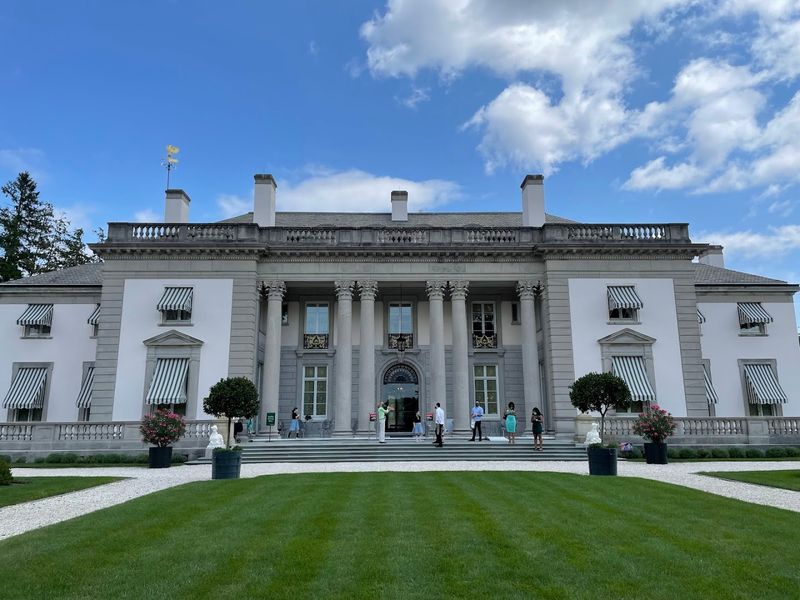
Alfred I. du Pont completed Nemours in 1910 as a Louis XVI-style chateau, naming it after the French town where his ancestors had lived. The mansion contains 77 rooms and was designed by architect Carrere and Hastings, the same firm responsible for the New York Public Library’s main branch.
The formal French gardens are the estate’s most distinctive feature. Stretching nearly a third of a mile from the house, they include a series of terraces, fountains, reflecting pools, and sculptural elements arranged in strict geometric patterns.
The overall design draws a direct comparison to the gardens at Versailles, though Nemours operates on a more human scale.
Alfred du Pont stipulated in his will that the estate be used as a charitable institution after his passing. Today, Nemours is managed by the Nemours Foundation, which also operates a children’s health system.
The estate reopened to the public in 2022 after a multi-year, $40 million restoration project that returned both the mansion and the gardens to their original 1910 appearance. The restoration is considered one of the most thorough of any Gilded Age property in the country.
10. Pittock Mansion (Portland, Oregon)
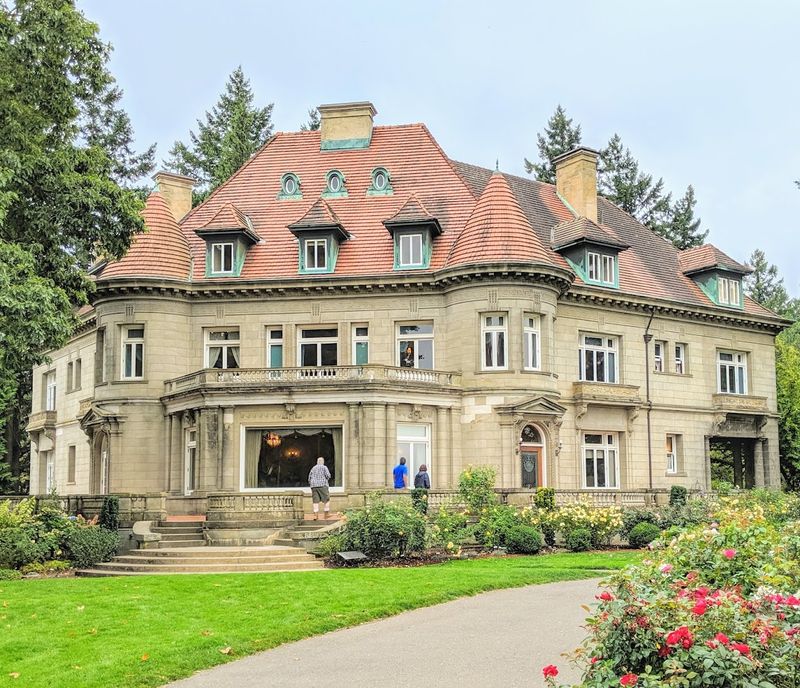
Henry Pittock, founder of The Oregonian newspaper, built his Portland hilltop estate in 1914 at the age of 76. The 46-room French Renaissance mansion was designed by architect Edward Foulkes and represents the peak of early 20th-century residential design on the West Coast.
Pittock and his wife Georgiana were central figures in Portland’s civic development for decades. The mansion reflects that status, incorporating the latest technologies of its era, including a central vacuum system, intercoms, and a built-in refrigeration unit.
These were not standard features in 1914, and their inclusion shows how seriously Pittock approached the construction.
The city of Portland purchased the property in 1964 after it sustained damage in a winter storm and opened it as a museum in 1965. The interiors have been carefully restored to reflect the 1914 period, and the collection includes original furnishings alongside period-appropriate pieces.
The mansion sits 1,000 feet above sea level, and on clear days, the views extend to Mount Hood, Mount St. Helens, and the Portland metropolitan area. Few historic house museums in the Pacific Northwest offer this combination of architectural quality and scenic setting.
11. Stan Hywet Hall (Akron, Ohio)
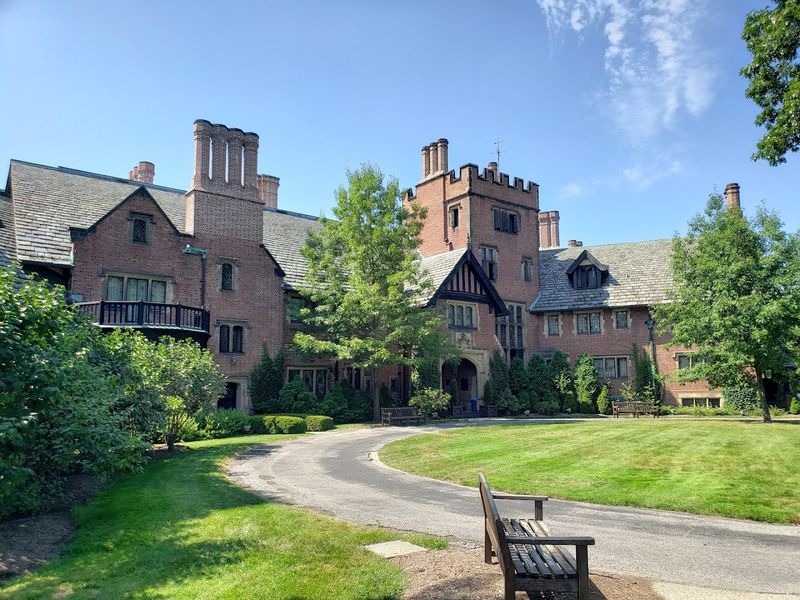
Frank A. Seiberling co-founded Goodyear Tire and Rubber Company in 1898, and by 1915 he had channeled a portion of that industrial fortune into one of the largest private homes ever built in Ohio.
Stan Hywet Hall, a 65-room Tudor Revival manor, takes its name from the Old English phrase meaning stone quarry, a reference to the sandstone quarried on the property during construction.
Architect Charles Schneider designed the house after Seiberling and his wife Gertrude toured English manor houses for inspiration. The estate covers 70 acres and includes a formal English garden, a Japanese garden, and a birch tree allée that serves as one of the property’s most recognizable landscape features.
The Seiberling family lived in the house until 1936, when financial difficulties following the Great Depression forced a change. The property was transferred to a nonprofit foundation in 1957 and has been open to the public ever since.
Stan Hywet consistently ranks among the top historic house museums in the Midwest, and its seasonal programming, including holiday tours and garden festivals, draws visitors throughout the year.
12. Kykuit (Sleepy Hollow, New York)
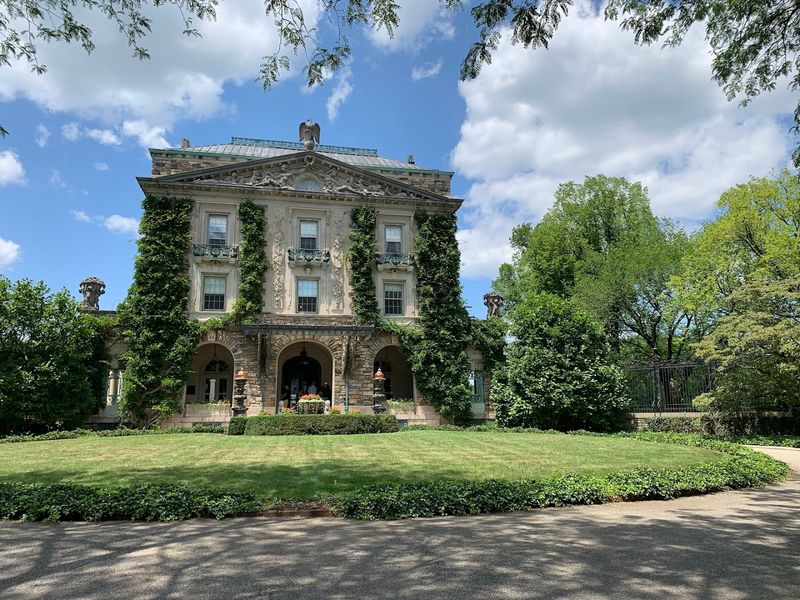
Four generations of the Rockefeller family lived at Kykuit, the family’s Hudson Valley estate, between its completion in 1913 and its transfer to the National Trust for Historic Preservation in 1979. The name comes from the Dutch word for lookout, and the hilltop position above the Hudson River fully justifies it.
John D. Rockefeller Sr. commissioned the original house, which was subsequently modified by his son John D.
Rockefeller Jr. Architects Delano and Aldrich oversaw the final design, producing a Beaux-Arts structure that balances formal elegance with residential comfort. The terraced gardens, developed over several decades, contain an outdoor sculpture collection assembled by Nelson Rockefeller that includes works by Picasso, Calder, and Moore.
Tours of Kykuit are operated through Historic Hudson Valley and require advance reservations, as access is limited to preserve the property. The combination of Gilded Age architecture, 20th-century modern art, and panoramic Hudson River scenery makes Kykuit one of the most layered historic estates in the Northeast.
No other Gilded Age property in New York integrates fine art collection and landscape design at this level.
13. Rosecliff (Newport, Rhode Island)
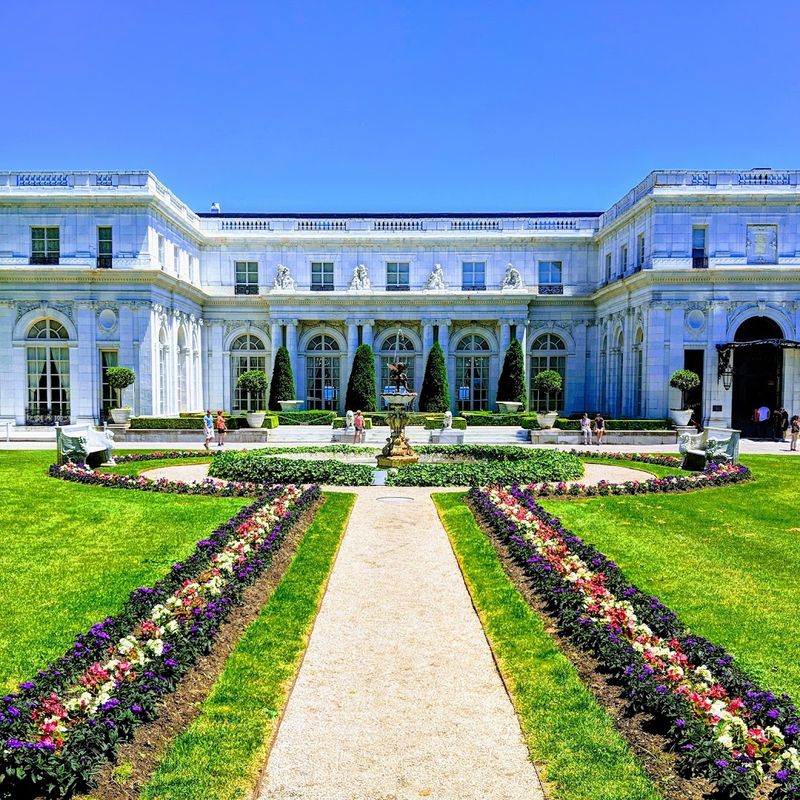
Stanford White designed Rosecliff in 1902 for Nevada silver heiress Theresa Fair Oelrichs, and he based the design directly on the Grand Trianon at Versailles. The result is one of the most photographically striking mansions in Newport, with a white terra cotta exterior that stands apart from the stone and brick of its neighbors.
The ballroom inside is the largest in Newport, measuring 40 by 80 feet. Oelrichs was known for hosting elaborate themed parties, and she used the space to full effect during the early 1900s.
One of her most famous events featured a fleet of model ships sailing in the garden fountains while guests dined nearby.
The property was donated to the Preservation Society of Newport County in 1971. Film crews have used Rosecliff as a location multiple times, most notably for the 1974 version of The Great Gatsby and the 1993 film True Lies.
Those appearances have kept the estate in public consciousness well beyond its historical significance. Tours cover the main floor rooms and the grounds, and the ballroom remains a popular venue for private events.
14. The Frick Collection (New York City, New York)
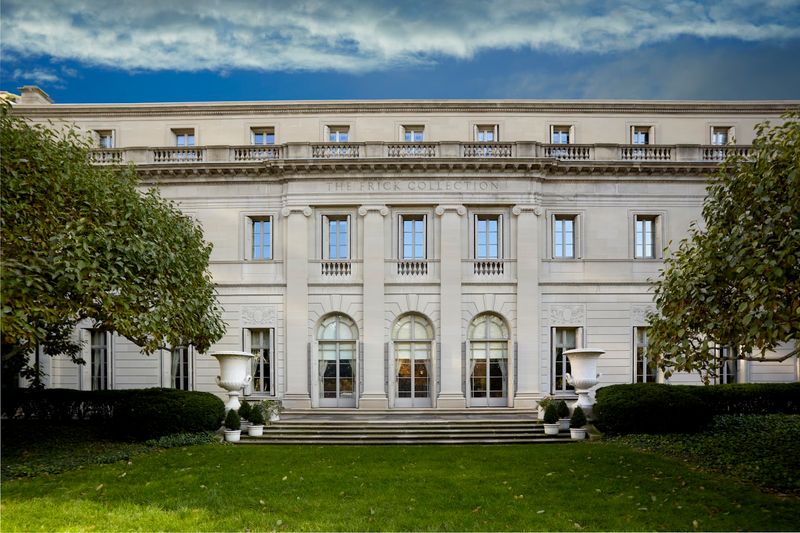
Henry Clay Frick made his fortune in coke and steel production, and by 1914 he had built a Fifth Avenue mansion designed specifically to house his growing art collection. Architect Thomas Hastings designed the Beaux-Arts structure to function simultaneously as a private home and a public gallery after Frick’s passing.
The collection Frick assembled includes works by Rembrandt, Vermeer, Velazquez, and El Greco, among many others. What distinguishes The Frick from a typical art museum is that the paintings remain displayed in the rooms for which they were originally acquired, giving visitors a sense of how Frick actually lived among his masterpieces.
The Living Hall, for example, contains three major paintings by Holbein, Titian, and El Greco arranged exactly as Frick intended.
The Frick Collection closed for a major renovation in 2020 and reopened in 2024 with expanded gallery space and restored original interiors. The mansion itself is a landmark of Gilded Age residential design in New York, and the collection it houses is considered one of the finest small museums in the world.
Admission is free for visitors under 10 years of age.
15. Chateau-sur-Mer (Newport, Rhode Island)
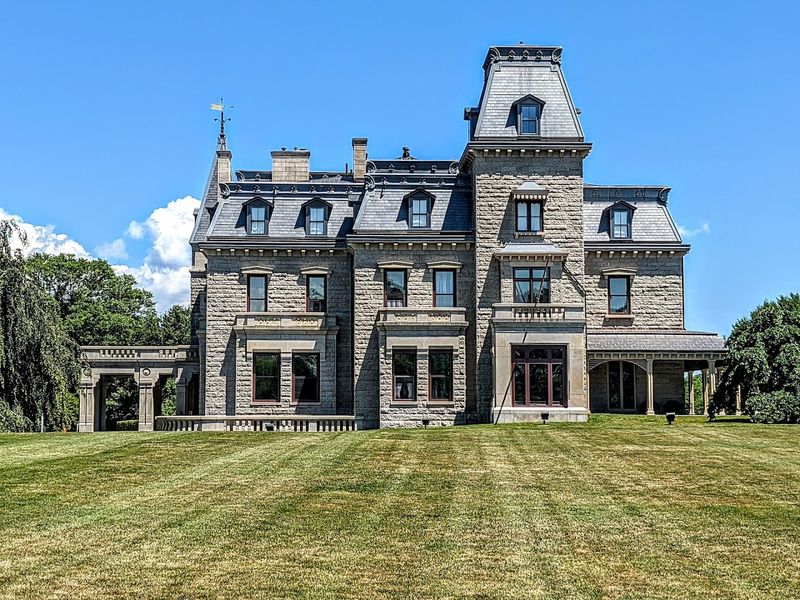
Built in 1852 for China trade merchant William Shepard Wetmore, Chateau-sur-Mer predates most of Newport’s famous Gilded Age estates by several decades. When Wetmore’s son George Peabody Wetmore inherited the property, he commissioned architect Richard Morris Hunt to expand and renovate it between 1872 and 1878, bringing it in line with the new standards of Newport society.
Hunt’s renovation transformed the original Italianate structure into a Victorian Gothic mansion, adding a mansard roof, new interior spaces, and elaborate decorative woodwork. The interiors reflect the aesthetic transition between mid-Victorian taste and the full Gilded Age style that would dominate Newport by the 1890s.
That transitional quality makes Chateau-sur-Mer historically useful as a reference point for understanding how design tastes evolved across the era.
The Preservation Society of Newport County has managed the property since 1969, and the interiors remain largely intact from the Hunt renovation period. The house contains original furniture, wallpapers, and decorative objects collected by the Wetmore family over several generations.
George Peabody Wetmore later served as a United States Senator from Rhode Island, adding a political dimension to the estate’s history.
Share this story