New Mexico is often celebrated for iconic landmarks like Santa Fe and Carlsbad Caverns, but the Land of Enchantment hides countless lesser-known gems rich in culture, history, and natural beauty. These underrated destinations offer quieter, more authentic experiences — perfect for travelers who want to go off the beaten path and discover New Mexico’s true character.
Below are 8 places that deserve a spot on your travel list.
Bisti/De-Na-Zin Wilderness
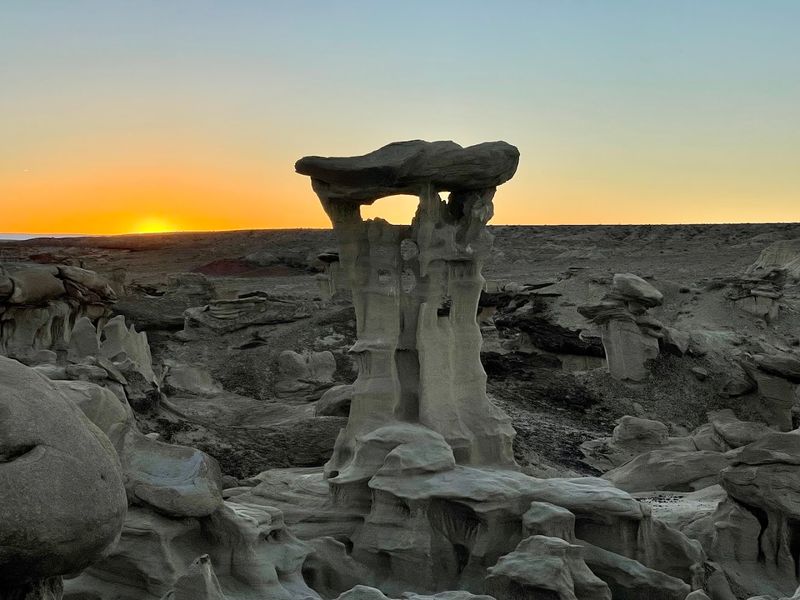
Nowhere else on Earth looks quite like Bisti/De-Na-Zin Wilderness — and that’s not an exaggeration. This remote stretch of northwestern New Mexico is packed with bizarre hoodoos, twisted rock spires, and chunks of petrified wood scattered across cracked, colorful earth.
It genuinely looks like a film set for a sci-fi movie.
What makes Bisti extra special is how few people actually visit. There are no marked trails, no visitor center crowds, and almost no noise except wind.
You navigate by landmarks and instinct, which sounds intimidating but is actually thrilling. Bring a compass, plenty of water, and a fully charged camera battery.
The rock formations shift color dramatically depending on the light. Sunrise and sunset turn the landscape shades of orange, purple, and gold that feel almost unreal.
Serious photographers plan trips specifically around that golden-hour glow. Even casual visitors tend to leave speechless.
Camping overnight near the wilderness boundary puts you under one of New Mexico’s darkest, most star-packed skies. This place rewards patience and curiosity in equal measure.
If you want somewhere that genuinely feels like an undiscovered world, Bisti delivers every single time.
Gila Cliff Dwellings National Monument
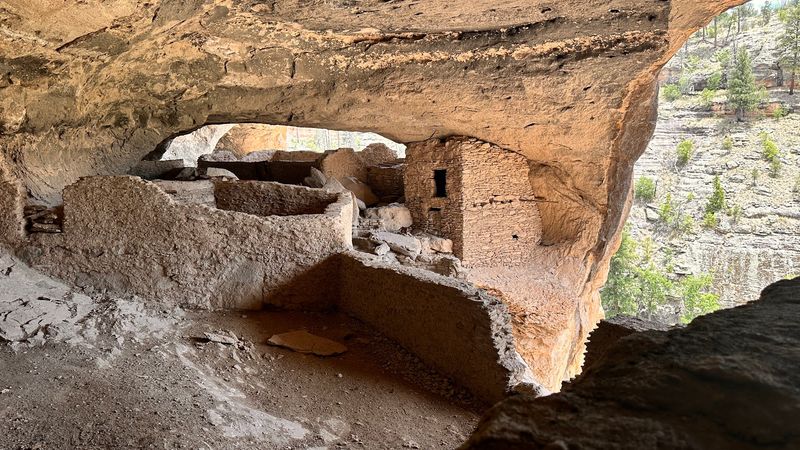
Roughly 700 years ago, the Mogollon people built their homes directly into the cliffs of a quiet New Mexico canyon — and those homes are still standing today. Gila Cliff Dwellings National Monument protects these remarkable 13th-century structures, giving visitors a rare, up-close look at ancient Southwestern life.
Few national monuments feel this personal.
Getting here requires a winding drive through the Gila National Forest, which honestly makes the whole experience feel like an adventure. The road passes hot springs, towering pines, and dramatic canyon views before arriving at the trailhead.
That drive alone is worth the trip.
A short loop trail — about one mile round trip — climbs into the cliff alcoves where the dwellings sit. You can walk through the actual rooms, peer into storage spaces, and imagine daily life centuries ago.
Rangers are on hand with fascinating stories and historical context that bring everything to life.
Because Gila sits far from major highways, crowds are refreshingly light even during peak travel seasons. The combination of ancient history, forest scenery, and peaceful atmosphere makes this one of New Mexico’s most rewarding — and most underappreciated — stops.
Pack a lunch and stay awhile.
El Morro National Monument
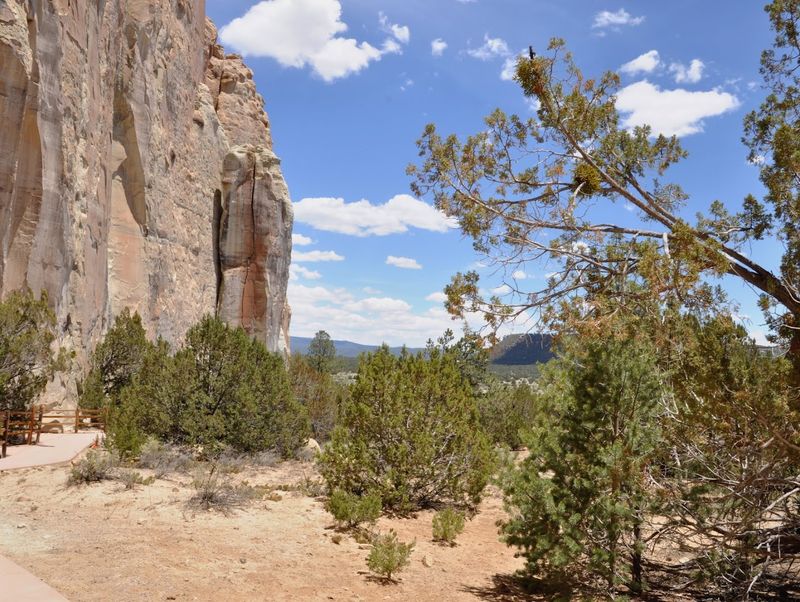
Carved into a massive sandstone bluff are thousands of inscriptions left by everyone from ancient pueblo people to Spanish conquistadors to 19th-century American pioneers. El Morro National Monument is essentially a 2,000-year-old guestbook carved in rock, and reading it feels genuinely eerie in the best way possible.
At the base of the bluff sits a natural pool fed by rainwater and snowmelt. For centuries, this reliable water source made El Morro a critical stopping point for travelers crossing the desert Southwest.
People drank, rested, and apparently felt compelled to leave their mark before moving on.
Two hiking trails explore the monument. The shorter Inscription Rock Trail passes the pool and carvings at ground level.
The longer Mesa Top Trail climbs above the bluff to ancestral pueblo ruins with sweeping views across the surrounding landscape. Both trails are well worth the effort.
El Morro sees a fraction of the visitors that crowd nearby parks, which means you can actually stand quietly and read the inscriptions without being rushed. Some carvings include dates from the 1600s alongside names and short messages.
History rarely feels this tangible or this strangely moving. Bring binoculars for the mesa views.
Casa Grande Trading Post and Museum
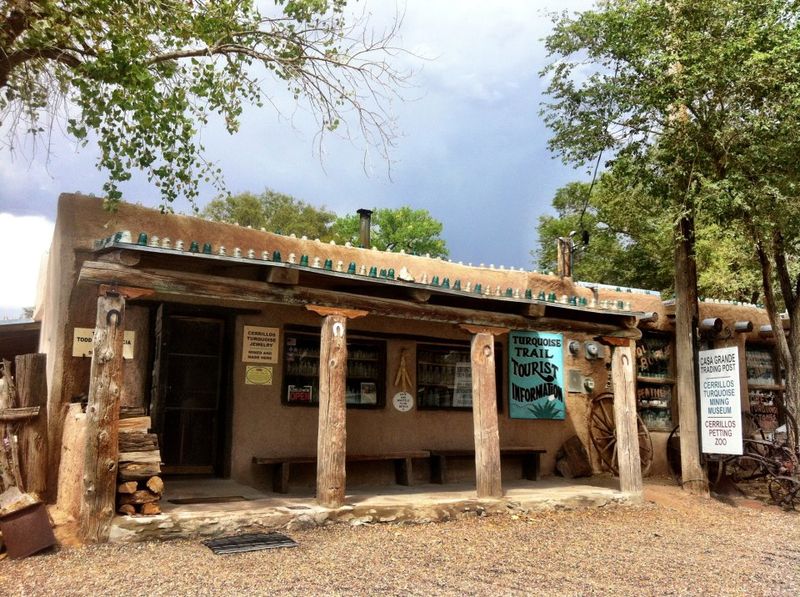
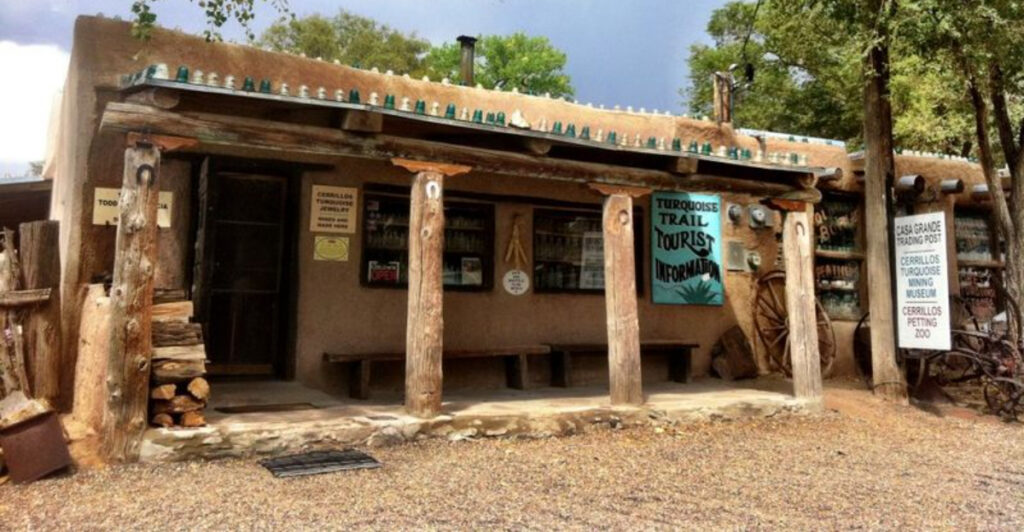
Stuffed with sparkling minerals, turquoise jewelry, fossils, and mining artifacts, Casa Grande Trading Post and Museum is the kind of roadside stop that makes you pull over without fully knowing why. Located along the famous Turquoise Trail between Albuquerque and Santa Fe, it’s been drawing curious travelers off the highway for decades.
The museum section showcases the rich mining history of the Cerrillos Hills area, where turquoise and other minerals were mined by Indigenous people for over a thousand years. Spanish colonizers later worked the same deposits, and the collection reflects that deep, layered history with impressive depth.
It’s a surprisingly educational stop.
Kids tend to go wide-eyed in the mineral room, where specimens glow under UV light and cases display everything from raw turquoise chunks to polished gemstones. Adults find it equally captivating.
The trading post side sells locally made jewelry, pottery, and regional souvenirs that feel genuinely authentic rather than mass-produced.
Admission is affordable, staff are knowledgeable and friendly, and the whole experience takes about an hour. Pair a visit here with a stroll through nearby Cerrillos village for a full afternoon of off-the-beaten-path New Mexico charm.
This one sneaks up on you in the best way.
Bosque del Apache National Wildlife Refuge
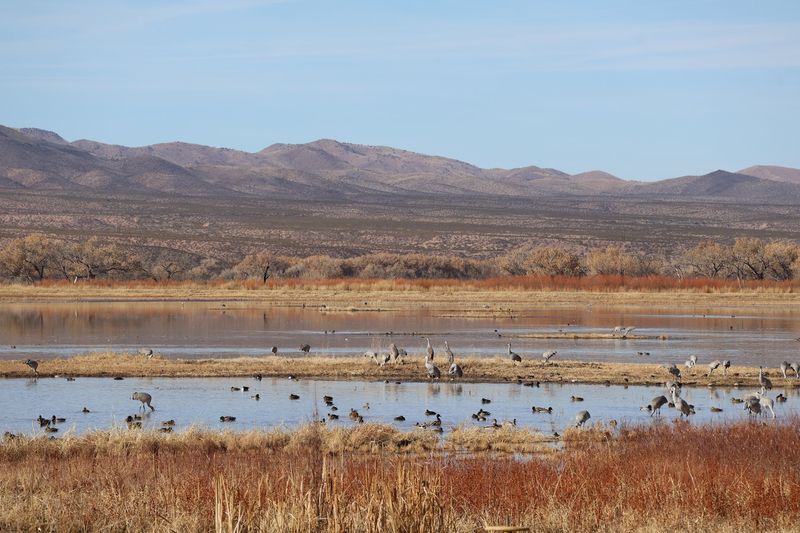
Every November, tens of thousands of sandhill cranes descend on Bosque del Apache like a feathered army, filling the air with their prehistoric calls and turning the wetlands into one of North America’s greatest wildlife spectacles. The annual Festival of the Cranes draws birders from around the world — yet somehow this refuge still flies under most travelers’ radars.
The refuge sits along the Rio Grande south of Socorro, covering over 57,000 acres of wetlands, meadows, and desert uplands. A 15-mile auto tour loop lets visitors explore the habitat without leaving their car, which is perfect for spotting wildlife without disturbing it.
Snow geese, bald eagles, and dozens of duck species join the cranes each winter.
Sunrise visits are absolutely worth the early alarm. Watching thousands of birds lift off the water simultaneously, silhouetted against a pink and orange sky, is the kind of scene that stays with you for years.
Bring binoculars and a camera with a decent zoom lens — you will not regret it.
Summer visits offer a completely different experience, with hummingbirds, roadrunners, and nesting herons replacing the winter crowds. Year-round, Bosque del Apache rewards patience and attention.
Entry fees are modest, and the memories you take home are priceless.
La Cieneguilla Petroglyphs
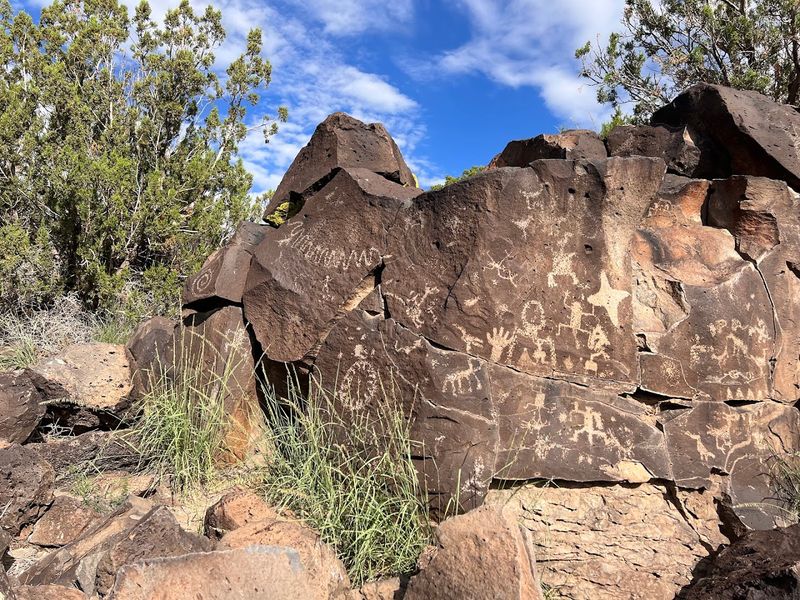
Just a short drive southwest of Santa Fe, thousands of ancient petroglyphs cover the dark basalt boulders of La Cieneguilla mesa — and most Santa Fe tourists have absolutely no idea this place exists. That’s a remarkable oversight, because the rock art here spans multiple cultures and thousands of years of human history in one accessible outdoor site.
The images include spirals, animals, human figures, and geometric patterns carved by ancestral Pueblo people and later by Tiwa-speaking communities. Archaeologists believe some carvings date back over 700 years, while others may be considerably older.
Walking among them feels like reading a conversation across centuries.
Access requires a short hike across open mesa terrain managed by the Bureau of Land Management. The trail is informal and unmarked in places, so downloading a map beforehand is a smart move.
Wear sturdy shoes, bring sun protection, and go early in the morning before the desert heat builds.
Photography here is spectacular, especially in low-angle morning light when the carvings cast sharp shadows that make every detail pop. Unlike more commercialized rock art sites, La Cieneguilla has no entrance fee and rarely feels crowded.
For history lovers and outdoor enthusiasts alike, this mesa is one of New Mexico’s most quietly extraordinary places.
San José de Gracia Church (Las Trampas)
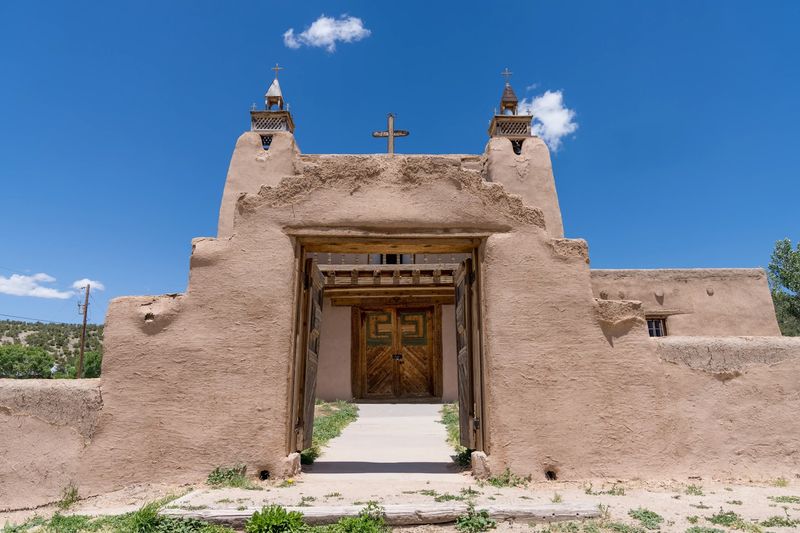
Built between 1760 and 1776 by the settlers of Las Trampas, San José de Gracia Church has stood through wars, floods, and centuries of New Mexico history without losing a single ounce of its quiet dignity. Architectural historians consider it one of the finest surviving examples of Spanish Colonial church design in the entire United States.
The exterior is deceptively simple — thick adobe walls, twin bell towers, and a plain facade that gives nothing away. Step inside, and the atmosphere shifts completely.
Handmade wooden santos, painted altar screens, and centuries-old vigas overhead create an interior that feels genuinely sacred and deeply human at the same time.
Las Trampas sits along the High Road to Taos, a scenic mountain route that passes through a string of historic Hispanic villages. Most travelers speed through on their way to Taos without stopping.
Pulling over at San José de Gracia takes maybe 20 minutes, but the impression it leaves lasts considerably longer.
The church is still an active parish, so visiting hours can vary — checking ahead before you go saves disappointment. Local volunteers sometimes offer informal tours filled with stories about the village’s history.
Few places in New Mexico carry this much living history in such a small, unassuming package.
Grulla National Wildlife Refuge
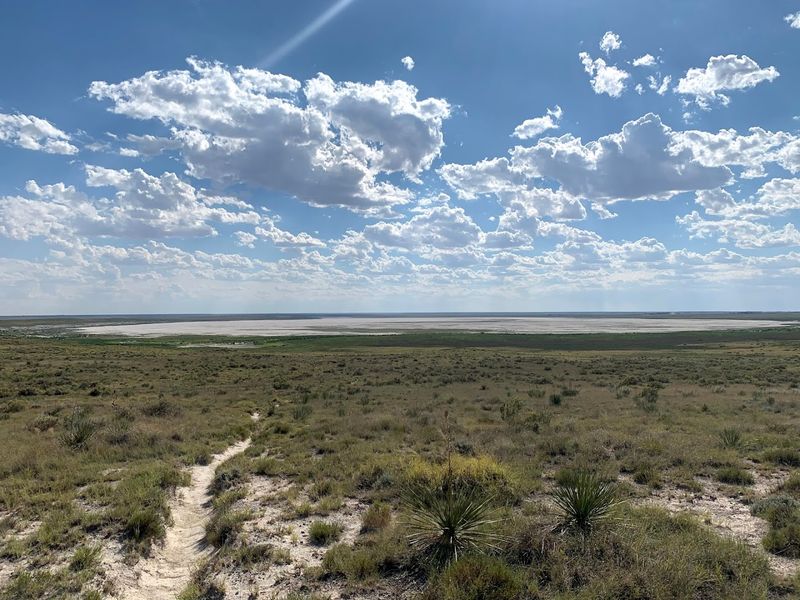
Grulla National Wildlife Refuge sits in the high plains of eastern New Mexico so quietly that even many lifelong New Mexico residents have never heard of it. Covering just over 3,200 acres of salt playa lakes and native shortgrass prairie, it hosts one of the most important sandhill crane staging areas in the entire Central Flyway migration route.
Peak crane season runs from October through February, when flocks numbering in the tens of thousands use the refuge’s shallow lakes as a resting and feeding stop. The sound alone — a rolling, bugling chorus that carries across the flat grassland — is something you feel as much as hear.
Wildlife photographers make pilgrimages here specifically for that experience.
Outside of crane season, Grulla supports prairie dogs, burrowing owls, northern harriers, and a surprising variety of migratory shorebirds. The refuge has no formal visitor facilities, which means no crowds, no entrance booths, and no noise except wind and wildlife.
That raw simplicity is exactly the point.
Eastern New Mexico doesn’t get much attention from travel writers, which makes Grulla one of the state’s best-kept secrets. Bring binoculars, a field guide, and plenty of patience.
The payoff for those willing to seek this place out is a genuinely rare and unhurried connection with wild New Mexico.
Share this story