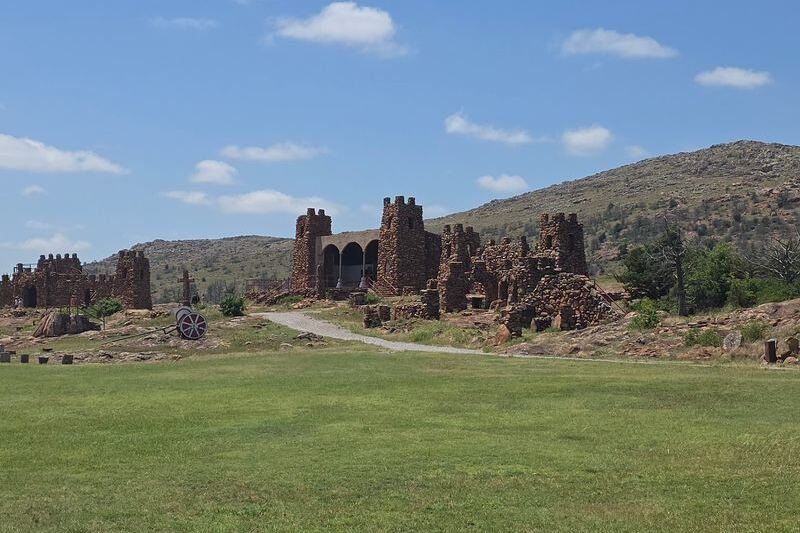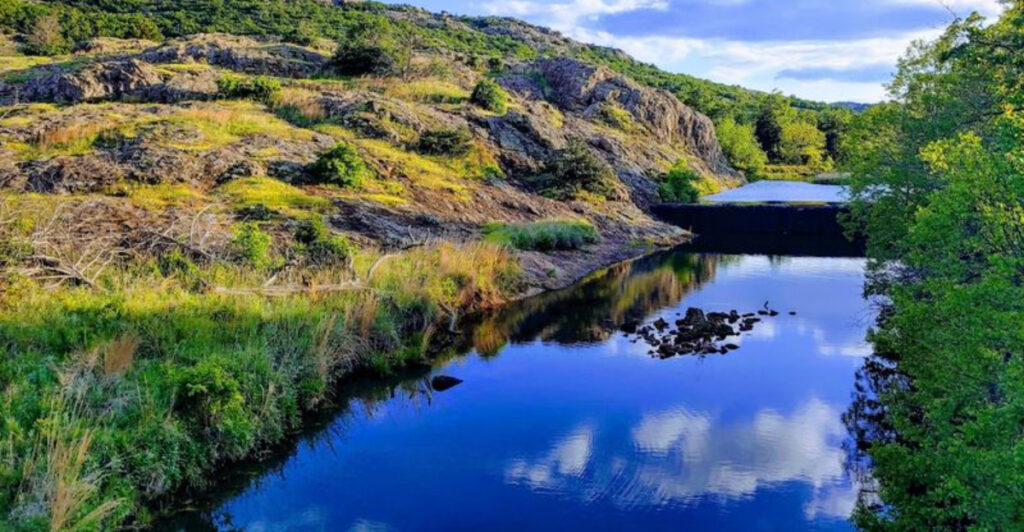
There is a short hike in southwestern Oklahoma that rewards you with one of the most sweeping views in the entire state, and most people outside the region have never heard of it. The trail climbs a granite peak that geologists say is among the oldest in the continental United States, yet the path itself is friendly enough for families with young children.
You get rocky scrambles, wildflower meadows, free-roaming bison spotted from the summit, and a sky that seems twice as wide as anywhere else. By the time you finish reading this, you will want to lace up your boots and head straight there.
Where the Trail Begins: Address and Location
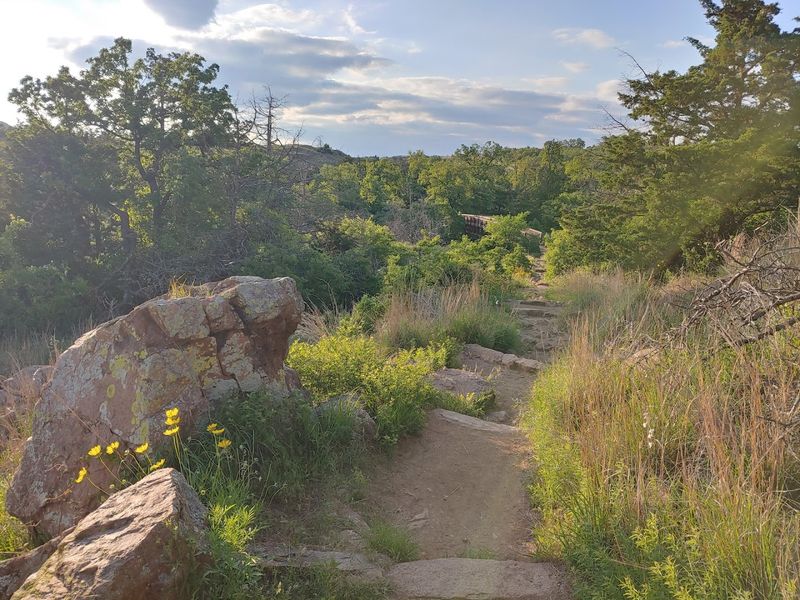
The trailhead sits at Elk Mountain Trail, Indiahoma, OK 73552, inside the Wichita Mountains Wildlife Refuge, one of the most ecologically rich protected areas in all of Oklahoma. The refuge itself sprawls across more than 59,000 acres of granite peaks, mixed-grass prairie, and scattered woodlands in Comanche County, roughly 90 miles southwest of Oklahoma City.
Getting there is straightforward. Most visitors drive through the town of Lawton and then head north on State Highway 49, following signs toward the wildlife refuge.
The trailhead has a dedicated parking lot with picnic tables and restroom facilities nearby, which is a welcome convenience before a hike.
Parking fills up fast on weekends, especially during spring and fall when the weather is ideal. Arriving before 9 a.m. gives you the best chance of securing a spot close to the trailhead.
The refuge is open year-round, and the trail itself is accessible 24 hours a day, so early birds and golden-hour chasers both have options worth exploring.
The Mountain Itself: Ancient Granite and Geology
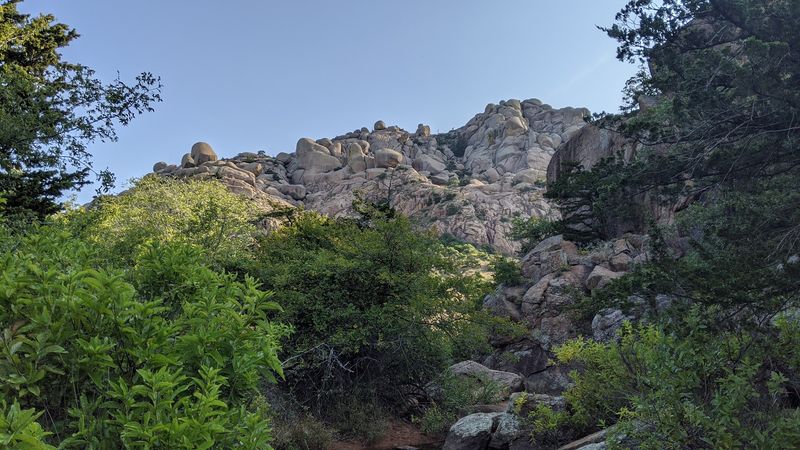
Elk Mountain is not just old by Oklahoma standards. The granite that forms its core is estimated to be around 525 million years old, making it part of one of the oldest exposed mountain ranges in the continental United States.
That kind of age puts it in a completely different category from the Rocky Mountains or the Appalachians.
The summit reaches an elevation of approximately 2,270 feet above sea level. While that number might not sound dramatic on paper, the surrounding terrain is flat enough that the peak feels genuinely elevated once you reach the top.
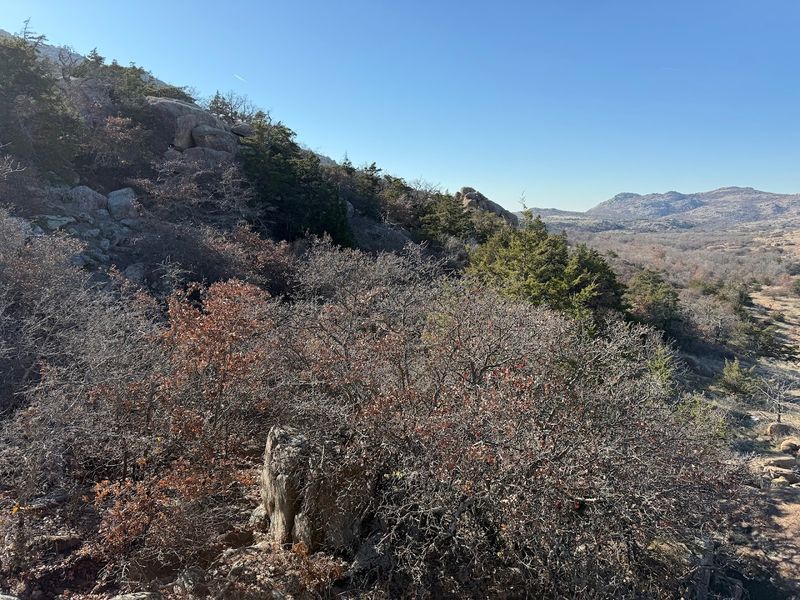
The rock itself is a rough-textured, pinkish-gray granite that has been shaped by millions of years of wind, rain, and temperature shifts. Large boulders are scattered across the upper sections of the trail, and many of them are big enough to sit on comfortably while you take in the view.
Geologically speaking, this mountain is a window into deep time, and that fact alone gives the hike a quiet sense of weight that most short trails simply cannot match.
Trail Difficulty and What to Expect on the Way Up
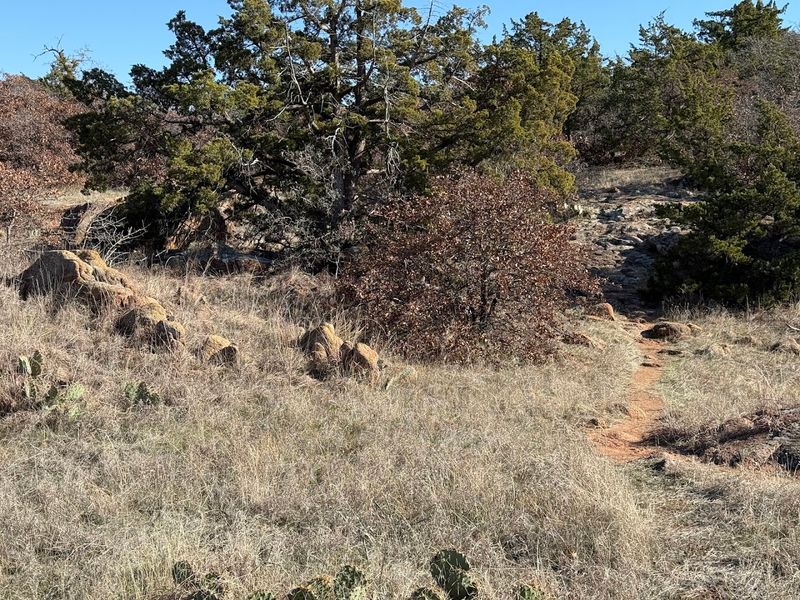
The trail covers roughly 1.8 to 2 miles one way, depending on the specific route taken to the summit. Most hikers classify it as moderate, though some sections feel closer to challenging thanks to the rocky terrain and the occasional steep scramble over large granite slabs.
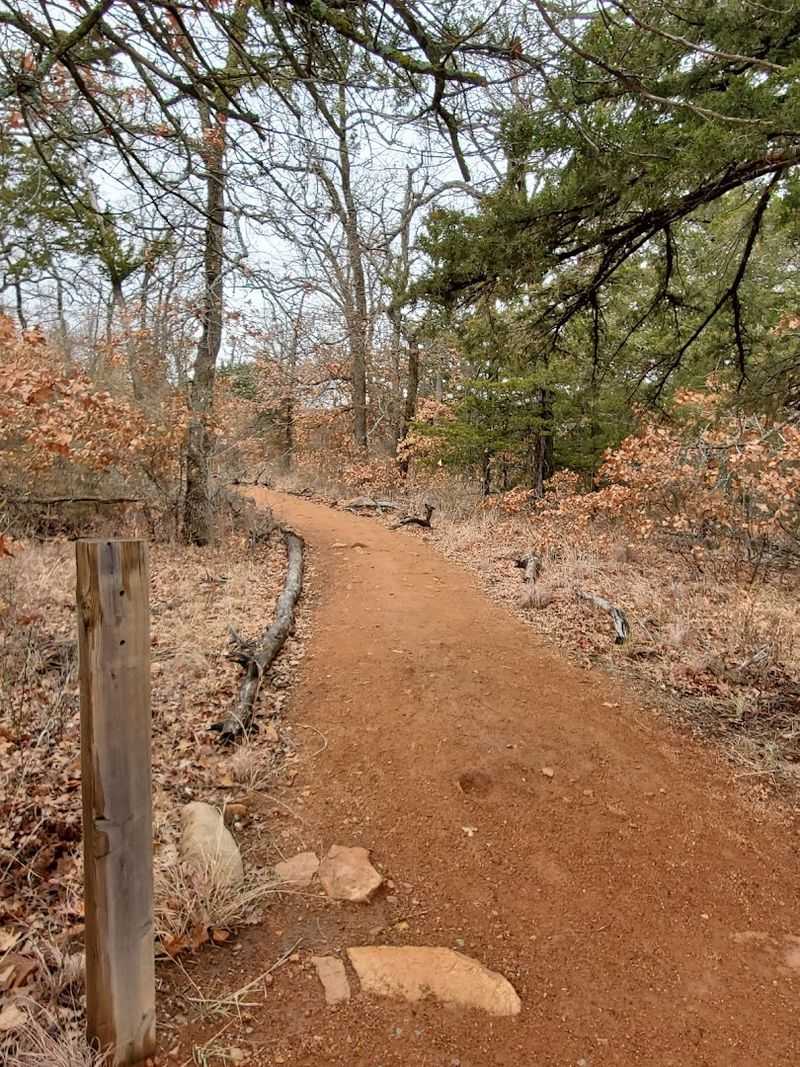
Stone steps have been built into parts of the path, which helps with footing on the steeper sections. The incline is gradual enough that hikers who are not in peak physical condition can still complete it with steady pacing and a few rest breaks along the way.
Flat stretches appear between the steeper sections, giving your legs a chance to recover before the next climb. The trail can be a bit tricky to follow in spots where it crosses open rock, since there is no clear path etched into the stone.
Orange trail markers and ribbons help guide the way, so keeping an eye out for those prevents unnecessary backtracking. A downloaded offline map on your phone is a smart backup, especially if you plan to explore the summit area once you arrive at the top.
The Summit Views: What You Actually See from the Top
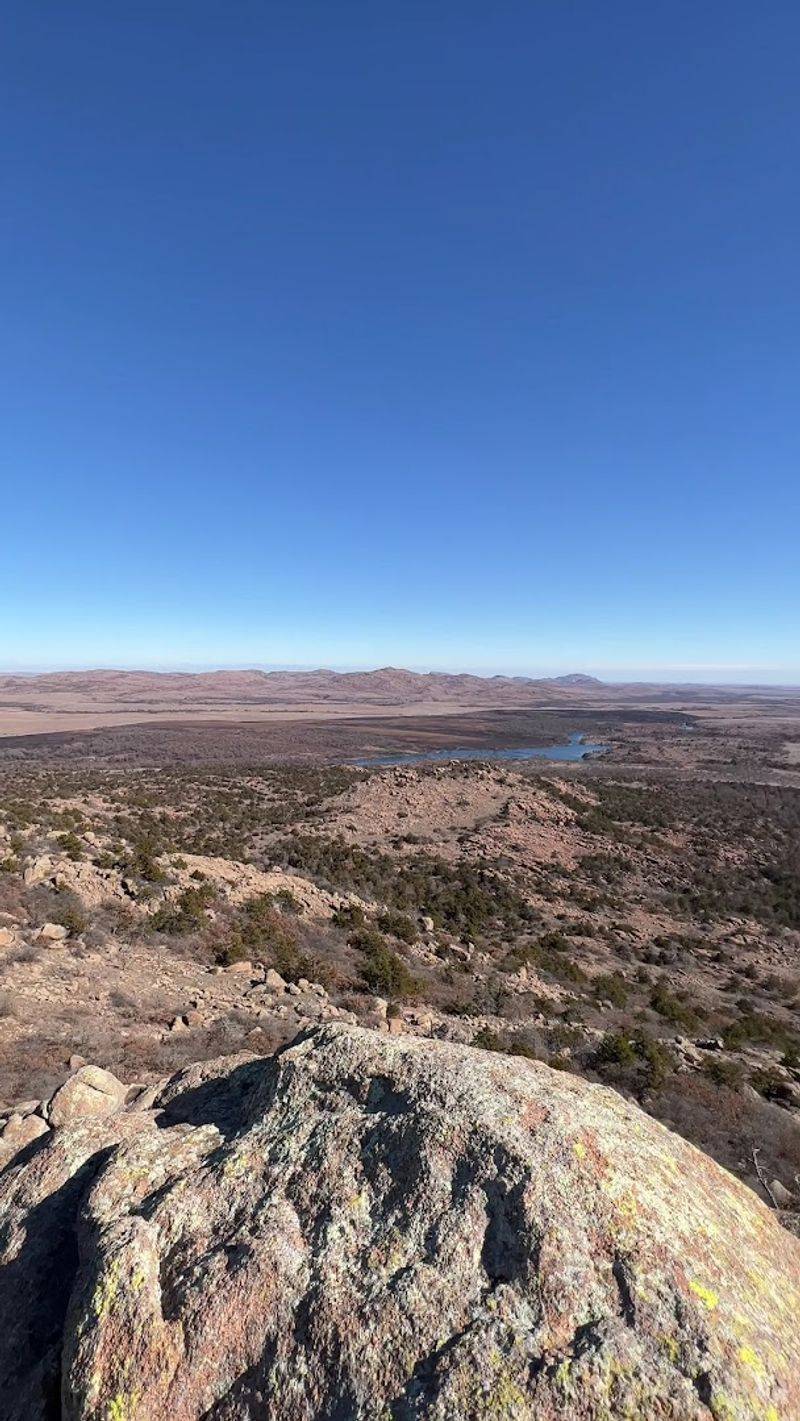
Reaching the top of Elk Mountain is the kind of payoff that makes every rocky step feel completely worth it. The summit opens up into a wide, unobstructed panorama that stretches across the Wichita Mountains Wildlife Refuge and the surrounding plains in every direction.
On a clear day, you can see the Charon Garden Wilderness below, a rugged and beautiful section of the refuge filled with granite formations and dense cedar thickets. The contrast between the rocky peaks and the open grasslands creates a visual range that feels almost cinematic.
Free-roaming bison are sometimes visible from the summit, grazing on the plains far below. Spotting them from that elevation adds a genuinely wild dimension to the experience that few hikes in the region can replicate.
The top of the mountain is also dotted with enormous boulders that make perfect natural seats for a snack break. Bring something to eat and a drink, sit down, and take your time up there because the view deserves more than a quick glance before heading back down.
Wildflowers and Wildlife Along the Trail
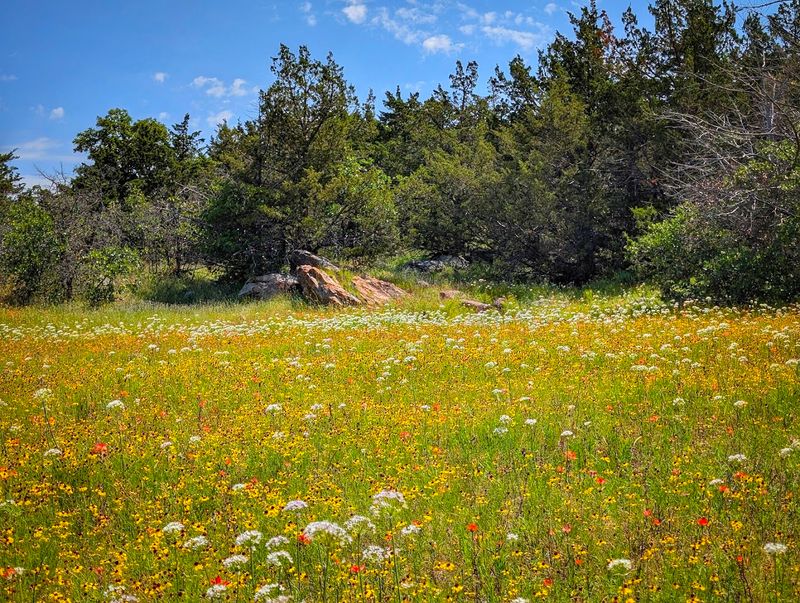
The trail is not just about the destination. The journey up Elk Mountain passes through some genuinely beautiful stretches of native Oklahoma landscape, and the variety of wildflowers along the path is one of the most talked-about features among regular visitors.
Spring and early summer bring out the most impressive floral displays, with patches of color appearing between the granite outcroppings and along the grassy sections of the trail. July in particular has a reputation for dense wildflower blooms that add a vivid contrast to the gray and pink rock faces.
Wildlife sightings are common throughout the hike. The Wichita Mountains Wildlife Refuge supports a remarkable variety of species, including white-tailed deer, wild turkey, and Texas longhorn cattle alongside the famous bison herds.
Hikers occasionally spot lizards darting across warm rocks and hawks circling overhead. Snakes are also present in the refuge, so watching where you step and keeping your hands away from rock crevices is simply good trail sense rather than cause for alarm.
The natural soundtrack of the trail, including birdsong and the sound of a nearby stream, adds to the overall experience.
Best Times to Visit and Seasonal Highlights
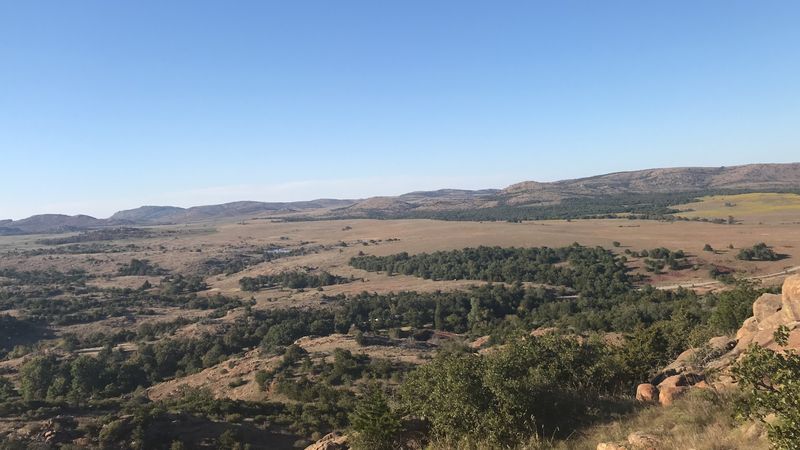
The trail is open every day of the year and accessible around the clock, which gives visitors a lot of flexibility when planning a trip. That said, spring and fall are widely considered the best seasons for this hike, and the reasons are easy to understand.
Spring brings mild temperatures, blooming wildflowers, and greener vegetation throughout the refuge. Fall delivers cooler air, softer light, and the golden tones of drying grasses against the dark granite, which makes for some genuinely striking photography.
Summer is manageable but can get hot in the midday hours, so early morning starts are strongly recommended if you visit between June and August.
Winter hikes on Elk Mountain have their own quiet appeal. The crowds thin out considerably, the air is crisp, and the bare landscape reveals the raw geology of the mountain in a way that leafy seasons tend to hide.
One thing to keep in mind regardless of the season is that the parking lot fills up quickly on weekends. Weekday visits or early Saturday arrivals consistently give you a more peaceful experience on the trail.
Practical Tips for First-Time Hikers
A few practical details can make a real difference on this trail, especially for first-time visitors. Water is at the top of every experienced hiker’s checklist here.
The hike is short, but the exposed sections and physical effort of climbing over rocks can leave you more thirsty than expected, so carrying more than you think you need is always the right call.
Sturdy footwear matters on this trail more than on a simple walking path. The rocky terrain and stone steps require shoes with good grip and ankle support.
Sandals and flat sneakers work fine for the flat sections but become a liability on the steeper granite scrambles near the summit.
Wearing long pants and applying insect repellent before the hike helps manage the overgrown sections of the trail, particularly in warmer months. A basic trail map downloaded to your phone before leaving cell range is genuinely useful once you reach the open rock sections near the top, where the path becomes harder to follow.
The refuge phone number is (580) 429-3222 if you need information before your visit, and the official trail page is available at the U.S. Fish and Wildlife Service website.
The Wichita Mountains Wildlife Refuge: Bigger Picture
Elk Mountain Trail is one piece of a much larger outdoor experience. The Wichita Mountains Wildlife Refuge surrounds it on all sides, and the refuge itself is one of the oldest managed wildlife areas in the United States, established in 1901.
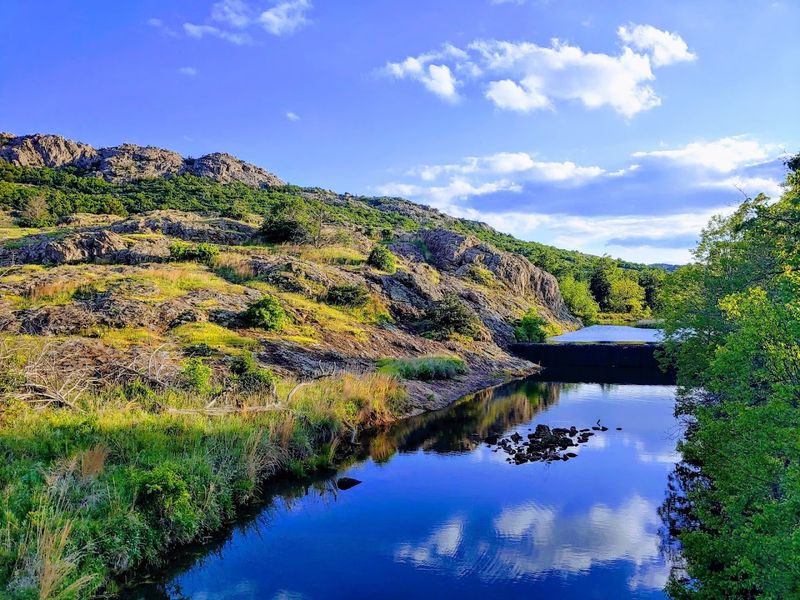
The refuge covers a massive stretch of southwestern Oklahoma and contains dozens of trails ranging from easy nature walks to demanding full-day routes like the Charon Garden Trail, which passes through a designated wilderness area, Treasure Lake, and Postage Falls. Elk Mountain sits comfortably in the middle of the difficulty range, making it the most popular trail in the refuge for good reason.
The combination of accessible terrain, impressive views, and the surrounding wildlife population creates a hiking experience that feels genuinely wild without requiring expert-level fitness or technical skills. Visitors who arrive with time to spare often explore other parts of the refuge after completing the Elk Mountain hike.
The variety of landscapes within a single protected area, from granite summits to open prairie to cedar woodlands, is a reminder of just how much natural diversity Oklahoma quietly holds within its borders.
Why This Hike Stays with You Long After You Leave
Some hikes are enjoyable in the moment and forgotten by the following weekend. Elk Mountain Trail tends to stick around in memory longer than that, and the reason is not simply the view, though the view is genuinely hard to shake.
There is something about standing on a piece of granite that formed half a billion years ago, looking out over an Oklahoma landscape that still contains free-roaming bison and open prairie, that feels unexpectedly grounding. The scale of time and space on that summit puts everyday concerns into perspective without requiring any effort on your part.
The trail also rewards repeat visits in a way that single-experience hikes often do not. Different seasons change the color palette, different weather conditions shift the mood of the summit, and different times of day transform the quality of light across the plains below.
Hikers who visit once tend to return, often bringing friends or family who had never considered a trail in southwestern Oklahoma worth the drive. The mountain has a quiet way of making converts out of skeptics, and that might be its most impressive feature of all.
Share this story