Oregon is home to some of the most breathtaking bridges in the entire country, stretching across wild rivers, dramatic gorges, and scenic coastal bays. These structures are more than just ways to get from one side to another – they are works of art built from steel, concrete, and sheer human ambition.
From the fog-wrapped shores of Astoria to the rugged canyon lands near Smith Rock, each bridge tells its own story. Get ready to discover ten Oregon bridges that will make your jaw drop and maybe even inspire a road trip.
1. Astoria–Megler Bridge – Astoria
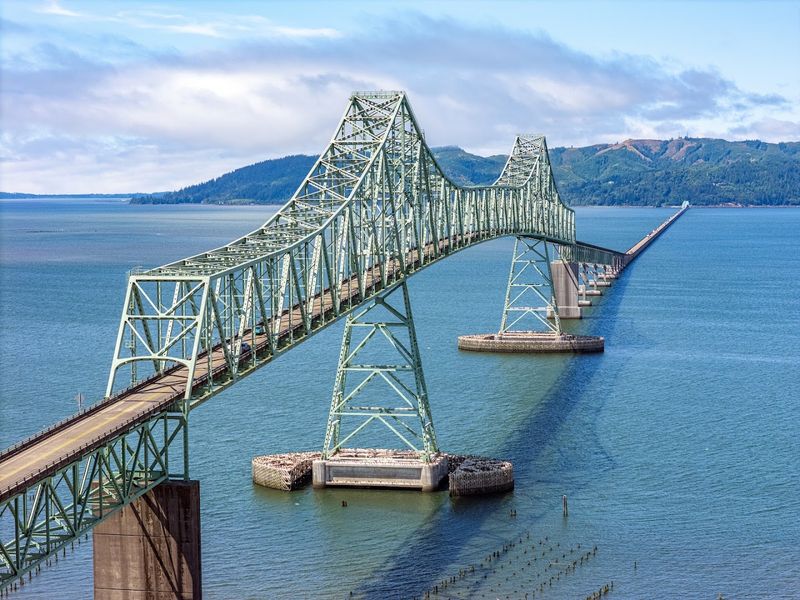
At over four miles long, the Astoria-Megler Bridge holds the record as the longest continuous truss bridge in North America – and it earned that title the hard way. Completed in 1966, this steel giant connects Astoria, Oregon, to Point Ellice in Washington, soaring above the mighty Columbia River.
Drivers crossing it often feel like they are floating above the water.
The bridge rises to a dramatic 196-foot clearance at its highest point, allowing large ships to pass underneath without a problem. On foggy mornings, only the tops of its towers peek above the clouds, creating an almost magical sight.
Locals sometimes joke that crossing it feels like driving into another world.
Photographers flock here for sunrise shots when golden light bounces off the river below. It is a true engineering legend that doubles as a stunning landmark for the entire Pacific Northwest coast.
2. St. Johns Bridge – Portland
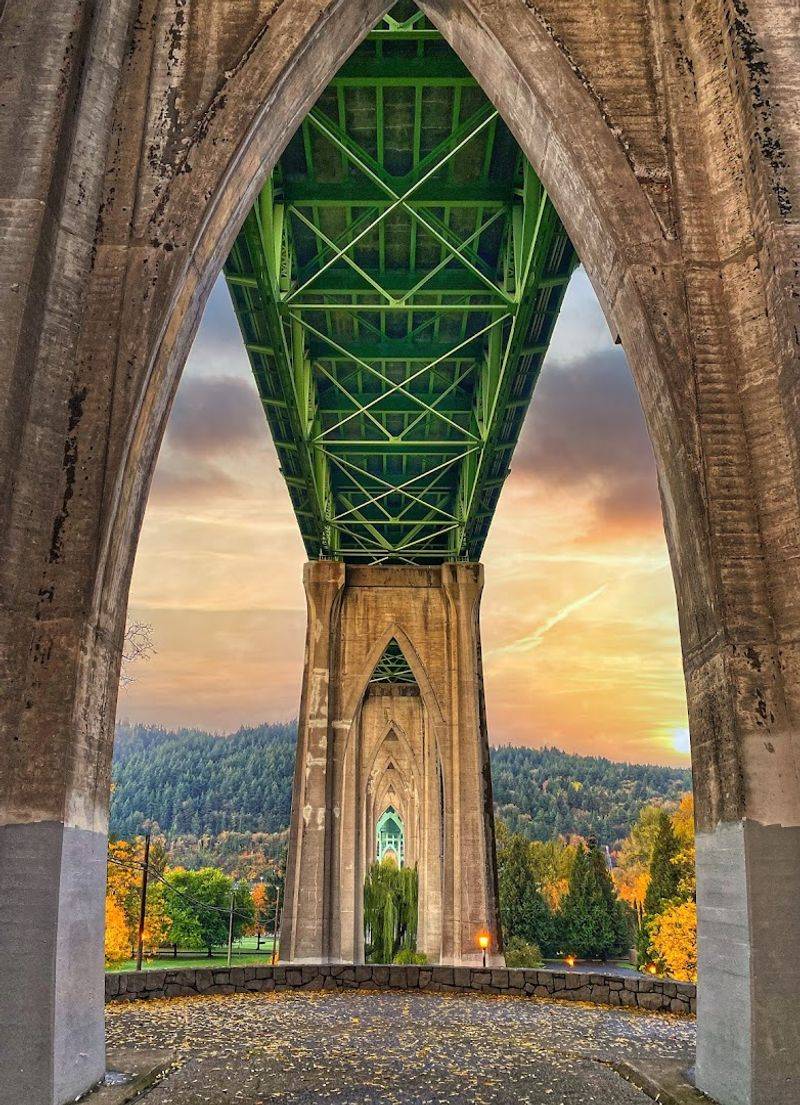
Portland has a lot of bridges, but none of them look quite like St. Johns. Built in 1931, this Gothic-style suspension bridge features two soaring towers decorated with pointed arches that look like they belong on a cathedral rather than a highway crossing the Willamette River.
Engineer David Steinman designed it with both beauty and function in mind, and the result is something truly special. The towers rise 408 feet above the water, making St. Johns one of the tallest bridges in Oregon.
Its pale green color blends naturally with the forested riverbanks surrounding it.
Cathedral Park sits directly beneath the bridge, offering one of the most photographed views in all of Portland. Looking up through those arches on a sunny afternoon is genuinely stunning.
Whether you visit by car, bicycle, or foot, St. Johns Bridge is the kind of structure that stops you mid-step in pure amazement.
3. Conde B. McCullough Memorial Bridge – North Bend / Coos Bay
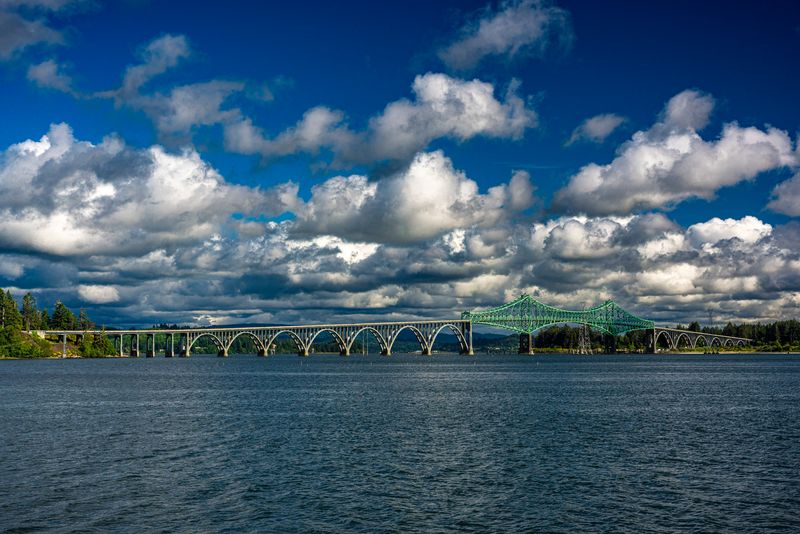
Conde McCullough was Oregon’s master bridge builder during the Great Depression, and this magnificent structure near Coos Bay is his crowning achievement. Originally called the North Bend Bridge when it opened in 1936, it was renamed in his honor – and rightfully so.
Every detail of this 5,305-foot span shows genuine artistry.
The bridge features a stunning combination of tied arches, a bascule draw span, and Art Deco ornamentation that makes it look more like a European landmark than a highway crossing. Decorative towers, arched portals, and elegant railings give it a refined, timeless look that most bridges can only dream about.
A major restoration project completed in 2006 brought the bridge back to its full glory, reinforcing its structure while preserving every decorative detail. Crossing it on the Oregon Coast Highway feels ceremonial, like you are entering something grand.
McCullough would certainly approve of how well his masterpiece has aged.
4. Yaquina Bay Bridge – Newport
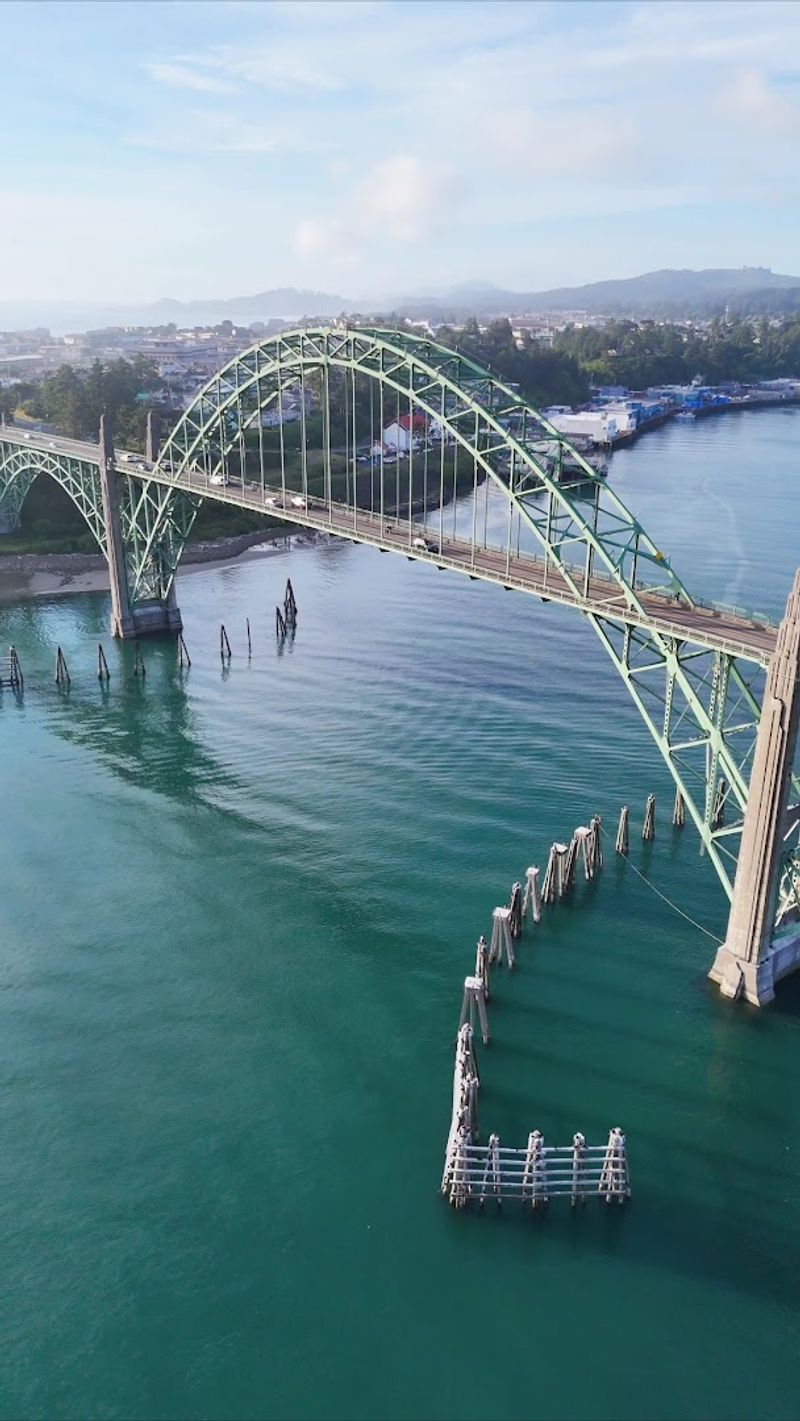
Few bridges in Oregon feel as perfectly placed as the Yaquina Bay Bridge, which frames the Newport waterfront like a painting waiting to happen. Opened in 1936 and designed by Conde McCullough, this 3,223-foot beauty is considered one of the finest examples of Depression-era bridge design in the entire United States.
Its two soaring tied arches are the showstoppers, flanked by smaller approach spans that create a rhythmic, elegant silhouette against the Oregon sky. Art Deco details appear throughout – from the decorative railings to the ornate towers anchoring each end.
Every element feels intentional.
Standing on the Newport bayfront and looking up at the bridge is a genuinely memorable experience. The way it curves slightly above the water, with fishing boats passing beneath, is pure coastal Oregon charm.
It was added to the National Register of Historic Places in 2005, cementing its status as an irreplaceable piece of American bridge history.
5. Siuslaw River Bridge – Florence
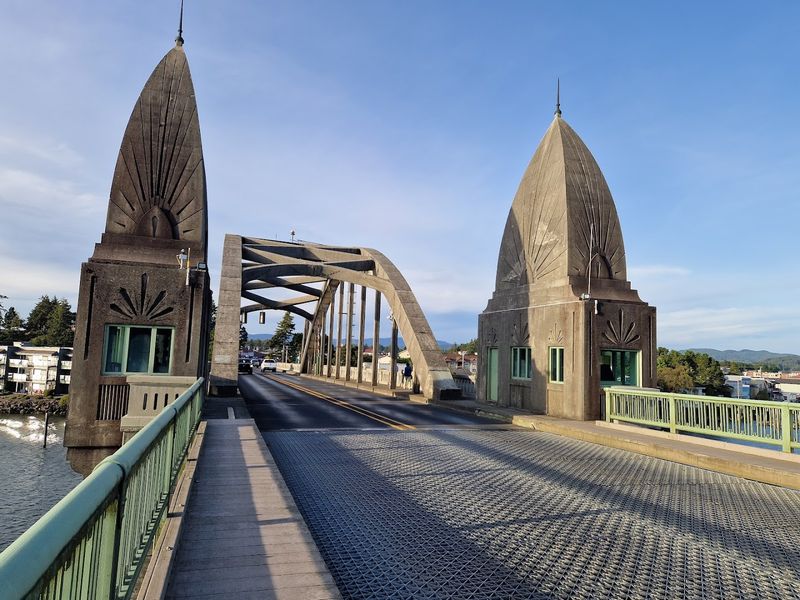
Something about the Siuslaw River Bridge makes it feel like a small town’s proudest possession – and Florence would absolutely agree. Designed by Conde McCullough and opened in 1936, this 1,568-foot bridge is famous for its double bascule draw spans, which swing upward like wings to let tall boats pass through.
Watching those massive draw spans rise is genuinely thrilling, even if you have seen it before. The Art Deco towers that flank the draw spans add a stately, almost ceremonial quality to the whole structure.
McCullough packed an incredible amount of architectural personality into what could have been a simple river crossing.
Florence has grown into a charming coastal town, and the Siuslaw River Bridge remains its most iconic landmark. Visitors often stop mid-crossing to snap photos from the pedestrian walkway.
Listed on the National Register of Historic Places, this bridge proves that even functional infrastructure can carry genuine artistic soul.
6. Rogue River Bridge – Gold Beach
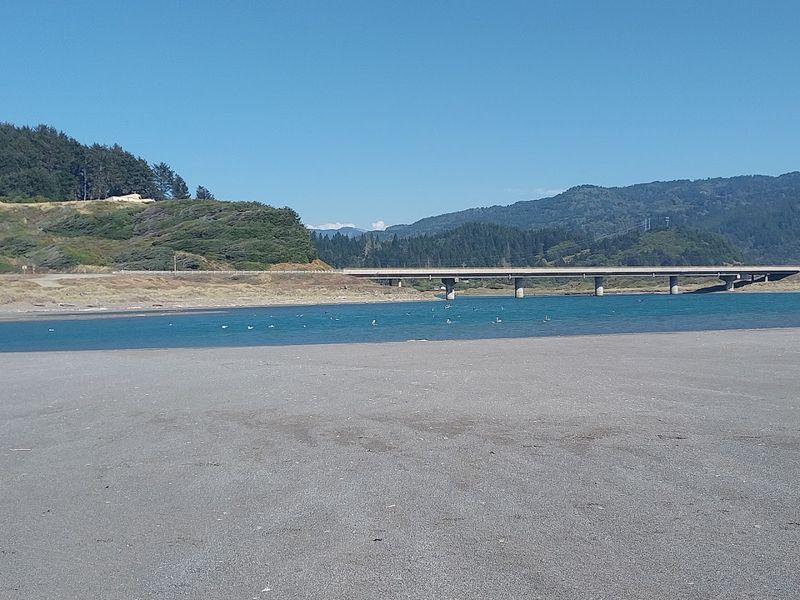
Gold Beach sits where the wild Rogue River finally meets the Pacific Ocean, and the bridge that crosses this meeting point is every bit as dramatic as its setting. Completed in 1932 and designed by Conde McCullough, the Rogue River Bridge stretches 1,898 feet across one of Oregon’s most celebrated rivers.
Seven graceful concrete arches carry the roadway above the water, each one carefully proportioned to complement the rugged coastal landscape. McCullough was obsessed with making his bridges feel like they belonged in their environment, and here he absolutely succeeded.
The natural surroundings make the structure look almost organic.
Traveling along the Oregon Coast Highway, this bridge announces your arrival at Gold Beach with quiet confidence. Stop at the north end and look back – the view of the arches framing the river mouth is stunning on any day, but especially spectacular when storm clouds roll in off the Pacific.
Pure coastal drama at its finest.
7. Bridge of the Gods – Cascade Locks
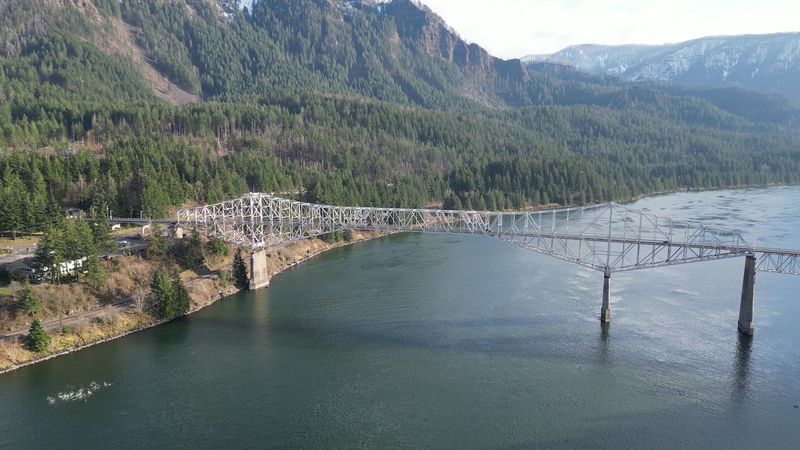
Named after a legendary Native American land bridge that once crossed the Columbia River, the Bridge of the Gods carries serious mythological energy – and it lives up to its name. This steel truss bridge at Cascade Locks has connected Oregon and Washington since 1926, though it was raised 44 feet in 1940 after the Bonneville Dam raised water levels.
Crossing it feels like an adventure. The bridge is narrow, the river below is massive, and the towering walls of the Columbia River Gorge surround you on all sides.
Pacific Crest Trail hikers famously cross it as a milestone moment on their journey from Mexico to Canada.
At just 1,858 feet long, it may not be the biggest bridge on this list, but its personality is enormous. The combination of history, legend, and jaw-dropping gorge scenery makes the Bridge of the Gods one of the most memorable crossings in the entire Pacific Northwest.
8. Tilikum Crossing (Bridge of the People) – Portland
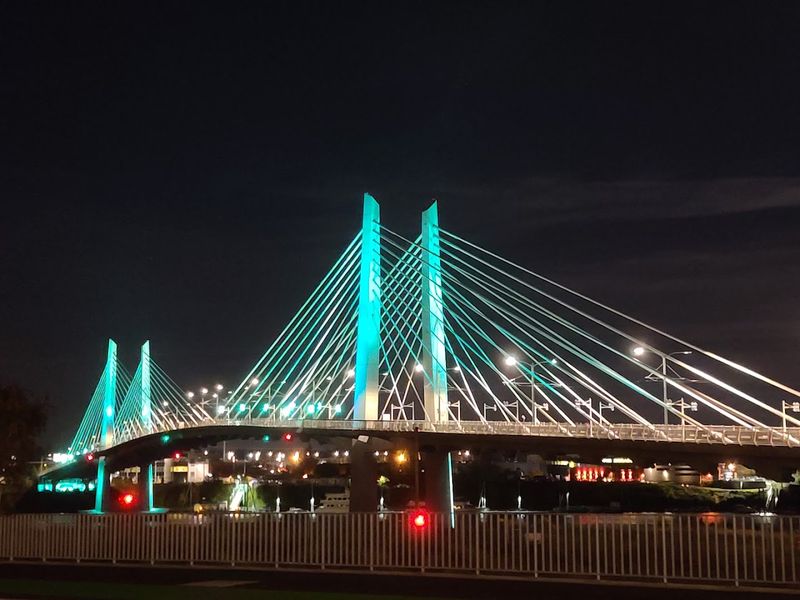
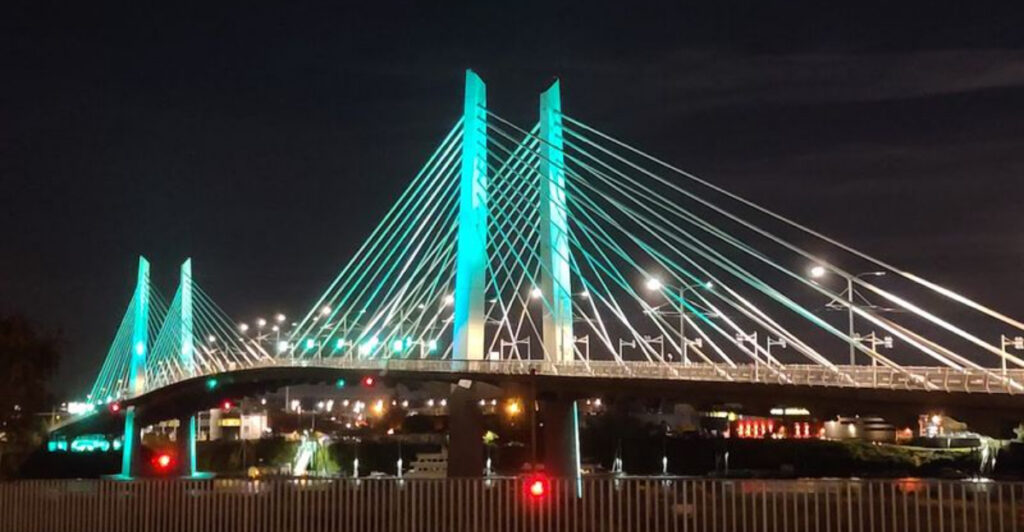
When Tilikum Crossing opened in 2015, it made history as the largest car-free bridge built in the United States in over fifty years. Portland designed it specifically for light rail, buses, cyclists, and pedestrians – zero personal vehicles allowed.
That bold decision made it an instant symbol of modern, people-first urban thinking.
The bridge spans 1,720 feet across the Willamette River with an elegant cable-stayed design that looks sleek and purposeful. But the real magic happens after dark.
Sensors monitor river conditions and display changing colors across the bridge’s LED lighting system, turning it into a living, breathing public art installation every single night.
Architecture critics praised its clean lines and thoughtful integration into Portland’s waterfront. Cyclists and MAX light rail passengers share the crossing daily, making it one of the busiest pedestrian and transit bridges in Oregon.
Tilikum Crossing is proof that bridges can be built for people first and still look absolutely spectacular.
9. Cape Creek Bridge – near Florence (Oregon Coast)
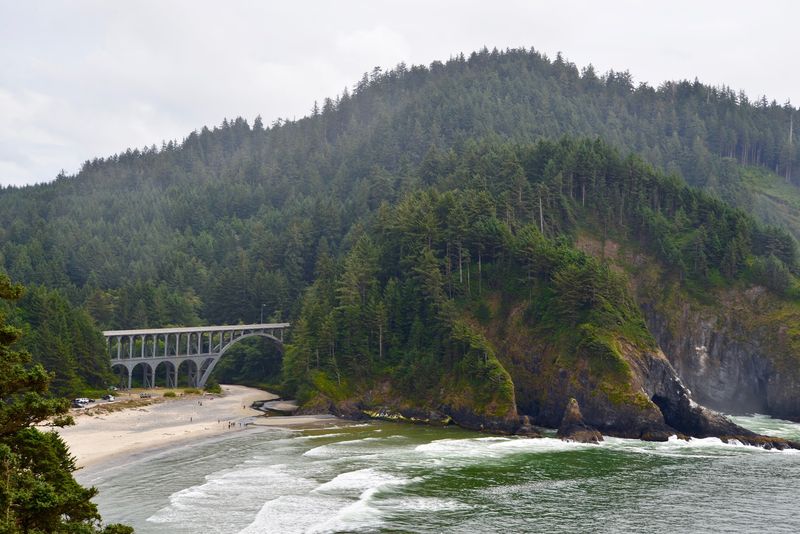
Tucked inside the lush coastal forest near Heceta Head Lighthouse, Cape Creek Bridge is the kind of hidden gem that rewards curious road-trippers who slow down long enough to notice it. Built in 1932 and designed by Conde McCullough, this small but beautifully proportioned concrete arch bridge spans just 619 feet – but every foot is gorgeous.
The single main arch rises above a narrow creek gorge, framed on all sides by towering Sitka spruce and Douglas fir trees. The setting feels almost surreal, like the bridge grew naturally out of the forest floor.
McCullough designed it to complement the wild coastal environment rather than compete with it.
Nearby Heceta Head Lighthouse adds to the area’s storybook atmosphere, making this one of the most scenic roadside stops on the entire Oregon Coast. Cape Creek Bridge is small enough to overlook and beautiful enough to never forget once you have seen it in person.
10. Crooked River High Bridge – near Terrebonne (Smith Rock area)
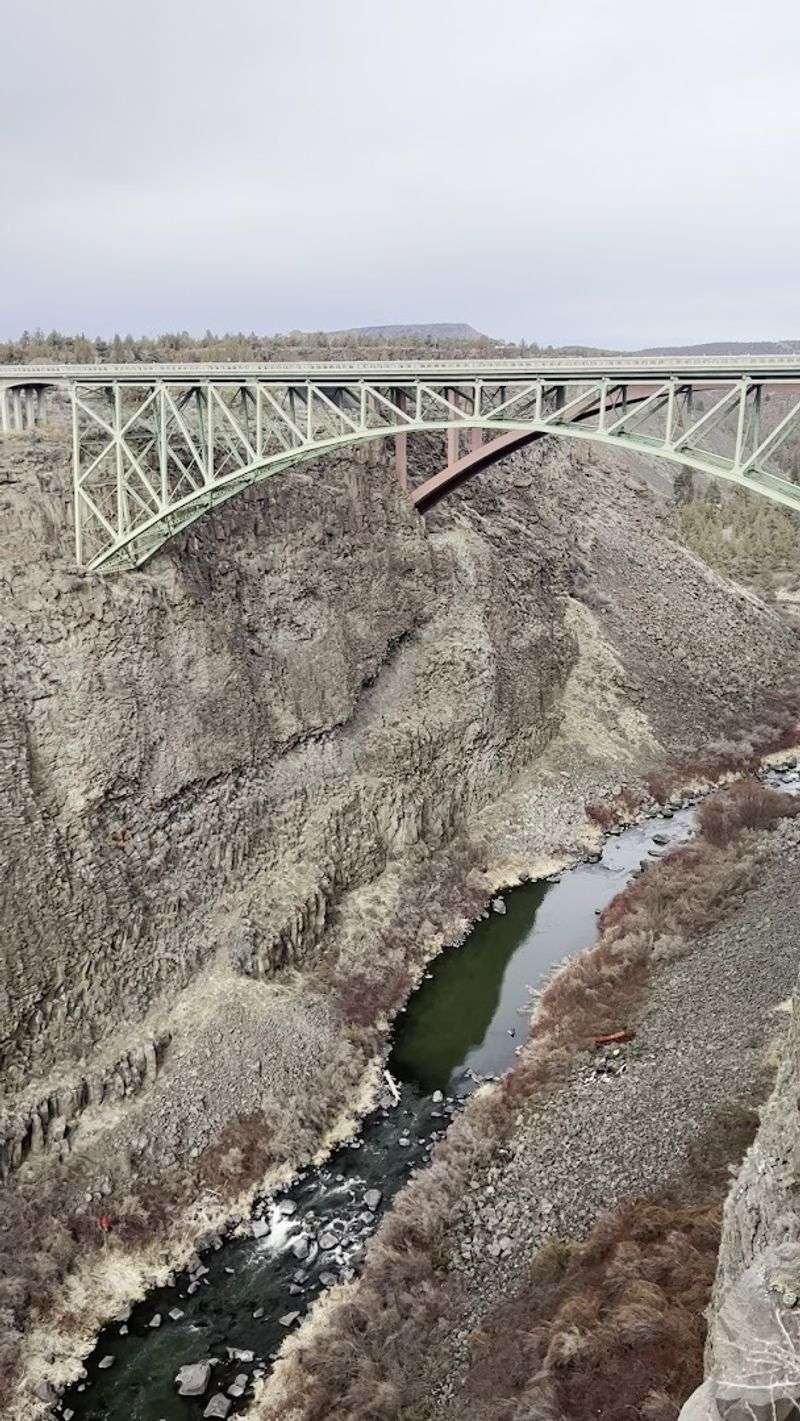
Standing 295 feet above the Crooked River, this high bridge near Smith Rock is the kind of structure that makes your palms sweat just looking down. Built in 1926 and later joined by a newer parallel span in 2000, the original Crooked River High Bridge held the record as the highest bridge in the United States west of the Mississippi for decades after its completion.
The setting is pure central Oregon drama – volcanic rock walls, sparse juniper trees, and the thin silver ribbon of the Crooked River winding far below. Driving across it on US-97 is quick, but pulling over for a closer look is absolutely worth it.
The canyon views from the bridge are staggering.
Rock climbers heading to Smith Rock State Park pass over this bridge regularly, barely glancing down. First-timers, however, tend to grip the railing a little tighter.
Engineering meets geology in spectacular fashion here, making this one of Oregon’s most thrilling bridge experiences.
Share this story