
New Jersey has plenty of shore towns, but Cape May sits in a category entirely its own. This city at the very southern tip of the Cape May Peninsula has been around since the 1600s, and the layers of history packed into its Victorian streets are hard to overstate.
The grand painted houses, the old lighthouse standing watch over Delaware Bay, and the pedestrian-friendly Washington Street Mall all carry a quiet weight that other beach towns simply do not have. There is a reason visitors keep coming back here year after year, and it is not just for the beach.
Cape May has ghost tours, historic estates, a working lighthouse, and a personality that feels like the past never fully let go. This article walks you through everything that makes this town feel like a ghost story that never quite ended.
Where Cape May Sits and What It Actually Is
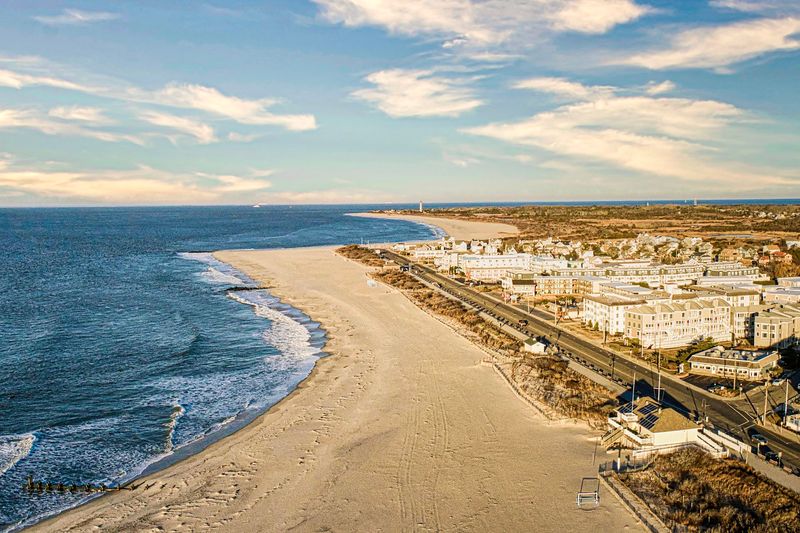
Cape May is a city at the very southern tip of New Jersey’s Cape May Peninsula, sitting where the Delaware Bay meets the Atlantic Ocean. The official address is Cape May, New Jersey, and the city’s website is capemaycity.com.
What makes this location so striking is that you are essentially on a narrow strip of land surrounded by water on three sides. That geography has shaped everything about the town, from its history as a resort destination to its reputation as one of the most hauntingly atmospheric places on the East Coast.
Cape May has been a resort town since the early 1800s, drawing visitors from Philadelphia and beyond. The town was almost entirely rebuilt in the Victorian style after a major fire in 1878, which is why the architecture looks so remarkably preserved and uniform today.
That consistency gives the whole city a theatrical quality that few American towns can match.
The Victorian Architecture That Stops You Cold
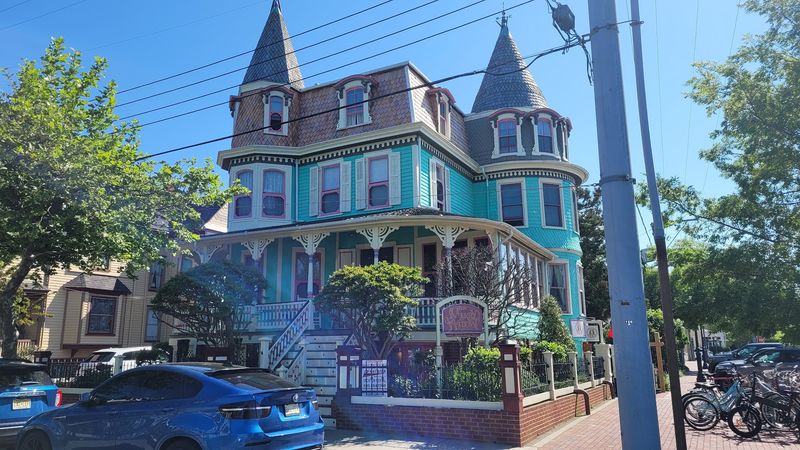
Few towns in the United States have as high a concentration of preserved Victorian architecture as Cape May. The city has over 600 Victorian structures, and the National Park Service recognized that by designating the entire city a National Historic Landmark in 1976.
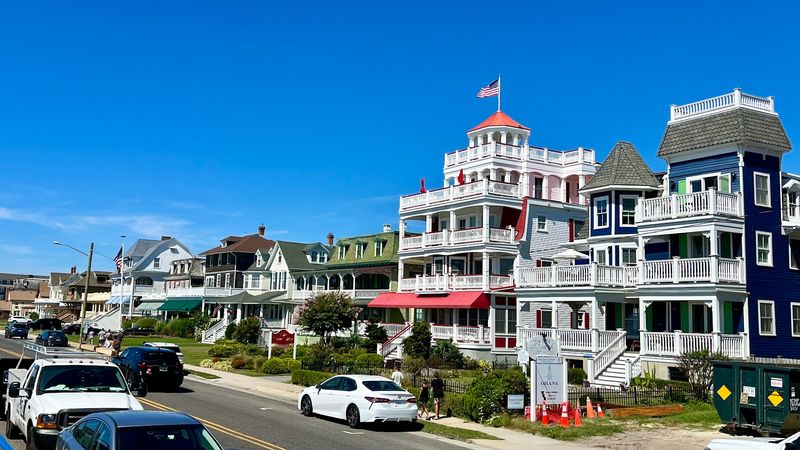
Walking the residential streets here feels genuinely different from other historic towns. The houses are not just old, they are elaborate, with decorative woodwork called gingerbread trim, wraparound porches, turrets, and color schemes that seem almost too bold to be real.
Many of these homes have been converted into bed and breakfasts, which means you can actually sleep inside one and experience the creaking floors and high ceilings firsthand. The architecture is the backbone of Cape May’s haunted reputation, because nothing sets a ghost story mood quite like a three-story painted lady with shuttered windows and a widow’s walk on top.
These buildings have stories written into every plank.
The Emlen Physick Estate and Its Preserved Past
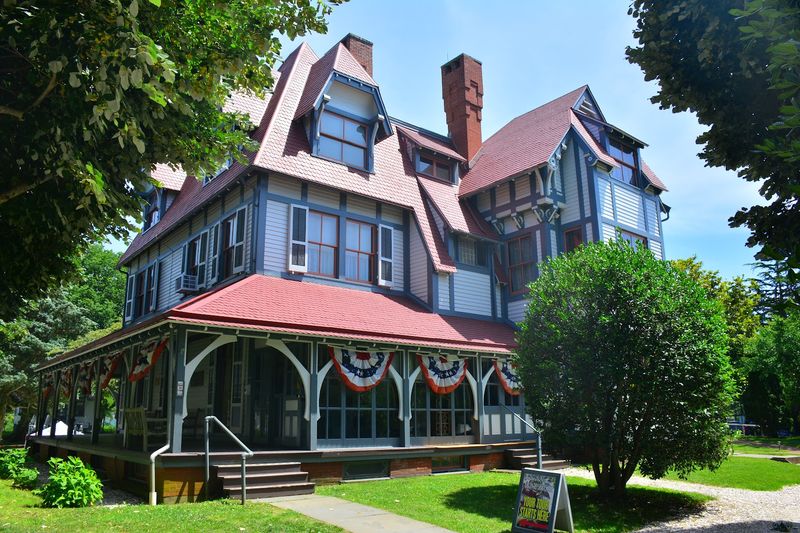
The Emlen Physick Estate at 1048 Washington Street is the crown jewel of Cape May’s historic sites. Built in 1879 and designed by architect Frank Furness, the 18-room mansion is now a museum operated by the Mid-Atlantic Center for the Arts and Humanities.
The interior has been carefully preserved to reflect the way the Physick family actually lived in the Victorian era. Period furniture, original wallpaper, and family artifacts are displayed throughout, giving the house a quality that goes beyond typical museum staging.
The estate is also the starting point for many of Cape May’s famous ghost tours, which run throughout the year and especially during the October season. Local historians and tour guides have documented numerous reports of unexplained activity in the building over the years.
Whether you believe in that sort of thing or not, the house carries an undeniable weight that makes every room feel like it is still being watched by someone.
Ghost Tours That Take the Legends Seriously
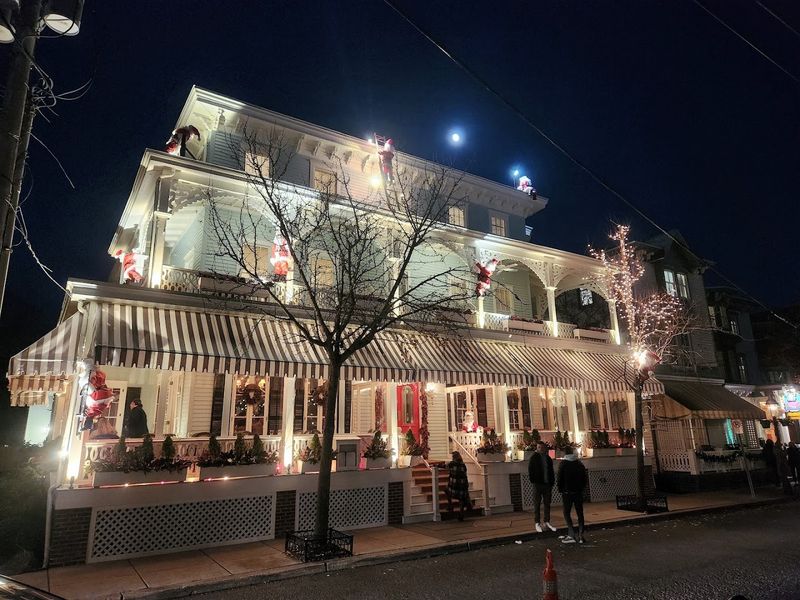
Cape May has built a legitimate ghost tour industry around its history, and these are not cheesy carnival-style experiences. The Mid-Atlantic Center for the Arts and Humanities runs several tour options, including lantern-lit walking tours through the historic district that cover documented accounts tied to specific buildings.
The tours draw on actual local history rather than invented folklore, which makes them more compelling than most ghost tour operations in other towns. Guides reference specific families, specific events, and specific addresses, giving the stories a grounded quality that is harder to dismiss.
Tours run seasonally, with the most popular programming concentrated in October around Halloween. However, Cape May offers ghost-related tours and events throughout much of the year because the demand is consistent.
The combination of genuine Victorian architecture, a long documented history, and a peninsula geography that keeps the town physically isolated after dark creates an atmosphere that does not need much embellishment to feel genuinely unsettling.
The Cape May Lighthouse Standing Watch Since 1859
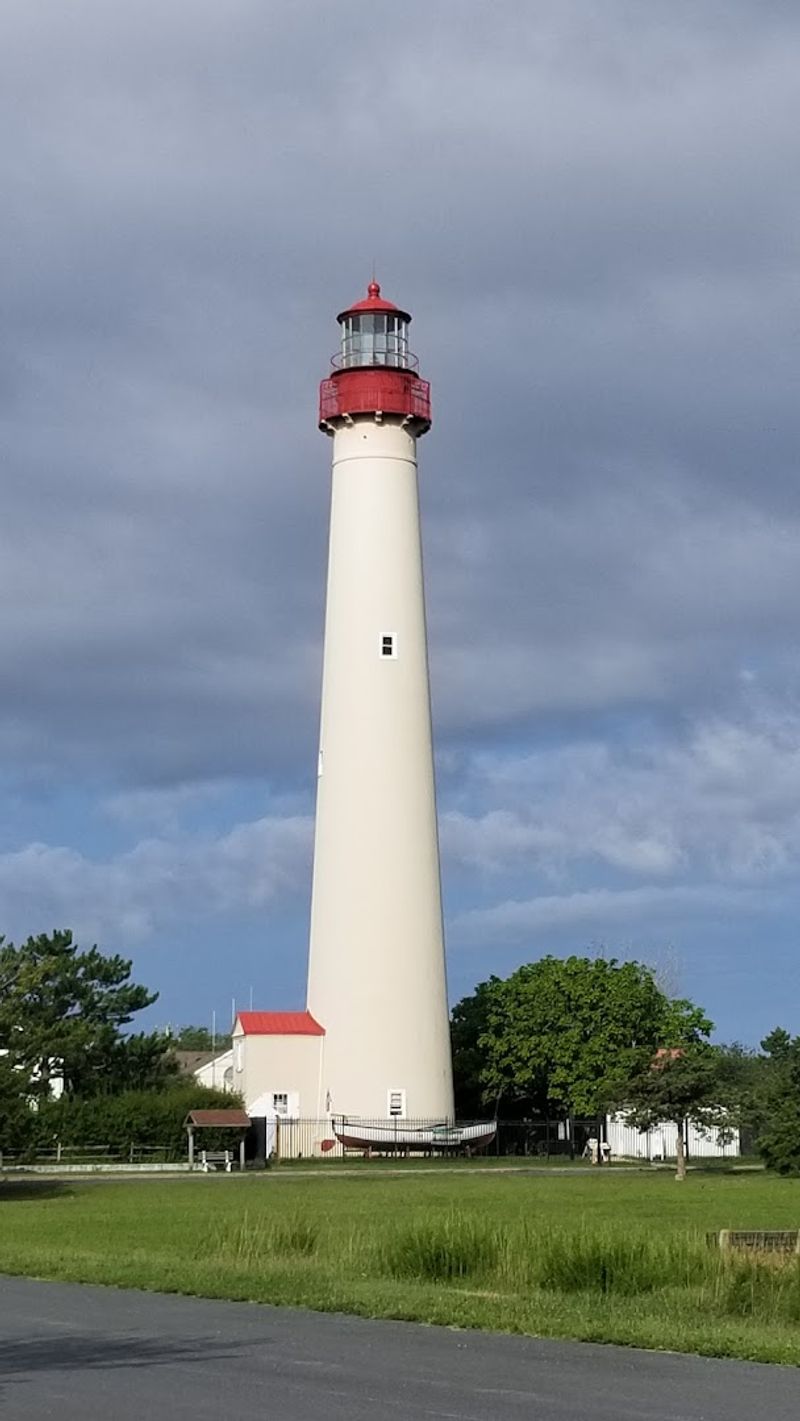
The Cape May Lighthouse has been operating continuously since 1859, making it one of the oldest active lighthouses on the East Coast. It stands 157 feet tall at Cape May Point State Park, near the very tip of the peninsula where the bay and ocean converge.
Visitors can climb all 199 steps to the top for a panoramic view across Delaware Bay and the Atlantic Ocean. The climb is steady and the views from the lantern room are genuinely worth the effort, especially on a clear day when you can see the Delaware shore across the water.
The lighthouse itself has its own layer of local legend, with stories about former keepers and unexplained lights reported by people in the surrounding park at night. The structure was restored by the Mid-Atlantic Center for the Arts and Humanities starting in 1988 and remains one of Cape May’s most visited landmarks.
It is a quiet giant with a long memory.
Washington Street Mall and the Heartbeat of the Town
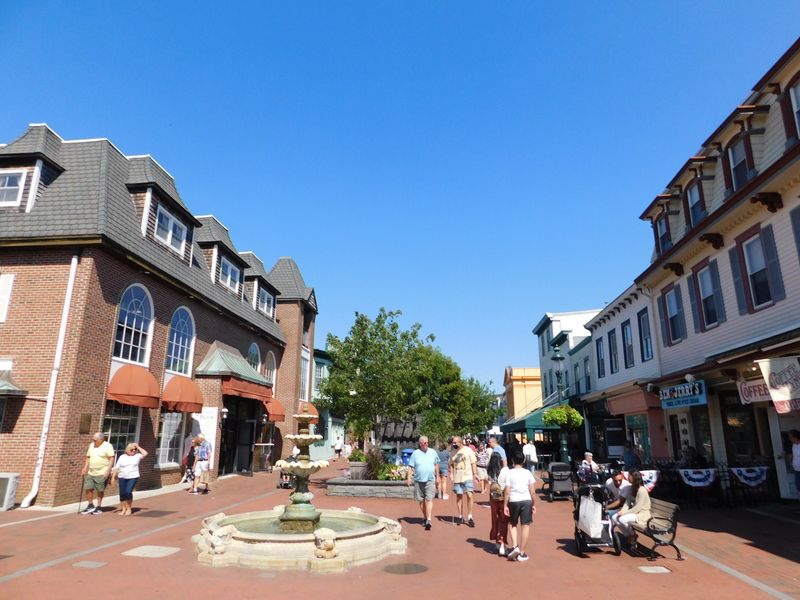
The Washington Street Mall is the commercial and social center of Cape May, covering three pedestrianized blocks of Washington Street in the heart of the historic district. Shops, restaurants, and galleries line both sides of the brick walkway, and the Victorian building facades continue the architectural theme of the surrounding neighborhoods.
What makes this mall different from a typical tourist shopping strip is the scale and the setting. The blocks are walkable without feeling overwhelming, and the mix of independent boutiques, candy shops, and local restaurants gives it a genuinely community-driven character rather than a chain-store feel.
Street performers occasionally set up along the mall, and the area stays active well into the evening during summer. The surrounding side streets connect the mall to the residential historic district, so it is easy to drift off the main path and find yourself deep in a quiet block of Victorian houses that looks almost unchanged from a century ago.
That transition happens faster than you expect.
The Beach That Comes With a Haunted Backdrop
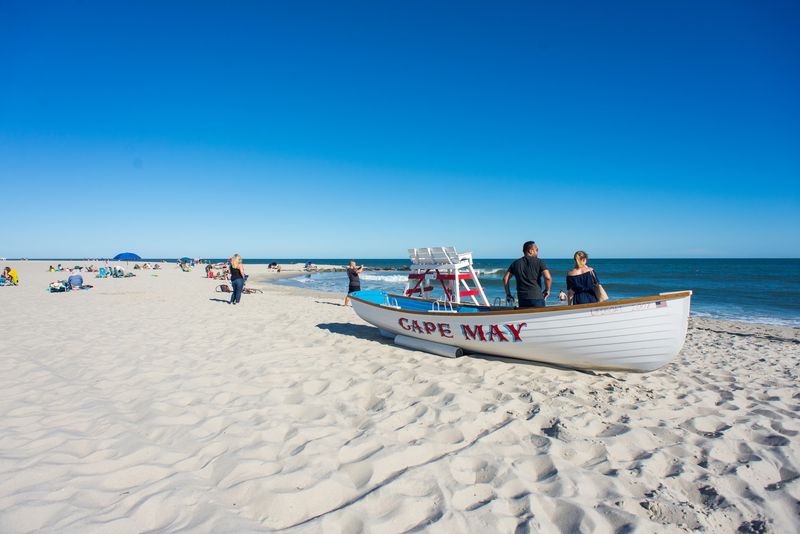
Cape May’s beach is a wide stretch of Atlantic coastline that sits just a few blocks from the Victorian historic district, which creates an unusual combination of classic shore experience and historic atmosphere. The beach requires a seasonal badge for access, which is a standard practice throughout much of the New Jersey shore.
The water here is relatively calm compared to beaches further north on the Jersey Shore, partly because of the peninsula’s position where the bay and ocean meet. Families with younger children tend to appreciate that quality during summer visits.
What sets this beach apart from others in the state is the context surrounding it. You can spend a morning on the sand and then spend the afternoon walking past 150-year-old houses and touring a Victorian estate.
The contrast between the open beach and the dense, tree-lined historic streets gives Cape May a layered quality that keeps the visit interesting long after the sunscreen goes back in the bag.
Cape May Point State Park and the Wild Side of the Peninsula
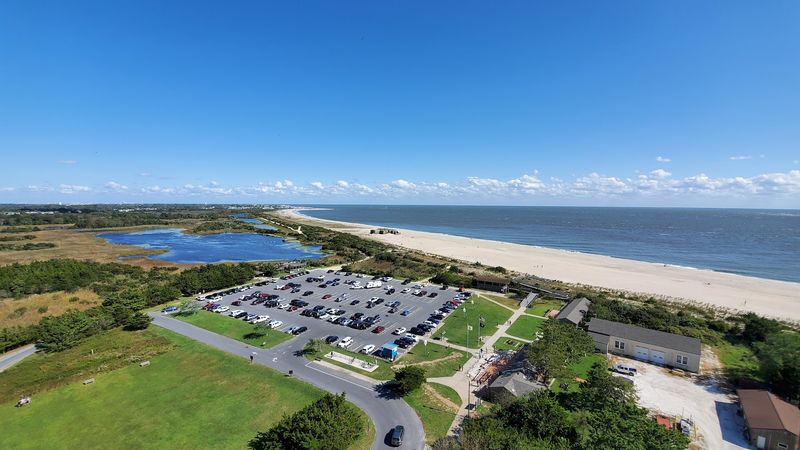
Cape May Point State Park occupies the very tip of the peninsula and surrounds the lighthouse with a mix of beach, wetlands, and walking trails. The park is one of the best birdwatching locations on the entire East Coast, sitting directly on the Atlantic Flyway migration route.
During fall migration, millions of birds pass through the cape, including raptors, songbirds, and shorebirds. The hawk watch platform at the park draws serious birders from across the country every September and October, and the numbers recorded here during peak migration are among the highest on the continent.
The park also has a small beach area near the lighthouse and a network of flat, easy trails through coastal scrub and wetland habitats. Concrete bunkers from World War II are still visible partially buried in the dunes near the beach, left over from coastal defense installations.
Those bunkers, slowly being reclaimed by the sand, add another quiet layer of history to an already layered landscape.
The World War II Bunkers Hiding in the Dunes
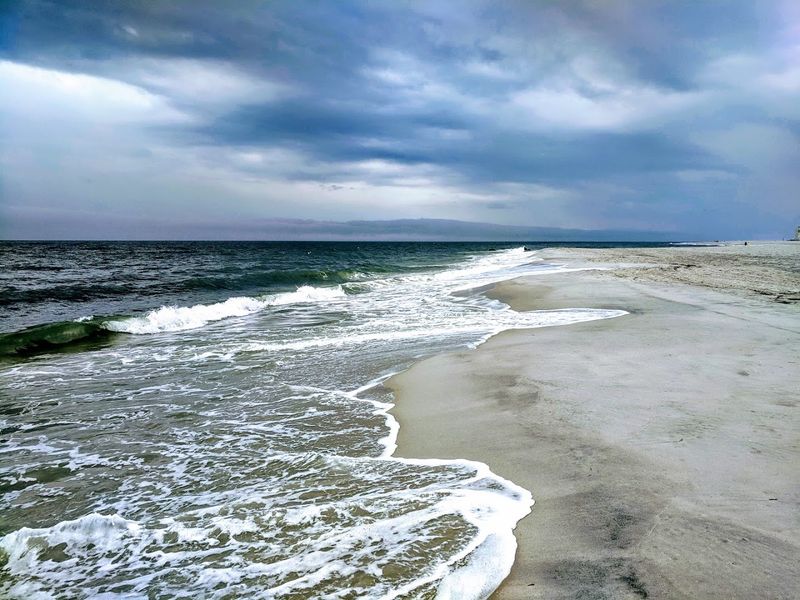
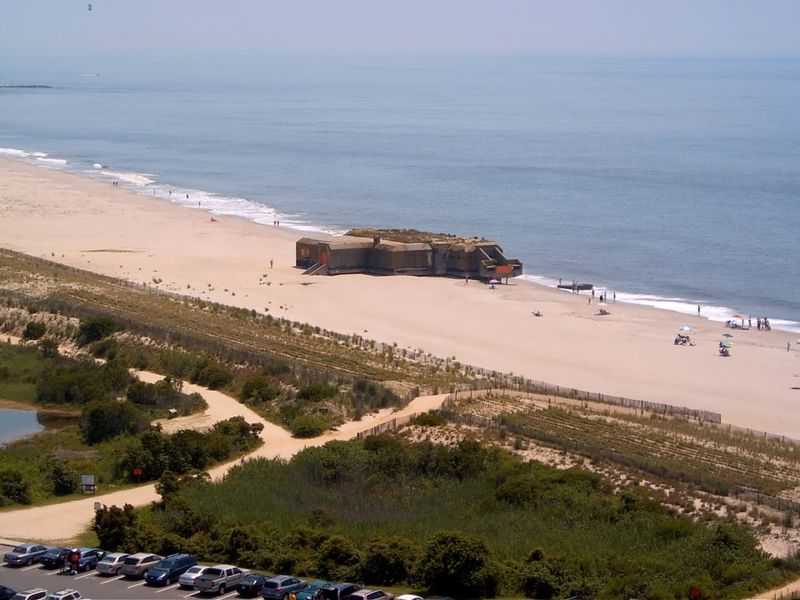
One of the more unexpected discoveries at Cape May Point is the presence of large concrete military bunkers that are slowly being consumed by the dunes. These structures were built during World War II as part of the coastal defense network protecting the Delaware Bay entrance from potential submarine threats.
The bunkers originally sat well inland, but decades of shoreline erosion have moved the water’s edge significantly, leaving them stranded on or near the beach in various states of burial. Some are tilted at sharp angles, partially swallowed by sand, and covered in weathering and vegetation.
No special access is required to see them since they are visible from the beach and state park trails. They are not maintained or open for interior access, but their physical presence is striking enough on its own.
A massive concrete military structure slowly disappearing into a beach is the kind of detail that makes Cape May feel like history is always in the process of being reclaimed rather than simply preserved.
The Historic District After Dark
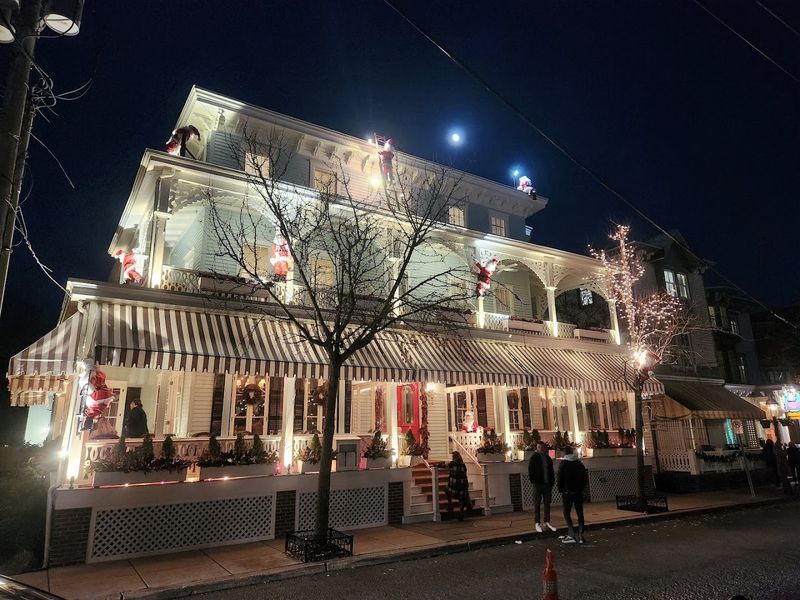
The daytime version of Cape May’s historic district is picturesque and busy with visitors. The nighttime version is an entirely different experience.
After the shops close and the tour groups thin out, the residential blocks settle into a quiet that feels a few decades removed from the present.
Gas-style street lamps cast a warm, low light along the brick sidewalks, and the elaborate facades of the Victorian houses take on a different character in the shadows. Trees planted along the streets add to the layered darkness between the pools of lamplight.
Walking the district after dark is not a formally organized activity, but it is something many visitors do on their own after dinner. The streets are safe and well-maintained, but the atmosphere is undeniably different from a typical shore town at night.
There is a stillness here that the architecture amplifies, and more than a few people have described the experience as the closest thing to a real ghost story setting they have ever encountered.
Victorian Week and the Town’s Biggest Annual Event
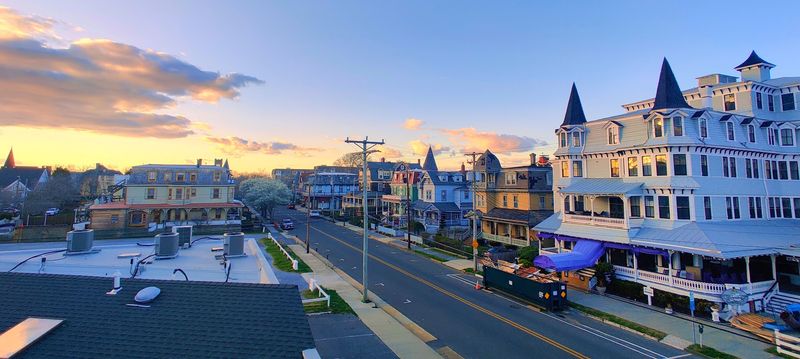
Victorian Week is Cape May’s signature annual event, running for ten days every October and celebrating the city’s architectural and cultural heritage with a packed schedule of tours, performances, house tours, and themed events. It has been running since 1970, making it one of the longest-running heritage festivals in New Jersey.
The programming covers a wide range, from formal house tours that open private Victorian homes to the public, to period music performances, antique shows, and costumed walking tours. The ghost tour programming also intensifies during this period, with additional evening events layered on top of the regular schedule.
October is genuinely the peak season for experiencing Cape May at its most atmospheric. The summer crowds have thinned, the temperatures are cooler, and the combination of fall foliage and Victorian architecture creates a visual backdrop that photographs extremely well.
Victorian Week draws visitors specifically for the event from across the Mid-Atlantic region, and hotel rooms book up months in advance.
The Food Scene Along the Historic Streets
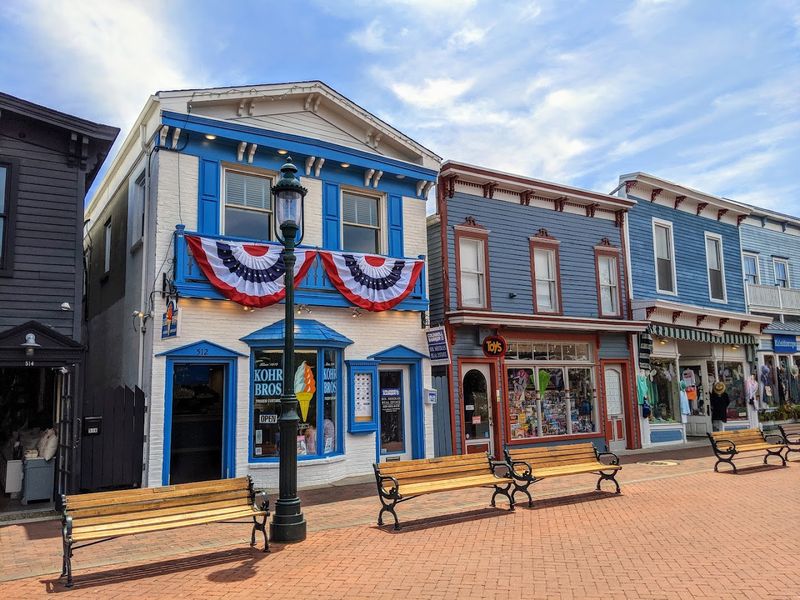
Cape May has a restaurant scene that punches above its weight for a city of its size. The dining options range from casual seafood spots near the beach to more formal restaurants operating out of restored Victorian buildings in the historic district.
Fresh seafood is the obvious draw, and the proximity to both the Atlantic and the Delaware Bay means the local catch options are legitimate. Crab, fish, and shellfish appear on menus throughout town, and several restaurants source locally enough that the offerings change with the season.
The Washington Street Mall area has a concentration of dining options that makes it easy to graze through a visit without going far. Many restaurants in Cape May operate seasonally, with peak service from Memorial Day through October and reduced hours or temporary closures in the off-season.
Visiting in shoulder season means shorter waits and a more relaxed pace, though it also means some spots may not be open.
Planning ahead is worth the effort.
Bed and Breakfasts Inside the Victorian Houses
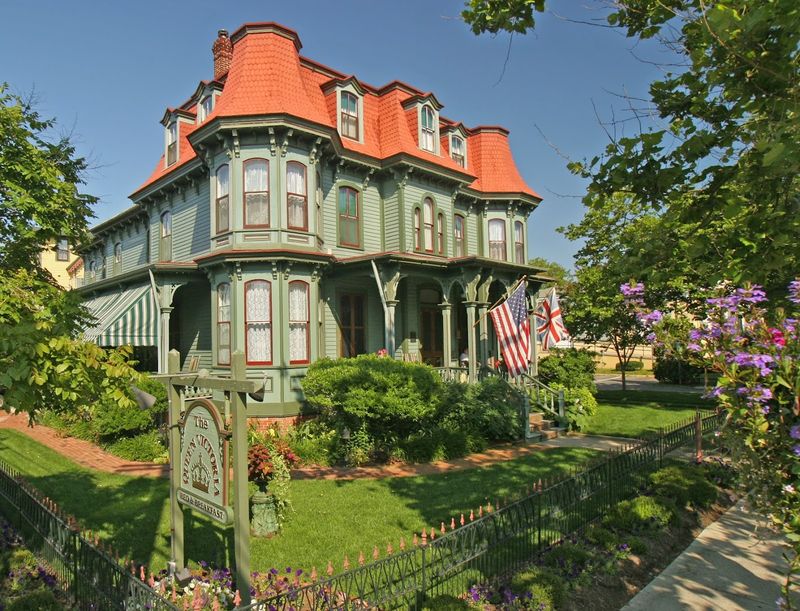
Staying in a Cape May bed and breakfast is one of the most direct ways to experience what makes this town different from every other shore destination. Many of the B&Bs are housed in original Victorian structures that have been carefully restored and converted for guest use, meaning you are actually sleeping inside the history rather than just looking at it from the street.
The quality and character varies from property to property, but the common thread is the architecture. High ceilings, original woodwork, clawfoot tubs, and period-appropriate furnishings show up across many of the options.
Wraparound porches are a recurring feature, and mornings spent on one with a cup of coffee are part of the Cape May experience that repeat visitors specifically mention.
Booking early is essential for summer and Victorian Week visits. Many of the most well-regarded properties fill months in advance.
The off-season rates drop considerably, and a fall or spring stay in a Victorian B&B has a quiet, almost cinematic quality that the busy summer season cannot fully replicate.
Cape May Diamonds and the Beach Treasure Tradition
Cape May has its own version of a treasure hunt, and it requires nothing more than a walk on the beach at Cape May Point. The quartz pebbles known as Cape May Diamonds wash up regularly on the shores near the lighthouse, tumbled smooth by centuries of wave action after traveling down the Delaware River from deposits further inland.
The stones range from clear to milky white and can be polished to a glass-like finish. Local shops sell them cut and set into jewelry, and collecting your own from the beach is a free activity that families and solo visitors alike take seriously.
Some people spend hours working through the pebbles along the shoreline.
The tradition of collecting Cape May Diamonds goes back generations, and the Lenape people who originally inhabited this region are documented as having valued the stones long before European settlement. That continuity of appreciation across centuries adds a layer of meaning to what might otherwise just be a beach pebble hunt.
Why Cape May Stays With You Long After You Leave
Most shore towns are easy to categorize and easy to forget once the season ends. Cape May refuses that treatment.
The combination of genuine Victorian architecture, a documented history stretching back four centuries, active ghost lore, a working lighthouse, military ruins in the dunes, and a beach culture that has been running continuously since the 1800s creates something that is genuinely hard to replicate.
The town does not feel like a theme park version of the past. The houses are real, the history is documented, and the people who live and work here take the preservation of that character seriously.
That intention comes through in the maintenance of the buildings, the quality of the tours, and the way the commercial district has been kept at a human scale.
Cape May earns its reputation as one of the most atmospheric towns on the East Coast not through spectacle but through accumulated detail. Every street corner, every porch, and every creaking floorboard has a story underneath it, and that depth is what keeps people coming back.
Share this story