Human history stretches back hundreds of thousands of years, and the fossils we’ve discovered have changed everything we thought we knew about our origins. These ancient bones and skulls tell amazing stories about where we came from, how we evolved, and when modern humans first appeared on Earth.
From deep caves in South Africa to ancient riverbeds in Ethiopia, scientists have unearthed remains that push our understanding of humanity further back in time than ever imagined.
13. Homo naledi (South Africa) – ~335,000 years old
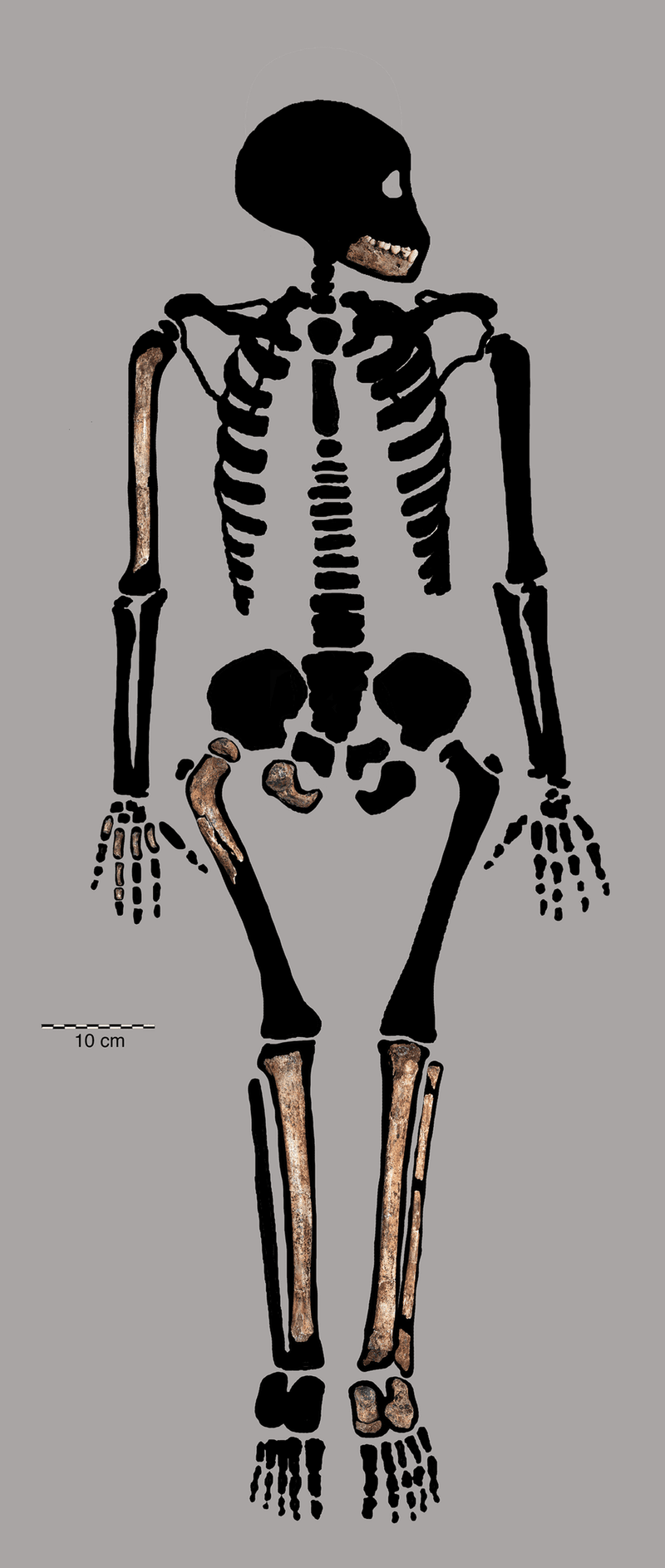
Deep inside a South African cave system, scientists made one of the strangest discoveries in human history. Homo naledi had a brain about the size of an orange, yet this ancient relative showed surprisingly human characteristics in its hands and feet.
The fossils were found in a chamber so difficult to reach that only the smallest team members could squeeze through the narrow passages.
What makes this discovery truly remarkable is the combination of primitive and advanced features all in one species. The small brain suggests something ancient, but the curved fingers hint at tree climbing abilities while the feet look built for walking upright.
Some scientists believe Homo naledi may have even buried its dead deliberately, which would show complex thinking despite that tiny brain.
This finding challenges everything we assumed about brain size and intelligence in early humans. It proves that human evolution wasn’t a simple straight line from primitive to modern, but rather a complex web of different species with varied adaptations.
12. Broken Hill / Rhodesian Man (Zambia) – ~600,000 years old
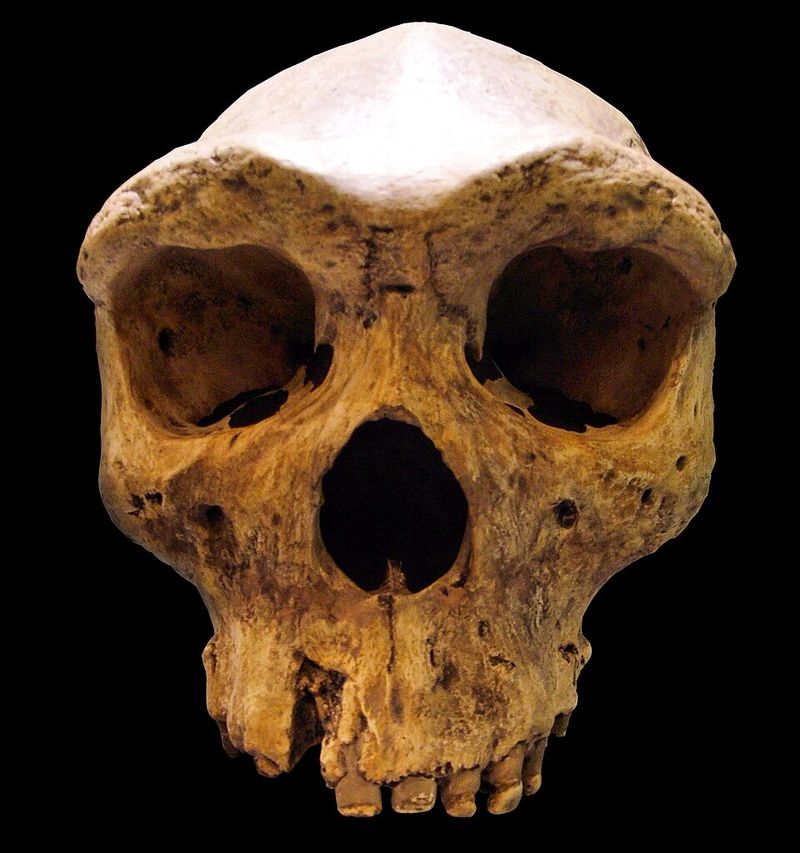
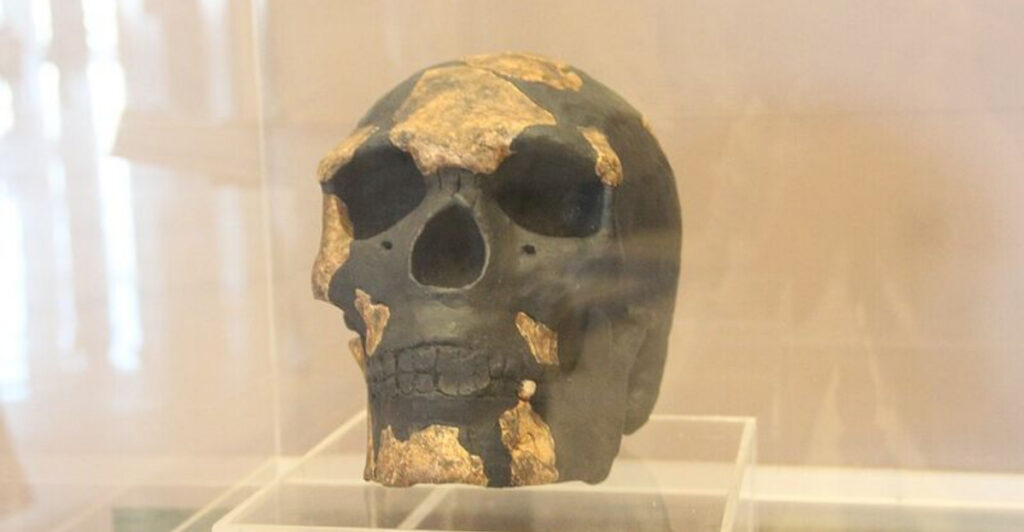
Miners working in Zambia stumbled upon something extraordinary back in 1921. They discovered one of the most complete early human skulls ever found, featuring massive brow ridges and thick bone structure that immediately caught scientists’ attention.
The skull was so well preserved that researchers could study details usually lost to time.
This individual likely stood around six feet tall and had a brain nearly as large as modern humans. However, the face tells a different story with its projecting features and heavy bones suggesting a transitional form between earlier human ancestors and later species.
The teeth showed extensive wear and even cavities, giving us clues about diet and daily life.
What’s particularly fascinating is evidence of possible disease on the skull. Some researchers have identified what might be the earliest known case of tooth decay in human history.
The fossil has sparked debates about human migration patterns across Africa and how different populations developed unique characteristics over hundreds of thousands of years.
11. Bodo Skull (Ethiopia) – ~600,000 years old
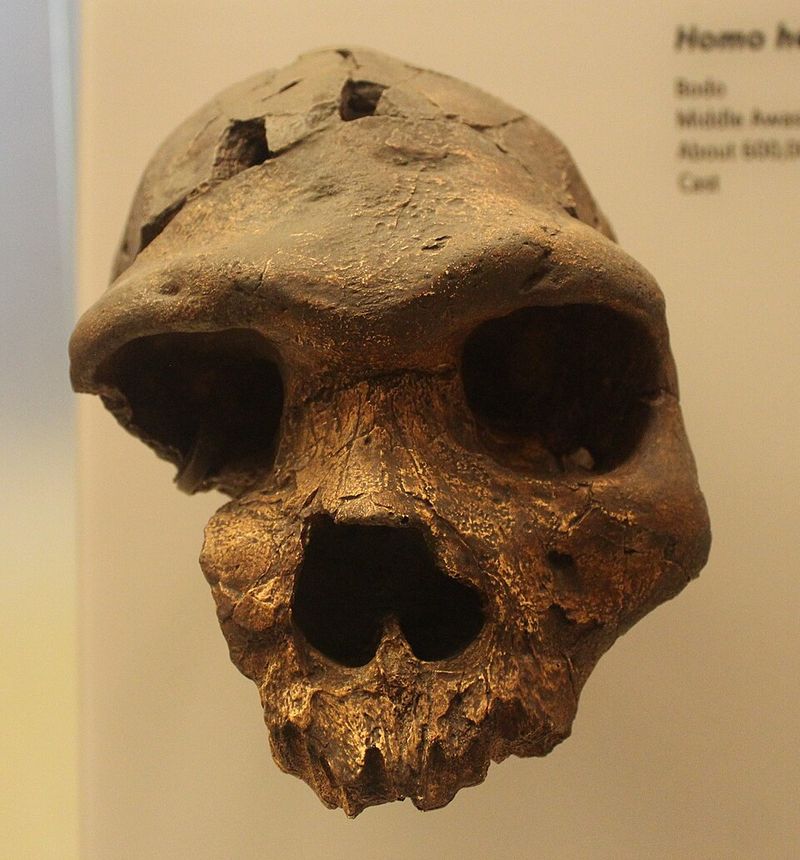
Picture the Ethiopian landscape 600,000 years ago when a large-brained human ancestor roamed the region. The Bodo skull represents a critical piece in understanding human evolution, classified as Homo heidelbergensis and believed to be a direct ancestor of modern humans.
Its discovery in 1976 provided scientists with crucial information about the Middle Pleistocene period.
The skull shows something particularly chilling yet scientifically valuable. Stone tool cut marks appear across the face, suggesting defleshing occurred shortly after death.
Whether this represents early burial practices, cannibalism, or some other ritual remains hotly debated among researchers.
With a brain capacity approaching modern human size, Bodo demonstrates that large brains evolved much earlier than previously thought. The skull’s robust features and thick bones show adaptations to a challenging environment.
This fossil bridges the gap between earlier human species and the later emergence of Homo sapiens, making it absolutely essential for understanding our evolutionary journey through Africa.
10. Dali Man (China) – ~260,000 years old
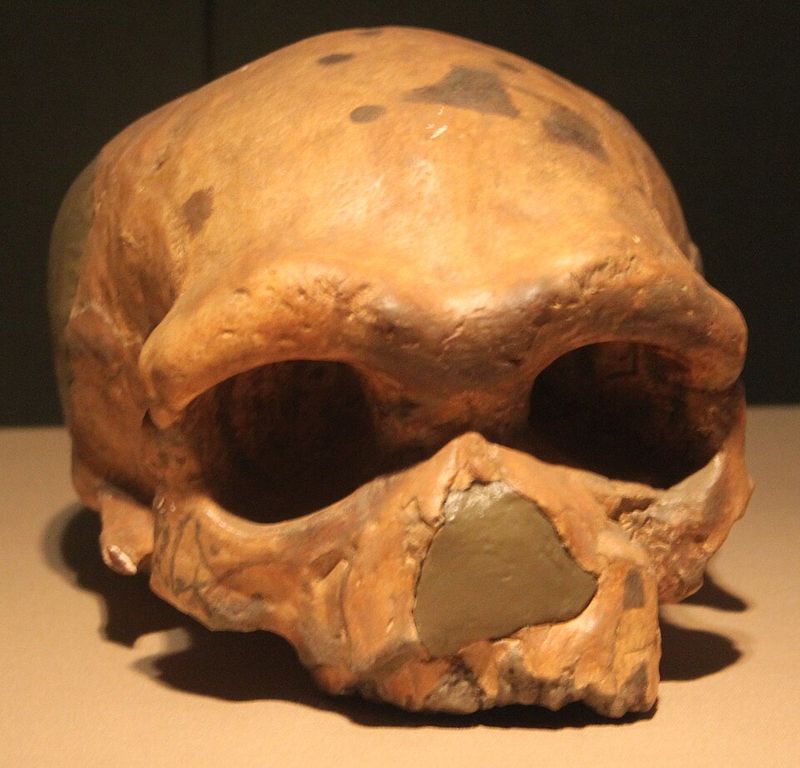
Found near the Yellow River in China, the Dali skull presents a fascinating puzzle for scientists studying human evolution in Asia. This remarkably complete cranium shows a blend of features that don’t fit neatly into any single category.
Some characteristics look ancient while others appear surprisingly modern, creating ongoing debates about its exact classification.
The skull belonged to someone with a fairly large brain, though not quite reaching modern human size. Interestingly, the face shows flatter features than typical African fossils from the same time period.
This has led researchers to wonder whether Asian and African populations were developing distinct characteristics even this far back in history.
What really sets Dali Man apart is the preservation quality. Scientists can study fine details usually destroyed by time, including the inner ear structure and brain case shape.
These details suggest this individual may represent an Asian variant of Homo heidelbergensis or possibly an early form leading toward modern humans in the region.
9. Kabwe Skull (Zambia) – ~300,000 years old
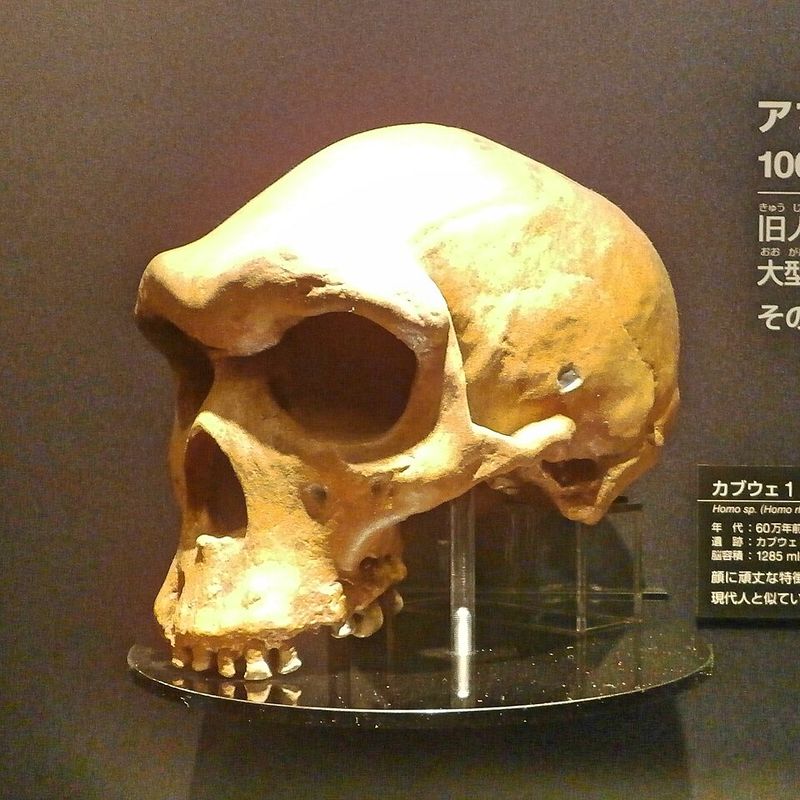
Sometimes called Broken Hill 1, this skull from Kabwe represents another incredibly complete specimen of Homo heidelbergensis. The fossil shows the massive brow ridges and robust bone structure typical of this species, yet the brain size falls within the range of modern humans.
Discovery of this specimen helped scientists recognize a distinct human species that lived across Africa and possibly Europe.
Medical researchers have found this skull particularly interesting beyond its evolutionary significance. The teeth display severe dental disease including abscesses that would have caused tremendous pain.
Some scientists believe chronic infections from these dental problems might have eventually killed this individual, making it one of the earliest documented cases of death from tooth disease.
The skull’s features suggest a powerful jaw capable of chewing tough foods. Combined with its large brain, Kabwe Man represents a sophisticated human ancestor capable of complex tool use and social behavior.
This fossil continues helping scientists understand how human ancestors adapted to African environments during a crucial period of evolution.
8. Jebel Irhoud Fossils (Morocco) – ~300,000 years old
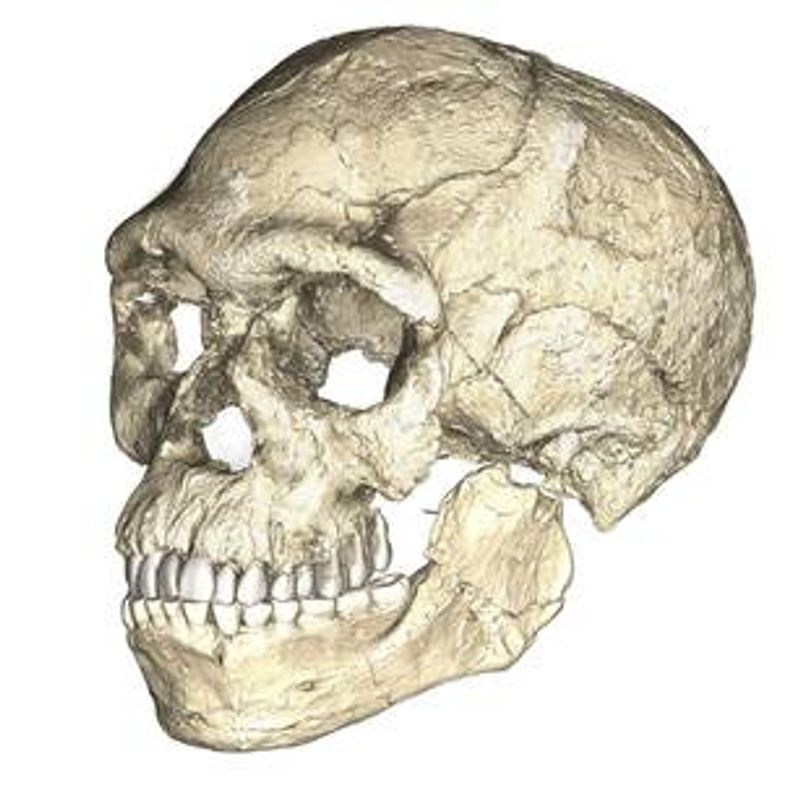
Everything changed in 2017 when scientists announced these Moroccan fossils were actually 300,000 years old, not 160,000 as originally thought. This discovery pushed back the origin of Homo sapiens by over 100,000 years and moved the location from East Africa to North Africa.
Multiple individuals were found at this site, giving researchers a rare glimpse at an early human population.
The skulls show an interesting mix of features. The faces look surprisingly modern and could pass for contemporary humans in many ways.
However, the brain cases are elongated rather than rounded like ours, suggesting the brain itself may have been shaped differently inside.
Stone tools found with the fossils show sophisticated craftsmanship including prepared core techniques. This means these early humans were planning ahead and thinking abstractly about toolmaking.
The Jebel Irhoud discovery proved that modern humans didn’t suddenly appear in one location but rather evolved gradually across the entire African continent, fundamentally changing our understanding of human origins.
7. Florisbad Skull (South Africa) – ~260,000 years old
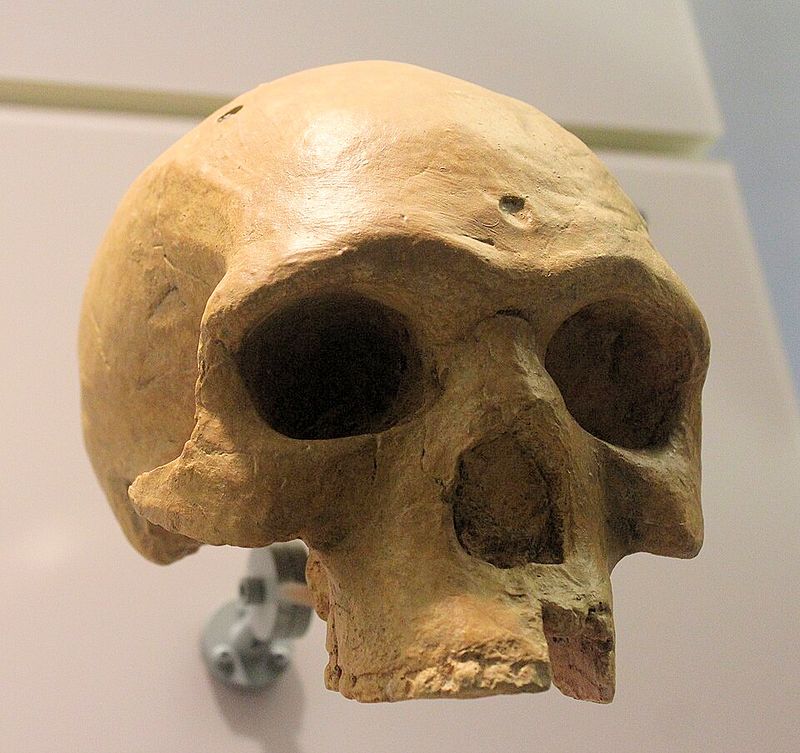
Discovered at a natural spring in South Africa, the Florisbad skull represents a crucial transitional form in human evolution. Though incomplete, the preserved portions show a fascinating blend of archaic and modern characteristics that help scientists understand how Homo sapiens gradually emerged from earlier species.
The fossil was found alongside stone tools and animal bones, painting a picture of life at this ancient watering hole.
The face displays more modern proportions than earlier human species, with a less projecting profile and smaller brow ridges. Yet the skull thickness and overall shape retain some primitive features.
This combination suggests Florisbad represents an evolutionary stepping stone between Homo heidelbergensis and fully modern Homo sapiens.
Dating this fossil proved challenging but eventually revealed its great age of around 260,000 years. This timing places it perfectly within the period when modern human features were beginning to appear in Africa.
The Florisbad specimen demonstrates that human evolution involved gradual changes across populations rather than sudden transformations, giving us valuable insight into our species’ long developmental process.
6. Herto Man (Ethiopia) – ~160,000 years old
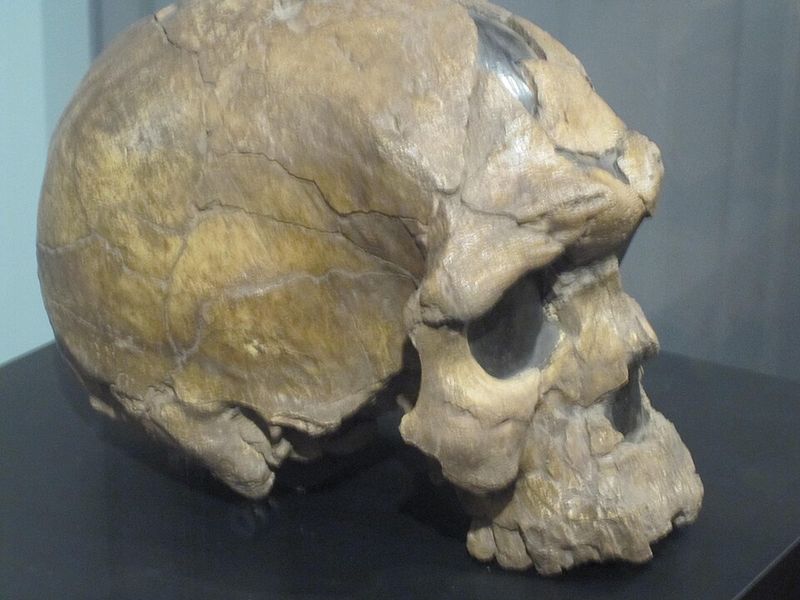
Found near the village of Herto in Ethiopia, these skulls received their own subspecies name: Homo sapiens idaltu. The word “idaltu” means “elder” in the local Afar language, recognizing these individuals as ancient members of our own species.
Three skulls were discovered, including one from a child, providing rare information about growth and development in early humans.
The adult skulls show almost completely modern features but with slightly heavier build and larger size than average today. Most significantly, cut marks on the bones suggest some kind of mortuary practice where flesh was deliberately removed after death.
This behavior indicates symbolic thinking and possibly spiritual beliefs about death and the afterlife.
Scientists consider Herto Man among the best evidence for the African origin of modern humans. The fossils date to a time when our species was just beginning to develop the full package of modern human characteristics.
Stone tools found at the site show sophisticated craftsmanship, and the presence of hippo bones suggests these people hunted or scavenged large dangerous animals successfully.
5. Omo I (Ethiopia) – ~233,000 years old
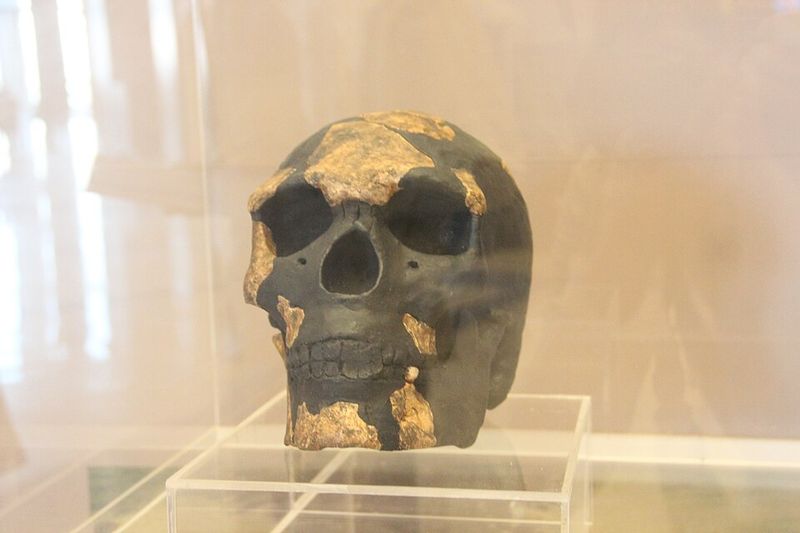
Meet possibly the oldest anatomically modern human ever discovered. Omo I comes from the Omo Kibish Formation in Ethiopia, a region that has yielded numerous important fossils.
When first discovered in 1967, scientists couldn’t accurately date it, but modern techniques eventually revealed its staggering age of over 230,000 years.
The skull shows the rounded brain case and flat face characteristic of modern humans. Unlike more archaic species with heavy brow ridges and projecting faces, Omo I could walk down a modern street without attracting much attention.
The skeleton includes leg bones showing this individual walked fully upright with a modern stride.
What makes this fossil truly revolutionary is how it pushes back the emergence of anatomically modern humans. For decades, scientists thought our species only appeared around 200,000 years ago, but Omo I proves we existed even earlier.
The fossil demonstrates that the key physical features defining Homo sapiens evolved first, likely followed later by the behavioral and cognitive developments that make us fully modern in every sense.
4. Omo II (Ethiopia) – ~195,000 years old
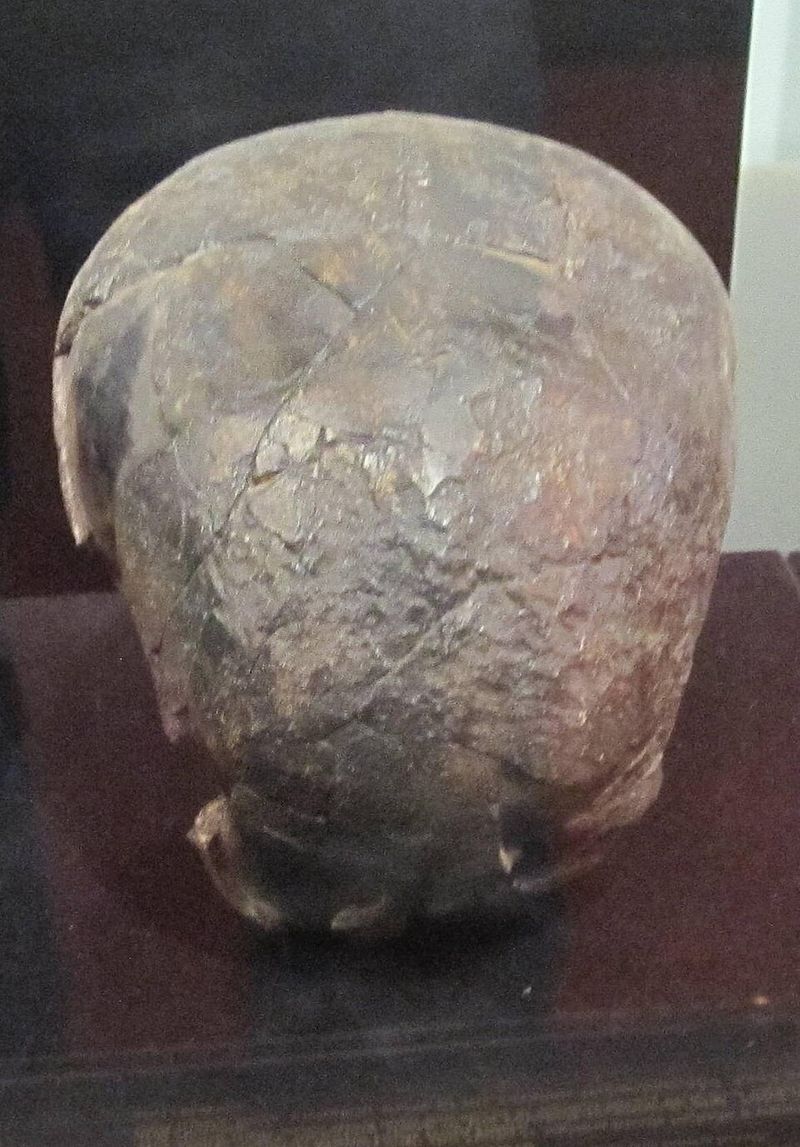
Found in the same region as Omo I but showing slightly different features, Omo II adds complexity to our understanding of early human populations. This skull appears somewhat more robust than Omo I with thicker bones and more prominent brow ridges.
Such variation within a single time and place suggests early human populations showed considerable diversity in appearance.
The differences between Omo I and Omo II have sparked interesting debates among scientists. Some researchers believe they represent natural variation within a single population, similar to how modern humans show different features across populations today.
Others suggest they might indicate separate groups with distinct characteristics living in the same general region.
Dating of Omo II has been refined over the years using volcanic ash layers found in the same sediments. The fossil provides evidence that the transition to modern humans wasn’t instantaneous or uniform.
Instead, early Homo sapiens populations likely included individuals with varying degrees of modern versus archaic features, all gradually shifting toward the anatomy we see in humans today over thousands of generations.
3. Bacho Kiro Cave Humans (Bulgaria) – ~45,000 years old
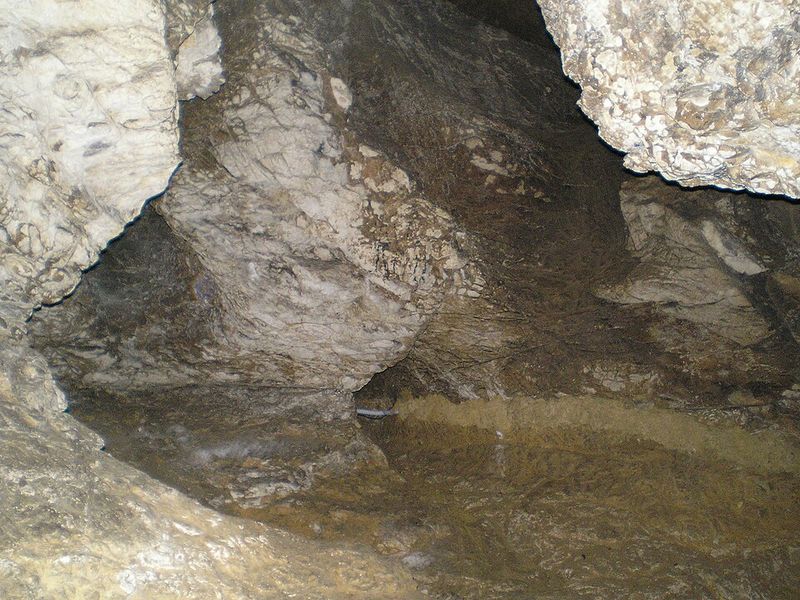
High in the Bulgarian mountains, Bacho Kiro Cave held secrets about the earliest modern humans to reach Europe. The fossils discovered here date to around 45,000 years ago, representing some of the first Homo sapiens to successfully colonize the European continent.
Along with the bones, archaeologists found sophisticated stone tools and even jewelry made from cave bear teeth.
DNA extracted from these ancient bones revealed fascinating connections to present-day populations. These early Europeans contributed genetic material to people living in East Asia today, suggesting complex migration patterns we’re only beginning to understand.
The individuals at Bacho Kiro were part of a wave of human expansion out of Africa and into new territories.
The cave contained multiple layers of occupation showing people returned to this shelter repeatedly over thousands of years. Animal bones found alongside human remains indicate successful hunting of horses, bison, and deer.
The presence of personal ornaments suggests these people had developed symbolic thinking and possibly complex social structures requiring markers of identity or status within their groups.
2. Cro-Magnon Humans (France) – ~43,000 years old
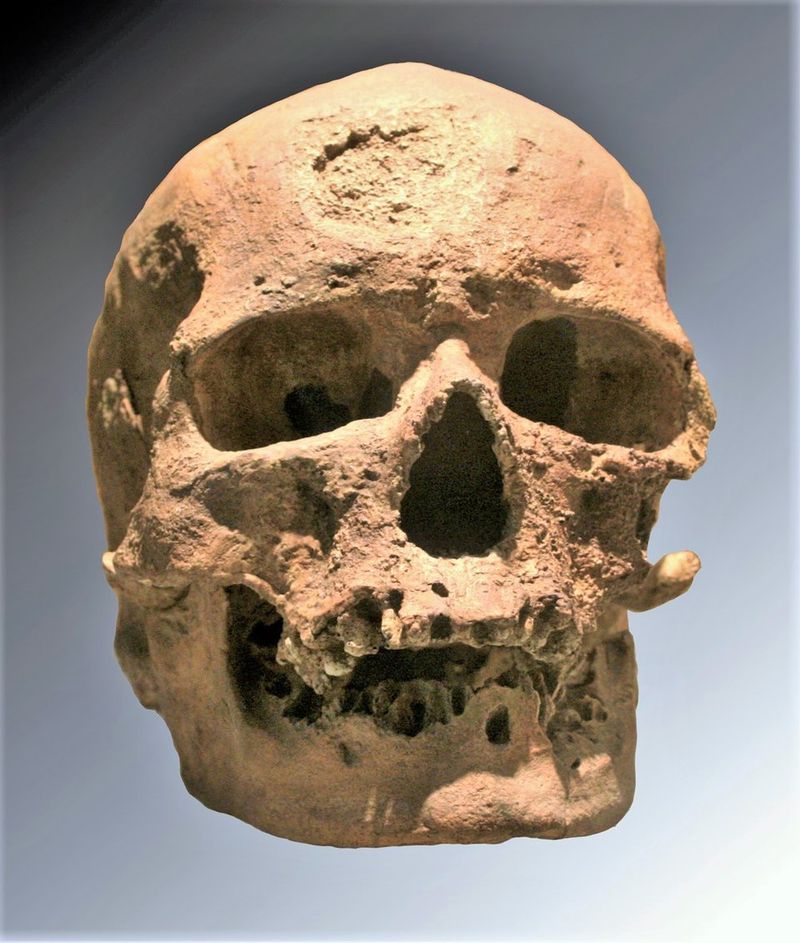
When railroad workers accidentally discovered a rock shelter in southwestern France in 1868, they uncovered some of the most famous fossils in human history. The Cro-Magnon skeletons represented early modern humans who lived in Europe during the Ice Age.
These people were anatomically identical to humans today, with tall stature, large brains, and fully modern skeletal features.
What captured public imagination was the cultural sophistication these people displayed. The Cro-Magnons created beautiful cave paintings, carved intricate sculptures, and made complex tools from stone, bone, and antler.
They wore jewelry and buried their dead with ceremony, showing the full range of modern human behavior and symbolic thinking.
The name “Cro-Magnon” became synonymous with early European humans, though scientists now simply call them early modern humans or early Homo sapiens. These people successfully adapted to harsh Ice Age conditions, hunting mammoth and reindeer while creating some of humanity’s first great art.
Their fossils proved that fully modern humans lived in Europe much earlier than previously believed.
1. Peștera cu Oase (Romania) – ~40,000 years old
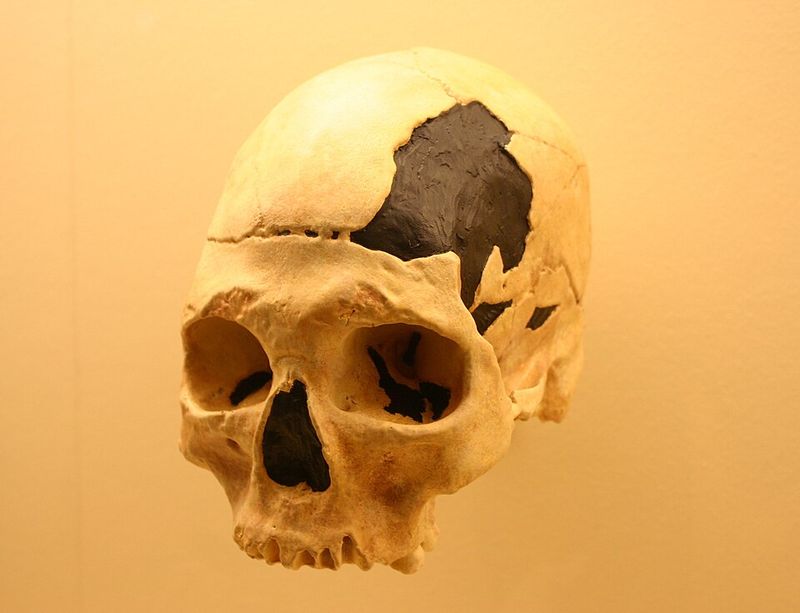
Deep within a Romanian cave system called “The Cave with Bones,” scientists found human remains that would rewrite our understanding of human and Neanderthal interaction. The fossils from Peștera cu Oase include a jawbone and skull fragments from individuals who lived around 40,000 years ago.
What makes these bones extraordinary is what their DNA revealed about recent interbreeding.
One individual had a Neanderthal ancestor just four to six generations back in their family tree, essentially a great-great-great-grandparent. This represents the most recent Neanderthal ancestry ever documented in an ancient human fossil.
The discovery proved that humans and Neanderthals didn’t just occasionally interbreed but did so repeatedly and recently enough that some people had Neanderthal relatives within living memory.
Despite this recent Neanderthal heritage, these individuals didn’t leave genetic descendants in modern populations. Their lineage apparently died out, representing an evolutionary dead end.
This finding shows that early European populations were more complex and diverse than previously imagined, with multiple groups appearing and disappearing as humans gradually established permanent populations across the continent.
Share this story