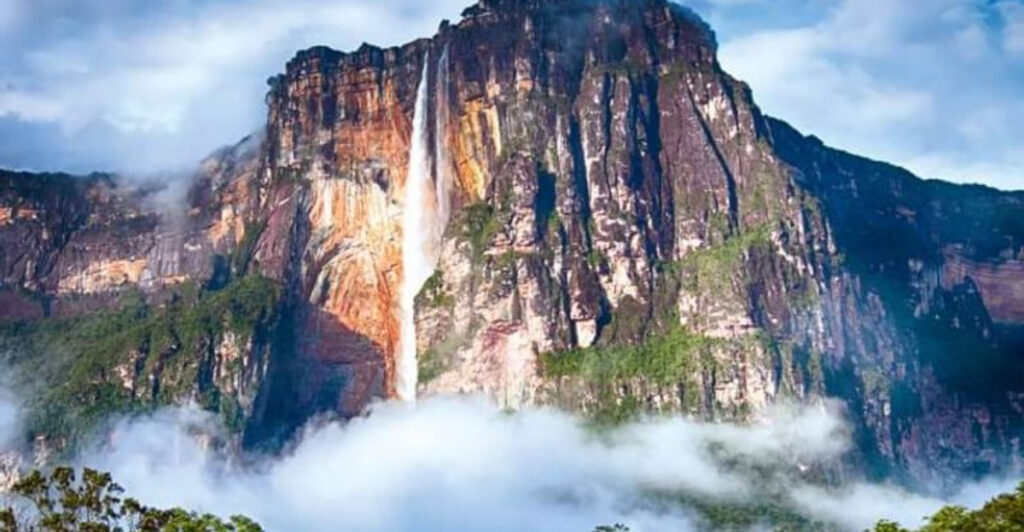
Waterfalls captivate us with raw energy and breathtaking beauty, but there is no single way to define largest. Some are measured by height, others by width, and the most powerful ones by the sheer volume of water crashing over their edges every second.
From remote jungle giants to iconic tourist destinations, these waterfalls remind us just how unstoppable nature can be. Below are 8 giants of the waterfall world you absolutely need to know about.
Inga Falls – Democratic Republic of the Congo
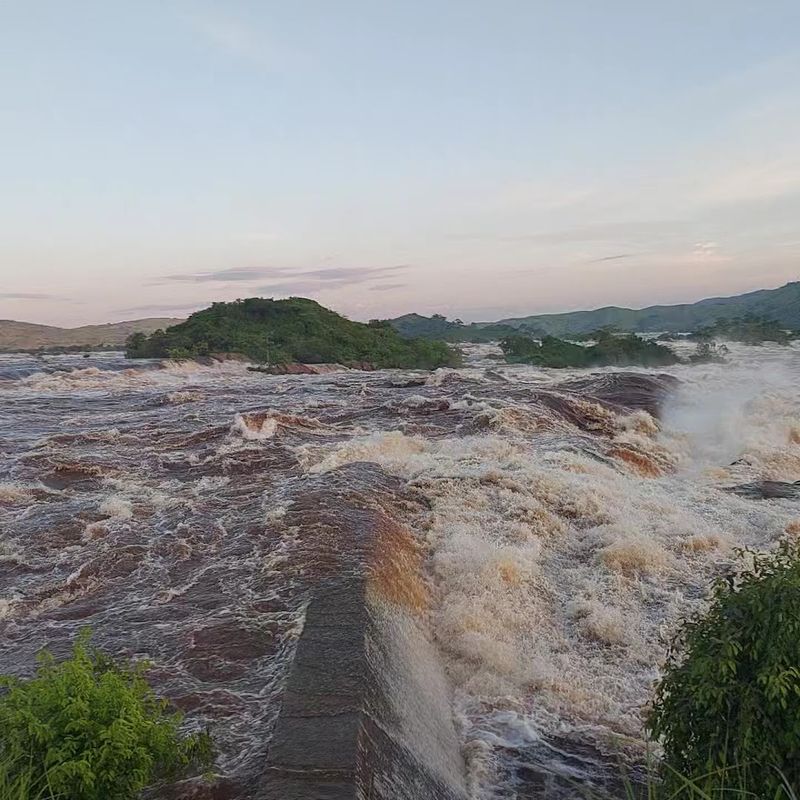
No waterfall on Earth moves more water than Inga Falls — and the numbers are almost hard to believe. Sitting on the Congo River in the Democratic Republic of the Congo, it pushes an average discharge of around 25,768 cubic meters per second.
That makes it the most powerful waterfall on the planet by flow rate.
Unlike the postcard-perfect waterfalls you see on travel brochures, Inga Falls is a series of wild, churning rapids rather than a single dramatic drop. The Congo River narrows through a rocky gorge, forcing an unimaginable volume of water through a tight channel at terrifying speed.
The result is pure, untamed hydraulic chaos.
Because of its remote location and political instability in the region, very few tourists ever witness this beast in person. Scientists and engineers, however, pay close attention — Inga Falls holds the potential to generate more hydroelectric power than any other site on Earth.
Plans for a massive dam project called Grand Inga have been discussed for decades. Whether or not that ever happens, Inga Falls remains nature’s most jaw-dropping display of water volume, raw power, and unstoppable force.
Khone Phapheng Falls – Laos
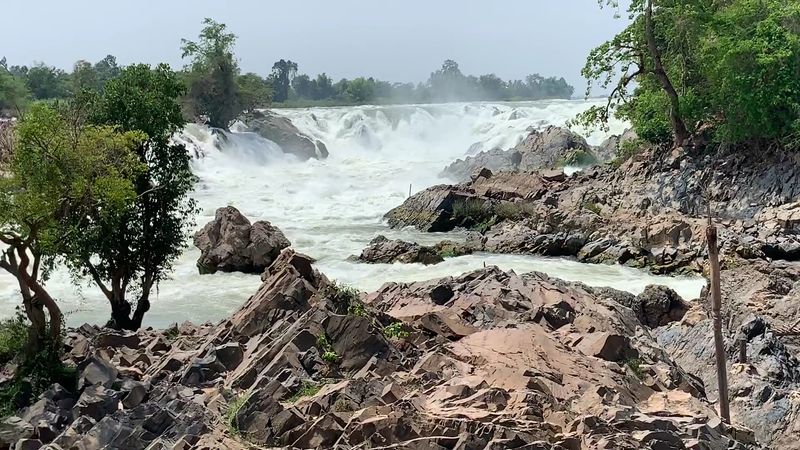
Stretching wider than most people can even imagine, Khone Phapheng Falls on the Mekong River holds the title of the widest waterfall system in the world. At over 10,783 meters across, calling it a single waterfall almost feels like an understatement — it is more like a river throwing itself off a cliff in every direction at once.
Located in southern Laos near the Cambodian border, these falls are a series of thundering rapids and cascades that make upstream navigation completely impossible. For centuries, boats traveling the Mekong River had to be unloaded and carried overland just to bypass this roaring natural barrier.
That practical reality shaped the entire history of trade and travel in the region.
Visitors who make the trip are rewarded with a spectacle that feels almost surreal. The sheer width of the water means you cannot see from one end to the other — the falls simply disappear into the horizon.
Local fishermen still work the edges of the rapids using traditional bamboo platforms, a practice passed down through generations. Khone Phapheng is not just a waterfall; it is a living, breathing piece of Southeast Asian cultural and natural heritage worth every bit of the journey.
Iguazu Falls – Argentina/Brazil
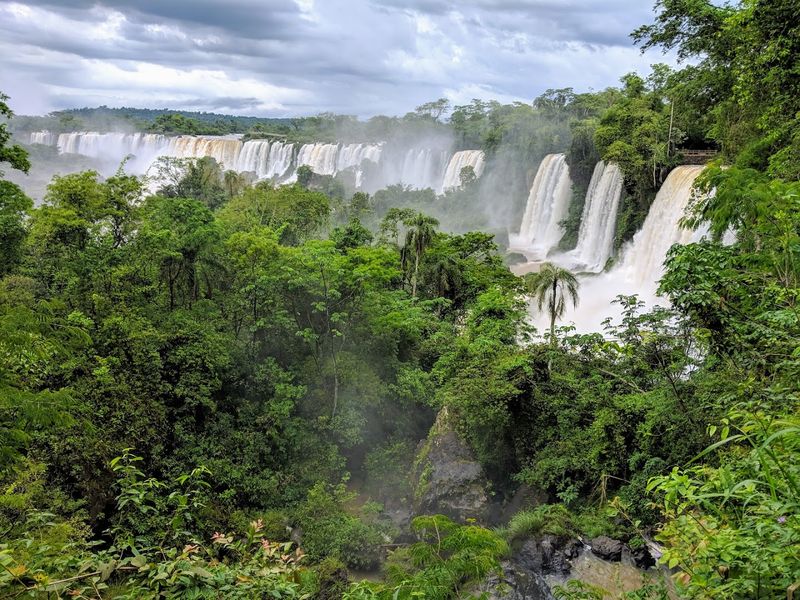
Eleanor Roosevelt reportedly took one look at Iguazu Falls and whispered, “Poor Niagara.” Whether the story is true or not, anyone who has stood at the edge of this colossal waterfall system completely understands the sentiment. Iguazu stretches roughly 2.7 kilometers wide and consists of around 275 individual cascades — making it the largest waterfall system on Earth by width and sheer visual spectacle.
Straddling the border between Argentina and Brazil, the falls sit inside two national parks that are both UNESCO World Heritage Sites. The most dramatic section, known as the Devil’s Throat, is a massive U-shaped chasm where the water plunges nearly 82 meters into a thundering abyss below.
Standing on the walkway above it feels like being at the edge of the world.
The surrounding Atlantic rainforest is home to hundreds of bird species, jaguars, giant anteaters, and colorful butterflies that flutter around the mist-soaked trails. Rainbows appear almost constantly in the spray, making every photo feel accidental and perfect at the same time.
Visiting from both the Argentine and Brazilian sides gives you completely different perspectives of the same jaw-dropping show. Iguazu does not just impress — it overwhelms every single sense you have.
Victoria Falls – Zambia/Zimbabwe
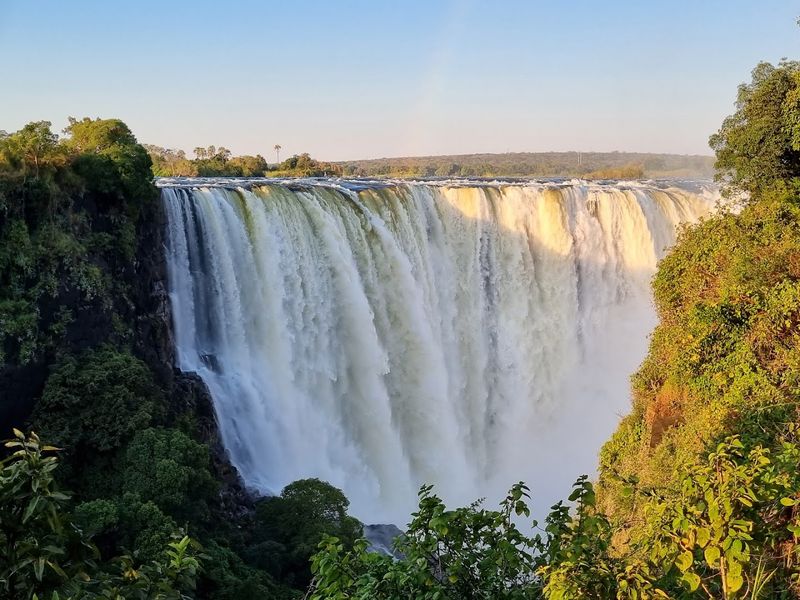
Locals call it Mosi-oa-Tunya, which translates to “The Smoke That Thunders” — and honestly, that name does a better job describing the experience than any photograph ever could. Victoria Falls on the Zambia-Zimbabwe border sends up a column of mist so enormous it can be seen from 48 kilometers away on a clear day.
That mist keeps the surrounding forest permanently drenched, creating a lush microclimate in an otherwise dry savanna region.
At nearly 1,708 meters wide and up to 108 meters tall, Victoria Falls is neither the tallest nor the widest waterfall on Earth, but it holds the record for the largest sheet of falling water anywhere in the world. During peak flood season, the roar is so loud that normal conversation becomes impossible anywhere near the gorge.
The spray soaks visitors completely within minutes of arrival — ponchos are not optional.
Adventurous travelers can swim in Devil’s Pool, a natural rock pool right at the edge of the falls during low-water season. Bungee jumping off the nearby bridge is also popular for those who prefer their adrenaline served with a view.
Victoria Falls earned its UNESCO World Heritage status for good reason — it is genuinely one of the most spectacular natural wonders humans have ever stumbled upon.
Angel Falls – Venezuela
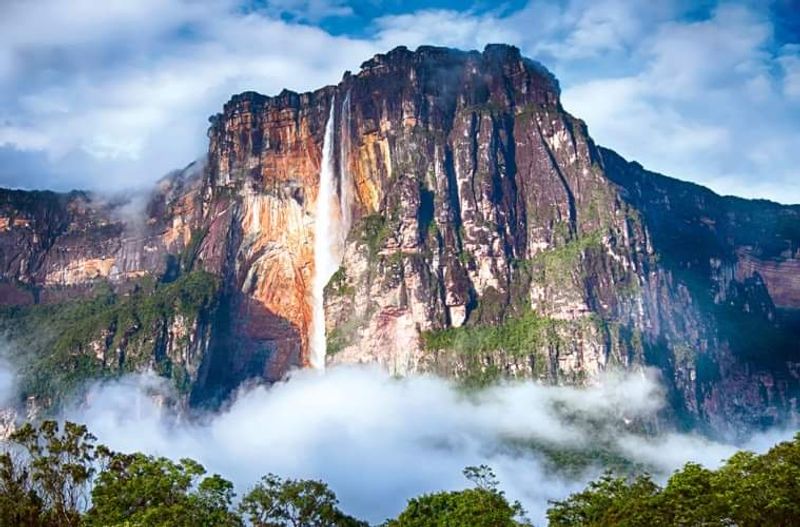
From the top of Auyán-tepui, a flat-topped mountain rising dramatically from Venezuela’s jungle, water drops 979 meters straight down — the longest uninterrupted freefall of any waterfall on Earth. By the time it reaches the base, much of the water has already turned into a fine mist, drifting sideways in the breeze rather than crashing to the ground.
Angel Falls is less a waterfall and more a vertical river floating through the sky.
Named after American aviator Jimmie Angel, who spotted the falls from his plane in 1933, the cascade sits deep inside Canaima National Park, a UNESCO World Heritage Site. Getting there is an adventure in itself — visitors must travel by small plane to a jungle airstrip, then by motorized dugout canoe through winding rivers and dense forest.
There are no paved roads anywhere near it.
The indigenous Pemon people, who have lived in this region for centuries, call the falls Kerepakupai Merú, meaning “waterfall of the deepest place.” Their name feels far more poetic and accurate than the aviator’s name that stuck in international circles. During Venezuela’s rainy season from June to November, the falls run at full power, roaring with tremendous volume.
Seeing Angel Falls in person is one of those rare experiences that permanently rewires your understanding of how big the natural world really is.
Tugela Falls – South Africa
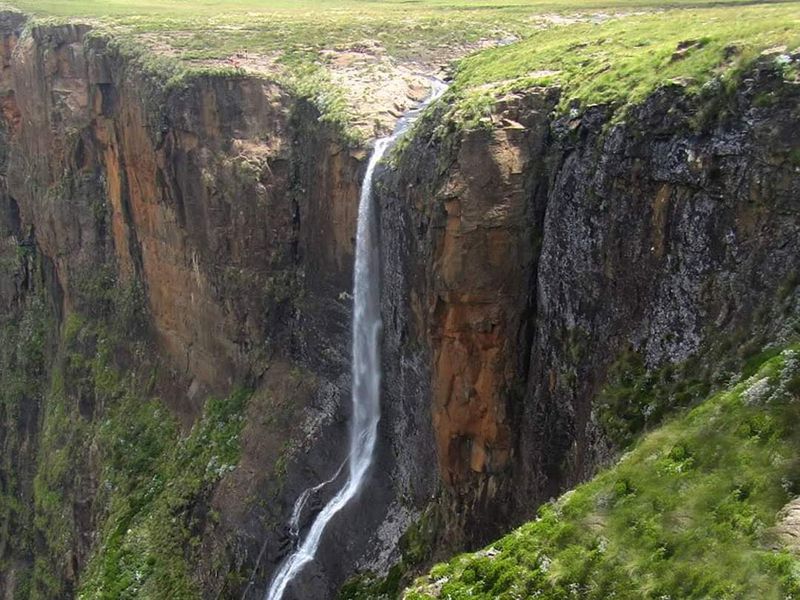
Hidden inside the dramatic Drakensberg Mountains of South Africa, Tugela Falls drops a total of approximately 948 meters across five separate tiers, making it one of the tallest waterfalls on the planet. Some measurements have even placed it in a close rivalry with Angel Falls for the number-one spot, depending on the calculation method used.
Either way, the view from the top is absolutely staggering.
The falls are located within Royal Natal National Park, a protected area famous for its rugged alpine scenery, ancient San rock art, and breathtaking hiking trails. Reaching the base of Tugela requires a moderately challenging hike through golden grasslands and rocky terrain, while the summit trail involves a few chain ladders bolted into sheer cliff faces.
Both routes are worth every bit of effort.
During winter months in South Africa, the upper tiers of Tugela Falls sometimes freeze completely, coating the cliff faces in massive columns of blue-white ice. Photographs of the frozen falls look almost too dramatic to be real, like something from a fantasy novel.
The Zulu name Thukela means “startling” — a perfectly understated description for a waterfall that drops nearly a kilometer through one of Africa’s most beautiful mountain landscapes. Tugela Falls is the kind of place that makes you feel genuinely small in the best possible way.
Niagara Falls – USA/Canada
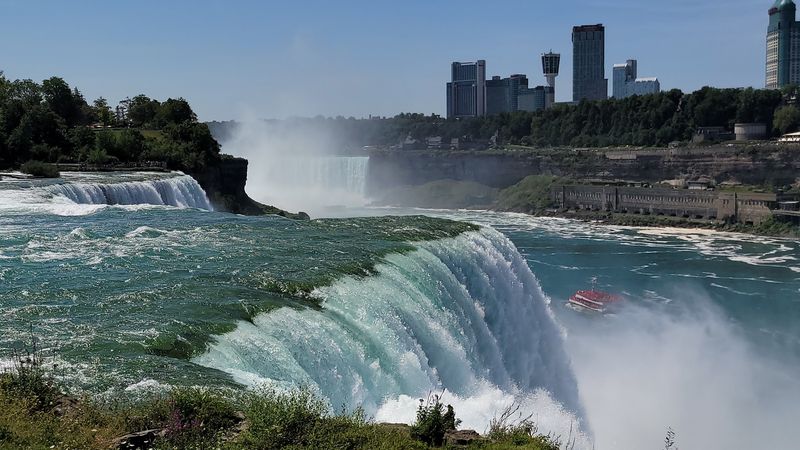
Every second, roughly 2,400 cubic meters of water thunder over Niagara’s famous Horseshoe Falls — enough to fill about 24 bathtubs per person on Earth every single minute. Niagara is not the tallest or the widest waterfall in the world, but it is almost certainly the most visited, drawing over 30 million tourists annually to its misty, roaring shores.
That kind of crowd usually means the hype is real.
Shared between the United States and Canada, Niagara actually consists of three separate falls: the Horseshoe Falls, the American Falls, and the smaller Bridal Veil Falls. The Horseshoe section on the Canadian side handles about 90 percent of the total water flow and offers the most dramatic views.
Standing near the railing with mist soaking your face and the ground literally vibrating beneath your feet is an experience that sticks with you.
The Maid of the Mist boat tour, which has been running since 1846, takes passengers directly into the spray at the base of the falls. Daredevils throughout history have gone over the falls in barrels, kayaks, and even tightrope-walked across the gorge on a wire.
Niagara has been generating hydroelectric power since the late 1800s, and today it powers millions of homes across New York and Ontario. Accessible, dramatic, and endlessly entertaining — Niagara delivers every single time.
Kaieteur Falls – Guyana
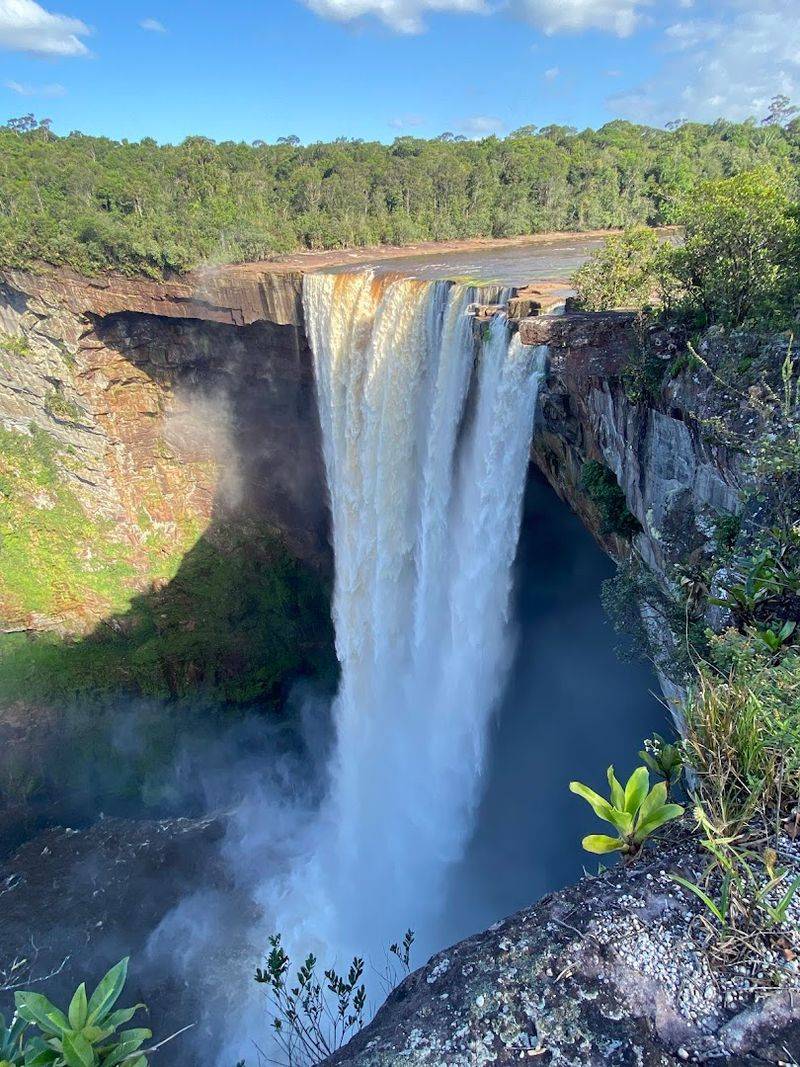
Tucked deep inside the Guyanese Amazon, Kaieteur Falls is the kind of place that makes you feel like you have accidentally stumbled into a lost world. Dropping approximately 226 meters in a single unbroken plunge, it is about four times taller than Niagara Falls — and it carries a serious volume of water to match that height.
The combination makes Kaieteur one of the most powerful single-drop waterfalls anywhere on the planet.
Getting there is genuinely remote. Most visitors arrive by small propeller plane, landing on a grass airstrip just minutes from the falls.
There are no hotels, no souvenir shops, and no crowds — just the deafening roar of water, the smell of wet jungle, and the occasional golden frog hopping across the rocks. The Kaieteur golden frog, found nowhere else on Earth, actually breeds in the bromeliad plants that grow right at the edge of the waterfall.
The Patamona indigenous people consider Kaieteur a sacred site, named after a chief called Kai who paddled over the falls in a canoe to sacrifice himself to the great spirit Makonaima. That legend gives the falls a spiritual weight that feels entirely appropriate when you are standing at the edge, staring down into the mist-filled abyss below.
Kaieteur is raw, wild, and completely unforgettable.
Share this story