Most people drive right past it without ever knowing what is just a few steps away. In northern Michigan, there is a short trail where the trees suddenly open up to reveal one of the most stunning views of Lake Michigan you will find anywhere.
It comes without the crowds, without the long lines of cars, and without the usual noise that follows popular overlooks. The walk itself is quick, but the climb is just enough to make you feel it.
And then you reach the top. The view stretches out over bright blue water toward North and South Manitou Islands, the kind of scene that makes you stop talking for a minute and just take it in.
All it takes is a quiet trailhead near Maple City and a little bit of effort. And once you see where this path leads, you will wonder how it stayed under the radar for so long.
Where the Trail Begins: Location and Getting There
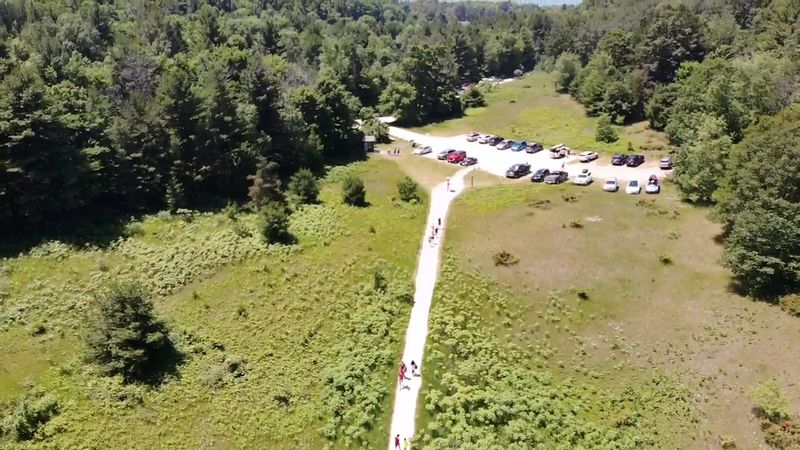
The trailhead sits at the end of Basch Road in Maple City, Michigan 49664, right inside the Sleeping Bear Dunes National Lakeshore. The address is Basch Rd, Maple City, MI 49664, and getting there requires a short drive down a paved road that eventually transitions to gravel as you near the parking area.
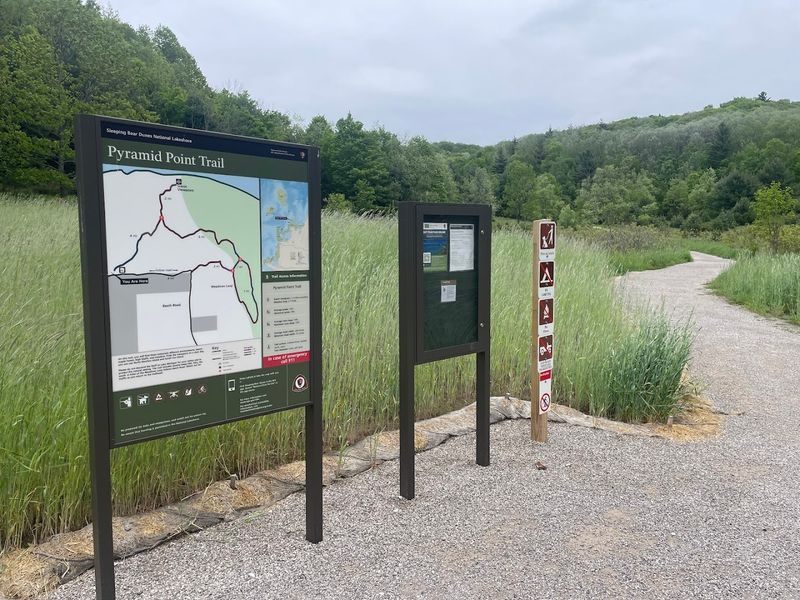
The lot itself is modest in size, which actually works in your favor because it keeps the crowds thin. You will find a vault toilet on-site, a trail map posted near the entrance, and a trash and recycling bin for convenience.
Cell service can be spotty near the parking lot, so downloading an offline map before you arrive is a smart move.
A National Park pass or day-use fee is required to park here, so keep your pass visible on the dashboard. Plan to arrive early on summer weekends to snag a spot before the lot fills up.
The Trail Itself: What to Expect on the Way Up
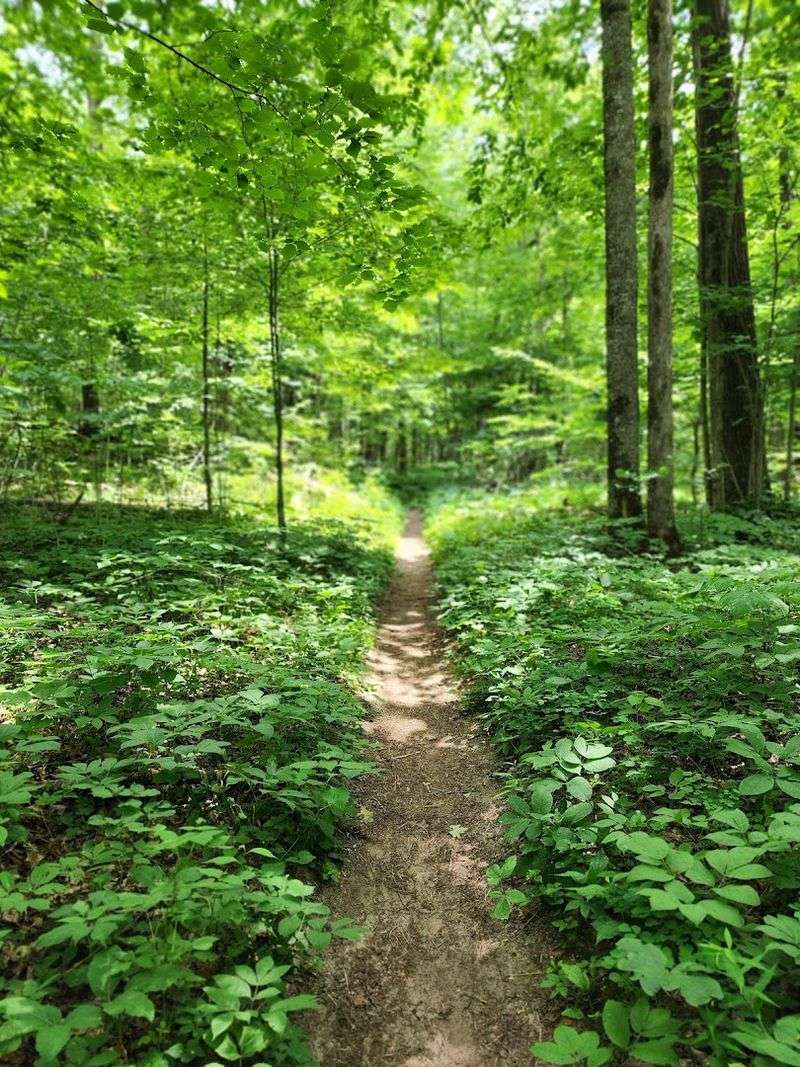
The path from the trailhead to the overlook is just over a mile round trip, making it one of the shorter hikes in the Sleeping Bear Dunes National Lakeshore area. Do not let the distance fool you, though, because the trail climbs steadily from the start and gets noticeably steeper as you approach the top.
Most of the route is shaded by a beautiful mix of birch, maple, and other hardwood trees, which makes the walk comfortable even on warm summer days. The canopy keeps the sun off your back for the majority of the climb, and the forest floor feels cool and quiet compared to the open dunes nearby.
Some sections of the trail run alongside Basch Road before heading back into the woods, so do not be surprised when you briefly see the road. The footing is generally solid, though sandy patches and roots appear closer to the summit, so watch your step and take your time.
The 400-Foot Elevation Gain: A Climb Worth Every Step
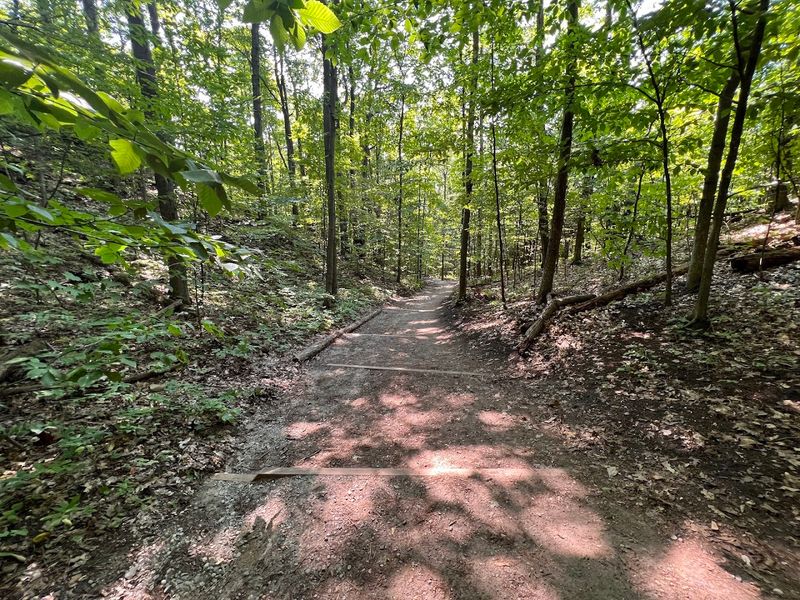
The roughly 400-foot elevation gain from the trailhead to the overlook is what separates Pyramid Point from the flat, easy walks you might find elsewhere in the park. The incline builds gradually at first, giving your legs time to warm up before the trail steepens near the crest.
Teenagers in solid shape have been known to jog up without much trouble, while the climb presents more of a challenge for younger children or anyone with joint concerns. That said, the slow and steady approach works perfectly well here, and the shaded trail makes the effort feel much more manageable than it would on an exposed dune climb.
Trekking poles can be a real help on the descent, especially on the sandy sections near the top where your feet tend to slide forward. The uphill push on the way out means you get a relaxed, easy downhill stroll on the return, which feels like a well-earned bonus after the summit view.
The Overlook: A Panorama That Earns Its Reputation
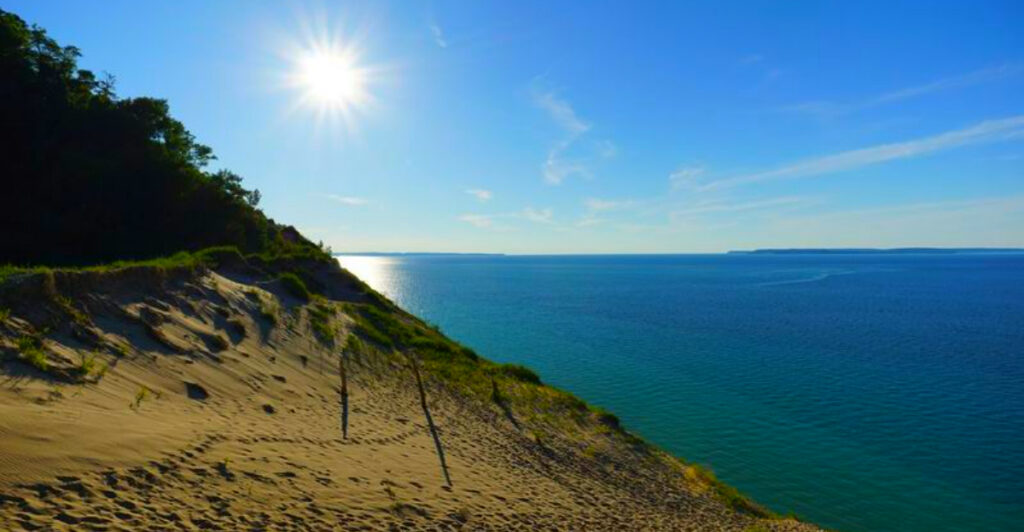
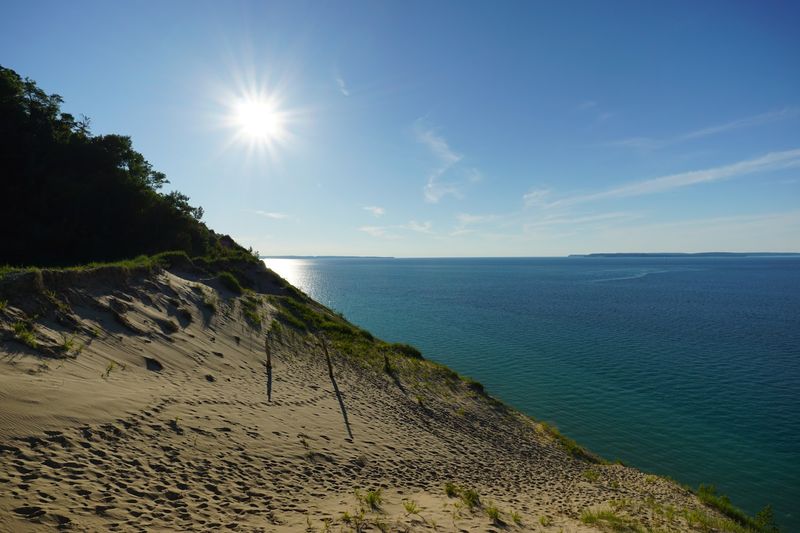
Standing at the Pyramid Point overlook for the first time is one of those moments where the scenery genuinely exceeds the expectation. Lake Michigan spreads out below in shades of blue and green that shift depending on the light, and on a clear day, both North and South Manitou Islands are visible on the horizon.
The view is framed by the edge of the dune, which drops sharply away from the overlook and gives the whole scene a dramatic, almost theatrical quality. The water somehow looks more vivid here than at other spots along the lakeshore, with colors ranging from pale aquamarine near the shore to deep sapphire farther out.
The overlook area itself is relatively compact, so it never feels like a stadium-style attraction. Even with a handful of other groups nearby, the atmosphere stays peaceful and unhurried, and most people naturally spread out along the edge to take in the view at their own pace.
Wildlife and Nature Along the Route
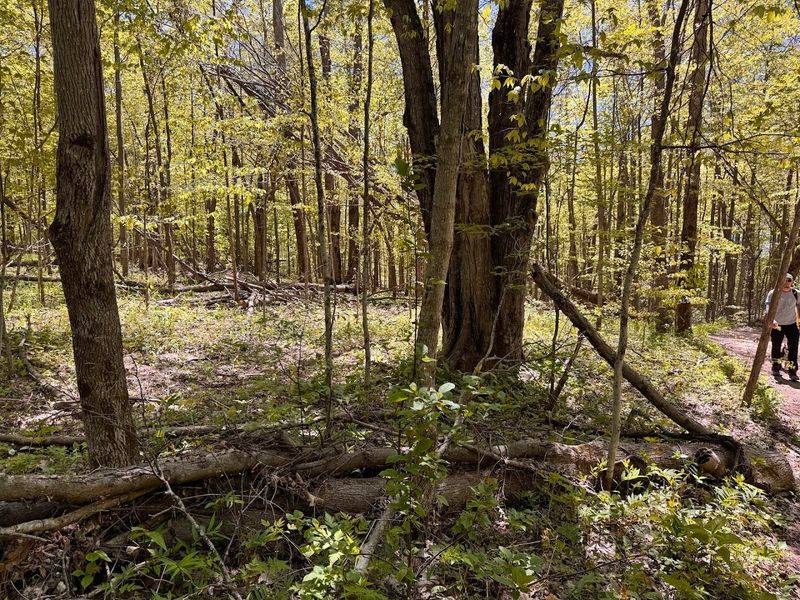
The wooded stretch of the Pyramid Point trail is surprisingly rich in wildlife, especially during the warmer months when the forest is fully leafed out and buzzing with activity. Monarch butterflies have been spotted drifting through the trees in late summer, often pausing on wildflowers along the trail edges.
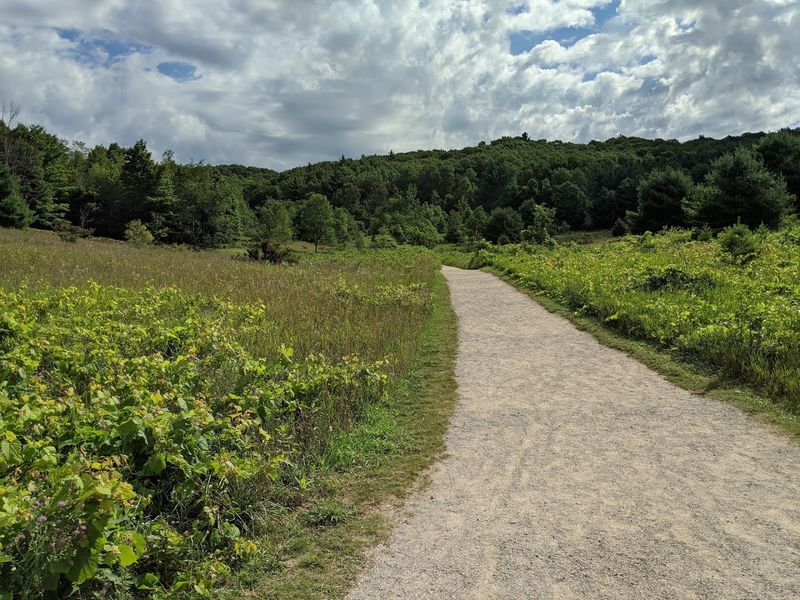
Birdwatchers will want to keep their eyes and ears open for indigo buntings, a small but brilliantly colored blue bird that frequents the forest edges in this part of Michigan. The mix of open meadow near the trailhead and dense woodland higher up creates a layered habitat that attracts a wide variety of species throughout the season.
Mosquitoes are a genuine presence during humid summer days, so bringing insect repellent is not optional, it is essential. The wooded sections hold moisture and shade, which are exactly the conditions mosquitoes love, so spray up before you hit the trail and reapply if you linger at the overlook.
The Dune Drop: A Warning Before You Wander
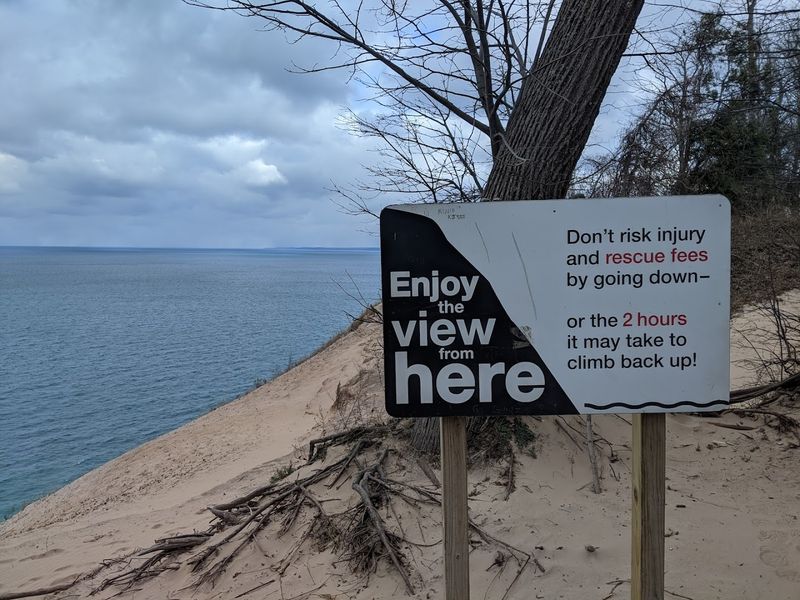
At the overlook, the dune face drops away sharply toward Lake Michigan far below, and the temptation to scramble down is real. The view from the edge is dramatic, and the sandy slope looks manageable at first glance, but appearances here are genuinely misleading.
The descent is much steeper than it looks from the top, and climbing back up after reaching the bottom is an exhausting challenge even for fit adults. There have been situations in the past where hikers underestimated the climb back up and had to wait for assistance, which is a scenario that ruins the rest of your day and is completely avoidable.
A small unmarked path does exist to the sides of the main overlook, leading along the ridge edge, but it is narrow and overgrown in places. Exploring those side paths is manageable with care, but heading straight down the dune face toward the water is a decision that consistently delivers regret.
Stay at the top and enjoy the view from safety.
Best Time to Visit and Seasonal Highlights
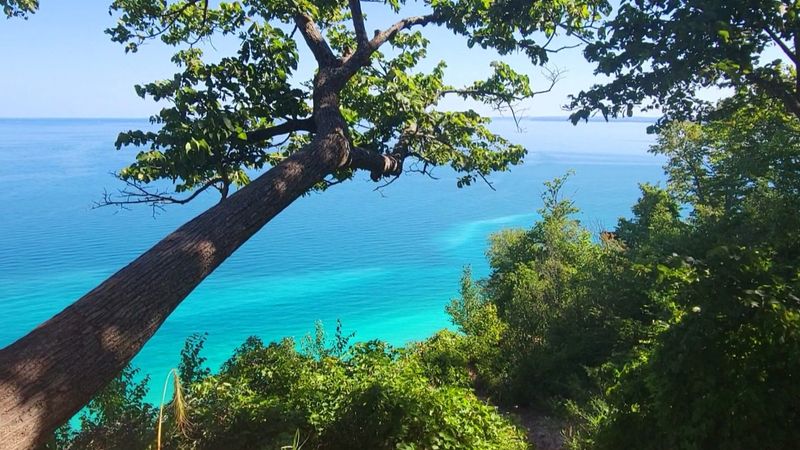
Sunset at Pyramid Point is something that locals talk about with genuine affection, and for good reason. The overlook faces west over Lake Michigan, which means the sun drops almost directly into the water on clear evenings, painting the sky in shades of orange, pink, and purple that reflect off the lake below.
Summer is the busiest season, but the trail still feels uncrowded compared to the popular Pierce Stocking Scenic Drive nearby. Fall is arguably the most rewarding time to visit, when the hardwood trees along the trail turn brilliant shades of red and gold and the air is cool enough to make the climb feel effortless.
Winter visits are possible but require caution, as the trail can become icy and the unmarked side paths are harder to follow under snow. Spring brings wildflowers to the forest floor and a fresh, clean feeling to the whole trail that makes the early-season effort feel especially rewarding.
Visiting With Dogs: A Pet-Friendly Trail
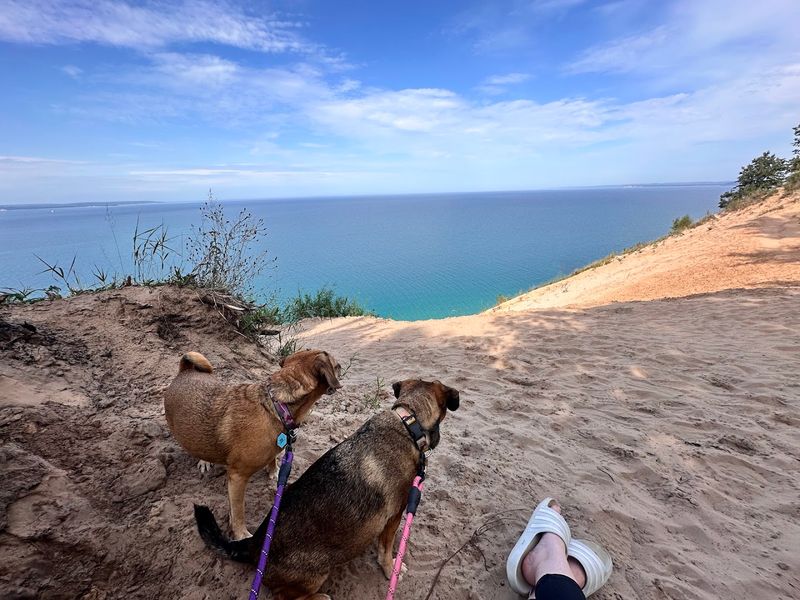
Pyramid Point is one of the more dog-friendly trails in the Sleeping Bear Dunes National Lakeshore, and plenty of visitors make the hike with their four-legged companions in tow. Dogs are welcome on the trail as long as they remain on a leash at all times, which is a park-wide rule that keeps wildlife undisturbed and other hikers comfortable.
The shaded trail is a genuine plus for dogs on warm days, since the tree cover keeps the path cooler than the open dune areas found elsewhere in the park. Bring enough water for your pet, because there are no water sources along the trail itself, and a thirsty dog makes for a miserable hike for everyone involved.
The overlook area requires some extra attention with dogs, given the steep drop-off at the dune edge. Keeping your pup close and on a short leash near the summit is the safest approach, and the narrower side paths along the ridge are best skipped if your dog has a habit of pulling toward interesting smells.
Practical Tips for First-Time Visitors
A few practical details can make the difference between a great hike and an unnecessarily rough afternoon. The trail is short, but the elevation gain means you will work up a sweat, so bringing at least one water bottle per person is a solid baseline, and two is smarter on hot days.
Sunscreen matters most at the overlook, where the open sky leaves you fully exposed to the sun while you linger and take photos. The wooded trail offers shade, but the summit does not, so apply before you leave the car rather than after you arrive at the top.
Poison ivy grows along sections of the trail, particularly near the edges and in the overgrown side paths, so staying on the main route and wearing long socks or pants is a reasonable precaution. A trail map is posted at the trailhead, but photographing it with your phone before you head out gives you a quick reference if you want to explore the meadow loop on the way back.
Why Pyramid Point Stands Apart in Sleeping Bear Dunes
Sleeping Bear Dunes National Lakeshore is full of remarkable spots, but Pyramid Point has a character that sets it apart from the more heavily visited attractions in the park. The hike requires just enough effort to filter out casual visitors, which means the overlook almost always has a quieter, more contemplative atmosphere than places you can drive directly to.
The combination of a forested trail, a meaningful elevation gain, and a west-facing overlook above Lake Michigan creates an experience that feels complete from start to finish. You get the walk through the trees, the satisfying burn of the climb, and then the wide-open payoff of the view, all within a round trip of just over a mile.
For anyone exploring northern Michigan for the first time, this trail offers a concentrated version of everything that makes the region so compelling. The water is impossibly blue, the islands float on the horizon like a postcard, and the whole experience wraps up in under two hours, leaving plenty of afternoon left to explore the rest of the lakeshore.
Share this story