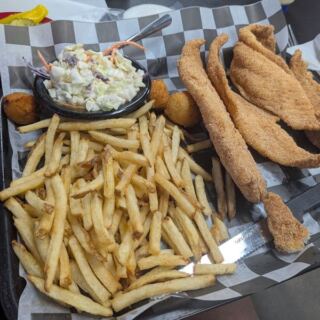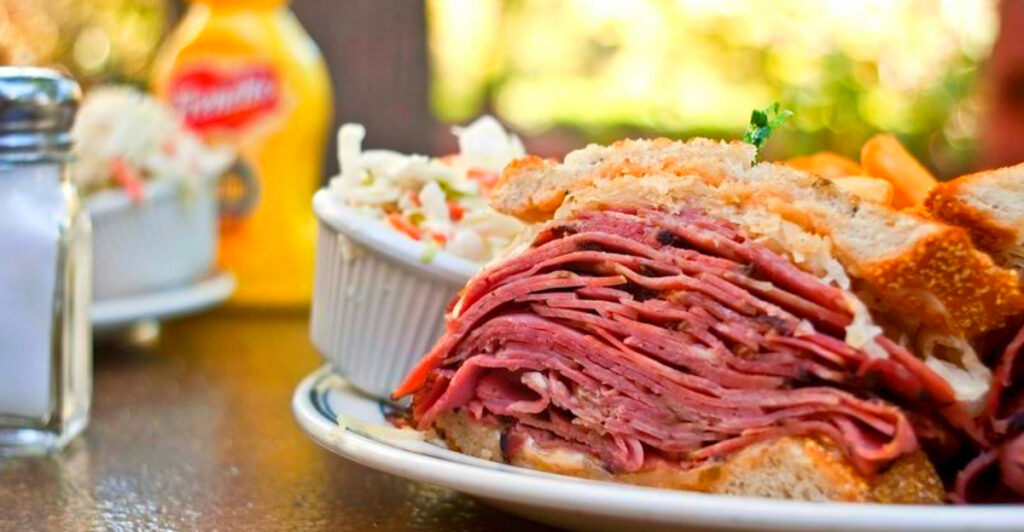
America’s love affair with the diner grew alongside highways, refrigeration, and the rise of quick-service culture from the 1920s through the 1970s. Stacked sandwiches became a kind of edible headline, advertising abundance, speed, and regional pride.
You will find more than giant portions here, though. Each stop tells a story about immigration, postwar prosperity, televised food fame, changing labor norms, and how neighborhoods rallied around places that sliced meat, poured coffee, and remembered names.
1. Katz’s Delicatessen – New York City, New York
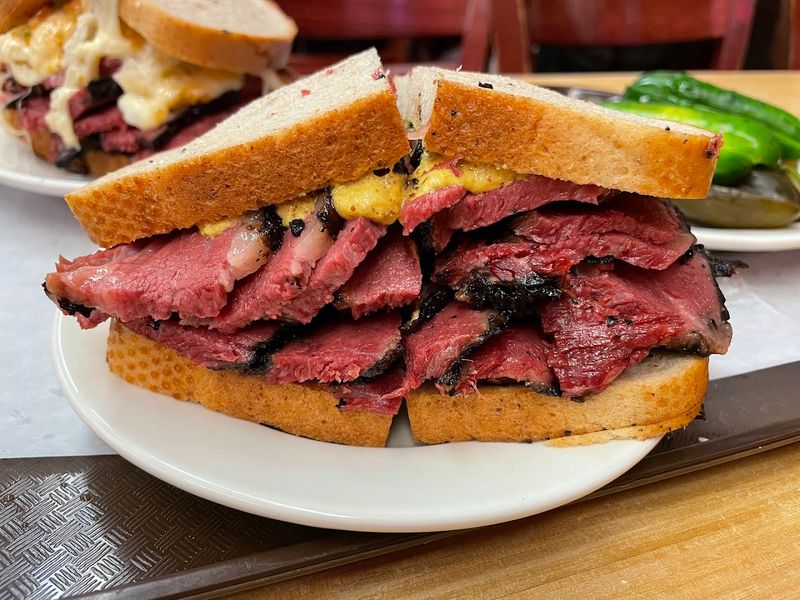
One ticket slip and a mountain of pastrami turned a lunch line into living history. Katz’s Delicatessen traces back to 1888, when pushcarts and tenements defined the Lower East Side.
The signature stack rides on rye with mustard, a format shaped by Eastern European Jewish deli traditions and American abundance.
Hand cutting matters here, preserving grain and moisture in a way slicers often flatten. Wartime culture cemented the slogan “Send a salami to your boy in the Army,” tying sandwiches to homefront support.
Celebrity cameos and decades of photo walls made every overflowing sandwich feel like a local headline.
You come for size, but stay for technique that survived consolidation and diet trends. In an era of fast everything, Katz’s kept the pace without losing craft.
2. Primanti Bros. – Pittsburgh, Pennsylvania
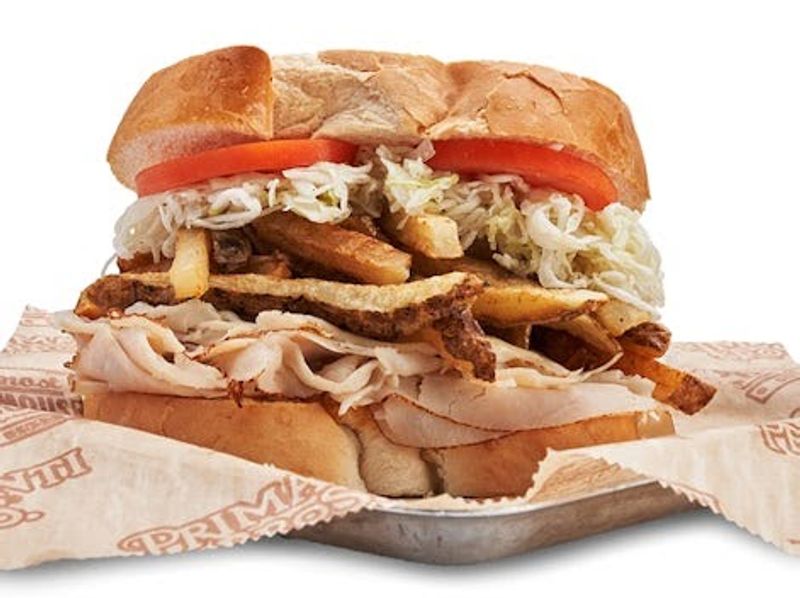
Fries in the sandwich were not a gimmick so much as logistics. Primanti Bros. started in the 1930s serving truckers who needed a full meal in one hand during overnight runs.
Thick Italian bread, grilled meat, vinegar slaw, and fries formed a portable stack built for speed and substance.
The formula reflected Depression-era efficiency and Pittsburgh’s industrial workforce. As steel jobs shifted and the city reinvented itself, the sandwich became civic shorthand.
Television crews amplified the height, but locals knew the design solved a practical problem.
Primanti’s shows how regional foodways often begin as workflow hacks. Bite into one and you taste an operations manual for a city that prized utility, from warehouse docks to stadium seats, all layered between two resilient slices.
3. Langer’s Delicatessen – Los Angeles, California
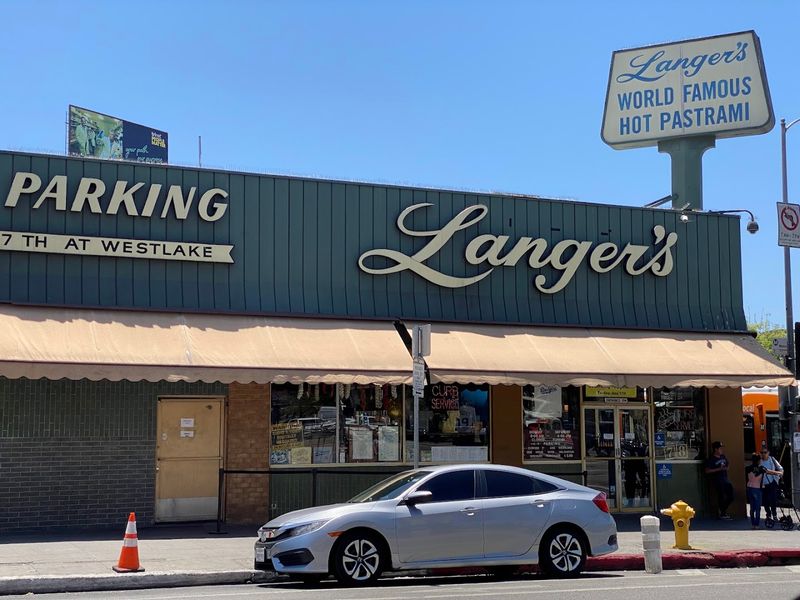
Some sandwiches travel cross-country without moving an inch. Langer’s No. 19 brought New York deli craft to Los Angeles in 1947, then adapted to West Coast rhythms.
The double-baked rye delivers structural integrity, keeping hand-cut pastrami tall and tidy.
The neighborhood shifted with subway construction, civic policy, and immigration, yet Langer’s persisted through targeted lunch hours and loyal regulars. James Beard recognition validated technique in an era that equated speed with quality.
The stack’s architecture is textbook: balanced fat, hot steam, cool slaw, Swiss, and assertive dressing.
You learn quickly that size without bread engineering collapses. Langer’s treats bread like rebar and pastrami like masonry, building a sandwich that survives commutes, critics, and countless debates about the nation’s best bite.
4. Canter’s Deli – Los Angeles, California
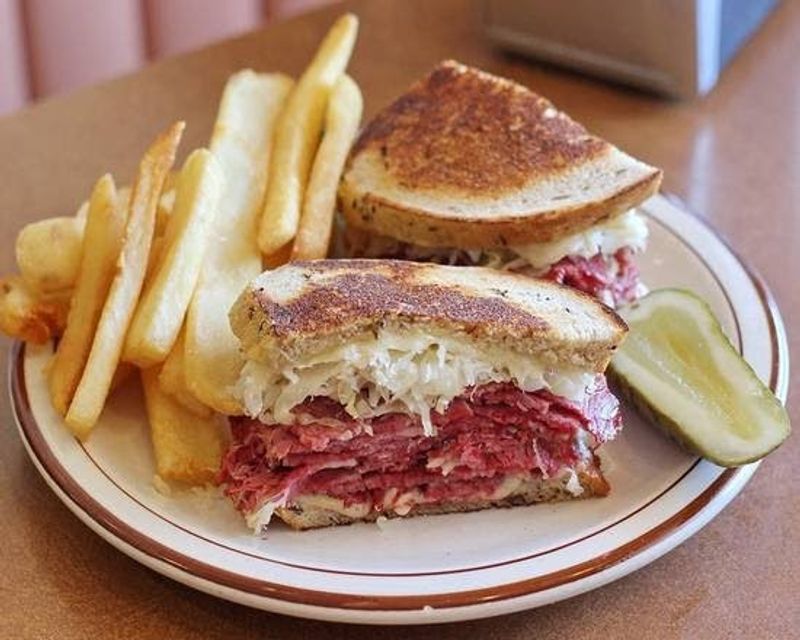
Night owls and matinee legends once shared the same pastrami altitude. Canter’s opened in the 1930s, migrating to Fairfax as Los Angeles expanded.
The menu reads like a census of deli standards scaled for performers, crew members, and families seeking generous plates.
Portions grew with postwar prosperity and studio culture, where long hours demanded serious fuel. The bakery’s rye and challah support heroic stacks, while the kibitz room reminded patrons that conversation is part of the service model.
Television appearances turned the sandwiches into calling cards.
Order a corned beef tower and you join a timeline of late-shift workers, comedians, and neighbors. It is a living archive where recipes, not exhibits, keep the city’s overlapping histories layered and unmistakably tall.
5. The Hat – Pasadena, California
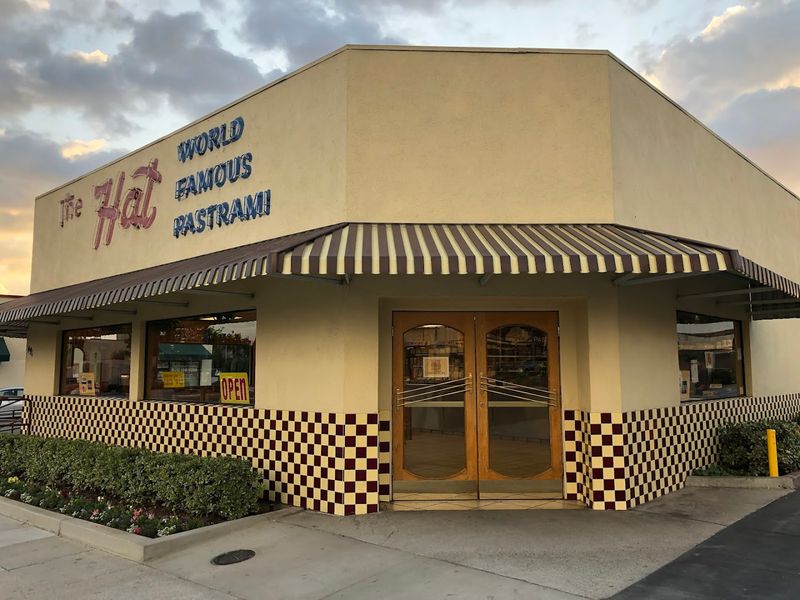
A paper crown and a mountain of meat made quick work of hunger. The Hat dates to 1951, when car culture shaped menus and curbside habits across Southern California.
Its famous pastrami dip arrives in excess, weighted with sliced meat and a generous pour of jus.
Drive-ins popularized portable abundance, and The Hat leaned into that expectation. Prices stayed competitive by streamlining choices and moving volume through efficient service windows.
The result is a sandwich that looks like a physics problem and eats like a lunch break.
You learn how postwar mobility redefined dining when a counter becomes a crossroads. The Hat proves that simple assembly, quick turnover, and relentless portions can create a regional landmark without a linen napkin in sight.
6. Frank’s Diner – Kenosha, Wisconsin
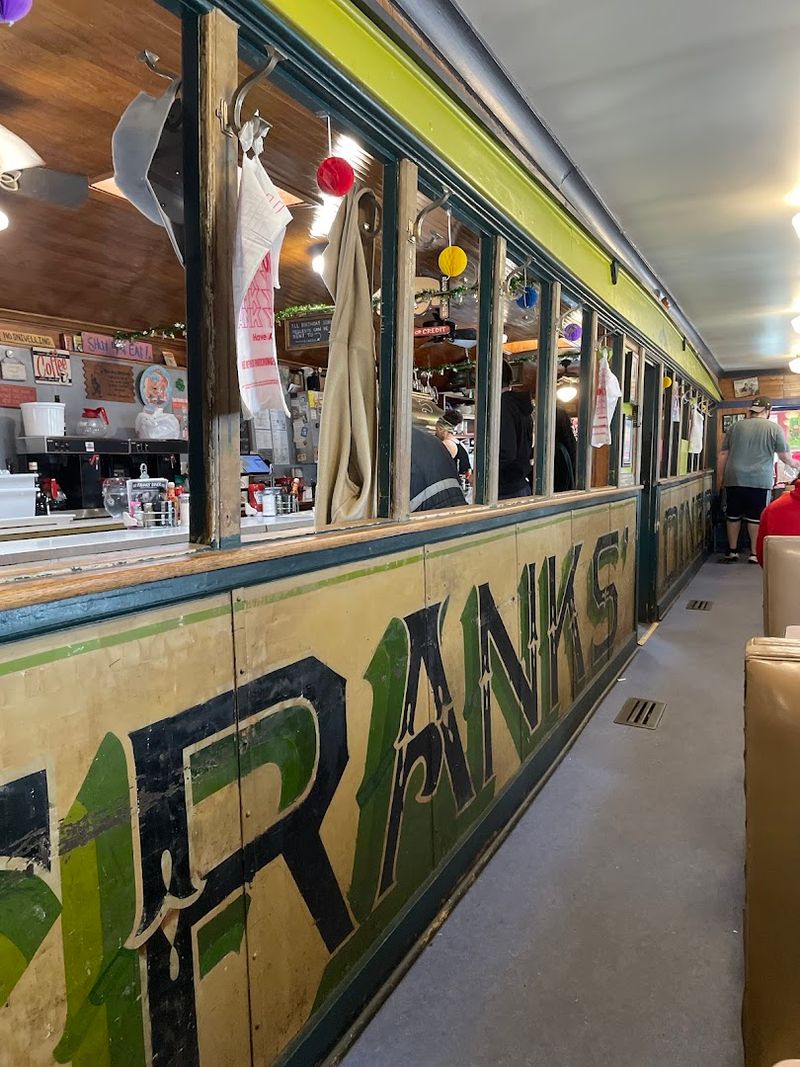
An old railcar parked purposefully can still outpace modern trends. Frank’s Diner, serving since 1926, channels working-class appetite into colossal scramblers and stacked burgers.
The narrow space concentrates the ritual of frying, slicing, and stacking in plain view.
Railcar diners spread with highway growth, offering predictable prices and quick hospitality. Frank’s survived economic swings by doubling down on hearty combinations that could anchor a day’s labor.
Oversized breakfast sandwiches blur lines between meal categories, a Midwestern practicality.
Order one and you participate in a choreography perfected over decades. The portions are not novelty for its own sake.
They honor customers who counted on a single plate to handle a long shift and a winter afternoon.
7. Harold’s New York Deli – Edison, New Jersey
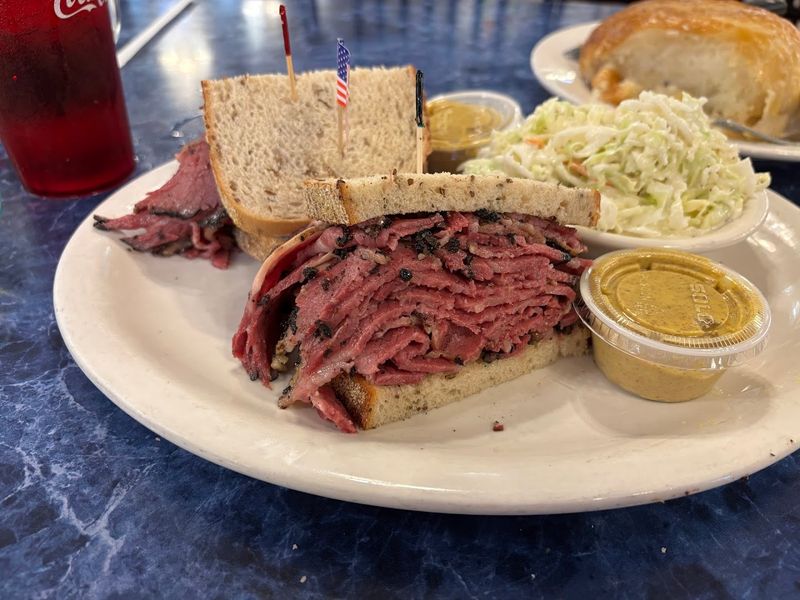
Some menus require a team strategy. Harold’s New York Deli turned portion scale into architecture, with sandwiches that feed tables rather than individuals.
The bread tower and pickle bar underscore a hospitality thesis from the 1980s and 1990s: deliver surplus and win loyalty.
New Jersey’s highway grid made destination dining practical, and Harold’s capitalized with spectacle balanced by deli craft. Corned beef and pastrami are steamed properly, then stacked to startling heights that still slice cleanly.
The ritual of sharing plates builds social currency.
Take a photo, then pass the halves. You will remember the laughter, but the lasting note is a business model that treats abundance as both marketing and memory, anchored by careful brining and brisk service.
8. Manny’s Cafeteria & Delicatessen – Chicago, Illinois
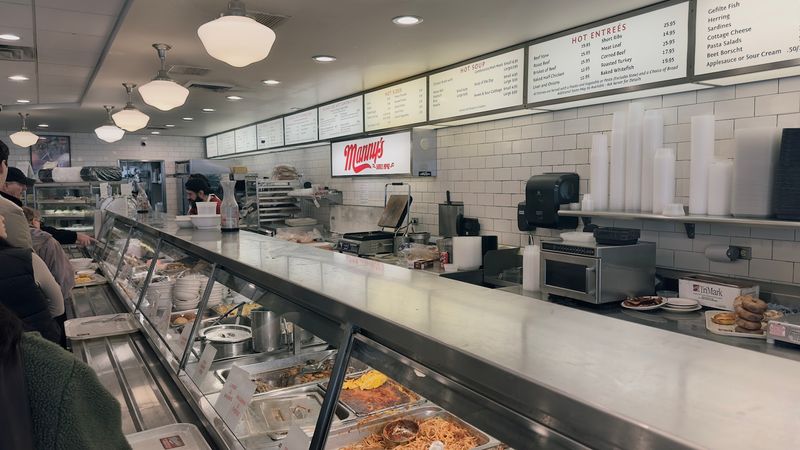
Power lunches do not require linen when the carving station sets the agenda. Manny’s has anchored Chicago appetites since the 1940s, drawing union workers, officials, and families to lines that move with practiced efficiency.
Corned beef lands thick and plentiful, then meets rye without apology.
Postwar cafeteria design kept prices predictable and portions ambitious. Manny’s became a civic clubhouse where policies and gossip shared table space with mustard.
The sandwich towers reflect a city that values straightforward output.
Grab a tray and watch a system perfected over decades. Every slice signals reliability in a town that counts on durable institutions.
You leave full, informed, and oddly optimistic about the problem-solving power of a proper stack.
9. Eisenberg’s Sandwich Shop – New York City, New York
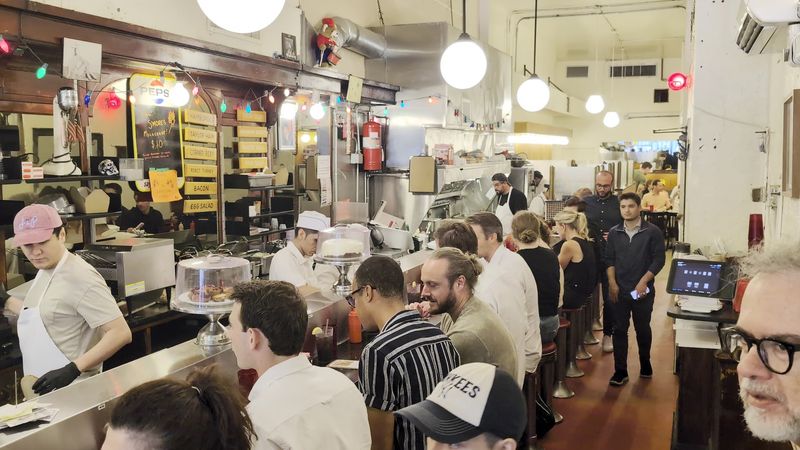
A slender counter can host outsized ambition. Eisenberg’s opened in 1929 and treated Midtown office life as its steady drumbeat.
The sandwiches, tall and tidy, traced a line from old soda fountain fare to modern lunch rush survival.
The shop weathered decades of real estate pressure by leaning on efficiency and personality. A tuna melt here stacks with the confidence usually reserved for corned beef, reminding you that heft is a democratic principle.
Ownership changes came and went.
What never drifted is the idea that a counter lunch can anchor a workday. Slide onto a stool, order a classic, and watch a city keep time to bread, filling, and a quick nod from the griddle cook.
10. Dyer’s Burgers – Memphis, Tennessee
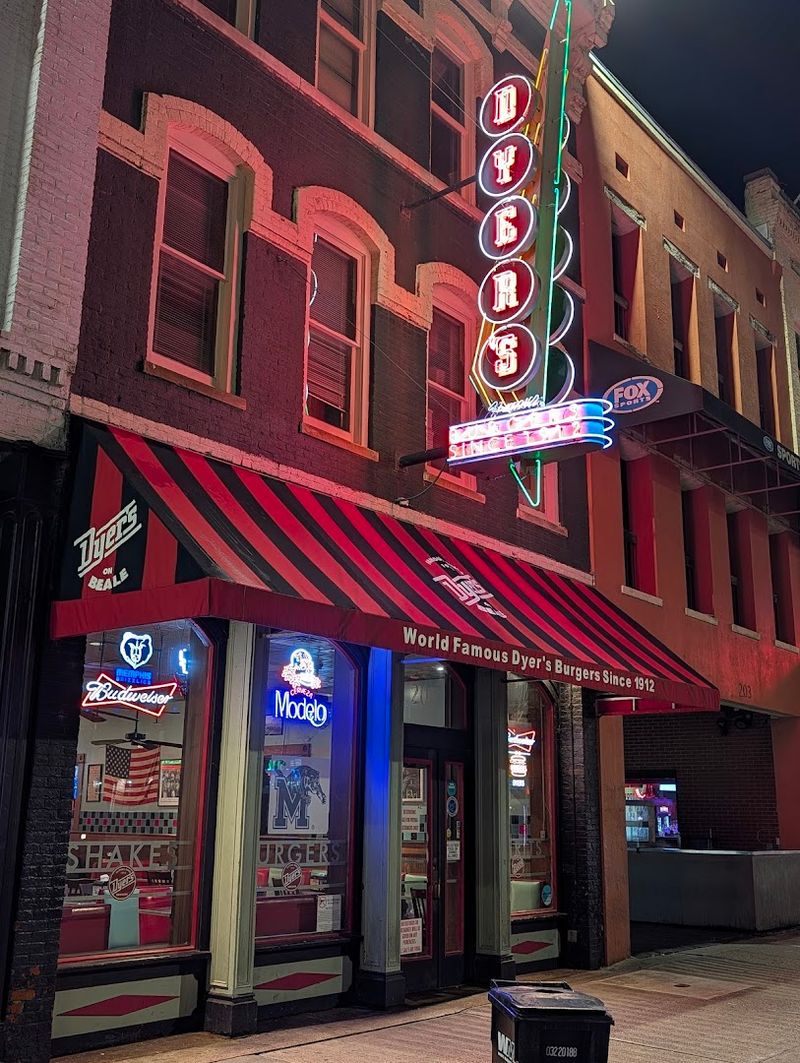
Sometimes the stack speaks fluent South. Dyer’s Burgers, famous for its griddle tradition, also piles sandwiches with unapologetic enthusiasm.
Memphis lunch culture prizes quick service and memorable heft, and Dyer’s delivers with layered burgers that compete with deli towers.
The location’s century-plus story intersects with street music scenes, tourism waves, and downtown revitalization. Menu engineering keeps lines moving while preserving the signature sear.
Add-ons and double builds let customers calibrate size to appetite.
Take a seat and you will see how a burger joint can mirror deli bravado without copying it. The lesson is straightforward.
Portion scale becomes a signature when the city adopts it as shorthand for welcome.
11. The Chatterbox – Ocean City, New Jersey
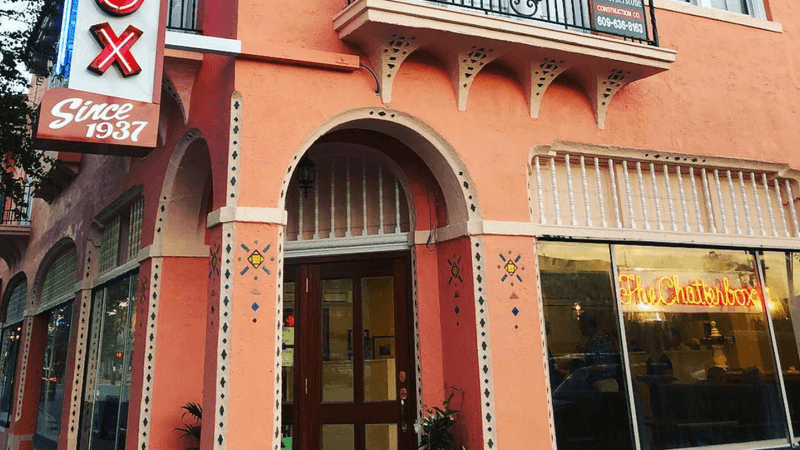
Summer appetite does not negotiate. The Chatterbox has long served shore traffic with sandwiches that respect post-beach hunger.
BLTs and clubs climb high, stable enough to share across a table of sandy elbows and sunscreened planners.
Tourism economies reward consistency and speed, and The Chatterbox calibrates both. Seasonal staffing and predictable prep keep portions bold without slowing service.
The building’s colorful facade operates as a signpost and a promise.
Order a stack and you are buying more than lunch. You are banking on a ritual that steadies family schedules between waves and minigolf.
The sandwich size carries the message clearly. No one leaves wondering whether they ordered enough.
12. Sarge’s Delicatessen – New York City, New York
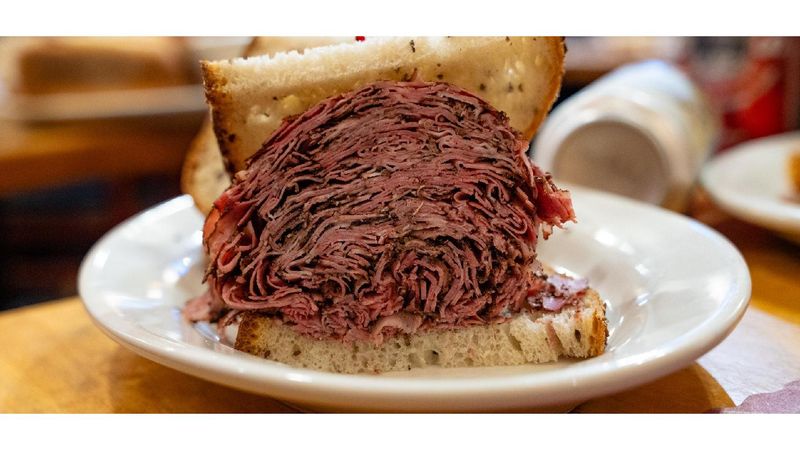
Late hours and tall stacks make reliable companions. Sarge’s opened in 1964 and embraced the city’s around-the-clock metabolism.
Pastrami and corned beef arrive in strata that challenge napkins and schedules alike.
The graveyard shift kept lights on while trends came and went. Delivery routes, cab stops, and newsroom deadlines shaped the menu’s endurance.
Sandwiches here demonstrate that height can coexist with proper steam and careful slicing.
Slide into a booth and the rhythm sets in. Order, stack, chat, and continue your mission.
The plate feels like a timekeeper that understands how New York measures energy in layers of meat and rye.
13. Brent’s Deli – Northridge, California
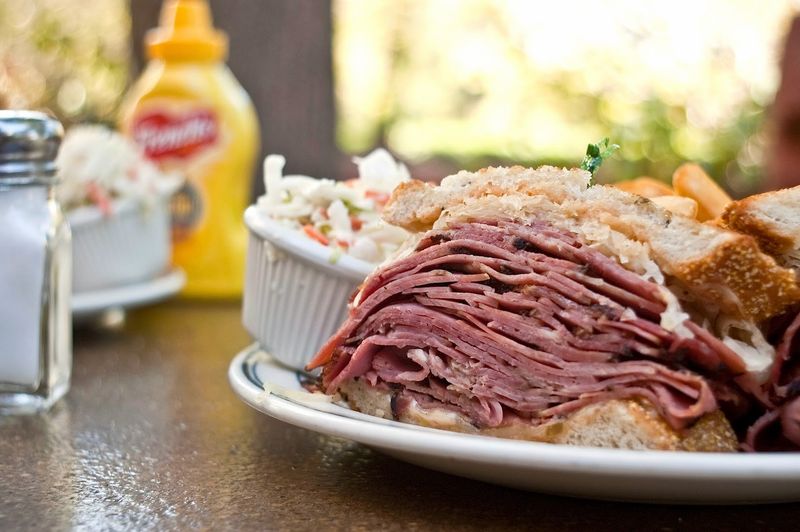
Valley comfort can still reach skyscraper status. Brent’s Deli opened in 1967 and turned Northridge into a pilgrimage for pastrami loyalists.
The stacks show meticulous trimming and careful steam, with rye that keeps its posture start to finish.
As suburban Los Angeles matured, Brent’s balanced family dining with serious deli technique. Black pastrami Reubens became a signature that photographs beautifully and eats even better.
Awards followed, but the line stayed neighborly.
Order a tower and you will understand why regional pride builds around a sandwich. It is proof that craftsmanship survives sprawl.
The meat is plentiful, the service quick, and the tradition unmistakably West Coast in its execution.
14. Al’s #1 Italian Beef – Chicago, Illinois
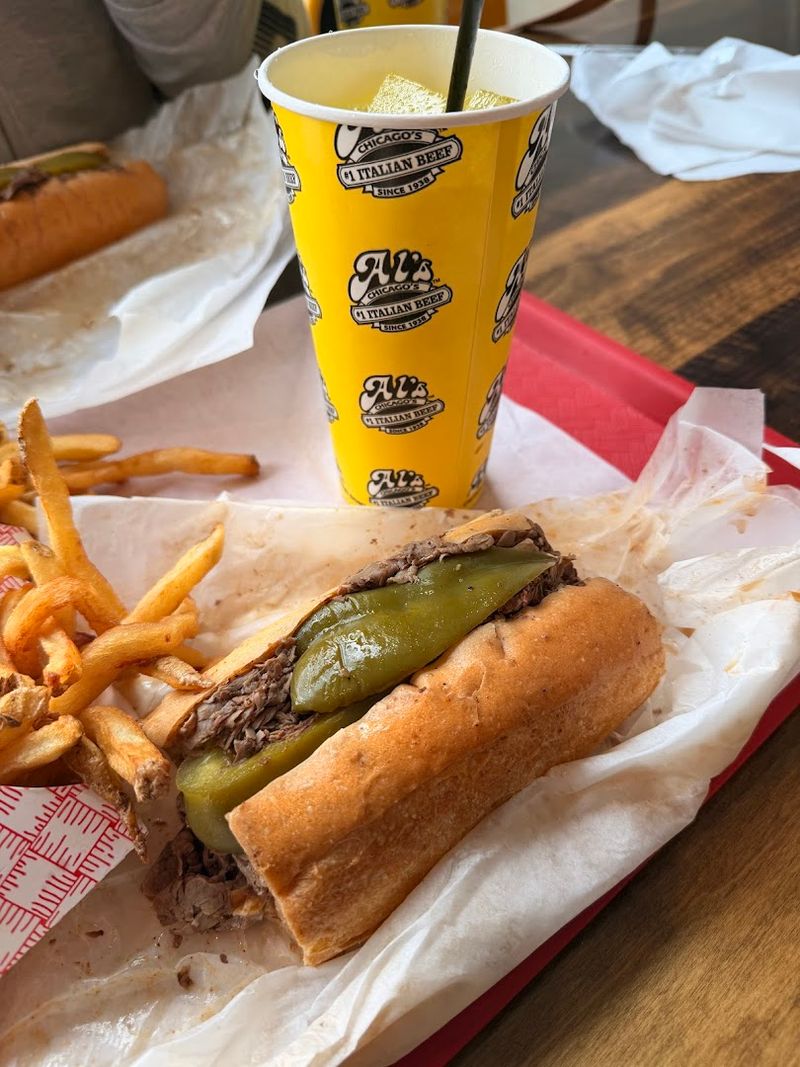
Gravity meets gravy in a Chicago institution. Al’s #1 Italian Beef traces roots to the 1930s, when thin slicing and broth stretching turned scarce resources into crowd-pleasing sandwiches.
The dipped roll and giardiniera add drama that rivals any deli tower.
Portion size scaled with city pride, sports seasons, and late-shift cravings. The operation runs like a compact assembly line, keeping lines moving during lunch crushes.
What you hold is both thrifty origin story and present-day indulgence.
Ask for extra peppers and accept the structural challenge. The sandwich may not stack vertically like pastrami, yet the overflowing build delivers the same message.
Abundance, speed, and a neighborhood signature that outlived its starting budget.
15. The Sandwich Shoppe – Rutland, Vermont
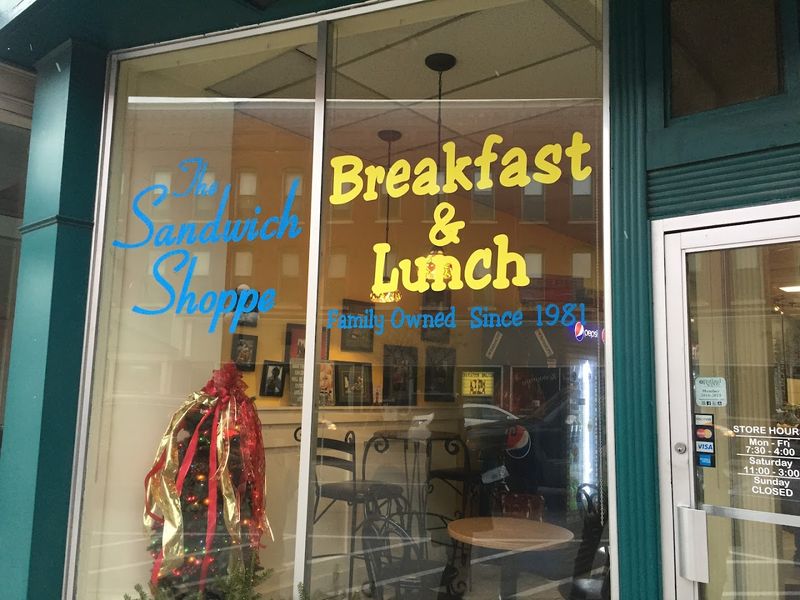
A tiny storefront can project big confidence. The Sandwich Shoppe in Rutland wins loyalty with Vermont practicality and portions that double as planning.
Turkey, roast beef, and local cheddar stack high between sturdy bread baked to handle winter commutes.
Small towns rely on consistent operators who remember orders and balance budgets. This shop treats the mile-high idea as daily service, not stunt work.
Maple mustard and crisp lettuce keep flavors bright and balanced.
You walk out with lunch and tomorrow’s snack solved. The sandwich works because someone measured thickness against errands, not cameras.
That is why locals defend it with the enthusiasm usually reserved for sports schedules and snow forecasts.
16. Time Square Diner – Melbourne, Florida
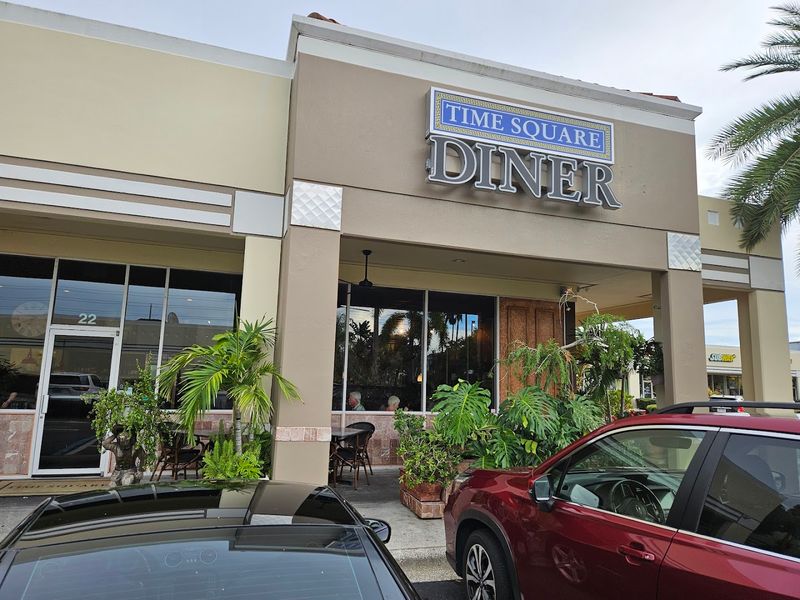
Sunshine meets skyscraper portions without a skyline in sight. Time Square Diner borrows Carnegie-style stacking to serve Florida’s transplant population.
Corned beef and pastrami arrive in assertive layers, flanked by deli pasta salad and a kosher pickle for balance.
Menu design respects retirees, families, and workers on quick breaks. The New York motif signals familiarity while the Florida address promises parking and ease.
Pile height doubles as a welcome sign for anyone missing northern delis.
Order a combo and enjoy the regional handshake. It says your memories travel well, and your sandwich can too.
The portion scale certifies the message in clear, slicer-cut lines.
17. Rosie’s Diner – Rockford, Michigan
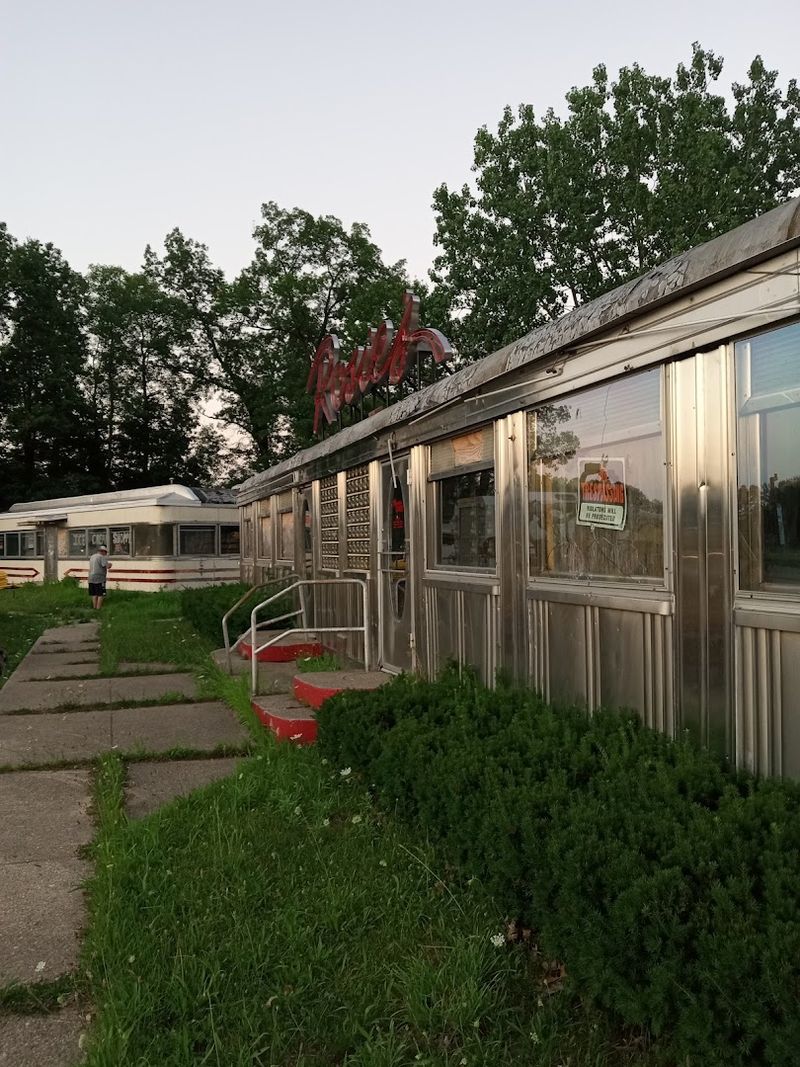
A photogenic facade still needs serious layers inside. Rosie’s Diner, once the Silver Dollar, rode national attention through commercials and relocations, yet the menu kept faith with belly-filling stacks.
Reubens and clubs arrive tall enough to share across a booth.
Michigan road culture rewards diners that deliver consistency on long drives. Rosie’s used branding savvy to complement the basics of slicing, grilling, and quick plating.
The look drew cameras, but the portions earned return visits.
When a sandwich holds together after a road trip, you know the ratios are right. Rosie’s reminds travelers that chrome is the invitation and volume is the handshake.
Both matter when miles add up.
18. Ruth’s Diner – Emigration Canyon, Utah
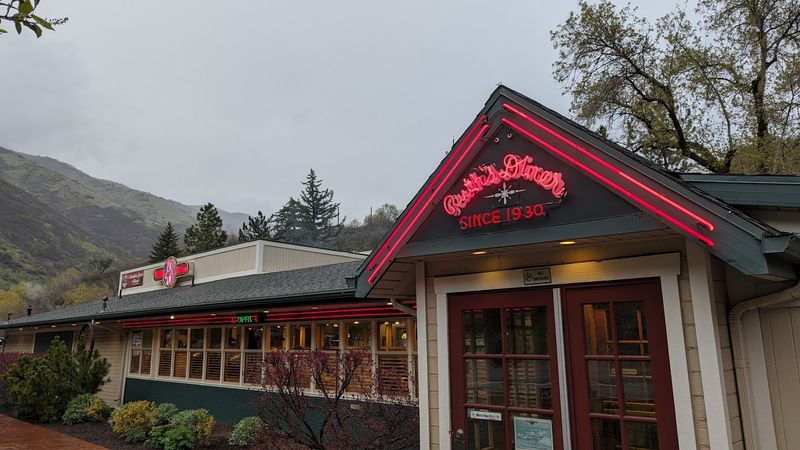
A biscuit can play the lead when height is the theme. Ruth’s Diner dates to 1930 and is famed for Mile High biscuits that anchor breakfast sandwiches with sturdy comfort.
The canyon location turned weekend drives into dining rituals.
As Salt Lake City expanded, Ruth’s balanced nostalgia with operational upgrades to serve larger crowds. The biscuit’s architecture matters.
Split, buttered, and stacked, it handles eggs and meats without collapse.
You sit down for scenery but stay for a plate that respects appetite and routine. The lesson lands clearly.
Regional identity can hinge on a carb that carries the morning like a dependable tool.
19. Sam’s No. 3 – Denver, Colorado
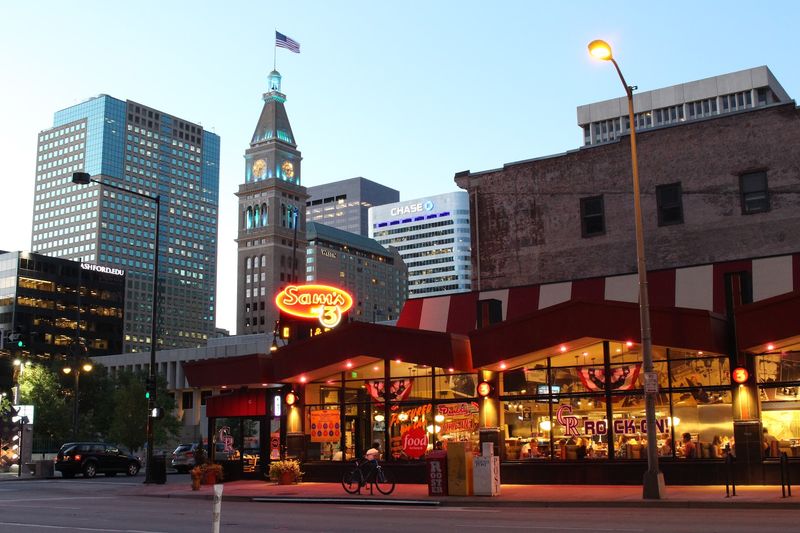
Menus that read like novels need sturdy heroes. Sam’s No. 3, tracing roots to 1927, serves stacked sandwiches alongside the city’s famous burritos, each portion calibrated for long days and high altitudes.
Downtown foot traffic and office schedules shaped its reliable pace.
Television features brought national curiosity, but locals already knew the drill. Large plates, quick turns, and a friendly clatter of orders keep the system moving.
Sandwiches here treat deli ratios with Western confidence.
Order a club or Reuben and you witness a city balancing legacy with growth. The size is generous without gimmickry, built for commuters, nurses, and night-shift crews who measure lunch by output, not ornament.
Share this story