New Jersey does not always get the credit it deserves when it comes to the American Revolution, but one building in Trenton tells a story that changed the course of history. Built in 1758 and still standing today, this structure housed British soldiers, became a Continental Army hospital, and witnessed some of the most critical military decisions of the war.
It is the kind of place where the past does not feel distant at all. The building itself is the artifact, the walls are the exhibit, and every room holds a layer of history that most people never learned in school.
Whether you are a history enthusiast, a curious traveler, or a parent looking for a meaningful outing, this Trenton landmark delivers something rare: a genuinely preserved piece of 18th-century military life that you can actually walk through and explore up close.
Where History Still Has a Street Address
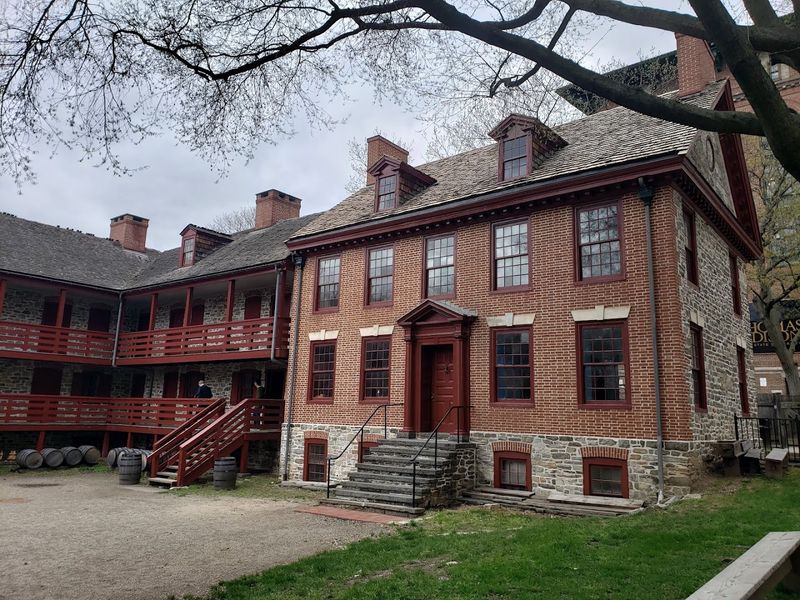
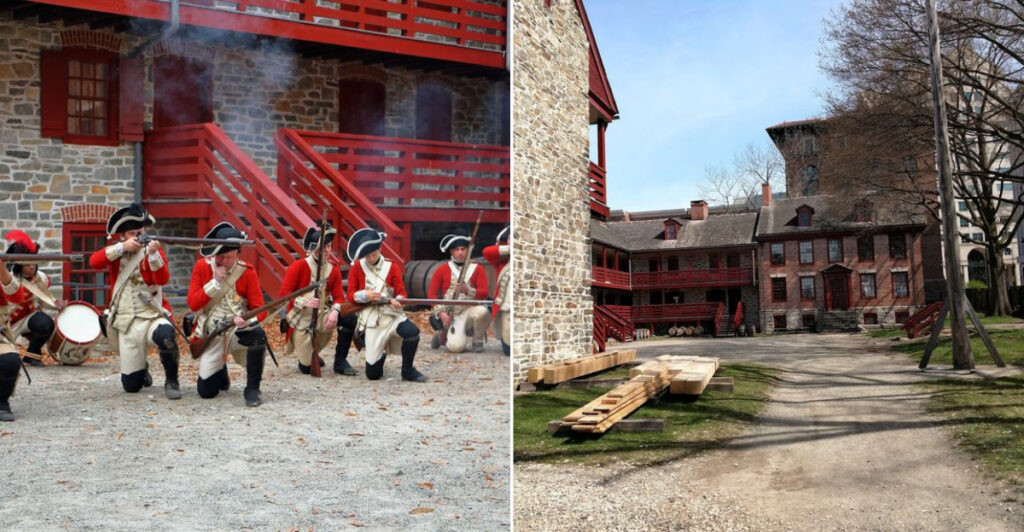
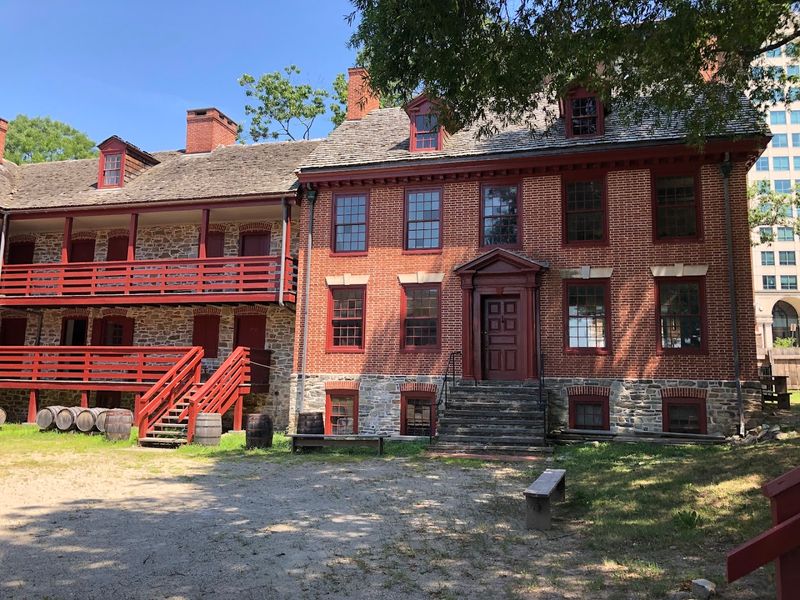
The Old Barracks Museum sits at 101 Barrack St, Trenton, NJ 08608, right in the heart of downtown Trenton, surrounded by the modern city but looking every bit like it belongs to another century. The building dates to 1758, making it one of the oldest surviving examples of British colonial military architecture in the entire United States.
Most structures from this era are long gone, lost to fire, demolition, or neglect. The fact that this one still stands is remarkable on its own.
The museum is easy to reach from major roads, and a municipal parking lot sits just a short two-minute walk away, with free parking available depending on the day and time. Nearby, other cultural institutions and local parks add even more reason to make a full afternoon out of the visit.
For anyone curious about where the Revolution actually happened on the ground, this address is a very good starting point.
A Building Born Out of Colonial Frustration
Before the Revolution, before Washington crossed the Delaware, there was a serious problem in colonial New Jersey. British soldiers needed somewhere to stay during the French and Indian War, and local families were legally required to house them under the Quartering Act.
Colonists hated it.
The New Jersey Colonial Assembly eventually funded the construction of barracks in five towns to keep soldiers out of private homes. Trenton got one of those buildings, completed in 1758, and it was the largest of the group.
The structure was designed to hold around 300 soldiers at a time, which was a significant military presence for a town of that size. Long wooden sleeping platforms, shared cooking areas, and cramped quarters defined daily life inside these walls.
That background matters because it shows how tensions between colonists and the Crown were already building long before the first shots at Lexington and Concord. This building was part of that friction from the very beginning.
The Battle of Trenton and What Happened Right Here
December 1776 was a turning point that almost did not happen. The Continental Army was exhausted, underfunded, and losing ground fast.
Washington’s famous crossing of the Delaware River on the night of December 25th led directly to the Battle of Trenton on December 26th, and the Old Barracks was right in the middle of it.
Hessian soldiers, German troops hired by the British Crown, were using the barracks at the time of the attack. Washington’s surprise assault caught them off guard, and the American forces secured a victory that gave the Revolution a desperately needed boost.
The win at Trenton is widely considered one of the most important military moments of the entire war. It kept the Continental Army together at a time when enlistments were expiring and morale was at rock bottom.
Standing inside the barracks today, knowing exactly what unfolded just outside these walls, gives the building a weight that no textbook description fully captures.
From Enemy Barracks to Continental Hospital
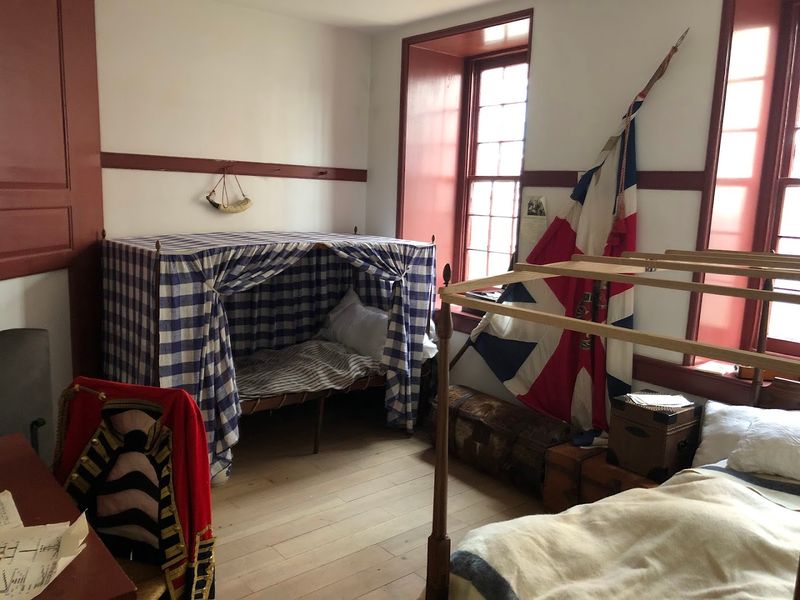
After the American victory at Trenton, the barracks did not stay empty for long. The building shifted roles and became a hospital for Continental Army soldiers during parts of the Revolutionary War.
That transition from enemy quarters to American medical facility is one of the more striking chapters in the building’s long history.
Colonial medicine was, to put it plainly, a very different world from what exists today. Surgeons worked with limited tools, infections were a constant threat, and recovery depended heavily on rest and basic care rather than advanced treatment.
The museum does a good job of presenting this period honestly, without overdramatizing it. Exhibits related to military medicine and daily soldier life help visitors understand what recovery actually looked like in the 18th century.
That shift from barracks to hospital also reflects a broader truth about the Revolution: buildings, like the people inside them, had to adapt quickly as the war changed direction almost season by season.
The Architecture That Refused to Quit
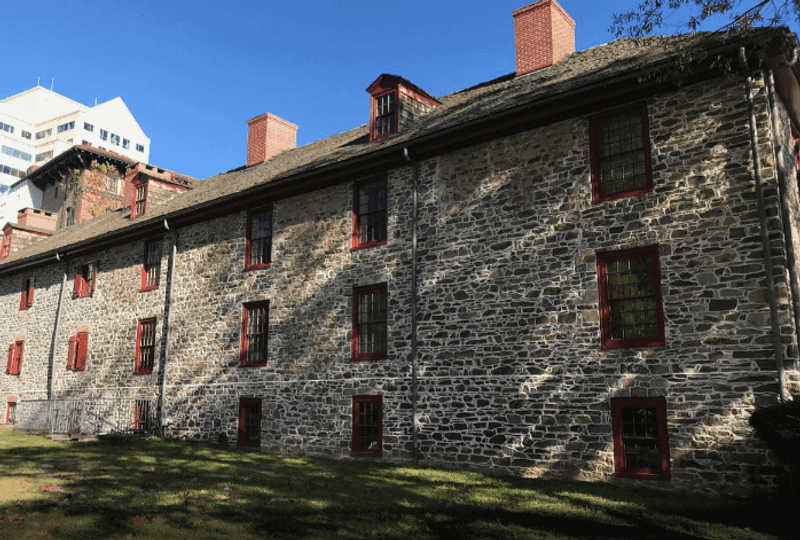
Most of the structure at the Old Barracks Museum dates to the 1760s, which puts it in genuinely rare company among surviving American buildings. Colonial construction used heavy timber framing, thick masonry walls, and hand-cut materials that have proven surprisingly durable over the centuries.
The building has gone through periods of neglect and repair, and it is not in perfect condition. One longtime visitor noted that the barracks are a little rough around the edges, but the museum has been working toward a significant refurbishment ahead of 2026, which marks the 250th anniversary of American independence.
That upcoming renovation is expected to refresh exhibits and improve the visitor experience without stripping away the authentic character of the space. Preserving a building this old requires constant attention and investment, and the museum has remained committed to that work.
The architecture itself tells part of the story: thick walls built for harsh winters, narrow windows designed with defense in mind, and long communal rooms that reflect how soldiers actually lived.
Guided Tours That Actually Teach You Something
The guided tours at the Old Barracks Museum are one of the main reasons visitors keep coming back and recommending the place to others. The guides are well-prepared, know the history in real depth, and manage to make 18th-century military life genuinely interesting for a wide range of ages.
Tours typically run around two hours and cover both the indoor exhibits and the outdoor areas of the property. Guides explain the daily routines of soldiers, the political context of the time, and the specific events that unfolded at this location during the Revolution.
What sets these tours apart is the engagement level. Questions get real answers, not scripted deflections, and the guides adjust their explanations depending on whether the group includes young children, students, or adults with deeper historical knowledge.
Groups visiting during school field trips have found the experience especially effective because the guides know how to connect historical events to things kids can actually relate to and understand.
Living History Characters Who Stay in Character
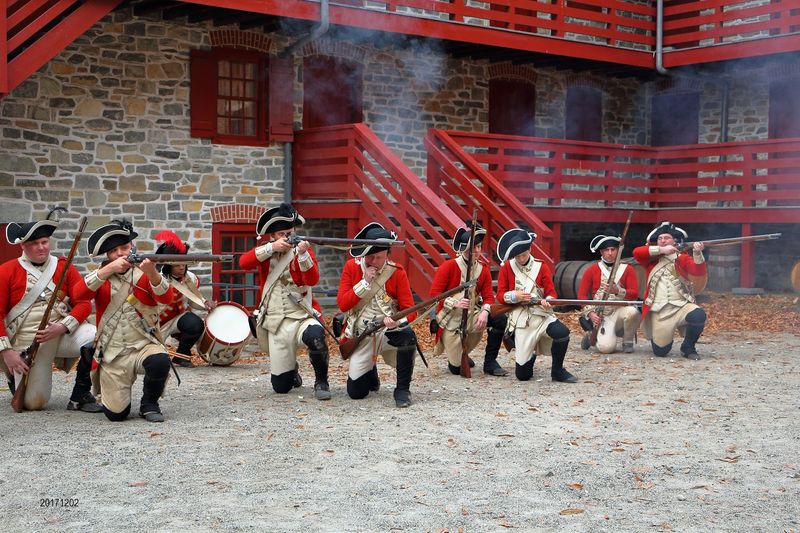
One of the most distinctive features of the Old Barracks Museum experience is the presence of living history interpreters, staff members who dress in period-accurate clothing and portray tradespeople, soldiers, and other figures from the 1770s. They do not break character easily, and that commitment makes a real difference.
A shoemaker and a carpenter have both been featured as regular characters, demonstrating their crafts while explaining what daily life looked like for working people during the colonial period. The detail in the costumes and tools is accurate, and the interpreters clearly know their subject matter well.
The musket demonstration is a consistent highlight. Guides explain the mechanics of loading and firing a flintlock musket, covering everything from the powder charge to the firing sequence, and the demonstration goes well beyond just the weapon itself.
For visitors who have only ever read about this period in books, watching someone actually perform these tasks in real time gives the history an immediacy that static displays simply cannot match.
Hands-On Exhibits That Go Beyond the Glass Case
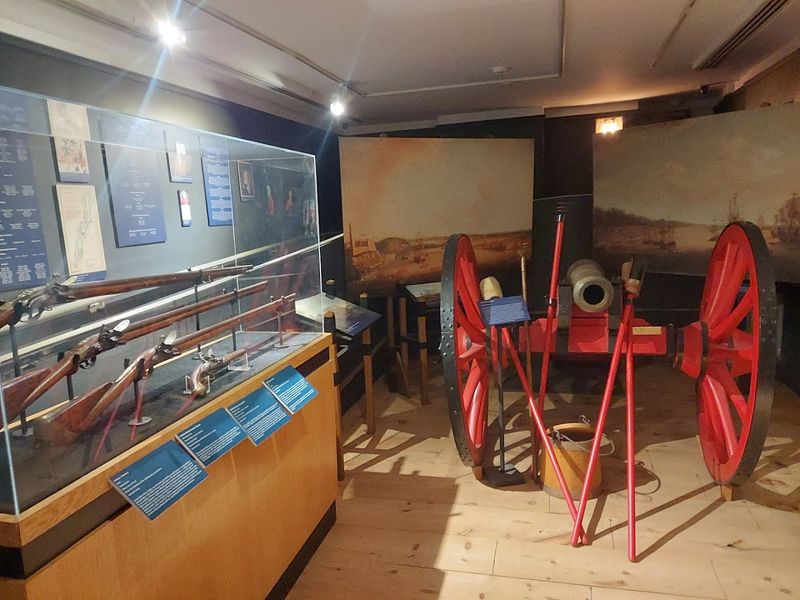
Not every museum lets you touch the artifacts, but the Old Barracks Museum takes a more interactive approach with several of its exhibits. Visitors have been able to handle real armor and period clothing, which gives the collection a tactile quality that most history museums avoid.
That hands-on element matters more than it might seem at first. Holding a piece of equipment that was actually used in the 18th century shifts the experience from observation to connection.
It stops being something behind glass and starts being something real.
The French and Indian War exhibit is one of the indoor spaces that draws particular attention, offering context for the period before the Revolution and explaining why the barracks were built in the first place. Short historical films are also available in a small viewing room on the property.
For school-age children especially, the combination of interactive elements and knowledgeable guides makes the Old Barracks Museum one of the more effective history education destinations in the entire region.
Patriots Week and the Power of Reenactments
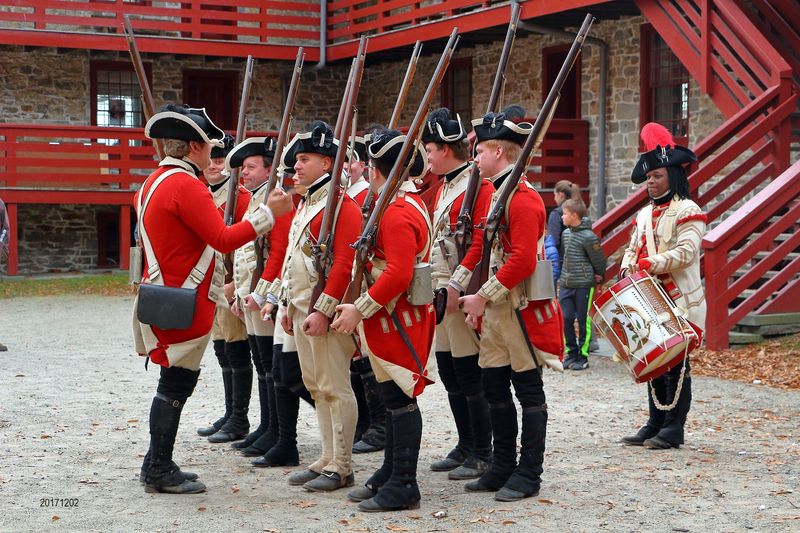
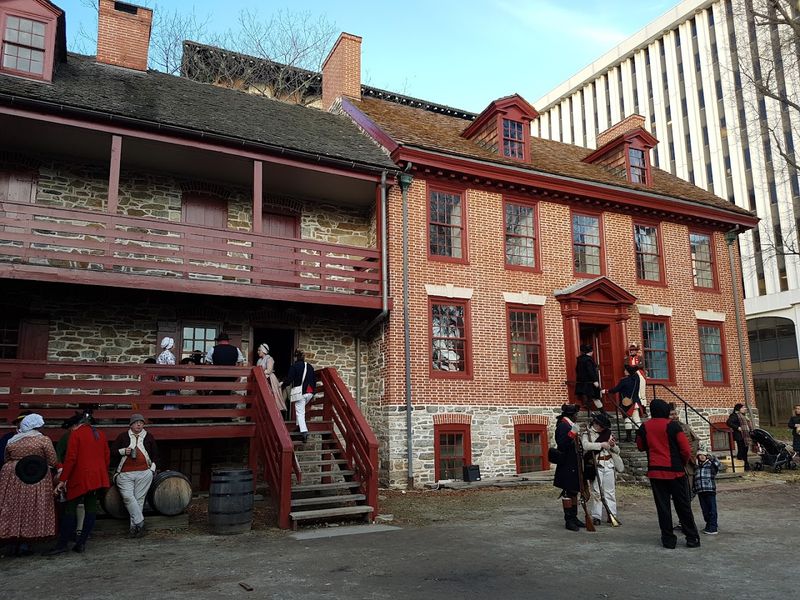
Patriots Week in Trenton is one of those events that transforms the Old Barracks Museum from a quiet history site into something much larger and louder. The annual commemoration of the Battle of Trenton draws reenactors from across the region, all arriving in period-accurate uniforms and gear.
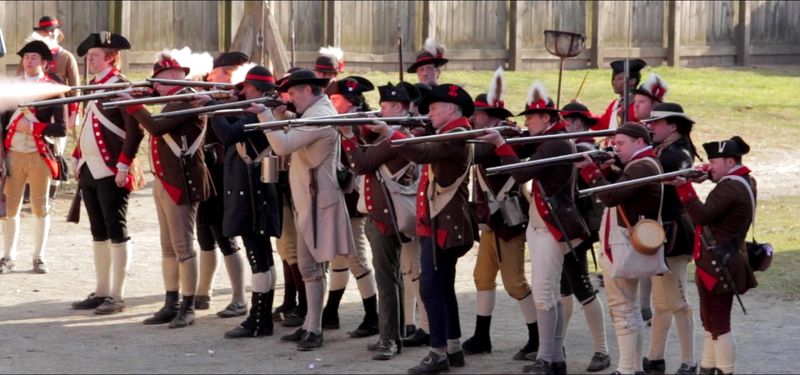
During these events, the grounds fill with Continental soldiers, Hessian troops, colonial tradespeople, and camp followers, all portraying their roles with serious attention to historical detail. The scale of participation during Patriots Week is genuinely impressive.
Speed reloading contests with muskets have taken place on the grounds, with skilled reenactors demonstrating just how fast an experienced soldier could fire in the 18th century. One documented contest saw a winner fire four rounds in just over a minute, which gives a real sense of what battlefield conditions actually demanded.
For families, first-time visitors, and history enthusiasts alike, visiting during Patriots Week adds a layer of spectacle and education that a standard tour simply cannot replicate.
A Small Gift Shop With a Genuine Purpose
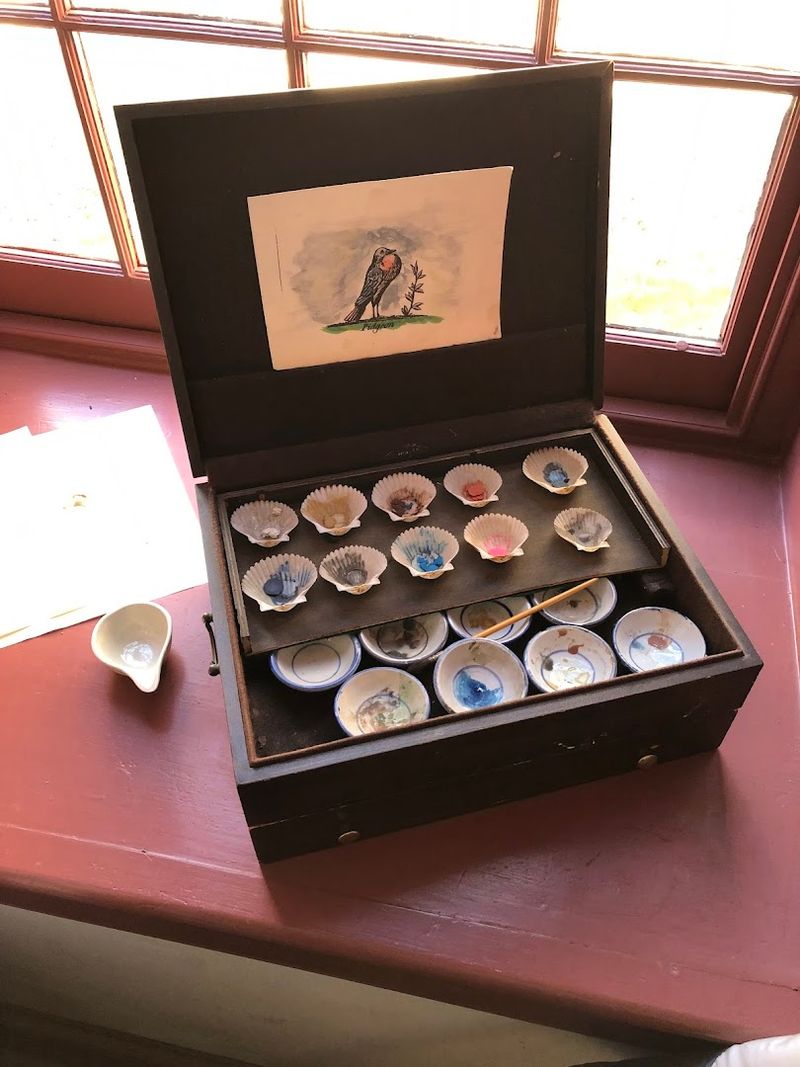
The gift shop at the Old Barracks Museum is modest in size but well-stocked with items that actually connect to the history on display. Books about the Revolution, the Battle of Trenton, and colonial life in New Jersey sit alongside replica artifacts, educational toys, and locally themed souvenirs.
It is the kind of shop where the merchandise feels curated rather than generic. You are not going to find items that have nothing to do with the museum’s mission, which makes browsing it a natural extension of the tour rather than a detour into commercial territory.
For teachers and parents looking for resources to continue the learning at home, the book selection is particularly useful. Several titles are aimed specifically at younger readers, making them good picks for kids who got excited during the tour and want to know more.
Supporting the shop also directly supports the museum’s ongoing preservation and education programs, which is worth keeping in mind when deciding whether to pick something up on the way out.
Accessibility and Getting Around the Property
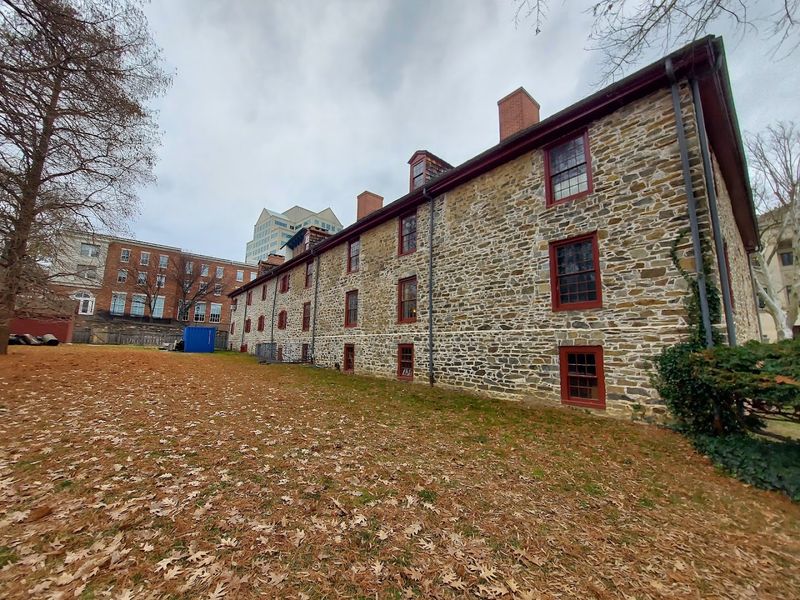
Visiting a building from 1758 raises reasonable questions about accessibility, and the Old Barracks Museum has worked to make the space as welcoming as possible for visitors with mobility needs. An elevator is available on the property, which is a significant accommodation given the age and layout of the building.
The hallways inside the barracks are narrow by modern standards, which is simply a function of 18th-century construction. The elevator does make the upper areas reachable, though the tight corridors are worth knowing about in advance if mobility is a concern.
The outdoor grounds are generally easier to navigate, and the surrounding area in downtown Trenton is walkable from the nearby municipal parking lot. Restrooms on the property are clean and functional, which is a detail that matters more than it sounds on a two-hour visit.
The museum’s location near other cultural sites and parks in Trenton also means that visitors can pair the Old Barracks with additional stops and make a full day out of the trip without much extra planning.
Why New Jersey’s Role in the Revolution Gets Overlooked
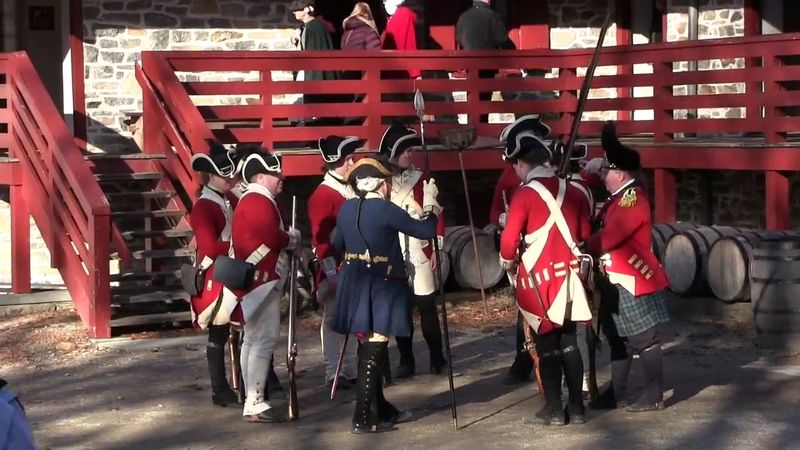
New Jersey earned the nickname the Crossroads of the Revolution for a reason. More battles were fought on New Jersey soil than in any other state during the Revolutionary War, yet the state rarely gets the same attention as Massachusetts or Virginia when people talk about where the Revolution happened.
The geography explains a lot. New Jersey sits between New York, which the British controlled for much of the war, and Philadelphia, which served as the seat of the Continental Congress.
Any army moving between those two cities had to pass through New Jersey, which made the state a constant theater of conflict.
Trenton specifically was critical because of its position along the Delaware River. Control of the river crossings meant control of movement, supply lines, and communication between the northern and southern colonies.
The Old Barracks Museum puts all of that context on the table, helping visitors understand not just what happened at this specific building, but why New Jersey mattered so much to the outcome of the entire war.
Planning Your Visit: Practical Tips That Help
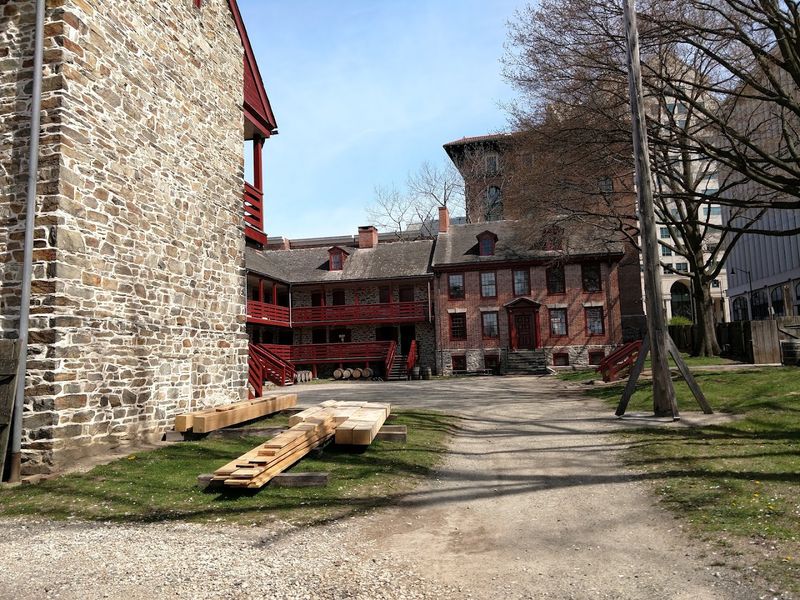
A few practical details can make the difference between a smooth visit and a frustrating one at the Old Barracks Museum. The free municipal parking lot is about a two-minute walk from the entrance, and some street parking near the building may also be available depending on the day and time of arrival.
Checking the museum’s website at barracks.org before visiting is a good habit, especially to confirm current hours, tour availability, and any special events on the calendar. Hours and programming can vary by season, and some exhibits or areas may be temporarily closed during the ongoing refurbishment work ahead of 2026.
The museum works well for groups of all sizes, from solo visitors to school field trips and family outings. Younger children engage well with the hands-on elements and living history interpreters, while older visitors and adults tend to appreciate the depth of the guided tour content.
Arriving a few minutes early for a scheduled tour time is always a good idea, as tours tend to start promptly and cover a lot of ground.
A Living Landmark Looking Toward 2026
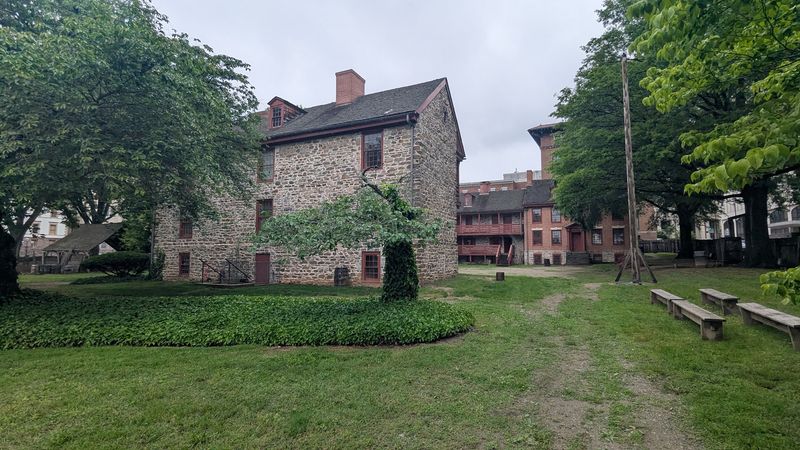
The year 2026 carries significant weight for the Old Barracks Museum and for American history more broadly. The 250th anniversary of the Declaration of Independence is already generating national attention, and Trenton’s role in the Revolution positions the museum as one of the most relevant sites in the country for that commemoration.
Refurbishment work is underway to prepare the building and its exhibits for the increased interest and visitor traffic that 2026 is expected to bring. The goal is to improve the experience without compromising the authenticity that makes the barracks worth visiting in the first place.
New exhibitions, enhanced programming, and updated interpretive materials are all part of the plan.
For anyone who has been thinking about making the trip, the next few years represent an especially good time to visit, both to see the site in its current state and to be part of a moment in American historical memory that only comes around once every 250 years.
Share this story