New Jersey does not always get credit for its wild places, but tucked into Somerset County is a preserve that quietly earns a standing ovation from everyone who finds it. The trails here are rocky, rugged, and refreshingly free of the weekend circus that plagues more famous parks.
The longest loop stretches past five miles, there are boulders the size of small houses, and on a clear day the New York City skyline appears in the distance like a postcard nobody expected. This is the kind of place where the parking lot fills up but the forest swallows the crowd whole, leaving hikers feeling like they have the whole mountain to themselves.
Where the Preserve Sits and How to Find It
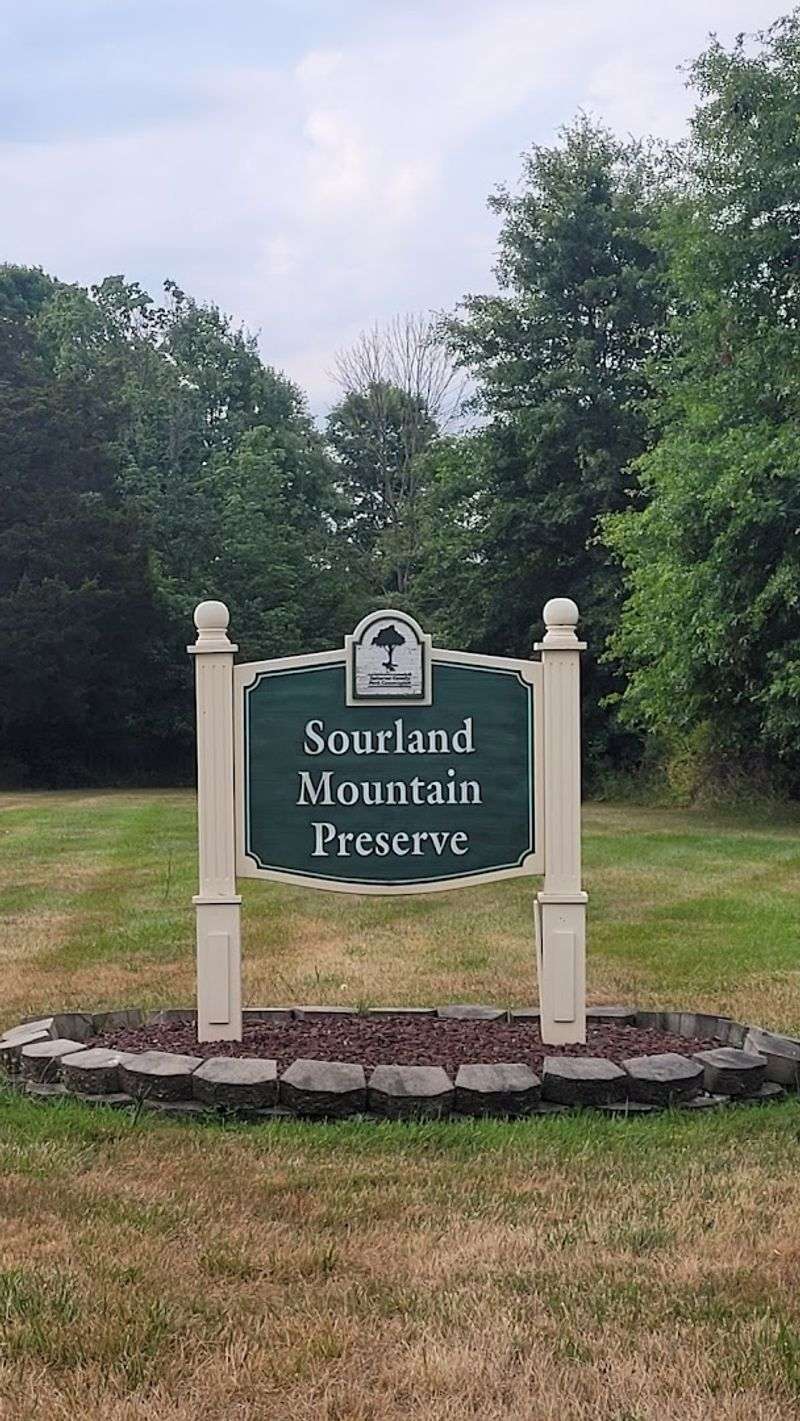
Sourland Mountain Preserve sits at 421 E Mountain Rd, Hillsborough Township, NJ 08844, managed by Somerset County Parks. The preserve is open 24 hours a day, every day of the week, which means early risers and evening explorers are equally welcome.
Getting there is straightforward from most central New Jersey towns, and the preserve is roughly accessible from Route 206 and nearby county roads. The entrance leads directly into a large gravel and paved parking lot that fills quickly on weekend mornings, so arriving early is a practical move.
A trail map board greets visitors right at the trailhead, and printed maps are available at several points throughout the preserve. Phone service can be spotty once you head deep into the trails, so photographing the map before heading out is a smart habit that more than a few hikers have adopted.
The Story Behind the Sourland Mountain Name
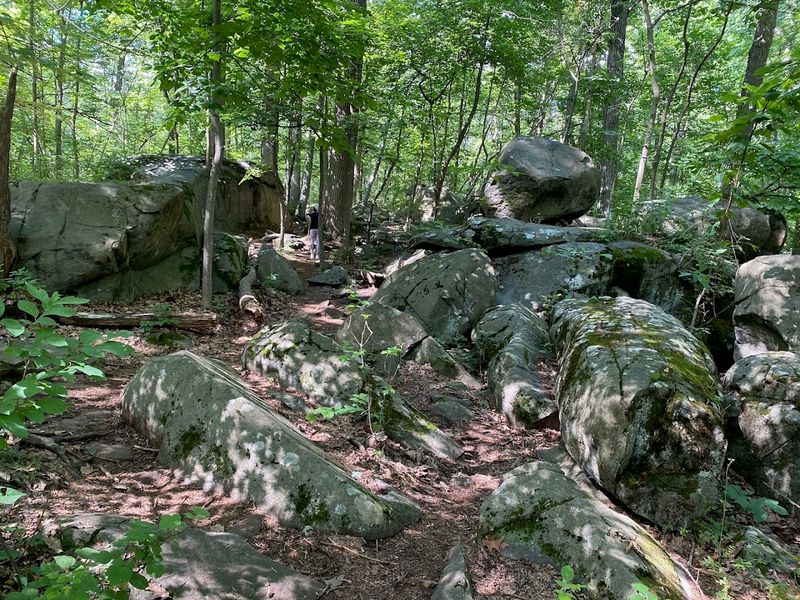
The name “Sourland” has sparked curiosity for generations of hikers and local historians alike. One widely accepted explanation traces the name to the Dutch word “zoar,” meaning swampy or difficult land, which early settlers used to describe the rocky, hard-to-farm terrain of the ridge.
The Sourland Mountain ridge itself stretches across parts of Somerset, Hunterdon, and Mercer counties in New Jersey, making it one of the larger continuous forested ridges in the state. The preserve portion managed by Somerset County covers over 3,000 acres of that ridge, protecting a significant chunk of the region’s natural habitat.
Because the land was historically considered poor for agriculture due to its rocky diabase geology, it was largely left undeveloped, which ironically turned out to be its greatest gift to future generations. That stubborn, difficult soil is exactly why the forest here feels so old and undisturbed today.
The Rocky Terrain That Keeps Things Interesting
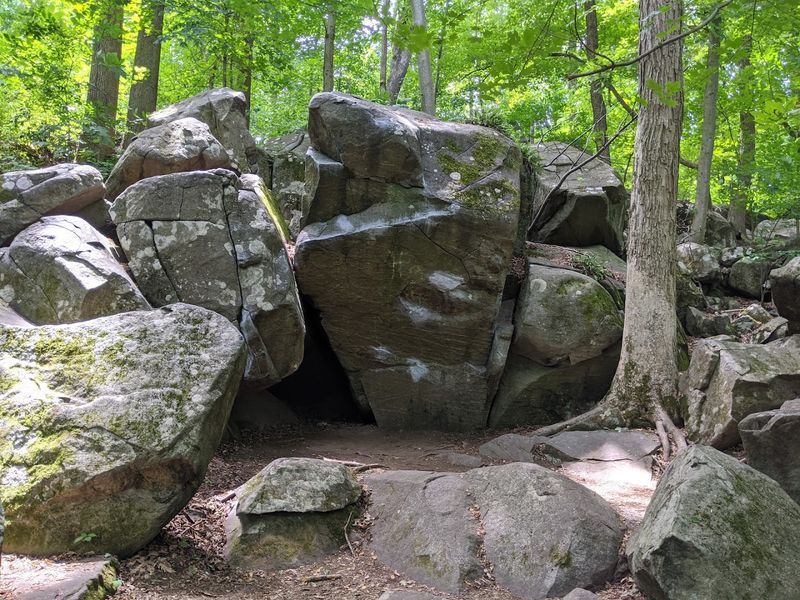
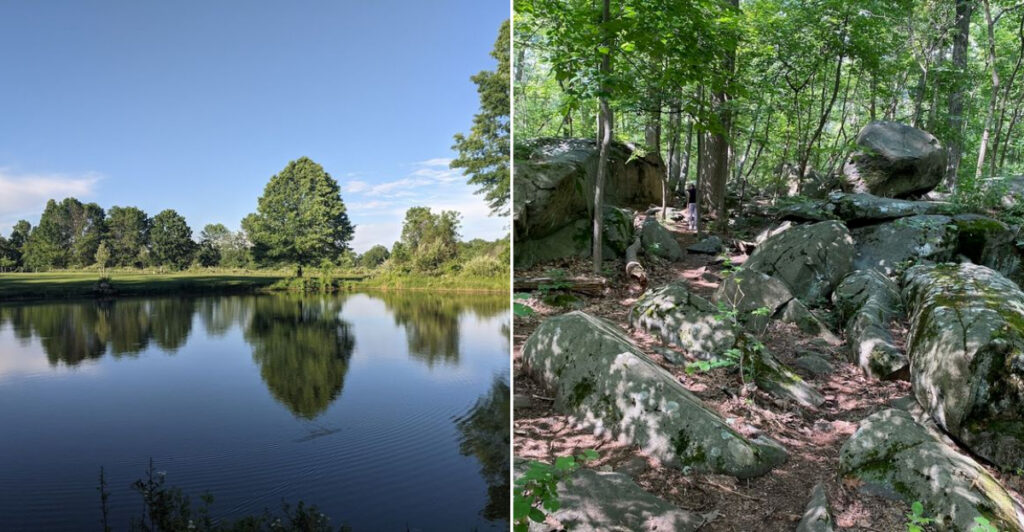
The trails at Sourland Mountain Preserve are not your average flat woodland walk. The bedrock here is diabase, a dark and extremely hard volcanic rock that creates the jagged, boulder-strewn landscape visitors encounter throughout the preserve.
Boulders range from ankle-height obstacles to massive formations that stand over 30 feet tall. The most concentrated area of large rock formations is known as Devil’s Half Acre, a section of trail where the path essentially disappears into a field of stacked and tumbled boulders that hikers must navigate carefully.
Wearing proper hiking boots is strongly recommended, and a walking stick or trekking poles add a useful layer of stability on the uneven ground. The challenge of the terrain is part of the appeal for many regular visitors, who return specifically because the trails demand real attention and reward careful footwork with a genuine sense of accomplishment.
Trail Options for Every Skill Level
Sourland Mountain Preserve offers a well-organized system of color-coded trails that makes navigation accessible even for first-time visitors. Trail blazes, which are painted squares on tree trunks, guide hikers along each route, and a black dot in the center of a blaze indicates a shortcut between trails.
The shortest routes work well for families with young children or anyone looking for a lighter outing, while the full perimeter loop covers close to seven miles and takes roughly three hours at a comfortable pace. The orange and yellow trails are among the more challenging combinations due to their rocky surfaces and elevation changes.
Trail maps posted at multiple locations throughout the preserve reduce the chance of getting turned around, though the dense canopy and occasional service dead zones mean that a downloaded offline map or a photograph of the trailhead board is always a useful backup plan before heading deeper into the woods.
Bouldering at Devil’s Half Acre
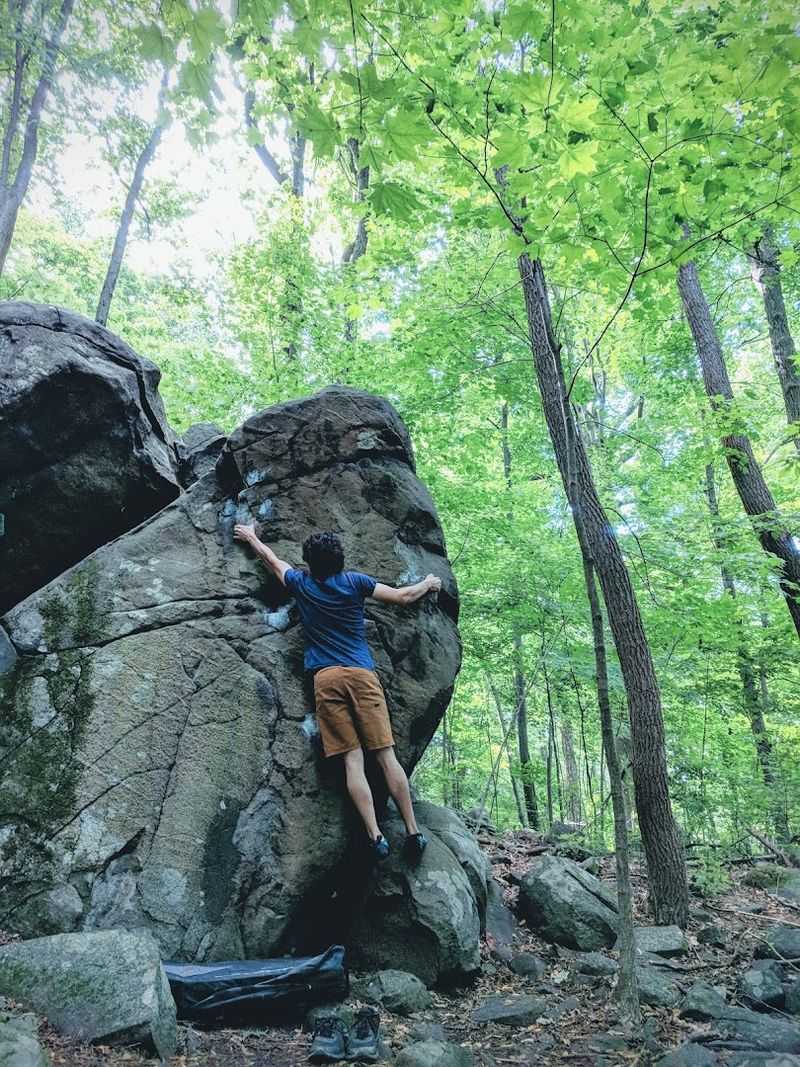
For those who want more than a hike, Devil’s Half Acre delivers a genuine bouldering playground without requiring any technical climbing gear. The area is reached by following the trail markers labeled with the number 3, and the boulders there range from manageable scrambles to more serious climbing challenges.
The approach to Devil’s Half Acre feels like the trail simply runs out of dirt and replaces itself with rock. Painted squares on the trees help keep climbers and hikers oriented as the path transitions from a clear dirt track to a route that winds across and between massive stone formations.
Bouldering here draws a dedicated crowd of local climbers who appreciate the variety of problems the natural rock offers. No chalk-up stations or crash pads are provided, so visitors bring their own gear.
The raw, unmanicured quality of the spot is exactly what makes it feel rewarding rather than like a manufactured outdoor gym.
Mountain Biking Through Rugged Terrain
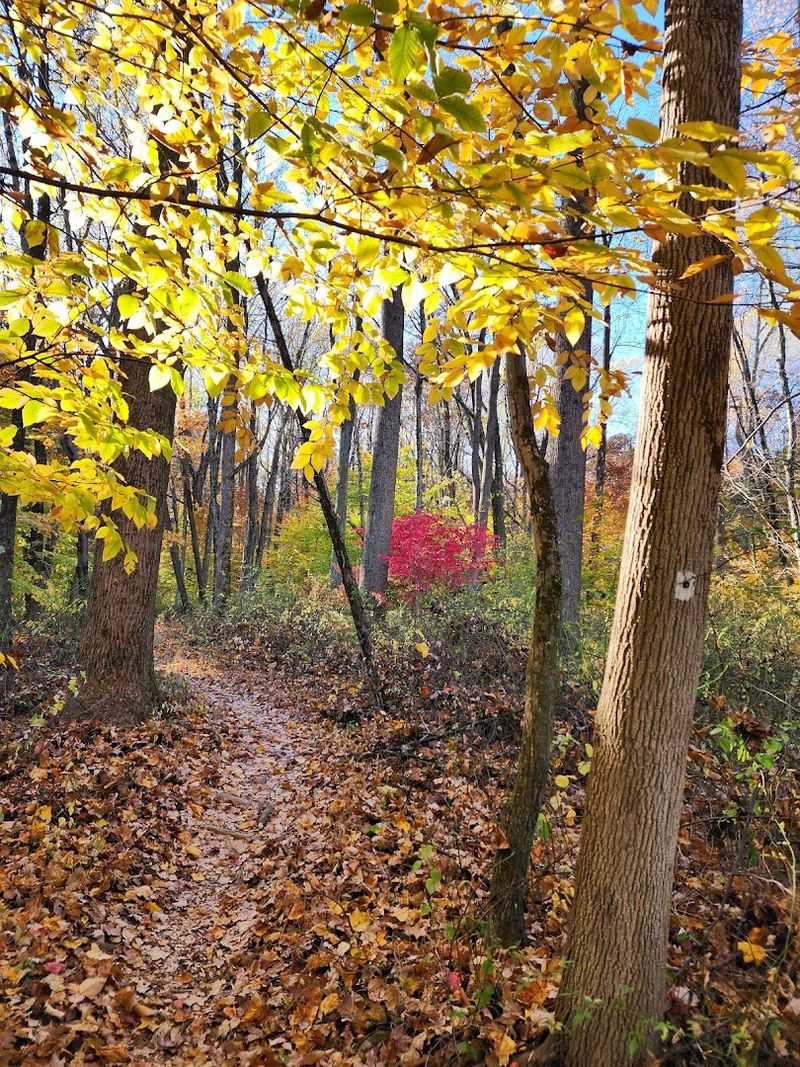
Sourland Mountain Preserve has built a reputation among mountain bikers in the New Jersey and greater New York area as a technically demanding and rewarding ride. The same rocky diabase terrain that challenges hikers creates a natural obstacle course for riders looking to test their skills.
The trails are not groomed bike park routes but rather natural, multi-use paths shared with hikers and equestrians. That mix of users means riders need to stay alert and yield appropriately, especially on narrower sections where visibility around corners is limited by dense vegetation.
The combination of root-crossed dirt paths, loose rock sections, steep short climbs, and fast descents makes the preserve a go-to destination for technical mountain biking in central New Jersey. Riders who prefer flatter, smoother terrain will likely find the preserve frustrating, but those who enjoy picking lines through unpredictable ground consistently rank it among the better natural riding spots in the state.
Birding and Wildlife Worth Watching For
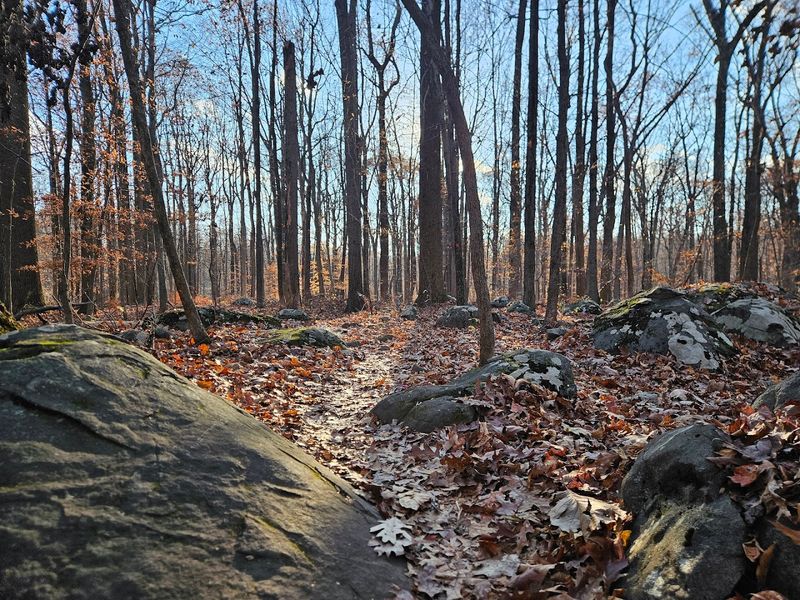
The Sourland Mountain region is recognized as an important bird area, and the preserve’s large, contiguous forest block provides habitat for species that require interior woodland conditions away from suburban edges. Birders regularly record a wide variety of warblers, woodpeckers, raptors, and forest songbirds throughout the year.
Spring migration turns the preserve into a particularly active birding destination, with numerous warbler species moving through the canopy during May. The diverse habitat, which includes rocky outcrops, small streams, wetland areas, and mature forest, supports a broader range of species than a single-habitat park would typically attract.
Beyond birds, hikers have reported encounters with white-tailed deer, wild turkeys, and the occasional snake sunning on the warm diabase rock. The wildlife here behaves with the confidence of animals that are rarely disturbed, which makes patient observation along the quieter trail sections surprisingly productive for anyone willing to slow down and look carefully.
Horseback Riding in the Preserve
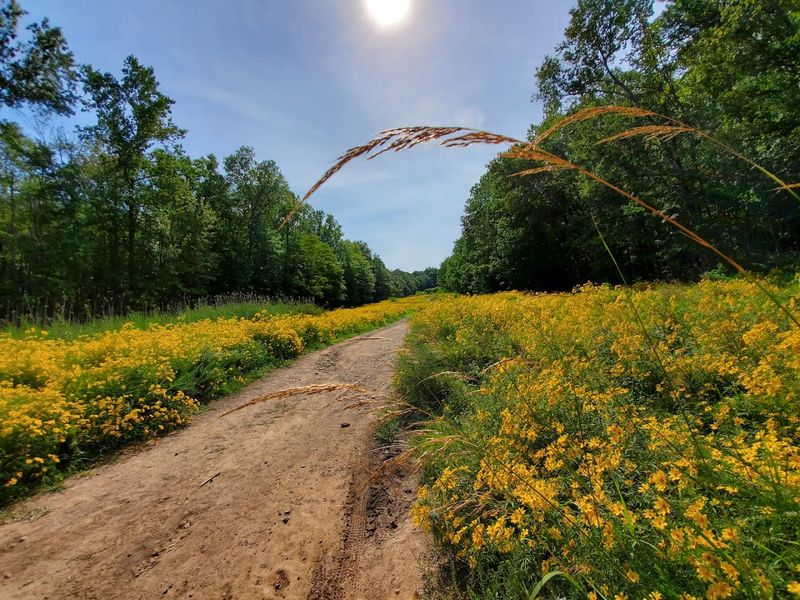
Sourland Mountain Preserve is one of a relatively small number of Somerset County parks that officially permits horseback riding, making it a valued destination for equestrians in the region. Certain trails within the preserve are designated as multi-use, allowing horses alongside hikers and cyclists.
The wide, packed-dirt sections of the trail system work well for horses, though the more boulder-heavy routes near Devil’s Half Acre are naturally less suitable for riding. Equestrians familiar with the preserve tend to stick to the more open corridors, including portions of the pipeline clearing, where footing is more predictable.
The preserve’s size and relative quiet compared to more developed parks make it an appealing option for riders who want a longer, uninterrupted outing in a natural setting. Horse trailers can be accommodated in the main parking area, though arriving early on weekends is advisable since the lot fills steadily through the morning hours, especially during fall and spring.
Visiting in Fall and Winter
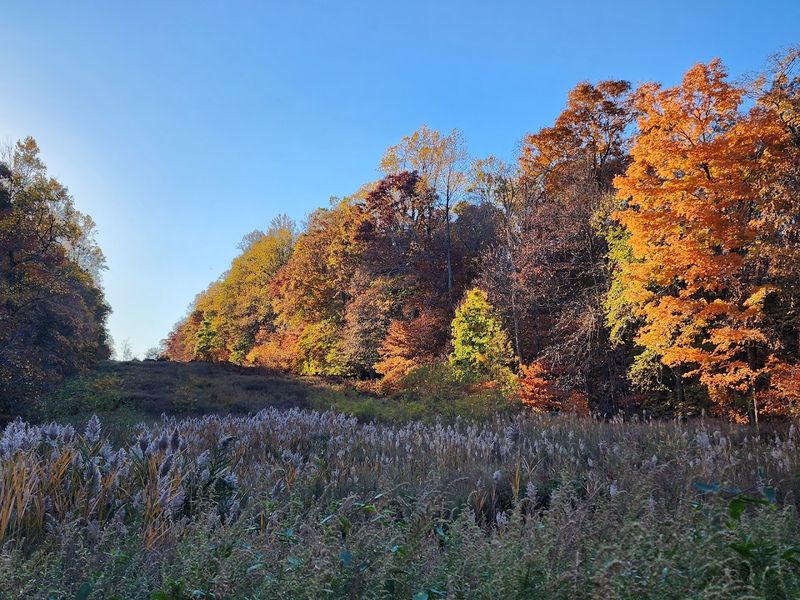
Fall is widely considered the best season to visit Sourland Mountain Preserve, and the reason is straightforward: the combination of colorful foliage against the dark diabase boulders creates a visual contrast that draws hikers back year after year. The cooler temperatures also make the more challenging trails significantly more comfortable to complete.
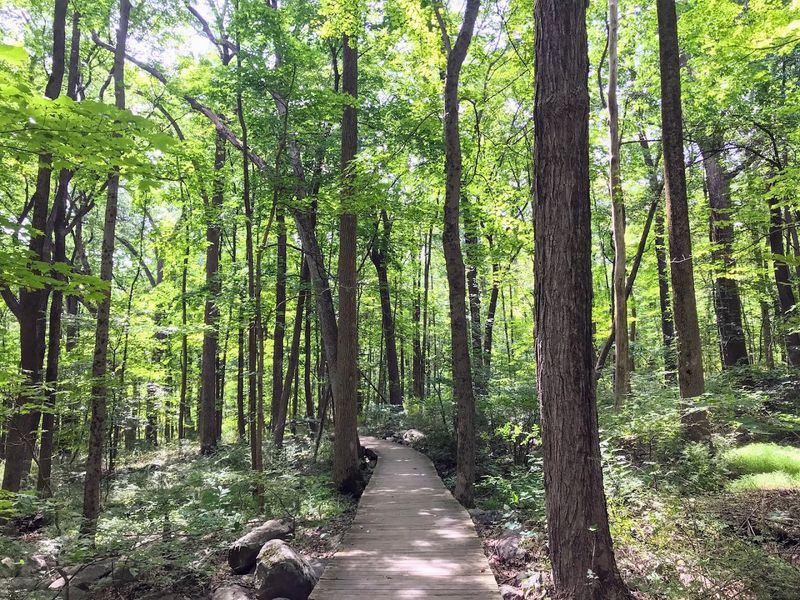
Winter visits carry their own appeal, particularly after a snowfall when the rocky terrain transforms into a quiet, white landscape that feels genuinely remote. The parking lot is plowed reliably, and the wooden boardwalks over the small streams remain passable even in icy conditions, though traction devices for boots are worth packing.
One practical advantage of visiting in late fall and winter is that the absence of leaves opens up sightlines through the forest that are completely hidden during the growing season. Certain views along the ridge become visible in winter that summer hikers never get to experience, which gives the preserve a noticeably different character across the seasons.
Practical Tips Before You Hit the Trail
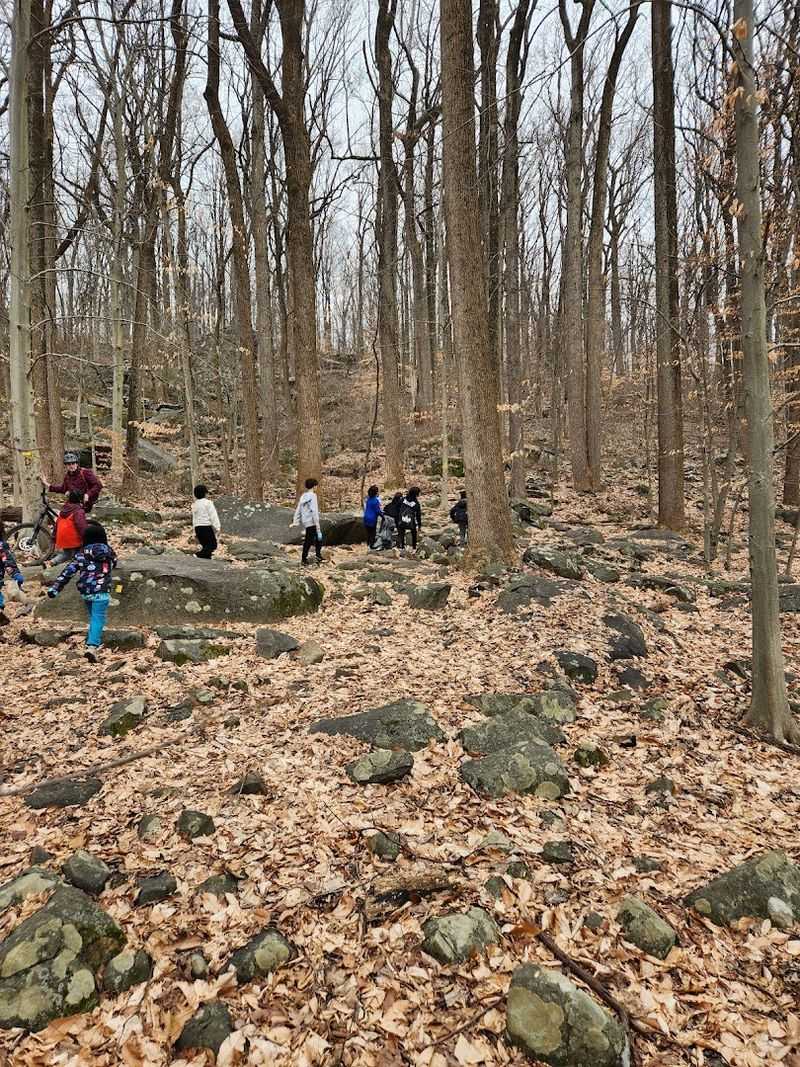
A few practical details make a real difference at Sourland Mountain Preserve. Hiking boots are strongly recommended over sneakers because the rocky terrain increases ankle roll risk on softer footwear, and more than a few hikers have learned that lesson the hard way mid-trail.
Bug spray is worth packing from spring through fall. Tick awareness is particularly important in this region of New Jersey, and checking clothing and skin after any hike through the preserve is a sensible habit.
The preserve does not have formal restroom facilities inside the trail system, but portable toilets are available in the parking area.
Carrying enough water and snacks for the full planned route is important because there are no vendors or services inside the preserve. Phone service weakens noticeably on many sections of trail, so downloading an offline map or photographing the trailhead map before departing is a small step that prevents a lot of unnecessary confusion deep in the woods.
Dogs on the Trail

Sourland Mountain Preserve is a genuinely dog-friendly destination, and the trails see a steady stream of four-legged hikers on any given day. Dogs are required to remain on leash throughout the preserve, and waste bags are provided at the trailhead to keep the paths clean for everyone.
The rocky terrain gives dogs plenty of interesting textures and scrambling opportunities, and the small streams scattered through the preserve offer convenient spots for a drink or a quick cool-down. Most dogs take to the boulder fields with enthusiasm, hopping between rocks with considerably more ease than their human companions.
Tick prevention is worth considering before bringing a dog to the preserve, as the dense vegetation and woodland edges are prime tick habitat in Somerset County. Many regular dog-walking visitors check their pets thoroughly after each visit as a standard routine.
The preserve’s open hours mean that early morning weekday walks with dogs are a particularly calm and crowd-free option worth taking advantage of.
Beating the Weekend Crowds
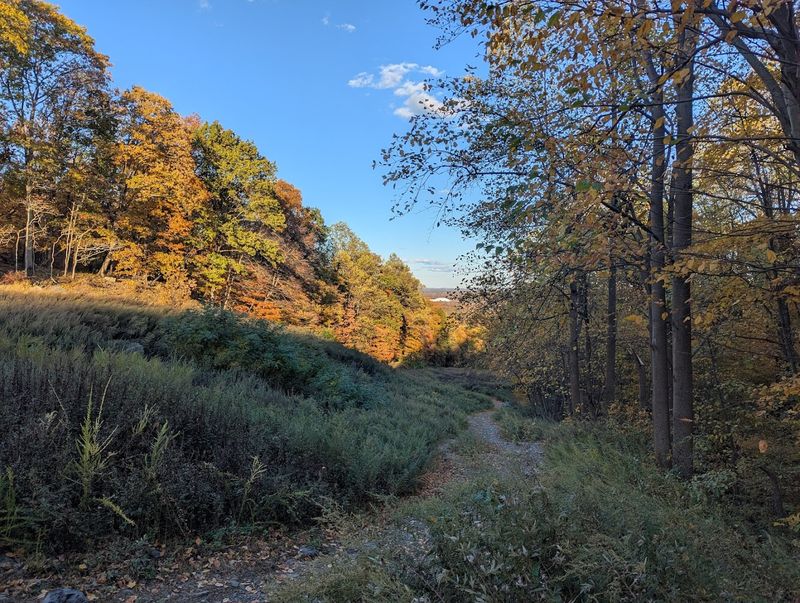
The parking lot at Sourland Mountain Preserve fills up quickly on weekend mornings, particularly during fall and spring when the weather draws large numbers of hikers from across central New Jersey and beyond. The lot is generous in size, but it is not uncommon to arrive at mid-morning on a Saturday and find it at capacity.
The good news is that the preserve is large enough that even a full parking lot does not translate into a crowded trail experience. The size of the property and the branching trail network spread visitors out effectively, and many hikers report feeling completely alone on the trail even when dozens of cars are parked at the entrance.
Weekday visits, particularly midweek mornings, offer the most reliably quiet experience. Arriving before 9 a.m. on weekends also dramatically improves both parking availability and the sense of solitude on the trail.
The preserve’s 24-hour access technically allows for very early starts for those who plan accordingly.
The Pond and Quieter Corners of the Preserve
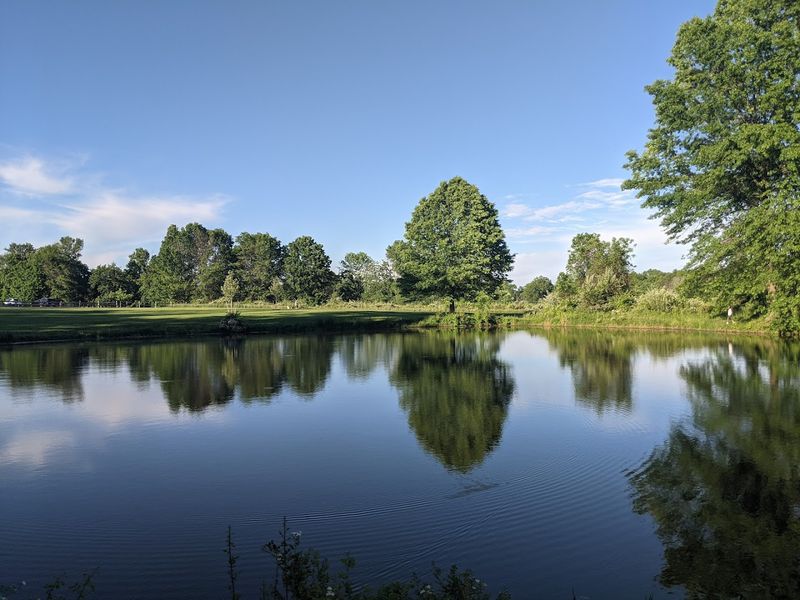
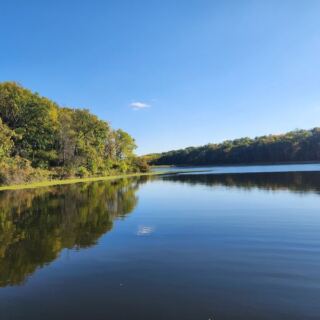
Beyond the main trail network and the boulder fields, Sourland Mountain Preserve contains a pond that sits quietly within the forest and offers a natural rest point during longer hikes. The area around the pond provides a flat, open space that works well as a lunch stop or a place to simply sit and observe the surrounding habitat.
The pond attracts a different set of wildlife than the rocky upland areas, including waterfowl and various amphibians depending on the season. It adds a layer of ecological variety to the preserve that many first-time visitors do not expect when they arrive expecting only boulders and ridge-top views.
Finding the quieter corners of the preserve generally requires venturing beyond the most popular trail loops and spending time on the less-trafficked paths that branch away from the main entrance corridor. Those who take the time to explore the full trail network consistently find that the preserve rewards patience with pockets of genuine stillness that feel miles removed from the suburban world just outside its borders.
Why This Preserve Keeps Drawing People Back
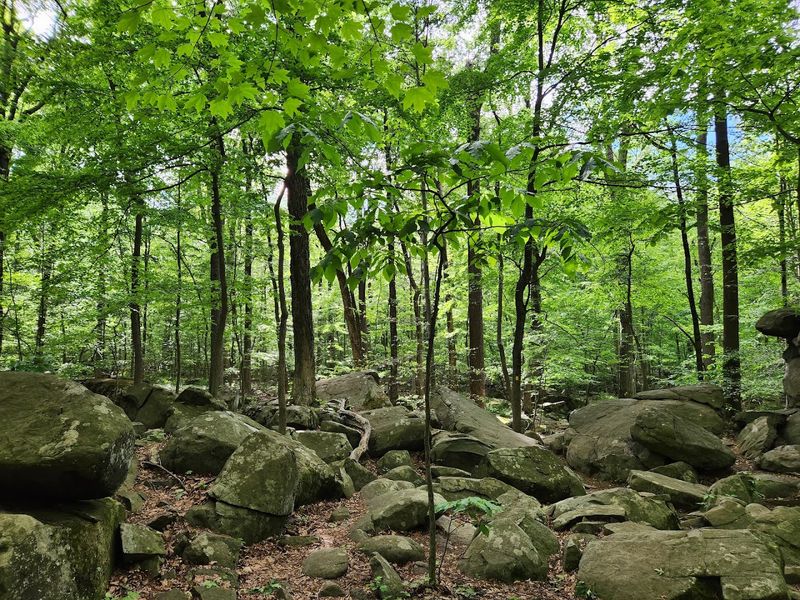
Regular visitors return across all four seasons, finding that the preserve changes enough with the weather and the foliage to feel fresh on repeat visits. Some come back specifically for the bouldering, others for birding, and others simply because the combination of rugged terrain and relative solitude is hard to find this close to a major metropolitan area.
The preserve is free, open around the clock, well-maintained by Somerset County Parks, and large enough to absorb a crowd without losing its wild character. That combination of accessibility and authenticity is exactly why so many people who discover it once find themselves planning a return trip before they even reach the parking lot on the way out.
Share this story