There is a stretch of old highway in central Oklahoma where time seems to slow down just enough for you to notice something extraordinary sitting right off the road. Vintage cars poke out of buildings, hand-painted signs cover every surface, and the whole property hums with decades of collected history.
This is not a polished tourist attraction with a gift shop and a ticket counter. It is one man’s life work, open to anyone curious enough to stop, and once you do, you will not regret it for a single second.
Where to Find This One-of-a-Kind Stop
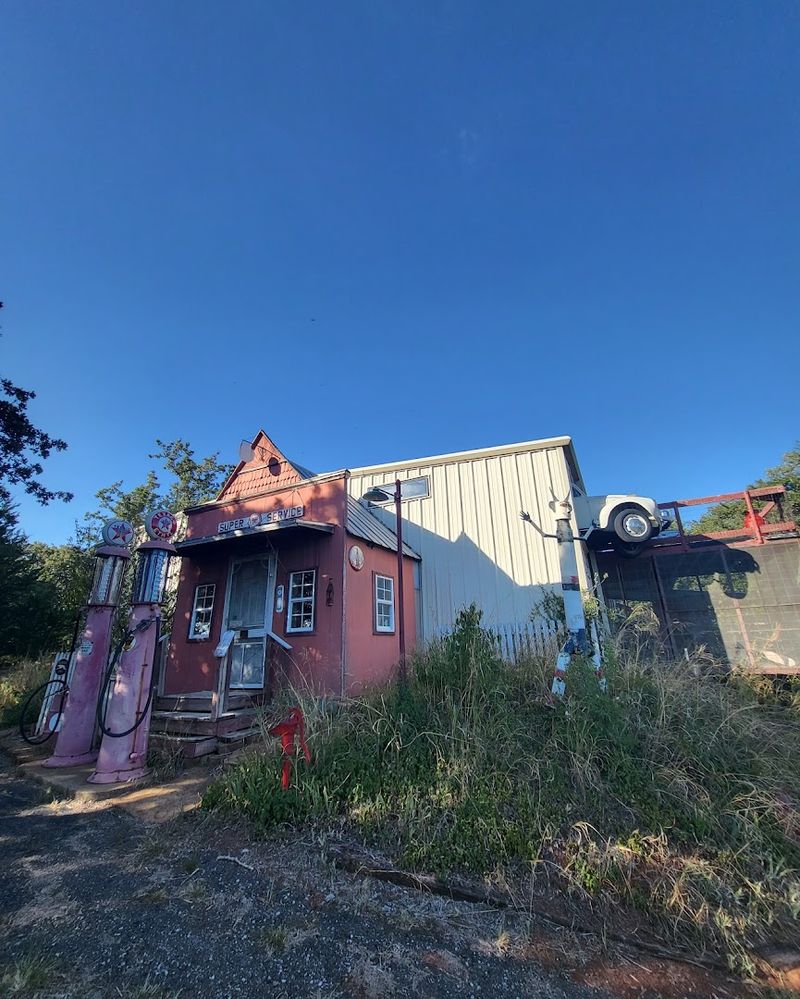
The address is 13441 OK-66, Arcadia, Oklahoma 73007, and the moment you spot the property from the road, you already know this is going to be a different kind of stop. The museum sits right along historic Route 66, the legendary highway that once connected Chicago to Santa Monica and carried generations of travelers across the American heartland.
Arcadia is a small town in Oklahoma County, and this spot fits its character perfectly. There is nothing corporate or manufactured about the place.
What you see from the road is exactly what you get inside, and what you get is a whole lot more than you expected.
The museum is open every day of the week from noon to 6 PM, which makes it easy to fit into any road trip schedule. You can reach the property by phone at +1 405-396-2055 if you want to check ahead.
The location pulls in travelers from across the country and even from other parts of the world, all drawn by the same magnetic pull of authentic Route 66 culture.
The Man Behind the Magic
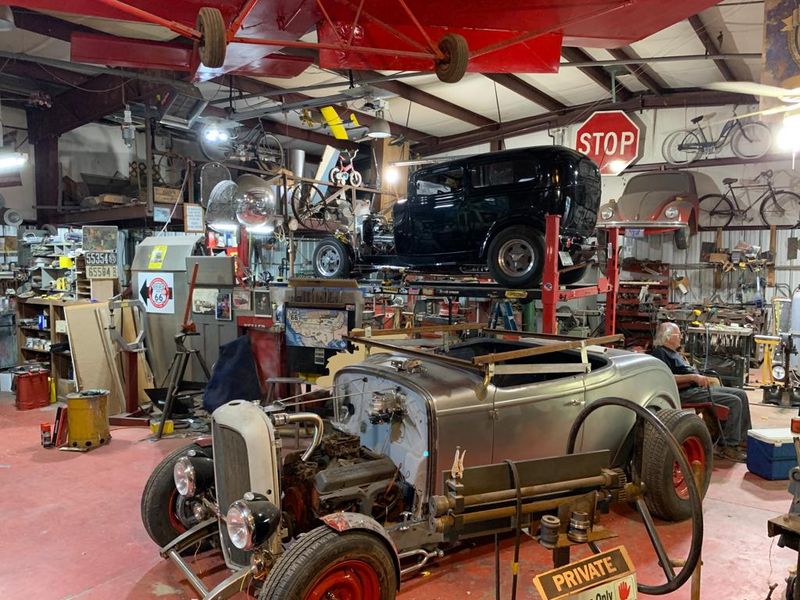
John is the kind of person who makes you feel like you have known him for years within the first five minutes of conversation. At around 80 years old, he moves through his property with the energy and enthusiasm of someone half his age, personally greeting every visitor who walks through the gate.
He sold his previous property to purchase this land, and then he built the entire workshop and museum setup largely by himself. The painting, the framing, the upholstery work, the structural elements, all of it came from his own two hands and his own vision of what this place could become.
John does not charge admission for his tours. There is a small tip jar near the entrance, and most visitors happily drop something in after seeing the amount of work and heart that has gone into every corner of the property.
His passion for automobiles and Route 66 history is obvious in every single thing he has created or collected here, and spending time with him feels less like a museum tour and more like a long conversation with a living encyclopedia of the Mother Road.
A Collection That Covers Every Era
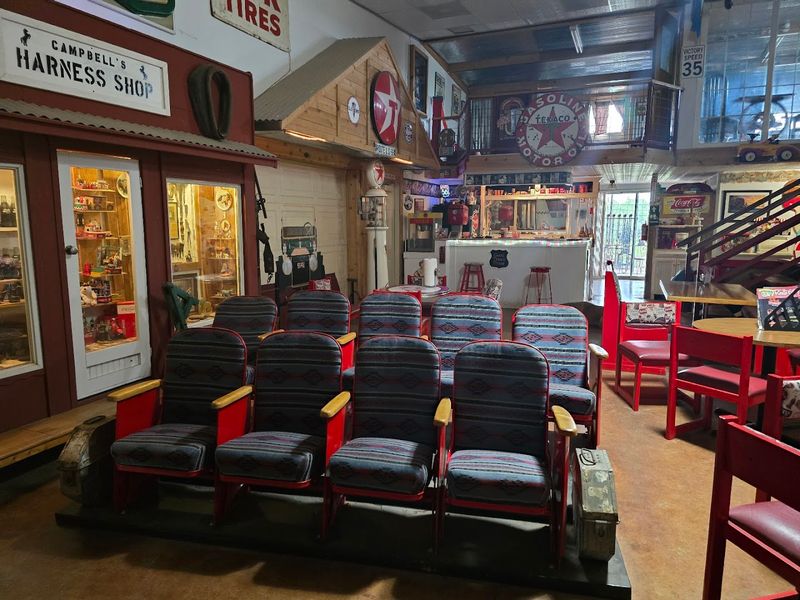
The range of objects inside this museum is genuinely hard to describe without underselling it. Planes, trains, automotive parts, vintage trucks, old restaurant signs, highway memorabilia, and hand-painted artwork cover nearly every inch of the oversized garages and the surrounding outdoor space.
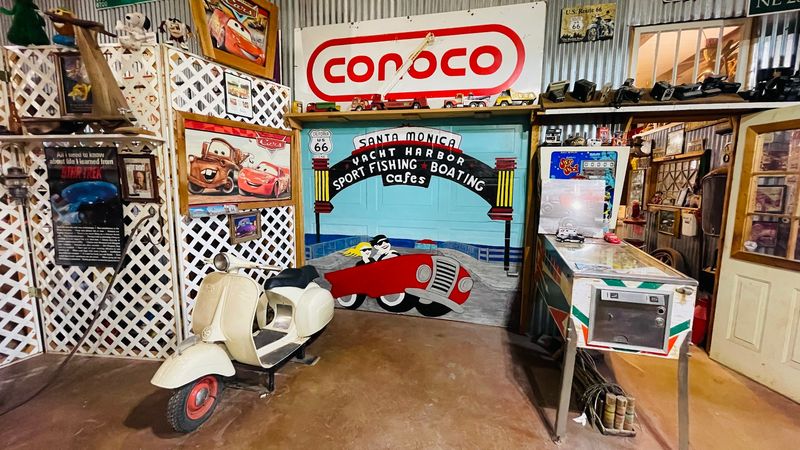
The 1950s diner setup inside is a favorite among visitors of all ages. A full dining area has been assembled with period-accurate furniture and decorations, and kids especially love pretending to work there, serving imaginary shakes and burgers just like the old roadside diners once did along Route 66.
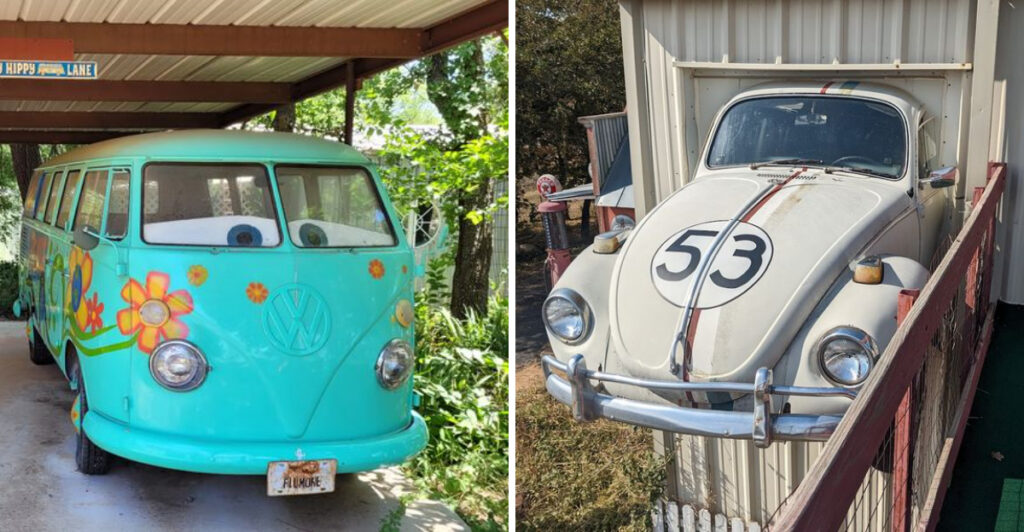
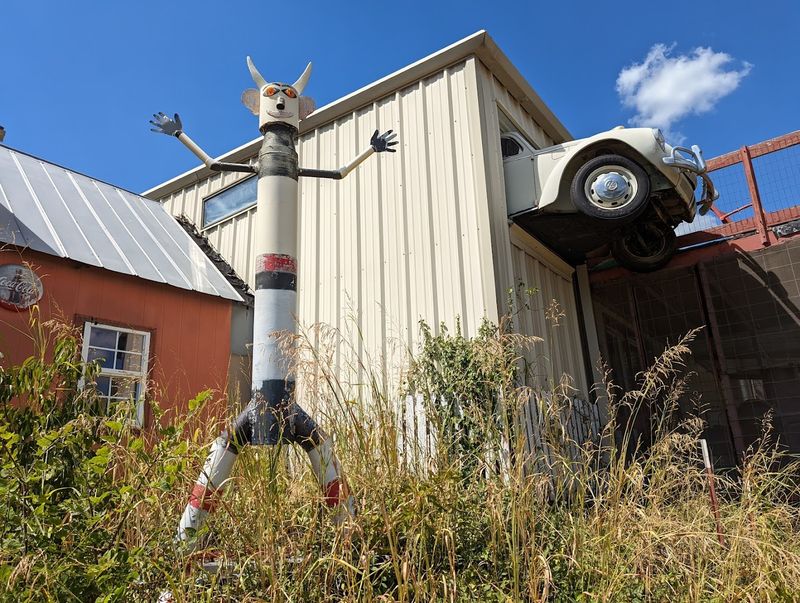
One of the most talked-about features is a VW Bug that appears to be emerging directly from the side of a building, a playful piece of automotive art that perfectly captures the spirit of the whole collection. Every item on the property has a story, and John knows every single one of them.
The collection is not curated in a sterile, hands-off way. It feels alive, personal, and genuinely fun to explore at your own pace without any pressure or time limits.
Buddy the Dog and the Welcome You Get
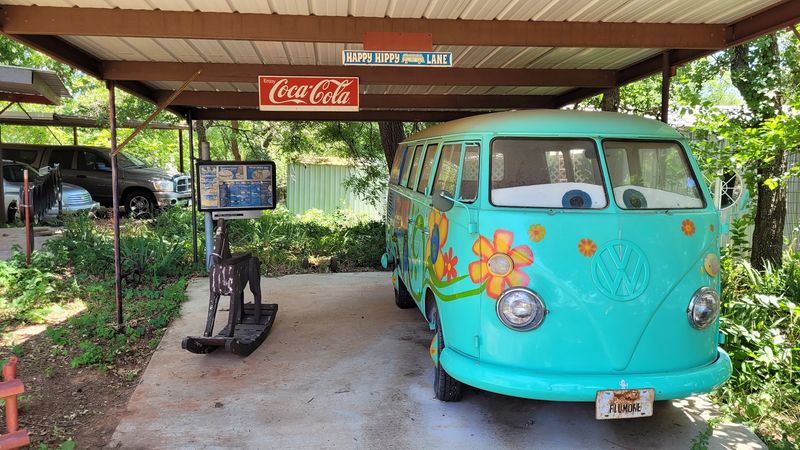
Not every museum has a four-legged staff member, but this one does. Buddy, John’s dog, is as much a part of the experience as the vintage cars and the hand-painted signs.
Calm, friendly, and completely at ease around strangers, Buddy has a way of making the whole visit feel even more relaxed and welcoming.
On days when John is busy talking to other visitors, Buddy has been known to take on unofficial tour guide duties through the interior of the museum. It sounds like a joke, but the dog genuinely wanders alongside guests in a way that makes the whole experience feel more like a neighborly visit than a formal attraction.
The combination of John’s warm personality and Buddy’s easygoing presence creates an atmosphere that is almost impossible to replicate. Many visitors mention both of them specifically when describing the stop, and it is clear that the human and canine duo are a major part of what makes this place so memorable.
Arriving here does not feel like checking a box on a tourist itinerary. It feels like making two new friends.
Free Admission and the Tip Jar Tradition
There is no ticket booth here, no entry fee, and no online reservation required. John opens his property to every visitor completely free of charge, which makes the whole experience feel even more generous given the sheer scale of what he has built and collected over the years.
The tip jar near the entrance has become a kind of tradition among grateful visitors. Most people who come through feel compelled to leave something behind, not because they have to, but because the experience genuinely earns it.
The knowledge John shares, the craftsmanship visible in every corner of the property, and the time he takes with each visitor all add up to something worth honoring.
This free-admission model also means that families traveling on a budget can enjoy a rich, engaging stop without any financial stress. Road trips along Route 66 can get expensive, and finding a stop this rewarding at no cost feels like a genuine gift.
The guestbook near the entrance is another small tradition worth participating in before you leave, a tangible record of all the travelers who have passed through and found something worth remembering here.
The Outdoor Property and Yard Art
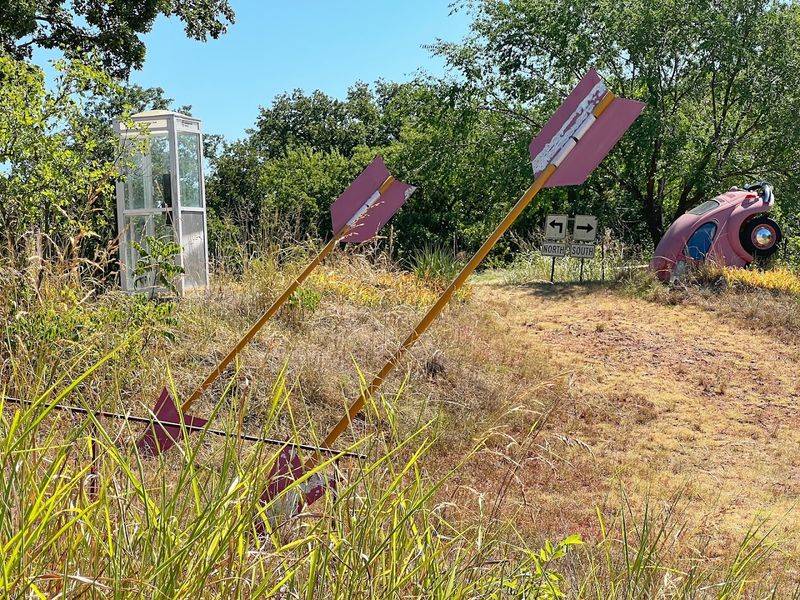
The outdoor portion of the property is just as captivating as the interior, and it rewards slow, careful exploration. Cars are positioned in unexpected ways across the grounds, some seemingly rising out of the earth, others leaning against structures, and a few displayed as the centerpieces of larger artistic arrangements.
Hand-painted signs cover fences, walls, and posts throughout the yard, each one reflecting John’s personal style and his deep connection to Route 66 history and American car culture. The visual effect of walking through the grounds is a little like flipping through a scrapbook, except the pages are three-dimensional and you can touch most of them.
The property is best explored at a leisurely pace on a cooler day. Oklahoma summers can bring real heat, and the outdoor sections of the museum have limited shade, so a morning visit in spring or fall tends to be the most comfortable experience.
That said, the collection is worth a little discomfort in warmer months. Bring water, wear comfortable shoes, and plan to spend more time than you initially expected because there is always one more thing worth looking at just around the next corner.
John’s Handcrafted Artwork and Inventions
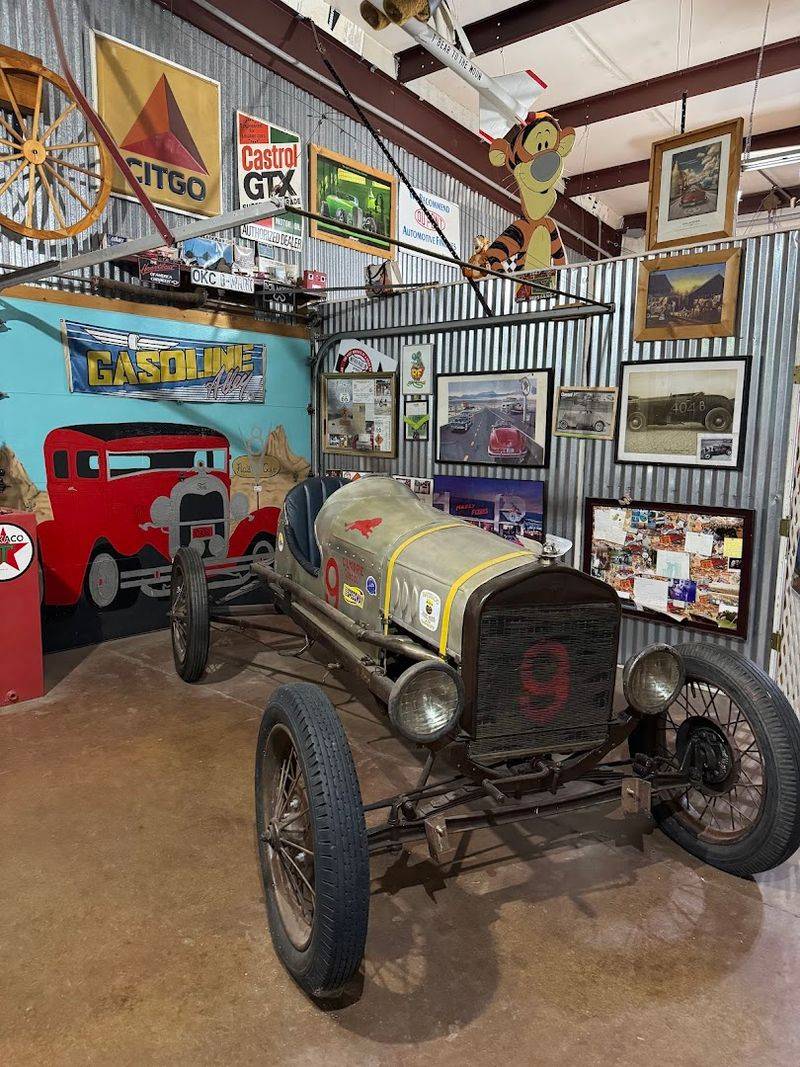
One of the most striking things about this place is realizing how much of it John created himself. This is not a collection of things he simply purchased and arranged.
Many of the pieces on display are things he built, painted, or fabricated from scratch using skills developed over a lifetime of working with his hands.
The upholstery work visible on several pieces is particularly impressive, showing a level of craftsmanship that would be at home in a professional shop. His paintings cover walls and surfaces throughout the property, and the murals reflect both his artistic talent and his encyclopedic knowledge of Route 66 culture, automotive history, and Americana in general.
Visitors with a background in any kind of trades or crafts tend to have an especially strong reaction to seeing what one person accomplished here largely on his own. The scale of the work is remarkable, and the quality holds up under close inspection.
John is happy to talk through the process behind specific pieces if you ask, and those conversations tend to be some of the most interesting parts of the entire visit. His inventions carry a personality that no factory could replicate.
A Living Piece of Route 66 History
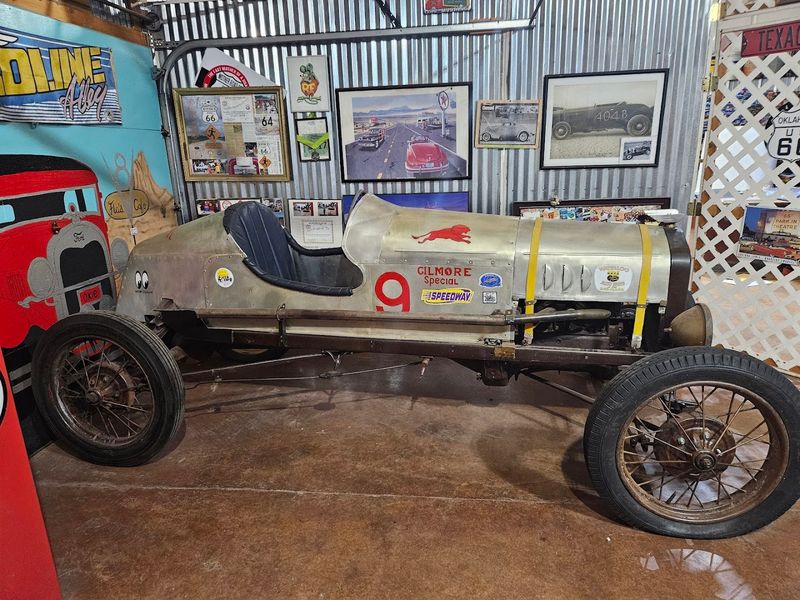
Route 66 holds a special place in American culture, and this museum captures that spirit more authentically than many larger, better-funded institutions manage to do. The highway itself was officially decommissioned in 1985, but the communities along its path have worked hard to keep its memory alive, and John’s place is one of the most personal expressions of that effort anywhere in Oklahoma.
The collection documents not just the cars and the road signs, but the whole ecosystem of roadside culture that once flourished along Route 66. Diners, motels, service stations, tourist attractions, all of it is represented through the objects and artwork on display, giving visitors a tangible sense of what traveling this highway once felt like.
John has also been known to point visitors toward a surviving stretch of the original Route 66 highway nearby, which adds a genuinely historic dimension to any stop here. Seeing the old pavement in person, after walking through a museum dedicated to its legacy, creates a connection to the past that is hard to manufacture through any other means.
The Mother Road still has stories to tell, and this is one of the best places in Oklahoma to hear them.
What to Expect When You Arrive
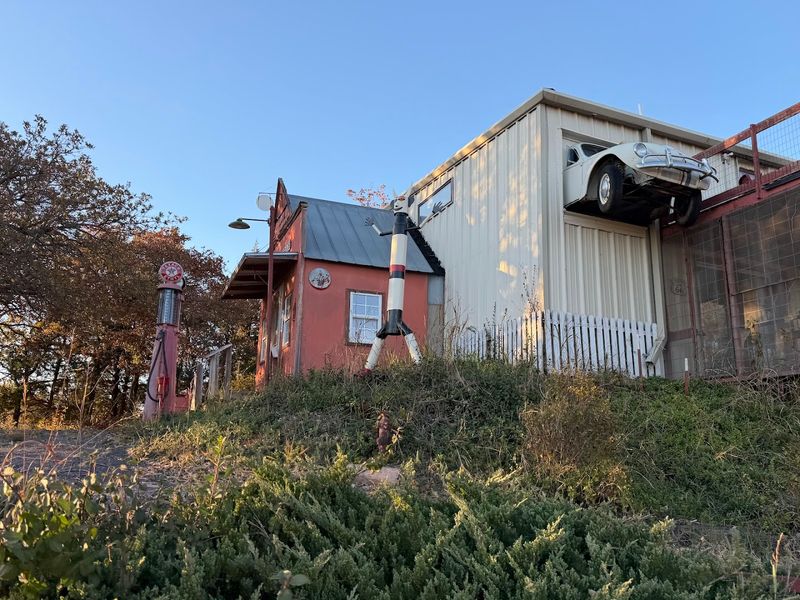
First-time visitors sometimes hesitate at the entrance because the property has the look of a private home mixed with an outdoor gallery, and it is not immediately obvious where to go. The gate is generally open during visiting hours, and the best approach is simply to walk in and look around.
John will find you.
The museum is open every day from noon to 6 PM, so arriving in the early afternoon gives you plenty of time to explore without feeling rushed. The phone number on file is +1 405-396-2055, and a quick call can confirm that John is on the property before you make the detour, since he occasionally heads out to collect new items for the museum.
Visitors with large vehicles like campers or trailers may find the property layout a bit tight, so arriving in a smaller vehicle or parking on the road before walking in tends to work better. The guestbook near the entrance is worth signing before you leave.
It is a small gesture that John genuinely appreciates, and flipping through the pages to see where other visitors have traveled from adds a surprisingly moving layer to the whole experience.
Who Travels Here and Why
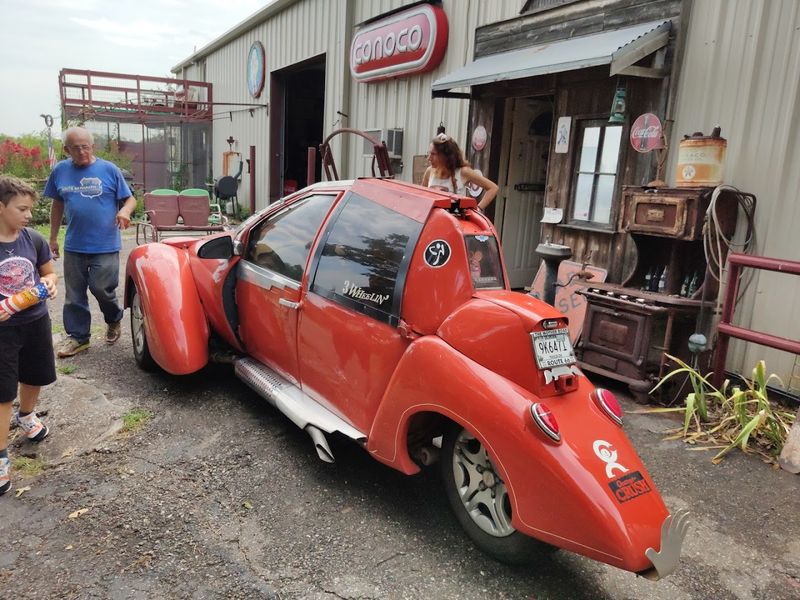
The visitors who find their way to this property come from a remarkably wide range of backgrounds. Harley riders cruising the old highway for a weekend, families on cross-country road trips, international travelers making a dedicated pilgrimage along Route 66, and local Oklahomans who somehow never stopped here before all end up sharing the same space and often the same conversations.
Children tend to warm up to the place faster than their parents expect. The interactive quality of the collection, the friendly dog, and the genuine enthusiasm John brings to every tour make it easy for kids to engage rather than just tag along.
One four-year-old visitor reportedly spent most of the stop pretending to work in the diner setup, which is exactly the kind of moment that makes a road trip worth the miles.
International visitors often express particular appreciation for how authentically American the whole experience feels. This is not a theme park version of Route 66 culture.
It is the real thing, maintained by one dedicated person who genuinely loves what he has built. That authenticity is something that travels well across language and cultural barriers, and it explains why people keep making the stop from so far away.
Photography Opportunities Throughout the Property
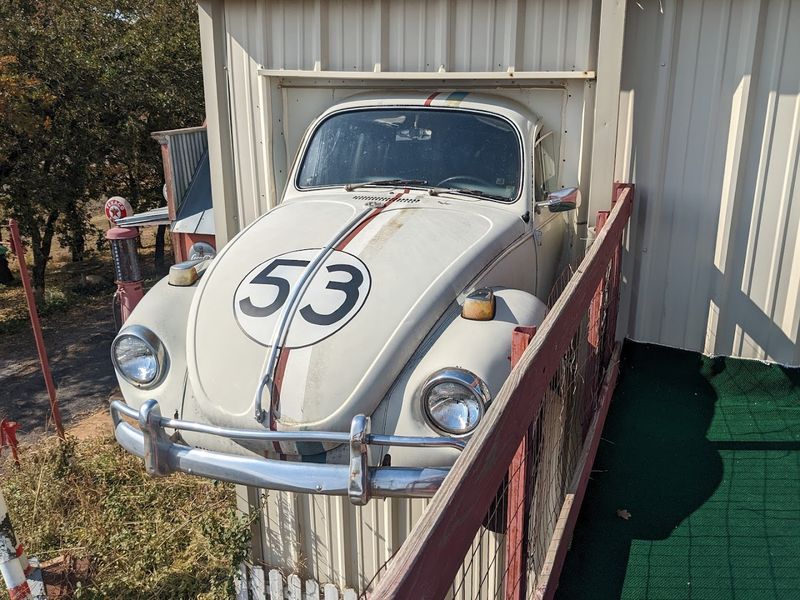
Every corner of this property offers something worth photographing, and the variety of subjects keeps things interesting from the first minute to the last. The outdoor displays provide wide-angle opportunities with vintage cars and painted walls in the background, while the interior spaces offer closer, more detailed shots of signs, artwork, and curated arrangements of memorabilia.
The VW Bug emerging from the building wall is one of the most photographed features on the property, and for good reason. It is the kind of image that immediately communicates the playful, inventive spirit of the whole collection.
The hand-painted murals also photograph beautifully in natural light, especially in the late afternoon when the colors seem to deepen.
John does not restrict photography on the property, and most visitors end up with far more pictures than they planned to take when they first arrived. The combination of color, texture, history, and personality packed into a relatively compact space makes it genuinely difficult to run out of interesting subjects.
Whether you shoot on a phone or a dedicated camera, the property rewards both quick snapshots and more deliberate compositions equally well. Every photo tells a slightly different story about the same remarkable place.
Why This Stop Stays With You Long After You Leave
Most roadside attractions are easy to categorize and easy to forget. This one is neither.
The combination of John’s personal story, the handcrafted nature of so much of what is on display, the free admission, the friendly dog, and the genuine warmth of every interaction creates an experience that sits differently in your memory than a typical tourist stop does.
Visitors consistently describe the stop as one of the highlights of their entire Route 66 journey, which is saying something on a highway that passes through dozens of celebrated landmarks and attractions. The reason it resonates so deeply is probably the same reason any truly personal creative work resonates: you can feel the intention behind it, and that intention is completely generous.
John built this place so that other people could enjoy it, learn from it, and connect with a piece of American history that deserves to be remembered. He asks for nothing in return beyond your time and curiosity.
That spirit is rare anywhere, and finding it on a stretch of old Oklahoma highway makes the whole Mother Road feel a little more alive. Some stops on a road trip change the trip.
This one has a way of changing the traveler.
Share this story