France has one of the most stunning coastlines in all of Europe, stretching over 3,000 kilometers from the windswept cliffs of Normandy to the sun-drenched shores of the Mediterranean. Whether you love history, beaches, fresh seafood, or just wandering through pretty harbor towns, the French coast has something for everyone.
From royal resort towns to tiny fishing villages painted in every color of the rainbow, each stop along this coastline tells its own story. Pack your bags and get ready to explore 15 of the most incredible coastal destinations France has to offer.
Saint-Malo (Brittany)
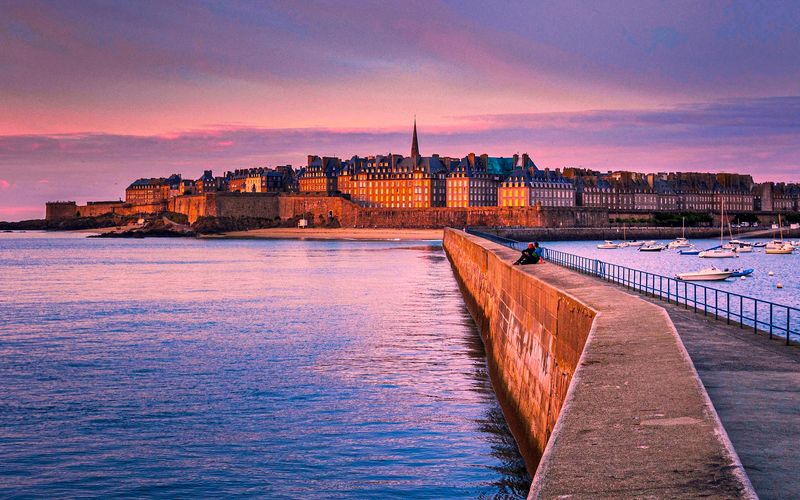
Walk on top of a city — literally. Saint-Malo lets you stroll along its ancient stone ramparts, where the Atlantic Ocean stretches out on one side and a maze of medieval rooftops fills the other.
These walls once kept pirates and warships at bay, and standing on them today still feels like something out of a history book.
The city sits on a rocky peninsula in Brittany, and at high tide, it looks like it’s floating on the sea. That dramatic setting alone makes it worth the trip.
Inside the walls, cobblestone streets wind past crêperies, cider bars, and boutiques selling locally made caramel and sea salt.
Saint-Malo was almost entirely destroyed during World War II but was carefully rebuilt stone by stone to match its original look. The beaches just outside the walls are wide, sandy, and family-friendly.
At low tide, you can even walk out to the small island of Grand Bé, where the famous French writer Chateaubriand is buried — just don’t get caught when the tide rushes back in.
Étretat (Normandy)
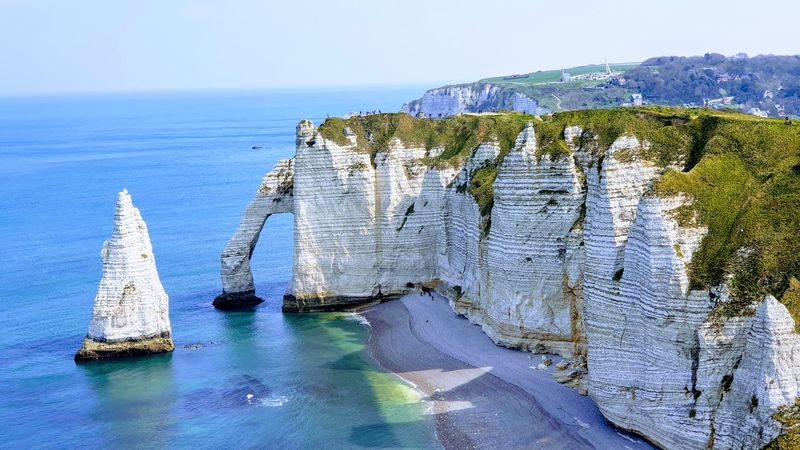
Nature went full artist mode at Étretat. The towering white chalk cliffs here curve and carve into giant arches and needle-like spires that shoot straight up from the sea.
It looks almost too dramatic to be real, which is probably why Claude Monet kept painting the same cliffs over and over again.
The famous Falaise d’Aval arch is the most photographed, but the Falaise d’Amont on the opposite end of the beach offers equally jaw-dropping views. Hiking trails run along the clifftops, giving you a bird’s-eye perspective of the whole coastline.
The walk is manageable for most fitness levels and takes about an hour round trip.
The beach itself is made of smooth gray pebbles rather than sand, which gives the whole place a moody, dramatic vibe perfectly suited to Normandy’s wild weather. The town behind the beach is small but packed with good seafood restaurants and cozy cafés.
Georges Méliès, the pioneer of fantasy filmmaking, once owned a villa here — so even the history has a magical twist.
Honfleur (Normandy)
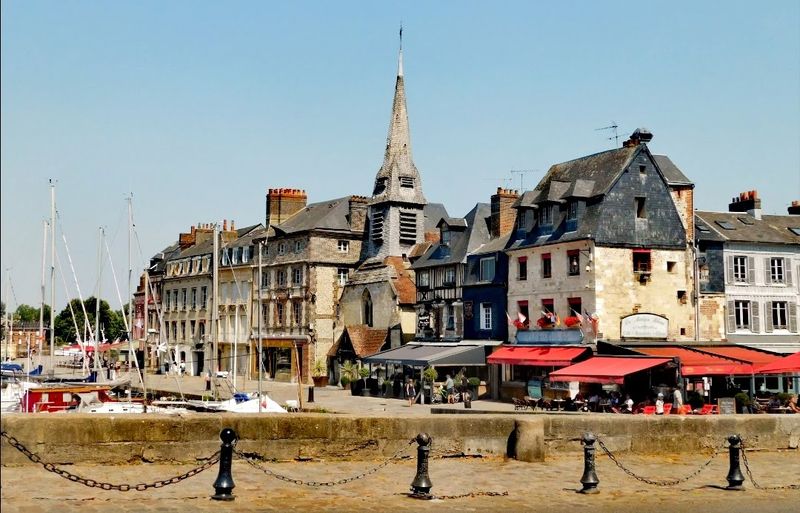
Honfleur looks like it was designed by a painter — and in many ways, it was. The harbor, known as the Vieux Bassin, is ringed by impossibly tall, narrow houses painted in shades of cream, rust, and slate blue, their reflections shimmering in the still water below.
It inspired the Impressionist movement and continues to attract artists from around the world.
The town sits at the mouth of the Seine River where it meets the English Channel, giving it a location that feels both sheltered and connected to the wider world. Samuel de Champlain, the French explorer who founded Quebec City, set sail from Honfleur in the early 1600s.
That sense of adventure still lingers in the salt-tinged air.
Weekends here are lively, with art galleries, antique shops, and excellent restaurants lining every corner. The Église Sainte-Catherine is a must-see — it is the largest wooden church in France, built by local shipbuilders after the Hundred Years War.
Honfleur is small enough to explore in a day but charming enough to make you want to stay much longer.
Deauville (Normandy)
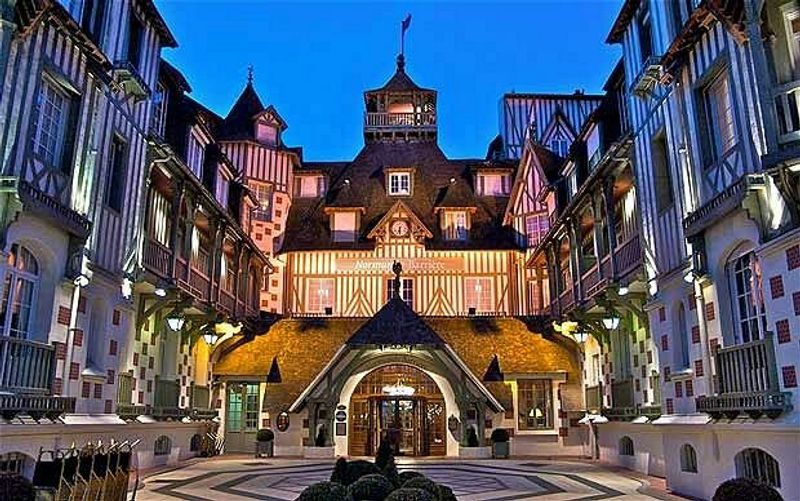
Somewhere between a Hollywood film set and a French postcard, Deauville has been pulling in stylish visitors since the 1860s. The famous boardwalk, called Les Planches, is lined with beach cabins painted in candy colors and labeled with the names of famous film stars.
It is simultaneously glamorous and wonderfully silly.
The town hosts one of France’s most prestigious film festivals every September, celebrating American cinema with a very French flair. Outside festival season, the beach stretches wide and golden, backed by grand Belle Époque hotels that look like they belong in a Wes Anderson movie.
Horse racing at the Hippodrome adds another layer of old-world elegance to the scene.
Deauville sits just across the river from Trouville, its more laid-back neighbor, and the two towns together make a perfect day of exploration. Fresh oysters from the local fish market, a stroll along the promenade, and an afternoon in one of the stylish boutiques is the ideal Deauville itinerary.
The train from Paris takes about two hours, making this one of the most accessible weekend escapes on the Normandy coast.
Biarritz (Basque Coast)
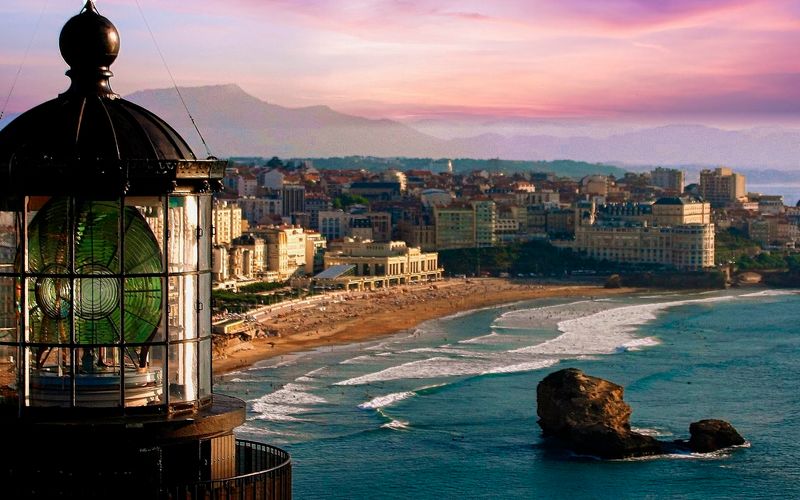
Surfers, royals, and seafood lovers have all claimed Biarritz as their own — and somehow the town makes room for all of them. Sitting just a short drive from the Spanish border, this Basque Coast gem has been a glamorous destination since Empress Eugénie of France vacationed here in the 1850s and essentially put it on the map for European high society.
These days, the royal crowd has been replaced by a seriously impressive surf scene. The Grande Plage and Côte des Basques beaches draw wave-riders from across Europe, with the Atlantic delivering powerful, consistent swells year-round.
Surf schools are plentiful, so beginners can give it a shot without embarrassing themselves too badly.
Beyond the waves, Biarritz has a genuinely beautiful old town with covered markets selling Basque specialties like Bayonne ham, Espelette pepper, and dark chocolate. The Rocher de la Vierge, a dramatic rock formation connected to shore by a footbridge, offers stunning views of the crashing surf below.
The food scene is exceptional — the Basque Country is one of the most celebrated culinary regions in the world, and Biarritz is right at the heart of it.
Arcachon (Atlantic Coast)
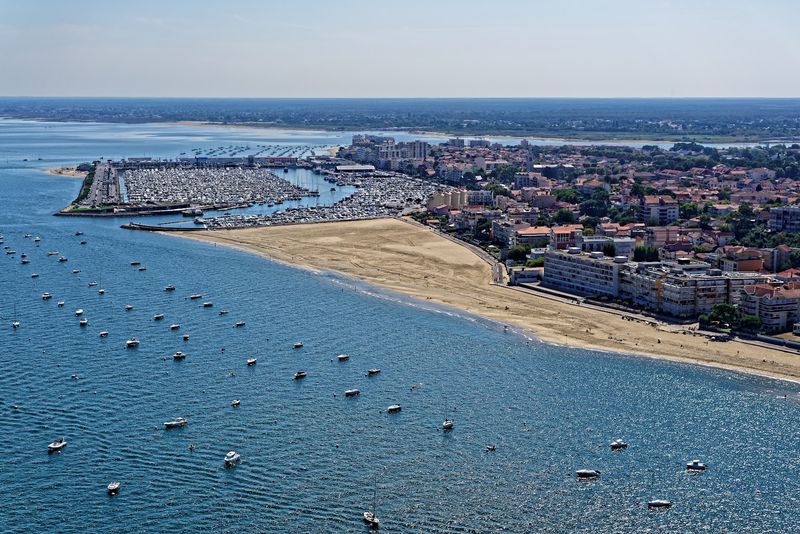
There is a sand dune in France so enormous it has its own weather system — well, almost. The Dune du Pilat near Arcachon stands over 100 meters tall and stretches nearly 3 kilometers along the coast, making it the tallest sand dune in all of Europe.
Climbing it feels like a workout, but the panoramic view from the top is absolutely worth the effort.
From the summit you can see the pine forests of the Landes stretching inland, the sparkling Bay of Arcachon below, and the Atlantic horizon beyond. The dune shifts and grows a little every year, slowly swallowing the trees at its edge.
It is one of those rare natural phenomena that feels genuinely surreal.
The town of Arcachon itself is charming and low-key, built around a sheltered bay famous for its oyster farms. A boat tour through the bay is a highlight, especially if you stop at the Île aux Oiseaux, a tiny island topped with colorful fishing cabins on stilts.
Fresh oysters eaten right on the waterfront with a glass of white wine is the definitive Arcachon experience — simple, local, and absolutely delicious.
Île de Ré (Atlantic Coast)
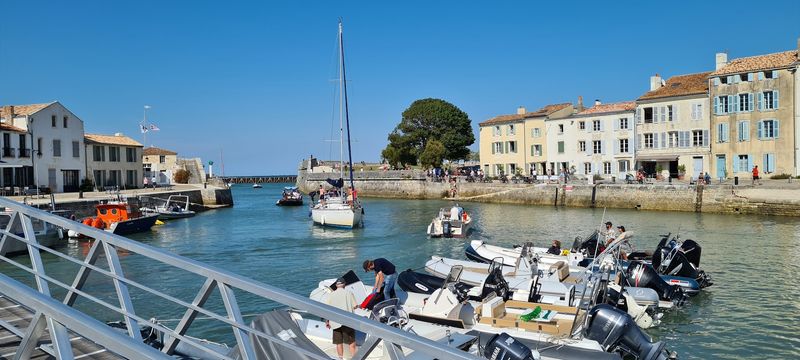
Hollyhocks grow wild along the roadsides here, and that pretty much sets the tone for the whole island. Île de Ré is the kind of place where life slows down, bicycles replace cars, and the biggest decision of the day is which harbor café to sit in for lunch. Connected to the mainland by a bridge near La Rochelle, the island manages to feel wonderfully remote despite being easy to reach.
The island is flat and laced with over 100 kilometers of dedicated cycling trails, making it one of the best places in France to explore by bike. You can pedal through salt marshes, past oyster beds, and through villages of low whitewashed houses with green shutters that look straight out of a storybook.
Saint-Martin-de-Ré, the main town, has a beautiful fortified harbor and a lively weekly market.
The beaches here are long and gentle, with warm shallow water that is ideal for families with young children. In summer, the island fills up with Parisian vacationers who have been coming for generations.
The local specialties — fleur de sel sea salt, Pineau des Charentes, and fresh seafood — give every meal on the island a distinctly local flavor worth savoring slowly.
Saint-Jean-de-Luz (Basque Coast)
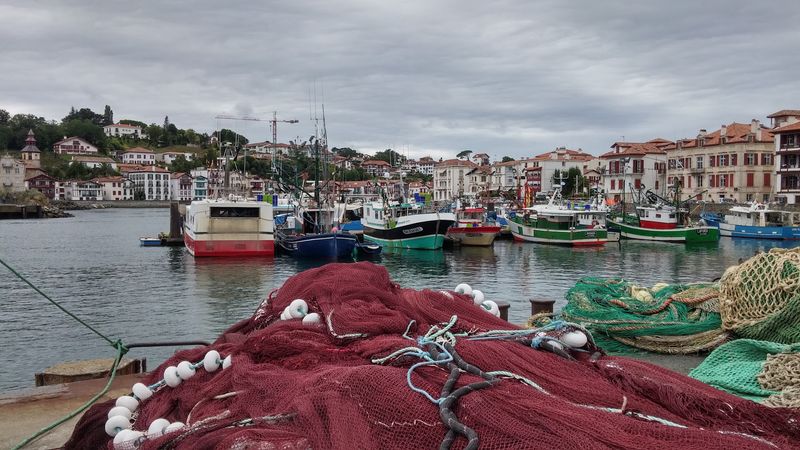
Few towns in France feel as authentically themselves as Saint-Jean-de-Luz. The Basque red-and-white color scheme covers everything from the harbor buildings to the fishing boats, giving the whole town a festive, confident identity that has nothing to do with tourism trends.
This is a place that knows exactly who it is.
The town’s protected bay creates one of the calmest swimming spots on the entire Atlantic coast of France, sheltered from the powerful ocean swells that make other nearby beaches exciting for surfers but tricky for casual swimmers. The main beach curves gently around the bay and gets wonderfully warm in summer.
Families have been coming here for decades for exactly that reason.
History sneaks in at every corner. The grand church of Saint-Jean-Baptiste is where King Louis XIV of France married the Spanish Infanta Maria Teresa in 1660 — a wedding that helped seal peace between France and Spain.
The door the king used was bricked up immediately after so no one else could enter through it, and it remains sealed to this day. The old town’s market squares are lined with tapas bars and Basque pastry shops selling gâteau Basque, a buttery almond cake worth every calorie.
Cassis (Provence)
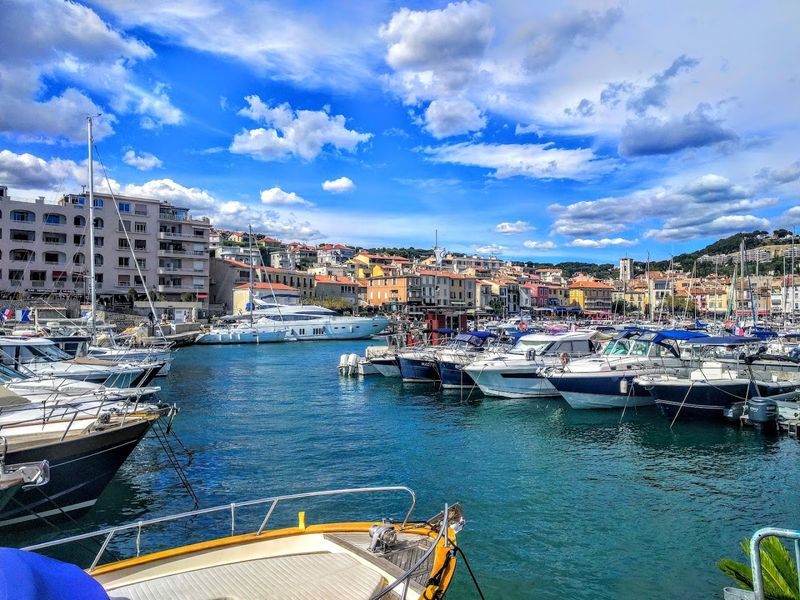
Cassis is the kind of town that makes you feel smug for finding it — even though everyone else has already found it too. Tucked between dramatic limestone cliffs on the Mediterranean coast of Provence, it sits at the entrance to the Calanques National Park, one of the most spectacular stretches of coastline in all of Europe.
Bright turquoise water, white rock, pine trees: the scenery is almost aggressively beautiful.
The Calanques are narrow rocky inlets carved into the cliffs, accessible by boat, kayak, or hiking trail. Some have tiny beaches at the bottom that feel like secret worlds.
The most popular ones, like Calanque de Port-Miou and En-Vau, require a short hike but reward you with water so clear you can see the bottom from 10 meters up.
Back in the town itself, the harbor is lined with seafood restaurants and wine bars serving Cassis blanc, a crisp local white wine produced from vineyards on the surrounding hills. The town is small — only about 8,000 residents — which gives it a genuine village feel even in peak summer.
Getting here early in the morning, before the day-trippers arrive from Marseille, is the best way to experience it at its most magical.
Saint-Tropez (French Riviera)
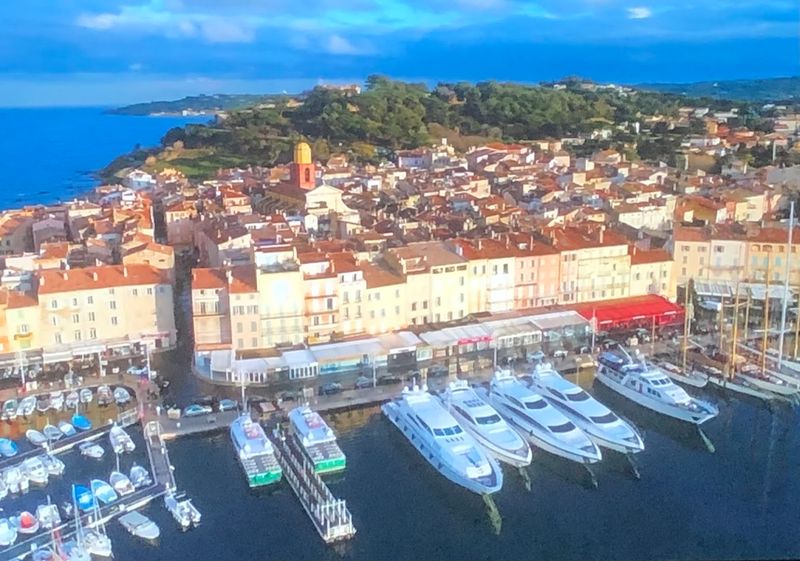
Before the yachts and the paparazzi, Saint-Tropez was a sleepy fishing village where the biggest event of the year was the local pétanque tournament. Then painter Paul Signac sailed in at the end of the 19th century, fell in love with the light, and told everyone about it.
Artists followed, then writers, then Brigitte Bardot — and the rest, as they say, is very glamorous history.
Today the harbor is a parade of megayachts and designer sunglasses, but the old town behind it, known as La Ponche, still has narrow lanes and pastel houses that feel genuinely timeless. The famous Place des Lices hosts a market on Tuesday and Saturday mornings where locals and visitors mix over fresh produce, antiques, and rounds of pétanque.
It is one of the most charming markets on the entire Riviera.
The beaches of Saint-Tropez are actually located a few kilometers from the town center, spread along the Pampelonne peninsula. Plage de Pampelonne is the most famous, lined with legendary beach clubs.
But quieter stretches exist nearby for those who prefer their sand without a DJ. The Musée de l’Annonciade in town has an outstanding collection of Post-Impressionist paintings inspired by the area.
Antibes (French Riviera)
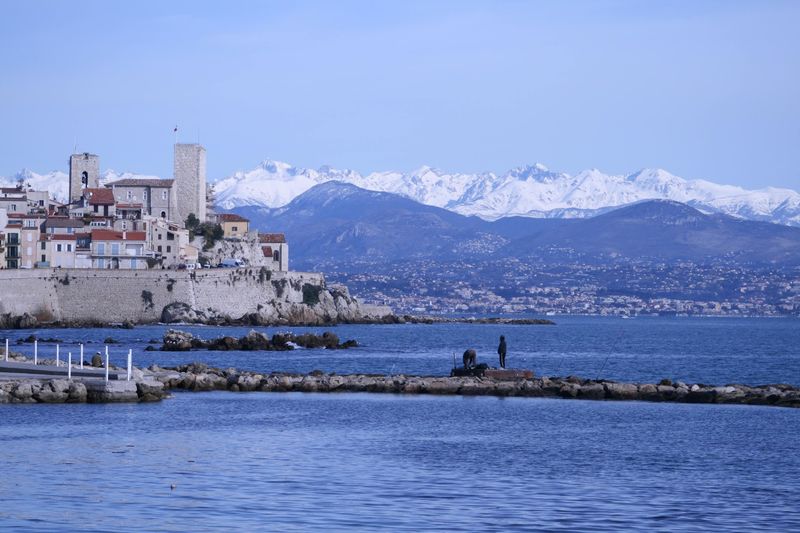
Antibes has been around long enough to have been founded by ancient Greeks — they called it Antipolis, meaning “the city opposite,” referring to its position across the bay from Nice. Two and a half thousand years later, the old town still sits behind Roman-era walls, and the sea views from the ramparts look like they have barely changed since then.
Pablo Picasso spent several months here in 1946 and left behind an enormous body of work inspired by the sea and the light. That collection now fills the Musée Picasso, housed in the Château Grimaldi right on the seafront — making it one of the most dramatically located art museums in the world.
Even if you are not a huge art fan, the setting alone is worth the entrance fee.
Port Vauban, just outside the old town walls, is one of the largest yacht marinas in Europe and home to some of the biggest private vessels on the planet. Cap d’Antibes, the pine-covered peninsula to the south, is lined with some of the most expensive real estate on the Riviera.
But the old town itself remains refreshingly accessible, with a lively covered market, excellent restaurants, and beaches just a short walk from the historic center.
Nice (French Riviera)
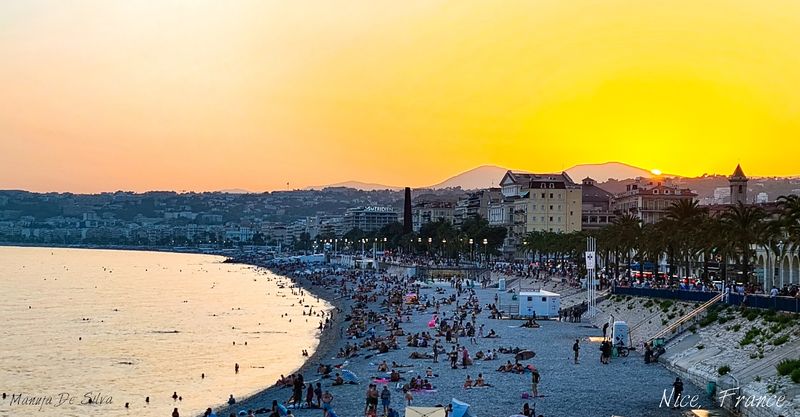
There is a reason Nice has been one of Europe’s favorite holiday destinations since the 18th century — the light here is unlike anywhere else. The way afternoon sun hits the terracotta rooftops of the Vieille Ville and bounces off the sea creates a glow that has been inspiring artists, writers, and Instagram accounts for generations.
Henri Matisse lived here for decades and credited the city’s light as the driving force behind his work.
The Promenade des Anglais is one of the most famous seafront walkways in the world, stretching 7 kilometers along the Baie des Anges. Named for the English aristocrats who funded its construction in the 1820s, it remains the beating heart of the city’s outdoor life.
Cyclists, joggers, families, and café-hoppers all share the space throughout the day.
The old town, known as Le Vieux-Nice, is a dense grid of narrow streets lined with Baroque churches, flower stalls, and the best socca — a crispy chickpea flatbread — you will ever eat. The Cours Saleya market is one of the liveliest and most colorful in southern France.
Nice also has world-class museums, including the Musée Matisse and the Musée Marc Chagall, both set in beautiful surroundings just a short bus ride from the seafront.
Menton (French Riviera)
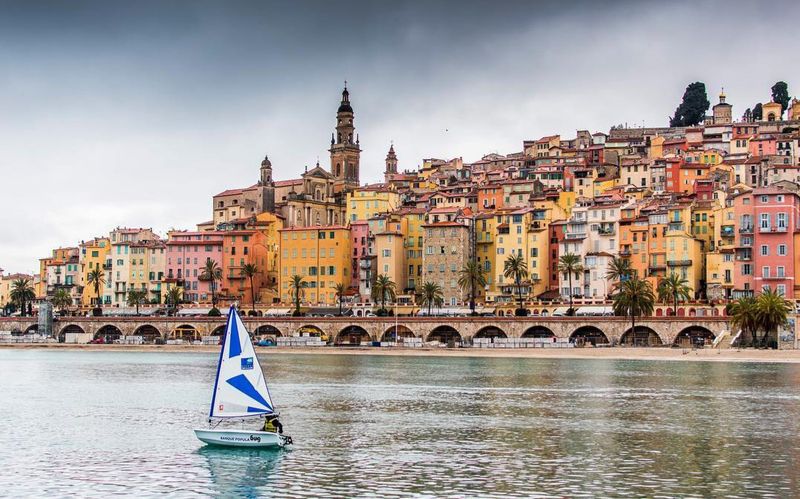
Menton is the last French town before Italy, and it wears that borderland identity with real charm. The architecture shifts subtly Italian, the pasta gets better, and the lemons — oh, the lemons.
Menton is famous across France for producing some of the most fragrant, flavorful citrus in the world, and every February the town throws a full-scale Fête du Citron festival complete with sculptures built entirely from lemons and oranges.
The old town climbs steeply above the seafront in a cascade of yellow, orange, and pink buildings that look almost edible in the afternoon light. The Basilique Saint-Michel-Archange sits at the top of the old town steps and is considered one of the finest Baroque churches on the entire Riviera.
The view from the church square down over the rooftops and out to sea is one of the most photographed in the region.
The beaches here are quieter than those in Nice or Cannes, which suits the town’s more relaxed, slightly retro atmosphere perfectly. Menton has long attracted retirees and slow travelers who prefer a genuine community feel over high-season crowds.
The Jardin Serre de la Madone and the Jardin Val Rahmeh are extraordinary botanical gardens that take full advantage of Menton’s exceptionally mild microclimate, one of the warmest in France.
Collioure (Occitanie Coast)
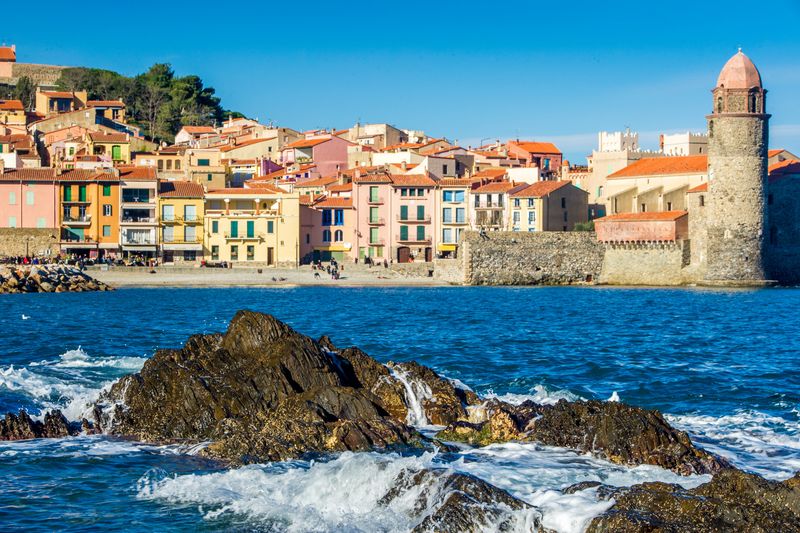
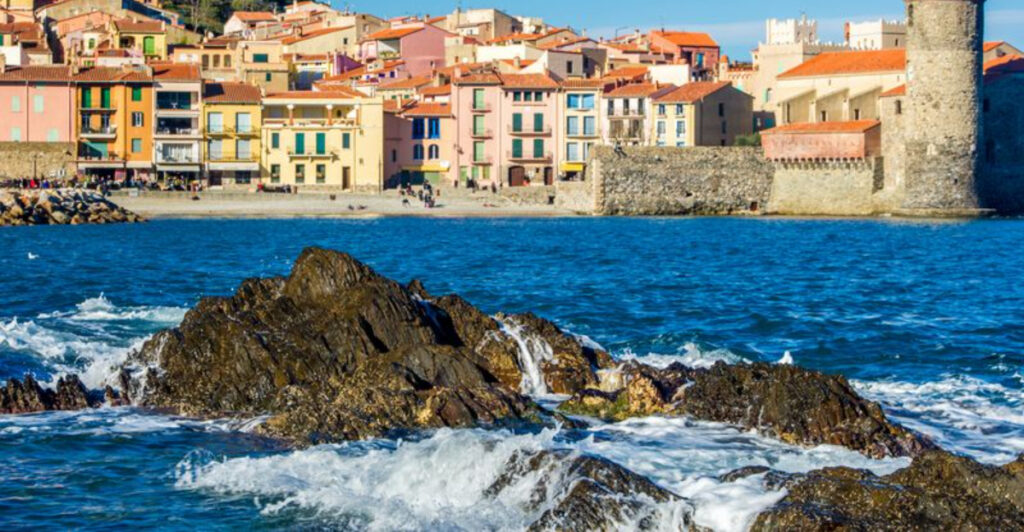
Collioure is the kind of place that makes painters want to quit their day jobs. Henri Matisse and André Derain arrived here in the summer of 1905 and were so overwhelmed by the intensity of the Mediterranean light and color that they essentially invented a new art movement — Fauvism — right on this waterfront.
The colors they painted look exaggerated until you actually stand here and realize the town really does look like that.
The Château Royal, a medieval fortress that juts into the sea at the edge of the harbor, has guarded this bay since the Knights Templar built the original structure in the 12th century. It now houses a contemporary art museum with rotating exhibitions.
The church of Notre-Dame-des-Anges, with its round pink bell tower rising directly from the beach, is one of the most distinctive and photogenic buildings on the entire French coast.
Collioure sits close to the Spanish border in the heart of Catalan France, and the local culture reflects that heritage strongly. The town is famous for its anchovies, which have been salted and cured here for centuries using a traditional method still practiced today.
A visit to one of the anchovy workshops is a genuinely fascinating and surprisingly delicious experience that most visitors remember long after they leave.
Marseille (Mediterranean Coast)
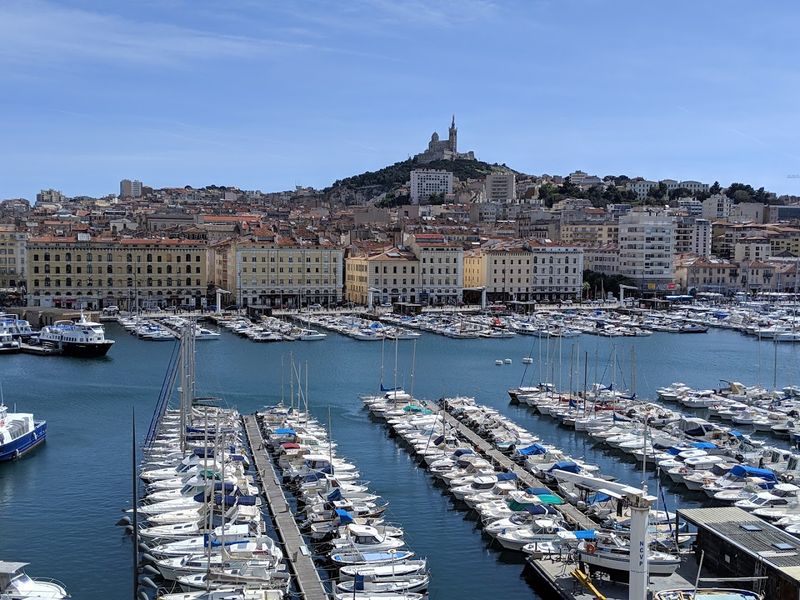
Marseille does not try to be charming — it just is. France’s oldest city, founded by Greek sailors around 600 BC, has a raw, unfiltered energy that sets it apart from every other place on the French coast.
It is loud, colorful, chaotic, and completely magnetic. Visitors who expect the polished elegance of the Riviera are sometimes surprised; those who embrace the city on its own terms tend to fall hard for it.
The Vieux-Port is the ancient heart of the city, a long harbor where fishermen still sell their catch every morning from their boats. The surrounding streets lead into Le Panier, Marseille’s oldest neighborhood, a tangle of steep lanes, street art, and small artisan workshops that has somehow survived centuries of change.
The view from Notre-Dame de la Garde, the golden basilica perched on the highest hill in the city, takes in the entire coastline in a single sweeping glance.
The Calanques National Park begins right at the city’s edge, offering dramatic limestone cliffs, hidden coves, and hiking trails that feel impossibly wild for a major urban center. Bouillabaisse, the iconic Marseille fish stew, is the dish to order here — served in the traditional two-course style with saffron broth first, then the fish.
No visit to the French coast is complete without a bowl.
Share this story