History leaves clues you can still stand beside and read like public records carved in stone. Over a thousand years, empires have shifted and technologies have changed, yet certain structures remain as lasting examples of design and power.
This guide explores seventeen places that outlived rulers and trends, showing how materials, skilled labor, and cultural choices can endure far longer than their creators.
1. The Great Pyramid of Giza (Egypt)
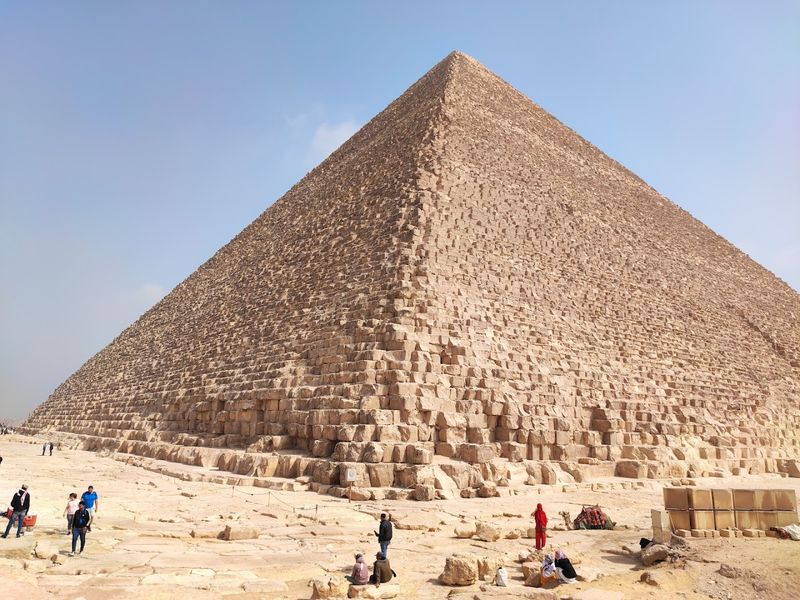
Rivaling any spreadsheet for precision, this pyramid set benchmarks in logistics and labor coordination around 2560 BC. Quarrying limestone and granite, crews shaped blocks with copper tools, sledges, and wet sand to reduce friction.
The result became a data point for height and alignment that later architects kept checking against.
You see not only a tomb for Khufu but a proof of state capacity, ration systems, and calendar management. The structure kept its form through shifting burial practices, medieval quarrying, and modern surveying.
Its casing stones mostly disappeared, yet the core geometry still teaches lessons about tolerance, load paths, and durable siting.
Ancient graffiti in workers’ marks turns the monument from myth into project history. Standing there, you read a long memo on material performance, supply chains, and the political value of permanence.
The pyramid makes longevity look planned, not lucky.
2. The Colosseum (Italy)
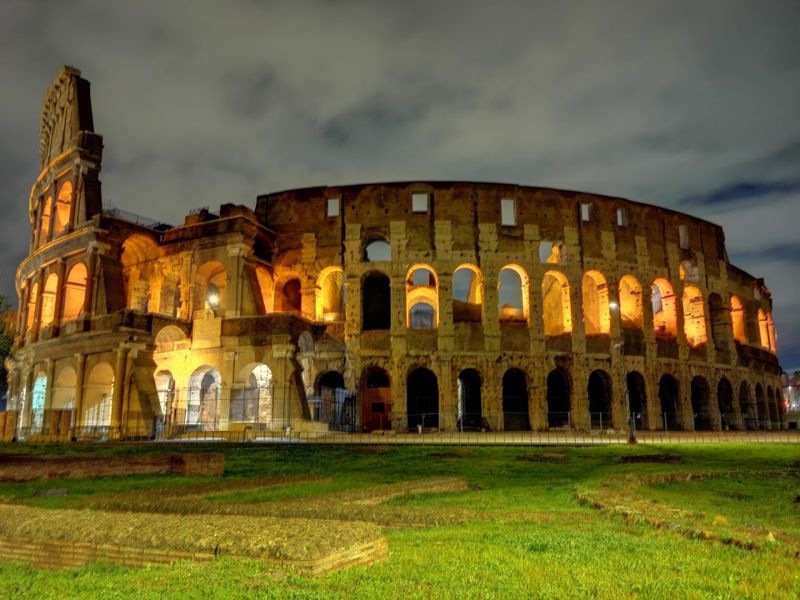
Think of it as a concrete lesson in public programming, opened in AD 80 with seating plans more organized than many modern arenas. Travertine, tufa, brick, and Roman concrete created a frame of arches and vaults that moved crowds quickly.
Tickets mapped to numbered entrances, proving wayfinding is not a new obsession.
Earthquakes, stone repurposing, and changing uses carved away pieces, yet the amphitheater still explains load distribution with its elliptical ring. The hypogeum reveals stagecraft and lift systems that turned events into choreography.
You trace revenue, policy, and prestige through free spectacles that tied rulers to urban morale.
Its survival owes much to layered reuse as housing, workshops, and a symbolic quarry. Restoration embedded it in national identity and tourism infrastructure.
The building is now a syllabus on materials science, maintenance cycles, and how a city reinterprets a venue across centuries.
3. Hagia Sophia (Turkey)
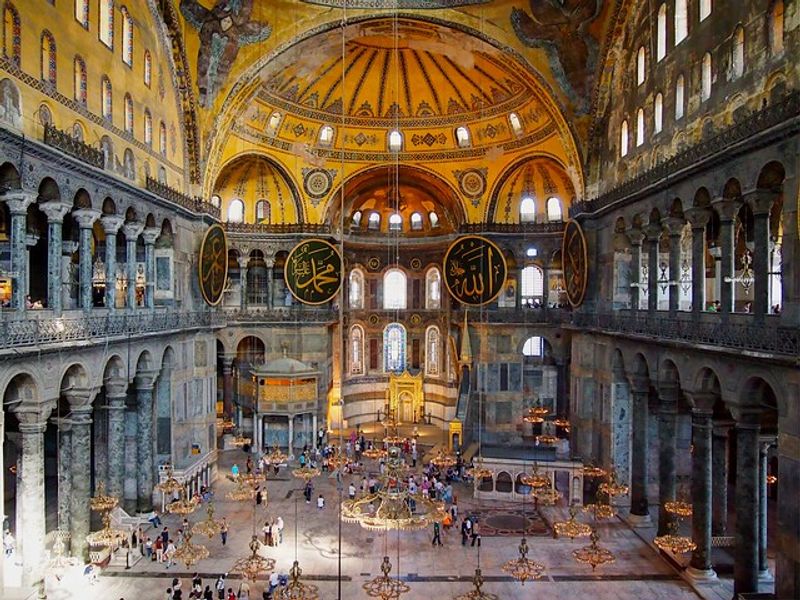
Few roofs have carried so much policy. Completed in AD 537, this basilica with a revolutionary dome on pendentives turned structural daring into imperial branding.
An early collapse prompted reinforcement and steeper curvature, a reminder that innovation usually needs a second draft.
Over time it toggled between cathedral, mosque, museum, and mosque again, each phase layering inscriptions, mosaics, and liturgical layouts. The building kept proving that flexible volumes survive institutional change.
You learn how buttresses, repairs after earthquakes, and conservation science stabilize an icon without freezing it.
Marble revetments, spolia columns, and shimmering mosaics demonstrate supply networks reaching across the Mediterranean. The interior volume still persuades with geometry more than ornament.
Walking under the dome, you witness a conversation between theology, mathematics, and governance that remains legible even after fourteen centuries of edits.
4. The Pantheon (Italy)
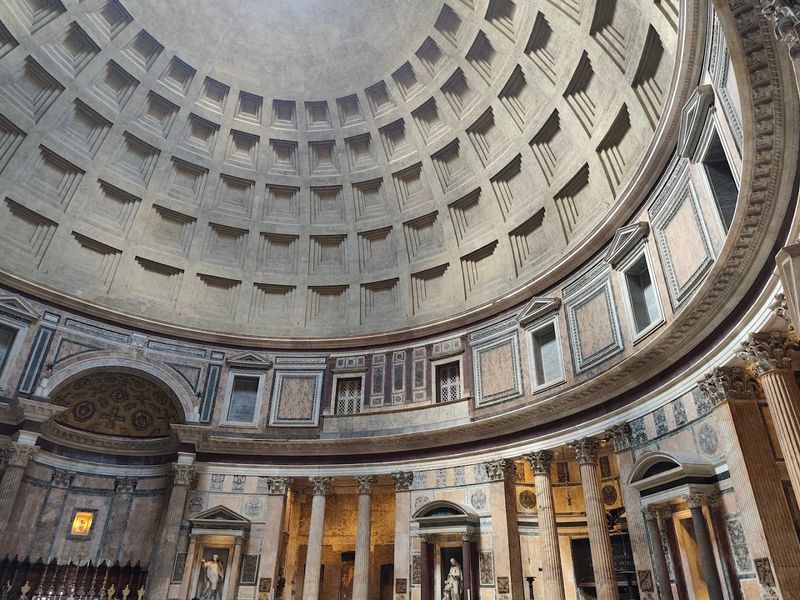
The best proof that materials are strategies, not just substances, sits in Rome with a dome poured about AD 126. Lightweight aggregates and a graded mix step down density toward the oculus, easing thrust where it matters.
Coffers shave mass while adding crisp geometry.
Once a Roman temple, later a church, it earned survival by staying useful. The porch to rotunda sequence still teaches how to set up a reveal.
Rain enters through the oculus, but drainage and detailing keep the floor civilized.
If you are curious about performance over time, look at the unreinforced concrete standing without steel. It trained generations of architects to think in sections and weights.
The Pantheon shows how a building becomes a textbook, and how a textbook remains in print when the lessons keep matching reality.
5. Petra (Jordan)
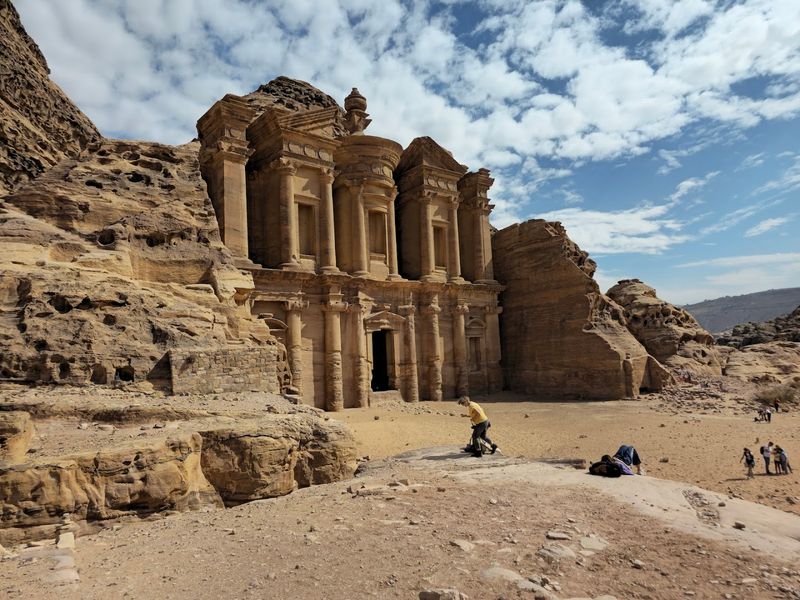
Long before social networks, caravan traffic built fame, and Petra cashed in by shaping a city into sandstone. Nabataean engineers cut facades, channeled flash floods with rock-cut conduits, and stored water in cisterns that kept commerce moving.
The city’s form is a ledger of tariffs and protection agreements.
Hellenistic touches on tombs show how styles traveled with goods. Rome annexed the region, trade patterns shifted, and the center of gravity moved, yet monumental fronts stayed on duty as persuasive advertising for skill.
You walk through the Siq and read hydraulic strategy as clearly as sculpture.
Excavations recover streets, temples, and a theater, while conservation manages erosion and visitor impact. Petra proves that the right location, infrastructure, and brand identity can echo for millennia.
It holds together because design followed climate data and market logic, not just ornament.
6. Stonehenge (England)
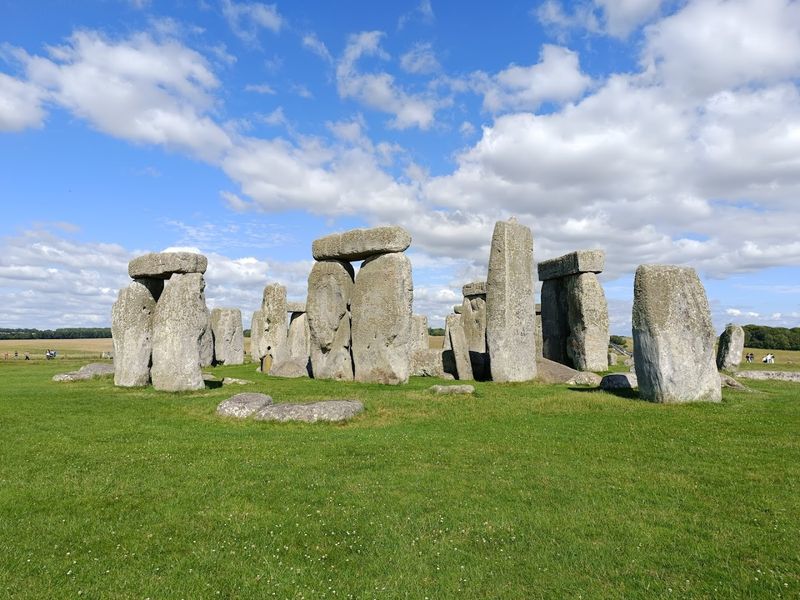
Scheduling and alignment, not mystery alone, keep this circle relevant. Built between 3000 and 2000 BC with sarsen uprights and imported bluestones, the site maps human coordination more than supernatural claims.
Mortise and tenon joints show woodworking logic applied to stone.
Archaeology tracks feasting sites, processional routes, and burials across the surrounding landscape, turning the monument into one chapter of a larger plan. Transporting stones from Wales argues for collective effort and political will.
Alignments suggest calendrical knowledge without turning the place into a planetarium.
Modern management uses path design and interpretation panels to reduce wear while keeping access. The ring endures because it became a reference point for questions rather than answers.
You leave with clearer timelines, better vocabulary for prehistoric engineering, and respect for communities that organized across distance and seasons.
7. The Parthenon (Greece)
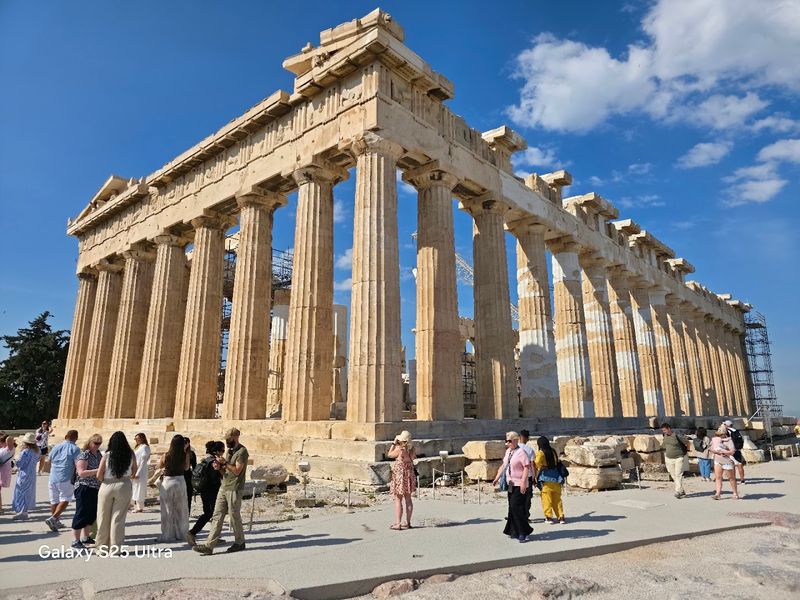
Nothing here is quite straight, and that is the point. Completed in 432 BC, the temple uses entasis, subtle curvature, and refined proportions to correct optical effects.
The sculptural program folded civic identity and myth into a marble syllabus.
It converted to church, then mosque, then endured damage and removal of sculptures, yet the platform still explains classical design choices. You can trace imperial ambitions, treasury management, and artisan training in every joint.
Conservation debates over fragments teach how heritage policy is written in public.
Standing among cranes and columns, you see maintenance as part of meaning. The Parthenon remains persuasive because its lessons are specific and testable.
Proportions, tooling marks, and surviving triglyphs turn abstract ideals into measurable craft, which is why students keep returning with notebooks.
8. The Great Wall of China (Early Sections)
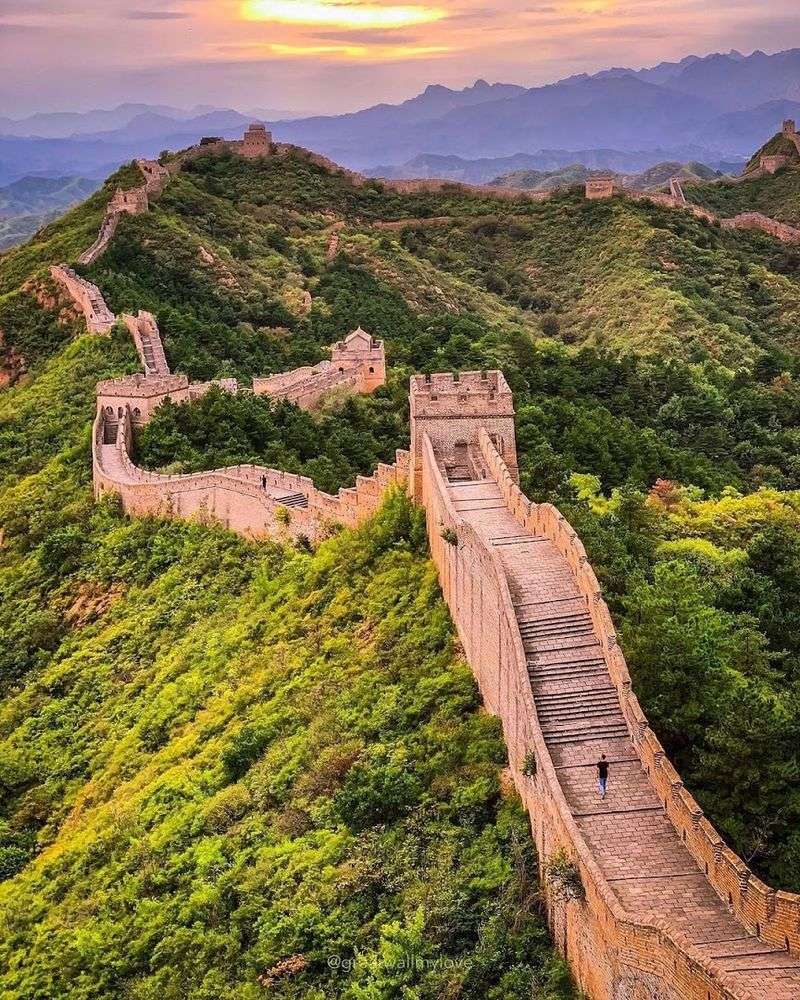
Rather than one continuous ribbon, early walls were regional projects, some dating to the 7th century BC. Rammed earth, tamped in layers, formed long segments later faced with stone and brick under different dynasties.
The system combined signal towers, garrisons, and passes to manage movement and taxation.
As states unified, sections were linked, rebuilt, or rerouted, proving infrastructure is a living document. You read policy shifts, labor practices, and regional materials in every stretch.
The wall’s longevity reflects periodic overhauls more than static preservation.
Research tracks beacon smoke formulas, courier speeds, and repair cycles. Tourism now overlays stairways and guardrails, balancing safety and authenticity.
What survives gives an audit trail of governance at scale, where distance, terrain, and neighbors shaped construction choices that still hold on mountain spines.
9. Angkor Wat (Cambodia)
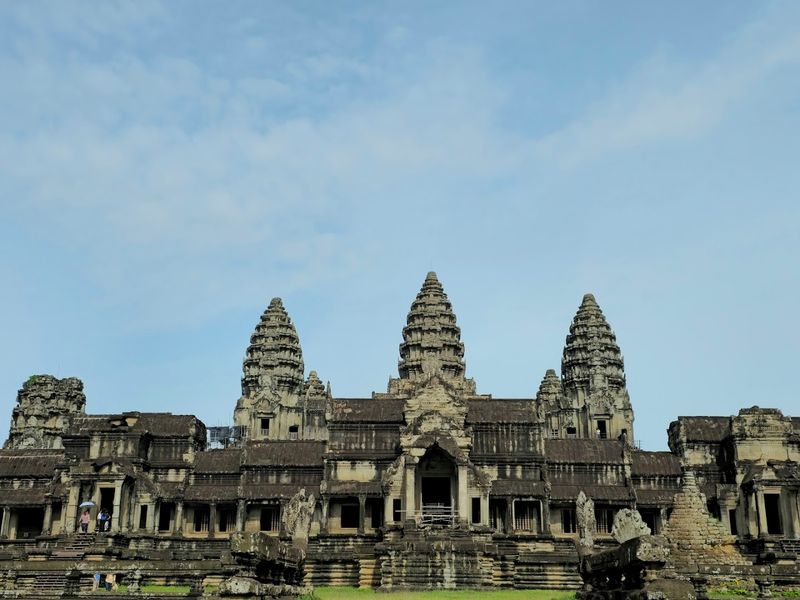
Twelfth century planners wrapped theology in hydraulics. The vast moat, causeways, and galleries organized ritual movement while also signaling state capacity.
Bas-reliefs list campaigns and myths like a carved newsletter.
Originally Hindu then predominantly Buddhist, the complex adapted without losing identity. Sandstone blocks were cut, transported, and assembled with tight joints that still handle Cambodia’s seasons.
Conservation battles erosion, vegetation, and visitor pressure, yet the silhouette remains an anchor for national symbolism.
Angkor’s survival also rests on the broader hydraulic city that fed and stabilized populations. When water systems faltered, urban density shifted, but stone records stayed legible.
Walk the corridors and you get a crash course in empire logistics, visual propaganda, and civil engineering that refuses to retire.
10. The Temple of Karnak (Egypt)
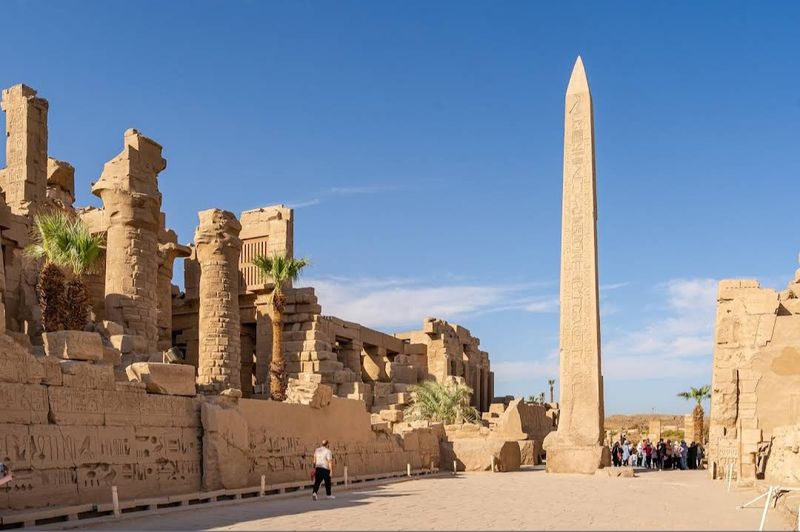
Karnak did not finish so much as pause. From around 2000 BC onward, pharaohs added pylons, obelisks, and courts, each ruler editing the campus like a running document.
The hypostyle hall’s forest of columns still turns stone into a lesson on vertical loads and shade strategy.
Inscriptions record festivals, offerings, and political claims, proving architecture can store agendas. Later reuse and dismantling supplied blocks for nearby projects, yet massive elements held ground.
Archaeology keeps reassembling fragments like footnotes back into the main text.
Conservation manages salt, groundwater, and visitor paths. You learn that durability often means planned redundancy and overdimensioned parts.
The complex remains a toolkit for understanding ritual routes, workforce organization, and how a building becomes a state archive you can walk through.
11. Machu Picchu (Peru)
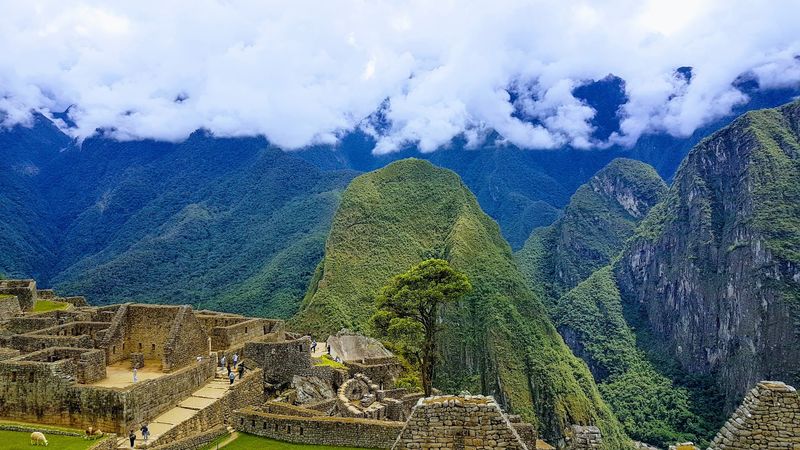
Fifteenth century planners fit terraces, canals, and housing into a ridge like a precise puzzle. Dry-stone walls with finely dressed blocks show tolerance so tight you struggle to slide paper between joints.
Agricultural steps manage soil and water as a working laboratory.
Though younger than a millennium, it demonstrates how siting protects and reveals a city. Rediscovery in the early twentieth century moved it from local memory to global syllabus.
Management now uses timed tickets and route controls to curb wear on paths and platforms.
Hydrology remains the quiet hero, with channels routing rain before it undermines foundations. You come away seeing infrastructure as the backbone of ceremony and daily life.
The place argues that longevity starts with reading terrain, not just stacking pretty stones in photogenic lines.
12. Borobudur (Indonesia)

Ninth century builders stacked a hill-shaped mandala of stone, inviting you to circle stories as you climb. Relief panels illustrate karma and teachings, while bell-shaped stupas shelter Buddha figures above.
Drainage tunnels woven through the mass show how design solved tropical downpours without drama.
Buried by volcanic ash and jungle, the monument resurfaced through colonial surveys and careful restorations. Stabilization in the 1970s used numbered blocks, geotextiles, and improved water control.
The site now balances pilgrimage, study, and visitor flow with timed entries.
What lasts here is choreography as much as masonry. The path curates attention, turning steps into chapters.
By the top, the open ring of stupas reads like a conclusion that needs no caption, and the whole complex keeps functioning as a lesson in narrative planning and climate-savvy construction.
13. The Dome of the Rock (Jerusalem)
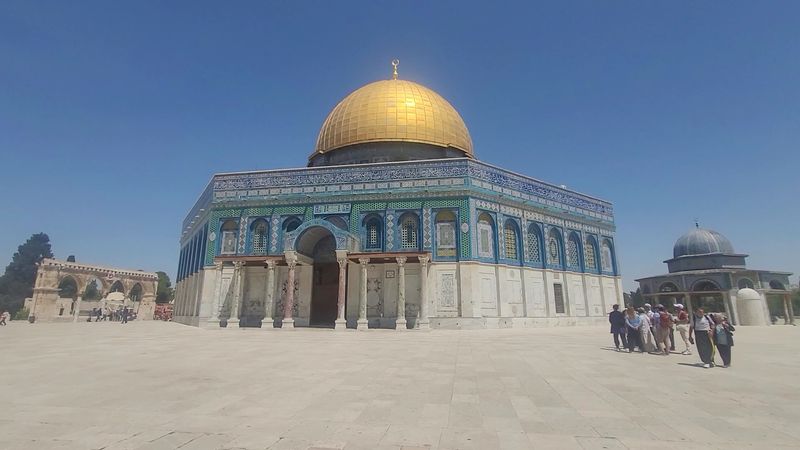
Completed in AD 691, this shrine organizes space around a rocky outcrop with an octagonal plan and a dome that became a citywide reference point. Its tilework, inscriptions, and proportions create clarity rather than spectacle.
The building reads as a diagram of beliefs, history, and civic presence.
Restorations swapped lead and gold finishes on the dome over centuries, documenting changing resources and tastes. The structure’s survival is tied to careful care and its role in urban identity.
Visitors read texts in stone and glaze instead of pamphlets.
Architecturally, the inner and outer ambulatories guide circulation. Columns and spolia register earlier eras while keeping the geometry consistent.
The dome remains persuasive because it balances monumentality with human-scale routes, letting the site serve worshippers and study without compromising either.
14. Nalanda University Ruins (India)
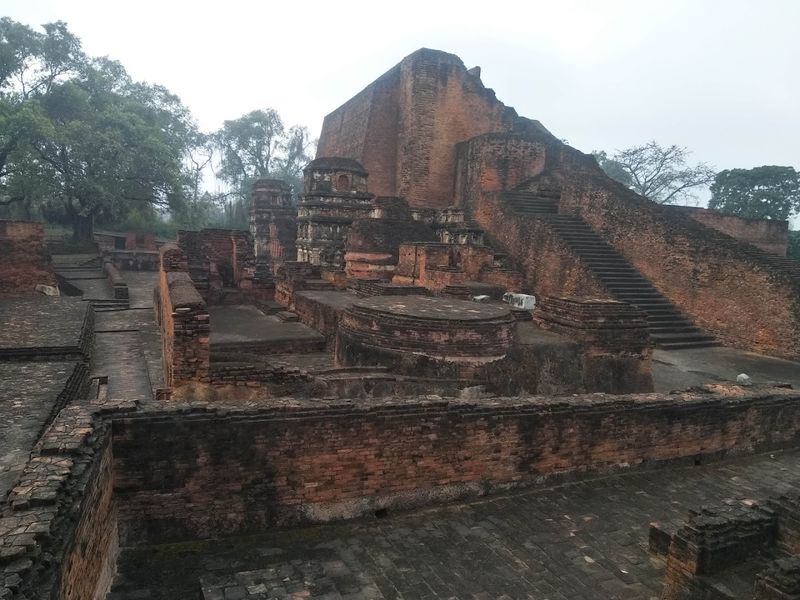
Founded in the 5th century, Nalanda scaled learning with hostels, libraries, and lecture spaces arranged around orderly courtyards. Brick construction with measured modules made repair and expansion straightforward.
Monastic rules shaped daily rhythms that modern schedules would recognize.
Texts mention thousands of students and teachers across disciplines from logic to medicine. Trade routes fed the institution with scholars and supplies, turning scholarship into regional diplomacy.
The ruins still map circulation and curriculum through doorways and platform remnants.
Excavations since the nineteenth century revealed the footprint of a large knowledge economy. Today, conservation uses brick-matching and drainage upgrades to protect fragile edges.
Walking the site, you sense how infrastructure, governance, and consistent planning maintain momentum in ideas as much as buildings.
15. The Moai Statues of Easter Island (Chile)
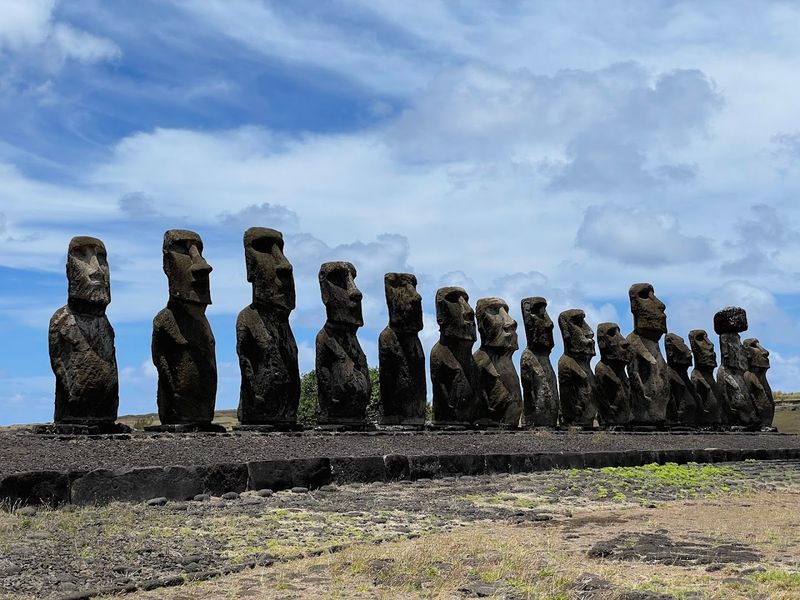
Carved between AD 1200 and 1500, moai were moved from quarries to platforms using systems that still invite debate. The statues broadcast lineage and authority, turning faces toward communities as reminders of obligations.
Tools, routes, and unfinished figures record learning curves in real time.
Restoration re-erected many moai, clarifying how bases, sockets, and crowns worked. The island’s limited resources prompted shifts in priorities, yet the sculptures continued to anchor social memory.
You read labor coordination and material limits in each carved jawline.
Archaeology pairs experimental transport trials with wear marks on roads and platforms. Careful site management now mitigates erosion and visitor impact.
The moai endure as civic markers that compress governance, engineering, and identity into silhouettes that remain unmistakable from any angle.
16. The Ajanta Caves (India)
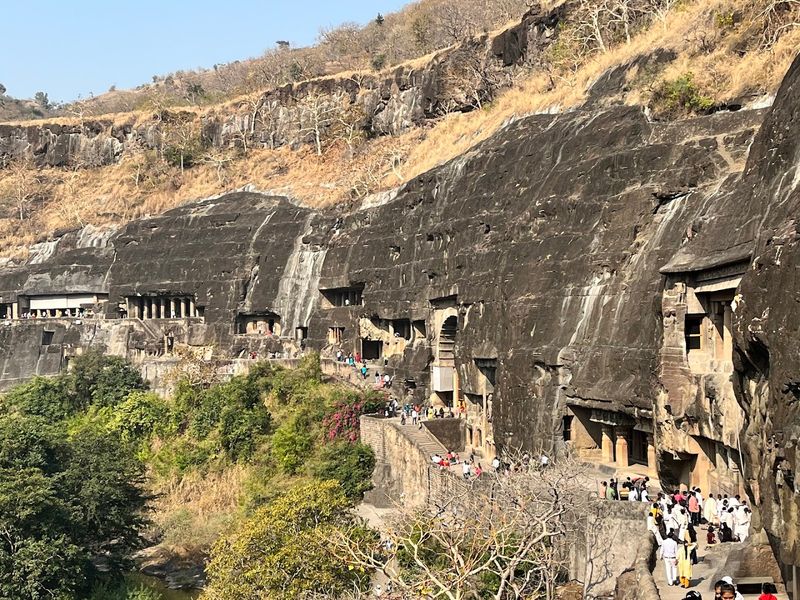
From the 2nd century BC to the 6th century AD, artisans carved monasteries and halls into a horseshoe-shaped escarpment. Rock-cut technique produced columns, facades, and interiors without freestanding blocks.
Murals narrate Jataka tales with disciplined line work and layered pigments.
Rediscovery in the nineteenth century catalyzed conservation that now balances humidity control, lighting standards, and visitor limits. The site demonstrates how paint and stone can partner for very long runs when microclimates are respected.
You observe planning in porch widths, window placements, and acoustic-friendly volumes.
Ajanta models how teaching, devotion, and craftsmanship reinforce each other. The caves remain a reference for Indian painting styles and monastic architecture.
Step by step, the sequence of spaces explains curriculum, ceremony, and rest without needing modern signage to fill in the gaps.
17. The Roman Aqueduct of Segovia (Spain)
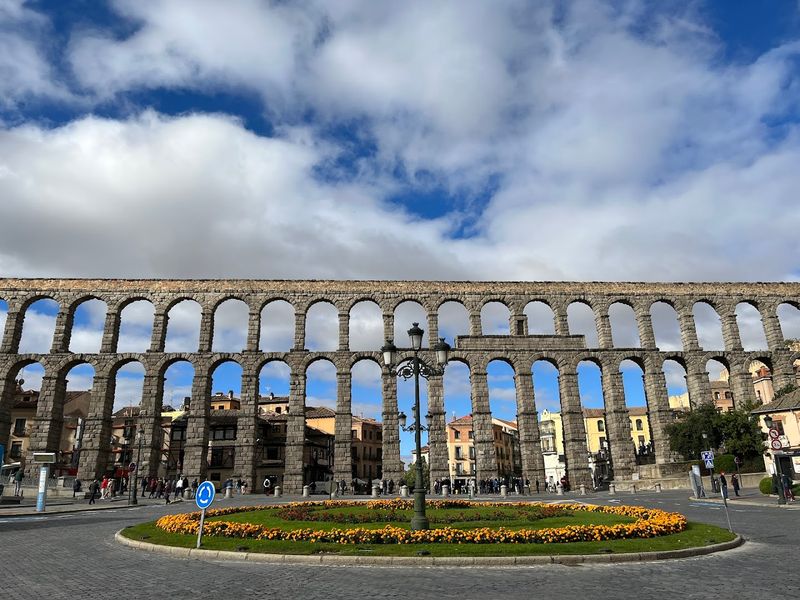
First century engineers delivered a civic service with a lineup of granite arches that skips mortar entirely. Carefully dressed blocks, friction, and geometry hold the channel high over streets.
The gradient from source to city keeps water moving like a measured sentence.
Repairs over time swapped elements, but the profile stayed honest. The aqueduct signals public investment that outlived administrations and fashion.
Local stewardship and modern regulations maintain clear spans while keeping urban life humming around the piers.
It survives because design margins were generous and materials weather well. If you want a crash course in how to build for the long term, trace a single arch and notice the repeatable parts.
Segovia’s arches prove durability is a method, not a miracle.
Share this story