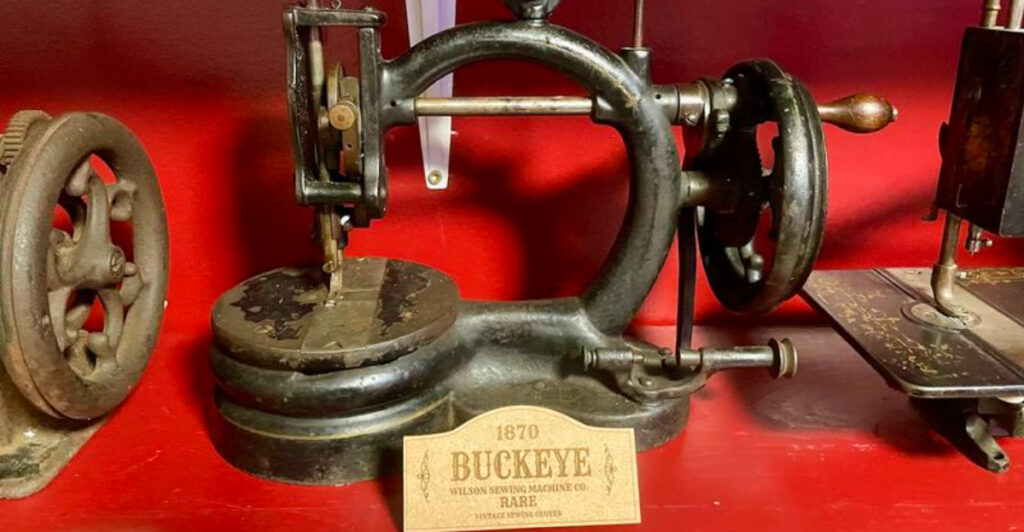
Most people drive past it without a second glance, but tucked along a busy street in Tulsa, Oklahoma, there is a place that stops curious visitors cold the moment they step inside. Rows upon rows of antique sewing machines fill every corner, each one carrying a story that stretches back decades or even centuries.
The man behind it all built this collection almost by accident, and what started as a simple need to fix a broken machine turned into one of the most unusual and deeply personal museums in the entire country. This is the kind of place where you plan to spend an hour and walk out three hours later, still buzzing with everything you just learned.
Where to Find This One-of-a-Kind Museum

The Vintage Sewing Center and Museum sits at 5528 S Peoria Ave, Tulsa, OK 74105, right in the heart of a neighborhood that does not immediately scream “world-class collection.” That contrast is part of what makes finding it feel so rewarding.
The building is modest from the outside, which means many people drive right past it without realizing what is waiting behind the door. Once you know it is there, though, it becomes one of those addresses you share with everyone you know who visits Tulsa.
The museum is open Tuesday through Saturday from 12 PM to 6 PM, and it is closed on Sundays and Mondays. You can reach them by phone at 918-280-0161 or check updates on their Facebook page before heading over.
Parking is easy, the entrance is straightforward, and the whole setup feels welcoming rather than intimidating. Oklahoma has plenty of well-known attractions, but very few carry the kind of personal warmth this small storefront delivers the second you walk in.
The Accidental Origin Story Behind the Collection

Few museum origin stories are as genuinely entertaining as the one behind this collection. W.K.
Binger spent around 30 years in the tree-trimming and stump-grinding business before he ever touched a sewing machine.
In 2016, all he wanted to do was reupholster his boat and go fishing. He bought a so-called heavy-duty sewing machine from a craft store for $99 and broke it within a couple of hours.
That small disaster sent him down a path he never saw coming.
A contact pointed him toward a man who could help him find a more suitable machine. That man handed over one machine on the condition that Binger also take two others and find good homes for them.
That simple handshake deal was the spark that lit the whole fire.
By around 2017, what had started as a practical errand had quietly become a full-scale museum. W.K.
Binger is also an inventor who holds multiple patents, which helps explain why a man who had never sewn before could end up building something this remarkable out of pure curiosity and determination.
Over 700 Machines and Every One Has a Name

The sheer volume of machines inside this museum is the first thing that hits you. The collection numbers in the hundreds, with reports of over 700 antique and vintage sewing machines gathered from across the country and around the world.
What sets this collection apart from a typical display is that W.K. knows the personal history behind each piece. He can tell you who owned a specific machine, the name of that person’s grandmother, and exactly what type of fabric or material the machine was originally built to handle.
There is a machine designed specifically for sewing hammocks. There are machines built for leather, for book-binding, for sails, and for tents.
The variety is a reminder that sewing machines were never just about clothing.
Historians note that more sewing machines have been manufactured since their invention than any other type of machine in world history, with enormous investment poured into their engineering and design. Standing inside this museum, surrounded by that history from every angle, makes that fact feel completely believable and genuinely staggering at the same time.
A Hands-On Experience Unlike Any Other Museum

Most museums put up a rope and a sign that says do not touch. This one hands you a chair and invites you to sit down at the machine.
That single policy changes everything about how a visit here feels.
Guests are encouraged to actually operate the machines, not just admire them from a distance. Some of those machines are enormous, including a leather sewing machine roughly the size of a small car, and visitors have had the chance to run it themselves under W.K.’s guidance.
That hands-on approach turns what could have been a quiet stroll through a collection into something much more alive. Your hands remember things your eyes sometimes forget, and working a treadle or pressing a foot pedal on a 100-year-old machine creates a connection to the past that no informational plaque can replicate.
Groups of three, couples celebrating anniversaries, solo travelers caught in the rain, and curious locals have all found themselves spending two or three hours here without planning to. The experience has a way of expanding to fill whatever time you give it, and most people leave wishing they had given it more.
The Guided Tour That Turns History Into a Story

A self-guided walk through the collection is genuinely interesting on its own. But the guided tour W.K.
Binger leads is where this museum transforms into something you will talk about for years.
He does not recite dry facts from a script. He tells stories, the kind with names and details and unexpected turns that make you lean in closer.
He knows which famous person donated a particular machine, what that machine was used for, and how it ended up traveling across the country before landing here in Tulsa, Oklahoma.
His delivery mixes deep knowledge with genuine warmth and a personality that visitors consistently describe as a little wonderfully unpredictable. That combination keeps the tour moving at a pace that never drags, even for visitors who walked in with zero interest in sewing history.
The admission structure has varied over time, with some visitors noting a $10 per person fee and others reporting no admission charge at all. It is worth calling ahead at 918-280-0161 to confirm current details.
Either way, the experience consistently delivers far more value than whatever is asked at the door.
Youth Programs That Teach Kids to Create

Beyond the collection itself, the Vintage Sewing Center and Museum runs active programs for young people that go well beyond basic sewing lessons. W.K.
Binger has built a teaching philosophy around the idea that creativity requires the freedom to stumble.
His exact words on the subject sum it up well: if you are not willing to live on the edge of failure, you are not using all your creativity. He keeps the work his students produce, including the pieces that did not turn out as planned, because he sees those as proof of real effort and real learning.
The program welcomes students of all abilities. W.K. has worked with autistic students and a blind student, and his approach is consistent across the board: if a kid has an idea, he does not redirect them toward an easier path.
He lets them work through it at their own pace.
Seeing the finished projects displayed in the museum adds a whole extra layer to the visit. The handiwork on display from these young creators is genuinely impressive, and it gives the museum a living, ongoing quality that most static collections simply do not have.
Custom Tiles and Laser Printing Surprises

Not everyone who visits the Vintage Sewing Center and Museum is a sewer, and W.K. Binger has a creative solution for that.
He uses a laser printer to design and produce custom tiles for visitors, a personal keepsake that ties directly to the experience of being there.
The process is genuinely interactive. He asks questions about your hobbies and interests, shows you previous designs he has created, and then works with you to settle on something that feels personal rather than generic.
The tile takes about 20 minutes to produce, and the conversation that happens during those 20 minutes is half the point.
One visitor described the whole experience as overwhelming in the best possible way, noting that W.K. kept showing new designs and sharing stories until the tile was ready, and then walked her to her car with the tile and a keychain in hand. That kind of personal attention is rare anywhere, let alone in a museum setting.
The custom tile offering is a clever way to make sure every visitor leaves with something tangible. It also reflects W.K.’s broader instinct for making people feel genuinely welcome rather than just processed through a ticketing line.
Machines That Sew Far More Than Clothing

One of the most eye-opening things about this museum is how quickly it dismantles the assumption that sewing machines exist only to make clothes. The collection covers an extraordinary range of industrial and specialized machines, each one built for a very specific purpose.
There are machines designed for hammocks, machines for sewing sails on large boats, machines for binding books, and machines built to handle thick leather upholstery. Some of these pieces are enormous, with industrial frames that look more at home in a factory than a museum gallery.
W.K. explains each machine’s function clearly and with obvious enthusiasm, connecting the technical details to the broader story of how manufacturing and craft evolved over the past 150 years. Hearing him describe what a specific machine was built to do, and then actually seeing it up close, turns abstract history into something concrete and fascinating.
For visitors who assumed this would be a quiet room of delicate domestic machines, the industrial section tends to land as a genuine surprise. The leather sewing machine alone, reportedly the size of a small automobile, has a way of stopping people mid-step and making them reconsider everything they thought they knew about the craft.
The Atmosphere Inside the Museum
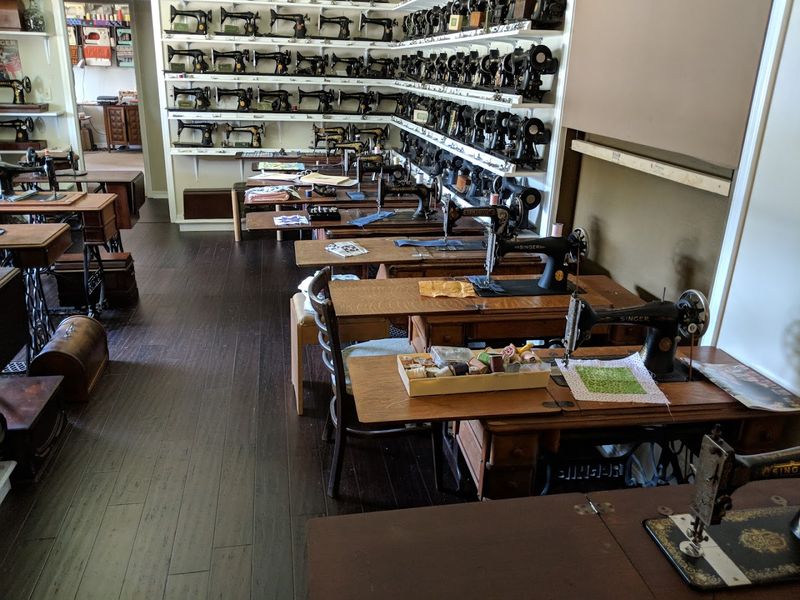
The inside of the Vintage Sewing Center and Museum is dense in the best possible way. Every surface holds something worth looking at, from compact domestic machines to hulking industrial models, with accessories, parts, and related artifacts filling the spaces in between.
The layout has an organized quality despite how full the space feels. W.K. has arranged the collection thoughtfully, and even on a solo visit without a guided tour, there is a clear sense that every item has been placed with intention rather than just stacked wherever it fits.
The lighting is warm and the overall atmosphere feels more like visiting a passionate collector’s personal workshop than walking through a formal institution. That informality is a feature, not a flaw.
It makes the whole experience feel accessible and inviting rather than hushed and hands-off.
Visitors who spent time browsing on their own consistently report that two hours passed before they realized how long they had been there. The density of the collection rewards slow, careful looking, and there is always something new to notice in a corner or on a shelf that did not catch your eye on the first pass.
Why Non-Sewers Love This Place Too

A common thread running through visitor accounts of this museum is surprise. People who came to support a sewing-enthusiast partner or friend ended up just as captivated as the person they tagged along with, sometimes more so.
The reason is straightforward: W.K. does not pitch this place as a sewing museum. He pitches it as a history museum where the machines happen to be the artifacts.
The industrial innovation, the personal stories, the social history of manufacturing, and the sheer ingenuity of 19th and early 20th century engineering all come through clearly in his presentations.
Couples celebrating anniversaries have reported that both partners left equally impressed. Groups of three where only one person sews have found that all three walked out buzzing.
The common denominator is always W.K.’s ability to find the angle that connects with whoever is standing in front of him.
No particular background in sewing, textiles, or history is needed to get full value from a visit here. An open mind and a willingness to let W.K. take the lead is genuinely all that is required, and the museum delivers something memorable every single time regardless of what you walked in expecting.
Practical Tips for Planning Your Visit

A few practical details can make the difference between a smooth visit and a frustrating one. The museum is open Tuesday through Saturday from 12 PM to 6 PM, and it is fully closed on Sundays and Mondays, so plan accordingly.
Hours listed on third-party travel sites have occasionally been inaccurate, so calling ahead at 918-280-0161 or checking the Facebook page before you go is genuinely worth the extra two minutes. At least one visitor sat in the parking lot on a rainy day after arriving based on incorrect information from a travel platform.
Budget more time than you think you need. Most visitors who planned for an hour ended up staying two to three hours.
W.K.’s stories have a way of making time disappear, and rushing through the collection would mean missing most of what makes it special.
The museum accepts donations, and visitors who felt the experience exceeded expectations have noted leaving more than they originally planned to. There is a donation box on-site for those who want to support the youth programs W.K. runs.
Oklahoma has no shortage of interesting stops, but few offer this level of personal engagement for the price of an afternoon.
A Tulsa Treasure Worth the Trip From Anywhere

Some places earn their reputation quietly, through word of mouth and repeat visits rather than billboard campaigns or travel magazine features. The Vintage Sewing Center and Museum in Tulsa, Oklahoma, is exactly that kind of place.
It holds a 4.8-star rating across more than 120 reviews, and the enthusiasm in those reviews is consistent and specific in a way that generic praise rarely is. People name the hammock machine.
They describe the tile they took home. They mention the exact stories W.K. told them.
That specificity is a reliable sign of a genuinely memorable experience.
Visitors have traveled from 12 hours away and said they would make the drive again. Others have called it the best museum they have visited anywhere in the country.
Those are strong claims, but they keep appearing independently across different accounts, which gives them real weight.
Oklahoma is home to plenty of well-marketed attractions, but the Vintage Sewing Center and Museum earns its praise the old-fashioned way: through personal connection, deep knowledge, and a host who treats every visitor like the most interesting person to walk through the door that day. That is not something you can manufacture, and it is exactly why this place is worth finding.
Share this story