There is a place in Tulsa, Oklahoma, where the handwritten notebooks, original guitars, and personal photographs of one of the most influential musicians in American history are kept safe and shared with the world. Bob Dylan donated his personal archive to this city, and the result is a museum experience unlike anything most people have ever walked through.
With over 100,000 rare items on display and in storage, the Bob Dylan Center is a serious cultural landmark that rewards both lifelong fans and curious first-timers. Whether you spend two hours or an entire day here, you will leave knowing far more about the man, the music, and the era that shaped modern American culture than when you arrived.
Where the Legend Lives: Address and Location
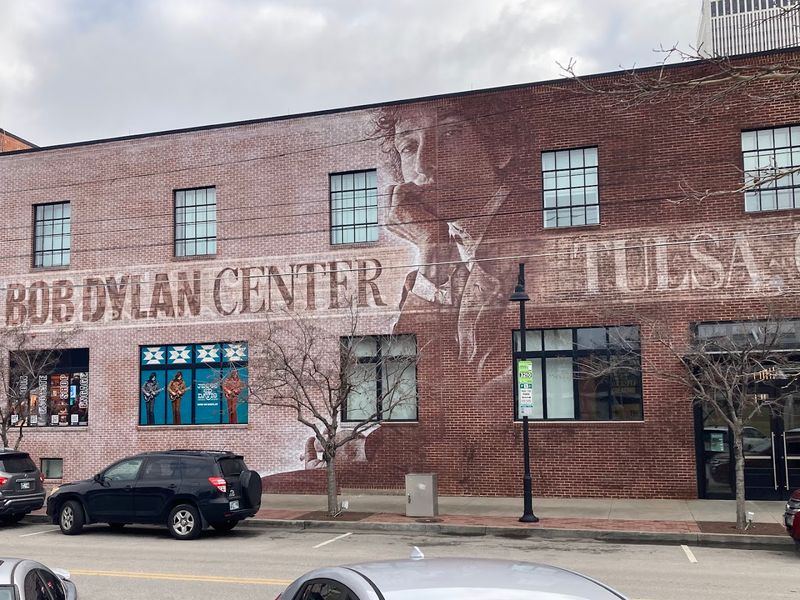
Right in the heart of downtown Tulsa, Oklahoma, at 116 Reconciliation Way, Tulsa, OK 74103, the Bob Dylan Center sits as a proud cultural anchor in the Greenwood Arts District. The building is part of a broader cultural corridor that includes the Woody Guthrie Center nearby, making this stretch of Tulsa a genuine destination for anyone who cares about American music history.
The museum is open Wednesday through Sunday from 10 AM to 6 PM, and it is closed on Mondays and Tuesdays. That schedule gives you a solid window to plan your visit, and the good news is that your ticket is valid for the entire day.
You can step out for lunch and come back inside without paying again.
The phone number is +1 918-392-3353, and the website at bobdylancenter.com has ticketing information, current exhibits, and event updates. Parking in the area is manageable, and the location puts you within easy walking distance of other Tulsa attractions.
The staff at the front desk are genuinely warm and helpful, setting a welcoming tone from the moment you walk through the door.
Over 100,000 Items: The Scale of the Archive
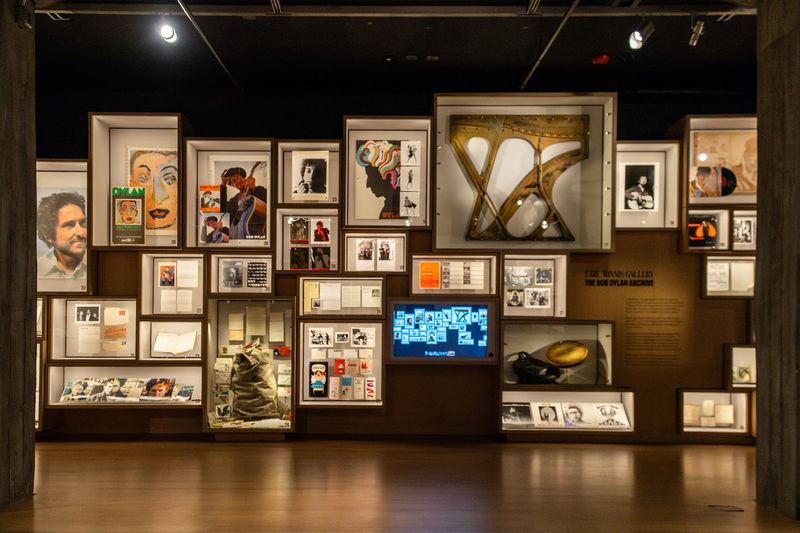
The number that stops most people cold is 100,000. That is how many items Bob Dylan personally donated to form the foundation of this museum and its research archive.
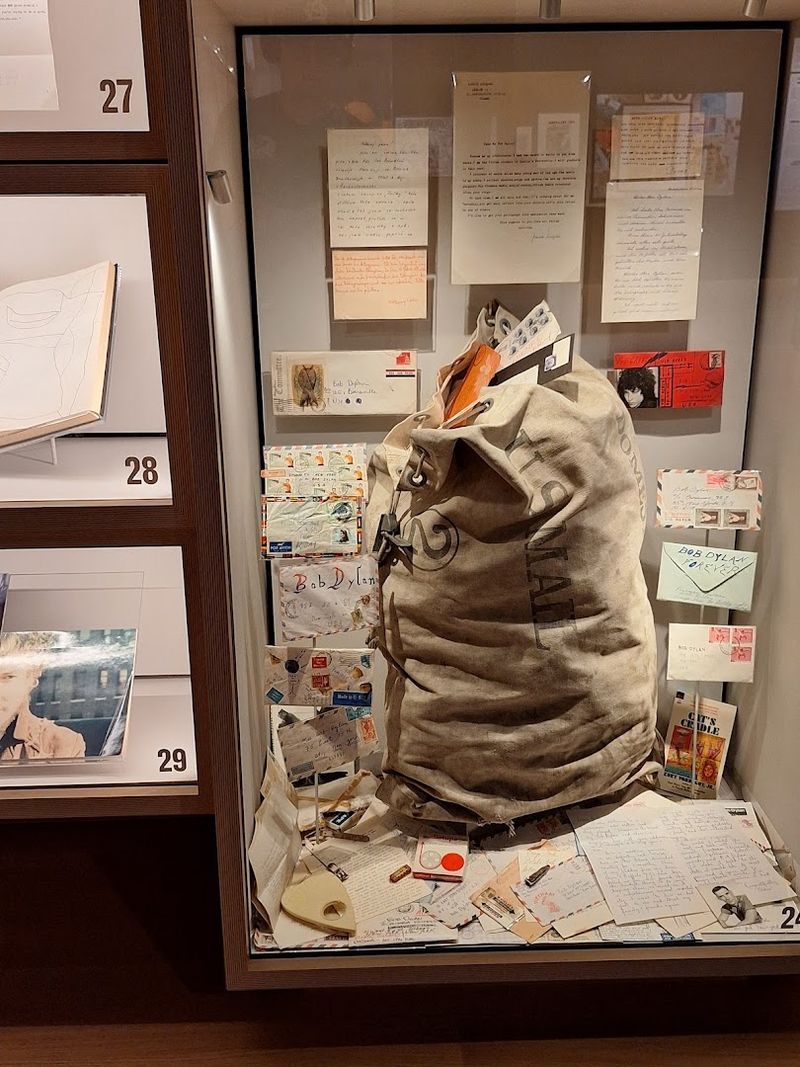
The collection includes handwritten song lyrics, correspondence, photographs, film reels, notebooks, artworks, and objects from across six decades of one of the most storied careers in music history.
Not everything is on the main exhibition floor at once, of course. A rotating selection of highlights is displayed for visitors, while the rest is preserved and made available to researchers and scholars.
The sheer volume of material means that no single visit could cover it all, and the museum does a thoughtful job of choosing what to show and how to present it.
What makes this archive feel different from a typical celebrity museum is the depth of the personal material. These are not just signed posters or tour jackets.
They are the actual working documents of a creative mind, and being in the same room with them carries a weight that is hard to shake once you feel it.
The Handwritten Lyrics That Tell a Deeper Story
One of the most fascinating parts of the Bob Dylan Center is the collection of handwritten lyrics that show how songs evolved from rough ideas into finished classics. Seeing crossed-out lines, margin notes, and multiple drafts of songs you have heard hundreds of times is a genuinely surprising experience.
It makes the creative process feel real and human in a way that a finished recording never quite can.
The museum takes this material seriously and presents it with care, pairing the handwritten pages with context about when and why the song was written. For songs like “Tangled Up in Blue,” visitors can trace entire creative journeys through the revisions on the page.
The penmanship alone is worth studying.
Teachers, writers, and anyone who has ever tried to create something from scratch will find this section especially compelling. Watching how a legendary songwriter wrestled with word choices and structure is both humbling and encouraging.
It is a reminder that great work rarely arrives fully formed, and that persistence and revision are just as important as raw inspiration.
Guitars, Stage Gear, and the Electric Moment
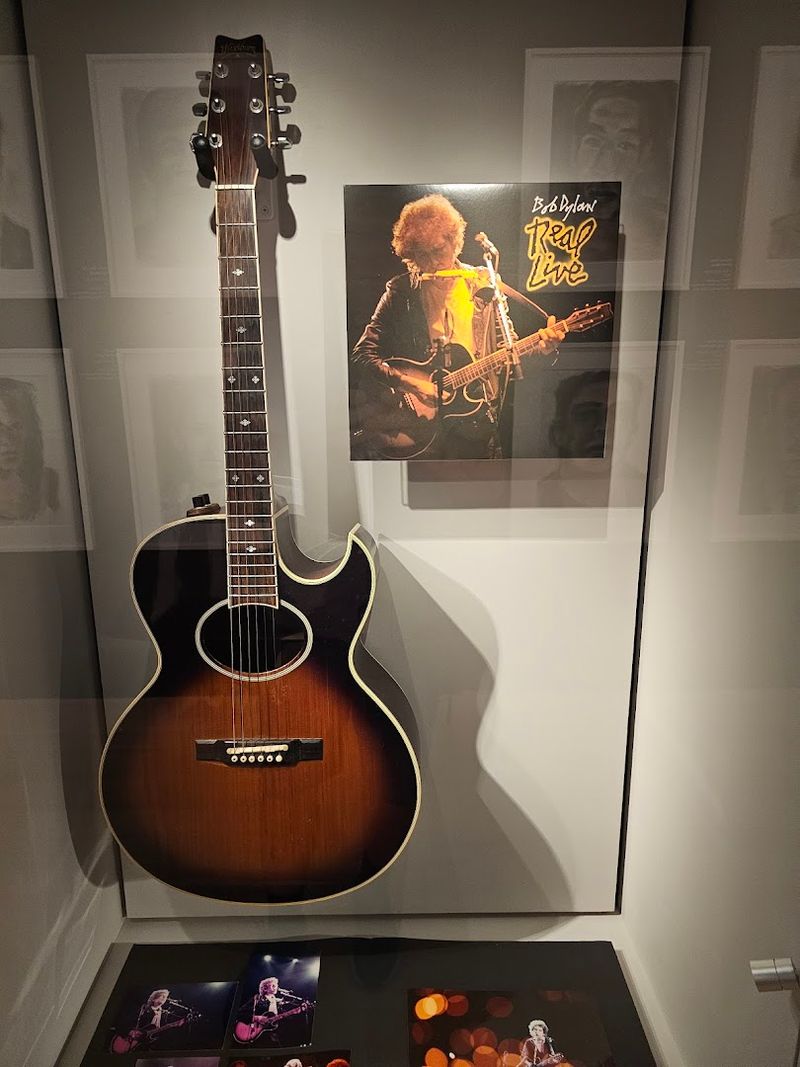
For anyone who plays guitar, the instrument displays at the Bob Dylan Center land differently than everything else. These are not replicas or commemorative editions.
These are the actual guitars Bob Dylan played on stage and in the studio, and standing a few feet away from them is a quietly thrilling experience.
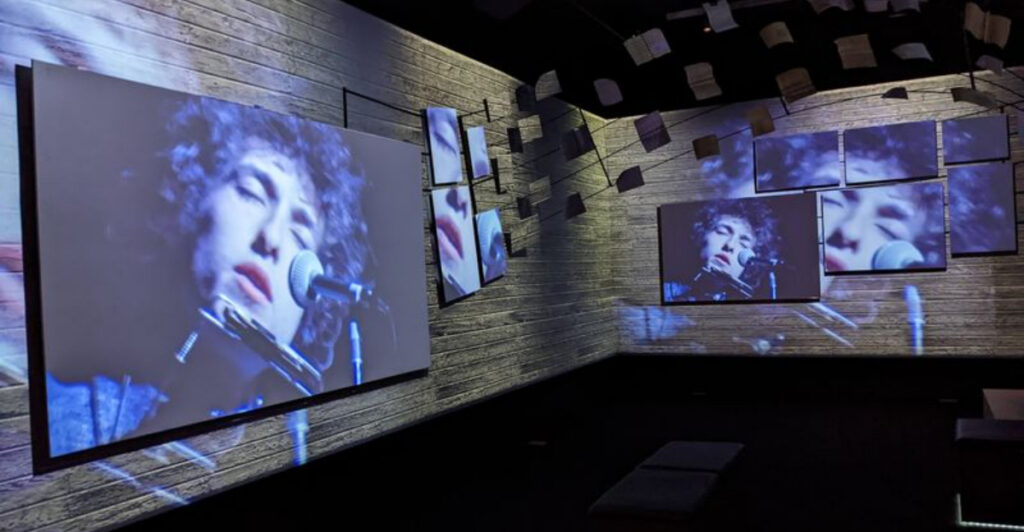
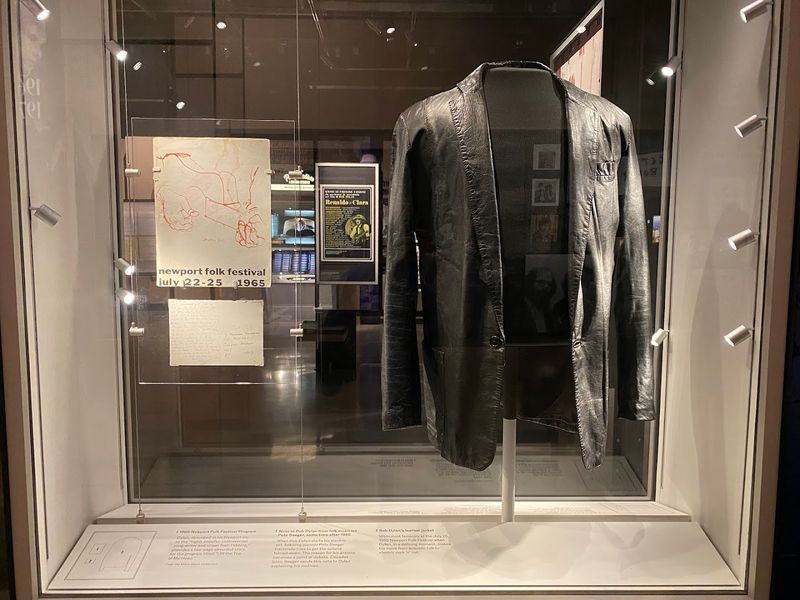
The “Going Electric” exhibit is one of the most talked-about sections in the building. It documents the moment at the 1965 Newport Folk Festival when Dylan plugged in and changed the direction of popular music.
The artifacts, text panels, and audio components in this section do an excellent job of explaining why that moment was so significant, not just for Dylan, but for how the world understood rock and roll as an art form.
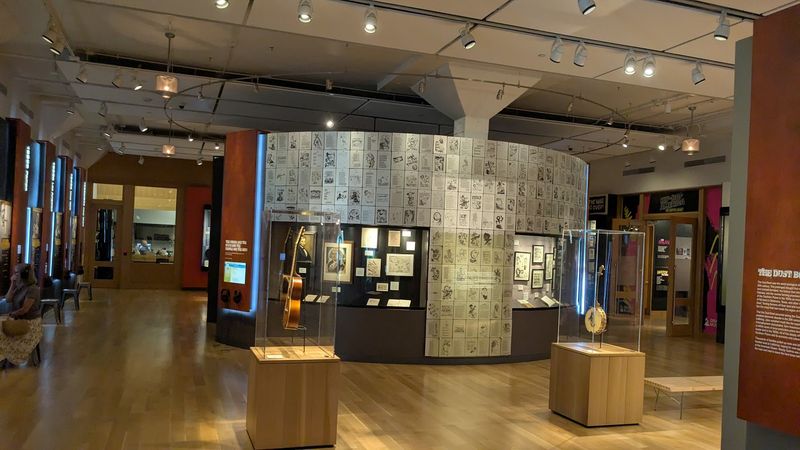
The collection spans decades, showing instruments from his earliest folk performances through his later years. Each guitar carries its own history, and the museum provides enough context to make each one feel like a character in a larger story.
Serious musicians tend to linger here longer than anywhere else in the building, and honestly, that is completely understandable.
The Immersive Audio Experience
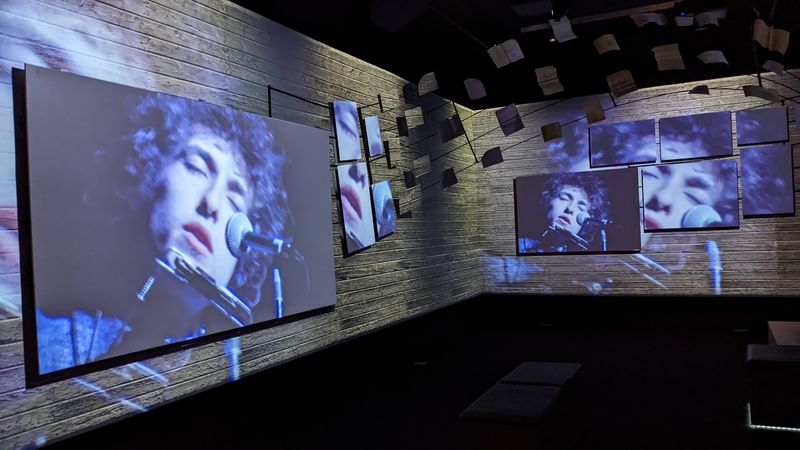
The audio guide system at the Bob Dylan Center is one of the smartest things about the whole visit. Each guest receives an iPod and headphones, and the music and interview clips are synced to the exhibits so that what you hear matches exactly what you are looking at.
It sounds simple, but the execution is genuinely impressive.
Hearing Dylan’s voice, his music, and archival interview recordings while standing in front of the objects connected to those moments creates a layered experience that static museum labels simply cannot replicate. The sound design feels intentional and personal rather than like a generic audio tour slapped onto an existing exhibit.
Visitors who have spent time at other music museums often single out this feature as what sets the Bob Dylan Center apart. The headphones create a kind of private, focused relationship between the visitor and the material, which is especially valuable in a place this dense with content.
Some people spend seven or eight hours here on a single ticket, and the audio system is a big reason why the time passes so easily and so well.
The Introductory Film That Sets the Stage
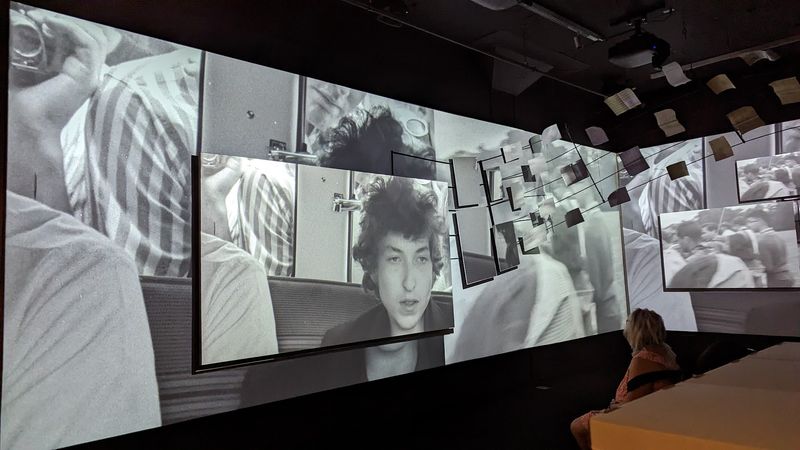
Before you reach the main exhibits, the Bob Dylan Center greets you with a short introductory film that blends historical footage, music, and biographical context into a compelling opening act. Several visitors describe it as one of the strongest parts of the entire experience, and it earns that praise by doing something simple really well: it gives you the background you need without talking down to you.
The film covers Dylan’s roots in Minnesota, his early years in New York, and the cultural forces that shaped his early work. For newcomers, it provides a foundation.
For longtime fans, it reframes familiar stories with fresh detail and well-chosen imagery.
The visual and sound design of the film reflects the same care that runs through the rest of the museum. Nothing feels rushed or generic.
The pacing is deliberate, and the music choices are excellent, which should surprise no one given the subject matter. By the time the film ends and you step into the main gallery, you are genuinely ready to engage with everything ahead of you.
It is a strong opening move from a museum that clearly thought hard about the visitor journey from start to finish.
Temporary Exhibits That Keep Things Fresh
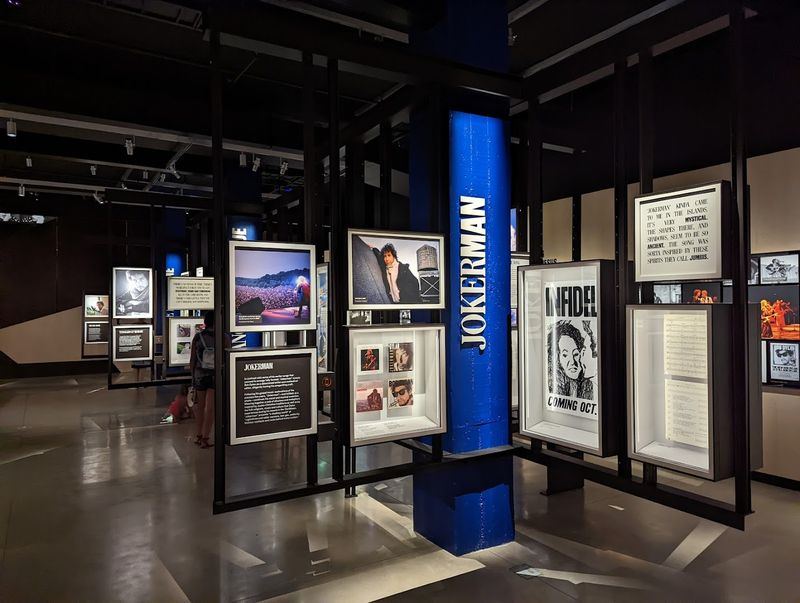
The permanent collection is reason enough to visit, but the Bob Dylan Center also runs rotating temporary exhibits that give repeat visitors something new to explore each time. One recent temporary exhibit focused specifically on Dylan’s legendary 1965 Newport Folk Festival performance, and the response from visitors was enthusiastic across the board.
That exhibit used curated artifacts, photographs, and detailed text panels to explore why the Newport performance mattered so much, both in the context of Dylan’s career and in the broader story of American music. It treated visitors as intelligent adults who could handle nuance and complexity, which is refreshing in any museum setting.
Past temporary exhibits have also spotlighted connections between Dylan and other major artists, with nods to figures like the Beatles and Jimi Hendrix woven into the broader narrative of his cultural influence. These additions make the museum feel alive rather than static.
The programming team clearly works hard to keep the experience evolving, and for a place that could easily rest on the strength of its permanent archive, that ongoing effort is genuinely appreciated by the people who keep coming back.
The Creative Process on Display
A recurring theme throughout the Bob Dylan Center is transparency about the creative process. The museum does not just show you the finished products.
It shows you the work that went into making them, and that approach transforms the experience from a tribute into something more like a masterclass.
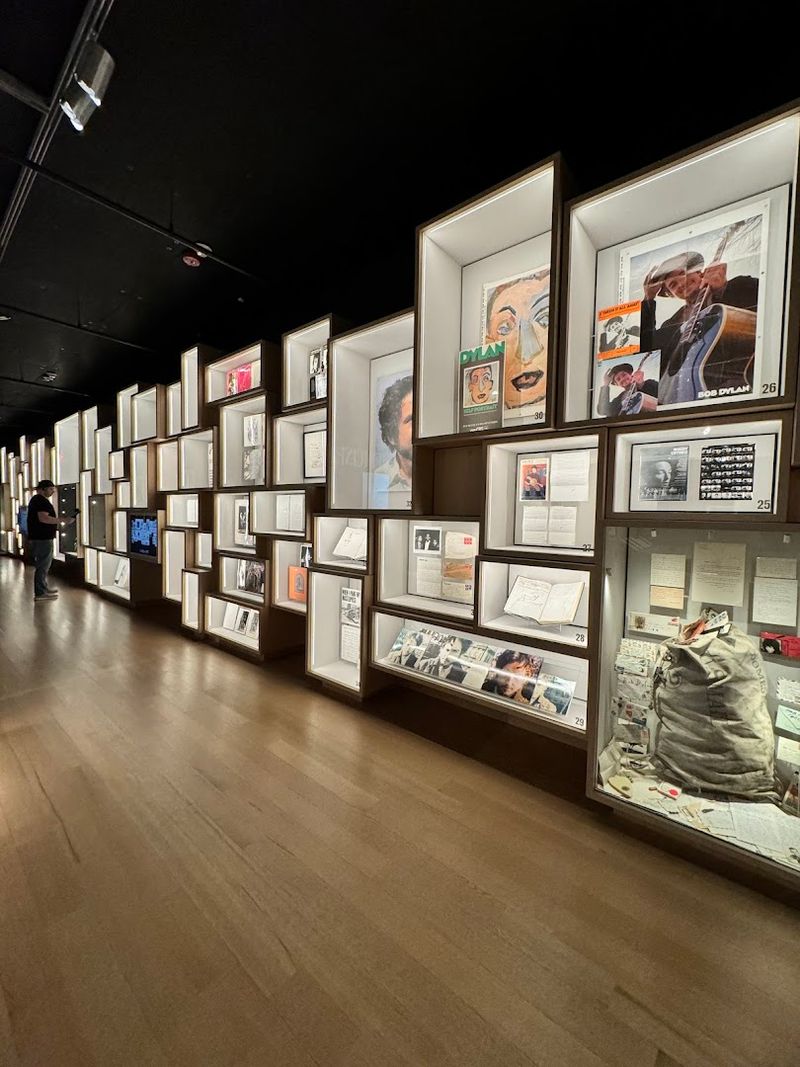
Notebooks filled with ideas, correspondence with collaborators, and personal documents that reveal how Dylan thought about his craft are presented alongside the recordings and performances they eventually produced. The connections between private thought and public art are made visible in a way that few other museums manage to achieve.
For students, writers, musicians, and anyone curious about how creative work actually happens, this is the most valuable part of the entire museum. It demystifies greatness without diminishing it, which is a genuinely difficult balance to strike.
Oklahoma has a strong tradition of honoring its cultural figures, and the Bob Dylan Center carries that tradition forward with a level of scholarly care and public accessibility that makes the archive useful rather than just impressive. The result is a museum that teaches as much as it celebrates.
The Visual Art Side of Bob Dylan
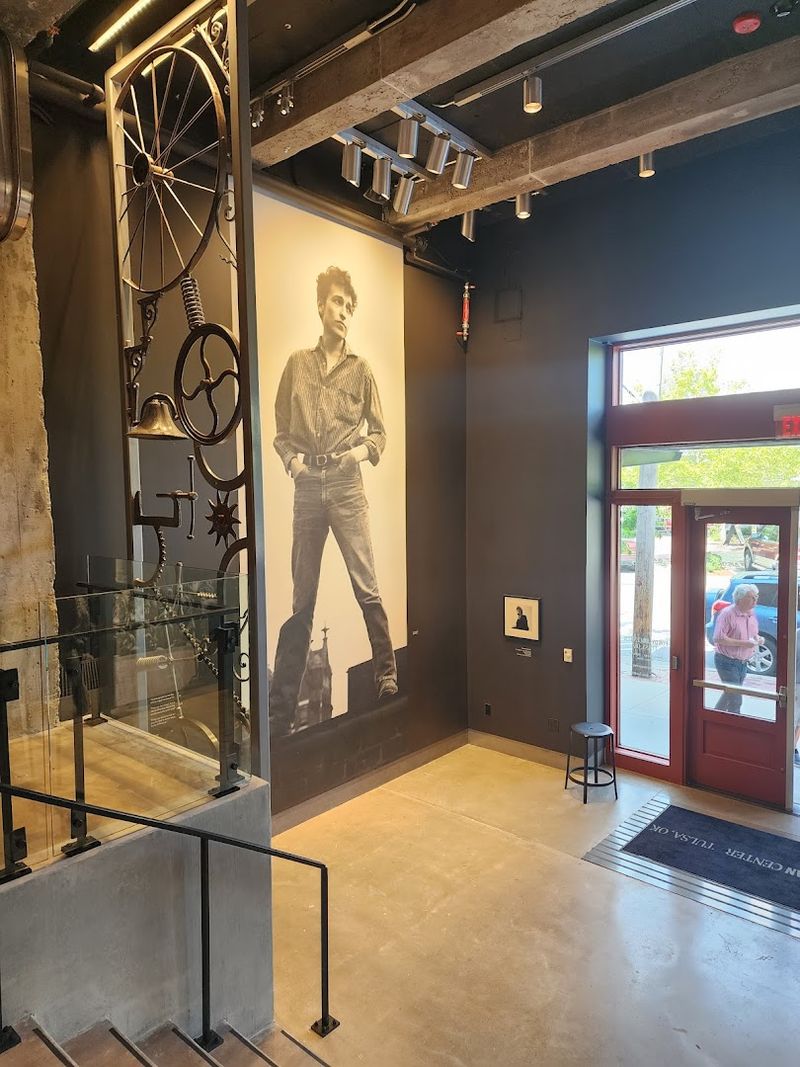
Most people know Bob Dylan as a musician and songwriter, but the Bob Dylan Center makes a strong case for taking his visual art just as seriously. At the entrance to the building, a two-story metal sculpture created by Dylan himself sets an immediate and striking tone.
It is the kind of piece that stops you before you even reach the ticket desk.
Throughout the museum, Dylan’s paintings, drawings, and other visual works are presented alongside his musical output, making it clear that his creative energy has never been confined to a single medium. The range of the work is genuinely surprising, and the quality holds up under close examination.
For visitors who arrive as music fans and leave as admirers of Dylan’s broader artistic output, this section often comes as the biggest revelation of the day. The museum treats the visual work with the same respect and context it gives to the music, and that decision pays off.
You leave with a more complete picture of who Bob Dylan actually is as an artist, not just as a figure in the history of popular music. That fuller portrait is one of the museum’s most lasting gifts to its visitors.
Staff, Docents, and the Human Touch
A museum is only as good as the people who run it, and the Bob Dylan Center has clearly put real thought into hiring and training staff who genuinely love the material. The docents are knowledgeable, approachable, and enthusiastic without being overwhelming, which is a harder balance to strike than it sounds.
Multiple visitors mention specific staff members by name when describing their experience, which tells you something important about the quality of the human interactions here. When someone drives 900 miles to visit a museum and then specifically praises the staff in their review, that is not a small thing.
It reflects a culture of hospitality that starts at the top and runs through the entire operation.
The docents can answer detailed questions about specific artifacts, point you toward exhibits you might otherwise miss, and help you get the most out of your time in the building. For first-time visitors who feel a little overwhelmed by the scale of the collection, talking to a staff member early in your visit is genuinely useful.
The warmth of the people here adds a layer of welcome to the experience that no exhibit label can replicate, and it makes the whole visit feel personal rather than transactional.
Planning Your Visit: Tips and Practical Details
A few practical details can make a real difference in how much you enjoy your time at the Bob Dylan Center. First, plan for more time than you think you need.
Most visitors who try to rush through in an hour end up wishing they had stayed longer, and the all-day ticket policy makes it easy to pace yourself without pressure.
Getting the audio guide is strongly recommended. The iPod and headphones system is free with admission and adds significant depth to every section of the museum.
Skipping it to save time is a trade-off that most visitors end up regretting once they see how well the audio integrates with the exhibits.
The museum is open Wednesday through Sunday from 10 AM to 6 PM, so if you are planning a trip to Tulsa, build your schedule around those days. The Greenwood Arts District location means you can combine the visit with the nearby Woody Guthrie Center and other local attractions for a full day of Oklahoma cultural exploration.
Arriving early gives you quieter time with the exhibits before crowds build, and the staff is always ready to help you navigate the collection and find the sections that matter most to you.
Why This Museum Matters Beyond the Fan Base
Not every visitor to the Bob Dylan Center arrives as a dedicated fan, and the museum works just as well for the curious newcomer as it does for the devoted collector. The way the exhibits are structured means you can appreciate the cultural and historical significance of the material even if you have never owned a single Dylan record.
The museum places Dylan’s work in the context of American history, the civil rights movement, the folk revival, the birth of rock and roll as a serious art form, and the evolution of popular culture across six decades. That broader framing makes it relevant to anyone interested in American history, not just music lovers.
Oklahoma has embraced this collection with real pride, and the Bob Dylan Center has become a genuine point of civic identity for Tulsa. The city invested in building a world-class cultural institution around this archive, and the result speaks for itself in the form of a 4.9-star rating from hundreds of visitors who came from across the country and around the world.
For a museum that opened relatively recently, that kind of reputation is earned one thoughtful exhibit at a time.
Share this story