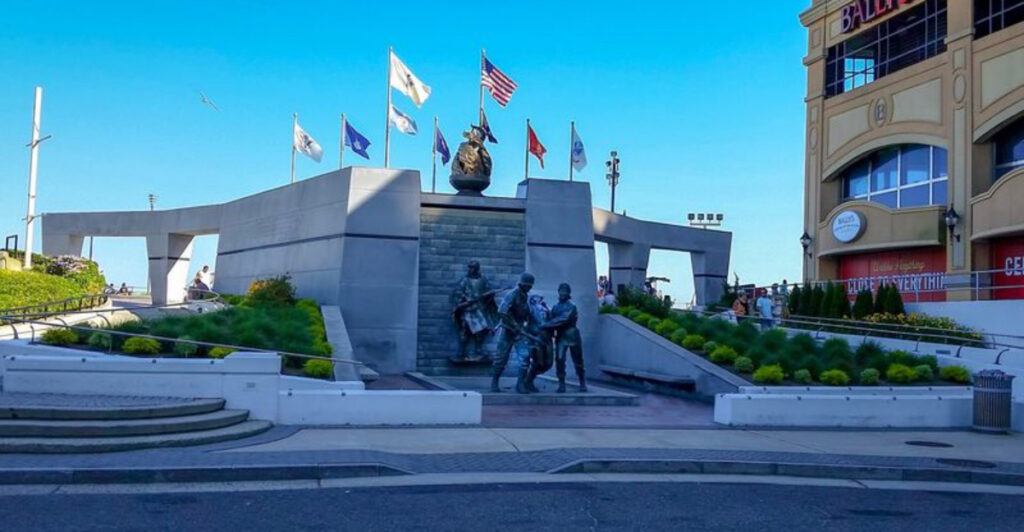
Atlantic City is famous for its boardwalk, casinos, and beaches, but there is one spot along the shore that stops people in their tracks for a completely different reason. Tucked near the intersection of Park Place and the Boardwalk, a powerful tribute to New Jersey’s Korean War veterans stands as a reminder that some stories are too important to forget.
The Korean War is often called the “Forgotten War,” yet this memorial works hard to make sure that label never sticks. Bronze figures, a reflective name wall, an eternal flame, and stories of extraordinary courage come together in one place to create something that stays with you long after you leave the beach behind.
Where to Find It and What to Expect
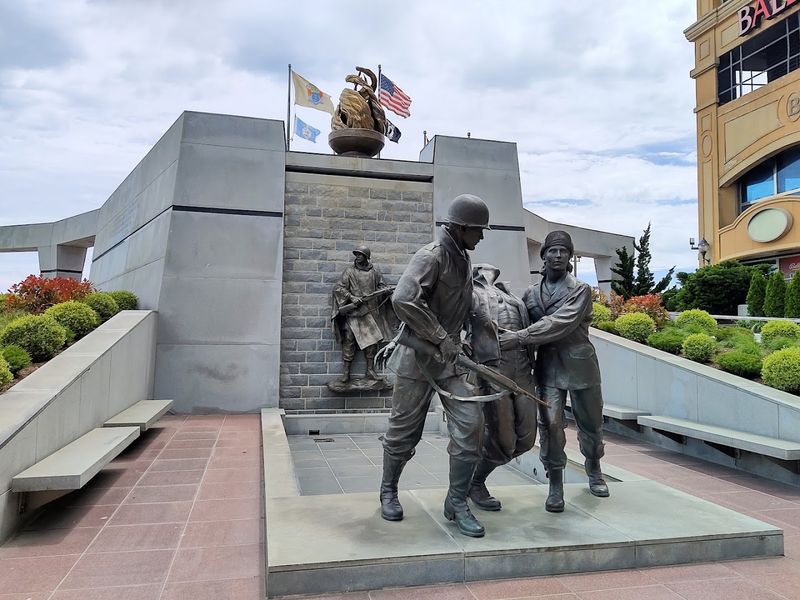
Right at the corner of Park Place and the Atlantic City Boardwalk, the New Jersey Korean War Memorial stands as one of the most accessible public monuments in the state. The full address is 124 Park Pl, Atlantic City, NJ 08401, and the memorial is open 24 hours a day, every day of the week, with free admission.
There is no ticket booth, no schedule to plan around, and no entrance fee to worry about. Whether someone swings by during a morning walk or stops in after an evening on the boardwalk, the memorial is always available.
Parking in the area can be tight, so many people simply walk over from nearby hotels or the boardwalk itself. The location makes it easy to combine a visit with a stroll along the shore, turning a quick stop into a meaningful part of any Atlantic City trip.
A War That Deserved Better Than Silence
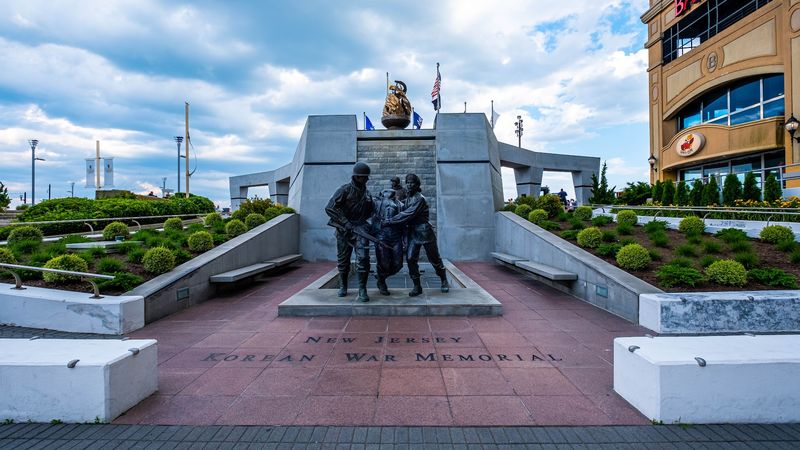
The Korean War ran from 1950 to 1953, and it claimed more than 36,000 American lives. Approximately 7,600 service members still remain unaccounted for, a number that is hard to fully process even today.
Despite its enormous human cost, the conflict was never officially declared a war by the United States government, which is part of why it earned the uncomfortable nickname “the Forgotten War.” Many veterans came home to little fanfare, their service overshadowed by World War II on one side and Vietnam on the other.
The New Jersey Korean War Memorial was built specifically to push back against that silence. Its purpose, as stated in its own dedication, is to ensure that future generations remember and honor the pride and dedication of those who served, the legacy they continued, and the freedom they helped preserve.
That mission shapes every detail of the memorial’s design.
The Mourning Soldier: The Figure That Stops You Cold
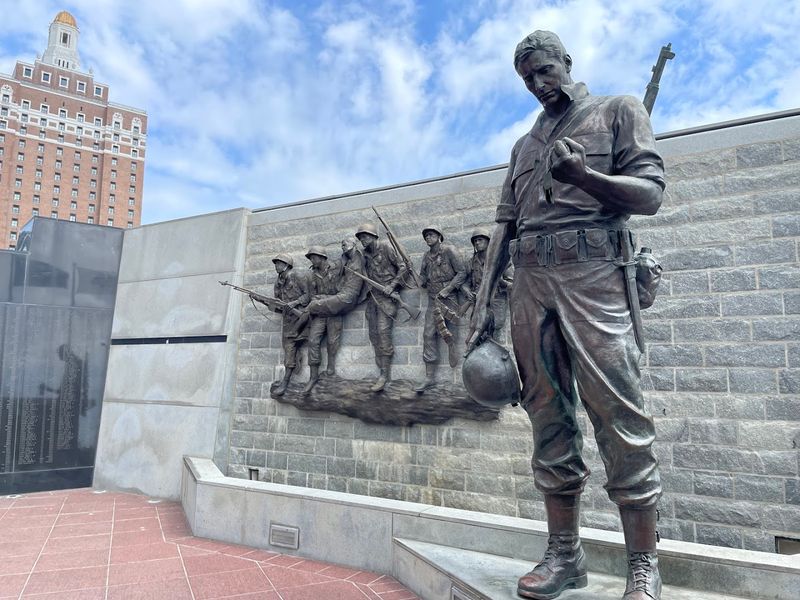
At the center of the memorial stands a 12-foot bronze figure known as the Mourning Soldier. He clutches a handful of dog tags, his posture heavy with the weight of the comrades those tags represent.
The figure is cast at what the memorial describes as “heroic proportions,” meaning the scale is deliberately larger than life. That choice was intentional.
By making the statue physically imposing, the designers ensured that no one walking past could easily dismiss it or overlook it in a crowd.
The Mourning Soldier does not strike a triumphant pose. There is no raised fist or forward charge.
Instead, the figure stands in quiet grief, which many find far more powerful than any traditional war monument stance. It is the kind of sculpture that makes people slow down, look twice, and actually think about what they are seeing rather than just snapping a photo and moving on.
The Nurse, the Soldier, and the Wounded: A Scene Frozen in Bronze
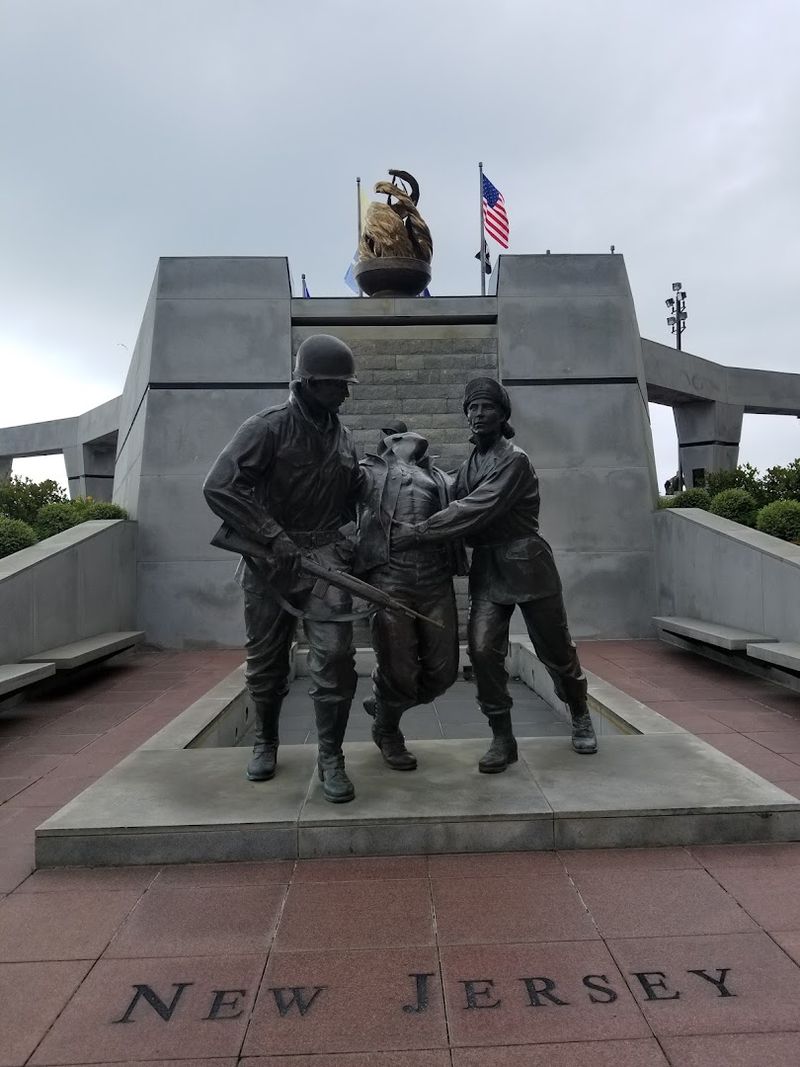
Beyond the Mourning Soldier, a second bronze grouping tells a different kind of story. A soldier and a nurse are shown helping a wounded comrade, a scene that captures the human effort required just to keep people alive in the middle of conflict.
This grouping adds an important dimension to the memorial as a whole. War monuments often focus exclusively on combat, but this scene acknowledges the medical personnel and support roles that were just as critical to the outcome.
Nurses who served in Korea faced dangerous conditions and long hours, and their presence in the memorial gives them a long-overdue acknowledgment.
The bronze figures are rendered with enough detail that the effort and urgency of the moment come through clearly. Together, the two bronze groupings create a fuller picture of what service in Korea actually looked like, moving beyond the battlefield charge and into the messy, human reality of keeping soldiers alive.
Water, Stone, and Reflection: The Memorial’s Design Language
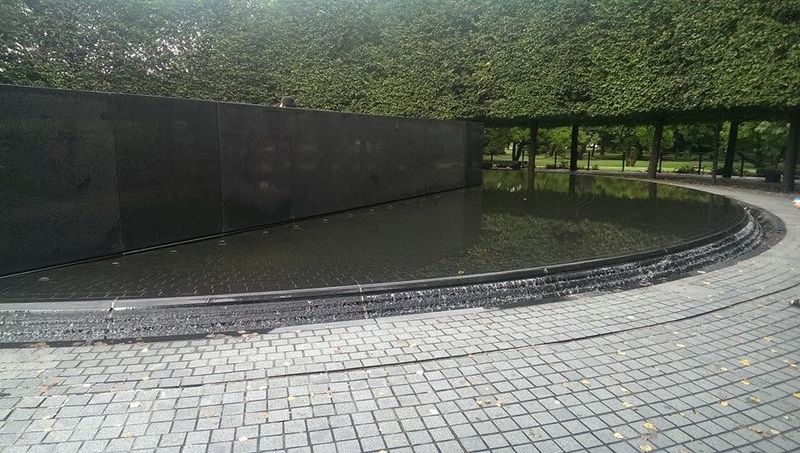
The layout of the memorial uses water as a deliberate design element. Two battlefield relief panels sit behind sheets of water that cascade down into reflecting pools below, creating a visual rhythm that slows the pace of anyone moving through the space.
Reflective black granite, similar in concept to the Vietnam Veterans Memorial in Washington D.C., forms the name wall. The polished surface catches light and creates a mirror-like quality that makes the engraved names feel present rather than distant.
The combination of bronze, granite, and flowing water gives the memorial a layered quality. Each material serves a purpose: the bronze figures for storytelling, the granite for permanence, and the water for movement and continuity.
The overall design avoids anything flashy or decorative for its own sake. Every element connects back to the central purpose of honoring service members and making their stories accessible to anyone who walks up to the site.
The Eternal Flame and the Name Wall
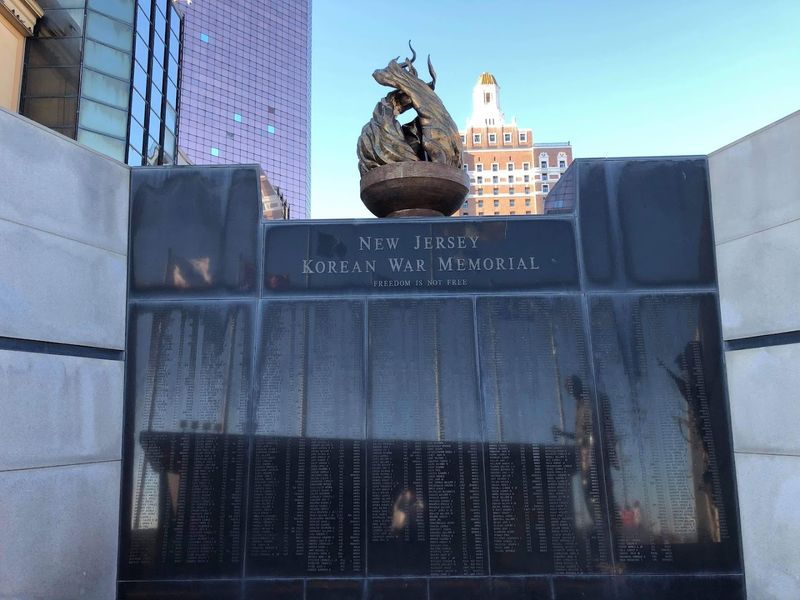
Beneath an eternal flame, a wall bears the names of all New Jersey service members who were killed or listed as missing in action during the Korean War. The flame burns continuously, a symbol of ongoing remembrance that does not dim with the passing of years.
The name wall serves a function similar to that of the Vietnam Veterans Memorial in the nation’s capital. Seeing a name carved into stone makes a number feel like a person.
Instead of processing an abstract statistic about casualties, a person reading the wall is confronted with individual identities, each one representing a life and a family.
The eternal flame positioned above the wall reinforces that the act of remembering is not passive. It is something that requires maintenance, intention, and effort.
The flame has to be kept burning, and that ongoing commitment mirrors what the memorial itself asks of every person who visits: to actively choose not to forget.
Medal of Honor Recipients: Stories Worth Reading Slowly
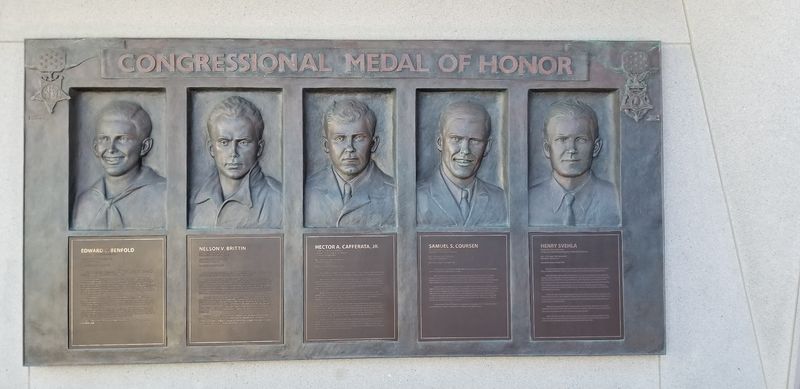
One of the most striking features of the memorial is a dedicated wall honoring the five New Jersey servicemen awarded the Medal of Honor for their actions in Korea. Most of these awards were given posthumously, which adds a particular weight to reading the accounts.
The stories themselves are extraordinary. One account describes a soldier who, after receiving near-fatal wounds, grabbed two grenades thrown into a trench, charged two enemy soldiers, tackled them, and protected his fellow troops at enormous personal cost.
The language used to describe these actions is plain and factual, which somehow makes each account hit harder than dramatic prose would.
Reading through these panels takes time, and that is exactly the point. The memorial does not rush anyone through.
The Medal of Honor section, in particular, rewards the visitor who slows down and actually reads rather than simply passing through on the way back to the boardwalk.
Free, Open, and Always There
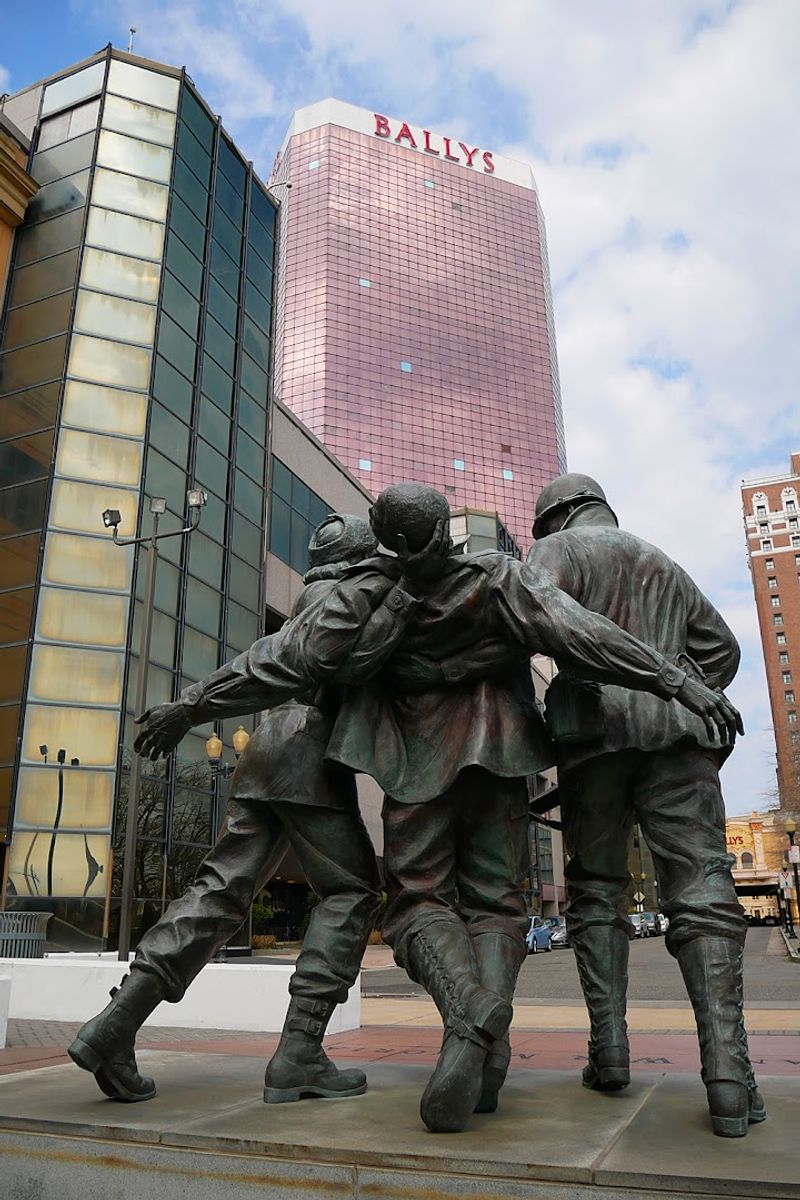
The memorial charges no admission and keeps no set hours. It is open around the clock, every single day of the year, which means there is never a wrong time to visit.
Early morning, late at night, or during a holiday weekend, the memorial is available.
That accessibility is part of what makes the site so well-suited to its purpose. Grief, reflection, and gratitude do not follow a nine-to-five schedule.
Veterans and their families, in particular, may find that certain times of day feel more appropriate for a personal visit, and the 24-hour availability respects that without requiring any explanation.
The free entry also removes any barrier that might otherwise make someone skip the stop. A family walking the boardwalk can detour for twenty minutes without budgeting for it.
A solo traveler can linger for an hour without watching the clock. That kind of open access turns a monument into a genuine community resource rather than just a ticketed attraction.
A Spot That Means Something Different to Veterans
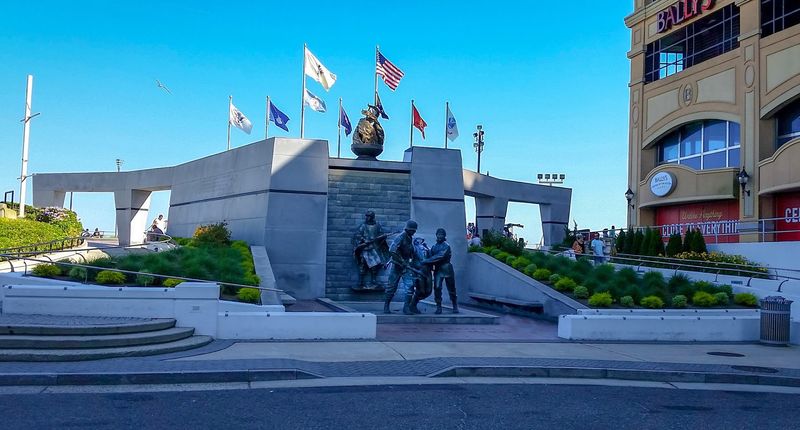
For those who served in the military, the memorial carries a different kind of weight. The Korean peninsula is not just a chapter in a history book for veterans who were stationed there or who knew people who served in the conflict.
The armistice signed in 1953 technically halted fighting, but no formal peace treaty was ever signed, meaning the Korean War has never officially ended.
That ongoing reality gives the memorial an unusual quality. It is not simply commemorating something that concluded and was resolved.
It honors a conflict that remains technically active, with American troops still stationed on the Korean peninsula today.
Veterans who visit often linger longer than other guests, reading names on the wall and spending time near the bronze figures. The memorial gives them a space that acknowledges their service without requiring them to explain it or contextualize it for anyone.
Sometimes that kind of quiet recognition is exactly what is needed.
Planning a Visit: What to Know Before You Go
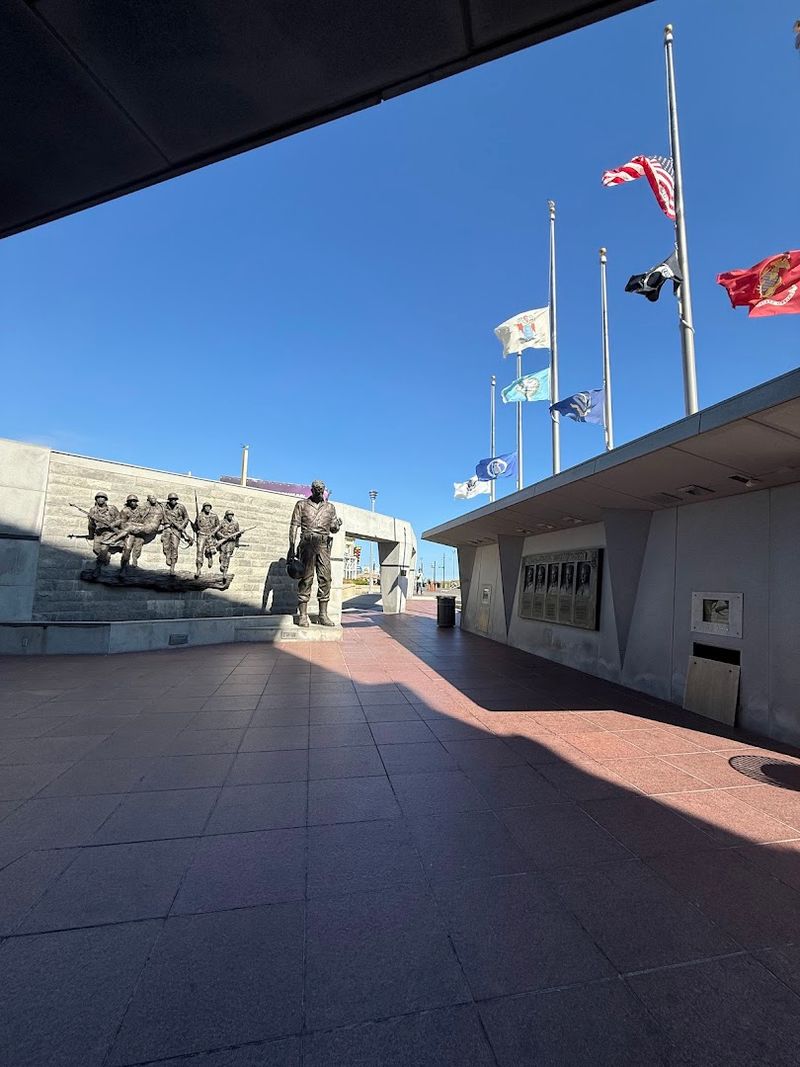
Getting to the New Jersey Korean War Memorial is straightforward. The site sits at 124 Park Pl, Atlantic City, NJ 08401, right near the boardwalk, making it walkable from most hotels and parking areas in the central part of the city.
Street parking nearby can be limited, so arriving on foot or using a nearby garage tends to work better.
The 2021 accessibility improvements mean the site is navigable for people using wheelchairs or other mobility aids. The pathways allow visitors to reach all major elements of the memorial, including the name wall, the Wall of Remembrance, and the bronze figures.
There is no gift shop, no guided tour schedule, and no audio guide system on-site, so visitors explore at their own pace. Bringing a phone to look up background information on the Medal of Honor recipients or the history of the Korean War beforehand can make the visit richer and more connected to what the memorial is actually telling.
Share this story