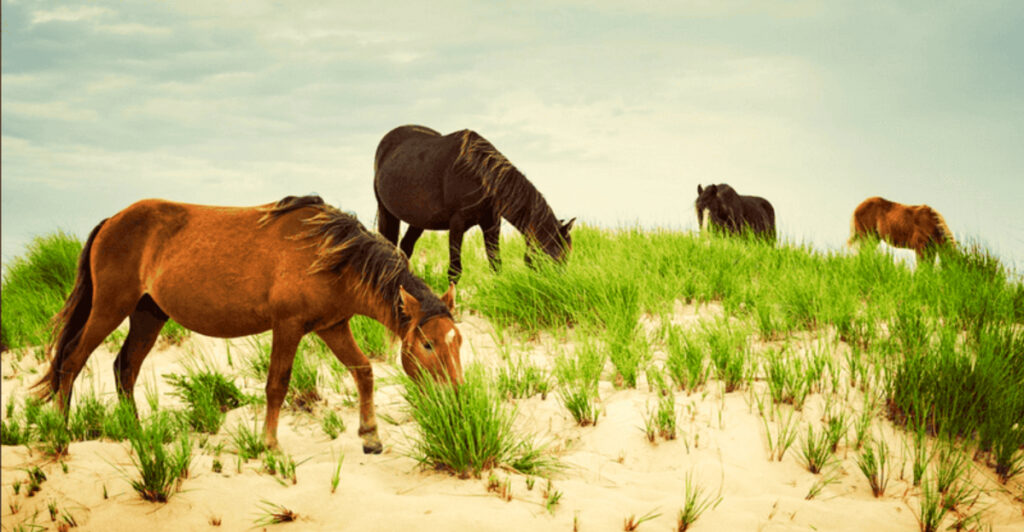
Wild horses still hold a curious place in modern life. Protected in parts of the United States and Canada, they are celebrated by local communities, debated by land managers, and sought out by travelers hoping to glimpse a landscape that still feels untamed.
Their story stretches across coastlines, deserts, islands, and mountain country, shaped by exploration, ranching history, tourism, and ongoing conservation debates. Follow along to discover places where wild horses still roam and history continues to move on four legs.
1. Assateague Island, Maryland & Virginia

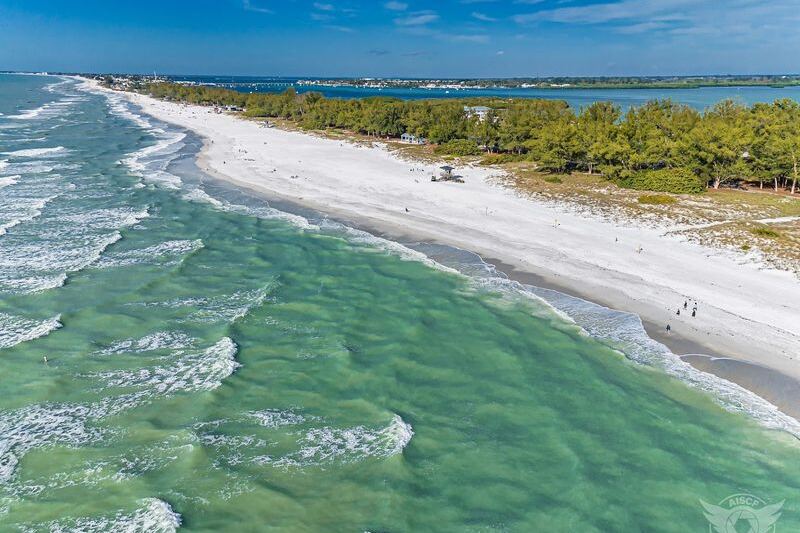
Nothing says American coastal folklore quite like horses wandering past dune grass on a barrier island. Assateague Island, split between Maryland and Virginia, is famous for the free roaming horses often called Chincoteague ponies, though the best known annual swim happens from nearby Assateague to Chincoteague during a long running community tradition.
The origin story involving a shipwreck is popular, but historians often point to colonial livestock practices as the likelier explanation. Ranchers once kept animals on offshore islands to avoid fencing laws and taxes, and over time the herd became a defining part of local identity, tourism, and wildlife management.
Today the Maryland and Virginia herds are managed differently, which makes this island especially interesting to visit. If you go, you are seeing more than a postcard scene – you are seeing a living mix of legend, regulation, and coastal history that has lasted for generations.
2. Outer Banks (Corolla), North Carolina

Beach driving gets a memorable upgrade when the local traffic includes a herd with Spanish roots. In Corolla, on the northern Outer Banks, wild horses roam a stretch of coast where four wheel drive access roads and historic isolation helped preserve one of the best known Colonial Spanish Mustang populations in the United States.
These horses are closely tied to the region’s early colonial history, with ancestry believed to trace back to animals brought by Spanish explorers. As settlement patterns changed and paved roads spread elsewhere, Corolla’s remote northern beaches acted like a historical pocket where older equine lines remained part of the landscape.
Modern visitors usually see them from guided tours or careful beach drives, and strict distance rules matter. What makes Corolla especially compelling is that it combines present day vacation culture with a very old Atlantic story, proving that not every survivor of the colonial era wears a plaque or sits behind museum glass.
3. Shackleford Banks, North Carolina

If you want the horse story without roads, gift shops, or a tidy overlook, Shackleford Banks delivers. Part of Cape Lookout National Seashore, this undeveloped barrier island is reachable only by boat, and its horses are widely believed to descend from Spanish mustangs that adapted over centuries to wind, salt, and sparse grazing.
Because the island lacks permanent development, the herd occupies a setting that feels unusually direct and historically revealing. Researchers and park managers have spent years tracking herd health, genetics, and habitat pressure, turning this place into a case study in how wild horse preservation works when tourism exists but infrastructure stays limited.
That combination gives Shackleford Banks unusual credibility with history minded travelers. You are not simply checking off another scenic stop – you are seeing how an Atlantic island, colonial animal history, and modern stewardship can overlap in a way that remains surprisingly intact in the twenty first century.
4. Cumberland Island, Georgia

Few places make feral horses look more entangled with American history than Cumberland Island. Georgia’s largest barrier island pairs free roaming horses with ruins, former estates, maritime forest, and a National Seashore setting that layers Gilded Age wealth, earlier settlement history, and long standing debates about how these animals fit the ecosystem.
The horses are not managed as a reintroduced symbol from a distant past. They are feral descendants of domestic stock, and that distinction matters because island managers and researchers have spent decades discussing grazing pressure, freshwater use, and the practical challenge of protecting both historic sites and native habitat.
For visitors, the result is a place where every sighting carries more context than you might expect. A horse near Dungeness ruins is not just an attractive photograph – it is a reminder that coastal Southern history includes plantations, elite retreats, preservation battles, and animals that outlasted the plans people once made for the island.
5. Pryor Mountain Wild Horse Range, Montana/Wyoming

The American West keeps one of its most discussed horse herds in the Pryor Mountains. Straddling Montana and Wyoming, the Pryor Mountain Wild Horse Range was established in 1968, before the federal Wild Free-Roaming Horses and Burros Act, making it one of the earliest official recognitions that these animals had become part of national heritage.
The herd is especially noted for bloodlines linked by some researchers and advocates to Colonial Spanish horses, though genetics and ancestry are always more complicated than souvenir language suggests. What is not complicated is the public fascination: these mustangs have been studied, photographed, and defended for decades, often as symbols in larger debates over range use.
Seeing them here means stepping into a long argument about what the West is supposed to preserve. The landscape feels expansive, but the history is specific – federal protection, citizen advocacy, and scientific monitoring turned this range into one of the most influential wild horse sites in North America.
6. Theodore Roosevelt National Park, North Dakota
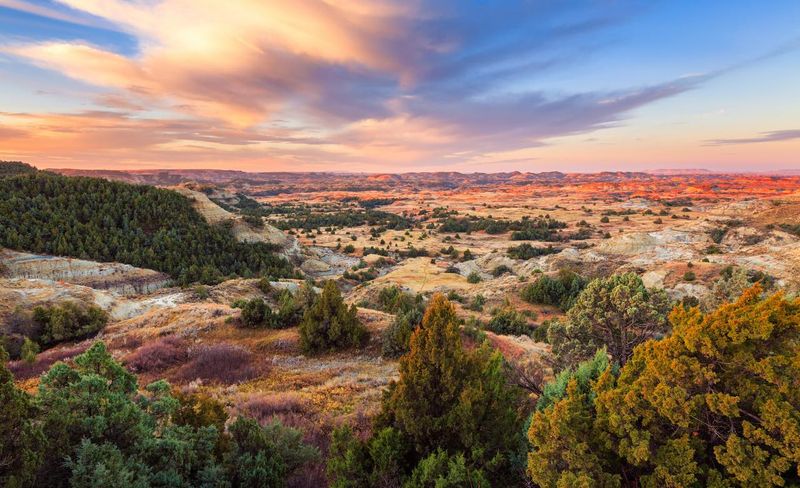
Presidential branding meets prairie reality in Theodore Roosevelt National Park, where wild horses remain one of the park’s most talked about sights. The North Dakota badlands already carry a powerful conservation backstory because Roosevelt’s time here shaped ideas he later brought into national public life, so the horses fit into a larger narrative about land, memory, and identity.
The park’s South Unit is the best known place to see them, and the herd has become a visitor favorite alongside bison and prairie dog towns. Although these horses are not some untouched relic from antiquity, they have become part of the park’s interpretive story about ranching history, open range culture, and changing federal attitudes toward public lands.
That makes a sighting here feel unusually layered. You are looking at animals tied not only to western mythmaking but also to the institutional history of conservation, which is a much more interesting souvenir than a generic postcard with a cowboy font.
7. Sand Wash Basin, Colorado
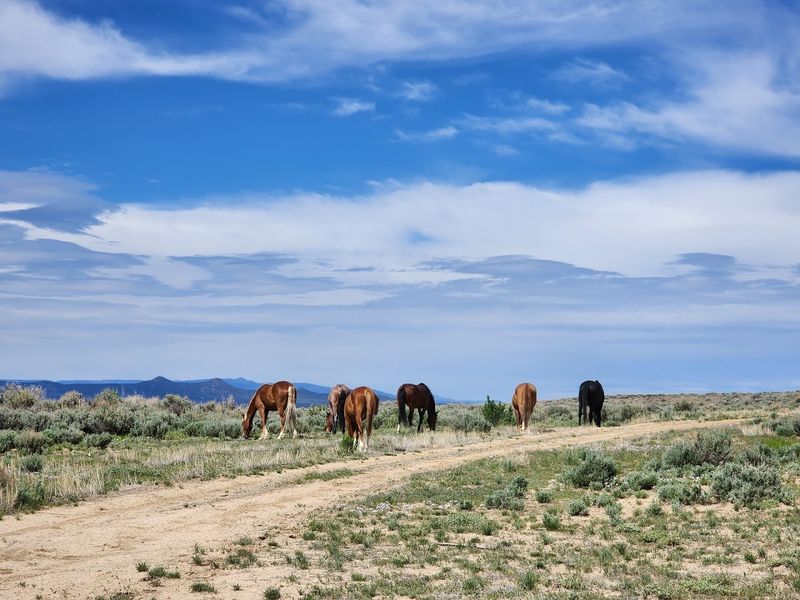
Sand Wash Basin has the kind of name that sounds almost too dusty to be real, yet the horses make it unforgettable. In northwestern Colorado, this Bureau of Land Management area became widely known through photographers, advocates, and social media followers who turned certain band stallions and mares into recognizable local celebrities without reducing the place to a theme park.
That attention reflects a modern chapter in wild horse history. Public fascination now spreads not only through guidebooks and roadside lore but also through online communities that track family bands, color patterns, and management updates, creating a new kind of cultural memory around animals once known mainly to ranchers and agency staff.
Visit carefully and you can still appreciate the older story beneath the internet fame. Sand Wash Basin shows how western horse country has entered the digital era while staying tied to familiar questions about grazing, land allocation, and whether the public sees mustangs as heritage animals, management issue, or a little of both.
8. McCullough Peaks Wild Horse Management Area, Wyoming

Color is part of the draw at McCullough Peaks, where the herd often looks like a moving catalog of horse coats. Near Cody, Wyoming, this Wild Horse Management Area is known for pintos, duns, grullas, and other striking patterns, which has helped make it a favorite among photographers and travelers who want a classic open country mustang experience.
Its appeal goes beyond appearance. McCullough Peaks sits in a region saturated with western tourism, ranching history, and the lingering influence of Buffalo Bill style frontier storytelling, so the horses occupy a landscape already loaded with ideas about what Wyoming represents in the national imagination.
That context matters because wild horses often function as cultural shorthand for freedom while also being managed through very practical federal rules. Here, those two realities sit side by side.
You can admire the herd’s visual variety while also recognizing that these animals are part of an ongoing administrative and historical story, not just a scenic accessory near Cody.
9. Fish Springs National Wildlife Refuge, Utah

A desert refuge with surprise wetlands is already interesting, and horses make it even harder to ignore. Fish Springs National Wildlife Refuge in western Utah is better known for migratory birds, yet wild horses can sometimes be seen in the surrounding area, where water sources have long shaped movement patterns for wildlife, travelers, and livestock alike.
This part of Utah also sits within the broader history of Great Basin travel. Routes through the region mattered to Indigenous communities, later overland emigrants, military parties, and mail lines, so the modern presence of free roaming horses fits into a landscape where mobility has always been central, even if the cast of characters keeps changing.
What makes Fish Springs memorable is the contrast between refuge management and open range realities nearby. You are not just visiting a birding stop with an occasional horse sighting.
You are seeing how western water, federal stewardship, and the long afterlife of domestic animals continue to intersect in a place many travelers would otherwise speed past.
10. Antelope Island State Park, Utah

An island in the Great Salt Lake is not the first place most people expect a horse story, which is part of the charm. Antelope Island State Park is better known for bison and panoramic lake views, but horses have also been part of the island’s human history through ranching operations that once used this isolated setting in practical, distinctly western ways.
The island became a ranch in the nineteenth century, and for decades livestock shaped its economy and reputation. That legacy still informs how visitors read the landscape today, because every trail and historic ranch feature hints at the period when remote islands, open grazing, and hard logistics formed a routine part of regional life.
Wild horse sightings here are not as central as in dedicated herd areas, yet they carry unusual historical texture. Antelope Island lets you connect horse culture to settlement and ranch management rather than frontier myth alone, which is a refreshing reminder that the West often ran on paperwork, fencing decisions, and persistence as much as romance.
11. Cerbat Mountains, Arizona

The Cerbat Mountains do not always top travel lists, which is exactly why they reward curious people. In northwestern Arizona near Kingman, this rugged range is associated with free roaming horses in a landscape shaped by mining history, desert travel corridors, and the long western habit of animals outlasting the industries that first brought many of them here.
Arizona’s horse stories often blend with burro history because prospecting and transport once depended heavily on working animals. As mines declined or operations shifted, descendants of domestic stock remained on the land, and over time public attitudes changed from seeing them as abandoned utility to treating them as heritage and conservation subjects.
That shift is the real historical lesson in the Cerbat Mountains. A sighting here is not just about dramatic terrain.
It points to changing values in the American West, where yesterday’s labor animals can become today’s protected icons, complete with advocacy groups, viewing guides, and the occasional roadside debate that never quite reaches a final answer.
12. Onaqui Mountains Herd Management Area, Utah

Utah’s most photographed mustangs may be the ones from the Onaqui Mountains, and the internet has definitely noticed. West of Salt Lake City, the Onaqui Mountains Herd Management Area has become famous for accessible views, striking stallions, and a visual style that regularly turns up in calendars, wall art, and the sort of social posts that make people reconsider their weekend plans.
Yet the herd’s popularity also reveals a newer chapter in public land history. Wild horses once entered popular culture through western films and tourist brochures, but now they circulate through digital advocacy, viral images, and online campaigns tied to gathers, fertility control, and the future of specific herds.
That means a trip here offers more than excellent photography. It shows how public affection for mustangs has adapted to new media without losing older western symbolism.
The Onaqui herd sits at the intersection of scenic access, federal management, and twenty first century fandom, which is not a phrase anyone expected to write about horses fifty years ago.
13. Sheldon National Wildlife Refuge, Nevada/Oregon

Sheldon National Wildlife Refuge feels built for arguments that begin with wildlife policy and end with maps spread across a table. Spanning parts of Nevada and Oregon, this vast high desert refuge has long been a place where wild horses, habitat management, and federal priorities meet in ways that are practical, contested, and historically revealing.
The refuge was originally established to protect pronghorn and other native species, which helps explain why horse management here attracts attention. Unlike places where mustangs dominate the public imagination, Sheldon highlights a different side of the story: how agencies balance cultural attachment to wild horses with conservation goals for birds, mammals, water sources, and native plant communities.
That makes this refuge especially useful if you want the less romantic but more informative version of western history. Free roaming horses here are part of a bigger institutional narrative about land stewardship, ecological limits, and the changing legal language through which Americans decide what belongs on public land and what responsibilities come with that choice.
14. Tonto National Forest Salt River Herd, Arizona

A river lined with wild horses near a major metro area sounds almost invented, but the Salt River herd is very real. In Arizona’s Tonto National Forest, these horses gained national attention because they live in a highly visited recreation corridor, where kayakers, hikers, photographers, and local families encounter them against a backdrop of ongoing management debate.
The herd’s exact historical origins are discussed with unusual enthusiasm, ranging from ranch stock to possible deeper regional roots, but their modern significance is clear. They became a focal point for public advocacy in the 2010s, leading to agreements that emphasized protection, humane management, and the herd’s place in Arizona’s public identity.
That recent activism gives the Salt River horses a distinctly contemporary historical flavor. This is not only a story about the old West surviving into the present.
It is also a story about community organizing, social media pressure, and the way regional symbols can gain formal recognition when enough people decide a familiar local sight is worth defending.
15. Sable Island, Nova Scotia, Canada
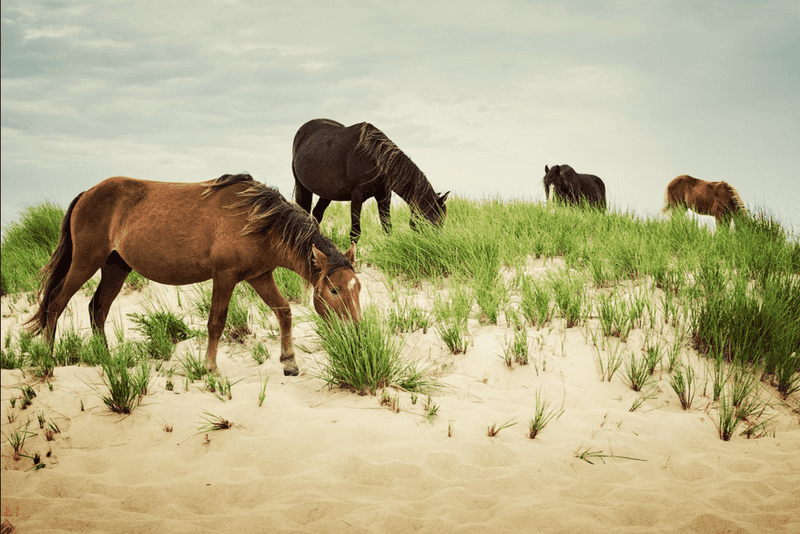
Far out in the Atlantic, Sable Island keeps one of the world’s most unusual horse populations on a strip of sand. This remote Canadian island, famous for its isolation and shifting geography, is home to free roaming horses that descend from animals introduced in the eighteenth century and later left to adapt without conventional ranch management.
The horses became central to the island’s identity over time, but Sable is equally notable for science and regulation. Researchers have studied its ecology for decades, and modern protections reflect a careful effort to treat the island as a rare environment where horse history, coastal dynamics, and conservation policy all demand unusually strict oversight.
That combination gives Sable Island a different tone from many North American horse destinations. There is less western mythology and more Atlantic endurance, administrative caution, and scientific curiosity.
In practical terms, you are looking at a herd that became famous not through frontier legend but through geography, persistence, and the remarkable fact that this place exists at all.
Share this story