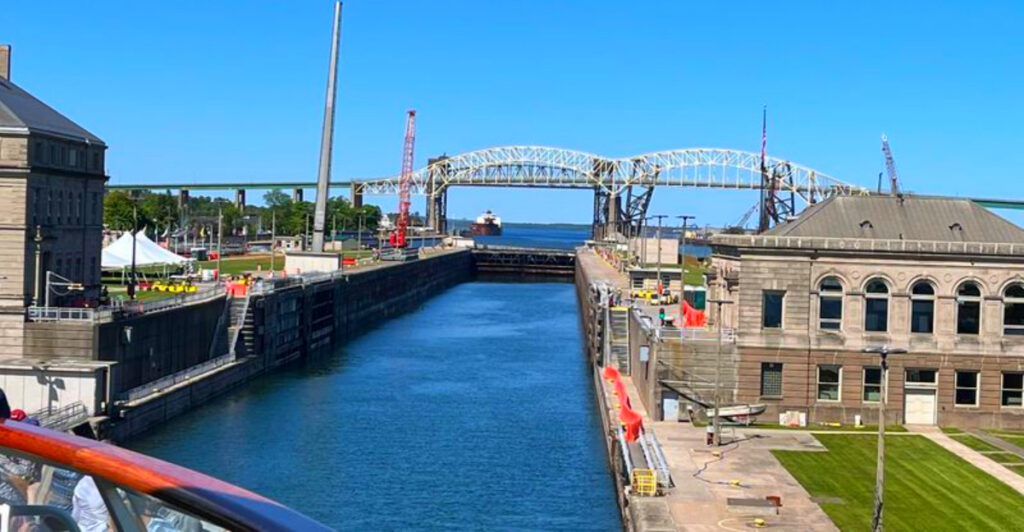
Some places entertain you, and some places make you stare at moving water like it is a live performance. This is one of those rare spots where giant freighters rise and fall with surprising grace, and I could feel my inner science nerd having a very good day.
The real fun is that the views are excellent, the history is deeper than it first appears, and the whole experience turns a practical shipping system into a front-row travel story. Keep reading, because this corner of northern Michigan delivers engineering, river scenery, local character, and the kind of ship watching that makes time disappear.
First Look at the Canal
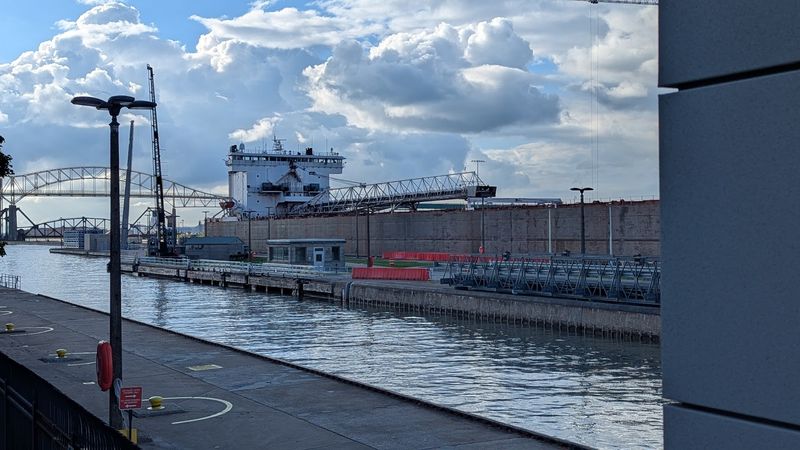
My first real introduction came at Soo Locks, Sault Ste. Marie, MI 49783, in Michigan, where the St. Marys River turns practical engineering into a spectator sport.
Seeing the complex in person made the famous 21 foot lift between Lake Superior and Lake Huron feel less like trivia and more like a living machine.
I liked that the setting felt open and easy to understand, even for someone who did not arrive with a notebook full of lock facts. Ships, gates, water levels, railings, and viewing areas all line up in a way that lets you quickly grasp what is happening without losing the sense of scale.
That scale is the real attention grabber. A freighter sliding toward the chamber looks calm, almost casual, yet everything around it hints at precision, timing, and serious purpose, and I found myself lingering far longer than planned because this is one place where watching traffic is genuinely thrilling.
Why the Water Changes Level
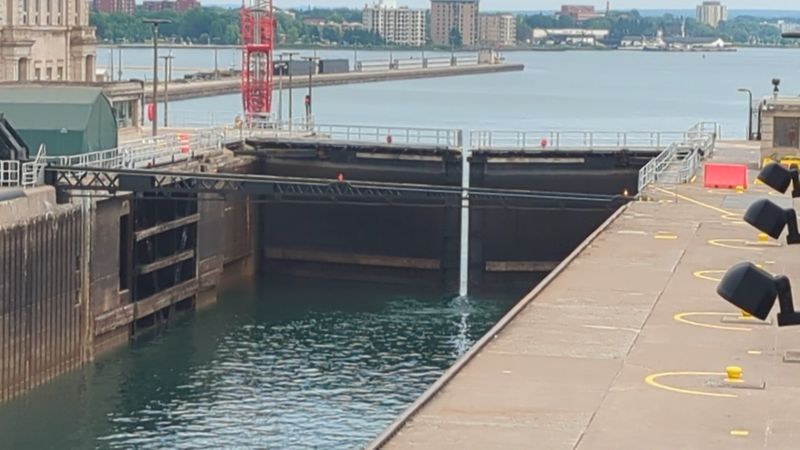
Nothing at the site feels abstract once you watch a vessel enter the chamber and wait for the water to do its quiet work. The locks exist because the St. Marys River drops about 21 feet here, and ships need a safe way around the rapids separating Lake Superior from the lower Great Lakes.
I appreciated how simple the idea becomes when you see it happen in real time. Gates close, water levels adjust, and a ship that looked fixed in place slowly rises or lowers until it can continue its trip, which is wonderfully dramatic for something based on careful engineering.
That process may sound technical on paper, but in person it feels almost theatrical. I kept watching the hull against the chamber wall, noticing the change little by little, and the whole operation made me grin because it is rare to find a lesson in physics that also works as a very satisfying afternoon show.
A Front Row Seat for Giant Ships
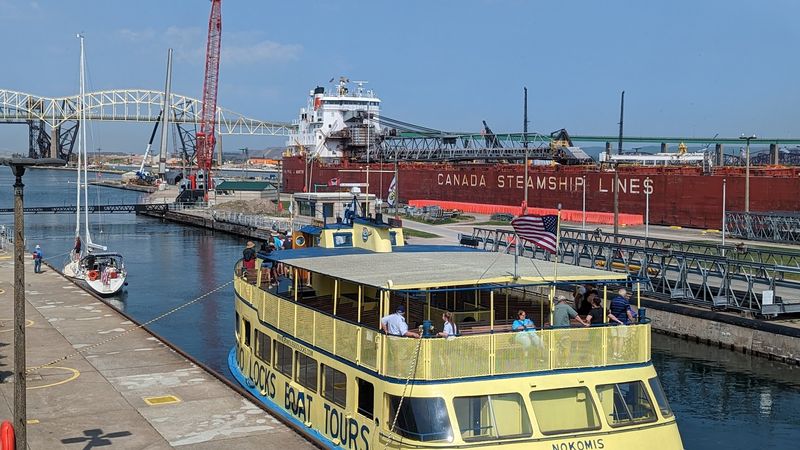
The observation areas are where the visit really clicks, because the ships do not stay distant for long. From the viewing platform and nearby walkways, I could watch massive freighters edge through the locks with a closeness that makes their height, length, and cargo capacity feel suddenly personal.
That nearness changes your sense of proportion in a hurry. Details I might have ignored from farther away, like deck equipment, crew movement, and the slow inching alignment inside the chamber, became part of the fun, and I caught myself staring upward like a kid who had discovered the world’s biggest moving wall.
I also liked that the experience does not require perfect timing to be memorable. Even between ship passages, the canal, gates, signs, and river traffic give you plenty to watch, but when a large vessel finally glides in front of you, the whole place shifts gears and turns patience into a very good payoff.
History That Still Feels Busy
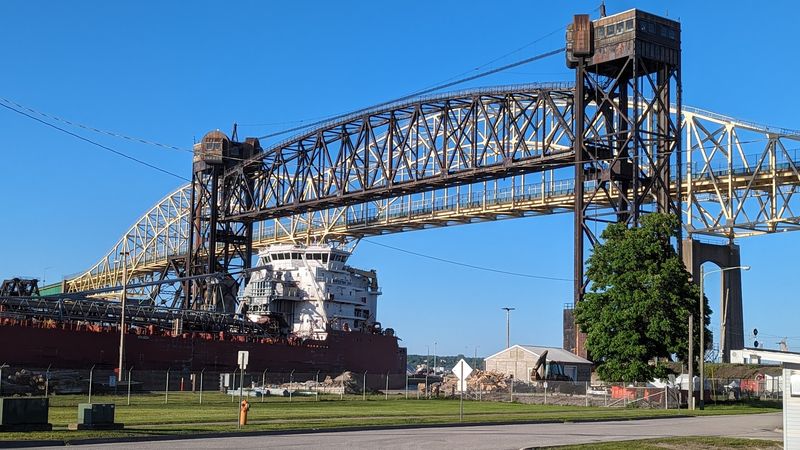
History hangs over the Soo Locks, but it never feels dusty or parked behind glass. The first lock here opened in 1855, and the site has been rebuilt and expanded over time so the system could keep up with larger ships, changing commerce, and the constant demands of Great Lakes navigation.
I enjoyed that this history comes with noise, motion, and purpose instead of quiet nostalgia. You are not just reading about a former industrial triumph, because the locks remain essential to moving cargo such as iron ore, grain, and other bulk materials through a water route that still matters every shipping season.
That combination gives the place unusual energy. Many historic attractions ask you to imagine the busy years, but here the busy years never fully left, and I found that deeply appealing because the past and present share the same stage, making every passing freighter feel like both a modern task and a page turning in a very long story.
Inside the Visitors Center
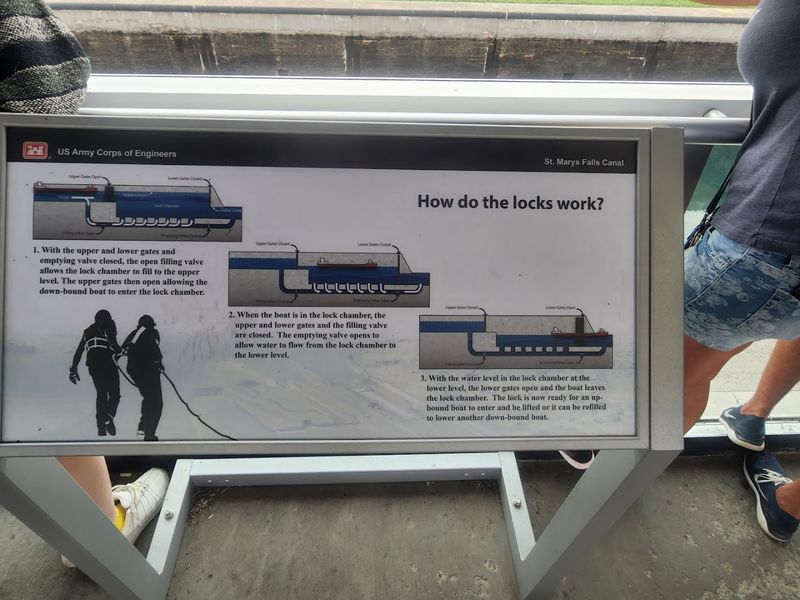
The visitors center adds context without slowing down the fun, which is exactly what I want from a stop like this. I could step inside, cool off, and get a clearer picture of the lock system, the shipping routes, and the long role this site has played in connecting Lake Superior to the lower lakes.
Exhibits and interpretive displays help translate the mechanics into something readable and useful. Instead of feeling buried in facts, I got the sense of how much planning, maintenance, and coordination keep everything moving, and that made the outdoor viewing even better because I understood more of what I was seeing.
I also liked the rhythm of visiting the center between stretches at the railing. A little history, a little engineering, another look at the water, then back indoors for more detail felt like the right balance, and it kept the visit from becoming a simple ship spotting session, even though ship spotting is undeniably a strong hobby for the afternoon.
The Riverfront Atmosphere
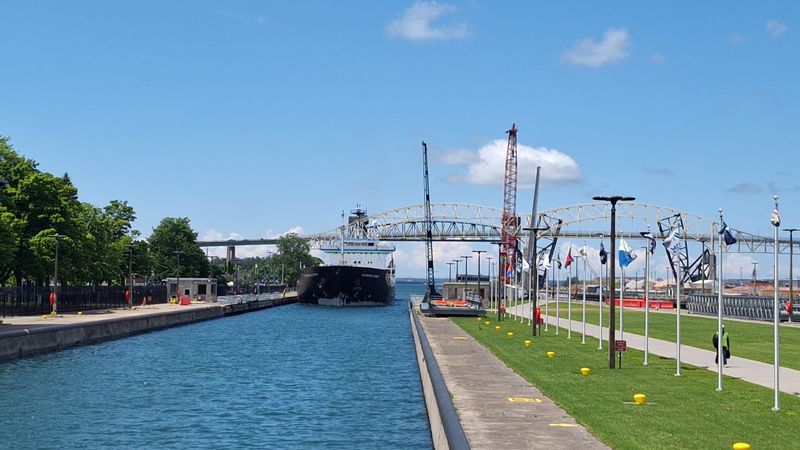
Beyond the mechanics, the atmosphere around the locks is part of the appeal. The riverfront setting feels tidy, breezy, and easy to enjoy, with walkways, railings, and open views that let you settle in without much effort, which is helpful because this is not the kind of place that rewards rushing.
I noticed how quickly the mood shifts from casual park stroll to total attention when ship activity picks up. One minute I was admiring the water and the clean lines of the canal area, and the next I was leaning forward with everyone else, waiting for gates to close and the chamber drama to begin.
That blend of calm and anticipation makes the locks unusually welcoming for different kinds of travelers. You can show up for engineering, history, photography, or a simple river walk, and the site still works, but once the action starts, even the most laid back visitor tends to become a surprisingly dedicated fan of practical infrastructure.
Boat Tours and a Better Perspective
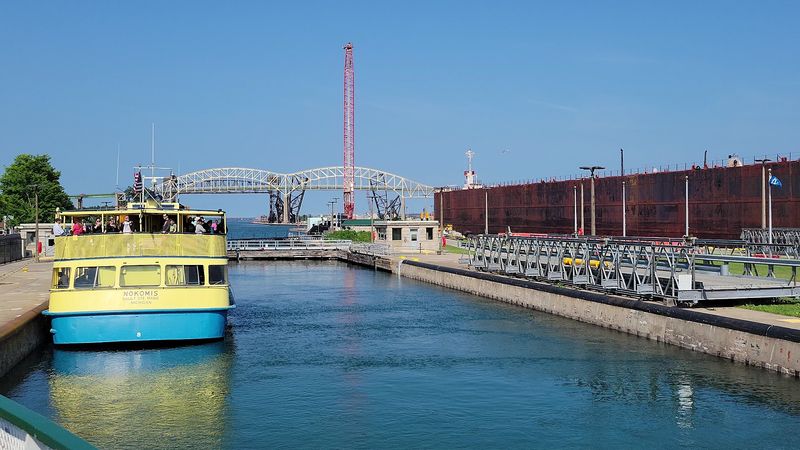
Watching from land is excellent, but a boat tour gives the whole system a different kind of clarity. Seeing the chamber from the water helped me understand the dimensions better, and feeling the boat rise or lower inside the lock made the process more immediate than any diagram ever could.
The river portion of the outing adds variety, too. You get changing views of the infrastructure, the shoreline, and the surrounding waterway, and the motion of the tour itself keeps the experience lively, especially if you enjoy hearing practical details while the scenery keeps shifting around you.
I would recommend this angle to anyone who wants more than a quick overlook stop. It adds time to the visit, but it also adds that satisfying moment when the whole place clicks into place and you stop thinking of the locks as a landmark alone, because now you have felt the level change yourself, and that is a neat trick for a Michigan afternoon.
Best Time to Catch the Action
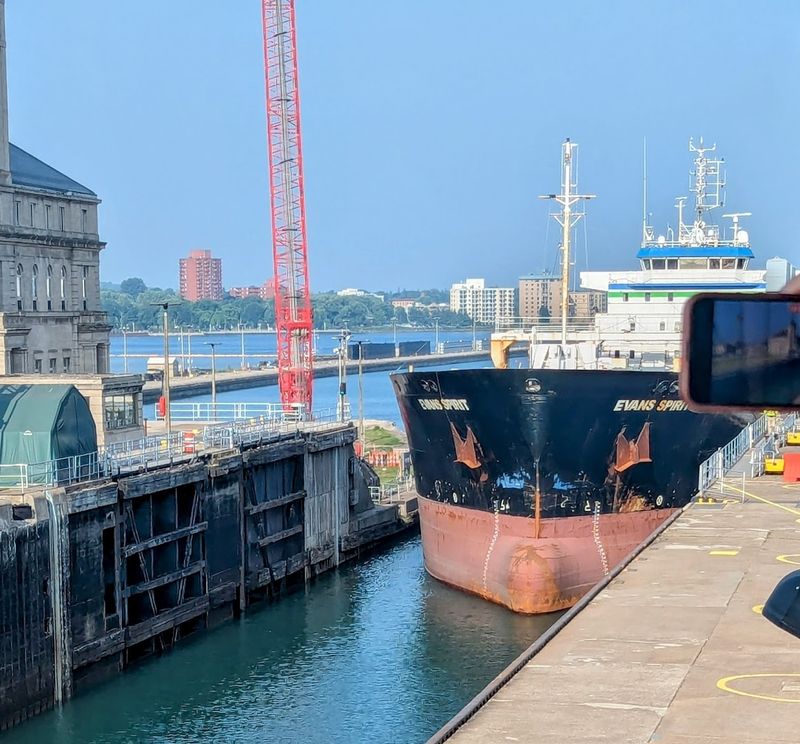
Timing matters here more than at many attractions, because ship traffic shapes the pace of the visit. The locks are generally open during the navigation season and close in winter, usually from January through March for maintenance, so warmer months give you the best chance to see regular action.
I found it smart to leave room in my schedule instead of treating the stop like a quick photo break. A busy day can deliver multiple ship passages and plenty of movement, while quieter stretches still offer scenery and exhibits, but patience is the secret ingredient if you want that memorable moment when a giant vessel takes center stage.
Weather also changes the experience more than I expected. Sun makes the views sparkle, clouds add a moody industrial look, and a cool breeze off the water can sneak up on you, so a light layer is worth bringing, because the longer you stay, the more likely it is that the locks will reward your stubbornly optimistic schedule.
Practical Tips Before You Go
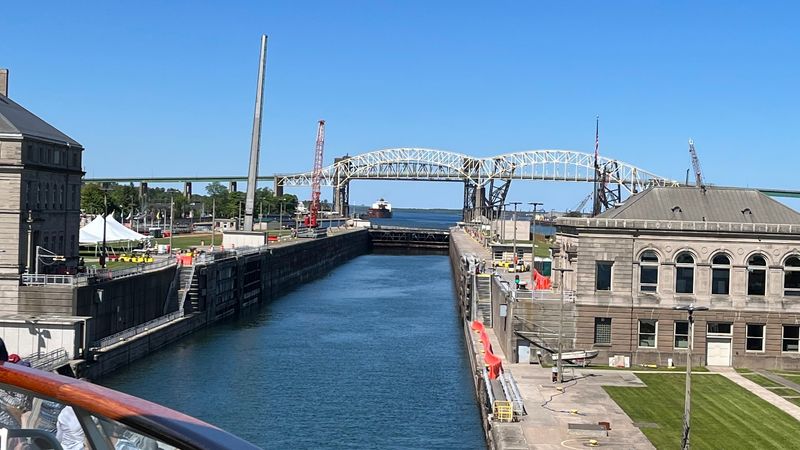
A few practical details make the visit smoother, and I was glad to know them before arriving. Entry to the viewing area involves security screening, the grounds operate with posted hours, and parking in the area can be metered, so it helps to arrive with a little extra time instead of charging in at the last minute.
Comfort matters more than style here. Good walking shoes, a jacket for wind off the river, and a willingness to stand at the rail for longer than expected all improved my day, because once the ships start moving, leaving for some forgotten small item suddenly feels like a very poor life choice.
I would also keep expectations flexible. You might see several ships in one stretch, or you might spend more time browsing exhibits and watching the river between big moments, but the site rewards curiosity and patience, and that easygoing approach turns small details like gate movement, signal changes, and water turbulence into part of the entertainment package.
Why It Matters to the Great Lakes
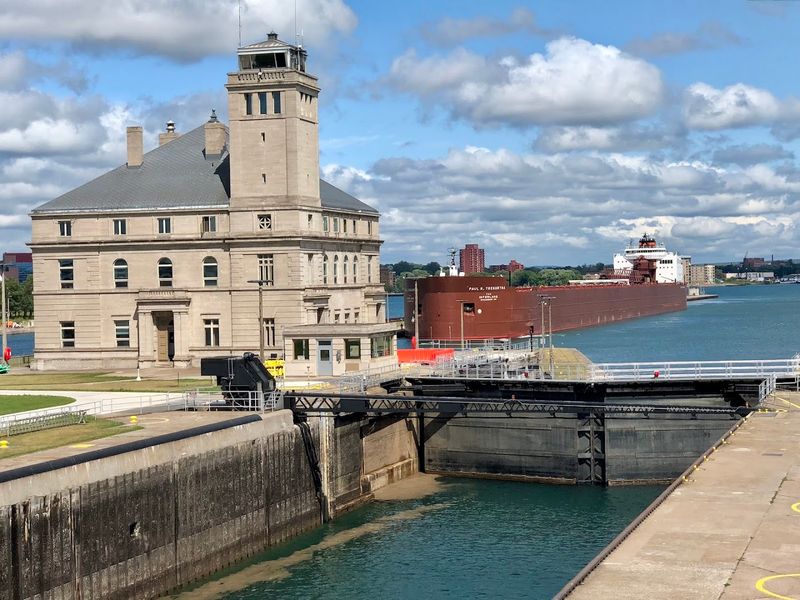
It is easy to treat the Soo Locks as a sightseeing stop, but their real importance runs far beyond a pleasant afternoon. This system is a critical link in Great Lakes shipping, allowing thousands of vessels each year to move essential bulk cargo between Lake Superior and the lower lakes without battling the river’s natural drop.
That larger purpose gives every passing freighter extra weight in my mind. I was not just watching a boat move through a chamber for fun, though that part is genuinely fun, because each transit also represented a working network that supports industries, ports, and communities connected by freshwater routes.
I think that is why the place stays with people. The locks are impressive as engineering, satisfying as a visual experience, and meaningful as infrastructure, which is a combination you do not find every day, and by the time I left, I had the oddly cheerful feeling that I had spent several hours admiring one of the Midwest’s most useful pieces of problem solving.
Details That Make the Visit Memorable
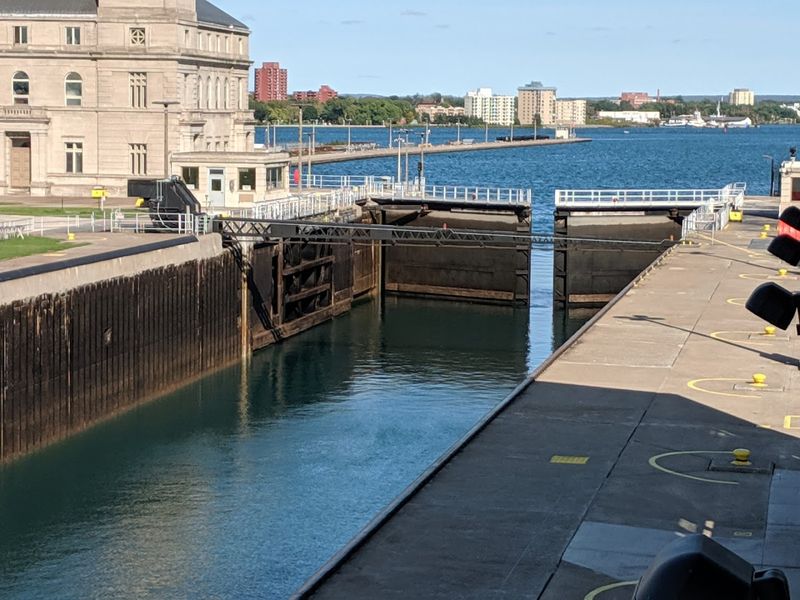
What stayed with me most were the small details that would be easy to miss in a rushed visit. The churn of water against concrete, the measured opening of gates, the shift in conversation when a ship approaches, and the way everyone suddenly becomes an expert in guessing timing all give the place personality.
I liked listening to the site as much as watching it. There is a quiet pause before movement, then mechanical sounds, river noise, and the low presence of a ship easing into position, and together they create a rhythm that feels both orderly and full of suspense without ever becoming chaotic.
Even the waiting turned out to be part of the charm. Instead of feeling like downtime, it gave me room to notice signage, study the chamber walls, and appreciate the people around me settling into the same shared curiosity, which may be the nicest surprise of all, because practical engineering rarely gets this much genuine public admiration and earns it so easily.
The Kind of Place That Lingers
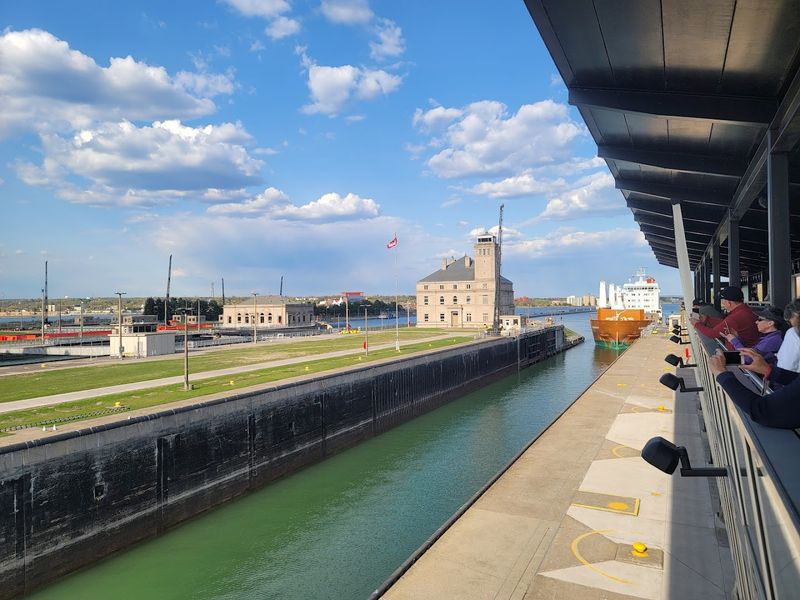
By the end of my visit, the locks felt bigger than a single attraction and more like a full portrait of this part of Michigan. They combine river scenery, working infrastructure, local history, and a very specific kind of suspense that keeps your eyes on the water, waiting for the next chamber cycle to begin.
I appreciate places that know exactly what they are, and this one does not need extra gimmicks. It lets ships, water, and engineering carry the show, then supports the experience with viewing areas, helpful exhibits, and enough comfort to make lingering easy, which is fortunate because lingering is almost guaranteed.
If you enjoy seeing how a place actually works, not just how it photographs, this stop delivers in a big way. I left with better respect for Great Lakes navigation, a phone full of freighter pictures, and the pleasant realization that a canal system in Sault Ste.
Marie had somehow become one of the most entertaining hours, then two, then three, of my trip.
Share this story