Every year, a handful of hotels stop travelers dead in their tracks. Not because of the thread count or the mini-bar selection, but because of pure, jaw-dropping beauty.
This year’s list of the world’s most beautiful hotels spans continents, centuries, and design styles that range from ancient palaces to sleek urban retreats. Buckle up, because your travel wishlist is about to get very long.
Jumeirah Marsa Al Arab – Dubai, United Arab Emirates

Dubai has a habit of building things that make architects elsewhere quietly weep into their blueprints. Jumeirah Marsa Al Arab is the city’s newest statement piece, shaped like a giant superyacht jutting into the Arabian Gulf.
It opened in 2024 and already feels like it belongs on a postcard you’d never actually mail because you’d want to keep it.
The design is bold without being chaotic. Clean lines, sweeping curves, and interiors that balance opulence with actual taste.
The spa alone has been called one of the best in the world, which is saying something in a city full of world-class spas.
What really sets it apart is the sense of arrival. Guests pull up to a private marina, and the hotel rises above them like something out of a sci-fi film.
Dubai just keeps raising the bar, and honestly, we’re not even mad about it.
Mandarin Oriental Qianmen – Beijing, China
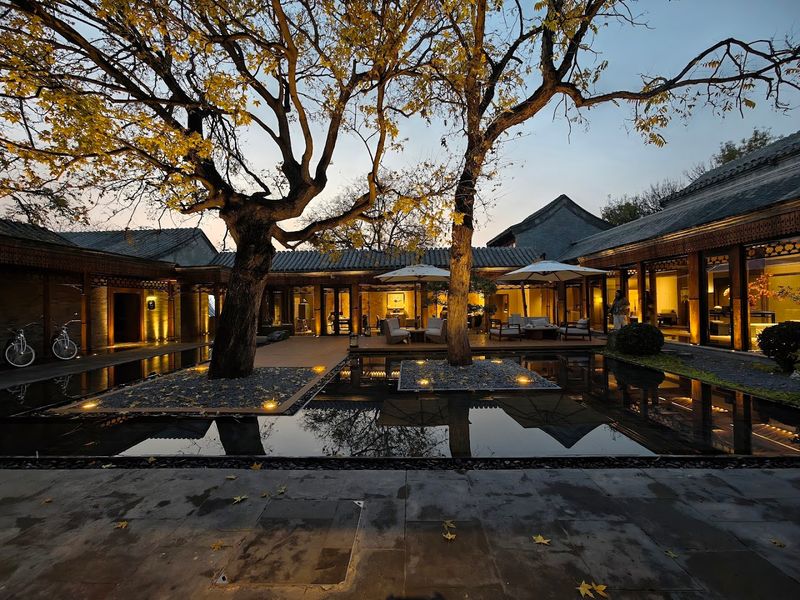
Tucked inside a restored hutong neighborhood just steps from Tiananmen Square, this hotel is the kind of place that makes history feel personal. The Mandarin Oriental Qianmen opened inside a cluster of centuries-old courtyard buildings that have been lovingly brought back to life.
Walking through the entrance feels like stepping into a beautifully curated film set, except everything is real.
The rooms blend Ming-dynasty aesthetics with modern comforts so seamlessly you barely notice where one ends and the other begins. Traditional wooden lattice screens, hand-painted silk panels, and stone courtyards coexist with heated floors and rainfall showers.
It is a genuinely rare combination.
I visited Beijing once and stayed somewhere far less impressive, which I now deeply regret. The Qianmen district is one of the oldest parts of the city, and having a hotel that honors that history rather than bulldozing it for glass towers?
That’s a win worth celebrating.
Rosewood Munich – Munich, Germany
Munich is not a city that screams for attention. It earns it.
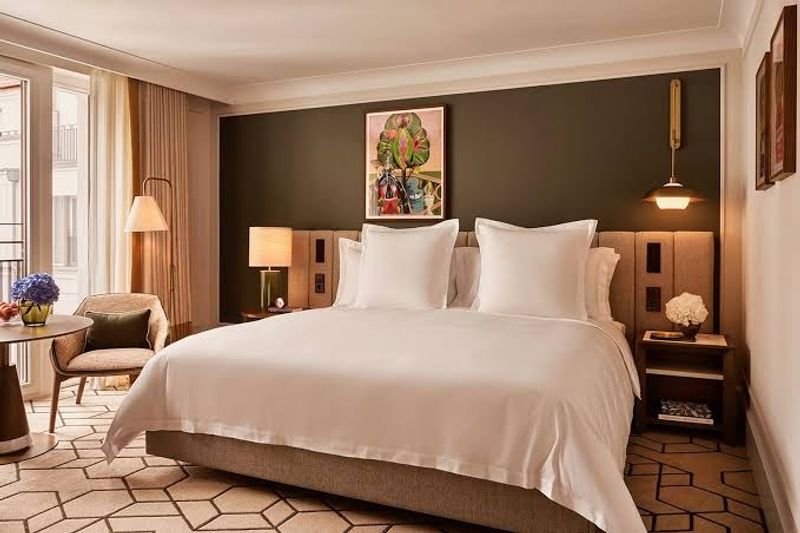
And Rosewood Munich, which opened inside a beautifully restored historic building near Maximilianstrasse, fits that ethos perfectly. There is nothing flashy about it at first glance, which is exactly the point.
Step inside and the design reveals itself slowly. Curated art collections, Bavarian craftsmanship references woven into contemporary interiors, and a restaurant scene that rivals anywhere in the city.
The rooftop bar has views of the Alps on clear days, which feels almost unfair to everywhere else.
What makes this property stand out on a global list is its restraint. So many luxury hotels try to dazzle you into submission from the lobby onward.
Rosewood Munich lets the quality speak for itself. The materials are exceptional, the service is understated, and the overall experience feels more like visiting a very well-appointed private home than checking into a hotel.
Al Moudira – Luxor, Egypt

Built entirely by hand over seven years, Al Moudira is one of those hotels that makes you question why more buildings are not made this way. Every arch, every fresco, every hand-painted tile in this Luxor property was crafted by local artisans using traditional techniques.
The result is a place that feels genuinely ancient, even though it was completed in 2003.
It sits on the west bank of the Nile, across from the Valley of the Kings, which means the history outside your window is as extraordinary as the history inside your room. The gardens are lush and fragrant, filled with jasmine and bougainvillea that somehow thrive in the desert heat.
Al Moudira is small, which adds to the magic. With only 54 rooms, the atmosphere stays intimate and quiet.
No conference groups, no pool parties, just the kind of deep, unhurried peace that feels increasingly rare in modern travel. Egypt has always been dramatic.
This hotel matches the energy.
Hôtel du Couvent – Nice, France

A 13th-century convent turned five-star hotel sounds like a premise from a quirky travel novel. At Hôtel du Couvent in Nice, it is just Tuesday.
The property occupies a beautifully restored Dominican convent in the heart of the old city, and the bones of the original building are everywhere you look.
Stone archways, a vaulted chapel that now serves as an event space, and a cloister garden that is genuinely one of the most peaceful spots on the French Riviera. The interiors were designed with a light touch, respecting the architectural history while adding the kind of comfort that makes you want to extend your stay indefinitely.
Nice tends to get overshadowed by Cannes and Monaco in the glamour department, but Hôtel du Couvent is quietly making the case that this city deserves more credit. The location alone, steps from the flower market and old port, is hard to beat.
Add the history, and you have something special.
Hôtel Hana – Paris, France

Paris has roughly ten thousand hotels, so standing out requires more than a good address. Hôtel Hana does it by blending French elegance with Japanese design philosophy in a way that feels entirely natural rather than gimmicky.
The name Hana means flower in Japanese, and that softness runs through every design decision in the building.
Located in the 9th arrondissement, the hotel is a boutique property with fewer than 30 rooms, each one feeling like a considered piece of art. Neutral palettes, clean lines, handpicked furniture, and a level of quiet that feels miraculous given its central location.
The ground-floor restaurant draws locals as much as guests, which is always a good sign. In Paris, a hotel restaurant that Parisians actually choose to eat at is basically the highest compliment possible.
Hôtel Hana earned its spot on this list not by being the loudest room in Paris, but by being one of the most quietly confident.
Mandarin Oriental Mayfair – London, United Kingdom

Mayfair already had its fair share of legendary addresses before Mandarin Oriental moved in. Now it has one more.
The Mayfair outpost of this iconic brand occupies a cluster of interconnected Georgian townhouses on Hanover Square, and the exterior alone is enough to make you slow your walk and stare.
Inside, the design team went for a look that honors British heritage without leaning into cliches. No tartan overload, no stag heads on walls.
Instead, there are bespoke artworks, handcrafted furniture, and a spa that has already developed a loyal following among Londoners who treat it as a personal secret.
The location is genuinely excellent. Bond Street shopping is a short stroll away, and the neighborhood has an energy that feels more residential than touristy, which is rare in central London.
Mandarin Oriental Mayfair feels like it was always supposed to be there, which is the best compliment you can give a new hotel.
Ran Baas The Palace – Patiala, India
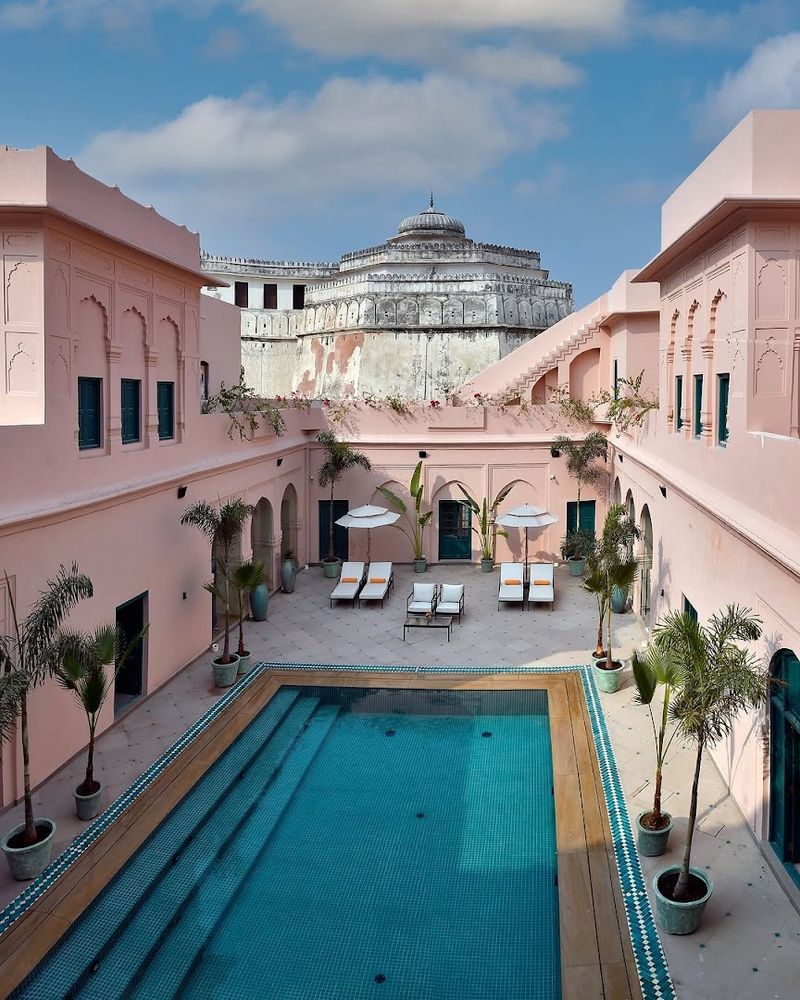
Patiala is not always the first city that comes to mind when people plan a trip to India, and that is exactly why Ran Baas The Palace is such a discovery. This converted royal palace in Punjab belongs to the former ruling family of Patiala, and the heritage drips from every carved ceiling and hand-painted wall in the building.
The architecture is a glorious mix of Mughal and Rajput styles, with European flourishes thrown in during the colonial period. The result is visually layered in a way that keeps revealing new details the longer you look.
Frescoes, mirrored halls, and furniture that has been in the family for generations create an atmosphere that no purpose-built hotel could replicate.
Staying here feels like being a guest of the royal family rather than a hotel customer. The staff are attentive without being formal, and the food, rooted in traditional Punjabi cuisine, is outstanding.
India is full of heritage hotels, but Ran Baas earns its place at the top of that list.
Palazzo Talìa – Rome, Italy

Rome has a building density problem in the best possible way. Around every corner is something that belonged in a museum centuries ago but is still just casually standing there.
Palazzo Talìa, a newly opened boutique hotel in the historic center, leans hard into that Roman abundance of beauty.
The building dates back to the 16th century and was once a private noble residence. The restoration kept original frescoes, stone staircases, and vaulted ceilings intact while threading modern plumbing and lighting through the walls with impressive discretion.
The courtyard, in particular, is the kind of space that makes you put your phone down.
With only 12 rooms, exclusivity is baked in from the start. Each room is unique, styled around a different period of the building’s history.
Guests have access to a rooftop terrace with views across Rome’s rooftops that are, predictably, ridiculous. Palazzo Talìa is proof that Rome still has surprises left to offer.
Romeo Roma – Rome, Italy
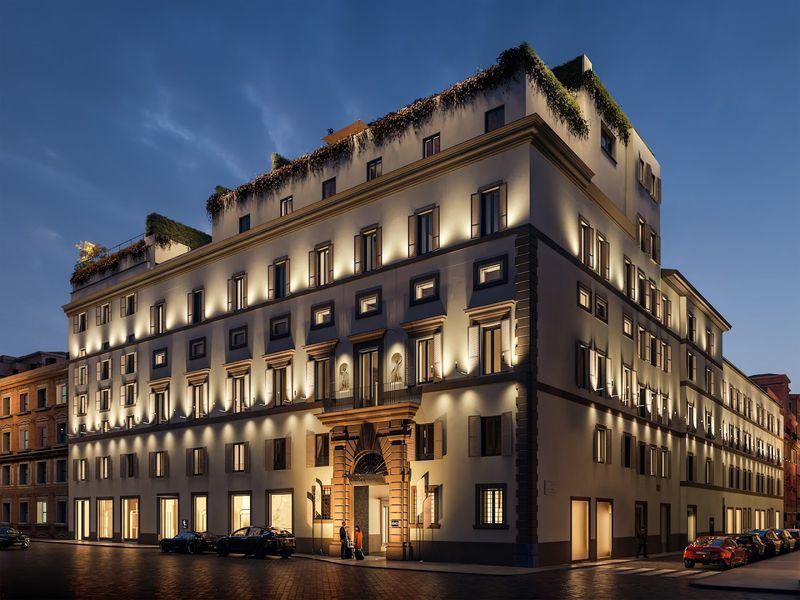
Two Rome hotels on one global beauty list is a flex the city didn’t even need, but here we are. Romeo Roma is the kind of property that makes you rethink what a city hotel can be.
Designed by Zaha Hadid Architects, the building is a sculptural statement that manages to hold its own against Rome’s overwhelming historical backdrop.
The interiors are dramatic and fluid, with curved forms and materials that shift between marble, glass, and warm wood. The rooftop pool and bar are the social hub of the hotel, with views that include the Castel Sant’Angelo and the dome of St. Peter’s Basilica.
It is not a subtle backdrop.
What I find most interesting about Romeo Roma is how confidently contemporary it is. Rome doesn’t always welcome the new, but this hotel earns its place by being genuinely excellent rather than just provocative.
The restaurant, helmed by a serious culinary team, is destination-worthy on its own terms.
MGallery Sosei Sapporo – Sapporo, Japan
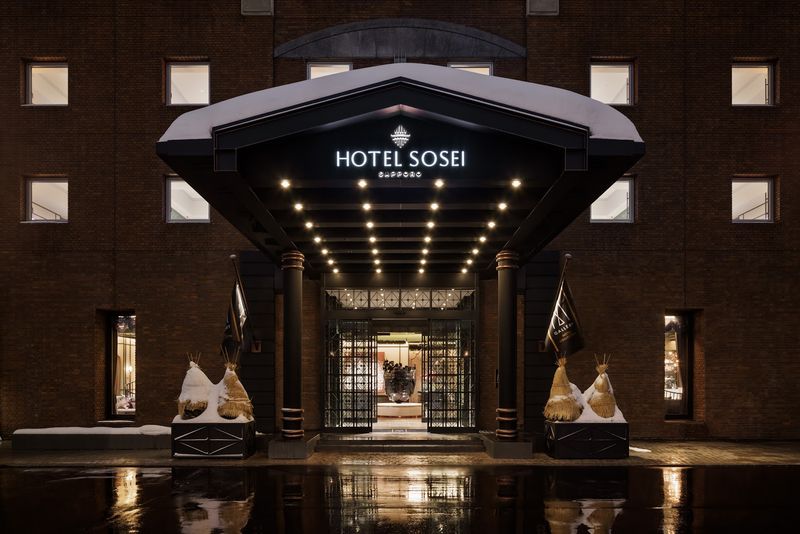
Sapporo is already beloved for its snow festivals, ramen, and the kind of clean mountain air that makes city lungs feel brand new. MGallery Sosei Sapporo adds a genuinely world-class design hotel to that list of reasons to visit.
The property sits in the Sosei River area, one of the city’s most creatively revitalized neighborhoods.
The hotel draws on Hokkaido’s natural landscape for its design vocabulary. Timber, stone, and earthy tones reference the forests and mountains that surround the city, while the furniture and lighting bring a contemporary Japanese precision that feels entirely intentional.
Nothing here is accidental.
MGallery as a brand focuses on properties with strong local stories, and Sosei Sapporo delivers on that promise. The on-site restaurant champions Hokkaido ingredients, which is a very good thing given how exceptional local dairy, seafood, and produce are in this region.
Sapporo has always been underrated as a travel destination. This hotel is not helping it stay that way.
Todos Santos Boutique Hotel – Todos Santos, Mexico
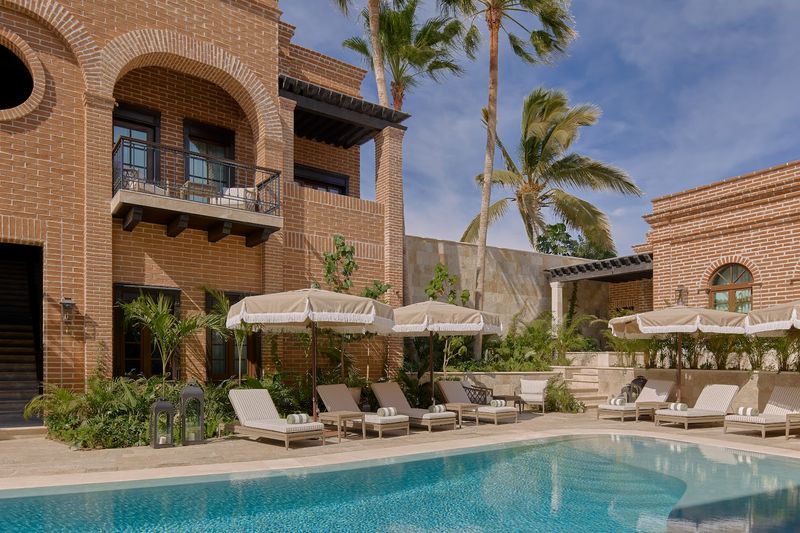
Todos Santos has been a well-kept secret among artists and surfers for years, and the locals would probably prefer it stayed that way. The Todos Santos Boutique Hotel is partly responsible for putting this Baja California Sur town on the international radar, and it is very hard to be annoyed about that when you see the place.
The hotel occupies a restored 19th-century hacienda with thick adobe walls that keep rooms cool even in the desert heat. Colorful hand-painted tiles, locally crafted furniture, and artwork from the town’s thriving gallery scene fill every corner with personality.
It feels curated without feeling forced.
The town itself is small and walkable, with excellent restaurants, independent boutiques, and a surf beach about 10 minutes away. The hotel sits right in the cultural heart of it all.
For travelers who want beauty without formality, character without chaos, and Mexico without the all-inclusive crowds, this is exactly the address to bookmark.
Shebara – Sheybarah Island, Saudi Arabia
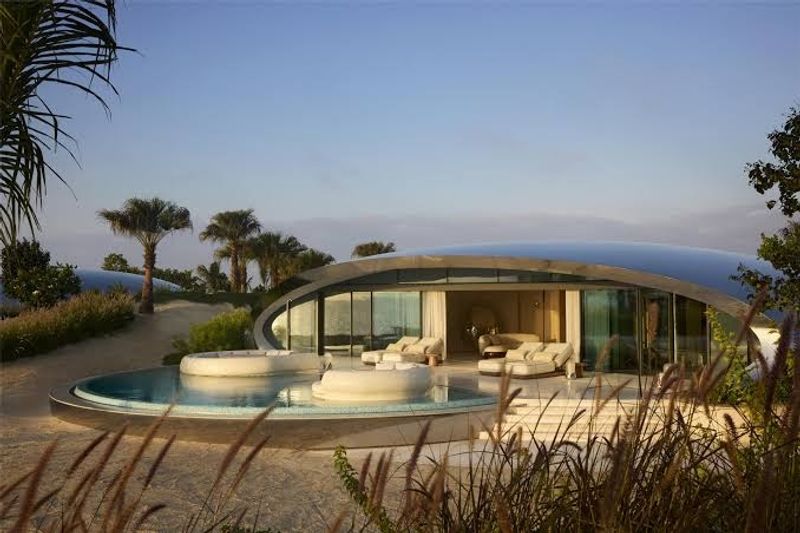
If a James Bond villain decided to build a luxury resort instead of a secret lair, it might look something like Shebara. Perched on Sheybarah Island in Saudi Arabia’s Red Sea, this resort consists of 73 spherical steel villas that rise above the water like something from a science fiction film.
Except they’re real, and you can book one.
The design was intentionally futuristic, referencing the island’s natural coral reef ecosystem with geometric forms that minimize contact with the seabed. The environmental thinking behind the architecture is as impressive as the visual drama.
This is not a hotel that chose style over substance.
Saudi Arabia’s tourism industry is still young, which means Shebara is operating in a landscape that hasn’t been overrun yet. The Red Sea here is extraordinarily pristine, with visibility in the water that snorkelers and divers describe as almost surreal.
Shebara made this list because there is genuinely nothing else like it on the planet right now.
Raffles Sentosa Singapore – Singapore, Singapore

The Raffles name carries serious weight in Singapore, where the original Raffles Hotel is practically a national monument. Raffles Sentosa takes that legacy and gives it a beachside, resort-style twist that works surprisingly well.
Sentosa Island already had plenty going for it, but a Raffles property elevated the whole conversation.
The hotel is designed around its lush tropical setting, with colonial-inspired architecture wrapped in greenery and connected by open-air walkways. The pool villas are the headline act, each with a private plunge pool and direct garden access.
It is the kind of setup that makes leaving feel genuinely difficult.
Singapore is a city that does luxury extremely well, and the competition is fierce. Raffles Sentosa stands out by combining the brand’s storied heritage with a relaxed, nature-forward atmosphere that feels like a genuine departure from the urban buzz.
It earned a spot on this global list not just because of the name, but because of the experience it consistently delivers.
The Manner – New York, United States
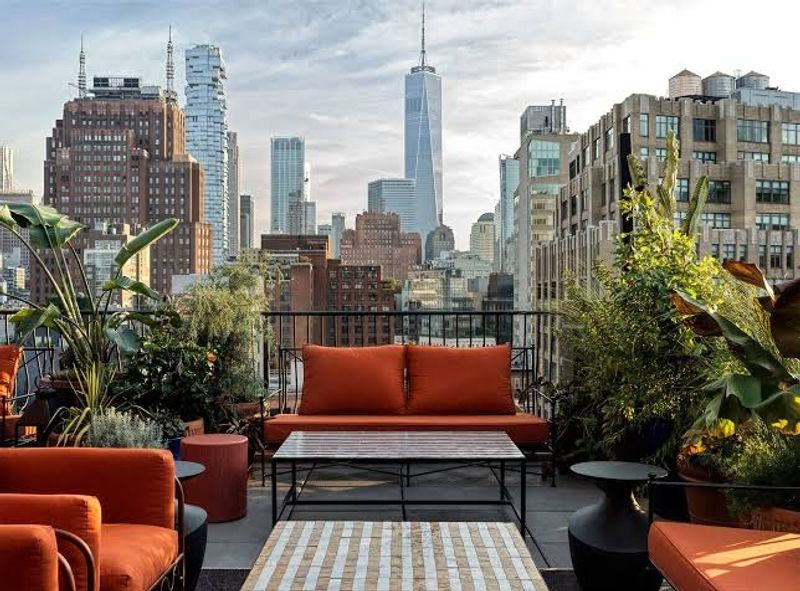
New York hotels tend to compete on size, views, or celebrity chef restaurants. The Manner, which opened in SoHo in 2024, decided to compete on personality instead, and it won.
The property feels less like a hotel and more like the home of someone with impeccable taste and an excellent record collection.
The design references European grand hotels without copying them, layering antique furniture, custom textiles, and curated art in a way that feels collected over time rather than installed overnight. The scale is deliberately human.
Nothing here is trying to impress you with sheer volume.
SoHo is one of the most interesting neighborhoods in New York for design, food, and fashion, and The Manner sits at the center of it all with a confidence that feels earned. The ground-floor restaurant and bar have already become neighborhood fixtures, which in New York is the truest test of whether a new opening actually belongs.
The Manner passed that test immediately.
Share this story