Earth is a lot more mysterious and remarkable than most of us realize. From its shifting magnetic poles to hidden oceans buried deep underground, our planet is full of surprises that even scientists are still working to understand.
Whether you have lived here your whole life or just started learning about geography and science, these facts are guaranteed to make you see the ground beneath your feet in a completely new way. Get ready to discover 15 things about Earth that are genuinely fascinating.
1. Earth Isn’t Perfectly Round
Most of us grow up picturing Earth as a perfect sphere, like a basketball floating in space. That image is close, but not quite right.
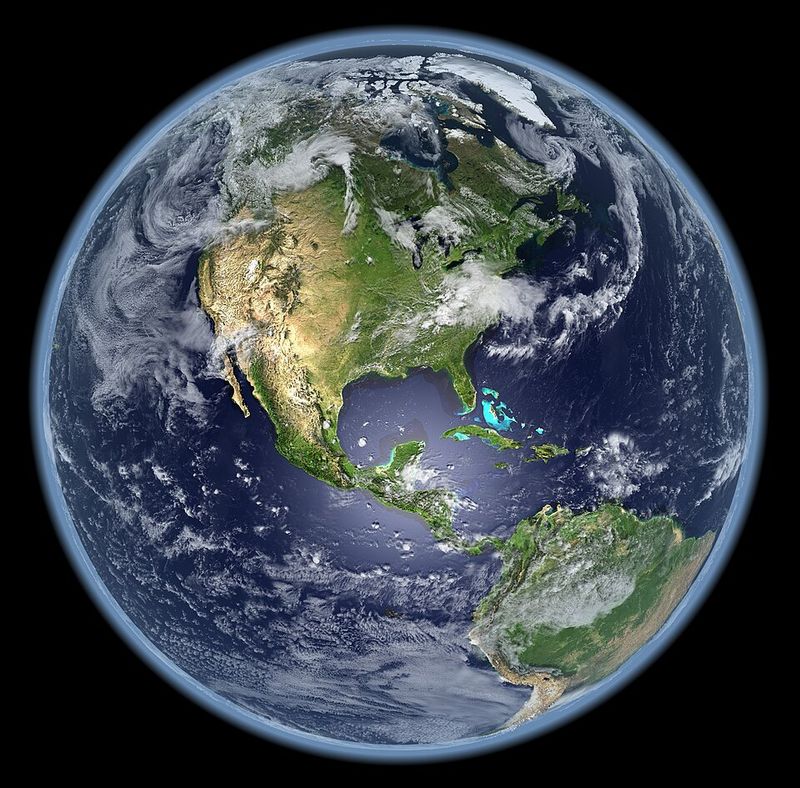
Earth is actually an oblate spheroid, which means it is slightly squished at the top and bottom and puffed out around the middle.
This equatorial bulge happens because Earth spins on its axis. The rotation creates outward force, pushing mass toward the equator over billions of years.
The difference is not huge, but it is measurable. Earth’s diameter at the equator is about 43 kilometers wider than its diameter from pole to pole.
This shape affects everything from satellite orbits to how we calculate distances on maps. GPS systems and space agencies must account for this bulge to stay accurate.
So the next time someone hands you a globe, remember that the real thing is slightly wider around the middle.
2. Most of Earth Is Unexplored
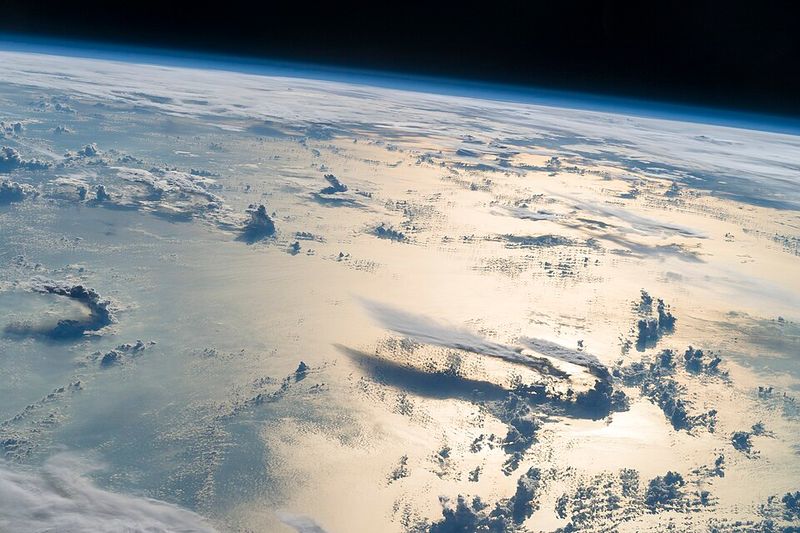
Space often gets all the attention when people talk about exploration, but the truth is we know more about the surface of Mars than we do about the bottom of our own oceans. Scientists estimate that over 80% of the world’s oceans remain unmapped, unobserved, or unexplored.
That is a staggering amount of unknown territory right here on our own planet. The deep ocean is cold, dark, and crushingly pressurized, making it incredibly difficult and expensive to study.
New species are discovered there regularly, and many more likely remain hidden.
Recent advances in underwater robotics and sonar technology are slowly changing that. Researchers are mapping sections of the seafloor that no human eye has ever seen.
Some scientists believe the deep ocean could hold clues about the origins of life itself. Earth’s greatest frontier might not be out in space after all.
3. Earth’s Core Is as Hot as the Sun’s Surface
Thousands of miles beneath your feet, there is a place where temperatures reach around 5,400 to 6,000 degrees Celsius. That is roughly the same temperature as the surface of the Sun.
The fact that something that scorching exists inside the planet we live on is genuinely mind-bending.
Earth’s inner core is made mostly of solid iron and nickel. Even though it is extraordinarily hot, the immense pressure from the layers above keeps it solid rather than liquid.
Surrounding it is the outer core, which is liquid and constantly moving.
That movement of liquid metal in the outer core is what generates Earth’s magnetic field, the invisible shield that protects us from harmful solar radiation. Without the heat driving that motion, life on the surface might not be possible at all.
The core is far more than just a hot rock at the center of things.
4. Earth Has a Heartbeat Every 26 Seconds
Every 26 seconds, Earth lets out a faint but steady pulse. Scientists call it a microseismic event, and it has been puzzling researchers since it was first detected in the 1960s.
The signal is so consistent and rhythmic that some researchers jokingly call it the planet’s heartbeat.
The source of this pulse has been debated for decades. The leading theory points to wave activity in the Gulf of Guinea off the coast of West Africa, where ocean waves may interact with the seafloor in a way that creates the repeating tremor.
However, scientists have not fully confirmed this explanation.
What makes this fact so captivating is how long it went unexplained. Geologists recorded it faithfully for years without knowing what caused it.
Earth, it turns out, has rhythms of its own that we are still learning to read. The planet is far more active beneath the surface than it appears from above.
5. Lightning Strikes Earth Millions of Times Daily

Right now, somewhere on Earth, lightning is striking. In fact, it is happening about 100 times every single second.
That adds up to roughly 8 to 9 million lightning strikes per day across the entire planet. Thunderstorms are far more constant than most people realize.
At any given moment, there are around 2,000 thunderstorms actively occurring worldwide. Tropical regions near the equator see the most activity, with places like the Democratic Republic of the Congo and Venezuela recording some of the highest lightning frequencies on Earth.
Lightning is not just a dramatic weather event. It plays a role in the nitrogen cycle, which helps fertilize soil and support plant growth.
Each bolt superheats the surrounding air to about 30,000 Kelvin, five times hotter than the Sun’s surface. Understanding lightning better helps meteorologists improve storm safety and warning systems for communities around the world.
6. Earth’s Atmosphere Protects Us from Thousands of Meteors
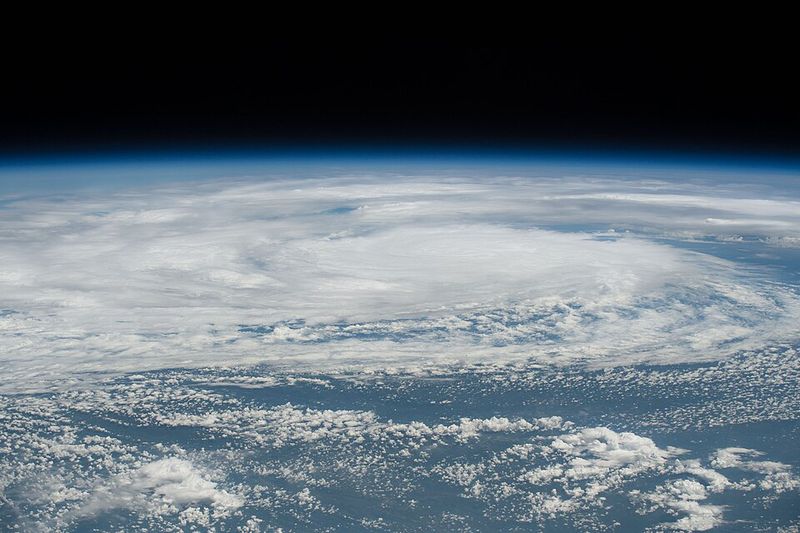
Space is not as empty as it looks, and Earth is constantly being pelted by debris from the solar system. About 17 meteors enter our atmosphere every single day, though most of them never make it to the ground.
They burn up as they travel through the air, turning into the streaks of light we call shooting stars.
The atmosphere acts like a natural shield, using friction to vaporize most incoming objects before they can cause any damage. Without this protective layer of air, Earth’s surface would look a lot more like the cratered Moon.
Occasionally, larger space rocks do survive the journey and land as meteorites. Scientists study these fragments carefully because they carry information about the early solar system.
Some meteorites found on Earth are billions of years old, older than any rock formed on our planet. The sky above us is busier than it appears on a clear, calm night.
7. Earth Once Had Supercontinents

The map of Earth looks nothing like it did hundreds of millions of years ago. Long before humans, dinosaurs, or even most complex life existed, all of Earth’s landmasses were joined together into a single massive supercontinent called Pangaea.
It began breaking apart around 175 million years ago.
Pangaea was not the first supercontinent, either. Before it came others, including Rodinia and Columbia, formed and split apart over billions of years in a slow, repeating cycle driven by plate tectonics.
The continents we know today are just the current arrangement in a much longer story.
Looking at a world map, you can almost see how the pieces fit. The eastern coast of South America lines up remarkably well with the western coast of Africa.
Scientists have confirmed this connection through matching fossils and rock formations found on both continents. Earth’s geography is not fixed.
It is always slowly changing.
8. The Planet’s Tallest Mountain Depends on How You Measure It

Ask most people which mountain is the tallest on Earth and they will say Mount Everest without hesitating. At 8,849 meters above sea level, Everest is indeed the highest point on the planet.
However, the answer changes depending on what you mean by tall.
Mauna Kea, a volcano in Hawaii, rises only about 4,205 meters above the ocean surface. But its base sits deep on the ocean floor.
Measured from base to summit, Mauna Kea stretches over 10,000 meters, making it taller than Everest in total height.
There is also a third contender. Mount Chimborazo in Ecuador, while shorter than Everest above sea level, sits near the equator where Earth’s bulge pushes it farther from the planet’s center.
In that sense, Chimborazo’s summit is the point on Earth farthest from the core. The definition of tallest, it turns out, is more complicated than it seems.
9. Earth’s Magnetic Field Flips
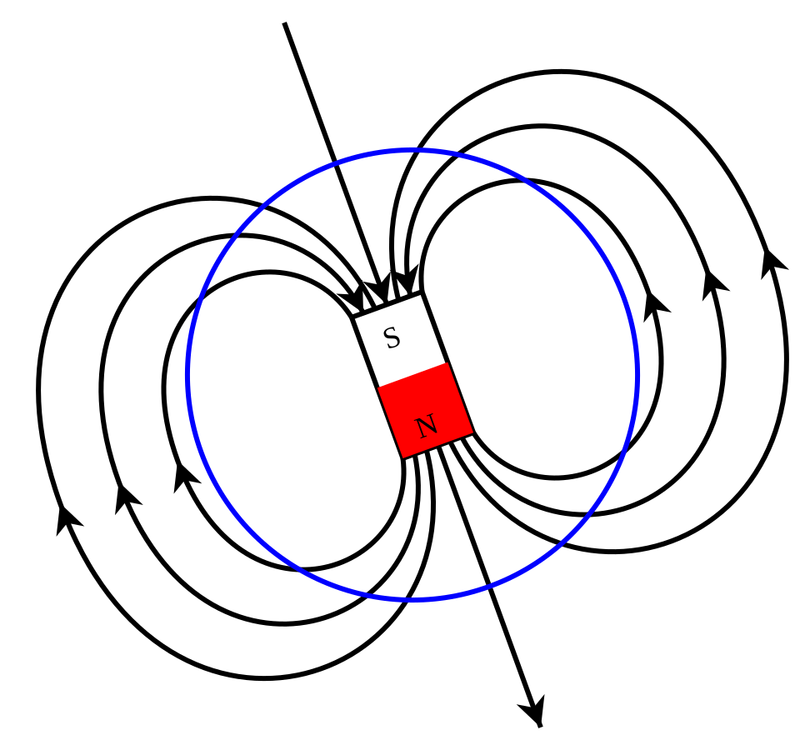
Earth’s magnetic field is constantly shifting, and every few hundred thousand years it does something dramatic: the north and south magnetic poles completely swap places. This process, called a geomagnetic reversal, has happened hundreds of times throughout Earth’s history.
The last full reversal occurred about 780,000 years ago. Scientists study ancient lava flows and ocean sediments to track these events because magnetic minerals freeze in place as they cool, recording the direction of the field at the time.
The evidence clearly shows the poles have flipped repeatedly.
During a reversal, the magnetic field weakens and becomes disorganized before rebuilding in the opposite direction. This could temporarily leave Earth more exposed to solar radiation.
Some researchers believe we may be in the early stages of another reversal right now, as the magnetic north pole has been drifting noticeably toward Siberia over recent decades. It is a slow process, but a real one.
10. The Deepest Place on Earth Is Nearly 11 Kilometers Deep
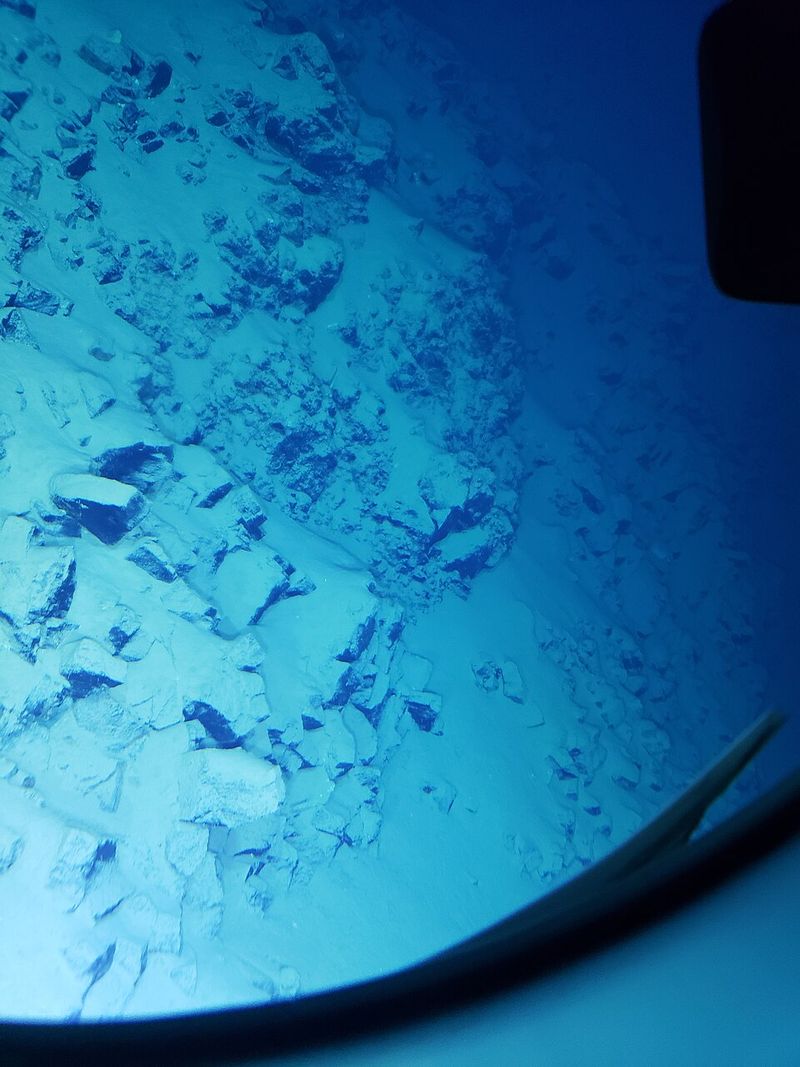
If you could drain all the water from the Pacific Ocean, you would find a trench so deep it could swallow Mount Everest with over a mile to spare. The Challenger Deep, located in the Mariana Trench near Guam, reaches a depth of approximately 10,935 meters, nearly 11 kilometers straight down.
The pressure at that depth is about 1,000 times greater than at sea level. Despite these crushing conditions, life still exists there.
Scientists have found microorganisms, small crustaceans called amphipods, and even sea cucumbers thriving in the Challenger Deep.
Only a handful of crewed expeditions have ever reached the bottom. Filmmaker James Cameron made a solo descent in 2012, and explorer Victor Vescovo reached it in 2019 during a mission to visit the deepest points in all five oceans.
Each trip reveals new information about how life adapts to the most extreme environments on our planet.
11. Earth’s Continents Move Every Year

The ground beneath your feet feels solid and permanent, but it is actually moving. Earth’s outer shell is broken into large sections called tectonic plates, and they are constantly drifting.
They move at roughly the same pace your fingernails grow, a few centimeters every year.
That might sound insignificant, but over millions of years it adds up to enormous changes. Mountains form where plates collide, ocean trenches open where one plate slides under another, and earthquakes happen when plates grind against each other.
The movement never stops.
The Atlantic Ocean, for example, is getting slightly wider every year as the plates on either side drift apart. Meanwhile, the Pacific Ocean is slowly shrinking.
Geologists use GPS satellites and ground sensors to track plate movement with remarkable precision today. Understanding how and where plates move helps scientists predict earthquake risks and better protect communities living near active fault lines around the world.
12. A Day Used to Be Much Shorter
Hundreds of millions of years ago, if you had a watch, you would have needed to reset it constantly. Back then, Earth was spinning much faster, and a single day lasted only about 21 hours instead of the 24 we are used to now.
The planet has been gradually slowing down ever since.
The main reason for this slowdown is the Moon. The gravitational pull between Earth and the Moon creates tidal friction, which acts like a gentle brake on Earth’s rotation.
Over time, this friction transfers energy from Earth’s spin to the Moon’s orbit, causing both the day to lengthen and the Moon to drift slightly farther away.
Scientists have confirmed this by studying ancient coral fossils, which grow in daily rings. Corals from 400 million years ago show that a year had about 400 days, meaning each day was shorter.
The planet’s rhythm has been changing since the very beginning.
13. Earth Has a Massive Hidden Ocean Underground

When you think of Earth’s water, you probably picture the oceans, rivers, and lakes visible on the surface. However, scientists discovered something remarkable in 2014 that changed the picture entirely.
Deep inside the mantle, about 660 kilometers underground, there is a mineral called ringwoodite that holds water locked within its crystal structure.
The amount of water stored in this layer could be enormous, potentially three times the volume of all the world’s surface oceans combined. It is not liquid water sitting in underground pools.
Instead, water molecules are chemically bonded inside the mineral itself, released only under extreme heat and pressure.
This discovery has major implications for how we understand Earth’s water cycle. Some scientists now believe Earth’s surface oceans may have originally formed partly from water released by the mantle over billions of years.
The planet is not just wet on the outside. It carries water deep within its very structure.
14. Antarctica Contains Most of Earth’s Freshwater Ice

Antarctica is one of the most remote and least visited places on Earth, yet it holds something absolutely vital to the planet. About 90% of all the ice on Earth and approximately 70% of the planet’s total freshwater supply is locked up in the Antarctic ice sheet.
That is an almost incomprehensible amount of frozen water.
The ice sheet covering Antarctica averages about 2.2 kilometers in thickness. In some places, it is nearly 5 kilometers deep.
The weight of all that ice is so immense it has actually pushed the land beneath it below sea level in certain areas.
If all of Antarctica’s ice melted, global sea levels would rise by roughly 58 meters, enough to flood most coastal cities on Earth. Scientists closely monitor changes in Antarctic ice because even small shifts can have major consequences for people living near coastlines.
This frozen continent plays a far bigger role in global climate than its remote location might suggest.
15. Earth Is the Densest Planet in the Solar System
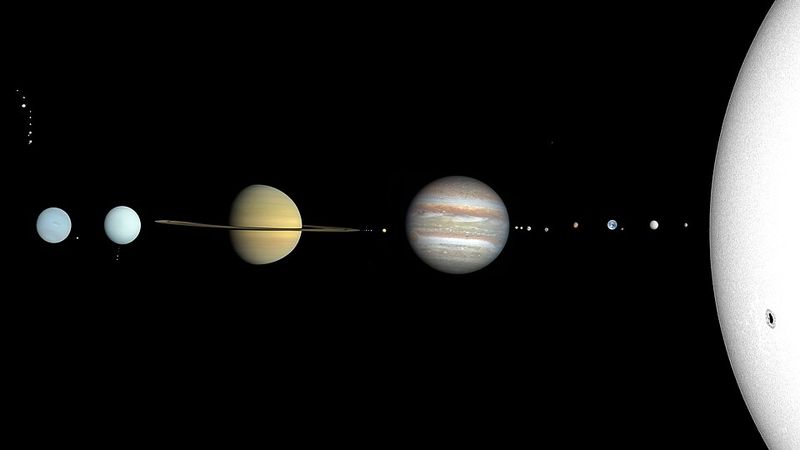
Earth may not be the biggest planet in the solar system, not even close, but it wins in a different category. Of all eight planets, Earth has the highest average density.
It packs more mass into each unit of volume than any other planet orbiting the Sun.
The main reason for this is Earth’s iron-rich core. The inner core is solid iron and nickel, and the outer core is liquid iron.
Together, they make up a significant portion of Earth’s total mass and contribute heavily to its overall density of about 5.51 grams per cubic centimeter.
Gas giants like Jupiter and Saturn are enormously larger but far less dense because they are composed mostly of lightweight gases like hydrogen and helium. Saturn is actually less dense than water, meaning it would theoretically float.
Earth, by contrast, is a compact, heavy world built from rock and metal. That density is part of what makes it so geologically and magnetically active.
Share this story