Northwest New Jersey keeps one of its strongest plot twists in plain sight: a mountain that turns a simple day outdoors into a full-scale mission with a serious payoff. The climb is not casual, the route asks for attention, and the parking situation can act like it has its own agenda, yet that is exactly why this place stands out from easier stops nearby.
Up top, the landscape opens across the Delaware River and neighboring ridges in a way that makes all the steep sections feel like part of the story rather than an obstacle. Keep reading, because this is not just a quick note about a pretty overlook – it is a practical, honest guide to what makes this Knowlton Township destination such a favorite, how the trails actually work, when to go, what to bring, and why so many hikers treat this mountain like a New Jersey classic with no need for extra hype.
Where the climb begins
First things first: Mount Tammany is in Knowlton Township, NJ 07832, and this 1,526-foot mountain peak is one of the signature hiking destinations in northwest New Jersey. That simple address does not look dramatic on a map, yet it leads to a route known for a demanding climb and a summit that earns its reputation honestly.
The mountain sits above the Delaware River and anchors the New Jersey side of the Delaware Water Gap, which explains why the outlook feels so expansive once the trail does its work. This is not a casual roadside stop or a brief stroll in clean sneakers pretending to be hiking footwear.
Most people come here for the classic loop that climbs steeply, opens to broad views, and returns by a longer descent with more variety along the way. In other words, Mount Tammany is the kind of place that asks for effort upfront and then answers with a finish that makes New Jersey look wonderfully overqualified.
Why the summit matters
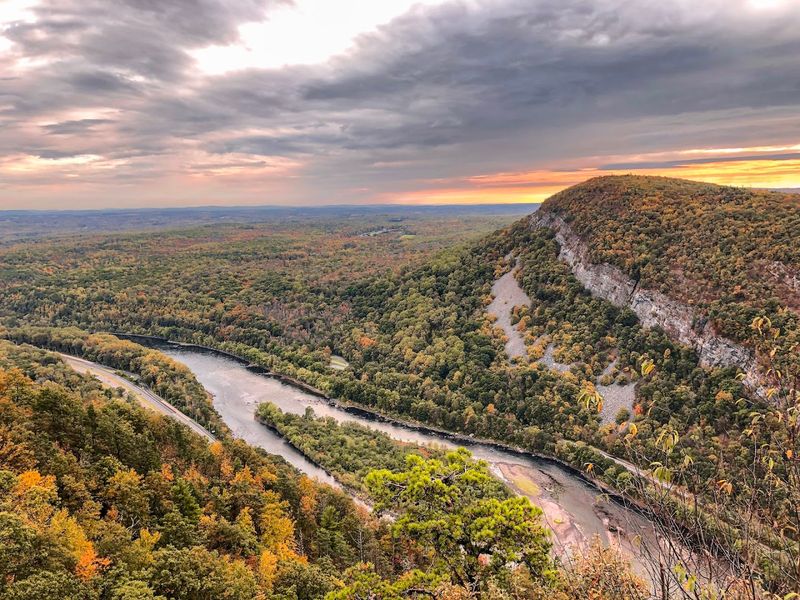
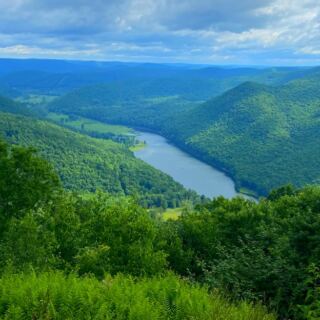
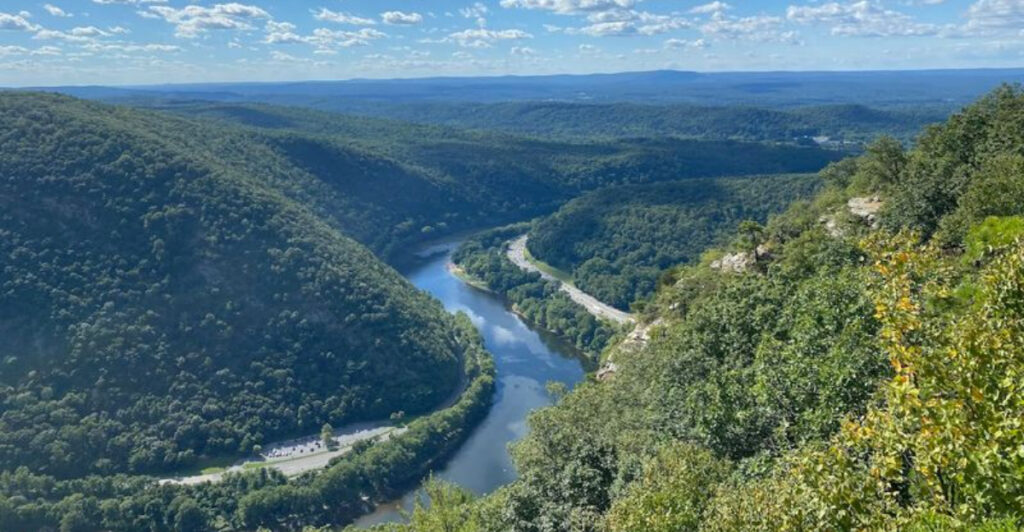
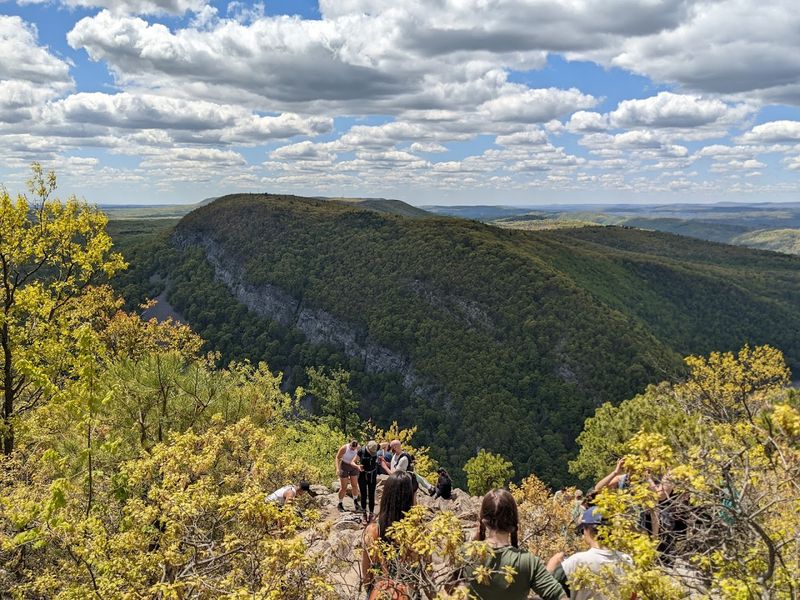
What gives this mountain its lasting pull is the summit view, which opens across the Delaware River and toward the ridges beyond in a broad, unmistakably regional panorama. New Jersey has plenty of rewarding hikes, but this one keeps appearing in conversations because the top delivers a perspective that feels bigger than the state line.
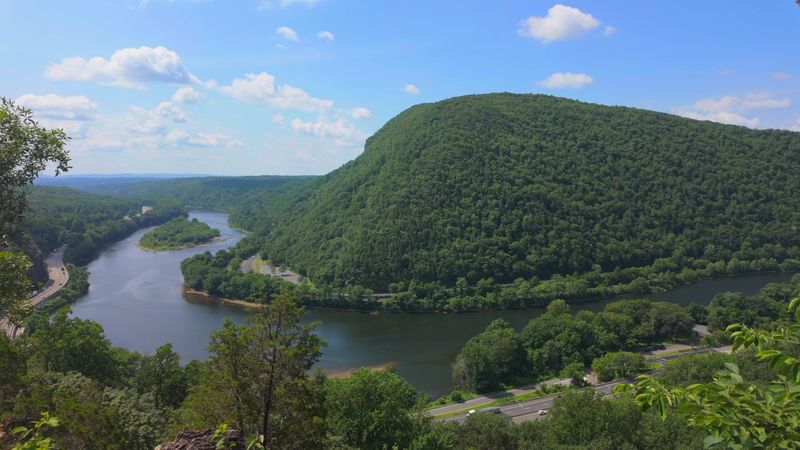
From the overlook, the landforms line up in a way that helps the whole Delaware Water Gap make visual sense. You can trace the river corridor, pick out the mountain shapes across the gap, and understand why this climb remains a benchmark for hikers who want something more than a quick leg stretch.
The best part is that the payoff is tied directly to the challenge, not separated from it by a parking lot or a boardwalk. Mount Tammany earns its reputation through terrain, timing, and persistence, which is a polite way of saying this mountain does not hand out great views like free samples at a grocery store.
The classic loop

Regulars often tackle Mount Tammany as a loop, and the most common strategy is simple: red trail up, blue trail down, with the white Appalachian Trail linking sections at the base. That combination has become the standard because it balances the route in the most practical way, even though practical here still includes steep grades and plenty of rocks.
The red route is shorter and more direct on the ascent, while the blue route usually makes more sense for the descent because it spreads the return over a longer distance. Add in the white trail connection, and the full outing becomes a satisfying circuit instead of an out-and-back that repeats the hardest sections.
For hikers who like a route with a clear rhythm, this loop is part of the mountain’s appeal. It gives Mount Tammany a built-in storyline: push upward, claim the viewpoint, then work back down with enough variety to keep the day interesting right to the last stretch.
The red trail test
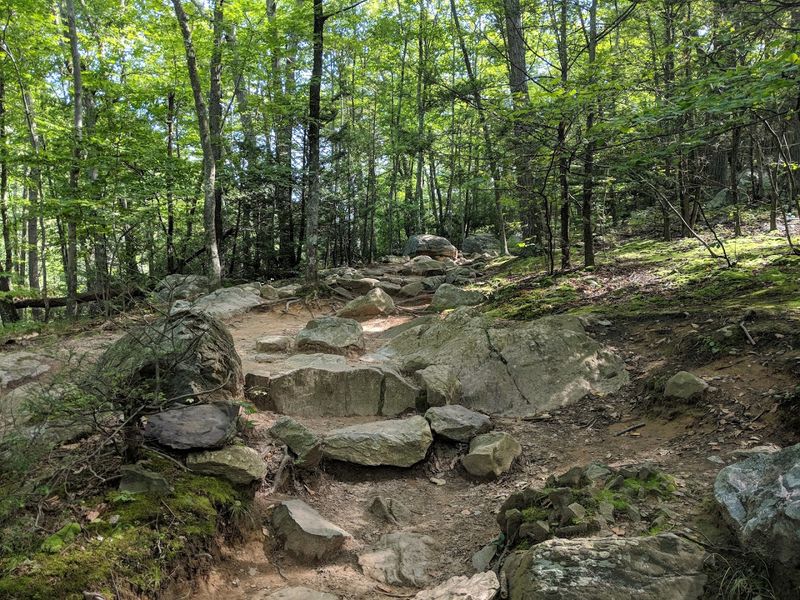
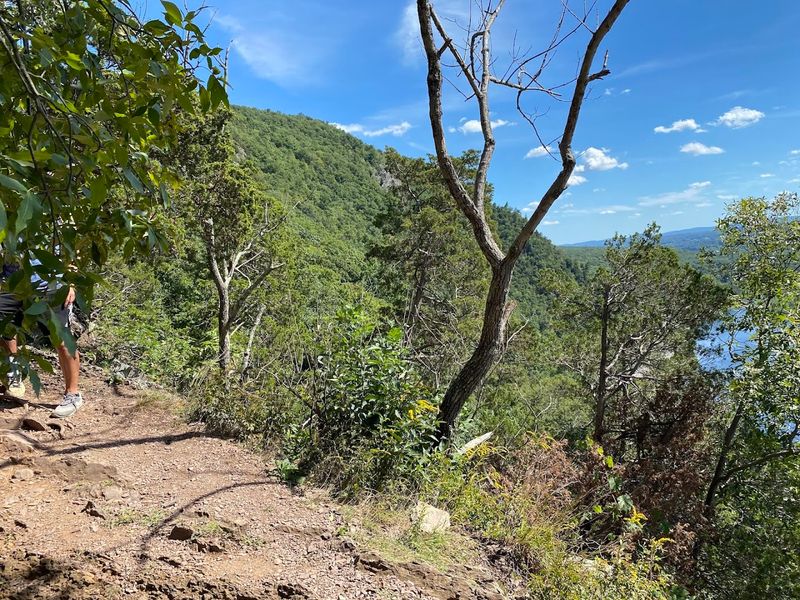
No section shapes the mountain’s reputation more than the Red Dot Trail, the direct climb that wastes very little time pretending to be gentle. Hikers describe it as steep, rocky, and physically demanding, which is a neat summary for a path that turns your legs into unpaid interns before the summit finally arrives.
The route gains elevation quickly and includes stretches where footing matters, pacing matters, and overconfidence starts to look like a poor planning choice. This is the part of Mount Tammany that separates people seeking a real workout from anyone hoping a famous New Jersey hike might somehow also be a soft afternoon stroll.
That said, the red trail is not difficult because it is confusing. Its challenge comes from the climb itself, and that honesty is part of its appeal.
By the time the summit opens up, the effort feels closely tied to the result, which is exactly how a memorable mountain route should behave.
A smarter way down

After the summit, the Blue Dot Trail usually takes over the story, and many hikers prefer it for the descent for one obvious reason: coming down the steepest parts of the red route is nobody’s idea of a clever encore. The blue side is still rugged, still rocky, and still a real hike, but it generally works better as the return.
This trail adds variety to the loop with longer stretches through the mountain’s lower terrain and access to streamside features near the bottom. Reports of a waterfall and creek crossings along the blue route help explain why the descent feels like more than just a practical exit strategy.
There is also a mental benefit to changing the terrain after the summit. Instead of retracing every step, hikers get a route with a different rhythm and different landmarks, which keeps Mount Tammany from feeling repetitive.
The mountain basically closes its own show with a second act, and that is a pretty good deal.
Know the difficulty
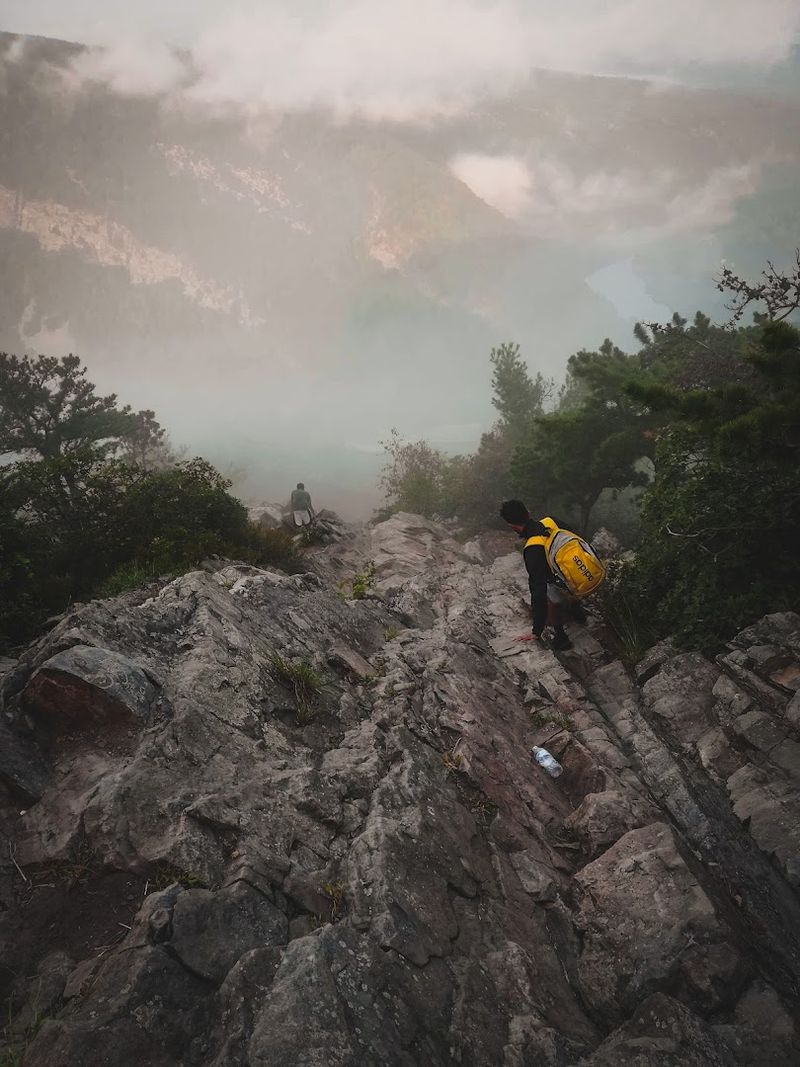
Plenty of mountains promise a challenge, but Mount Tammany actually follows through. The hike is commonly described as moderate to strenuous, and that range makes sense because fitness, pace, weather, and trail experience all change how demanding the route feels on any given day.
What stays consistent is the terrain. The climb includes steep grades, uneven rock, and sections that require attention from start to finish, so this is not the place to test completely new gear or discover that your conditioning plan was mostly optimism and good intentions.
At the same time, the route is manageable for prepared hikers who respect the mountain and give themselves enough time. Breaks are normal, a measured pace works fine, and there is no prize for pretending the uphill is easier than it is.
Mount Tammany’s appeal comes from being tough but achievable, which is exactly the sweet spot for people who want a hike with real substance and no fake drama.
Best seasons to go
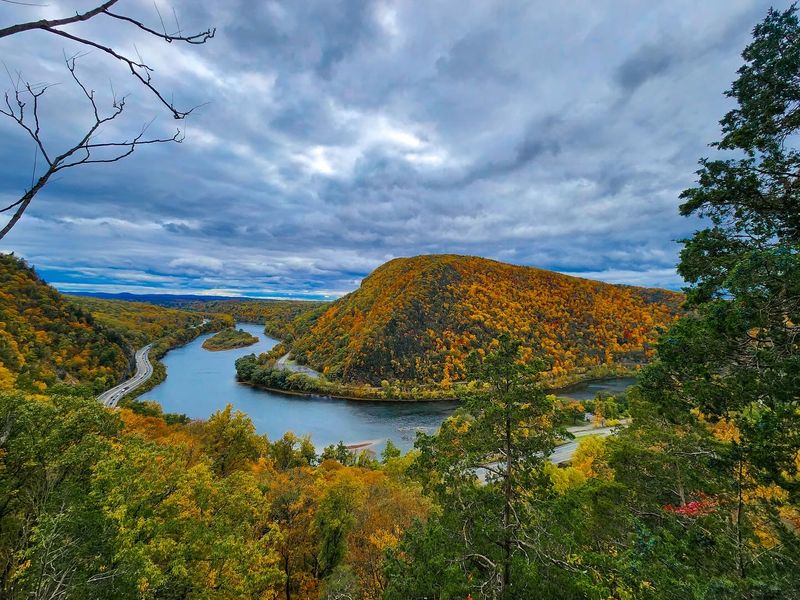
Season matters here more than people sometimes expect, and Mount Tammany tends to shine brightest in spring and fall. Those times of year are often singled out because the trail conditions, temperatures, and overall hiking experience line up in a way that makes the mountain feel challenging without becoming punishing.
Spring adds energy to the route with active water along the lower sections, while fall is prized for the wider regional view and the layered hills around the Delaware River corridor. Summer remains popular, but the combination of exposed effort, heat, and heavier traffic can make the outing feel more demanding than the mileage suggests.
Winter can transform the trail into a much more serious undertaking, which means preparation becomes even more important. For most hikers, spring and fall offer the most balanced introduction to what Mount Tammany does best.
The mountain is good in many conditions, but some seasons clearly read the assignment better than others.
Trail markings and route sense
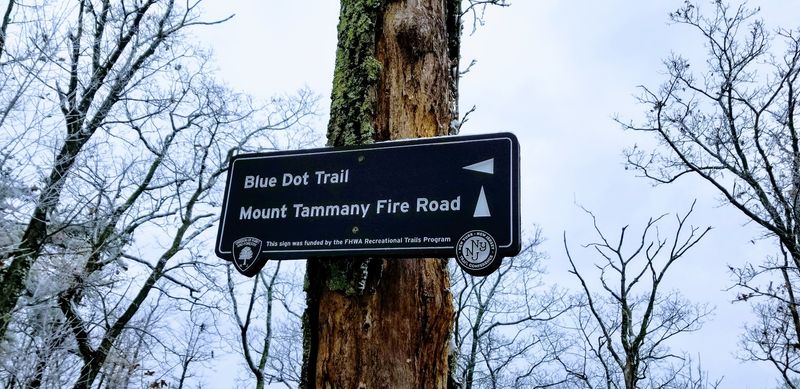
Navigation on Mount Tammany is straightforward when hikers pay attention to the trail markers, and that small detail deserves more respect than it sometimes gets. The common loop depends on following the red dots up, the blue dots down, and the white blazes where the Appalachian Trail connects the route.
Because the mountain is so popular, it is easy to assume the path will always be obvious, but marked trails still matter on steep and rocky ground. A quick check at each junction keeps the day simple and prevents the kind of wrong turn that turns a satisfying hike into a geography quiz nobody asked to take.
The good news is that Mount Tammany’s route is not famous for confusion so much as for effort. Hikers who understand the marker system before starting usually have an easier time focusing on the climb itself.
On a mountain like this, good navigation is not dramatic, but it is wonderfully effective, which is usually the best kind of smart.
What to bring
Preparation does a lot of heavy lifting on Mount Tammany, and the basics matter more here than on shorter, flatter routes. Water, trail snacks, sturdy footwear, and enough time to move at a steady pace are not optional extras for this climb.
They are the difference between a controlled outing and a long lesson in avoidable mistakes.
The rocky terrain makes supportive shoes a smart call, and extra water is commonly recommended because the uphill effort adds up quickly. Light packing sounds efficient until the trail reminds you that efficiency should still include hydration, traction, and enough fuel to keep your judgment working properly.
It also helps to know the route before arriving and to expect a hike that can take several hours depending on pace and stops. Mount Tammany does not demand elaborate gear or expedition-level planning, but it definitely rewards hikers who show up prepared.
This is one of those mountains where common sense deserves a standing ovation.
Who should take it on

Not every well-known hike is right for every group, and Mount Tammany proves that popularity should never be confused with ease. The route is best suited to people comfortable with sustained uphill hiking, uneven footing, and a trip that asks for a decent level of stamina from start to finish.
Some families do complete the loop, and some dogs manage it well, but the mountain’s rocky and steep sections mean that choices should be made carefully. Young children, less experienced hikers, or pets that do not handle rough ground confidently may find this route much tougher than the mileage suggests.
That does not make Mount Tammany exclusive. It just means the mountain rewards realistic planning over wishful thinking.
A prepared hiker with patience and solid footing can have a great day here, while an unprepared group may spend the whole climb renegotiating the plan. Nature is fair like that, even when it has a slightly sarcastic sense of humor.
The Delaware Water Gap backdrop

Part of Mount Tammany’s power comes from its setting within the Delaware Water Gap, where the mountain rises above one of the region’s most recognizable natural corridors. The summit view is not just broad.
It is geographically meaningful, with the Delaware River shaping the landscape and neighboring ridges creating a clear sense of place.
Across the gap, Mount Minsi forms a natural counterpart on the Pennsylvania side, giving the panorama a striking structure that hikers can immediately understand. This relationship between river, ridge, and gap is a major reason the overlook feels so complete rather than simply elevated.
That context also gives the hike a stronger identity than many local climbs. Mount Tammany is not only a good mountain in New Jersey.
It is part of a larger landform that defines the area around it. The result is a summit that feels rooted in the region’s shape, which is a tidy way for geography to show off a little.
Crowds, pacing, and etiquette

Fame has consequences, and at Mount Tammany that usually means company on the trail. This is a heavily used hike on many weekends and fair-weather days, so a little patience goes a long way when passing others, taking breaks, or waiting for space at the overlook.
A steady pace helps more than speed on a route like this, especially when the uphill is crowded and the footing demands attention. Hikers who leave room, communicate clearly on narrow sections, and avoid blocking key viewpoints make the mountain work better for everyone without turning the whole outing into an obstacle course.
Respect also matters at the summit and along the descent. Pack out what comes in, stay on marked paths, and treat the place like a shared destination rather than a personal stage set.
Mount Tammany can handle a lot of enthusiasm, but it looks best when people remember that great public places depend on good habits and not just strong calves.
A New Jersey classic
By the end of the day, Mount Tammany makes its case without needing flashy extras. The formula is straightforward: a serious climb, a memorable overlook, a well-known loop, and enough practical considerations to keep the experience grounded in reality rather than postcard fantasy.
That mix is exactly why the mountain keeps its status as one of New Jersey’s most talked-about hikes. It feels earned, not overproduced.
The route asks for preparation, fitness, and timing, yet it remains accessible enough that many hikers return again and again to test themselves against the same steep slopes and the same rewarding finish.
For anyone building a shortlist of standout outdoor spots in the state, this mountain belongs on it for reasons that hold up beyond a single photo. Mount Tammany offers challenge, perspective, and a clear sense of place all in one trip.
Not bad for a destination tucked into Knowlton Township and quietly reminding the rest of New Jersey to keep up.
Last look
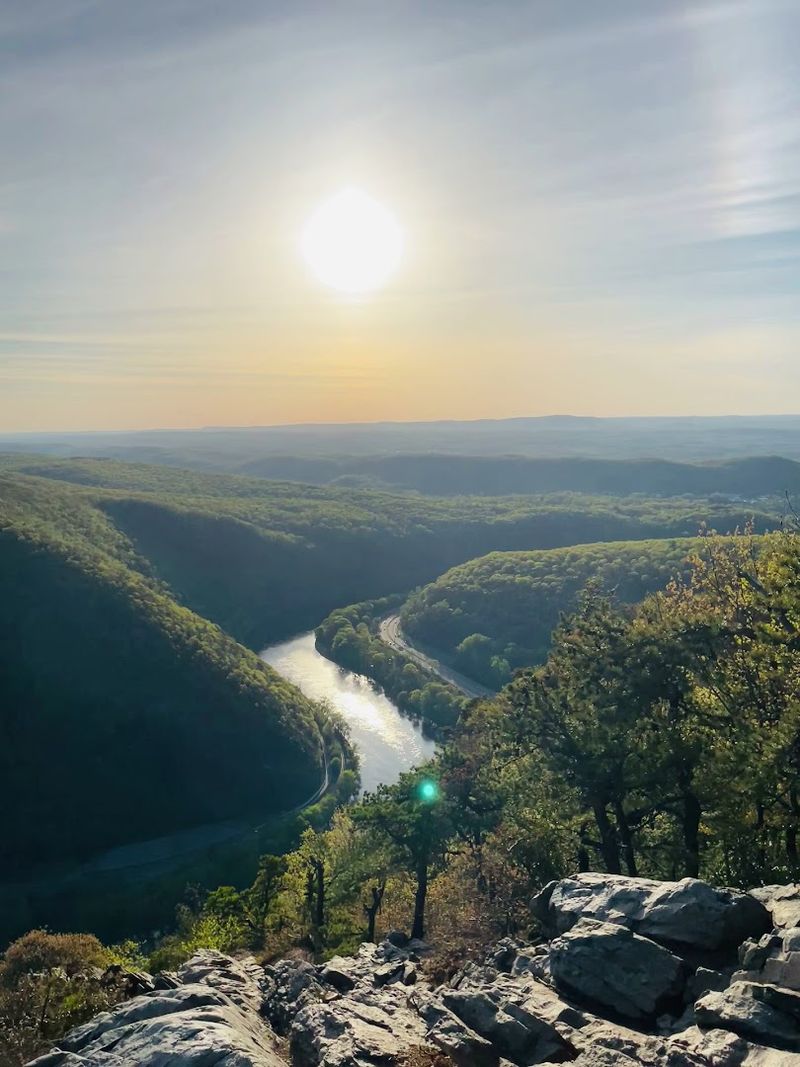
Some destinations are famous because they are easy to explain, and Mount Tammany is famous because it is easy to respect. The mountain combines a demanding ascent, a standout view over the Delaware River, and a route structure that gives the whole hike a satisfying beginning, middle, and end.
It also stays practical in the best way. Go early, bring water, wear proper shoes, follow the markings, and expect a real workout.
Those simple choices let the mountain be what it is supposed to be: a rewarding New Jersey challenge instead of a day derailed by preventable problems.
That is the lasting appeal here. Mount Tammany does not need exaggeration, and it certainly does not need gimmicks.
It just needs hikers willing to meet the trail on its own terms and enjoy the payoff at the top. In a state full of pleasant outdoor spots, this one rises above the crowd without trying too hard, which is a very mountain-like way to make a point.
Share this story