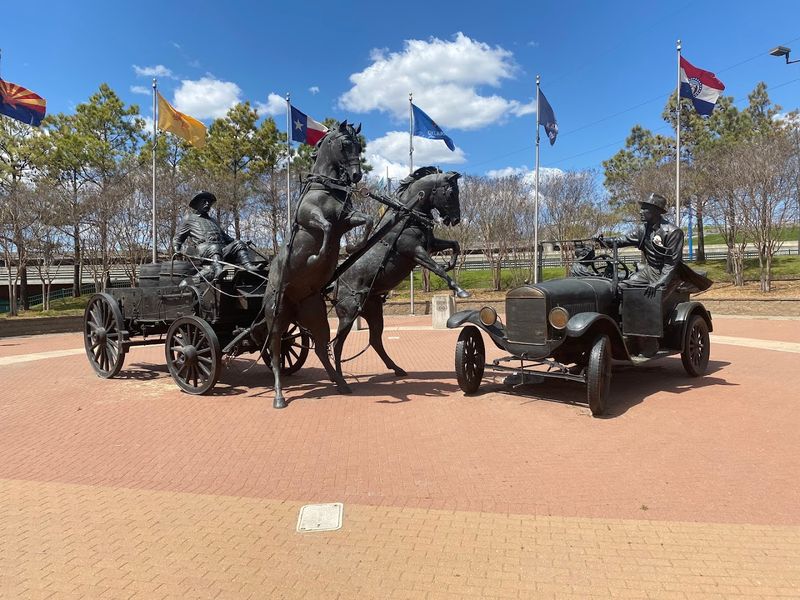
There is a spot in Tulsa, Oklahoma, where the story of one of America’s most legendary roads is told not through words, but through towering bronze. A massive sculpture freezes a dramatic moment in time, right where the old highway once crossed the Arkansas River.
The detail in this artwork is the kind that makes you stop mid-step and just stare. I had driven past this area before without knowing what was tucked down near the riverbank, and the day I finally stopped turned out to be one of the best unplanned detours I have ever made on a road trip.
Keep reading, because this place has a lot more going on than just a pretty statue.
Where the Plaza Sits and How to Get There
Right on Southwest Boulevard in Tulsa, Oklahoma, the Cyrus Avery Centennial Plaza sits at the edge of the Arkansas River at the coordinates that once marked one of the most important crossings on the original Route 66. The full address is Southwest Blvd, Tulsa, OK 74127, and it is open 24 hours a day, every day of the week.
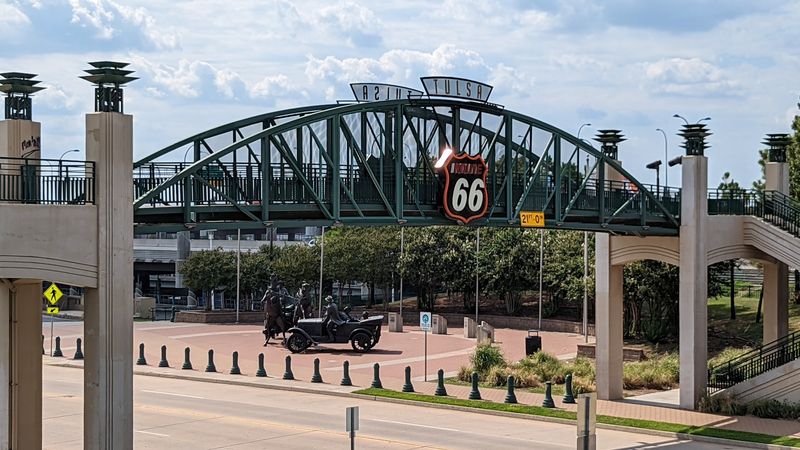
Getting there is straightforward, but parking does require a small strategy. There is a parking area up on the hill above the plaza, and a modern pedestrian crosswalk bridge connects that lot to the plaza level below.
The walk down gives you a nice aerial preview of the sculptures before you even reach them.
One thing worth knowing before your visit: the plaza is not fully accessible by elevator. If someone in your group has mobility challenges, curbside drop-off on the plaza side is the better option.
The open hours make it a great sunrise or sunset destination, and the river views shift beautifully depending on what time of day you arrive.
The Man Behind the Name: Cyrus Avery
Not everyone gets a road named after them, but Cyrus Avery came pretty close. Known widely as the “Father of Route 66,” Avery was an Oklahoma businessman and highway advocate who played a central role in planning and numbering the famous highway in 1926.
He pushed hard for the route to pass through Tulsa, which was no small political feat at the time. His vision connected Chicago to Los Angeles through the American heartland, and the road that resulted changed the way people traveled, worked, and thought about the country.
The plaza bearing his name sits on what was the original Route 66 corridor, right at the spot where the highway once crossed the Arkansas River on the 11th Street Bridge. That bridge has since been closed to traffic and renamed the Cyrus Avery Route 66 Memorial Bridge in his honor.
Standing at the plaza, you get a real sense of why his legacy still matters nearly a century after he helped draw that iconic highway line across a map.
The “East Meets West” Sculpture Up Close
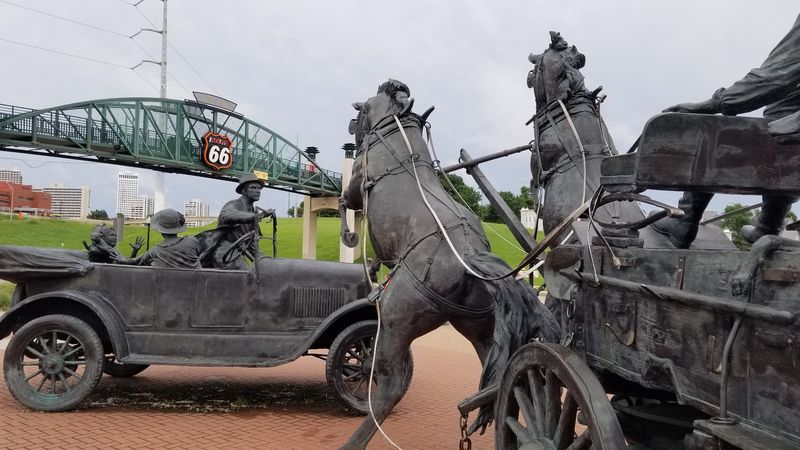
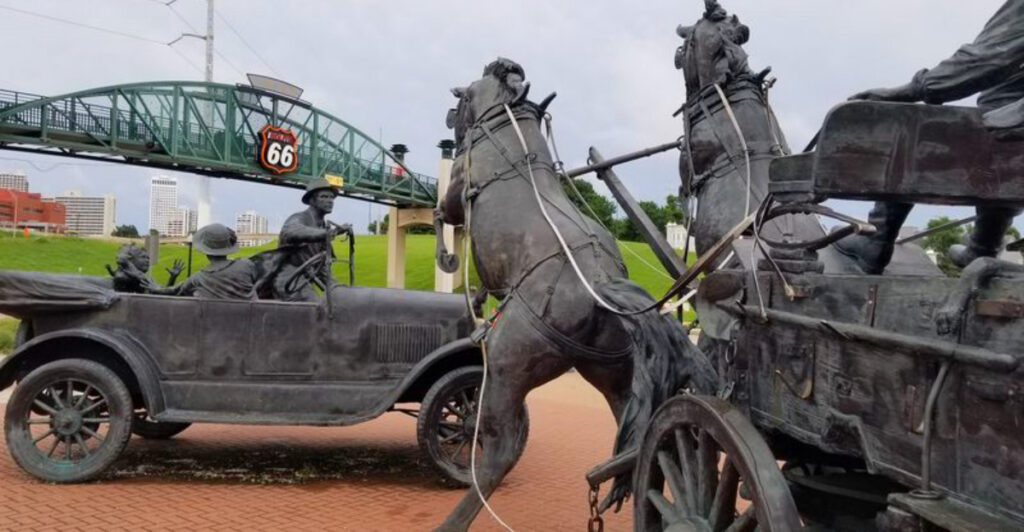
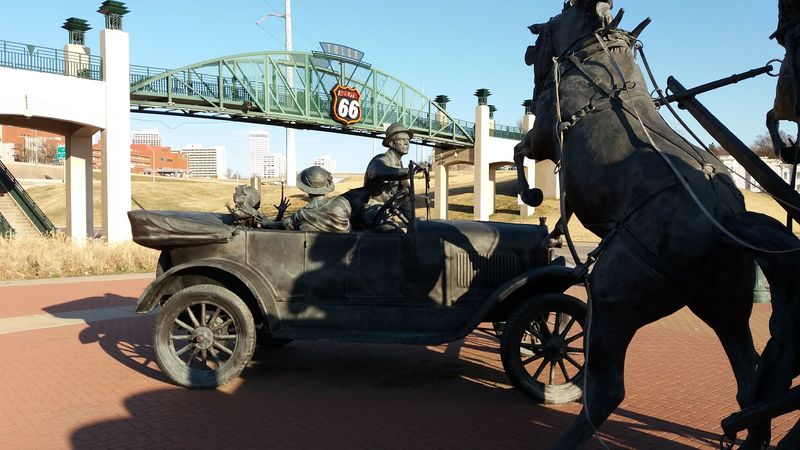
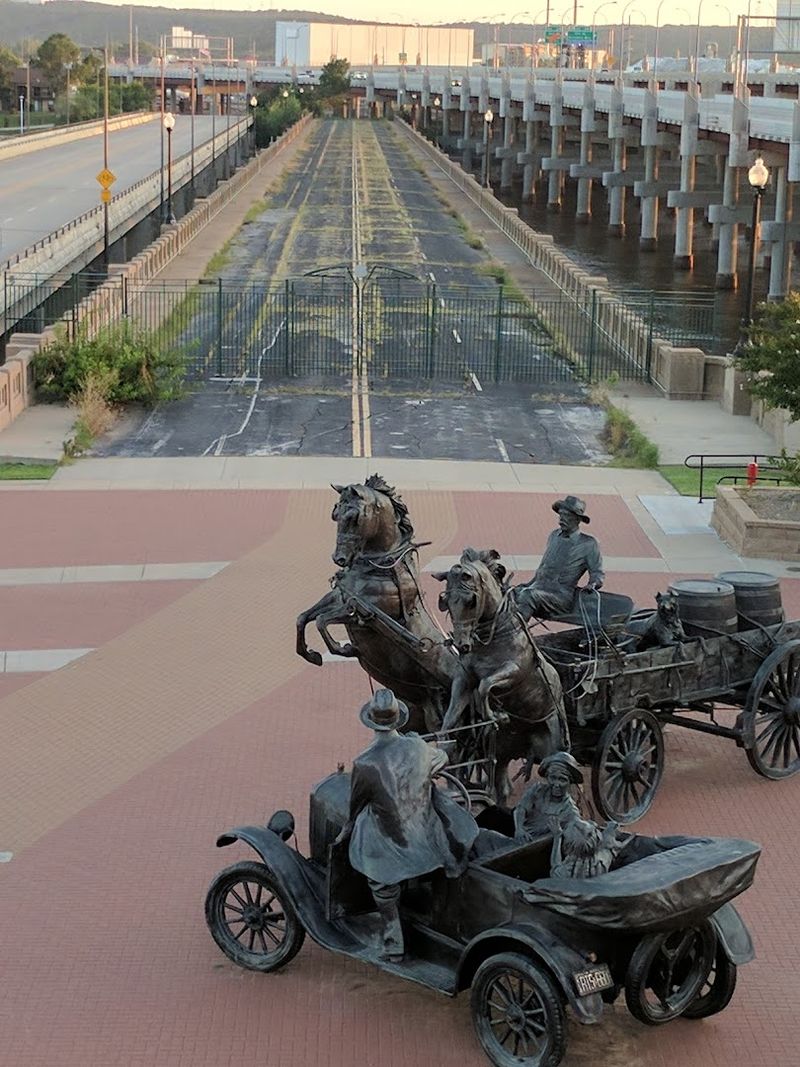
The centerpiece of the plaza is a two-piece bronze sculpture called “East Meets West,” and calling it impressive would be underselling it. The artwork depicts a tense, almost comedic near-collision between a man on horseback leading a wagon and Cyrus Avery himself driving an early automobile with his family on board.
The scene captures the exact tension of an era in transition, when horses and horsepower were still sharing the same dusty roads. Get close and you will notice the family dog sitting in the car, Avery’s wife and daughter beside him, and an almost alarmed expression on the horseman’s face.
One detail that consistently surprises first-time visitors: check the front grill of the automobile. There is a small piece of roadkill worked into the bronze, a quirky and very human touch that shows just how much thought the sculptor put into this piece.
The figures are life-size and larger, which makes the whole composition feel like you have stumbled into a scene rather than just looked at a statue. It is genuinely hard to walk away quickly.
The Cyrus Avery Route 66 Memorial Bridge
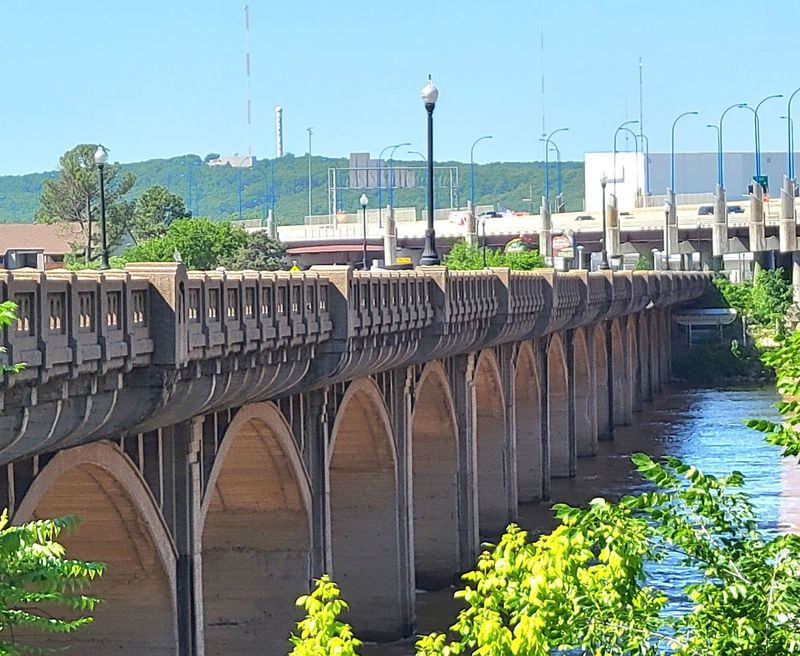
Just behind the plaza stands a piece of road history that most people do not expect to find still standing. The old 11th Street Bridge, now officially known as the Cyrus Avery Route 66 Memorial Bridge, is gated and closed to vehicle traffic, but it remains one of the most atmospheric spots along this stretch of the river.
The bridge once carried Route 66 traffic over the Arkansas River, connecting Tulsa to the road west toward California. Today it serves as a preserved relic, and during certain seasons, wildflowers bloom along its railings in a way that feels almost too picturesque to be accidental.
A newer pedestrian and bicycle trail runs underneath the old bridge along the riverbank, offering a different and surprisingly dramatic vantage point of the structure above. Walking that trail and looking up at the old steel span gives you a quiet moment to think about how many road-trippers once rolled across it, heading west with everything they owned packed into a car.
That kind of history has a weight to it that no museum exhibit can quite replicate.
The Eight State Flags Flying at the Plaza
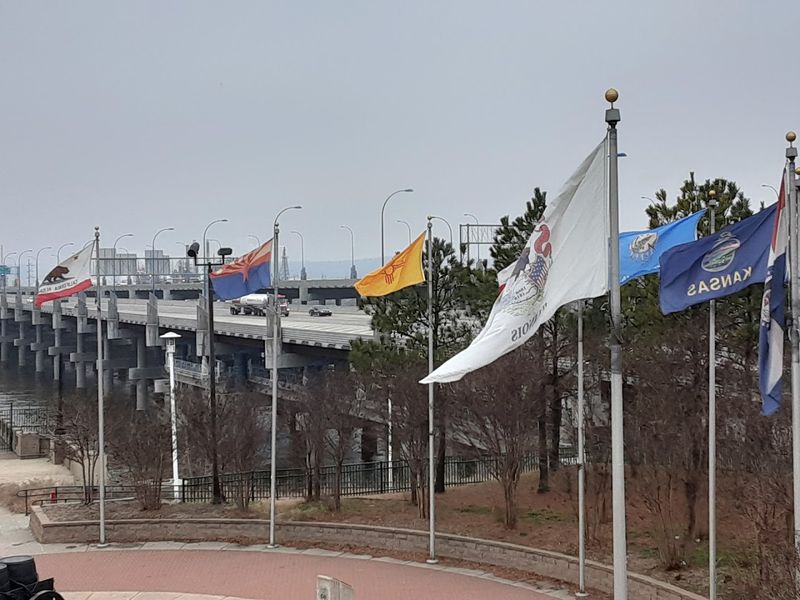
One of the first things you notice as you approach the main plaza area is a row of tall flagpoles, each one flying the flag of a state that Route 66 passes through. The eight states are Illinois, Missouri, Kansas, Oklahoma, Texas, New Mexico, Arizona, and California, and seeing them all together in one line gives you a vivid sense of just how far that highway stretches.
The flags serve as more than decoration. They are a quiet reminder that Route 66 was never just a local road.
It was a national connector, a lifeline for migrant families, a commercial artery, and eventually a cultural symbol that outlasted its own official decommissioning in 1985.
Originally, small plaques sat in front of each flagpole podium, but those have since been removed. The empty podiums are a small loss, but the flags themselves still do a good job of setting the tone for the whole plaza.
On a breezy day, all eight flags snapping in the wind together create a scene that feels genuinely ceremonial, like the highway itself is being honored in real time.
The Arkansas River Views from the Plaza
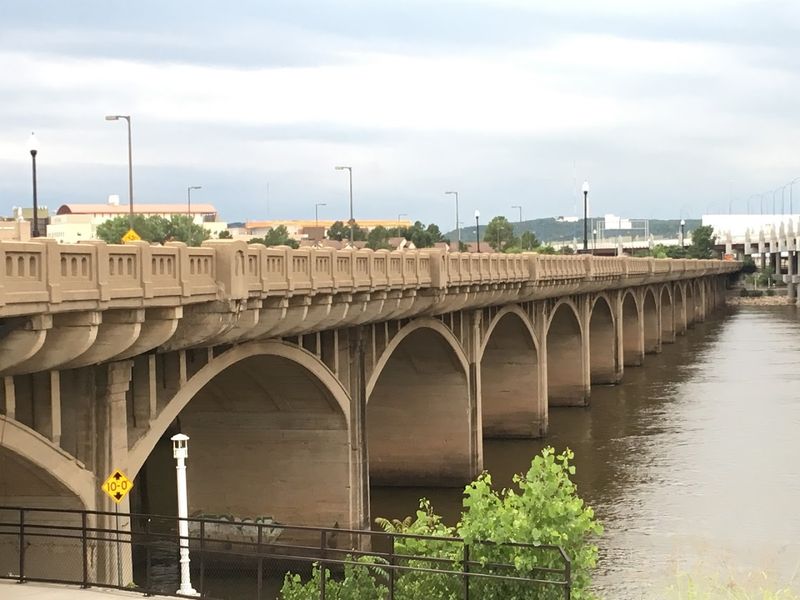
Few things pair better with a historic plaza than a wide river view, and this spot delivers one without any effort on your part. The Arkansas River spreads out just below the plaza level, and depending on the season, the water can look anything from glassy and calm to full and rushing after spring rains.
The view is especially rewarding in the early morning, when the light comes in low from the east and catches the surface of the water. Sunsets are just as good from the plaza side, with the old bridge silhouetted against the western sky in a way that makes even quick phone photos look considered and intentional.
The park area on the south end of the plaza adds to the overall setting, with foliage trees providing shade and ducks frequently spotted near the water’s edge. It is the kind of riverfront scene that makes you slow down without really deciding to.
The combination of the sculptures, the old bridge, and the river flowing past creates an atmosphere that is calm and historically charged at the same time, which is a harder balance to strike than it sounds.
The Pedestrian Bridge and Riverside Trail
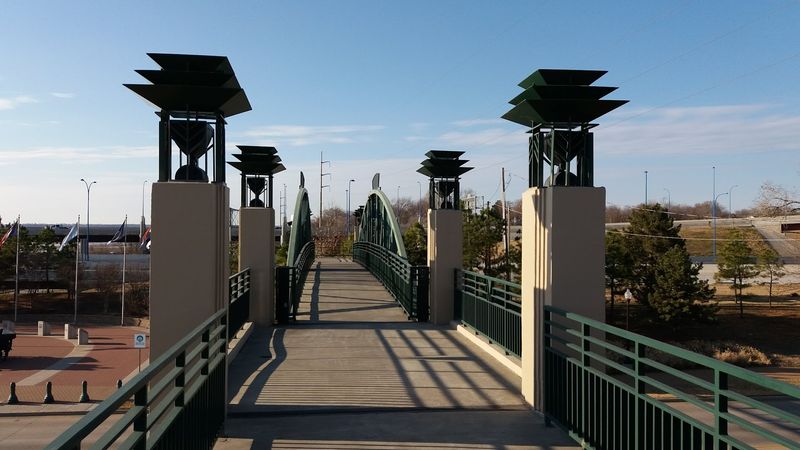
The modern pedestrian bridge that connects the hilltop parking area to the plaza below is a practical piece of infrastructure that also happens to be a pleasant walk in its own right. It offers a clear sightline down to the sculptures before you reach them, which builds anticipation in a way that feels almost theatrical.
Below the plaza, a dedicated bicycle and walking trail runs along the riverbank directly underneath the old Memorial Bridge. The trail is relatively new and well-maintained, and it provides a completely different perspective on both the bridge structure and the river itself.
Cyclists and joggers use it regularly, giving the area a lively, community-used feel rather than the dusty, forgotten quality some roadside historic sites tend to carry.
The contrast between the old bridge overhead and the fresh trail beneath it is one of those small design decisions that works really well in practice. You can spend time at the plaza level with the sculptures and flags, then drop down to the trail for a riverside walk, and the two experiences complement each other rather than competing.
The whole area rewards a longer visit than most people initially plan for.
The Plaza as a National Historic Register Site
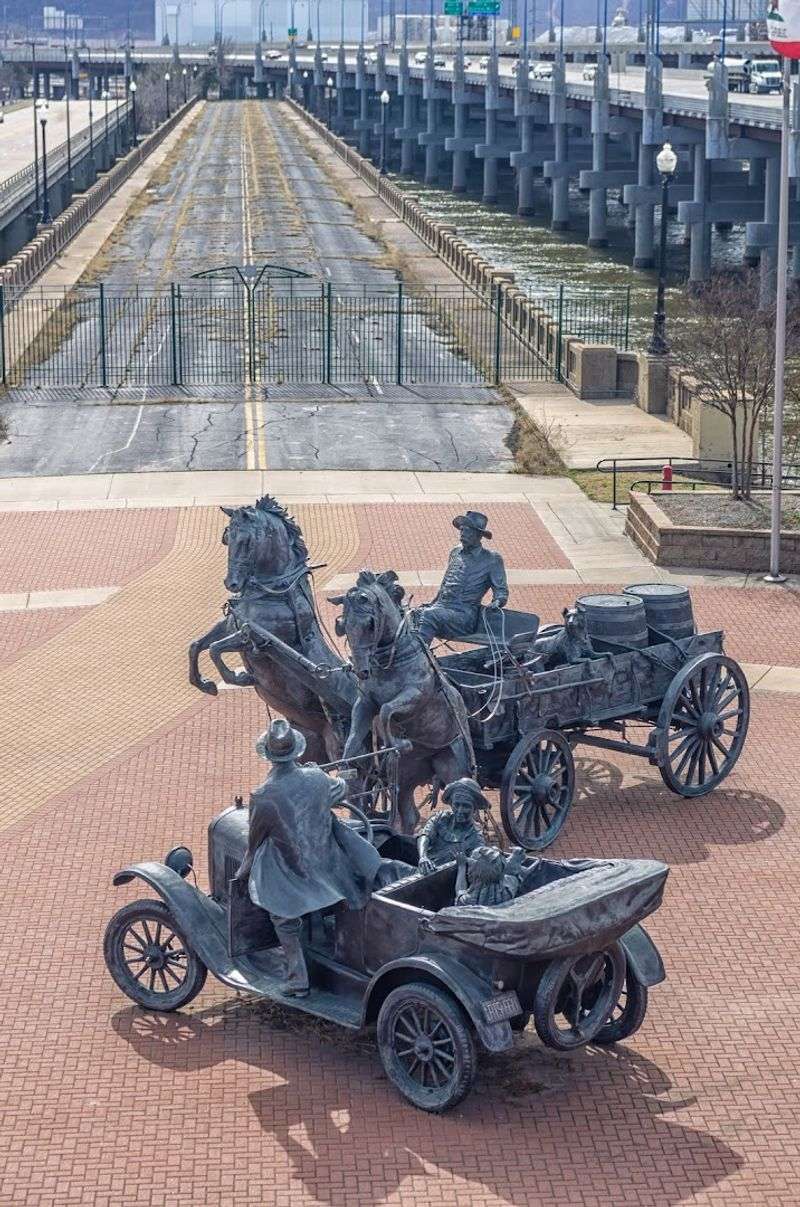
The Cyrus Avery Centennial Plaza holds a listing on the National Historic Register, which puts it in distinguished company alongside some of the country’s most significant landmarks. That designation is not handed out casually, and it reflects the genuine historical weight this location carries as the site where Route 66’s founder lived, worked, and helped shape American road culture.
Being on the National Historic Register also means the site has protections in place that help preserve its character for future visitors. The bronze sculptures, the bridge, and the plaza layout are all part of a recognized historic district, which adds a layer of significance to even a casual stop.
That said, some visitors have noted that maintenance of the park could use more attention to match the prestige of the designation. The 100th anniversary of Route 66 is approaching in 2026, and there is real hope in the community that the plaza will be restored and polished up to serve as a centerpiece of those celebrations.
The bones of a truly outstanding historic site are already there. The potential for this place to shine even brighter in the coming years is very real.
Best Times to Visit and What to Expect
The plaza is open around the clock every day, which makes it flexible for almost any travel schedule. That said, visiting during daylight hours is strongly recommended if you want to fully appreciate the detail in the bronze sculptures and read the informational placards around the site.
Spring and fall tend to offer the most pleasant conditions. Spring brings wildflowers along the old bridge railings and greener riverbanks, while fall adds warm foliage colors to the park area on the south end of the plaza.
Summer visits are absolutely doable, but the Oklahoma heat can be intense by midday, so an early morning start makes a real difference in comfort.
The plaza is generally quiet on weekday mornings, which is ideal if you want to spend time close to the sculptures without navigating around other visitors. Weekends bring more foot traffic, especially from Route 66 enthusiasts and families passing through Tulsa.
Either way, plan to spend at least 45 minutes to an hour. The site rewards slower exploration, and rushing through it means missing the smaller details that make the whole experience genuinely memorable.
Why This Stop Belongs on Every Route 66 Road Trip
Route 66 has no shortage of roadside stops competing for your attention, but this plaza earns its place near the top of the list for reasons that go beyond novelty. The combination of world-class public sculpture, genuine historical significance, river views, and a preserved piece of the original highway all in one location is genuinely rare.
The “East Meets West” sculpture alone would justify the stop. Add the Memorial Bridge, the eight-state flags, the riverside trail, and the story of Cyrus Avery himself, and you have a site that works on multiple levels simultaneously.
History fans, art lovers, photographers, and casual road-trippers all tend to find something that holds their interest here.
Oklahoma has a deep connection to Route 66 that shows up in towns and landmarks all along the highway’s path through the state, but this plaza in Tulsa is where that story arguably begins, right at the spot where the road’s founding father once lived and worked. Leaving the plaza, I found myself thinking about Cyrus Avery in a way I never had before, which is exactly what a great historic site is supposed to do.
That lingering feeling is the best souvenir this place offers.
Share this story