The United States still has places where distance shapes everything, from the mail schedule to the grocery run to whether a road exists at all. These towns are not just far away on a map – they preserve older patterns of daily life that most of the country left behind decades ago.
You will find Arctic settlements, canyon communities, mining outposts, and desert county seats where geography still calls the shots. Keep reading and you will get a grounded look at how isolation influences history, local identity, and the stubborn practicality that keeps these places going.
1. Barrow (Utqiaġvik), Alaska
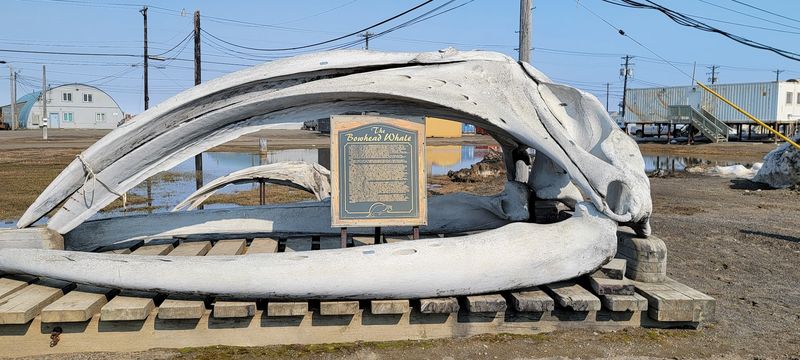
At the top of the American map, everyday life starts to look very different. Barrow, officially known as Utqiaġvik, sits on Alaska’s North Slope and is the northernmost town in the United States, with no road linking it to the wider highway system.
That fact alone changes nearly everything you expect from a town. People and supplies usually arrive by plane, while seasonal sealifts bring in bulk goods, creating a modern community that still depends on careful planning in a way many Americans last experienced generations ago.
The town’s Iñupiat heritage gives it a strong cultural center, and isolation has not erased that identity. Instead, it has reinforced local knowledge, community cooperation, and a practical rhythm shaped by Arctic conditions, expensive shipping, and long winters that make convenience feel like a luxury item.
Utqiaġvik feels isolated not because it is frozen in time, but because geography remains in charge. In an age of interstates and overnight delivery, that makes it stand apart with unusual clarity.
2. Supai, Arizona
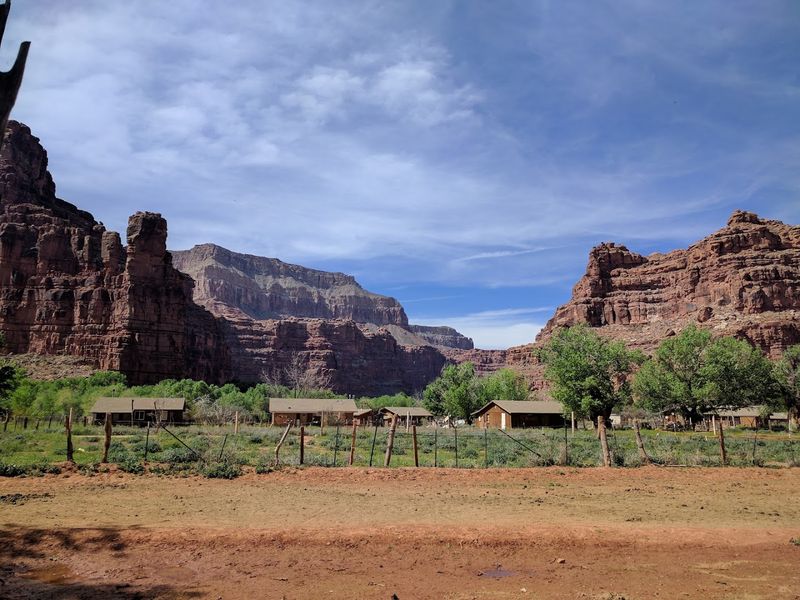
Few American addresses make the post office work this hard. Supai lies deep within the Grand Canyon and remains one of the most unusual communities in the country because you reach it by hiking, riding a mule, or using a helicopter.
It is the capital of the Havasupai Tribe, and its remoteness is not a travel gimmick but a daily reality with deep historical roots. Mail delivery by mule still happens here, which sounds like a museum demonstration until you remember it is simply how this town handles the job.
Isolation has helped preserve a distinct local rhythm, though it also makes basic logistics more complicated than most Americans can imagine. Food, building materials, medical access, and school operations all require the kind of planning that suburban life has largely edited out.
What makes Supai remarkable is not just the canyon setting, but the way geography still dictates routine. In a nation built on roads, this town quietly proves that some places continue on older terms, and do so with impressive determination.
3. Monowi, Nebraska
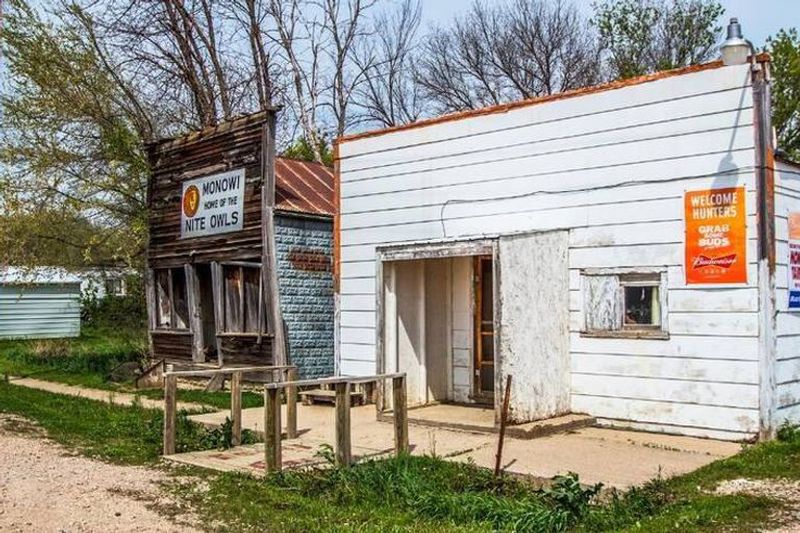
Some towns get smaller over time, and Monowi turned that trend into a national headline. This tiny incorporated community in Nebraska is widely known for having a population of one, which gives it a kind of statistical celebrity that sounds invented until you see the census record.
Yet Monowi is not a novelty act detached from history. It represents a familiar Great Plains story, where rail lines, farm consolidation, changing rural economies, and decades of outward migration steadily reduced once-active communities to a few buildings and long memories.
The town’s lone resident has kept its legal identity alive by managing the required paperwork, taxes, and municipal formalities. That means Monowi still functions on paper as a town, even though its scale would fit more comfortably inside a modest family reunion.
Its isolation comes less from mountains or Arctic weather than from pure demographic distance. Across the Nebraska plains, empty miles and disappearing neighbors create a quieter form of remoteness, one tied to the long retreat of rural population in twentieth-century America.
4. Whittier, Alaska
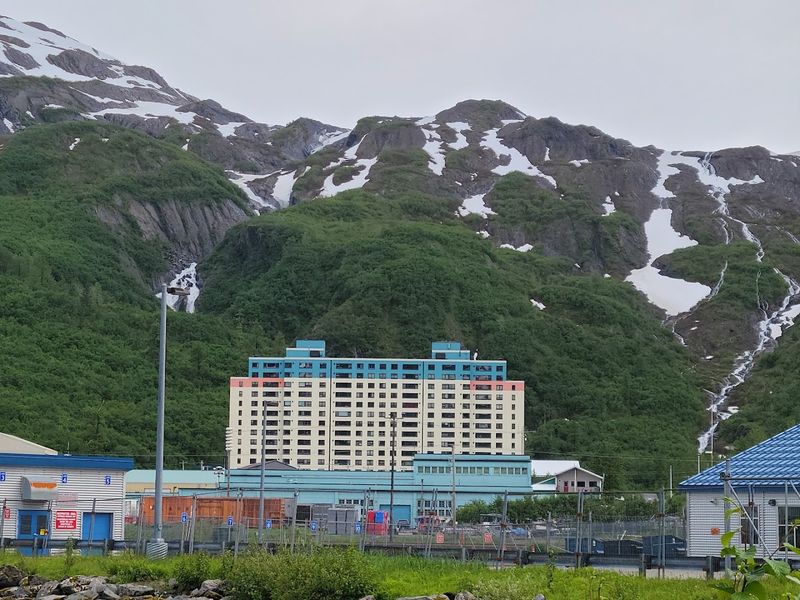
If a town designed itself around efficiency, it might accidentally resemble Whittier. This small Alaska community is famous because most of its residents live in Begich Towers, a single large building that bundles apartments and services into one unusually practical address.
Whittier began as a military supply port during World War II, and its geography has kept that strategic, tucked-away quality ever since. Surrounded by steep terrain and water, it connects to the outside world through the Anton Anderson Memorial Tunnel, a single route shared by cars and trains on a strict schedule.
That arrangement makes a simple drive feel like a coordinated appointment. Miss the tunnel timing, and the town immediately reminds you that convenience is not one of its founding principles.
Isolation here is both physical and architectural, which is part of what makes Whittier so memorable. In most American towns, people spread outward; in Whittier, they stack together and work around the mountain, turning remoteness into a highly organized daily habit.
5. Hanksville, Utah
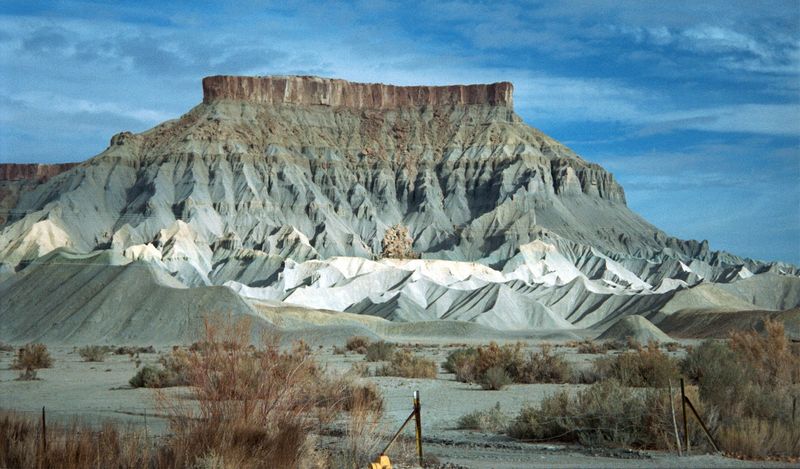
Drive long enough through southern Utah, and Hanksville appears like a practical note in the middle of a very large page. This small town sits amid desert country near national parks and public lands, where the distances between settlements make every gas pump feel unusually important.
Its history is tied to ranching, uranium exploration, and the stubborn economics of life in harsh terrain. Hanksville never became large, but it became necessary, serving travelers, workers, and residents navigating a landscape that offers spectacular geology and not many urban comforts.
That remoteness shapes how the town feels today. Services are limited, the population remains small, and the surrounding emptiness is not decorative background but the main fact of local geography.
Hanksville also carries the cultural identity of many western outposts that were built to persist rather than impress. You can sense the older logic of settlement here: establish a foothold, adapt to the land, and accept that the nearest major city is not exactly around the corner.
6. Stehekin, Washington
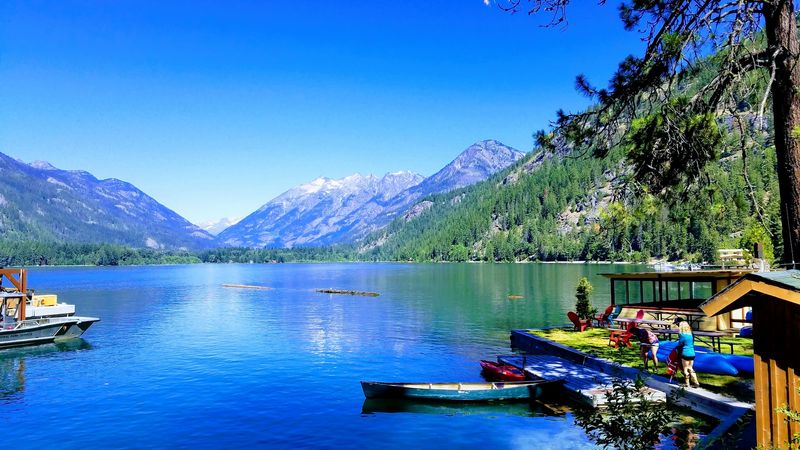
Road maps start losing their confidence when Stehekin enters the conversation. Hidden deep in Washington’s North Cascades, this tiny community has no road connection to the outside world, a detail that instantly separates it from ordinary American town life.
People typically arrive by boat, floatplane, or trail, and that access pattern has preserved a level of separation rare in the lower forty-eight states. Stehekin’s history includes homesteading, ranching, and tourism, but all of it developed within the limits imposed by mountains, lake travel, and federal wilderness protection.
The result is a place where modern expectations get edited down quickly. Deliveries, repairs, school routines, and visitor plans all depend on transportation methods that feel more regional and seasonal than suburban.
Stehekin is not isolated because it lacks significance. It feels isolated because the surrounding landscape still wins every argument about expansion, speed, and convenience.
That gives the town a distinct historical continuity, where older ways of reaching a community remain standard procedure rather than heritage theater performed for curious outsiders.
7. Chicken, Alaska
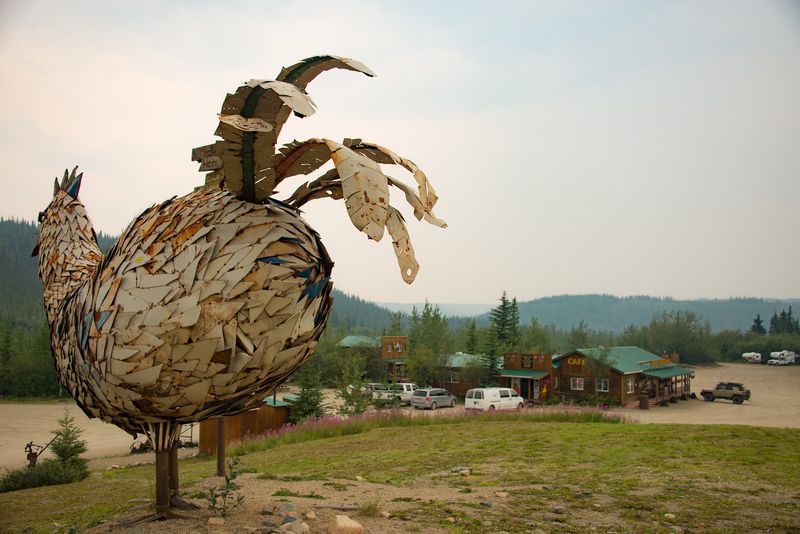
With a name like Chicken, the town hardly needs help getting remembered. This tiny Alaska community began as a gold rush settlement, and its famously odd name came from a practical spelling problem involving ptarmigan, which local miners wisely decided was more effort than it was worth.
The humor is charming, but the isolation is serious. Chicken sits along the Taylor Highway in eastern Alaska, and the long drive through sparse country makes it clear that this is not a place people reach by casual detour.
Its population is tiny, seasonal activity matters, and the remaining businesses lean into both history and survival. Gold mining heritage still defines the town’s identity, not as a polished historical exhibit, but as the foundation of why anyone settled there in the first place.
Chicken feels cut off because it never stopped being a frontier outpost in the logistical sense. Distances are large, services are limited, and everyday routines still involve the kind of self-reliance that older Alaskan communities treated as basic common sense rather than a personality trait.
8. Mentone, Texas
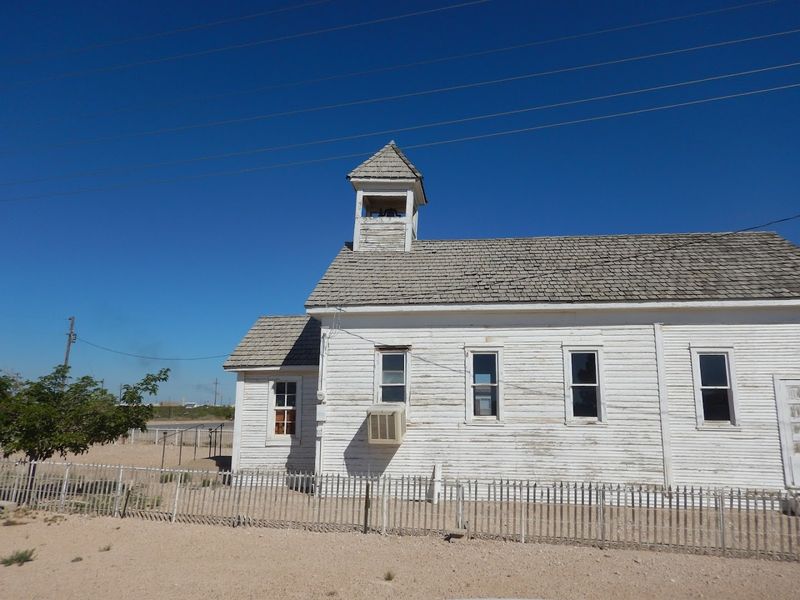
County seats are usually busy little bureaucratic anchors, but Mentone rewrites that expectation. This tiny town in Loving County, Texas, is one of the smallest county seats in the United States, which gives local government an unusually intimate scale.
Mentone rose during the early twentieth century in a part of West Texas defined by ranching, oil activity, and huge stretches of open desert. Loving County itself has long been known for having an exceptionally small population, so the seat of county business never had much chance to become a booming metropolis.
That mismatch between official status and actual size is what makes Mentone so fascinating. It holds onto civic importance while remaining physically sparse, remote, and far from the dense networks of commerce that shape bigger Texas communities.
The town’s isolation is reinforced by desert distance and limited local bustle rather than dramatic barriers. In practical terms, that means services, errands, and social life all operate on a smaller stage, one where geography and population numbers continue to keep expectations modest.
9. McCarthy, Alaska
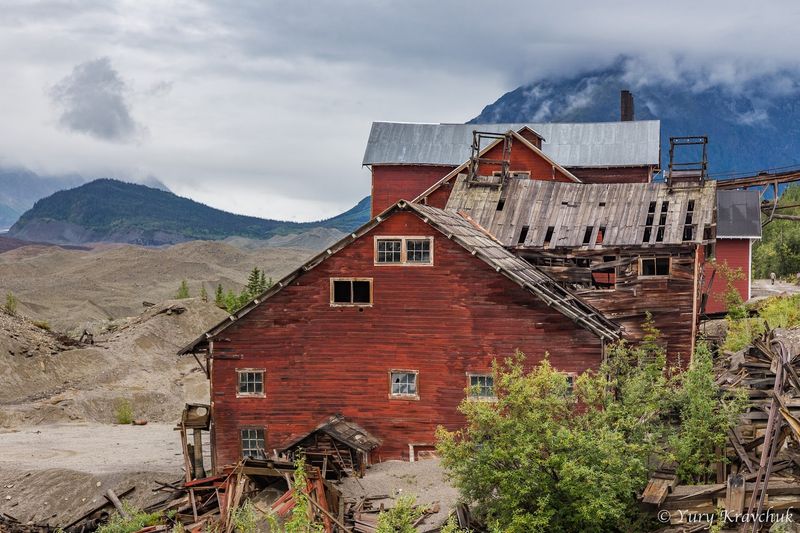
McCarthy feels like the kind of place a railroad forgot and a history book refused to drop. Deep inside Wrangell-St. Elias country, this former mining town grew in connection with the Kennecott copper operation and still carries the infrastructure logic of an earlier industrial Alaska.
Getting there is part of the point. Travelers use the long McCarthy Road, built on the old railbed, then cross a footbridge because the town itself remains separated from regular vehicle traffic in a way that immediately announces you have left normal road culture behind.
That unusual access preserves more than scenery. It keeps daily life linked to the region’s mining past, when remote camps, rail connections, and company logistics determined where people lived and how supplies moved.
Today McCarthy mixes residents, seasonal workers, and visitors, but it still feels notably detached from mainstream routines. The town’s isolation is not theatrical frontier branding.
It is baked into the route, the history, and the simple fact that reaching this place still requires intention, patience, and a reliable sense of direction.
10. Goulding, Utah
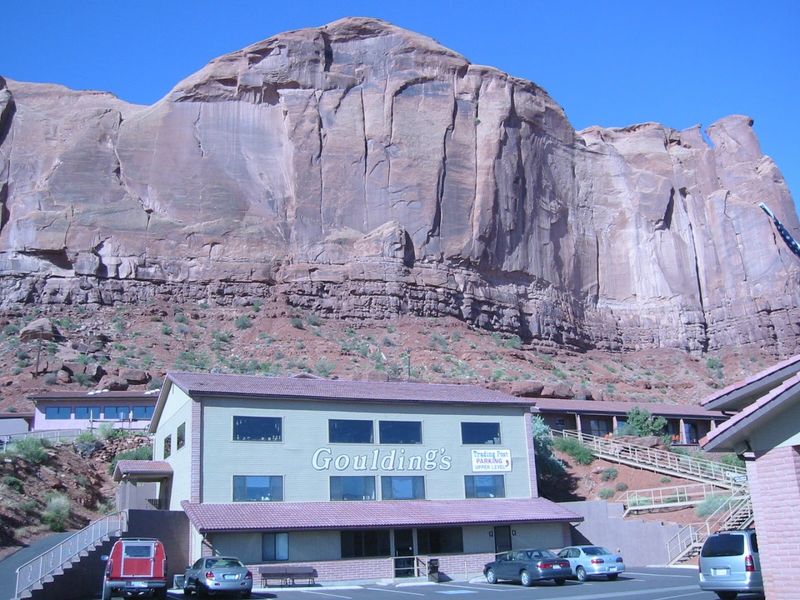
Hollywood helped put Goulding on the map, but distance keeps it feeling off the grid. This tiny Utah settlement near Monument Valley became historically important through Harry and Leone Goulding, whose trading post served Navajo residents and later helped attract film production to the region.
That cinematic connection did not make the place urban or even especially busy. Goulding remains far from major cities, surrounded by vast desert country where the open road can feel less like a convenience and more like a lengthy commitment.
The settlement’s history ties together trading networks, tourism, and the visual mythology of the American West, yet the actual place stays small and practical. Visitors may recognize the landscape from movies, but the isolation comes from geography, sparse settlement patterns, and the long travel times required to reach basic services elsewhere.
What makes Goulding interesting is the contrast between cultural familiarity and physical remoteness. Millions have seen nearby scenery on screen, but the town itself still operates at the scale of a distant outpost, not a major destination with metropolitan backup.
11. Silver City, Idaho
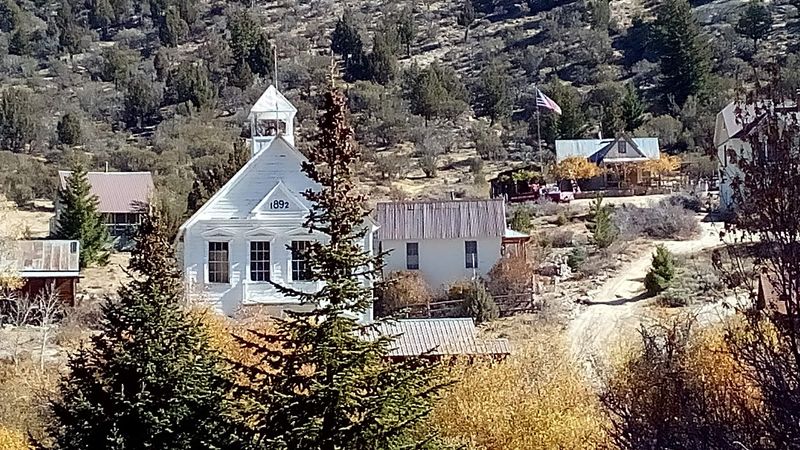
Some places keep the nineteenth century on the payroll, and Silver City is one of them. High in Idaho’s Owyhee Mountains, this preserved mining town still shows the outlines of its boom-era identity, when silver discoveries turned a remote camp into a lively settlement with hotels, stores, and newspapers.
Its relative isolation was never an accident. Mining towns often appeared where ore demanded, not where travel was convenient, and Silver City’s mountain location still makes access challenging, especially outside the warmest months.
Because the town was bypassed by later development, much of its historic fabric survived better than in places that modernized aggressively. That gives Silver City an unusual kind of cultural memory, one rooted in actual buildings, street patterns, and the stubborn persistence of a place left largely on its own.
Today it feels isolated both geographically and chronologically. You are not just far from larger Idaho population centers.
You are also face to face with the infrastructure of a mining West that built quickly, prospered briefly, and then left behind a remarkably intact record.
12. Kaktovik, Alaska
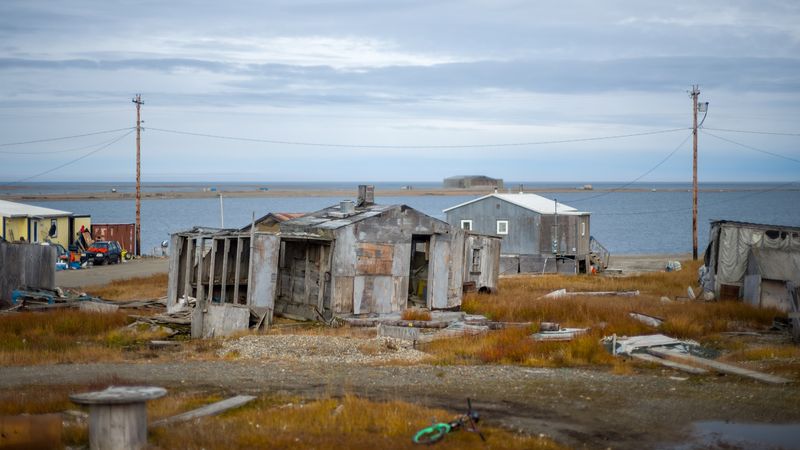
America has very few towns where the Arctic Ocean is part of ordinary directions, and Kaktovik is one of them. This small community on Barter Island sits on Alaska’s North Slope, far from the road network that ties together most American settlement.
Flights and boats are the main ways in and out, which means logistics remain central to local life. Kaktovik is home to an Iñupiat community, and like other Arctic settlements, it reflects deep local knowledge shaped by climate, subsistence traditions, and the realities of supply in a remote environment.
Many people know the town for polar bear viewing, but that outside attention only captures one part of the story. The more important fact is that Kaktovik continues as a living community where isolation affects prices, schedules, infrastructure, and nearly every assumption visitors bring with them.
What sets it apart is not novelty but persistence. In a country that usually treats access as a guarantee, Kaktovik stands as a reminder that some American towns still operate at the edge of distance, weather, and careful preparation.
Share this story