Some hikes are peaceful walks through the woods — and then there are the ones that make your palms sweat just reading about them. Around the world, certain trails push hikers to their absolute limits with terrifying drops, brutal weather, and landscapes that seem designed to humble even the toughest adventurers.
These ten hikes are not for the faint of heart, but for those who dare, the rewards are unforgettable. Lace up your boots and hold on tight.
Mount Huashan Plank Walk — China
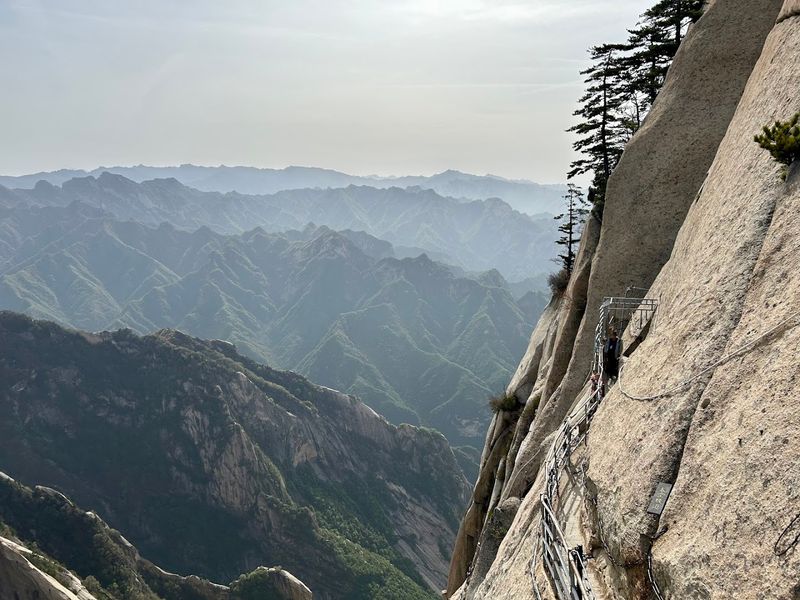
Wooden boards. A vertical cliff.
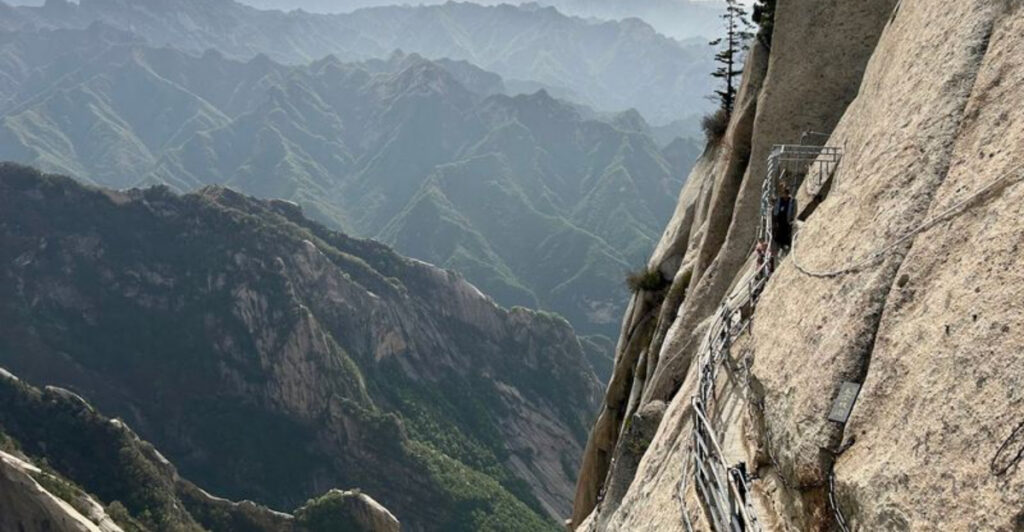
Thousands of feet of nothing below your sneakers. The Mount Huashan Plank Walk in China has earned its reputation as arguably the most terrifying hike on the planet, and once you see photos, it is very easy to understand why.
The trail clings to the side of Mount Huashan, one of China’s five sacred mountains, weaving across planks barely wide enough to fit both feet. Hikers clip into safety cables and inch along the rock face using iron chains and carved footholds.
One wrong step and — well, let’s just say the safety harness is not optional.
Despite the obvious danger, thousands of thrill-seekers attempt this hike every year. The mountain itself holds ancient Taoist temples, meaning people have been making this terrifying journey for centuries.
Modern safety gear makes it survivable, but nothing about this trail feels comfortable. Your heart will race from the first plank to the last.
If conquering fear sounds like a fun afternoon activity, Mount Huashan is calling your name — just make sure you answer with very sturdy footwear and absolutely zero vertigo.
Angels Landing — Zion National Park, USA
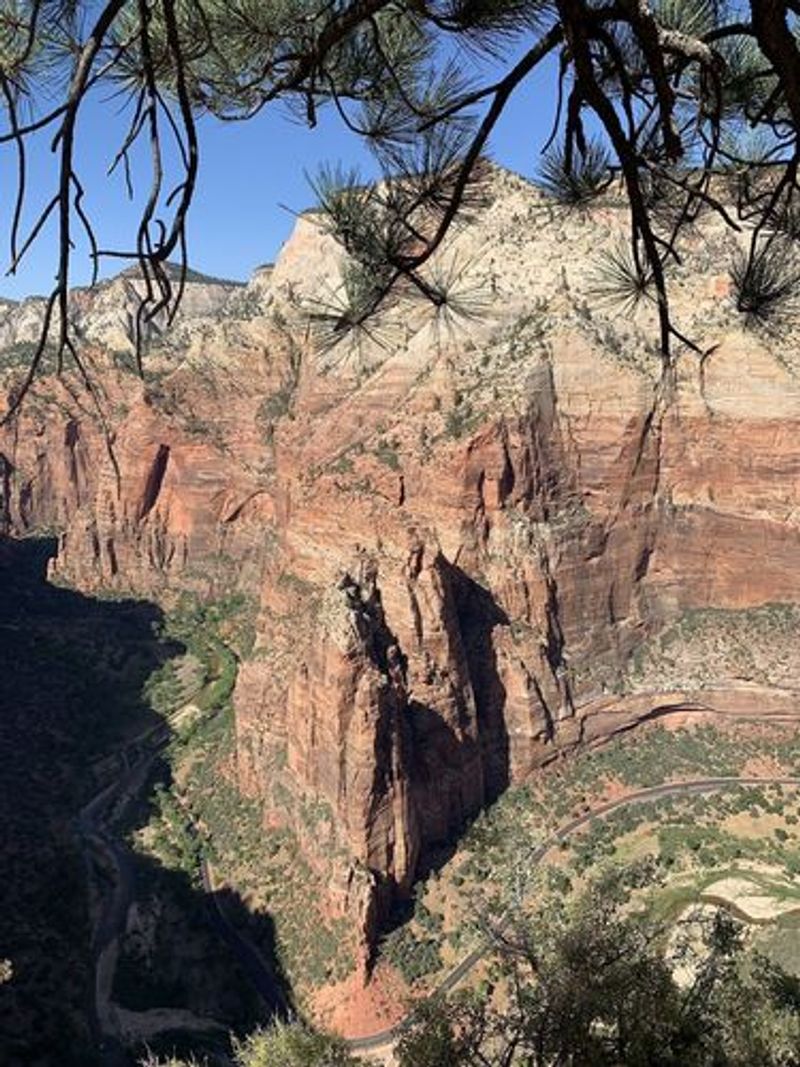
Picture standing on a ridge so narrow that you can see straight down over 1,000 feet on both sides — simultaneously. That is exactly what awaits hikers brave enough to tackle Angels Landing in Utah’s breathtaking Zion National Park.
The final half-mile of the trail is the stuff of legends. Steel chains bolted into the rock are the only thing between hikers and the canyon floor far, far below.
The path is not just steep — it is aggressively exposed, meaning wind, crowds, and shaky knees all become very real problems very quickly.
Since 2022, the National Park Service has required permits for the final section to reduce dangerous overcrowding. The view from the top, however, is genuinely spectacular — a sweeping panorama of Zion Canyon that rewards every white-knuckled step.
Several fatalities have occurred on this trail over the years, which puts the danger in very clear perspective. Experienced hikers treat Angels Landing with serious respect, wearing proper footwear and checking weather conditions before attempting the climb.
For those who make it to the summit, the feeling of accomplishment is hard to match anywhere else in the American Southwest.
Kalalau Trail — Kauai, Hawaii
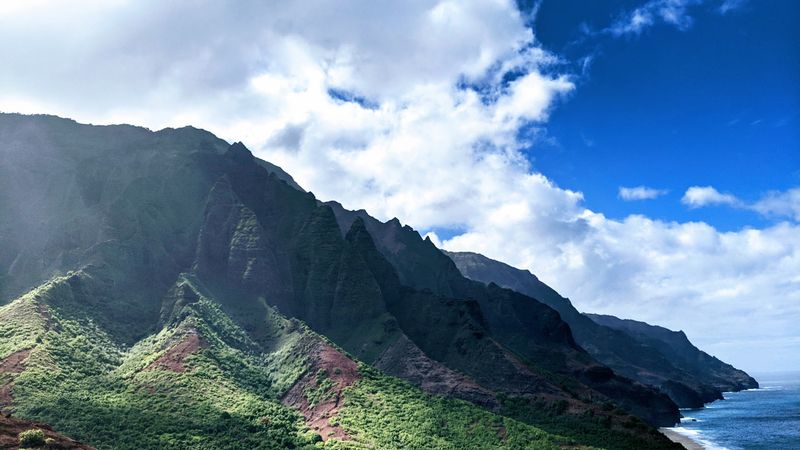
Hawaii sounds relaxing until someone mentions the Kalalau Trail — an 11-mile stretch of raw, unfiltered wilderness hugging the dramatic Napali Coast cliffs of Kauai. This is not a leisurely beach stroll; this is one of the most physically and mentally demanding hikes in the entire United States.
The trail crosses rivers that can flash flood with almost no warning during Hawaii’s unpredictable rain bursts. Narrow sections run along cliff edges above the Pacific Ocean, with loose rocks and crumbling soil making every footstep a calculated decision.
Falling rocks are a legitimate hazard, not just a warning-sign formality.
A permit is required to hike beyond the two-mile mark, which helps limit foot traffic on this fragile and genuinely treacherous path. Hikers who push through to the end are rewarded with the remote and stunningly beautiful Kalalau Beach — a place accessible only by foot or kayak.
Many experienced hikers describe the Kalalau Trail as one of the most memorable experiences of their lives. Just make sure your gear is waterproof, your navigation skills are sharp, and your respect for nature is fully charged before setting foot on this legendary Hawaiian trail.
El Caminito del Rey — Spain
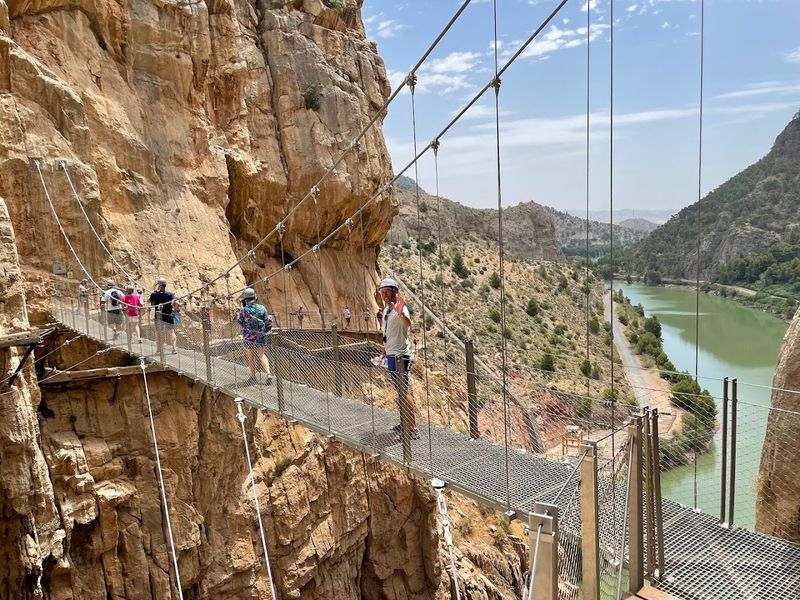
For decades, El Caminito del Rey had a different nickname than it does today — locals called it a death trap. Originally built in the early 1900s for workers maintaining hydroelectric infrastructure in southern Spain, the pathway eventually crumbled into a patchwork of broken concrete and gaping holes dangling hundreds of feet above the Guadalhorce River.
Daredevils snuck onto the closed trail for years, and a string of fatal accidents eventually forced authorities to act. After a major restoration completed in 2015, the trail reopened as a regulated, guided experience with proper walkways, safety railings, and helmets provided at entry.
The dramatic cliffside scenery — soaring limestone walls, narrow gorges, and brilliant blue water below — remains absolutely jaw-dropping.
Today, El Caminito del Rey is one of Spain’s most popular adventure attractions, drawing visitors from across Europe and beyond. The trail runs about 4.8 miles and takes roughly three hours to complete.
While the modern version is far safer than its notorious predecessor, the sheer exposure of walking along a cliff face still delivers a powerful adrenaline rush. History, geology, and heart-pounding scenery all packed into one unforgettable Andalusian adventure — this trail truly earns its legendary status.
Half Dome Cable Route — Yosemite National Park, USA
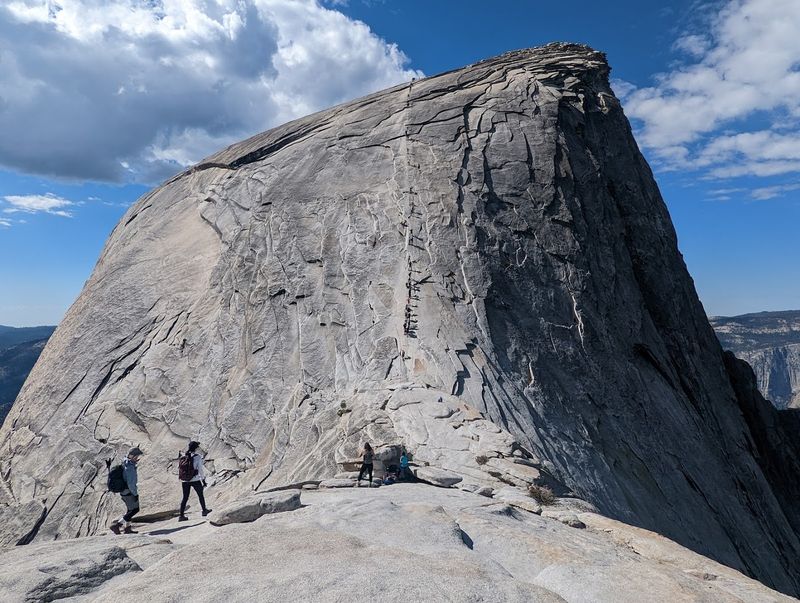
Half Dome does not ease you in gently — it saves its most terrifying moment for last. After a grueling 14 to 16 mile round trip through Yosemite National Park, hikers arrive at the base of the famous cable route: two steel cables stretching up a nearly vertical slab of polished granite at an angle steep enough to make your legs question every life decision you have ever made.
When dry, the granite is manageable with good grip gloves and strong arms. When wet — from rain or morning dew — the rock becomes dangerously slippery, and accidents happen quickly.
Lightning is another serious threat, as the exposed summit dome acts like a natural lightning rod during afternoon thunderstorms. Several hikers have been struck over the years.
The National Park Service requires permits to access the cables, limiting daily traffic to reduce accidents and crowding. Permits are notoriously competitive and often sell out within minutes of release.
Those who successfully summit are greeted by one of the most stunning views in all of North America — an endless sweep of Yosemite Valley, granite peaks, and sky. Earning that view, however, demands real preparation, physical fitness, and a healthy respect for altitude and weather.
Drakensberg Chain Ladders — South Africa
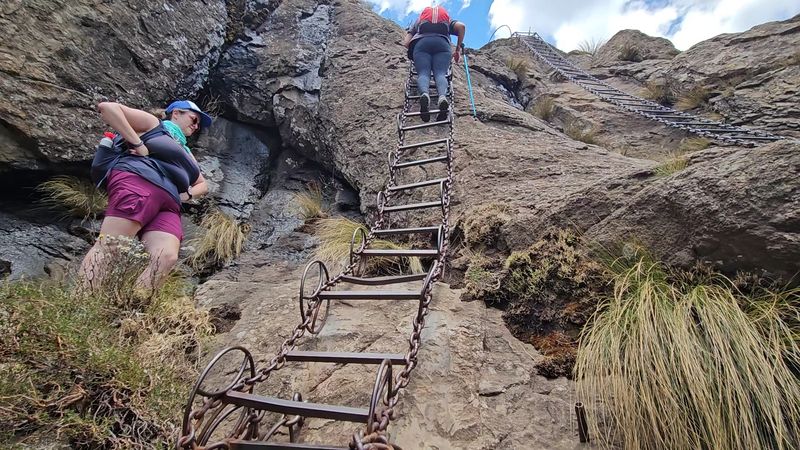
Two chain ladders. Hundreds of feet of vertical cliff.
Strong winds that arrive without invitation. The Drakensberg Chain Ladders in South Africa offer one of the most uniquely terrifying ascents on the African continent, and experienced hikers still talk about it with wide eyes afterward.
The ladders are attached to a sheer basalt rock face near Tugela Falls — the second highest waterfall in the world. Reaching the top of the escarpment means hauling yourself up rung by rung while the wind does its absolute best to make that plan difficult.
There are no enclosed safety cages around the ladders, meaning the exposure is total and completely real.
Once at the summit, hikers are rewarded with sweeping views across the Southern Drakensberg and, on clear days, glimpses of the stunning Tugela Falls cascading down the rock face below. The full hike to the falls and back is approximately 12 miles and is best tackled in early morning to avoid afternoon thunderstorms that roll in fast across the mountains.
Good physical fitness and a solid head for heights are essential. The Drakensberg Chain Ladders are not the longest or highest hike on this list, but they might just be the most unexpectedly intense experience South Africa has to offer adventurous hikers.
The Maze — Canyonlands National Park, USA
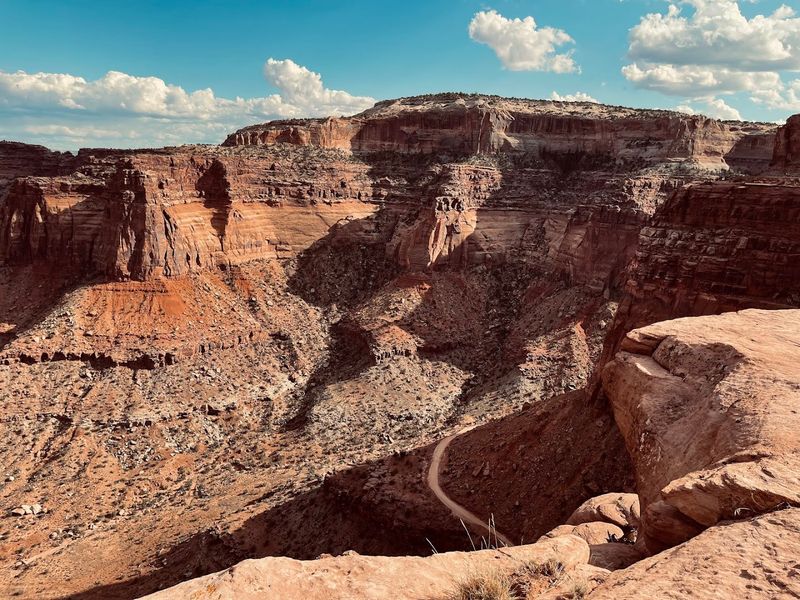
No cliffs. No ladders.
No terrifying drops. The Maze earns its place on this list through a different kind of danger — the kind that creeps up quietly while you are convinced you know exactly where you are going.
Spoiler: you probably do not.
Located in the remote heart of Utah’s Canyonlands National Park, The Maze is widely considered the most difficult and isolated backcountry destination in the entire U.S. National Park system.
The trail network is genuinely confusing, with twisting canyon passages that look nearly identical from every angle. Getting lost here is not a minor inconvenience — it is a life-threatening situation.
Rescue operations in this area can take days.
Water sources are scarce, summer temperatures regularly exceed 100 degrees Fahrenheit, and cell service is essentially nonexistent. Hikers must carry detailed topographic maps, a GPS device, and enough water and food to survive multiple extra days in case of emergency.
The National Park Service strongly recommends that only highly experienced backcountry hikers attempt The Maze. For those who go in fully prepared, the reward is extraordinary solitude and surreal desert landscapes unlike anything else in North America.
The Maze does not forgive unpreparedness — but it generously rewards those who come ready.
Mount Washington Presidential Traverse — USA
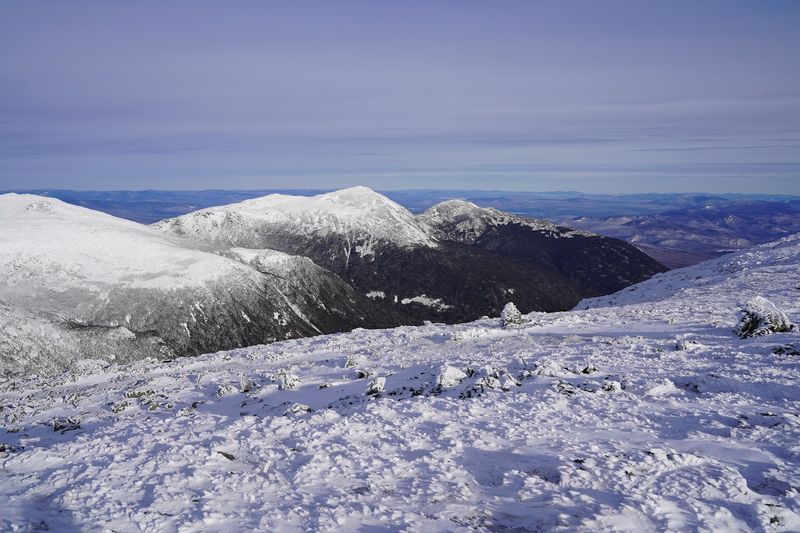
Mount Washington holds a record most mountains would not brag about — it was once home to the highest wind speed ever recorded on Earth’s surface: 231 miles per hour. That fact alone should tell you everything you need to know about hiking the Presidential Traverse in New Hampshire.
The traverse crosses multiple peaks in the White Mountains, including Mount Washington itself, over a brutally exposed ridge with almost no shelter from the elements. Weather here changes with shocking speed.
Sunshine can become a whiteout blizzard within the hour, and temperatures can plunge dramatically even in summer. Dozens of people have died on Mount Washington over the decades, many caught off guard by conditions that escalated far faster than expected.
The full Presidential Traverse covers roughly 23 miles and demands serious endurance, navigation skills, and weather awareness. Most experienced hikers complete it over two days with a backcountry camp in between.
Proper layering, emergency gear, and a conservative turnaround plan are non-negotiable on this route. The views from the ridge on a clear day are genuinely spectacular — rolling green mountains stretching in every direction.
But Mount Washington has a well-earned reputation for humbling even seasoned mountaineers, and it deserves every ounce of respect hikers can give it.
Huayna Picchu — Peru
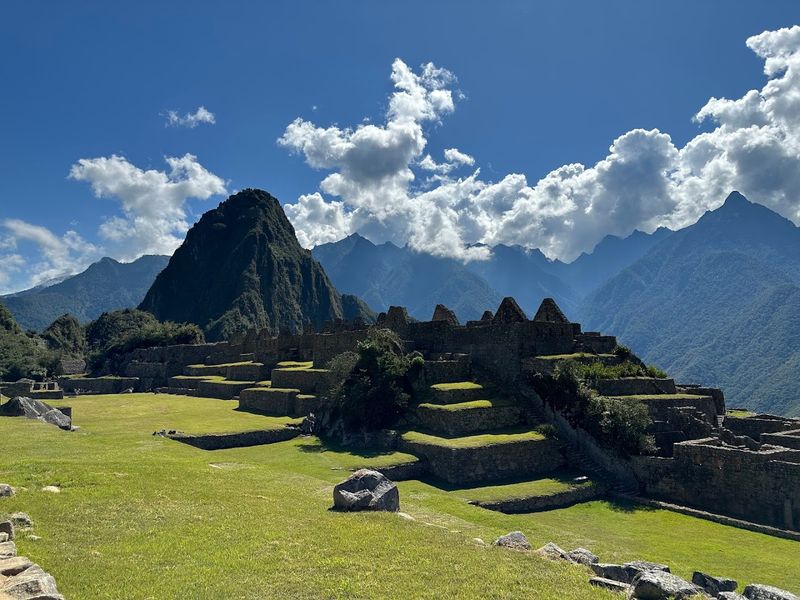
Standing like a dramatic spike above the clouds, Huayna Picchu is the mountain you can see looming behind nearly every famous photo of Machu Picchu. What those postcard shots do not show is just how steep, narrow, and heart-pounding the hike to its summit actually is.
The trail involves ancient Inca stone steps carved directly into the mountain face — steps so steep in places that hikers use their hands as much as their feet. The path hugs the edge of sheer cliffs with drops that disappear into the jungle far below.
Handrails exist in some sections, but for long stretches, it is just you, the rock, and a whole lot of altitude-fueled adrenaline.
Peru limits daily visitors to 400 people split across two morning time slots, so securing tickets well in advance is absolutely essential. The round trip from the entrance gate takes roughly 90 minutes to two hours for most hikers.
Despite the physical challenge, the payoff is extraordinary — a bird’s-eye view of the entire Machu Picchu citadel spread out below like a living map. Huayna Picchu is not the longest hike on this list, but it punches well above its weight in terms of pure, unfiltered adventure and jaw-dropping scenery.
Mount Everest Base Camp via Cho La Pass — Nepal
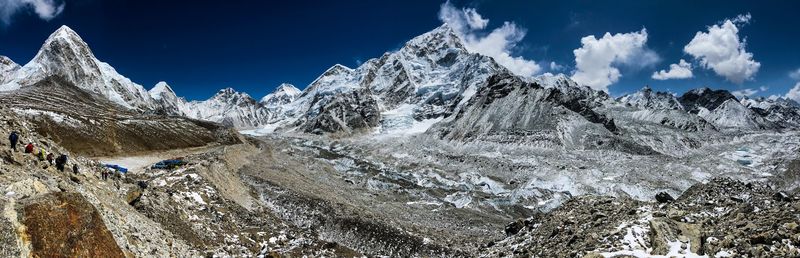
The classic Everest Base Camp trek is already a serious undertaking — add the Cho La Pass to the route and you have transformed an already demanding journey into something that genuinely tests the limits of human endurance at altitude.
The Cho La Pass sits at approximately 17,782 feet above sea level. Getting there requires crossing a glacier littered with crevasses, navigating icy slopes, and managing the very real physical effects of thin Himalayan air.
Altitude sickness is not a minor risk here — it is a constant companion that can escalate into life-threatening conditions like pulmonary edema if hikers ascend too quickly or ignore early warning signs.
Weather on the pass can shift from calm to dangerous within minutes, and the glacier crossing demands careful footing and ideally some experience with crampons. Most trekkers hire experienced local guides and use reputable agencies to improve their safety margins on this section.
The reward for all this suffering? Staggering views of Cho Oyu, Ama Dablam, and the entire Khumbu region — a landscape so enormous and wild it genuinely reframes your understanding of scale.
This is Nepal at its most uncompromising, most beautiful, and most humbling. Every difficult step is worth it, but only if you are properly prepared.
Share this story