There is a spot in south-central Oklahoma where cold, clear water pushes up through the earth on its own, surrounded by a circle of carefully placed stones that look like they have been there forever. No motor, no pump, no machinery.
Just the land doing what it has always done. The trail to get there winds through shaded forest, crosses a wooden bridge, and deposits you at one of the most quietly spectacular natural features in the entire Chickasaw National Recreation Area.
I had heard about this place from a friend who called it unforgettable, and after my own visit, I completely understand why. This is a story about a natural spring that has earned every bit of its 4.8-star reputation, one bubbling pool at a time.
Finding Buffalo Springs in Sulphur, Oklahoma

Buffalo Springs sits within the Chickasaw National Recreation Area in Sulphur, OK 73086, a small town in south-central Oklahoma that punches well above its weight when it comes to natural beauty. The coordinates place it at roughly 34.5026 latitude, and getting there is part of the experience.
The most reliable and rewarding way to reach the spring is on foot from the Nature Center, which serves as the official trailhead. The Nature Center itself is a worthwhile stop before you even hit the trail, offering a small but thoughtful exhibit space, a gift shop, and a short film about the area’s ecology and history.
From the Nature Center, the spring is approximately 0.7 to 1.2 miles depending on which trail route you choose. All routes are well-marked and manageable for most fitness levels.
One important heads-up: Google Maps GPS has occasionally routed drivers down an access road that is only suitable for trucks or off-road vehicles, so park at the Nature Center and walk. Your car will thank you, and honestly, so will your soul.
The Story Behind the Stones

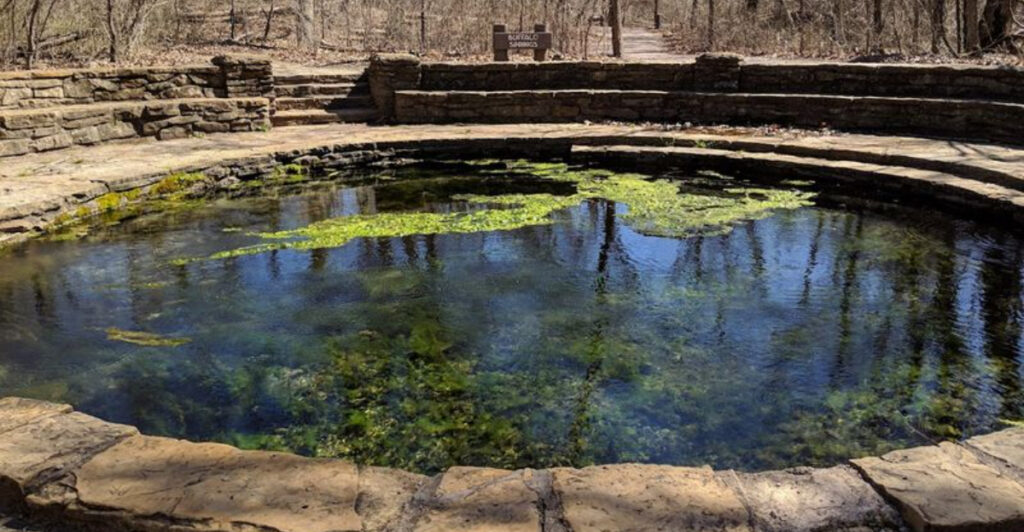
The most striking thing about Buffalo Springs is not the water itself but the ring of hand-laid stonework that frames it. Someone, at some point in history, took the time to carefully place stones in a deliberate circle around this natural spring, creating a structure that feels both ancient and intentional.
The craftsmanship is the kind that makes you stop and appreciate the effort. These are not casually tossed rocks.
They form a neat, circular wall that holds the spring water in a small, clear pool at the center. Visitors regularly sit on the stones to rest their feet and listen to the soft sound of water moving beneath them.
The spring is connected to the headwaters of Travertine Creek, a mineral-rich waterway that runs through much of the recreation area. Historically, bison are said to have used this spot as a bathing and watering location, which is exactly how it earned the name Buffalo Springs.
That kind of deep natural history gives the place a weight that you feel even before you read the interpretive signs.
The Trail Experience From Start to Finish

The walk to Buffalo Springs is short enough for beginners but interesting enough to keep seasoned hikers engaged the whole way. The trail surface is packed gravel for most of the route, which makes it comfortable underfoot and accessible even after light rain.
Towering trees create a full canopy overhead, so the trail stays noticeably cooler than the open fields nearby. On a hot Oklahoma summer day, that shade is not just pleasant.
It is practically a public service. A spring-fed stream runs alongside much of the path, adding a steady, soft soundtrack of moving water to the entire walk.
Partway along the trail, a wooden bridge crosses the creek and signals that you are getting close. That bridge moment feels like a small ceremony, a threshold between the ordinary world and something a little more special.
Side trails branch off from the main route near the spring, giving curious hikers options to explore further without backtracking the same path. Deer have been spotted along these quieter branches, so keep your eyes open and your footsteps light.
What You See When You Arrive

The first glimpse of the spring pool is genuinely rewarding after even a short hike. The water is crystal clear and cold, even in the middle of July, because it rises directly from an underground aquifer that maintains a consistent temperature year-round.
Tiny bubbles rise continuously from the bottom of the pool, proof that the water is actively pushing up from below rather than collecting from rainfall above. The movement gives the water a living quality that still photos can never fully capture.
You can watch it for longer than you expect and feel surprisingly content doing so.
The stone ring surrounding the pool is wide enough to sit on comfortably, and most visitors naturally gravitate toward doing exactly that. Families spread out around the circle, kids crouch down to peer into the water, and adults just breathe for a moment.
The spring is not enormous or dramatic in scale, but it has a quiet intensity that makes it feel significant. Worth noting: the spring can occasionally run low or dry during extended dry periods, so checking recent visitor reports before making a special trip is a smart move.
Wildlife and Nature Along the Way

The trail corridor between the Nature Center and Buffalo Springs is alive in a way that rewards patient walkers. White-tailed deer appear regularly along the path, often stepping out of the tree line with the casual confidence of animals that know they own the place.
Bird activity is constant throughout the canopy, and the mix of deciduous trees provides habitat for a wide range of species. The spring-fed stream running beside the trail attracts insects, which in turn attract birds, frogs, and small mammals at various times of day.
Early morning visits tend to offer the richest wildlife activity before foot traffic increases.
One thing every visitor should know before setting foot on the trail: poison ivy grows abundantly throughout this area. It lines the edges of the path in many spots and climbs up tree trunks nearby.
Staying on the marked trail eliminates most of the risk, but knowing how to identify three-leafed clusters before you go is genuinely useful knowledge here. Long pants and closed shoes are a reasonable choice, especially if you plan to step off the main path at any point.
The Nature Center as Your Starting Point

Before heading down the trail, the Nature Center at the trailhead deserves more than a quick glance through the window. It is small by national park standards, but the exhibits inside do a solid job of explaining the geology, ecology, and cultural history of the Chickasaw National Recreation Area.
A short film screens regularly and covers the story of the land in a way that makes the subsequent hike feel more meaningful. The gift shop carries the usual range of souvenirs, field guides, and nature books, and the staff there have consistently been described as friendly and knowledgeable by people who have stopped to ask questions.
Travertine Creek actually flows beneath the Nature Center building itself, which is a detail that catches most first-time visitors off guard in the best possible way. You can hear it if you stand still and listen.
Starting your visit here rather than driving directly to the spring means you arrive at the water already understanding something about where it comes from and why it matters. That context transforms a pleasant walk into something that actually sticks with you.
Best Times to Visit and What to Expect

Weekday mornings in late spring and early fall are the sweet spot for a Buffalo Springs visit. The crowds are thin, the temperatures are manageable, and the light filtering through the tree canopy has a quality that makes every photo look effortless.
May and October consistently deliver the most comfortable conditions. Summer visits are absolutely doable, and the cold spring water becomes a real bonus when the Oklahoma heat is at its peak, but expect more company on weekends and holidays.
A Wednesday morning in May, for example, offers the spring nearly to yourself.
The trail is free to access, which is one of those details that makes the whole experience feel even better. No entry fees, no reservation system, no timed tickets.
You simply show up, walk the trail, and enjoy one of Oklahoma’s most quietly impressive natural features at your own pace. Parking at the Nature Center is straightforward, and the facilities there include restrooms, which is worth knowing before a mile-plus round trip hike.
Bring water, wear sunscreen on the exposed sections, and plan for at least an hour to do the experience proper justice.
Why This Place Stays With You

Some places earn their reputation through spectacle, and some earn it through something quieter and harder to name. Buffalo Springs falls firmly into the second category.
The spring itself is modest in size, the trail is short, and the stonework is simple. Yet visitors return year after year, often bringing children who grow up to bring their own children.
That kind of loyalty does not come from Instagram appeal alone. It comes from a place that delivers exactly what it promises: cold, clean water rising from the earth, a circle of stones placed there by careful human hands, and a forest path that forces you to slow down for at least a few minutes.
The Chickasaw National Recreation Area in Oklahoma holds many worthwhile spots, but Buffalo Springs has a particular combination of natural function and human craft that makes it feel unlike anywhere else in the park. The bubbling water, the hand-built stonework, the deer on the trail, the wooden bridge, the shade overhead.
Each element is simple on its own. Together, they create an experience that settles into your memory and stays there long after the drive home is done.
Share this story