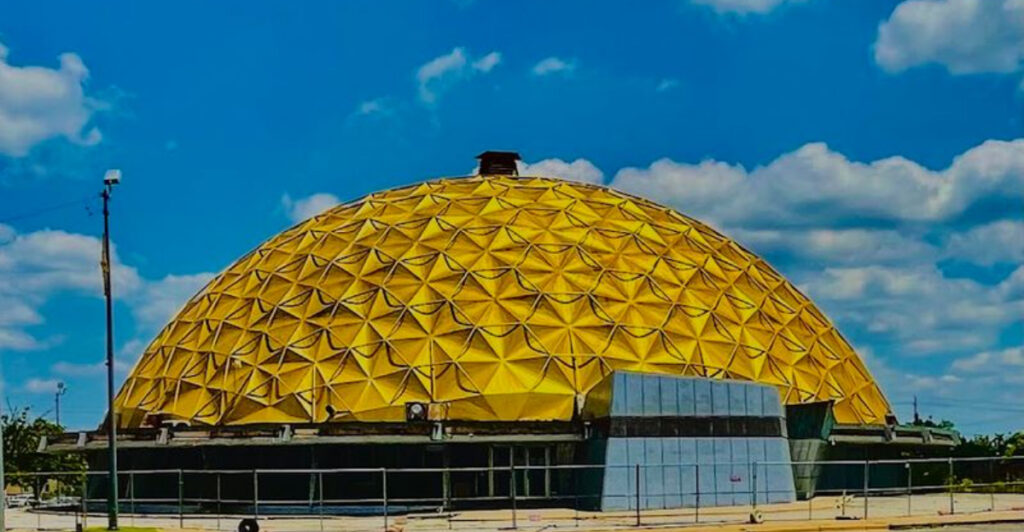
There is a building in Oklahoma City that stops people mid-drive, makes them do a double-take, and leaves them reaching for their phone camera before they even park the car. It sits along the historic Route 66 corridor, gleaming in gold, shaped like something that belongs in a sci-fi film rather than a Midwestern city block.
The Gold Dome Bank Building is one of those rare structures that feels both completely out of place and absolutely perfect all at once. In this article, I am going to take you through everything that makes this futuristic-looking landmark so fascinating, from its bold design and quirky history to what it is like to visit today.
The Address and First Impression
Some buildings announce themselves quietly. The Gold Dome Bank Building at 1112 NW 23rd St, Suite 115, Oklahoma City, Oklahoma 73106, does the opposite of that.
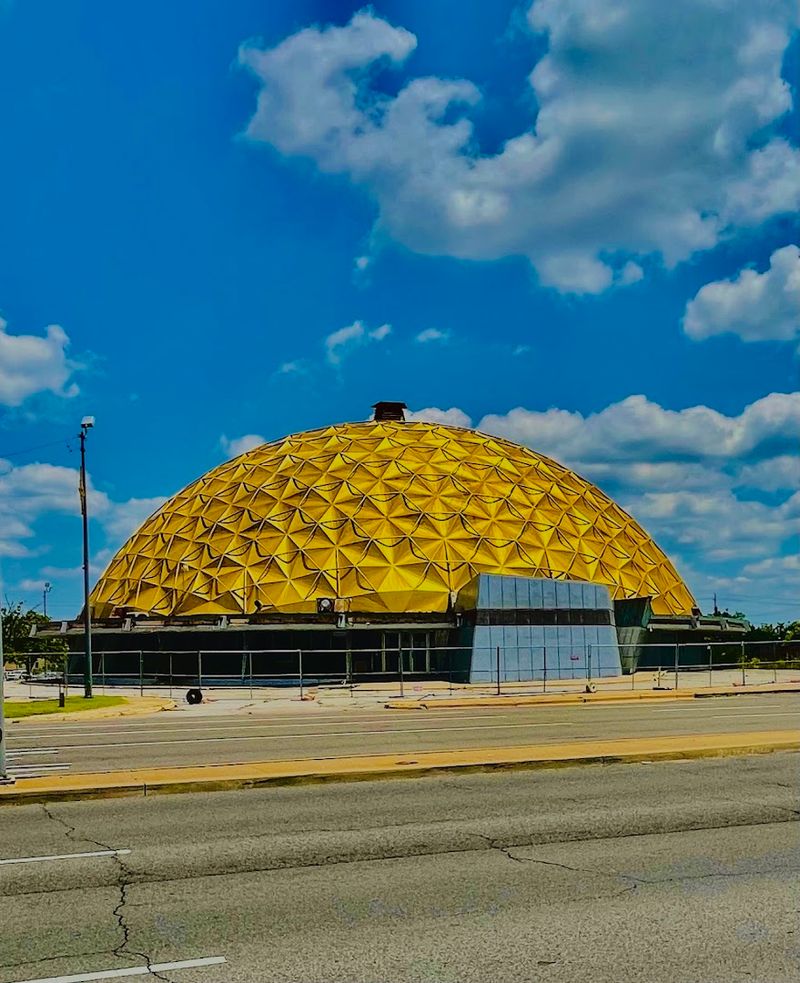
The moment it comes into view along NW 23rd Street, the golden dome practically shouts for your attention. It rises above the surrounding streetscape like a giant metallic bubble, catching sunlight in a way that makes it look almost alive.
The building sits along a stretch of the historic Route 66 corridor, which gives it an extra layer of road-trip romance. Travelers heading through Oklahoma City on the Mother Road have been stopping here for decades, and honestly, the reaction tends to be the same every time.
You pull up, stare for a moment, and think: how is this real? The dome is covered in gold-colored aluminum panels arranged in a geometric pattern, and the overall effect is somewhere between a UFO landing pad and a very glamorous igloo.
The first impression is powerful, and it only gets more interesting the longer you look at it.
The Story Behind the Dome
Back in 1958, Citizens State Bank commissioned something that nobody in Oklahoma City had ever seen before. The architect W.
Scott Dunne drew inspiration from the geodesic dome concept that had been gaining attention in the late 1950s, and the result was this extraordinary golden structure.
The dome itself is a Buckminster Fuller-inspired design, a style that was considered the cutting edge of modern architecture at the time. Fuller had been popularizing the idea that geodesic shapes were structurally efficient and visually striking, and this building took that idea and ran with it straight down Route 66.
When it opened, the building served as a working bank, and customers would walk under that gleaming dome to conduct their everyday financial business. There is something wonderfully surreal about that image: ordinary people cashing checks inside a building that looked like it had arrived from another decade entirely.
Over the years, the building changed hands and purposes several times. Its history as a bank gave way to other commercial uses, and eventually the structure found itself in a state of transition that continues to this day.
What the Dome Actually Looks Like Up Close
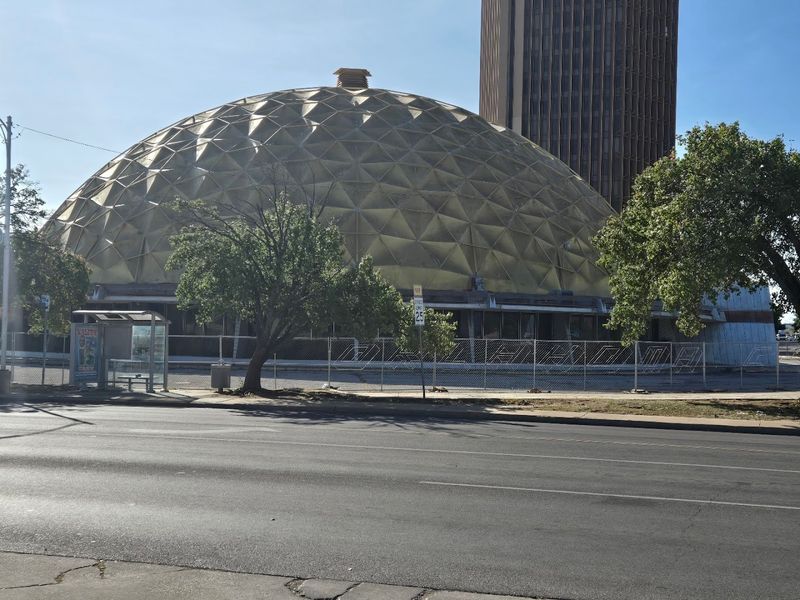
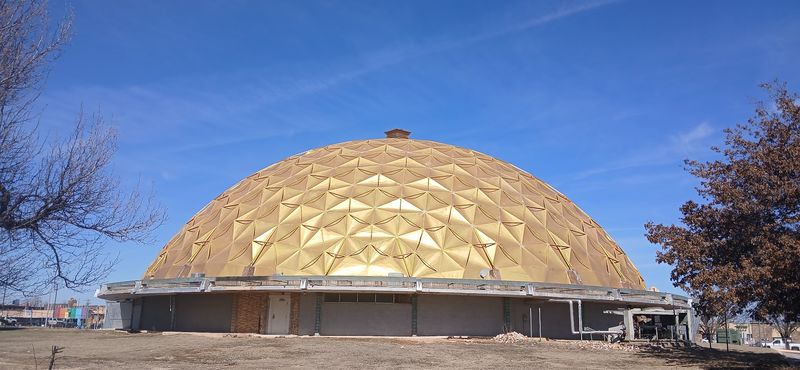
The geometry of the Gold Dome is genuinely mesmerizing when you get as close as the surrounding fence will allow. The exterior is made up of gold-anodized aluminum panels arranged in a repeating triangular pattern that covers the entire dome surface.
Each panel catches light differently depending on the angle and time of day, so the building actually looks slightly different in the morning than it does at noon or in the late afternoon. That quality gives it a kind of visual energy that flat-sided buildings simply cannot match.
The base of the structure is a low, circular building that supports the dome, and the whole thing is set on a modest plot that makes the dome appear even larger by contrast. The scale is surprising: it is not a massive building by any modern standard, but the shape makes it feel significant.
A chain-link fence currently surrounds the property, which means the best view comes from the sidewalk across the street. Visitors consistently find that the opposite sidewalk gives the cleanest, most photogenic angle, especially in the golden hour before sunset.
Route 66 Connection
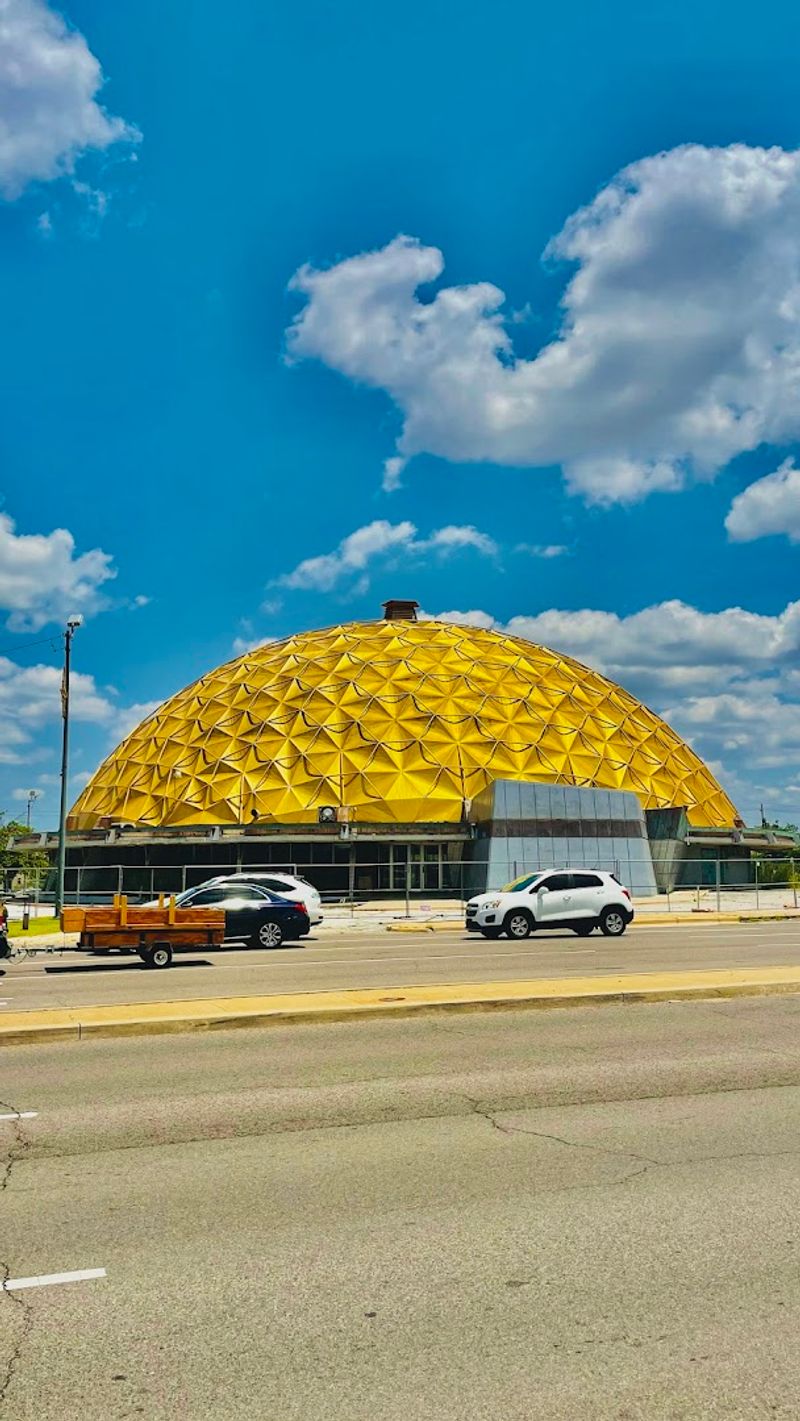
Route 66 runs through the heart of Oklahoma, and the Gold Dome Bank Building is one of its most visually distinctive stops along the entire stretch through Oklahoma City. The Mother Road has always attracted travelers who are looking for something beyond the ordinary highway experience, and this building delivers exactly that.
The Route 66 corridor through Oklahoma is packed with mid-century architecture, roadside curiosities, and buildings that carry decades of American road-trip culture in their walls. The Gold Dome fits right into that tradition, even though its futuristic shape stands apart from the diners and motels that typically define the Route 66 aesthetic.
Road-trippers heading east or west through Oklahoma City often include this stop on their itinerary simply because it photographs so well and because the story behind it is genuinely interesting. There is real satisfaction in standing across the street from a building that looks like it belongs in 1969 and 2069 at the same time.
The Route 66 connection also means the Gold Dome benefits from a steady stream of curious visitors who might otherwise never wander into this particular neighborhood.
The Current State of the Building
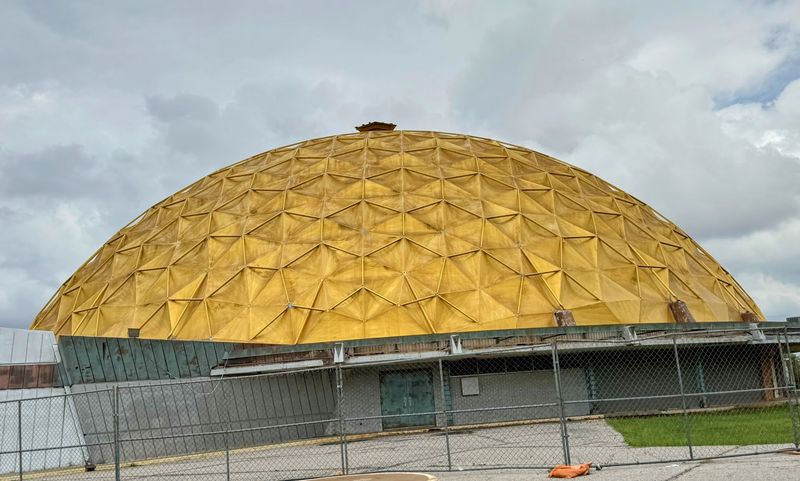
Honesty matters when you are planning a visit, so here is the real picture: the Gold Dome Bank Building is currently fenced off and has been listed for sale. The property is not open for public entry, and the fence means you cannot walk right up to the base of the dome.
The building has been sitting in this in-between state for a while now, which gives it a slightly melancholy quality that actually adds to its mystique rather than diminishing it. There is something compelling about a building this bold sitting quietly, waiting for its next chapter.
The exterior shows some signs of wear, which is understandable for a structure that has been through multiple ownership changes and decades of Oklahoma weather. But the dome itself remains structurally striking, and the gold panels still catch the light in that unmistakable way.
The listing status means the building’s future is genuinely uncertain, which makes visiting it now feel a little like catching something rare. Whatever comes next for the Gold Dome, the version you see today is a specific moment in its long, unusual story.
Best Time and Tips for Visiting
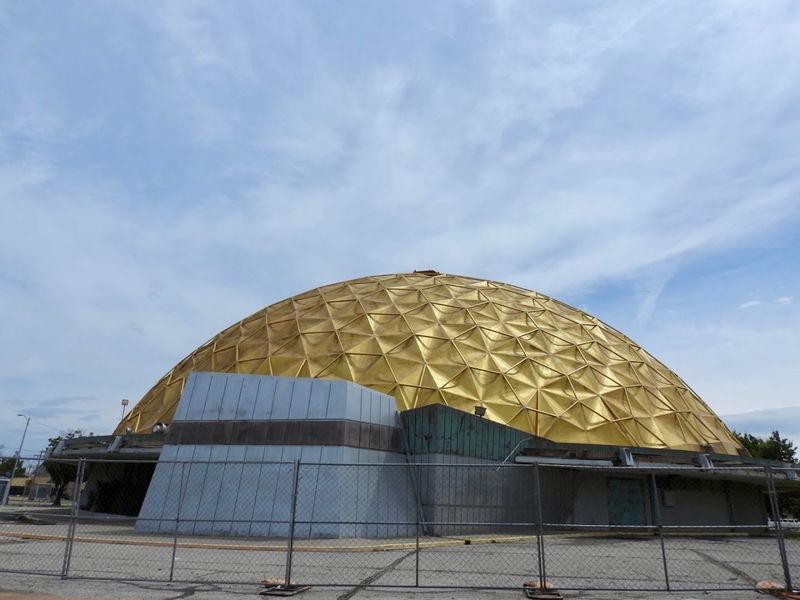
The Gold Dome Bank Building is technically accessible around the clock since the address is listed as open 24 hours, which simply means the exterior is visible at any time of day or night. The best photography happens in the late afternoon when the sun hits the gold panels at a low angle and the whole dome seems to glow from within.
Morning light works well too, especially in the early hours before traffic on NW 23rd Street picks up. The street is reasonably quiet on weekend mornings, giving you a chance to stand on the opposite sidewalk and frame your shots without too many cars in the frame.
Parking along the street is generally straightforward, and the surrounding neighborhood has enough space to pull over safely. The Gold Dome is best treated as a scenic stop rather than a destination that requires a long visit, so planning it as part of a broader Route 66 drive through Oklahoma City makes the most sense.
Bringing a wide-angle lens or using the panorama feature on your phone helps capture the full scale of the dome in a single frame.
The Architecture in Context
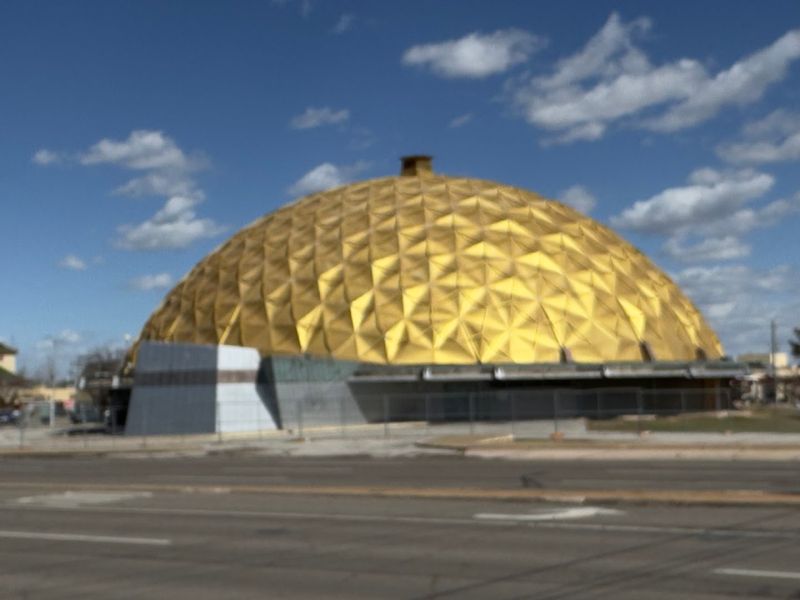
Mid-century modern architecture had a moment of genuine boldness in the 1950s and 1960s, and the Gold Dome Bank Building is one of Oklahoma’s clearest examples of that ambition. Architects and clients during that era were willing to take real risks with form, and the result was a generation of buildings that still turn heads today.
The geodesic dome form that inspired this structure was genuinely experimental at the time of construction. Most banks of the 1950s were built to look solid, traditional, and trustworthy, with columns and brick facades signaling stability.
The Gold Dome went in the opposite direction entirely, choosing a shape that communicated confidence through boldness rather than tradition.
That decision makes the building a fascinating case study in how architecture communicates ideas. The dome essentially said: this bank is forward-thinking, modern, and not afraid to be different.
Whether that message landed with every customer in 1958 is debatable, but the building certainly made an impression.
Seen against the rest of NW 23rd Street, the Gold Dome creates a sharp visual contrast that highlights just how singular its design really is among Oklahoma City’s commercial streetscapes.
The Neighborhood Around the Dome
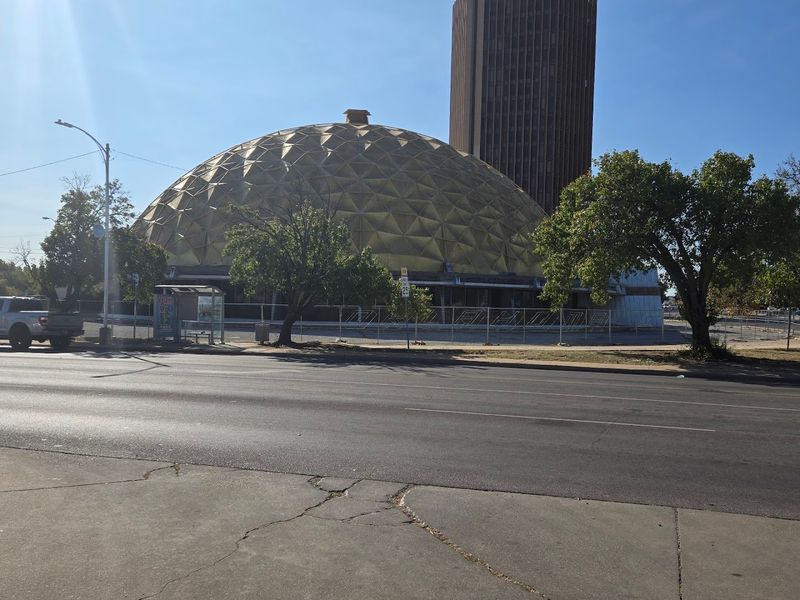
The stretch of NW 23rd Street where the Gold Dome sits has its own personality, and spending a little time in the surrounding blocks adds context to the visit. The neighborhood blends older commercial buildings with newer local businesses, giving the area a layered, lived-in quality that feels distinctly Oklahoma City.
There are independent shops, local restaurants, and small businesses within walking distance that make it easy to turn a quick dome drive-by into a longer neighborhood exploration. The area has seen gradual investment over the years, and the mix of old and new gives it an energy that rewards curiosity.
The Gold Dome anchors the block visually, and locals seem genuinely proud of having such a striking landmark in their neighborhood. There is a community awareness around the building that goes beyond simple nostalgia, with people actively interested in what its next use might be.
Spending an hour or two in the surrounding area before or after photographing the dome gives the visit a fuller sense of place. The Gold Dome is unusual, but the neighborhood around it is what makes the experience feel grounded and real.
Share this story