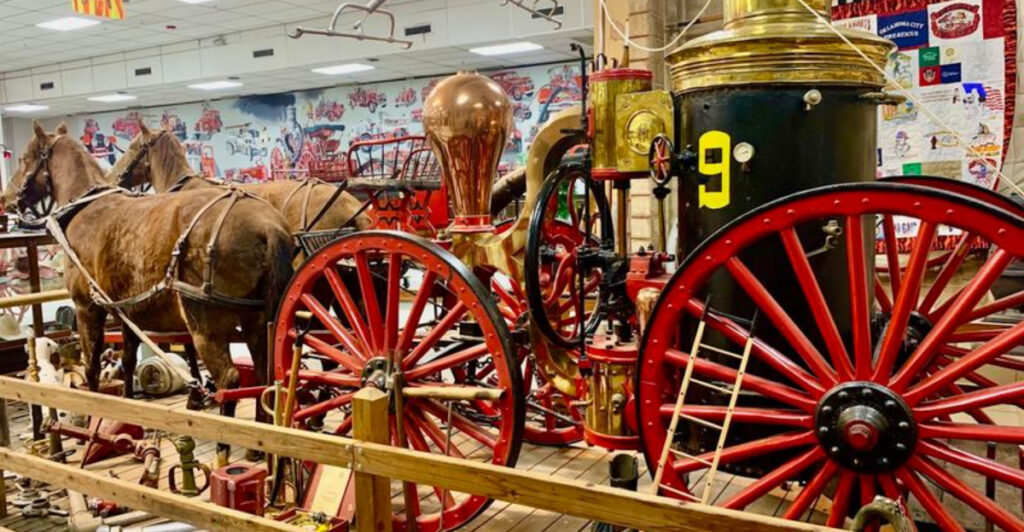
There is a place in Oklahoma City where history does not sit quietly behind glass. It roars at you through the polished brass fittings of hand-drawn pumpers, through the worn leather of century-old helmets, and through the stories stitched into thousands of fire department patches covering every wall.
The Oklahoma Firefighters Museum has been preserving the courage and craftsmanship of firefighting since 1969, and its collection stretches all the way back to the 1700s. Whether you are a history buff, a curious family, or someone who just wants to see a beautifully restored ladder truck up close, this place delivers something genuinely memorable.
A Historic Address Worth Finding
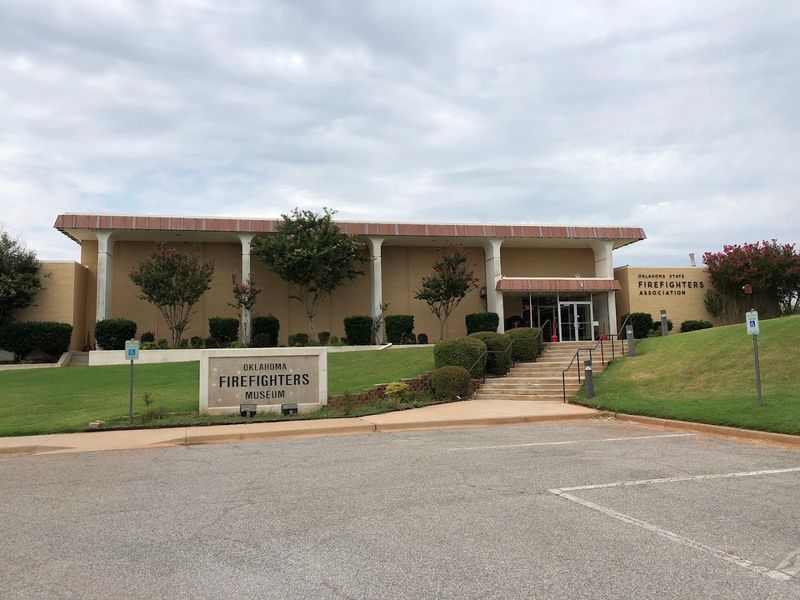
Right in the heart of Oklahoma City, at 2716 NE 50th St, Oklahoma City, OK 73111, the Oklahoma Firefighters Museum occupies a large, no-nonsense building that means business from the moment you pull up. The exterior alone gives you a preview of what is waiting inside, with antique fire apparatus parked outside and a welcoming energy that signals this is no ordinary stop.
The museum sits in a part of Oklahoma City that feels lived-in and genuine, far from the polished tourist corridors. That authenticity carries straight through the front door.
You are stepping into a space that has been carefully curated by people who clearly love what they are preserving.
Admission is remarkably affordable at around six dollars per adult, with discounts available for active firefighters. No advance ticket purchase is needed, so you can simply show up during operating hours, Tuesday through Friday from 9 AM to 4:30 PM and Saturday from 9 AM to 4:30 PM.
The museum is closed on Sundays and Mondays, so plan accordingly and you will have a smooth, stress-free visit.
Three Centuries of Firefighting History
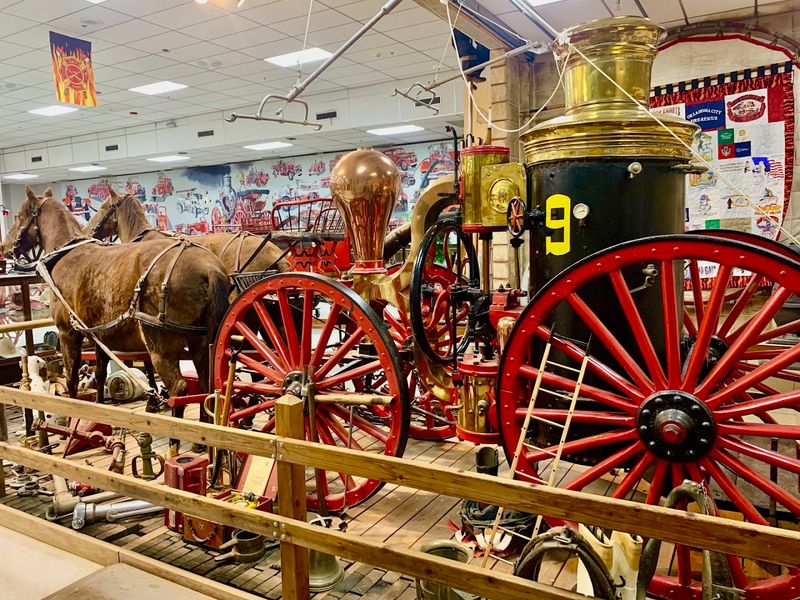
Most museums can claim a few decades of history on their walls. This one stretches the timeline back to the 1700s, making it one of the most historically deep firefighting collections in the entire country.
The oldest pieces in the collection date to the 18th century, a period when fighting fires meant hauling hand-pumped water carts through cobblestone streets.
Seeing those early hand-drawn pumpers in person is genuinely striking. These were the machines that communities depended on before motorized engines existed, and the craftsmanship built into them is remarkable given the tools and technology of the era.
Each piece tells you something specific about how firefighting evolved over generations.
The museum traces that evolution methodically, moving visitors through time with exhibits that show how equipment, training, and organization changed as cities grew. You start to appreciate just how far the profession has come when you compare an 18th-century leather bucket brigade setup to a gleaming early 20th-century motorized pumper.
The three-hundred-year span covered here gives the whole experience a weight and depth that surprises most first-time visitors who expected something far more modest.
The Antique Fire Engines That Steal the Show
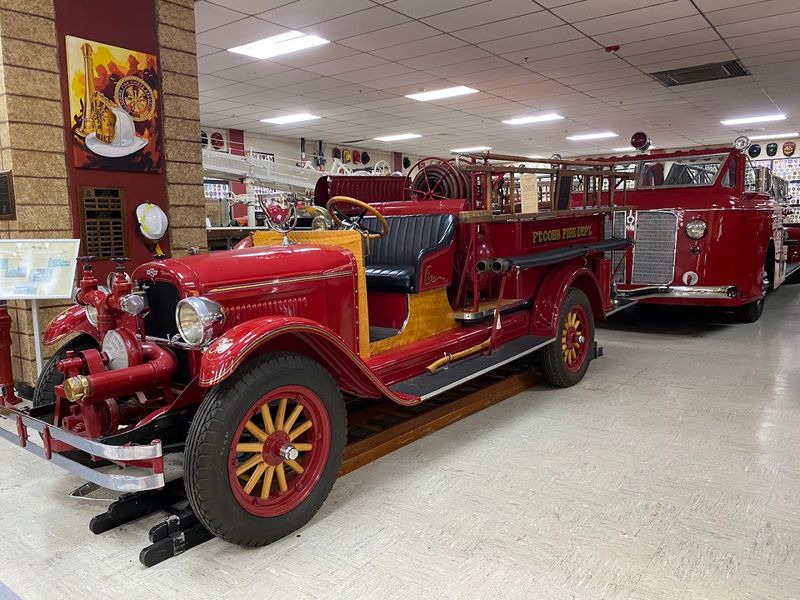
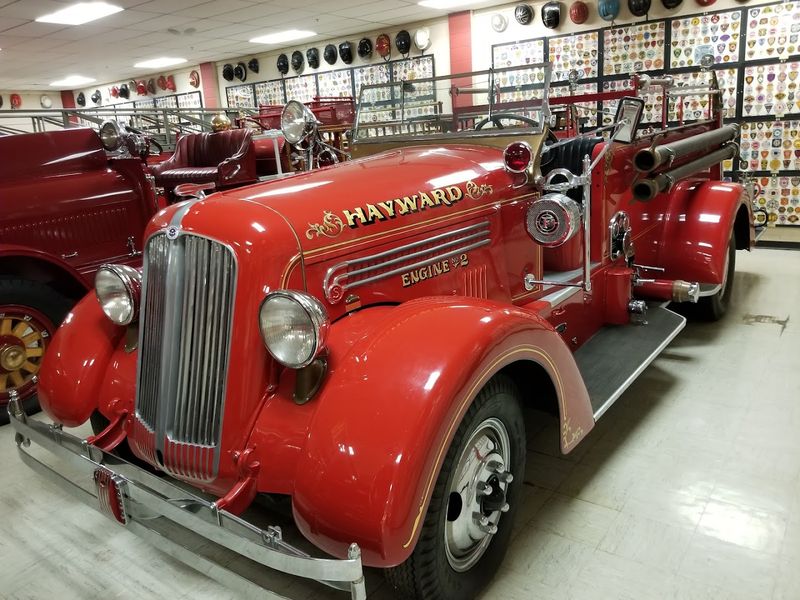
Antique fire engines have a way of commanding a room, and the collection here does exactly that. The sheer number of beautifully restored apparatus packed into this building is one of the first things that catches your eye upon entering.
Each engine has been brought back to a condition that looks almost factory-fresh, which is no small feat given their age.
The ladder truck is a particular crowd favorite. It is a genuinely unique piece that draws comments from nearly every visitor, and for good reason.
The scale of it inside the museum space creates an almost theatrical effect, as though the truck itself is aware of how impressive it looks.
Beyond the ladder truck, there are hand-drawn carts, early motorized pumpers, and hose wagons that span multiple eras of firefighting technology. Reading the details posted near each vehicle adds real context to what you are looking at.
One small suggestion worth noting is that some visitors wish there were even more written information about each engine, since the vehicles themselves raise so many questions that the existing signage does not always fully answer.
The World-Class Patch Collection
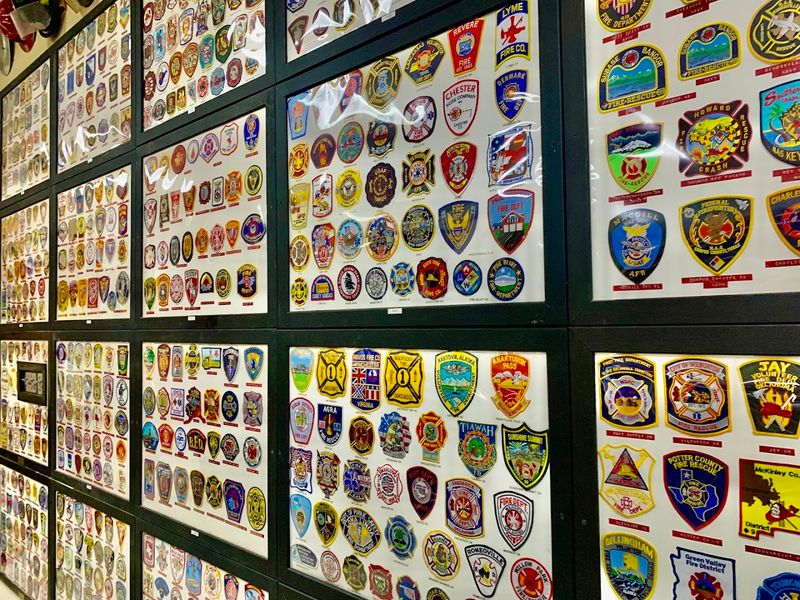
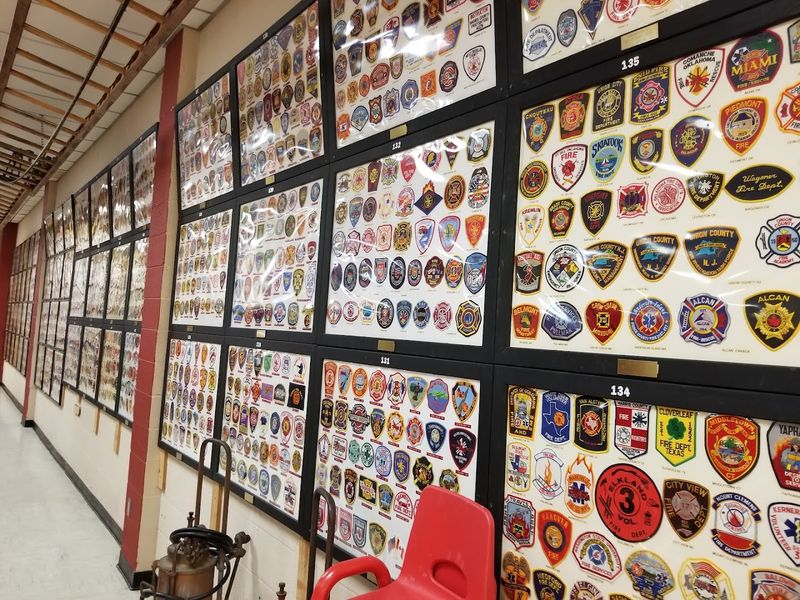
Few things in the museum stop visitors in their tracks quite like the patch collection. Thousands of fire department patches from departments across the United States and around the world cover the walls in a display that is both visually overwhelming and genuinely fascinating.
The range of designs, colors, and department names creates something closer to folk art than a simple memorabilia display.
A printed catalog is available that lists where each patch originated, which means out-of-town visitors can often find their own hometown fire department represented somewhere in the collection. That personal connection turns a passive viewing experience into something interactive and surprisingly emotional for many people.
The museum also participates in a challenge coin exchange program. If you bring a challenge coin from your department, staff will trade it for a patch, which is a tradition that has brought contributions from departments far beyond Oklahoma.
The patch wall keeps growing as a result, and it now stands as one of the most comprehensive displays of its kind anywhere in the country. Firefighters visiting from other states consistently call it a highlight, and it is easy to understand why once you are standing in front of it.
The Fallen Firefighter Memorial
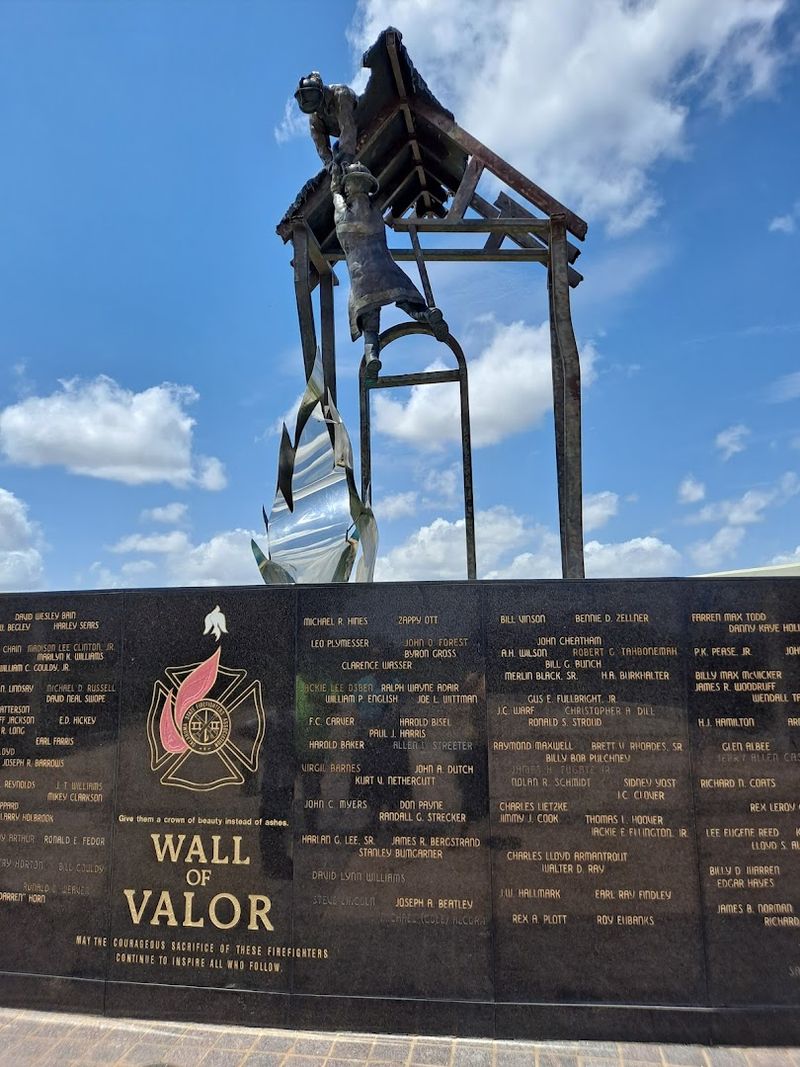
Just outside the main building, the fallen firefighter memorial stands as one of the most quietly powerful parts of the entire visit. It honors those who gave their lives in service, and the design carries a weight that makes you slow down and take a moment of genuine reflection.
A hidden fountain adds an unexpected element of serenity to the space.
The memorial is free to visit and accessible even without paying museum admission, which feels like the right call. Paying respects should not require a ticket, and the museum clearly understands that.
The outdoor space around the memorial is clean, well-maintained, and treated with the dignity the subject deserves.
Visitors who have spent time at the memorial consistently describe it as one of the most meaningful parts of their trip, even more so than some of the indoor exhibits. It grounds the whole experience in something real and human, reminding you that behind every polished fire engine and antique uniform is a profession built on extraordinary personal commitment.
Taking a few quiet minutes here before or after touring the main building adds a dimension to the visit that stays with you long after you have driven away.
Uniforms, Gear, and Equipment Through the Ages
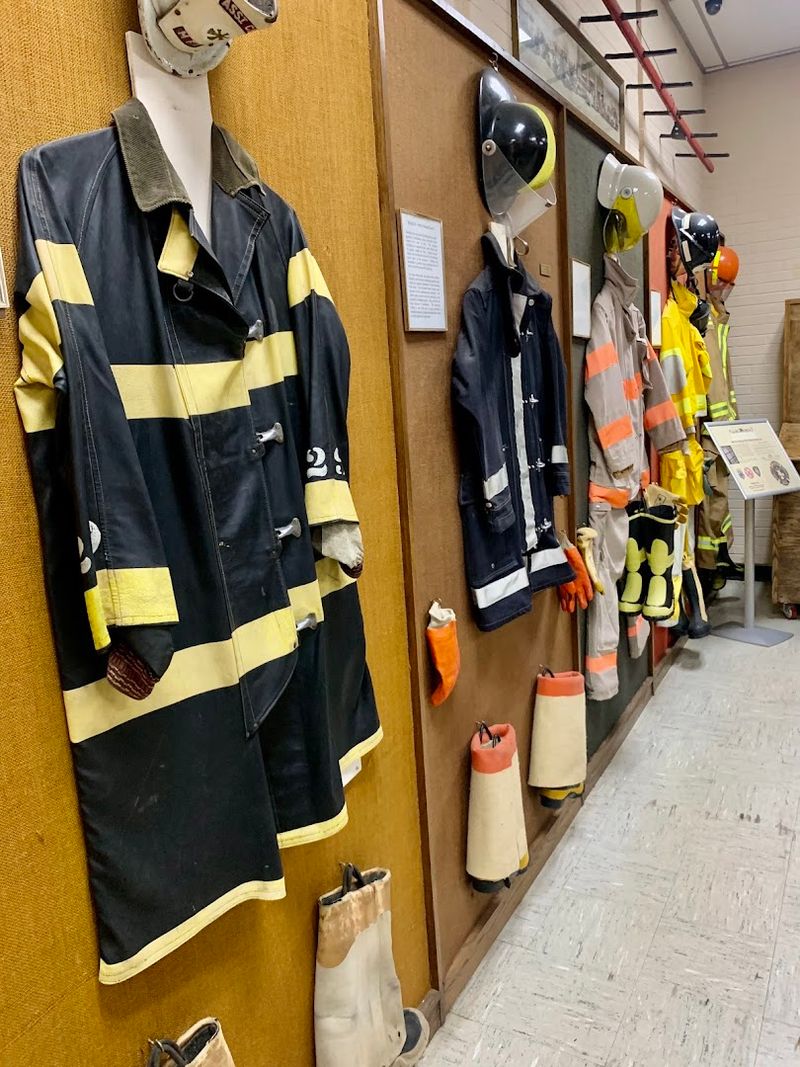
Beyond the fire engines, the museum holds an impressive collection of uniforms, helmets, hoses, and protective gear that shows how firefighting equipment changed dramatically over the centuries. Early leather helmets sit alongside canvas coats and rubber boots, each piece telling a story about what firefighters actually wore while battling blazes in their era.
The progression is genuinely educational. Seeing a helmet from the 1800s next to one from the 1960s makes the technological leaps feel tangible rather than abstract.
You start to appreciate how much danger early firefighters accepted as simply part of the job, given how little protection their gear actually provided compared to modern standards.
Pull hoses, nozzle attachments, and hand tools are displayed throughout the museum as well, filling in the details between the big-ticket items like engines and uniforms. These smaller artifacts are easy to overlook if you rush through, but they reward a slower pace.
Each one was used by someone, somewhere, on a day when it genuinely mattered. That context transforms what could be a dry equipment display into something that feels alive with human history and the kind of everyday heroism that rarely makes headlines.
The Ticker Tape Fire Alarm Machine
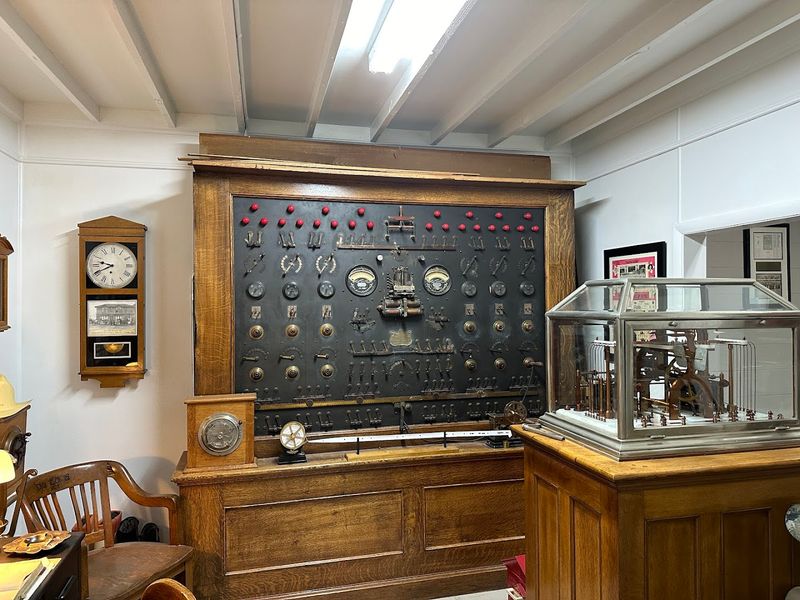
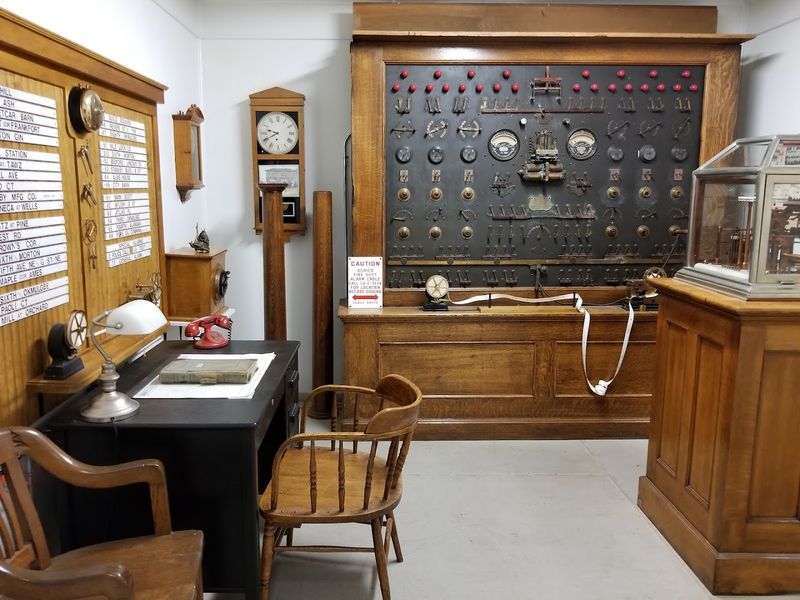
One of the more unexpected highlights in the museum is a vintage ticker tape machine that was once used to report the location of fires to the station. The technology feels almost quaint by modern standards, but understanding how it worked in its day is genuinely fascinating.
A fire call box on a street corner would trigger a coded signal, and the ticker tape machine would print out the location so firefighters knew exactly where to go.
The machine itself cannot be demonstrated live during a regular visit, but the museum has solved that problem with a QR code linked to a video that shows the machine in action. It is well worth scanning and watching, because seeing the tape roll out and understanding the code system adds real depth to the exhibit.
Fire call boxes are also displayed separately in the museum, and together with the ticker tape machine they paint a vivid picture of how early urban fire response was coordinated before radios existed. This part of the museum tends to attract the most curious visitors, the ones who want to understand not just what the equipment looked like but how the whole system actually functioned on a busy city street in the early 1900s.
A Family-Friendly Experience With a Kids Area
Families with younger children will find that the museum has put real thought into making the visit work for kids. A dedicated children’s area features coloring pages with firefighting themes, toy fire trucks, and activity materials that give little ones something hands-on to engage with while the adults explore the exhibits nearby.
Four-year-olds, in particular, tend to go absolutely wild for the toy fire trucks in the kids corner, and watching a small child push a tiny red truck around while surrounded by the real thing just a few feet away is genuinely charming. The area is clean, clearly organized, and tucked in a spot where kids can play without disrupting other visitors.
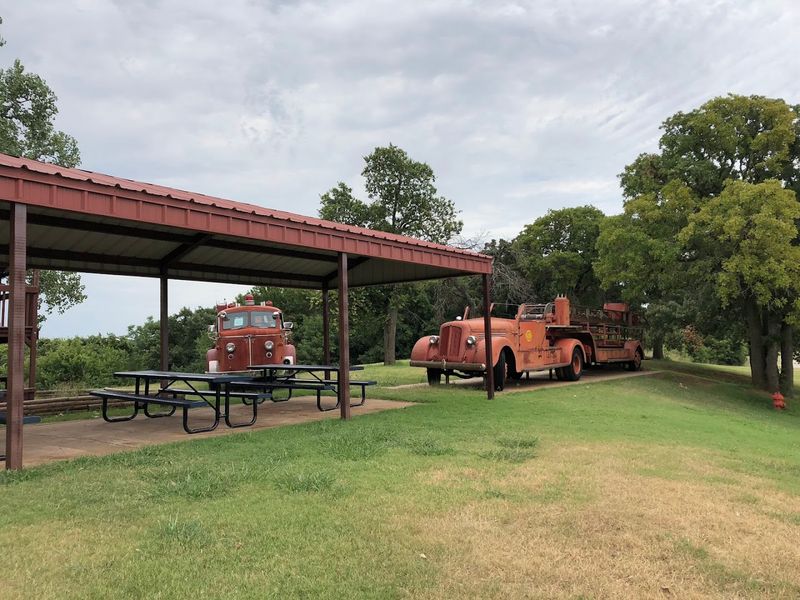
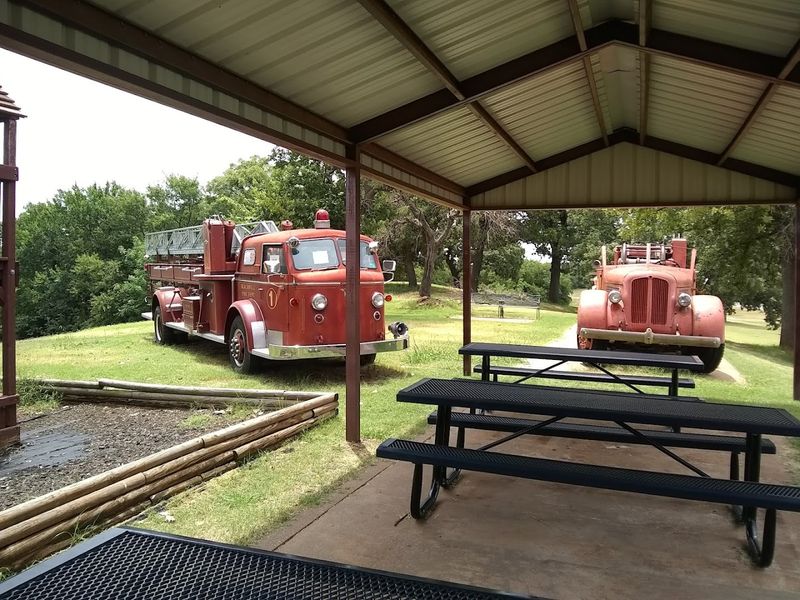
Outside the main building, additional fire engines are parked where children can get close for photos. The outdoor area has also featured picnic tables in shaded spots, making it possible to turn the visit into a full afternoon outing with lunch.
Families visiting Oklahoma City with children in the six-to-twelve age range consistently report that the museum holds their kids’ attention better than expected, and the combination of real engines, interactive elements, and outdoor space keeps energy levels from bottoming out halfway through.
The Gift Shop and Souvenirs
The gift shop at the Oklahoma Firefighters Museum is modest in size but well-stocked with items that feel genuinely connected to the museum’s mission rather than generic tourist fare. Patches, books, small collectibles, and firefighting-themed keepsakes fill the shelves and glass display cases near the entrance area.
Prices are reasonable across the board, which is refreshing at a time when museum gift shops can feel like a second admission fee. Small souvenir items for kids are available at accessible price points, making it easy to let children pick something out without the experience turning into a budget negotiation at the register.
The shop also carries items that appeal specifically to firefighters and fire service enthusiasts, including department-specific merchandise and collector patches. For anyone visiting who works in the fire service or has family members who do, this section of the shop has the kind of items that are hard to find anywhere else.
The gift shop sits conveniently near the exit, so you naturally pass through it on your way out, giving you a final chance to bring a piece of this impressive Oklahoma institution home with you.
What the Museum Feels Like Inside
The interior of the museum is compact but impressively organized, fitting a surprising amount of content into the available space. Two main rooms hold the bulk of the collection, and the layout guides you naturally from one exhibit to the next without ever feeling rushed or confusing.
Everything is clean, well-lit, and clearly labeled.
The atmosphere leans toward the reverent rather than the flashy, which suits the subject matter well. This is not a museum trying to overwhelm you with multimedia installations or theatrical lighting effects.
The artifacts carry enough weight on their own, and the presentation trusts visitors to appreciate them without a lot of extra noise.
Most visitors find that a thorough tour takes between one and two hours, depending on how deeply you read the informational materials and how much time you spend with the vehicles. That is a comfortable length for a family outing without anyone feeling like they are being rushed or dragged along.
The staff on duty are knowledgeable and approachable, ready to answer questions and share context about specific pieces when asked, which adds a personal dimension that no exhibit label can fully replace.
Practical Tips for Planning Your Visit
A few practical details can make the difference between a smooth trip and a frustrating one. The museum is open Tuesday through Friday from 9 AM to 4:30 PM, and Saturday from 9 AM to 4:30 PM as well.
It is closed on Sundays and Mondays, so a midweek or Saturday visit is your window. No advance ticket purchase is required, which keeps things refreshingly simple.
Admission runs approximately six dollars per adult, with a discount of around fifty percent for active firefighters. Children’s admission is lower, making this one of the most affordable family outings in Oklahoma City.
The phone number for the museum is 405-424-3440, and the official website is osfa.info, where you can find updated information before your visit.
Arriving right when the museum opens tends to give you the quietest experience, with the most space to move around and examine exhibits at your own pace. The museum can occasionally close early for private events, so calling ahead if you are making a special trip is a smart precaution.
Parking is available on-site, and the building is handicap accessible throughout the main interior, though the outdoor picnic area has some limitations in that regard.
Why This Museum Deserves a Spot on Your Oklahoma City Itinerary
Oklahoma City has no shortage of things to do, but the Oklahoma Firefighters Museum occupies a category all its own. It is the kind of place that delivers more than you expect from the outside, packing three centuries of firefighting history into a building that feels personal, well-tended, and genuinely proud of what it preserves.
The 4.6-star rating from hundreds of visitors reflects that consistently positive experience.
History enthusiasts will find the depth of the collection remarkable. Families will appreciate the combination of indoor exhibits and outdoor space.
Firefighters visiting from other parts of Oklahoma or beyond will find the patch exchange and department memorabilia deeply meaningful. The museum manages to serve all of these audiences without feeling unfocused or scattered.
Opened in 1969, the Oklahoma Firefighters Museum has spent more than five decades building a collection that honors the profession from its earliest days to the present. Few places in the state offer this kind of concentrated historical depth at such an accessible price point.
A visit here is not just an afternoon activity. It is a genuine encounter with the people and tools that kept communities safe across three centuries of American history, and that is worth every minute of the drive.
Share this story