Arena rock in the 1980s was never just about the songs. It was about MTV turning choruses into lifestyle branding, tours becoming rolling monuments to scale, and frontmen who could fill a magazine cover as easily as an arena stage.
That mix produced some genuinely huge bands whose fame often ran on image, timing, and spectacle as much as craft, which is exactly what makes them so interesting to revisit now. If you want a sharper look at how hype, hair, videos, and very large hooks helped define a decade, these twelve acts tell the story better than any stack of old ticket stubs.
1. Bon Jovi
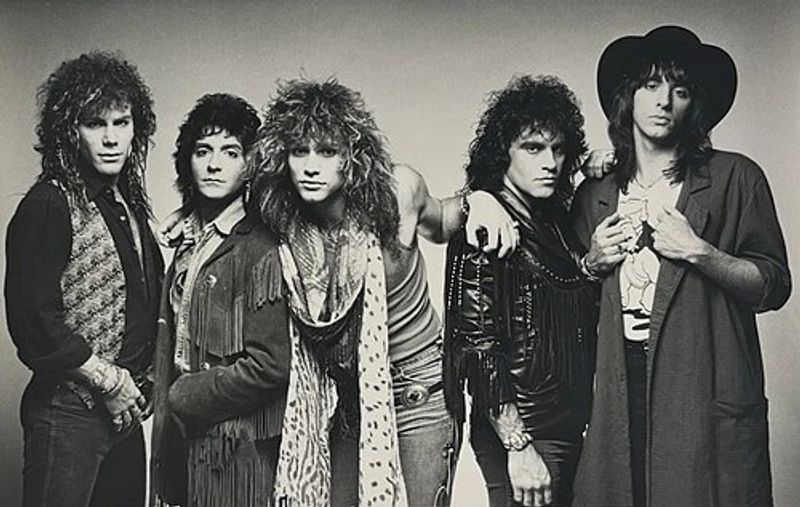
Some bands played arenas, but this group seemed built in a marketing lab specifically for them. Bon Jovi hit the mid-1980s sweet spot with Slippery When Wet in 1986 and New Jersey in 1988, pairing blue-collar slogans with glossy production that radio loved.
Jon Bon Jovi became an MTV fixture, Richie Sambora added a sharp visual counterpoint, and the band sold not just songs but a full stadium-ready identity.
That identity mattered almost as much as the records. Livin’ on a Prayer and You Give Love a Bad Name were undeniable hits, yet critics regularly pointed out how carefully engineered the formula was, from giant choruses to video-friendly styling and relentless touring.
Still, there is something impressive about a band understanding the decade so completely that it could turn image, accessibility, and aspiration into a global brand. Bon Jovi did not simply dominate playlists.
They became shorthand for the entire arena-rock machine.
2. Def Leppard
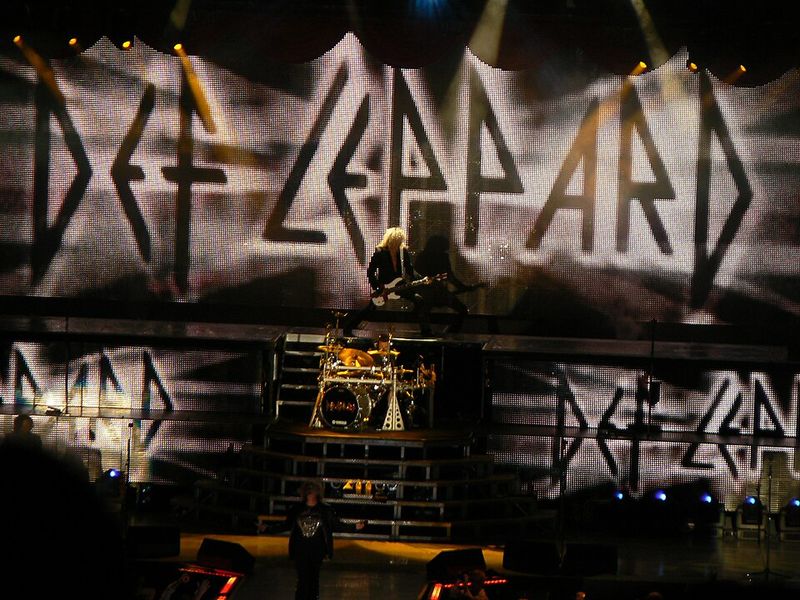
Precision became a selling point when this Sheffield band conquered the American mainstream. Def Leppard spent years refining a huge commercial sound, and that patience paid off with Pyromania in 1983 and Hysteria in 1987, albums designed for radio, MTV, and maximum repeat value.
Mutt Lange’s production stacked harmonies, guitars, and effects into something so polished that the band often felt larger than ordinary hard rock categories could contain.
The story around them also amplified their stature. Rick Allen’s return after losing an arm became part of the band’s public mythology, and Hysteria generated hit after hit with a consistency few rock records ever matched.
Yet the same perfection that helped them sell millions also fueled complaints that the music traded grit for shine and spontaneity for architecture. Even so, that was the point.
Def Leppard thrived because they understood arena rock as design, not accident, and they delivered it with almost industrial efficiency.
3. Mötley Crüe
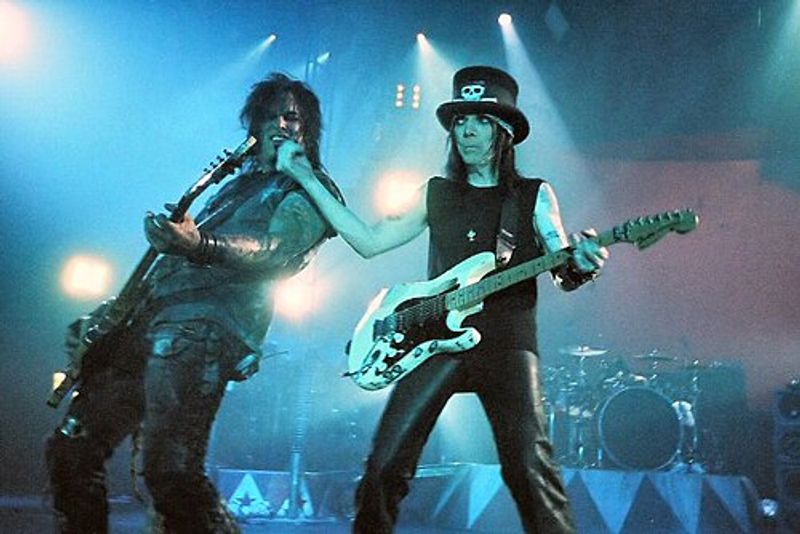
Subtlety was never invited to this party, and that was a major part of the business plan. Mötley Crüe turned themselves into headline material through image, controversy, and a carefully cultivated reputation for excess, all while landing major records like Shout at the Devil, Girls, Girls, Girls, and Dr. Feelgood.
Their visual identity was so strong that even people who barely followed hard rock usually knew the band’s name, look, and general public chaos.
The music could be effective, especially when Bob Rock helped sharpen their attack on Dr. Feelgood in 1989. Still, the conversation around Mötley Crüe often drifted quickly from riffs to hair, clothes, interviews, and whatever spectacle surrounded the latest tour.
That imbalance is exactly why they fit this list. They were not merely a successful band.
They were an event, a tabloid-friendly brand, and a perfect example of how 1980s arena rock rewarded personalities who could dominate screens and stages before anyone debated the finer points of songwriting.
4. Poison
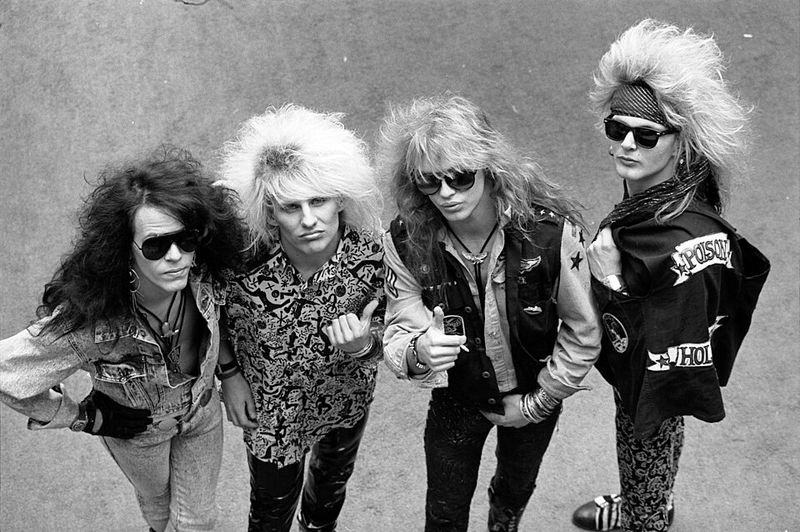
Color, confidence, and excellent timing carried this band a very long way. Poison arrived as glam metal was becoming a full MTV ecosystem, and they understood instantly that memorable hooks and unmistakable visuals could work together better than either one alone.
Songs like Talk Dirty to Me, Nothin’ but a Good Time, and Every Rose Has Its Thorn kept them visible, but their makeup, wardrobe, and high-energy presentation made them impossible to miss.
That combination brought huge sales and constant exposure, yet it also invited an old criticism: were people buying the songs, or buying the idea of Poison. Bret Michaels became a recognizable personality beyond the records, while the band’s image often stood front and center in media coverage.
Even supporters would admit that the music leaned hard on simple choruses and broad appeal rather than technical depth. Still, arena rock rewarded connection more than complexity.
Poison knew how to project fun, flirt with parody without losing control, and turn a style many mocked into a highly profitable mainstream package.
5. Twisted Sister
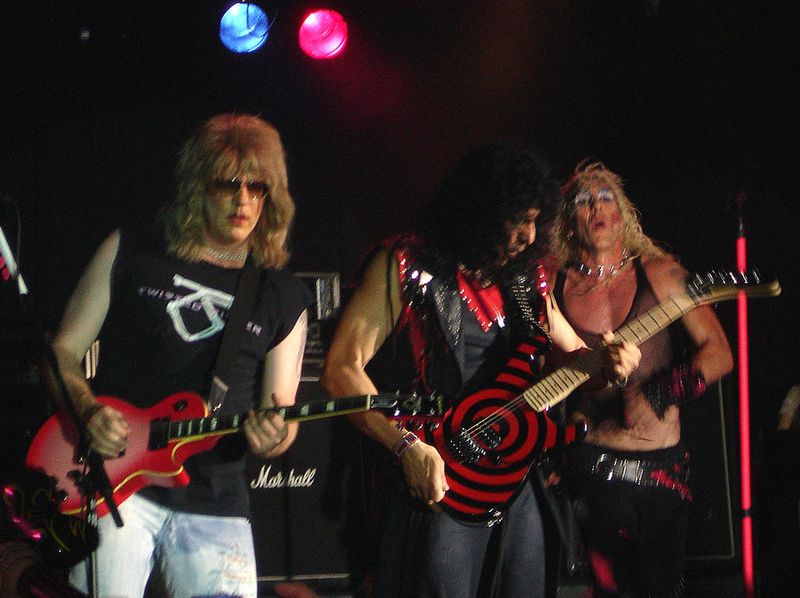
A sneer, a slogan, and a highly memorable face can take a band very far. Twisted Sister had been grinding for years before Stay Hungry broke through in 1984, but once We’re Not Gonna Take It and I Wanna Rock hit MTV, the band’s visual identity became almost inseparable from its music.
Dee Snider, with his towering presence and sharp media instincts, turned the group into a pop-culture symbol of loud rebellion that reached beyond heavy metal fans.
The irony is that their biggest footprint came from a relatively compact set of signature songs. The videos were funny, confrontational, and easy to remember, which helped fix the band in the public imagination even as their broader catalog remained less central to mainstream listeners.
Snider’s later visibility in censorship debates also extended that image of defiant rock theatrics. Twisted Sister absolutely had musical force, but their lasting fame came from something larger: a distinctive look, a clear message, and a knack for turning three-minute anthems into durable pieces of 1980s cultural shorthand.
6. Warrant

Late arrival or not, this band figured out the formula quickly. Warrant broke through near the end of the decade with Dirty Rotten Filthy Stinking Rich in 1989, balancing power ballads and cheeky party rock in a way that fit perfectly with MTV’s late-hair-metal peak.
Jani Lane’s songwriting gave them more melodic strength than some detractors admitted, but the band’s image often shaped public opinion before the music had a chance to speak for itself.
Heaven proved they could land a serious mainstream ballad, yet Cherry Pie eventually became the larger cultural marker, not least because its video and title made it easy for critics to reduce the entire band to a single joke. That shorthand stuck, sometimes unfairly.
Warrant were skilled at writing accessible choruses and packaging them for mass attention, which is exactly why they became bigger than their catalog in the public memory. Their fame came attached to a caricature, and that caricature traveled farther than the more nuanced parts of the band’s actual work.
7. Europe
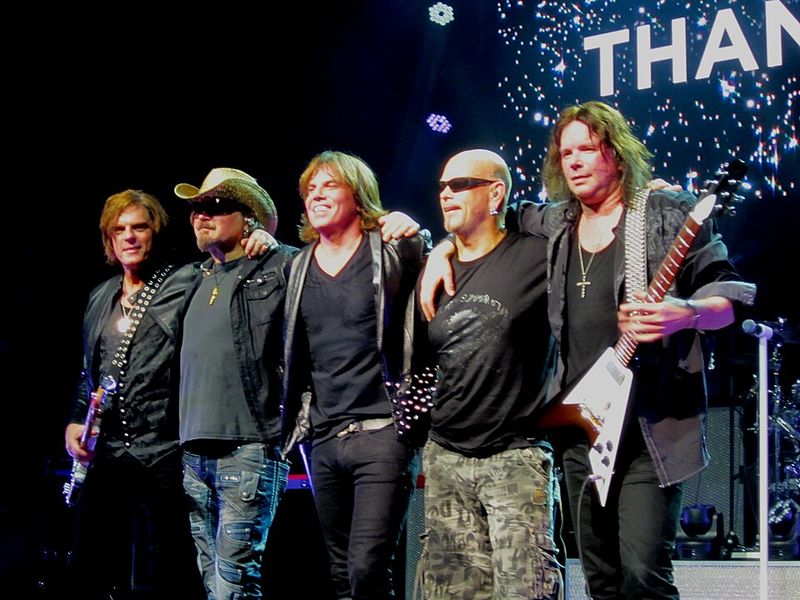
One keyboard riff did enough work for an entire international career. Europe had been active in Sweden before the world suddenly knew them through The Final Countdown in 1986, a song so immediately recognizable that it became a permanent piece of sports, television, and event culture.
The band’s polished look, Joey Tempest’s frontman profile, and the track’s enormous scale pushed them into arena-rock visibility almost overnight.
That success was both a gift and a trap. Europe produced other solid songs, including Rock the Night and Carrie, but the opening synthesizer figure of their signature hit became so dominant that it swallowed much of the wider catalog in public memory.
Critics sometimes treated them as a one-song phenomenon with excellent hair, which oversimplified their musicianship but captured a real commercial truth. The band’s image and that towering single did most of the heavy lifting.
Europe remains a perfect case of 1980s fame concentrating around one giant cultural marker until the marker itself became bigger than the band behind it.
8. Ratt
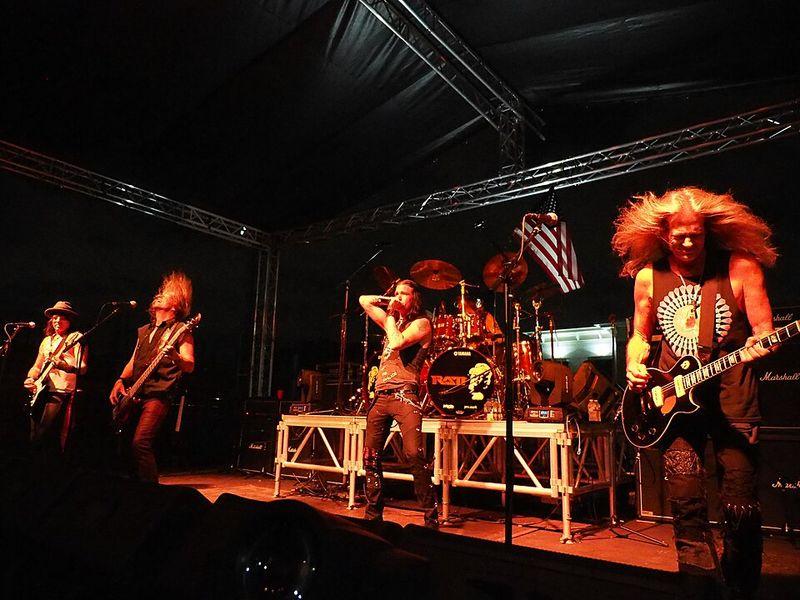
Sunset Strip ambition rarely came dressed with more confidence than this. Ratt emerged from the Los Angeles club scene and broke wide with Out of the Cellar in 1984, led by Round and Round, a hit that translated glam metal style into a cleaner mainstream package.
Stephen Pearcy’s voice, Warren DeMartini’s guitar work, and the band’s sleek visual presentation helped them become one of the defining acts of the early MTV hard-rock wave.
They were certainly more than a haircut with amplifiers, but image remained central to the appeal. Magazine coverage, videos, and arena tours reinforced the idea that Ratt represented the aspirational side of the decade’s rock culture, where attitude and presentation could carry nearly equal weight with songwriting.
Subsequent albums kept them commercially active, though the broader public often remembered the brand faster than individual tracks. That says a lot about how the era worked.
Ratt’s fame depended on being recognizable at a glance, and they mastered that assignment so well that the band’s look sometimes outran the music itself.
9. Quiet Riot
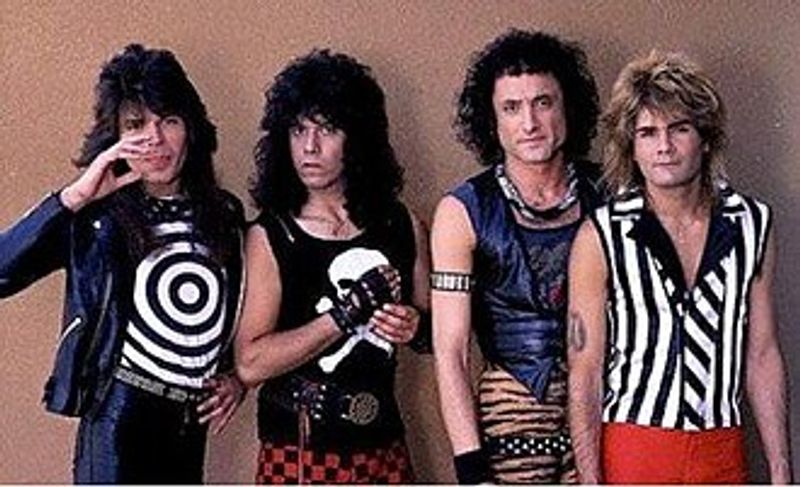
Sometimes one breakthrough hits so hard that it rewrites the whole conversation. Quiet Riot became a genuine mainstream phenomenon with Metal Health in 1983, the first heavy metal album to reach number one on the Billboard 200, powered by Cum On Feel the Noize and the title track.
For a moment, they looked like the band that had kicked open the commercial door for a whole generation of louder, glossier acts.
That achievement was real, but it also defined them almost too completely. Their sudden rise owed a lot to timing, MTV visibility, and a market newly ready to package metal for mass consumption, which meant the band’s cultural importance could feel larger than its long-term catalog weight.
Kevin DuBrow’s outspoken public persona added another layer of visibility that often rivaled discussion of the music. Quiet Riot mattered because they arrived at precisely the right commercial intersection.
Even now, they are remembered as much for the breakthrough moment itself as for a deep list of songs, which is exactly how arena-rock mythology tends to operate.
10. Cinderella
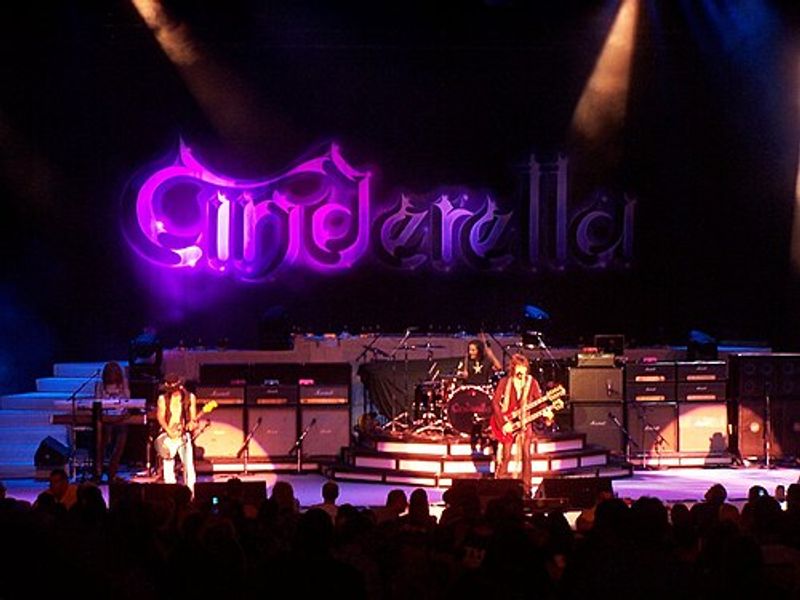
At first glance, they looked like another entry in the hair-metal assembly line. Cinderella broke through with Night Songs in 1986, and their image fit the visual rules of the period well enough to earn immediate MTV attention, major tours, and a fast-growing audience.
Yet Tom Keifer’s raspy voice and the band’s bluesier instincts gave them more character than many casual observers expected from the makeup-and-leather boom.
That mismatch between appearance and substance defined much of their reputation. Long Cold Winter in 1988 pushed further into blues-rock territory, but many listeners still approached Cinderella through the glam-metal packaging first, which meant the visual side often framed the conversation before the songs could complicate it.
They were good musicians caught inside a highly marketable costume, and that costume worked. Arena audiences responded to the big choruses, the power-ballad structure, and the recognizable style.
Cinderella’s fame grew because they fit the decade’s preferred silhouette, even when the music itself pointed somewhere a little more traditional and grounded.
11. Whitesnake
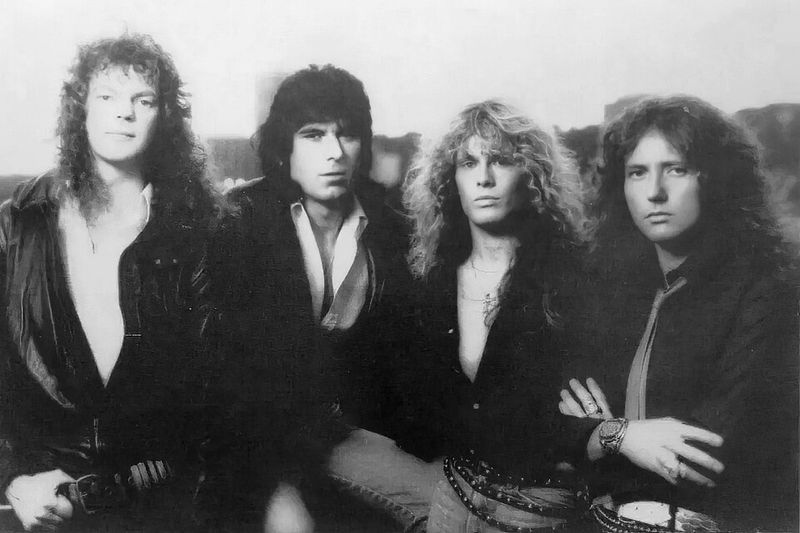
Few bands benefited from MTV’s visual economy more efficiently than this one. Whitesnake had existed in various forms before their commercial peak, but the 1987 self-titled album transformed David Coverdale’s project into a massive crossover act through Here I Go Again, Is This Love, and Still of the Night.
The songs were strong enough, yet the band’s public profile expanded dramatically because the videos became unavoidable cultural objects.
Those clips, featuring Coverdale and Tawny Kitaen in instantly recognizable scenes, helped turn Whitesnake into a broader pop-culture presence that reached viewers who may not have followed hard rock closely at all. The result was enormous success paired with a slightly skewed legacy.
People often remembered the videos, the image, and Coverdale’s persona before they discussed the band’s shifting lineup or earlier blues-rock roots. That does not erase the music, but it does explain the scale of their fame.
Whitesnake became a textbook 1980s case of presentation multiplying a band’s reach until the spectacle carried nearly as much weight as the records.
12. KISS (in their ’80s reinvention)
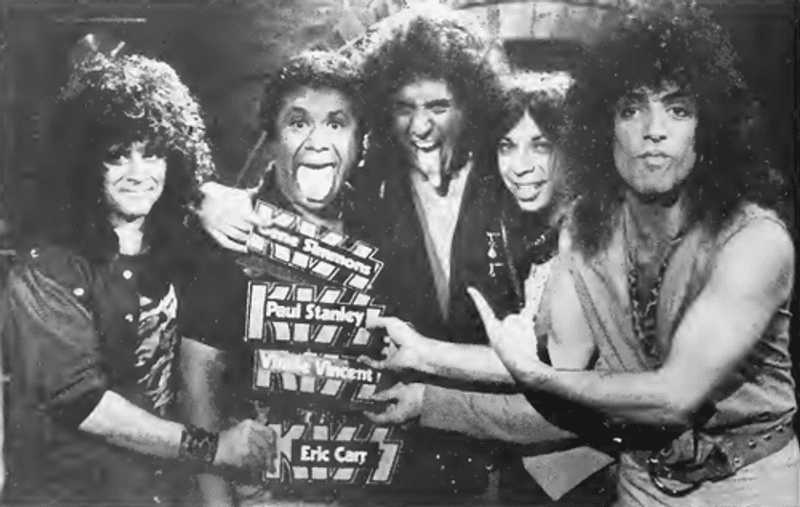
Reinvention is easier when your whole career already looks like a branding seminar. KISS entered the 1980s with their 1970s mythology intact, but changing tastes forced them to adapt, most visibly when they appeared without makeup in 1983 to launch the Lick It Up era.
That move generated major attention on its own, because the band had spent years building one of rock’s most recognizable visual systems before strategically disrupting it.
In the years that followed, KISS leaned into the decade’s video culture, brighter production, and more contemporary hard-rock styling to stay commercially relevant. Albums like Animalize, Asylum, and Crazy Nights kept them in the arena conversation, though the discussion often centered on the makeover, the merchandising instinct, and the sheer durability of the KISS machine.
That machine was always bigger than any individual song. By the 1980s, the band had become a self-sustaining symbol of spectacle, able to generate interest through presentation, history, and reinvention as much as new music.
Few acts illustrate the business side of arena rock more clearly.
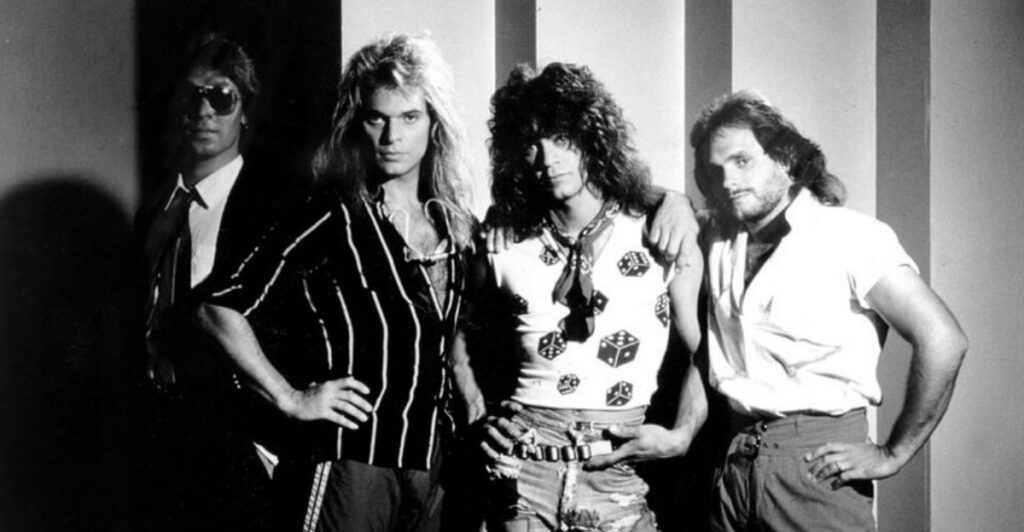
13. Van Halen
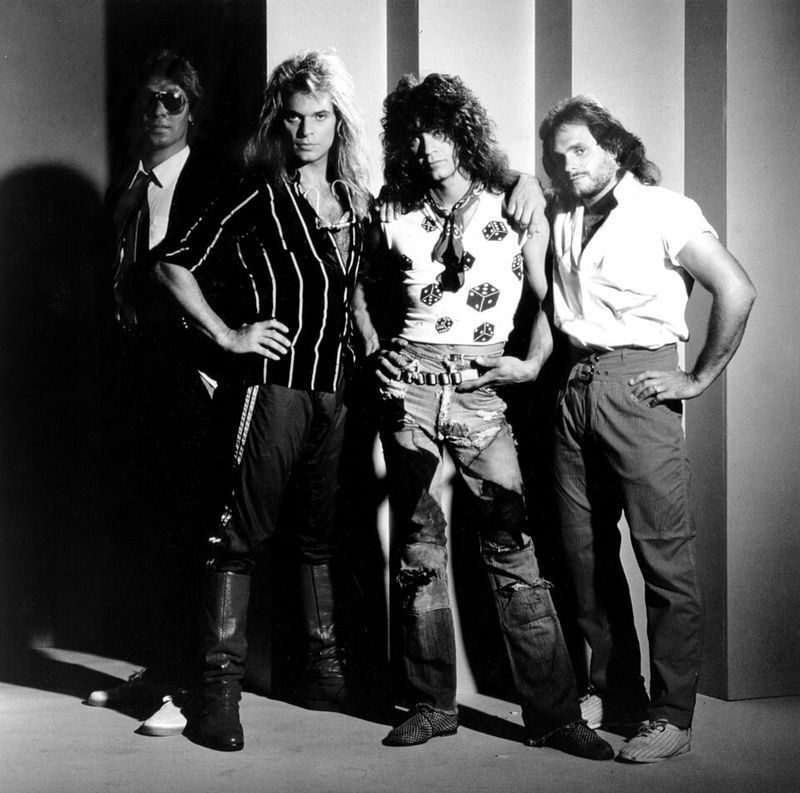
Pure momentum can become its own form of mythology, and this band had plenty of it. Van Halen entered the 1980s already established, then expanded their reach with albums like 1984, where Jump, Panama, and I’ll Wait pushed them deeper into pop culture without abandoning their oversized live reputation.
Eddie Van Halen’s guitar work alone gave the band a technical identity most arena acts could only dream about, while David Lee Roth and later Sammy Hagar kept the frontman role larger than normal life.
Because the personalities were so strong, the narrative around Van Halen often became as important as the records. Lineup changes, onstage swagger, interviews, and the constant spotlight on Eddie’s innovation helped turn the band into a permanent public fascination, not just a hitmaking act.
Unlike some others here, the music was undeniably substantial, yet even then the legend sometimes outran the songs in everyday memory. Van Halen felt enormous because every piece of the package, from virtuosity to ego to showmanship, operated at arena scale all the time.
Share this story