Gardens come in all shapes, sizes, and styles — from neat rows of tulips to gravity-defying tree sculptures towering above city skylines. Around the world, some gardens push the boundaries of what a garden can even be, blending art, science, history, and nature into unforgettable spaces.
Whether you love flowers, Zen rocks, or even poisonous plants, there is a garden out there that will blow your mind. Get ready to explore 19 of the most beautiful and unusual gardens our planet has to offer.
Gardens by the Bay — Singapore
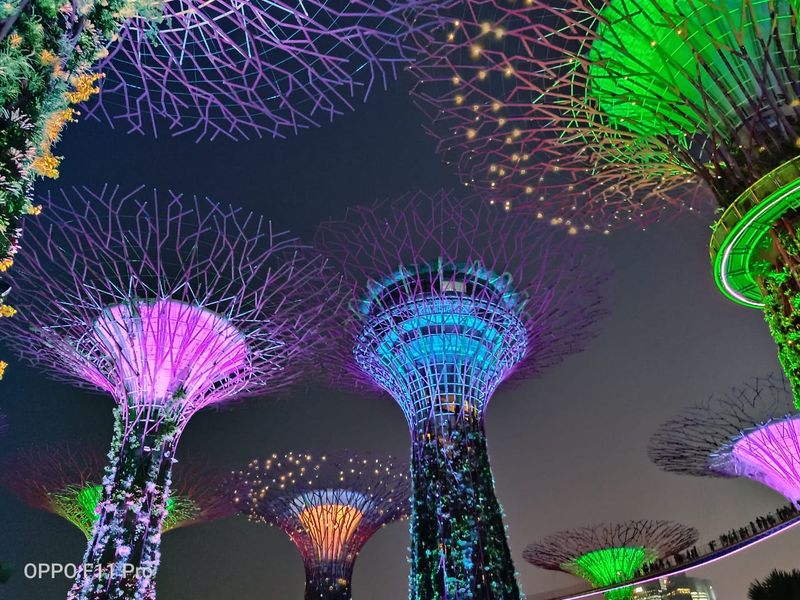
Step outside at night in Singapore and you might think you have landed on another planet. The Supertrees at Gardens by the Bay glow with thousands of colored lights, creating one of the most jaw-dropping light shows on Earth.
These vertical garden structures stand up to 50 meters tall and support over 200 species of plants, ferns, and orchids.
The park also houses two giant climate-controlled conservatories. The Flower Dome mimics a cool, dry Mediterranean climate, while the Cloud Forest recreates a misty tropical mountain environment complete with a stunning indoor waterfall.
Visitors can walk across aerial walkways connecting the Supertrees for a bird’s-eye view of the entire park.
Gardens by the Bay opened in 2012 and quickly became one of Singapore’s most visited attractions. It covers over 100 hectares of reclaimed land along the waterfront.
Whether you visit during the day or after sunset, this garden feels like a living, breathing work of science fiction turned reality.
Keukenhof Gardens — Netherlands
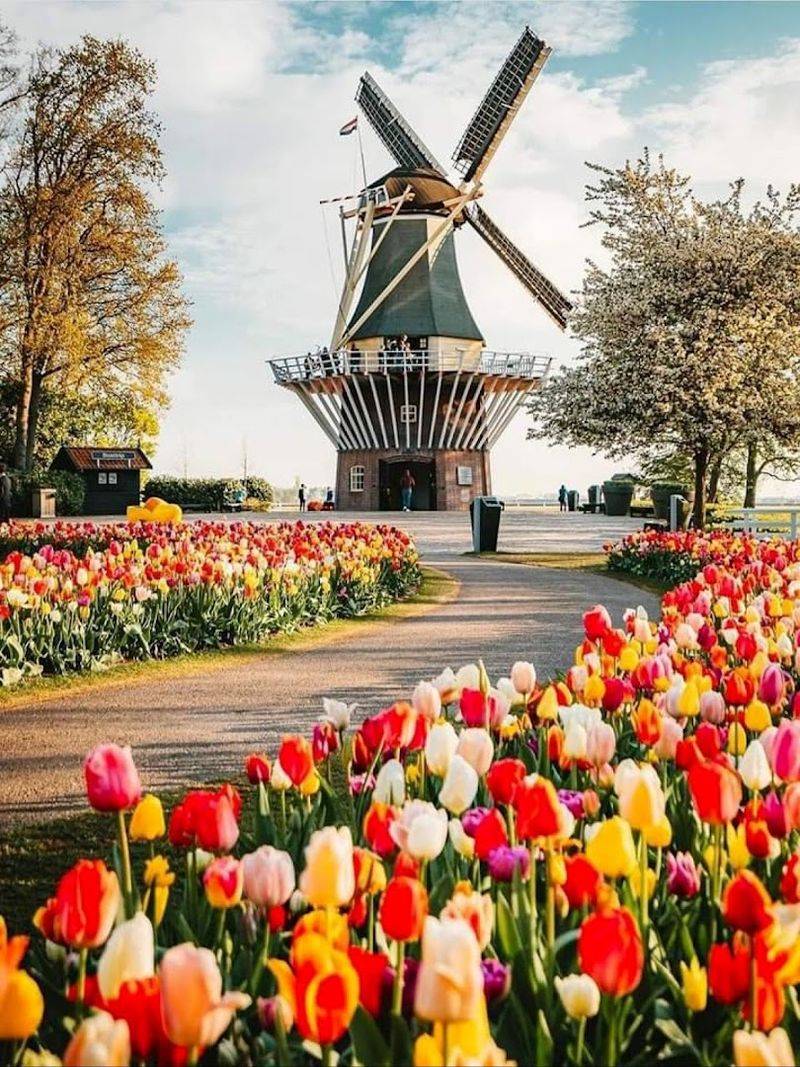
Every spring, the Dutch countryside erupts in a rainbow of color, and the heart of it all is Keukenhof. Known as the Garden of Europe, this legendary park near Amsterdam welcomes around 1.4 million visitors during its eight-week season.
The numbers are staggering — over seven million flower bulbs are planted by hand each year.
Tulips steal the spotlight, but daffodils, hyacinths, and lilies put on their own impressive shows across 32 hectares of carefully designed landscapes. The garden paths wind through flower beds arranged in breathtaking patterns, making every turn feel like a new surprise.
Photography enthusiasts travel from across the globe just to capture the perfect shot here.
Keukenhof is only open from mid-March to mid-May, so timing your visit is key. The park also features themed greenhouses, art exhibitions, and windmill photo spots.
Fun fact: the name Keukenhof means kitchen garden in Dutch, a humble name for one of the most spectacular floral displays on the planet. Missing it feels like skipping dessert entirely.
Butchart Gardens — Canada
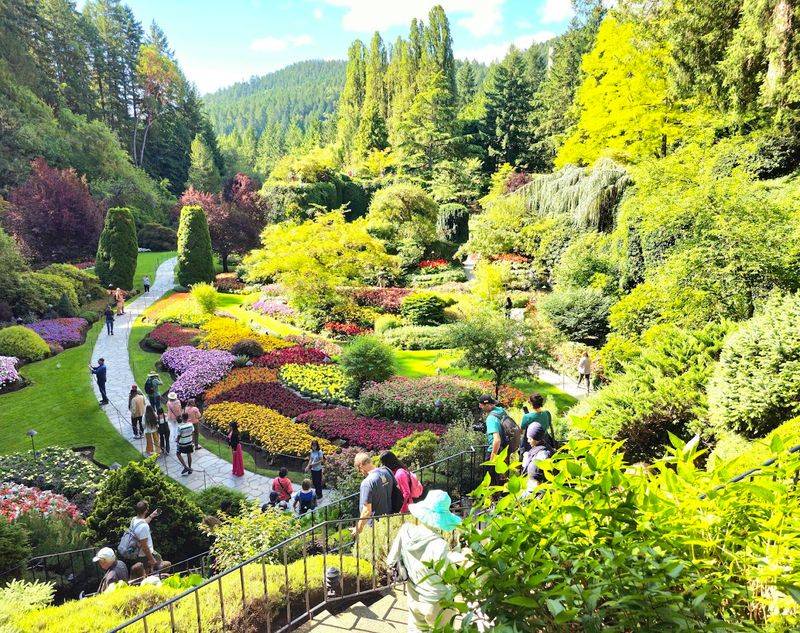
Hard to believe that one of Canada’s most gorgeous gardens used to be a giant hole in the ground. Back in the early 1900s, Jennie Butchart decided to transform her husband’s exhausted limestone quarry on Vancouver Island into something extraordinary.
Today, Butchart Gardens is a National Historic Site of Canada and one of the most visited attractions in the country.
The centerpiece is the Sunken Garden, which sits right inside the old quarry pit. Brilliant flowers cascade down the stone walls while manicured pathways lead visitors through the lush, layered landscape.
The garden also features a Japanese Garden, an Italian Garden, a Rose Garden, and a Mediterranean Garden, each with its own distinct personality.
Summer evenings bring outdoor concerts and illuminated garden displays that turn the whole property into a glowing wonderland. The garden is open 365 days a year, so even winter visits reward guests with festive holiday lighting and seasonal blooms.
Over a million visitors come each year, and with 55 acres of jaw-dropping beauty, it is easy to see why this quarry-turned-paradise keeps drawing people back.
Kawachi Fuji Gardens — Japan
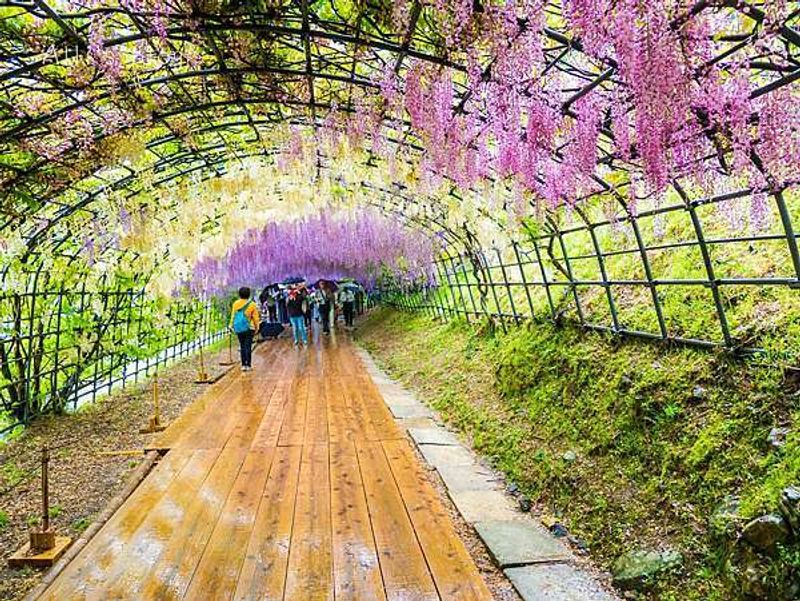
Purple rain has nothing on a wisteria tunnel in full bloom. Kawachi Fuji Gardens in Kitakyushu, Japan, is home to one of the most photographed natural spectacles in the world — long, arching tunnels completely covered in cascading wisteria flowers.
During peak bloom in late April and early May, the tunnels glow with shades of purple, white, pink, and blue.
The garden features around 150 wisteria plants from 20 different varieties, all trained to grow over wire frames that form the tunnel structures. Walking beneath the hanging clusters of flowers feels genuinely dreamlike, as though the entire world has been filtered through a soft purple lens.
The sweet floral scent drifting through the tunnels adds another layer to the sensory experience.
Because wisteria bloom season is short — sometimes just two weeks — the garden tightly controls visitor numbers during peak times. Entry tickets must be booked in advance, and the place fills up fast.
If you ever find yourself in Japan in late spring, this garden is absolutely worth rearranging your entire schedule for. It is the kind of beauty that photographs simply cannot do justice.
Jardin Majorelle — Morocco
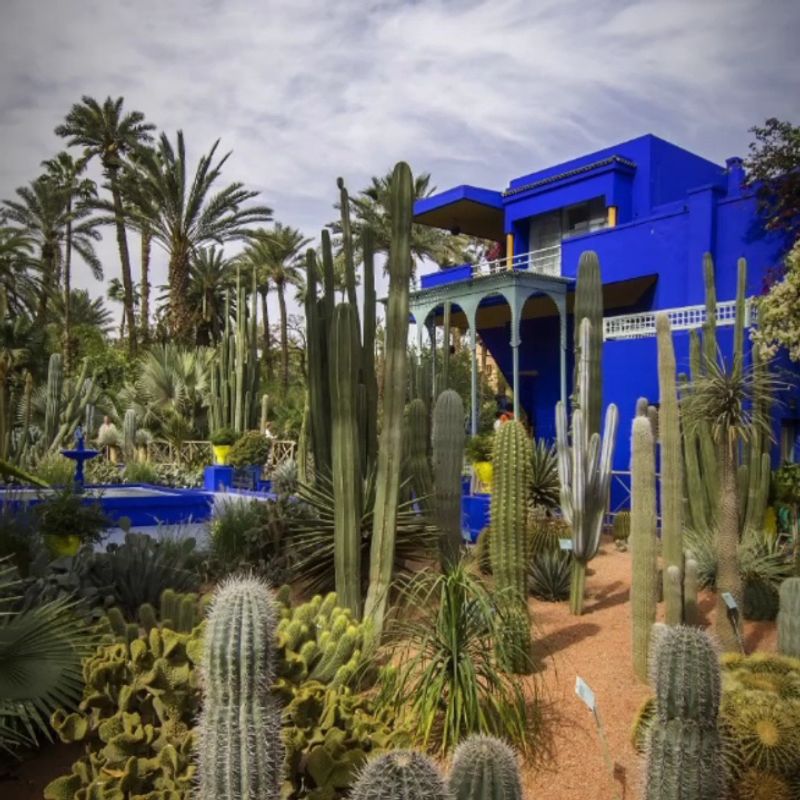
That particular shade of electric blue has a name: Majorelle Blue. French painter Jacques Majorelle spent decades developing this garden in Marrakech starting in the 1920s, and he eventually patented the striking cobalt color that now coats every wall and structure within its boundaries.
The contrast between the bold blue buildings and the vivid green plants is visually stunning.
Fashion legend Yves Saint Laurent and his partner Pierre Berge purchased the garden in 1980 after it had fallen into disrepair, restoring it to its former glory and opening it to the public. Today the garden houses an impressive collection of cacti, bamboo groves, palms, and water lilies spread across 2.5 acres of shaded pathways.
A small Islamic Art Museum sits at the garden’s center.
After Yves Saint Laurent passed away in 2008, his ashes were scattered in the garden, making it a deeply personal landmark as well as a public treasure. Visiting Jardin Majorelle feels like stepping into a painting — the colors are almost too vivid to be real.
It is one of those rare places that looks even better in person than in the thousands of photographs posted about it every single day.
Versailles Gardens — France
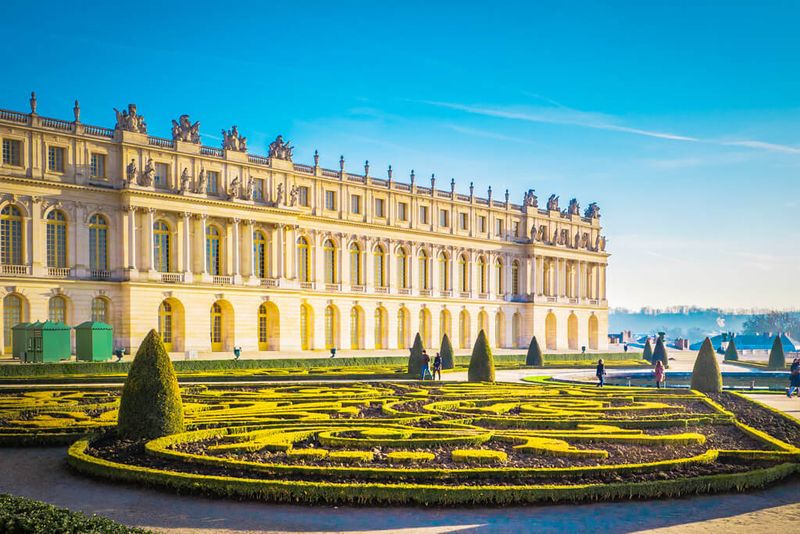
Symmetry, power, and an almost obsessive love of geometry — welcome to the Gardens of Versailles. Commissioned by King Louis XIV in the 17th century, these gardens were designed by landscape architect Andre Le Notre to reflect the absolute authority of the French monarchy.
Everything here is deliberate, precise, and impossibly grand.
Covering roughly 800 hectares, the gardens feature more than 50 fountains, 620 water jets, and hundreds of sculptures carved from marble and bronze. The Grand Canal stretches nearly 1.5 kilometers from the palace, reflecting the sky in a glassy ribbon that seems to extend forever.
Formal flower beds called parterres are replanted multiple times per year to keep them looking immaculate throughout every season.
On select summer weekends, the Grandes Eaux Musicales event activates all the fountains simultaneously to classical music, filling the gardens with sound and spectacle. The experience is genuinely theatrical.
Versailles Gardens became a UNESCO World Heritage Site along with the palace in 1979. Even if perfectly trimmed hedges are not usually your thing, the sheer scale of human ambition on display here is impossible not to admire.
Ryoan-ji Rock Garden — Japan
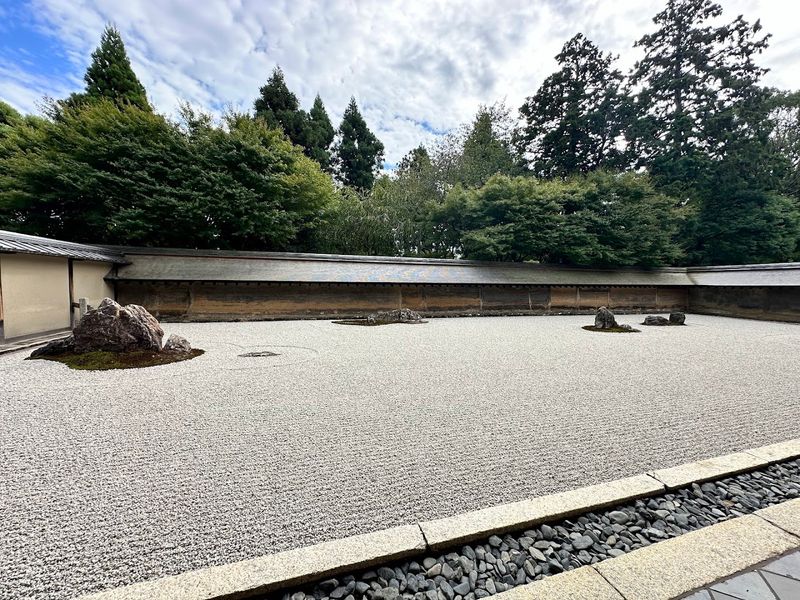
Fifteen rocks, some gravel, and centuries of debate — that is all it takes to create one of the most thought-provoking spaces in the world. The rock garden at Ryoan-ji temple in Kyoto, Japan, was created in the late 15th century and has puzzled visitors, monks, and scholars ever since.
Nobody knows for certain who designed it or what it is supposed to mean.
The garden measures just 30 by 10 meters, yet feels enormous in its simplicity. Fifteen moss-covered rocks are arranged in five clusters within a bed of carefully raked white gravel.
The unusual arrangement means that no matter where you stand along the viewing veranda, one rock is always hidden from view. Some say the design represents islands in a sea; others see a tiger crossing water.
Most people just sit quietly and feel something shift.
Ryoan-ji became a UNESCO World Heritage Site in 1994 as part of the Historic Monuments of Ancient Kyoto. The surrounding temple grounds include a beautiful pond garden that contrasts wonderfully with the austerity of the rock garden.
Visiting during early morning, when crowds are thin and the raked gravel gleams in the soft light, is an experience that stays with you long after you leave.
The Lost Gardens of Heligan — England
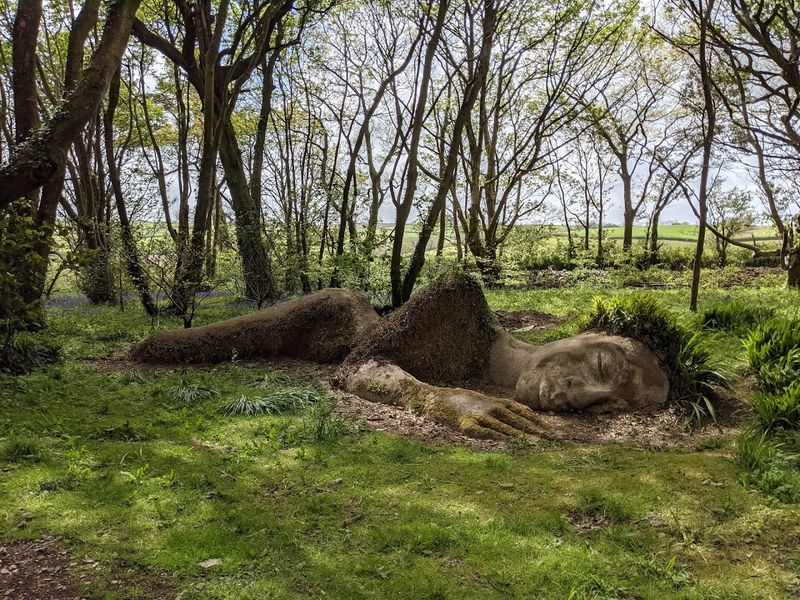
Somewhere in the Cornish countryside, a garden slept for over 70 years. The Lost Gardens of Heligan were once one of the grandest estates in England, but when World War One claimed the lives of many of the gardeners who maintained it, the grounds were swallowed by brambles, ivy, and time.
Their rediscovery in the 1990s by Tim Smit — who later founded the Eden Project — became one of the great horticultural rescue stories of the 20th century.
Today the restored gardens cover 200 acres and include a Victorian kitchen garden, a subtropical jungle valley, a walled flower garden, and mysterious woodland walks. Hidden throughout are quirky moss sculptures including the famous Mud Maid, a reclining human figure made entirely from living plants and soil that changes appearance with the seasons.
The gardens have a genuinely magical atmosphere, partly because restoration is ongoing and some areas still carry the wild, untamed feeling of rediscovery. Seasonal events, wildlife habitats, and working kitchen gardens make repeat visits worthwhile throughout the year.
Heligan is not just a pretty garden — it is a living history lesson, a conservation project, and a fairy tale rolled into one muddy, magnificent package.
Nong Nooch Tropical Garden — Thailand
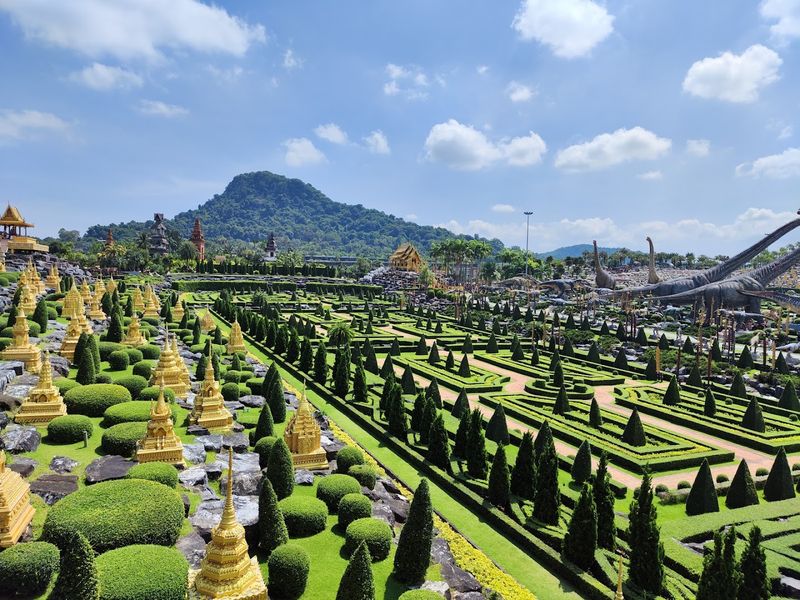
You could spend an entire day at Nong Nooch Tropical Garden and still not see everything. Covering around 600 acres near Pattaya in Thailand, this is one of Asia’s largest and most diverse botanical gardens.
It opened in 1980 after the Nongnooch family transformed their fruit plantation into a world-class horticultural attraction.
The garden is divided into more than 30 themed sections, each with a completely different look and feel. There is a French-style formal garden with symmetrical hedges, a replica Stonehenge, a cactus garden, a butterfly hill, and an enormous collection of cycads — ancient plants that have barely changed since the time of dinosaurs.
The sheer variety keeps things interesting around every corner.
Daily cultural shows featuring traditional Thai dance and elephant performances draw large crowds and add an entertainment dimension beyond the plants themselves. The garden’s palm collection is considered one of the finest in the world, and horticulture researchers visit regularly to study its rare specimens.
Families, plant enthusiasts, and casual tourists all find something to love here. Nong Nooch proves that a garden can be a whole world unto itself, not just a pretty place to stroll.
Boboli Gardens — Italy
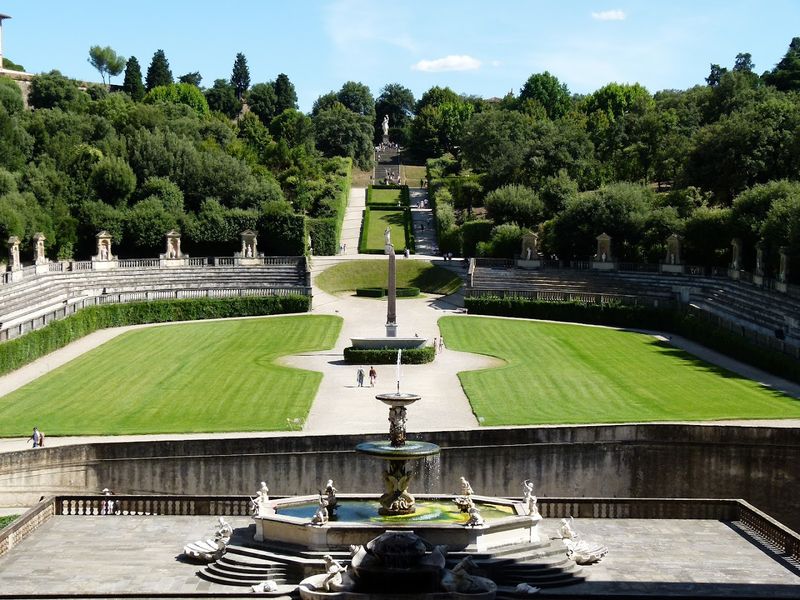
Behind the imposing walls of Florence’s Pitti Palace lies one of the finest examples of Italian Renaissance garden design ever created. The Boboli Gardens date back to 1550, making them nearly 500 years old and still going strong.
Cosimo I de Medici commissioned the garden, and the powerful Medici family used it as their private outdoor playground for generations.
Wander through cypress-lined avenues, past amphitheaters, grottos, and over 200 statues scattered throughout the grounds. The garden climbs the hillside behind the palace in a series of terraces, each offering increasingly dramatic views over Florence’s famous orange rooftops and the distant Tuscan hills.
The Isolotto, an oval island surrounded by a moat with a central fountain, is one of the garden’s most photogenic spots.
Today the Boboli Gardens form part of the Uffizi Galleries complex and are open to the public year-round. Early mornings are perfect for a peaceful walk before tour groups arrive.
The gardens cover 45,000 square meters and contain a porcelain museum, a costume gallery, and a small amphitheater still used for events. Few places combine art, history, and natural beauty quite so effortlessly as this remarkable hilltop garden.
Villa Ephrussi de Rothschild Gardens — France
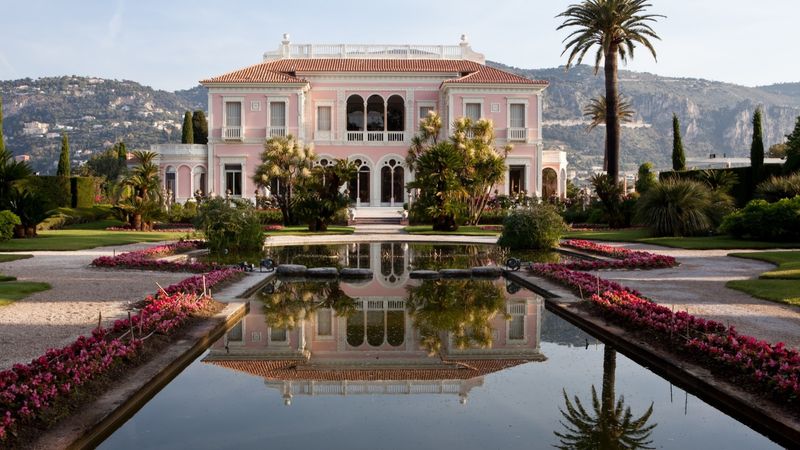
Imagine designing your garden to look like the deck of a luxury ocean liner — because that is exactly what Baroness Beatrice de Rothschild did. Built between 1905 and 1912 on the narrow Cap Ferrat peninsula in the South of France, Villa Ephrussi de Rothschild sits between the Mediterranean Sea and the Bay of Villefranche, with views of sparkling blue water on both sides.
The estate contains nine distinct themed gardens spread across seven acres. The main French garden features a long central fountain that performs choreographed water displays to classical music.
Surrounding it are a Japanese garden with a tea pavilion, a Florentine garden, a stone garden, a rose garden, and a Spanish garden, each carefully tucked into the hillside terrain.
Inside the villa, Baroness de Rothschild’s extraordinary collection of 18th-century furniture, Sevres porcelain, and Impressionist paintings is open to visitors alongside the gardens. The entire property was donated to the Academie des Beaux-Arts upon her death in 1934.
Visiting in May when the rose garden is in full bloom, with the sea glittering below, is the kind of afternoon that makes you briefly consider whether you chose the right career entirely.
Yuyuan Garden — China
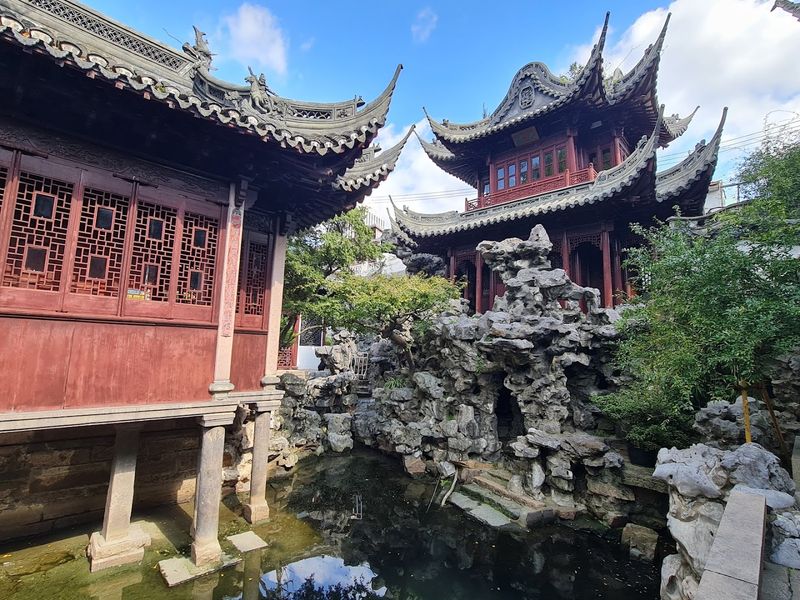
Right in the middle of one of the world’s busiest, noisiest cities sits a garden so peaceful it feels like a secret. Yuyuan Garden in Shanghai was built during the Ming Dynasty between 1559 and 1577 by a government official named Pan Yunduan, who wanted to create a tranquil retreat for his aging parents.
The name Yuyuan literally means Garden of Happiness.
The garden covers about five acres and packs an astonishing amount of detail into every corner. Visitors wind through moon gates, cross zigzag bridges over lotus ponds, and pass beneath dramatic rockery formations made from stacked yellow stones.
The Grand Rockery, standing nine meters tall, was considered an engineering marvel when it was built. Koi fish dart through the ponds beneath pavilions with upswept roofs decorated with dragons and mythological figures.
Yuyuan survived wars, occupations, and the rapid modernization of Shanghai over the centuries, making its preservation feel genuinely miraculous. The garden is surrounded by the lively Yuyuan Bazaar, where street food stalls and souvenir shops buzz with energy.
The contrast between the serene garden interior and the chaotic marketplace just outside its walls makes stepping through the entrance gate feel like passing through a portal to another era entirely.
Dubai Miracle Garden — United Arab Emirates
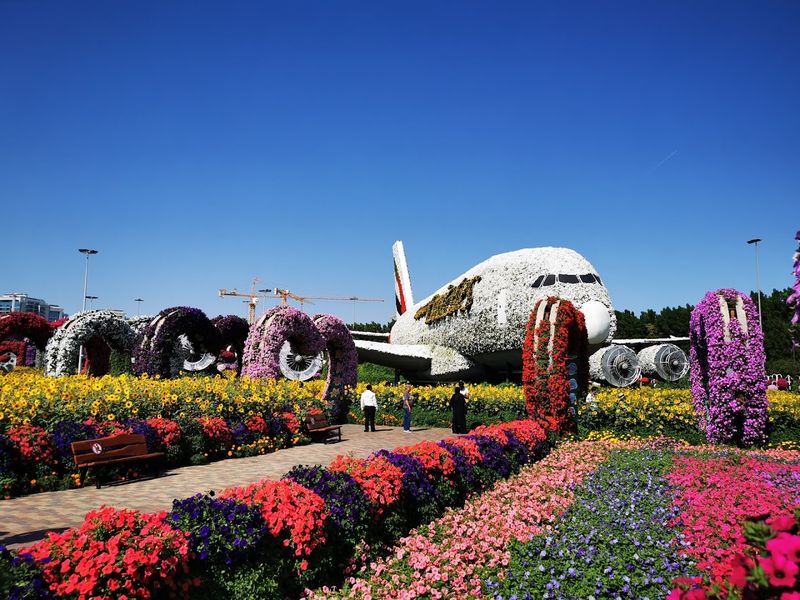
Growing flowers in the desert sounds like a terrible idea — and yet Dubai pulled it off spectacularly. Dubai Miracle Garden opened in 2013 and has grown into the world’s largest natural flower garden, covering 72,000 square meters of what was once barren desert.
During its season from November to April, over 150 million flowers bloom across the site in jaw-dropping arrangements.
The sculptures here are genuinely outrageous in the best possible way. A full-size replica of an Emirates Airbus A380 airplane is covered entirely in living flowers.
Giant castles, rotating carousels, heart-shaped arches, and even a floral reproduction of the Burj Khalifa tower rise from the desert ground. The garden recycles all its water using a drip irrigation system, making its existence even more impressive given the harsh climate surrounding it.
New themed displays are added every season, so returning visitors always find something fresh. The Butterfly Garden next door adds another layer to the experience, housing thousands of live butterflies in enclosed domes.
Dubai Miracle Garden is unapologetically over-the-top, which is kind of the whole point. In a city famous for doing things bigger and bolder than anyone thought possible, even its flowers have to go the extra mile.
Hamilton Gardens — New Zealand
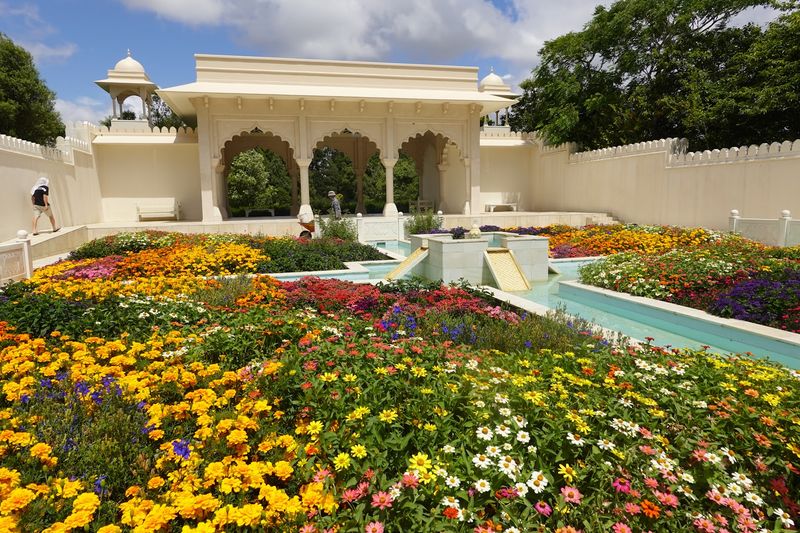
Hamilton Gardens in New Zealand takes a completely different approach to garden design — instead of showcasing one style, it recreates many. Located in Hamilton on the North Island, the park is divided into a series of enclosed Paradise Garden collections, each faithfully recreating a different historical or cultural garden tradition from around the world.
It is essentially a time machine you can walk through.
Visitors can explore a tranquil Japanese Garden of Contemplation, a lush Indian Char Bagh Garden, a fragrant Tudor Kitchen Garden, a dramatic Modernist Garden, and a colorful Chinese Scholar’s Garden, among many others. Each garden is enclosed by walls, hedges, or fences, so stepping from one to the next genuinely feels like entering a different world.
The attention to historical accuracy in plant selection and design is remarkable.
Hamilton Gardens has won multiple international awards, including being named the world’s best garden at the International Garden Tourism Awards. Admission to most garden areas is free, making it one of the best value attractions in New Zealand.
The surrounding park along the Waikato River adds extra space for picnics and relaxed strolling. For anyone curious about how different cultures throughout history have thought about nature, this garden is an absolute treasure chest.
The Alnwick Garden — England
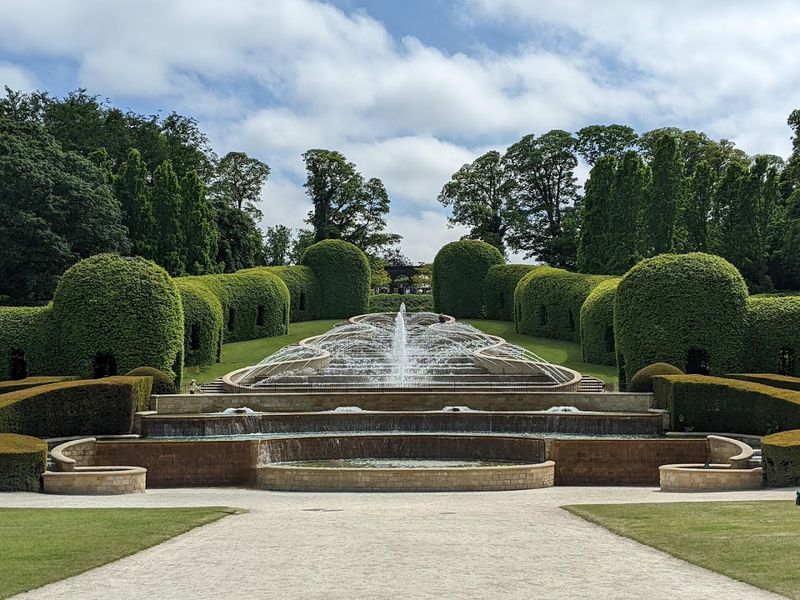
Most gardens want you to smell the roses. This one wants you to keep your hands firmly in your pockets.
The Alnwick Garden in Northumberland, England, is home to the Poison Garden — a locked enclosure filled with around 100 species of deadly, dangerous, and narcotic plants from around the world. Guided tours are the only way in, and touching anything is strictly forbidden.
The Poison Garden includes plants like belladonna, hemlock, and strychnine, all growing innocently behind black iron gates stamped with skull-and-crossbones warnings. The Duchess of Northumberland, who redesigned Alnwick’s gardens starting in 1997, deliberately wanted to create a garden that would captivate teenagers who might otherwise find horticulture boring.
Mission spectacularly accomplished.
Beyond the deadly plants, the rest of Alnwick Garden is stunningly beautiful. The Grand Cascade — a dramatic series of water jets shooting from stone steps — is one of the most impressive water features in any garden in Britain.
A giant treehouse restaurant, ornamental rose garden, and bamboo labyrinth round out the experience. The garden sits next to Alnwick Castle, which was used as Hogwarts in the early Harry Potter films, giving the whole place an extra layer of magical atmosphere.
Claude Monet’s Garden — France
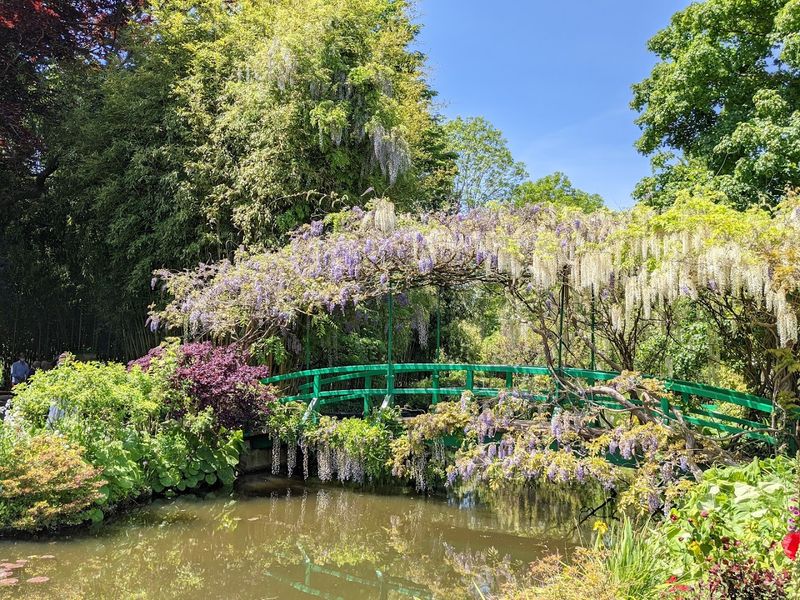
Claude Monet did not just paint gardens — he engineered one specifically to paint. The garden at his home in Giverny, Normandy, was Monet’s greatest long-term creative project, and he tended it obsessively for over 40 years until his death in 1926.
He employed six full-time gardeners and personally directed every planting decision, treating the garden as a living canvas.
The property is divided into two distinct sections. The Clos Normand in front of the house is a riot of color, with climbing roses, nasturtiums, and poppies tumbling over arching metal trellises in the impressionist style Monet loved.
Across the road, connected by a tunnel, lies the Water Garden — the source of his most famous series of paintings. The Japanese bridge draped in wisteria over the lily pond is one of the most recognizable scenes in art history.
Monet began painting his Water Lilies series in 1896 and produced over 250 paintings of this single garden pond before his death. The garden at Giverny was meticulously restored in the 1970s and reopened to visitors in 1980.
Walking through it feels less like visiting a garden and more like stepping physically inside one of the most beloved collections of paintings ever created.
Kenrokuen Garden — Japan
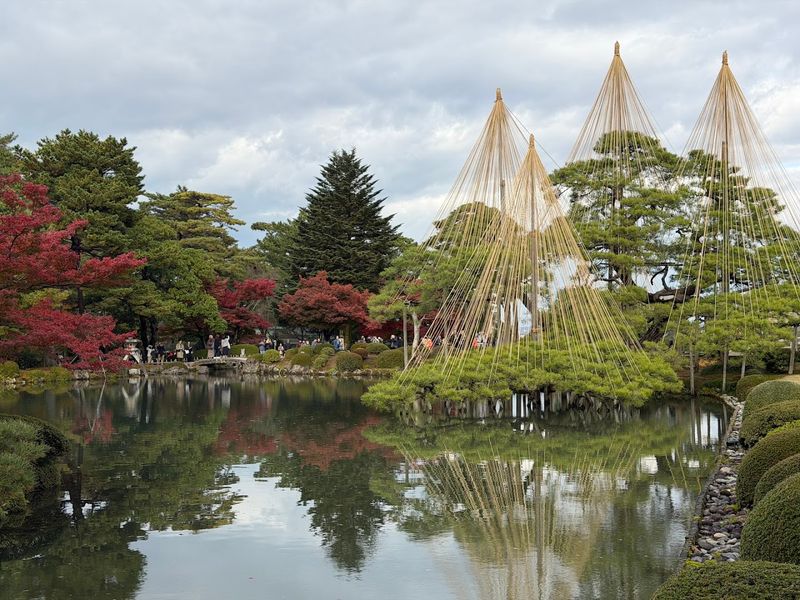
A garden designed to be beautiful in every single season is an ambitious goal. Kenrokuen in Kanazawa, Japan, pulls it off with effortless grace, and has been doing so for nearly 400 years.
The name Kenrokuen means Garden of Six Sublimities, referring to the six qualities that classical Chinese landscape theory considered essential to a perfect garden: spaciousness, seclusion, artifice, antiquity, water, and panoramic views.
Spring brings cherry blossoms that drift across the pond like pink snow. Summer fills the garden with deep green foliage and the sound of frogs.
Autumn transforms it into a blazing canvas of red and gold maples. Winter is perhaps the most dramatic season of all, when rope supports called yukitsuri are attached to the pine trees to protect their branches from heavy snowfall, creating elegant cone shapes throughout the garden.
The garden covers 11.4 hectares and includes two large ponds, over 8,000 trees, 183 stone lanterns, and numerous teahouses. The oldest fountain in Japan — powered entirely by natural water pressure — still operates within its grounds.
Kenrokuen consistently ranks among Japan’s most visited attractions, and every single visit, regardless of the season, offers something worth remembering. It is the kind of place that rewards patience and slow walking.
Nong Nooch Dinosaur Garden — Thailand
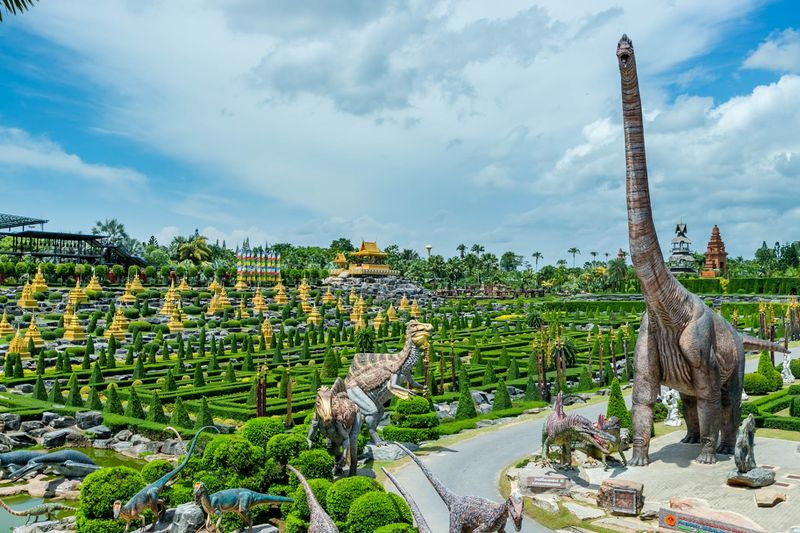
Somewhere between a botanical garden and a prehistoric theme park, the Dinosaur Garden at Nong Nooch is one of those places that is impossible to categorize and absolutely unforgettable. Tucked within the vast grounds of Nong Nooch Tropical Garden near Pattaya, this section features dozens of life-size dinosaur replicas positioned dramatically among tropical plants, as if the Jurassic era and a Thai botanical garden somehow collided.
The sculptures range from towering T-Rex models frozen mid-roar to gentler herbivores half-hidden in the undergrowth. The combination of realistic dinosaur figures with lush tropical foliage creates a surprisingly immersive atmosphere.
Children absolutely love it, but even adults tend to stop and stare when a 10-meter dinosaur appears around a bend in the garden path.
The Dinosaur Garden adds a playful, imaginative dimension to what is already one of Asia’s most diverse botanical collections. It works because the surrounding plant life is genuinely spectacular on its own — the dinosaurs simply give younger visitors an irresistible reason to keep exploring deeper into the greenery.
For families traveling through Thailand, this garden section consistently ranks as a highlight of the entire trip. It proves that education, creativity, and sheer fun can grow just as well as any flower.
Singapore Botanic Gardens — Singapore
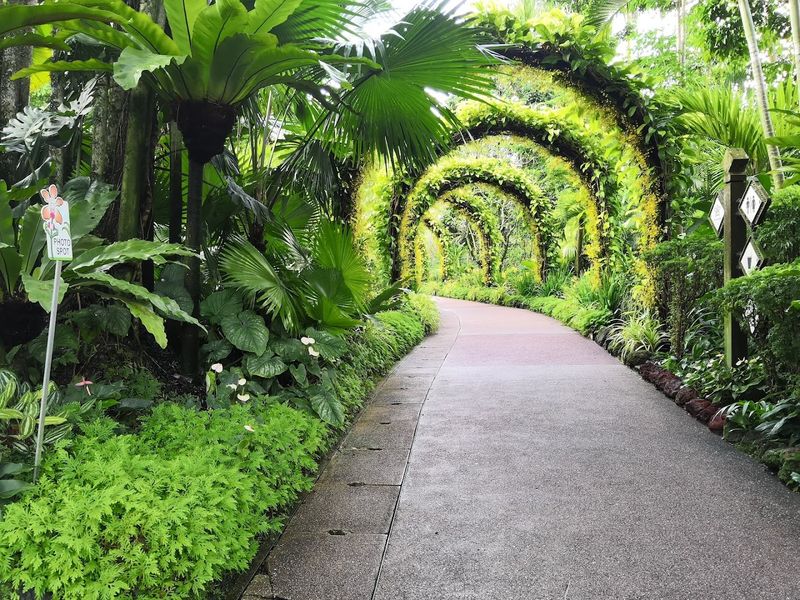
Not many city parks can claim a UNESCO World Heritage listing, but Singapore Botanic Gardens earned one in 2015 — the first tropical botanic garden in the world to receive that honor. Founded in 1859, the garden spans 82 hectares right in the heart of one of Asia’s most modern cities, offering a genuine green sanctuary from the urban buzz surrounding it.
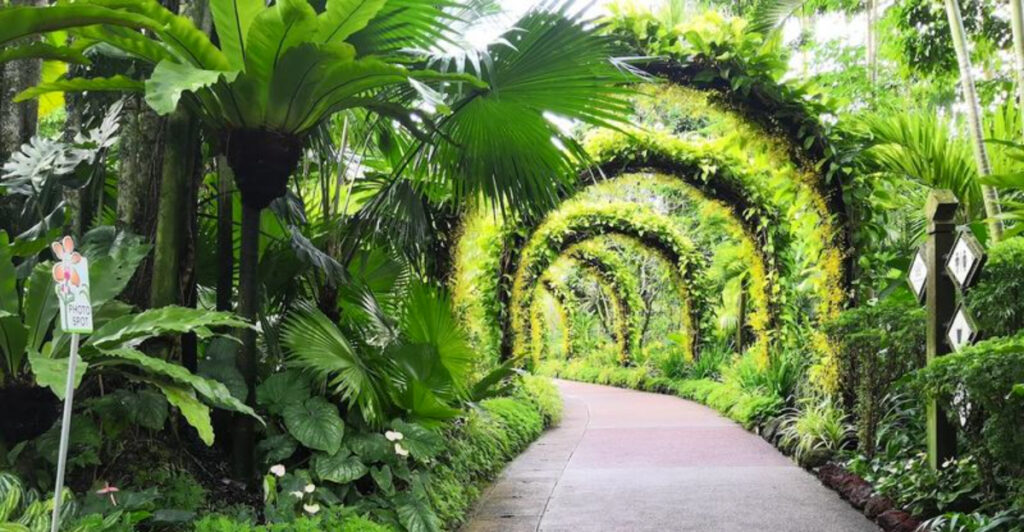
The crown jewel is the National Orchid Garden, where over 1,000 species and 2,000 hybrids of orchids are displayed across three hectares of manicured hillside. The collection includes the Vanda Miss Joaquim, Singapore’s national flower, as well as orchids named after visiting dignitaries including Princess Diana and Nelson Mandela.
The VIP Orchid Garden, where these celebrity blooms are kept, feels wonderfully absurd in the best possible way.
Beyond orchids, the gardens include a rainforest fragment that has never been cleared, a ginger garden, evolution garden, and a popular Symphony Lake where free outdoor concerts are held on weekends. Admission to most of the gardens is completely free, making it one of the most accessible world-class attractions anywhere.
Early morning joggers, picnicking families, and serious botanists all share the same paths here, which says everything about what a truly great garden can be.
Share this story