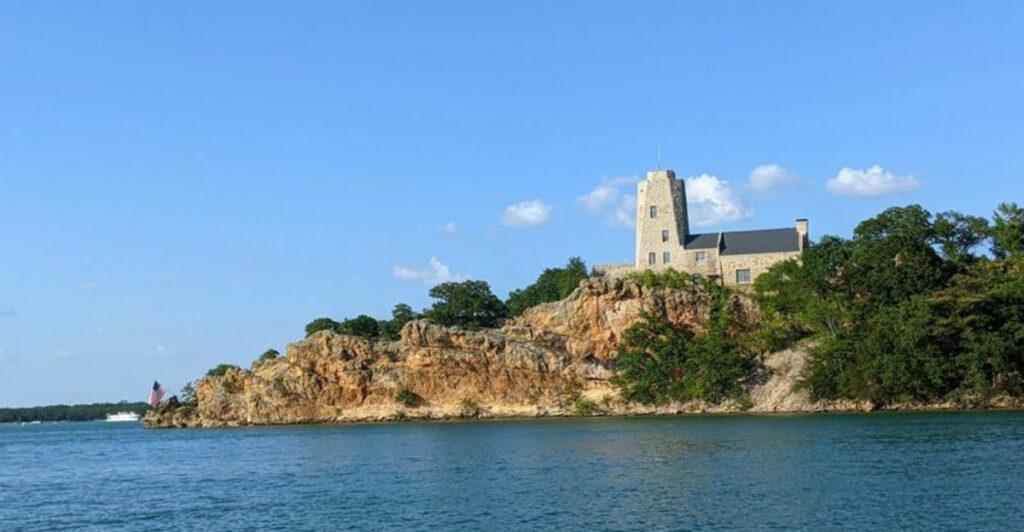
There is a stone tower rising above a sparkling lake in southern Oklahoma that looks like it belongs in a storybook. Most people drive right past it without knowing it exists, and that is honestly their loss.
Built during one of the hardest times in American history, this tower carries a story that is equal parts dramatic, inspiring, and surprising. By the time you read through everything this place has to offer, you will be checking your calendar to plan a visit.
Where Exactly You Will Find This Castle
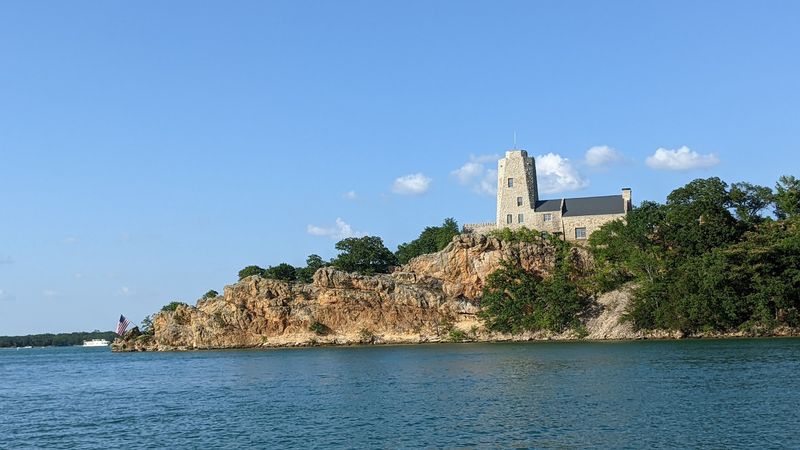
Tucker Tower sits at 18407 Scenic Highway 77, Ardmore, OK 73401, right on the edge of Lake Murray in the heart of southern Oklahoma. The drive along Scenic Highway 77 gives you a preview of what is coming, with the lake glittering through the trees as you approach.
Lake Murray State Park is one of the oldest state parks in Oklahoma, and Tucker Tower is its crown jewel. The park spans thousands of acres and offers camping, swimming, and boating, but the tower is the spot that makes first-time visitors stop and say something out loud.
The address is easy to plug into any navigation app, and the route is straightforward from Ardmore, which is just off Interstate 35. You can reach the site in under 15 minutes from downtown Ardmore.
Parking is available near the nature center at the base of the tower, and a small state park fee applies for out-of-state visitors. The tower is open every day from 9 AM to 4:15 PM, making it a reliable stop any day of the week.
The Remarkable Story Behind the Tower
Few buildings in Oklahoma carry as much historical weight as this one. Tucker Tower was constructed in 1933 as part of President Franklin D.
Roosevelt’s New Deal program, a sweeping effort to create jobs for Americans during the Great Depression.
The tower was originally planned as a presidential retreat, intended to serve as a getaway for President Roosevelt himself. That plan never came to fruition, but the construction went forward and produced something genuinely extraordinary.
Workers shaped native Oklahoma stone by hand, crafting walls and archways that have held strong for more than 90 years.
The project was tied closely to the construction of the Anadarko Basin dam that created Lake Murray, meaning the tower and the lake were essentially born at the same time. Oklahoma Governor William H.
Murray, nicknamed “Alfalfa Bill,” was a driving force behind the lake and park project. The tower carries a legacy that blends political history, economic hardship, and remarkable craftsmanship into one structure you can actually walk through and touch today.
What the Tower Looks Like Up Close
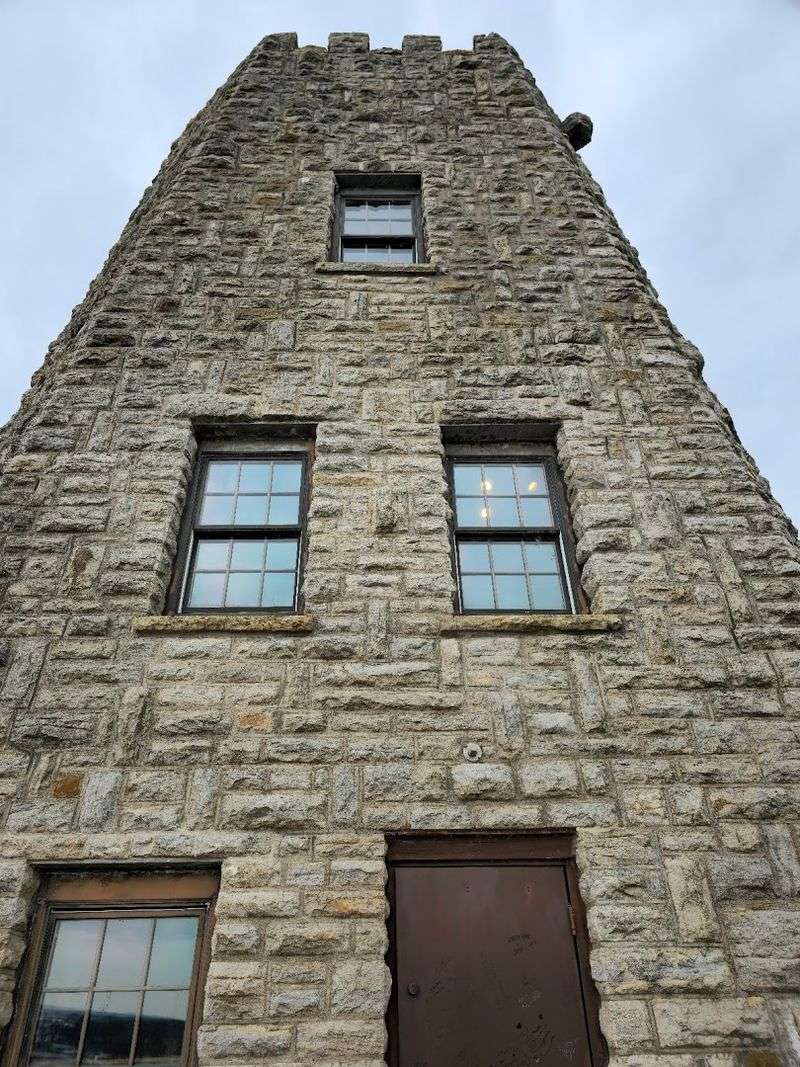
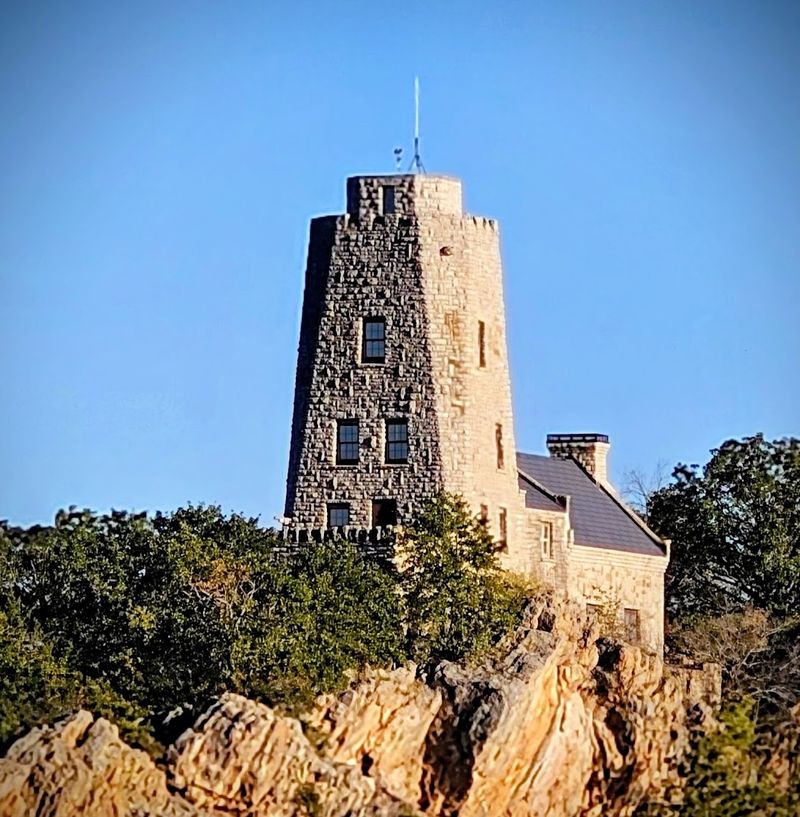
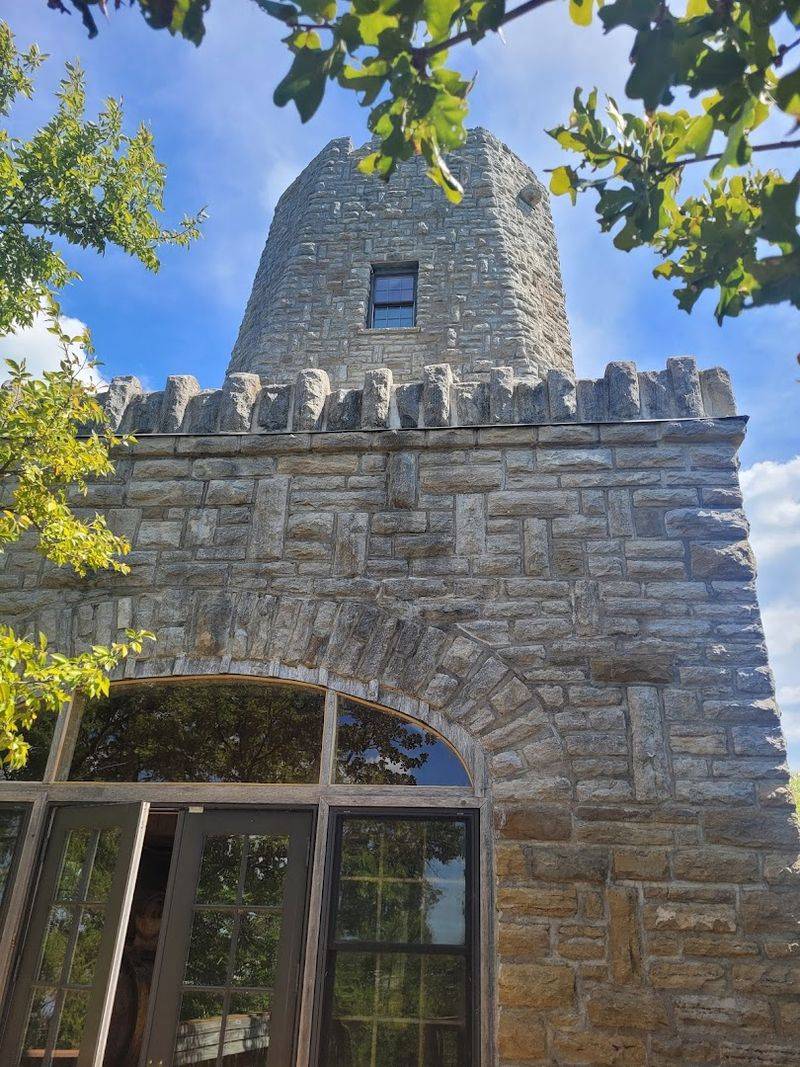
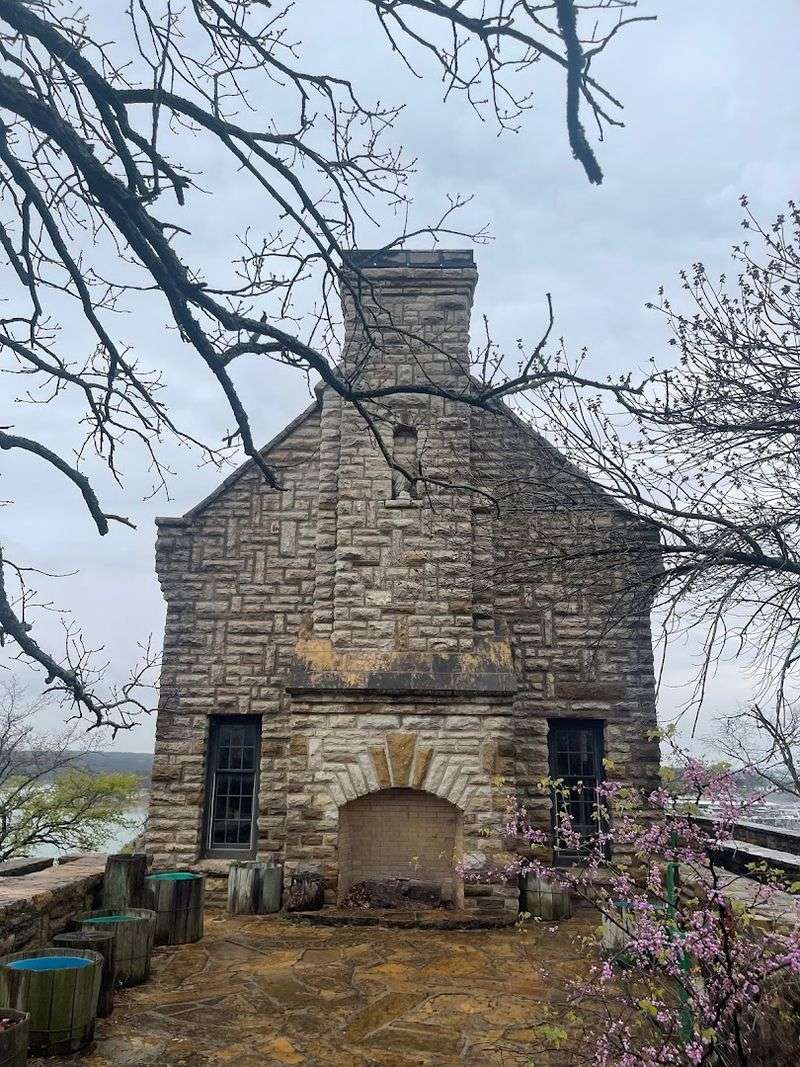
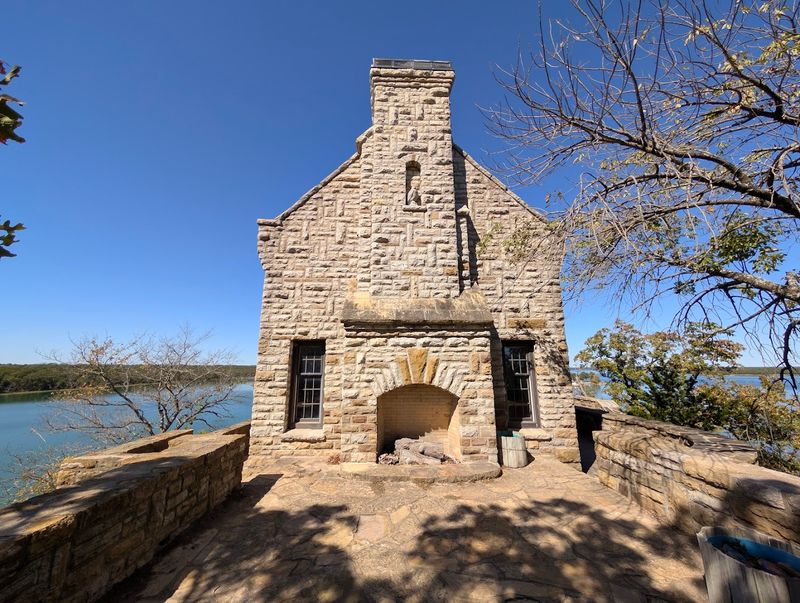
The first time you see Tucker Tower in person, the word that comes to mind is “castle.” The structure is built entirely from native Oklahoma limestone and sandstone, and the natural variation in the rock gives the walls a texture that no modern building can replicate.
The tower rises several stories above the rocky bluff it sits on, with narrow windows, stone archways, and a silhouette that genuinely looks like something out of medieval Europe. The fact that it sits directly above the lake makes the visual effect even more dramatic, especially on a clear day when the water reflects the sky below it.
Up close, the craftsmanship is even more impressive. The stones are fitted together with a precision that is hard to believe when you consider the tools available in 1933.
Moss and lichen have settled into the older sections of the wall, giving the exterior a weathered quality that feels earned rather than artificial. The building does not try to impress you with size alone.
It earns your attention through detail, and every angle offers something new worth noticing.
The Nature Center at the Base
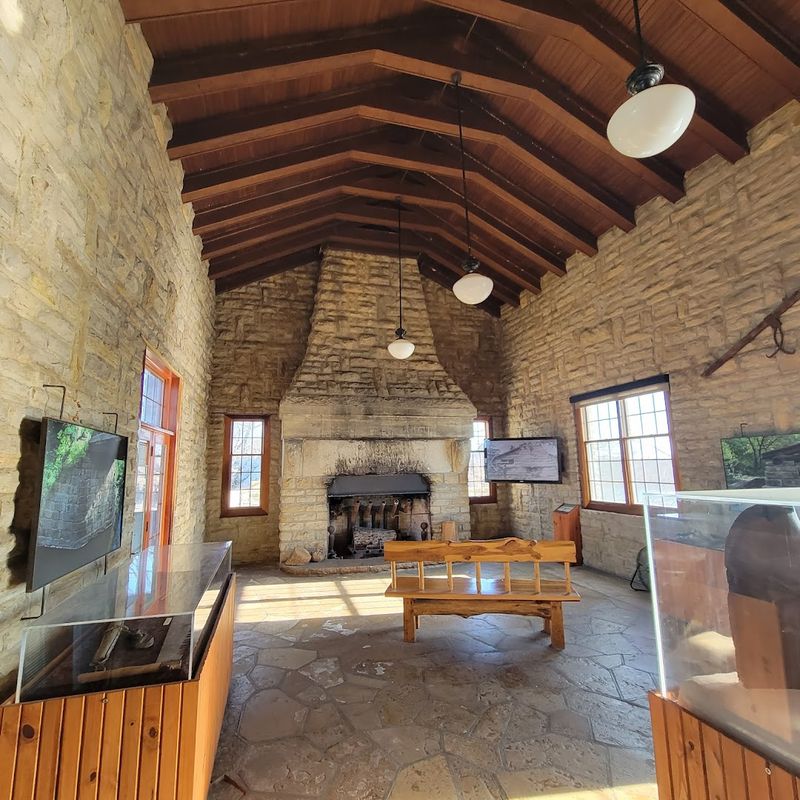
Before you even start the walk up to the tower, there is a full nature center waiting at the base near the parking area. Many visitors almost skip it in their eagerness to reach the tower, and that would be a real mistake.
The center houses exhibits on Oklahoma wildlife, the ecology of Lake Murray, and the natural history of the surrounding region. Live snakes are on display in cases, which tends to produce a wide range of reactions from visitors depending on their feelings about reptiles.
The exhibits are well-maintained and genuinely informative without feeling like a lecture.
Kids can ask for a Junior Park Naturalist booklet, which turns the visit into an interactive challenge. They work through the exhibits, answer questions, and earn a badge when they complete the program.
Public restrooms are available here, which is worth knowing before you tackle the climb to the tower. The nature center also has fans running inside, which is a very welcome detail during Oklahoma summer visits when the heat outside is doing its absolute best to discourage you.
The Climb to the Top
A spiral staircase winds its way from the ground floor all the way to the top of the tower, and it is one of those staircases that rewards patience. The steps are steep and narrow in places, so comfortable shoes are genuinely recommended rather than just a polite suggestion.
At each level, the staircase opens onto a landing where display cases hold artifacts related to the tower’s construction and the history of Lake Murray State Park. You can stop, catch your breath, and actually learn something useful at the same time, which makes the climb feel purposeful rather than just physically demanding.
The staircase has no elevator or accessible alternative, so visitors with limited mobility should be aware of that before making the trip out. For everyone else, the climb takes only a few minutes and the reward waiting at the top makes every step worthwhile.
The walls along the staircase are the original stone, and you can run your hand along them and feel the craftsmanship that Depression-era workers put into every course of rock. The climb itself becomes part of the story you take home.
The View from the Top of the Tower
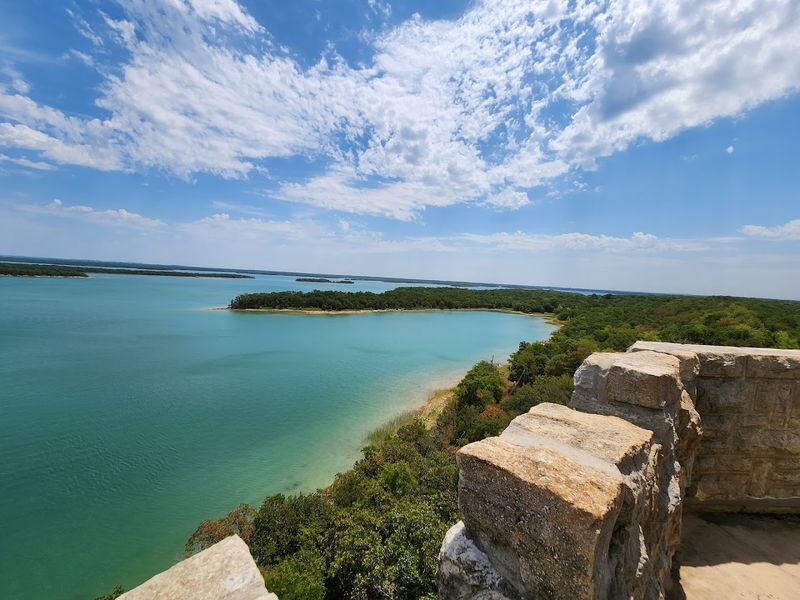
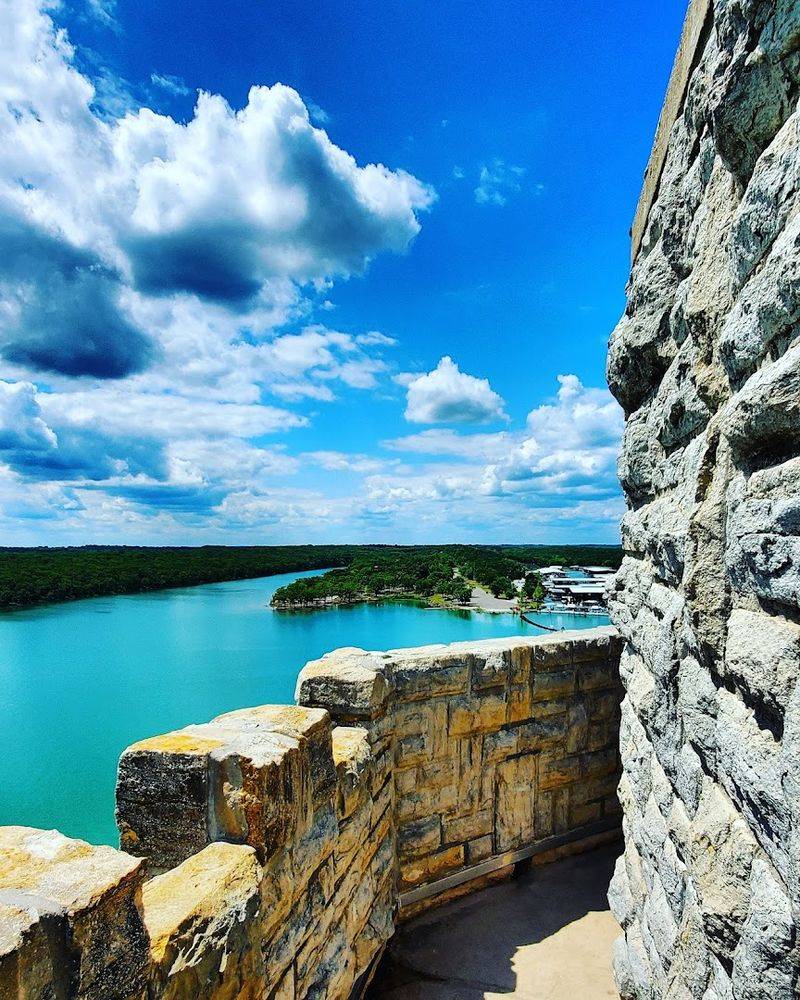
The view from the top of Tucker Tower is the kind that makes you stand still and just look for a while. Lake Murray spreads out in multiple directions below you, its clear blue water bordered by forested hills and rocky shorelines that stretch as far as you can see.
A full 360-degree panorama is available from the upper platform, and each direction offers something different. To one side you can spot the marina and boat docks.
In another direction the wooded park stretches toward the horizon. On a clear day the visibility is remarkable, and the elevation of the bluff adds to the height advantage the tower already provides.
Sunrise and sunset are particularly spectacular from this vantage point, and several visitors have noted that the golden light on the water during those hours is worth timing your visit around. Midday visits are great for photography when the lake color is at its most vivid blue.
The wind tends to pick up at the top, so loose items in pockets deserve a second thought before you step out onto the platform. The view genuinely lives up to every expectation.
History Displays Inside the Tower
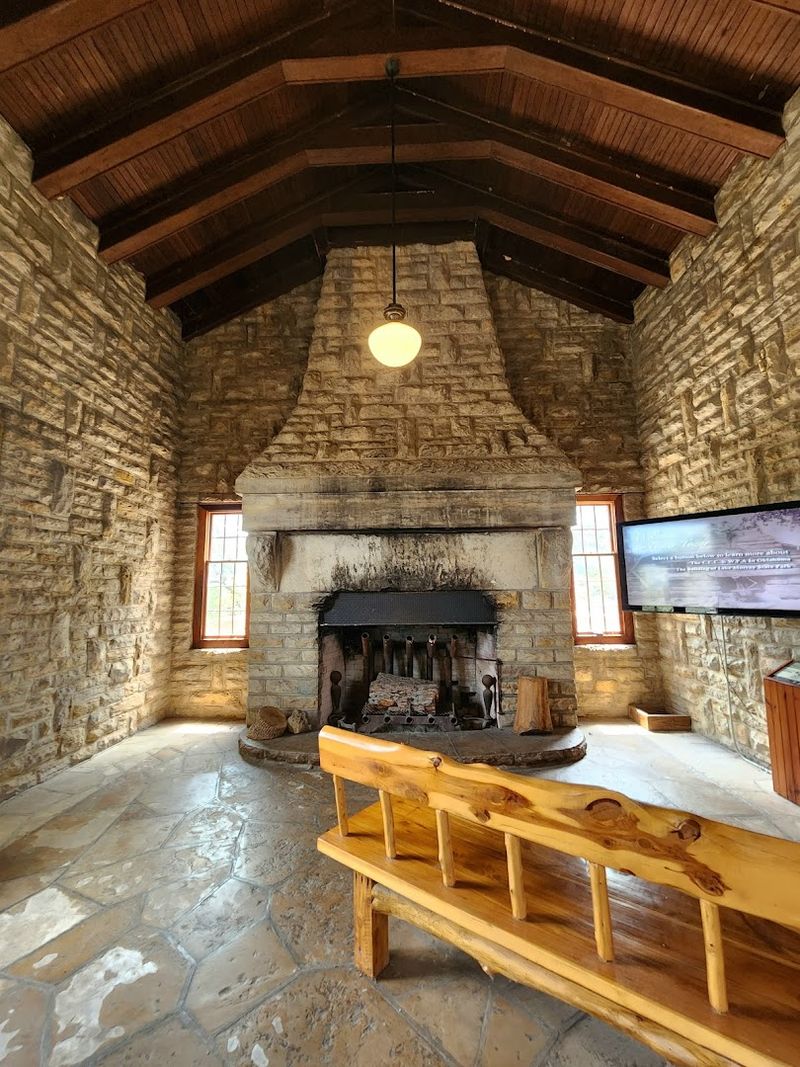
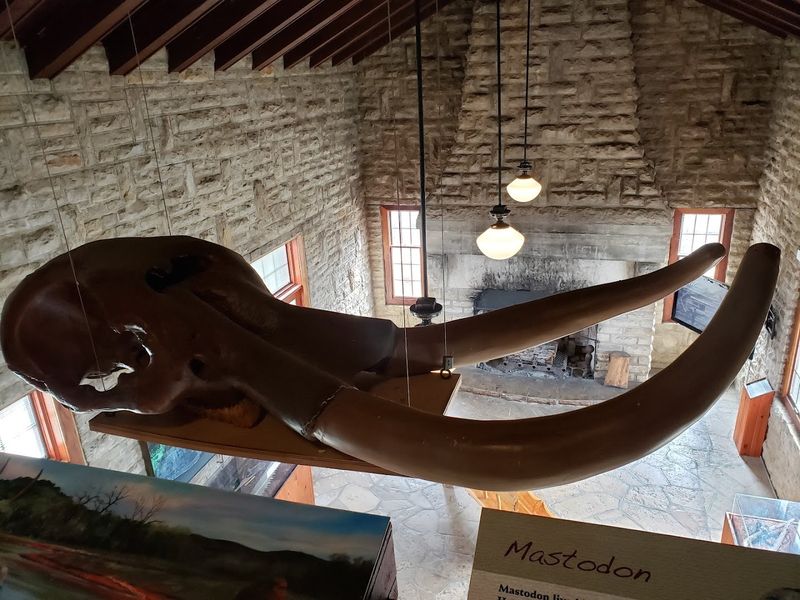
The inside of Tucker Tower functions as a layered museum, with each floor dedicated to a different chapter of the story. The ground floor introduces the New Deal context and explains why the tower and the lake were created together during the 1930s.
Upper floors hold artifact cases with objects recovered from the construction era, along with photographs that show what the landscape looked like before the dam was built and the lake filled in. Seeing the before-and-after transformation of the land is one of those details that changes how you look at the lake once you step back outside.
Short videos play on the lower level, giving visitors a more dynamic way to absorb the history without having to read every panel. The combination of video, photographs, physical artifacts, and the building itself creates an experience that feels complete rather than fragmentary.
History museums can sometimes feel like homework, but Tucker Tower avoids that trap by surrounding you with the actual place where the history happened. The stone walls are not just a backdrop.
They are the exhibit, and that makes every display inside feel more immediate and real.
Lake Murray and the Surrounding Park
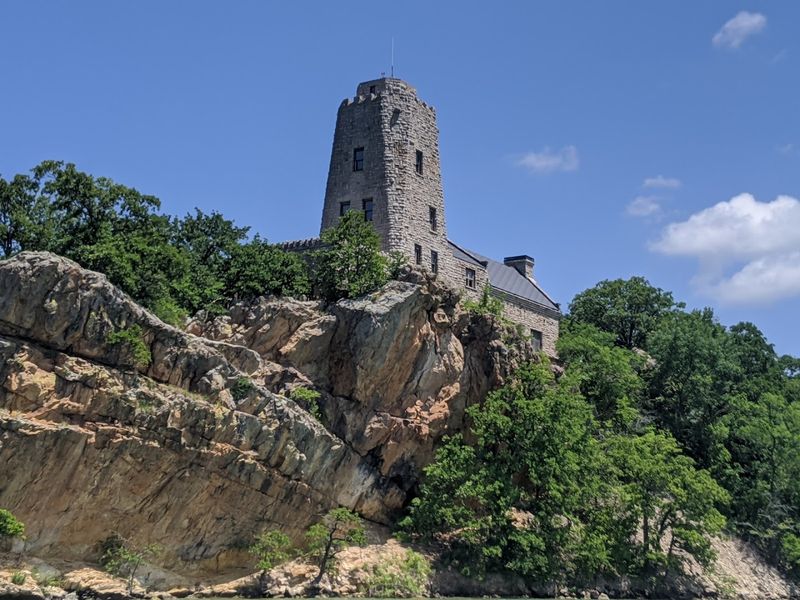
Lake Murray itself is one of Oklahoma’s most beloved recreational lakes, and Tucker Tower sits within the larger Lake Murray State Park, which offers far more than just the tower. The park covers over 12,000 acres and includes campgrounds, a marina, swimming areas, and miles of trails.
The water at Lake Murray is notably clear compared to many Oklahoma lakes, and the blue color on a sunny day is genuinely striking. Boating, kayaking, and fishing are all popular activities, and the marina offers rentals for visitors who did not bring their own equipment.
A beach area near the lodge draws families looking for a full day out rather than just a quick stop.
Camping spots are available less than ten minutes from Tucker Tower, making it easy to combine the historical visit with an overnight stay in the park. The combination of history, natural scenery, and outdoor recreation in one location is what makes Lake Murray State Park such a consistently popular destination for Oklahoma families and travelers passing through on Interstate 35.
The park rewards visitors who give it more than a single afternoon.
Wildlife and Nature Around the Tower
The natural setting around Tucker Tower is home to a healthy variety of Oklahoma wildlife, and keeping your eyes open during the walk between the nature center and the tower is well worth the effort. White-tailed deer are commonly spotted in the early morning and late afternoon hours near the tree line.
Birds are plentiful throughout the park, and the rocky bluff around the tower provides habitat for species that prefer elevated, open terrain. One visitor reportedly surprised a vulture perched on the upper landing of the tower, which is exactly the kind of unexpected encounter that makes outdoor visits memorable in ways a brochure never quite captures.
The wooded areas around the path to the tower also harbor the kind of plants that reward careful walkers. Poison ivy grows along some sections of the trail, particularly on trees with vines, so staying on the established path and keeping curious hands away from unfamiliar vegetation is genuinely good advice.
The nature center at the base covers local wildlife in detail, so stopping there first gives you a useful introduction to what you might encounter on the short hike up to the tower itself.
Tips for Planning Your Visit
Tucker Tower is open every day of the week from 9 AM to 4:15 PM, which makes scheduling a visit fairly flexible. Arriving earlier in the day tends to mean fewer crowds and cooler temperatures, both of which make the climb more comfortable.
Out-of-state visitors pay a parking fee of around ten dollars, which can be paid online or at the ranger station nearby. Oklahoma license plate holders pay a reduced rate.
The tower itself and the nature center are free to enter once you are inside the park, which makes this an unusually good value for a historical and natural attraction of this quality.
Carrying water is strongly recommended, especially during warmer months, because the hike to the tower is short but the heat in southern Oklahoma during summer can be serious. Pets are welcome on the grounds, which is a detail that traveling pet owners genuinely appreciate.
The restrooms at the nature center are clean and well-maintained, so using them before starting the climb is a practical move. For questions or to confirm current hours, you can reach the site at (580) 223-2109 or visit lake-murray.org/tucker-tower for updated information before your trip.
A Great Spot for Families and Kids
Tucker Tower has a genuine knack for keeping kids engaged, which is not something every historical landmark can claim. The multi-level museum format means children are constantly moving upward toward a goal, and each landing offers something new to look at rather than just more text on a wall.
The Junior Park Naturalist program at the nature center gives younger visitors a structured way to interact with the exhibits. They collect information, answer questions from the booklet, and earn a badge at the end, which turns a history lesson into something that feels like an adventure.
Children as young as six have been known to ask to come back for a second visit after completing the program.
The live snake display in the nature center is a reliable crowd-pleaser for the younger set, even if it produces mixed feelings in some of the adults accompanying them. The short walk between the nature center and the tower is manageable for most children, and the reward of the view from the top gives even reluctant young hikers a reason to keep moving.
Few places in Oklahoma offer this particular combination of education, history, and genuine excitement in one compact visit.
Why Tucker Tower Deserves a Place on Your Travel List
A 4.8-star rating from nearly 500 visitors is the kind of number that tends to reflect a genuine consensus rather than a lucky streak of good reviews. Tucker Tower earns that rating through a combination of things that are harder to manufacture than most attractions realize.
The history is real and specific, the setting is genuinely beautiful, the building is architecturally remarkable, and the experience of climbing to the top and looking out over Lake Murray is one that stays with you. There are no gimmicks here, no admission fees to the tower itself, and no long lines to navigate.
Oklahoma has a lot of natural beauty that travelers on Interstate 35 roll past without stopping, and Tucker Tower is one of the clearest examples of what gets missed in that rush. The tower took nearly a century to become widely known outside the state, and now that word has spread, it is drawing visitors from Texas and beyond who make a dedicated detour to see it.
Once you have stood at the top and watched the light move across that lake, the detour feels less like a side trip and more like the whole point of the journey.
Share this story