 Unearth The Voyage
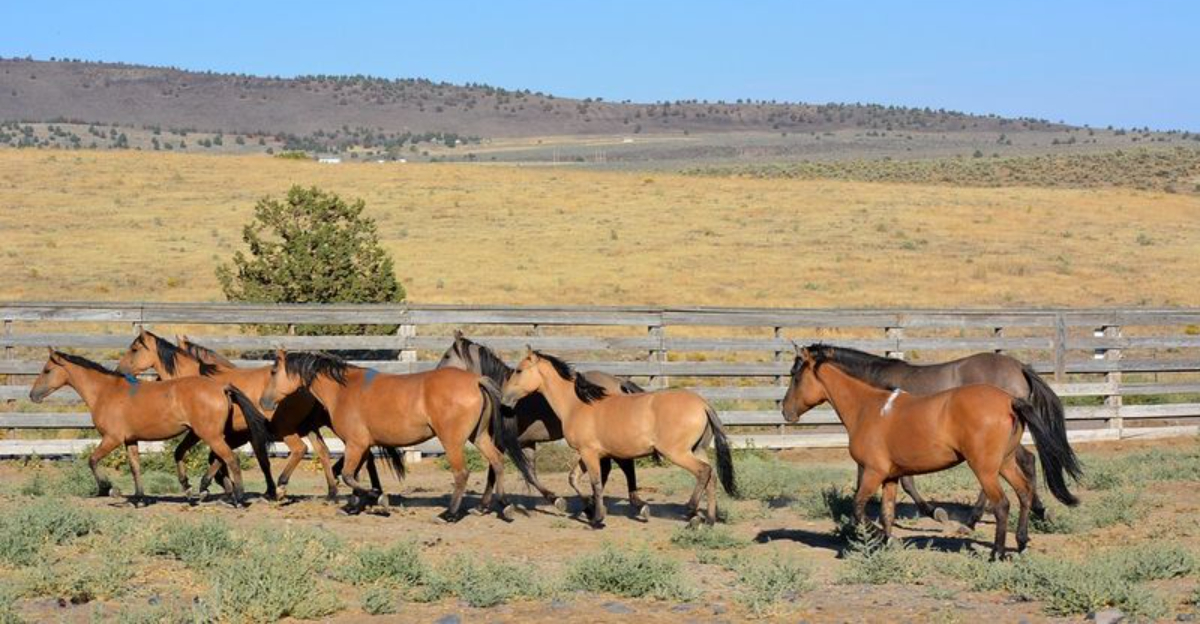
There is something genuinely thrilling about rounding a bend on a trail and finding a herd of wild horses just standing there, completely unbothered by your existence. The United States has more wild horse habitat than most people realize, from windswept Atlantic barrier islands to remote Nevada desert ranges.
I still remember the first time I spotted a band of mustangs in the distance and completely forgot what I was doing for a solid five minutes. Whether you are a first-time wildlife watcher or a seasoned road-tripper, these 13 spots are worth putting on your list.
Assateague Island National Seashore (Maryland & Virginia)
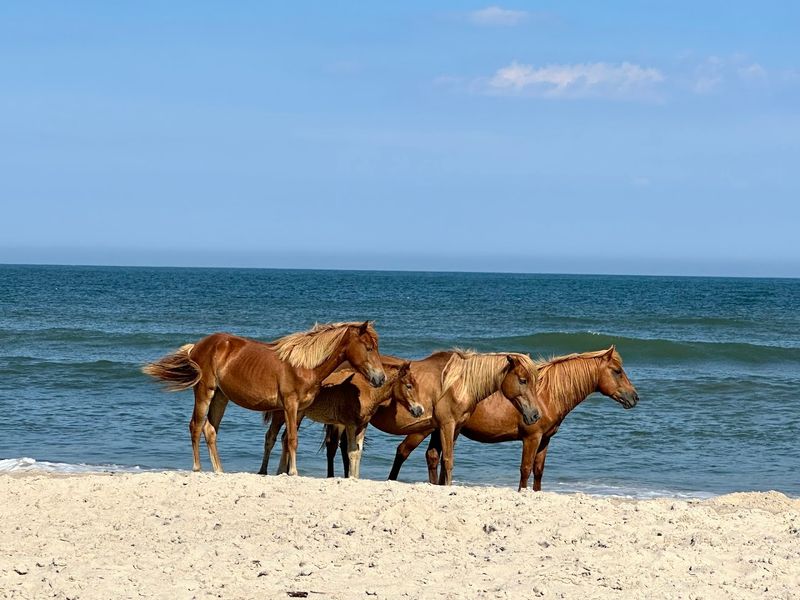
Forget the gift shop ponies you drew in third grade. The horses of Assateague Island are the real deal, wandering dunes, marsh edges, and beaches like they own the place (because, honestly, they do).
The herd is split between Maryland and Virginia sections, each managed separately. On the Maryland side, the National Park Service oversees the horses.
On the Virginia side, the Chincoteague Volunteer Fire Company manages the famous Chincoteague Ponies.
You can spot them from park roads, hiking trails, and right along the shoreline. Keep a respectful distance, do not feed them, and definitely do not try to pet one.
These horses have a reputation for being boldly curious around campsites, so secure your snacks. The island is accessible by car, and the campgrounds put you right in the middle of the action.
Cumberland Island National Seashore (Georgia)
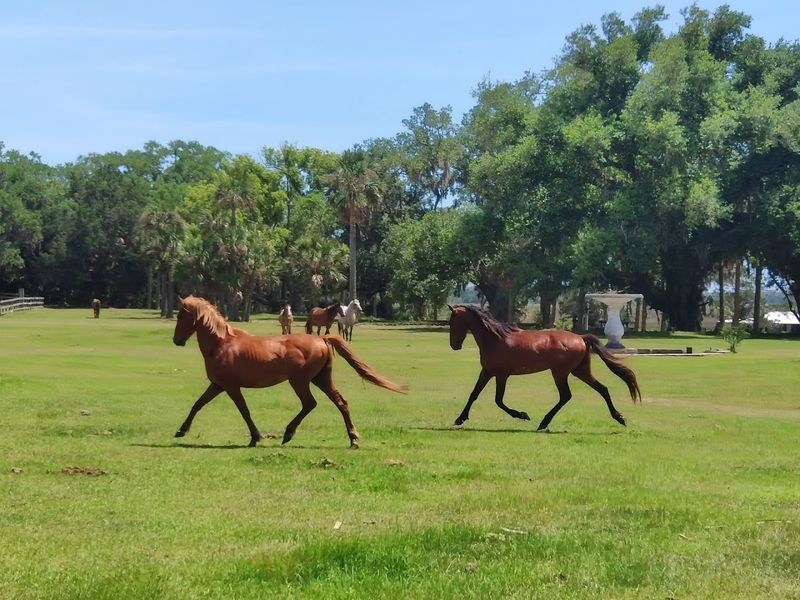
Cumberland Island has a certain untamed charm that feels almost cinematic. The feral horses here roam freely through maritime forests draped in Spanish moss, across open meadows, and right along the beach.
Getting here requires a ferry from St. Marys, Georgia, which keeps the crowds refreshingly low. Once on the island, you explore mostly on foot or by bike.
There are no paved roads, no fast food joints, and absolutely no Wi-Fi to distract you from the good stuff.
Horse sightings are common but never guaranteed, which is part of what makes spotting one so satisfying. The horses tend to appear near the beach and forest edges, especially in the early morning.
Pack water, wear good shoes, and bring binoculars. The island also has the haunting ruins of Dungeness mansion nearby, so the horses are really just one of many reasons to make this trip.
Shackleford Banks (Cape Lookout National Seashore, North Carolina)
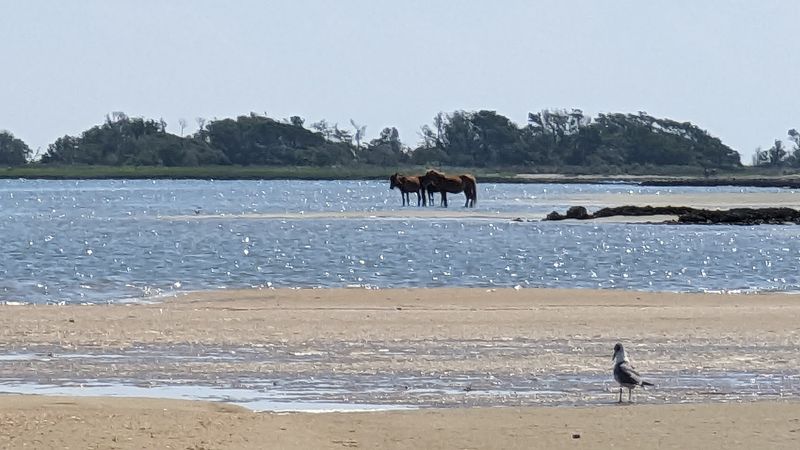
The horses of Shackleford Banks have been here for centuries, and they carry that energy with them. Known as Banker horses, this celebrated herd has Spanish colonial roots that make them genuinely unique among feral horse populations in the U.S.
You reach the island by passenger ferry from Beaufort or Harkers Island, which is already a fun part of the adventure. Once you arrive, there are no trails in the traditional sense, just open dunes, grassy flats, and wide beaches to wander.
The horses are often spotted grazing in the interior grassy areas or near the sound side of the island. Guided tours are available if you want expert eyes helping you find the herd.
The island has no facilities, so pack everything you need. With roughly 100 horses living on about nine miles of barrier island, your chances of a sighting are genuinely solid.
Grayson Highlands State Park (Virginia)
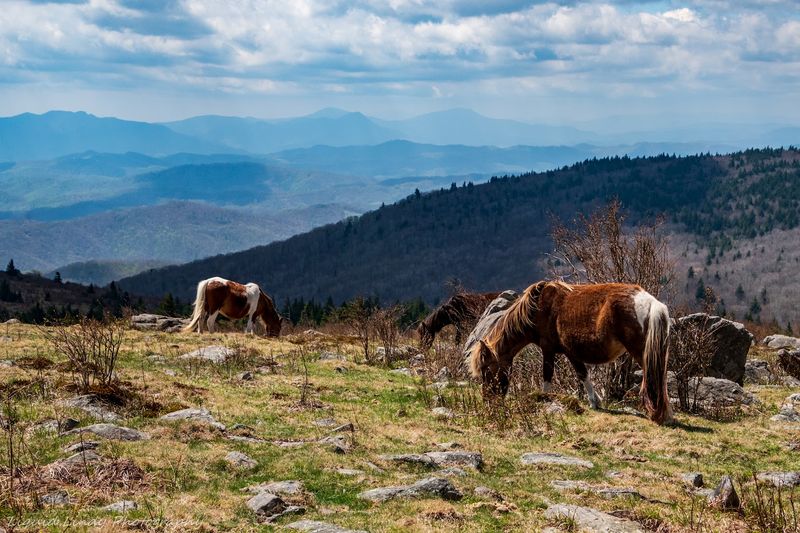
High elevation, sweeping mountain views, and wild ponies casually blocking the Appalachian Trail. Grayson Highlands delivers a hiking experience that is hard to match anywhere on the East Coast.
The park sits in the Blue Ridge Highlands of southwest Virginia, and the “wild ponies” here are technically feral ponies managed to help maintain the open grassy balds. They are accustomed to hikers but should still be treated as wildlife.
No feeding, no touching, no selfies taken at uncomfortably close range.
The most popular horse-spotting hikes include the Rhododendron Trail and the path toward Wilburn Ridge. Fall is spectacular here, with changing foliage framing the ponies beautifully.
Spring and summer bring wildflowers and foals, which are objectively adorable. The park is also a great base for multi-day AT section hikes.
Campsites are available, and waking up to ponies grazing outside your tent is a legitimate possibility worth planning your whole trip around.
Pryor Mountain Wild Horse Range (Montana/Wyoming)
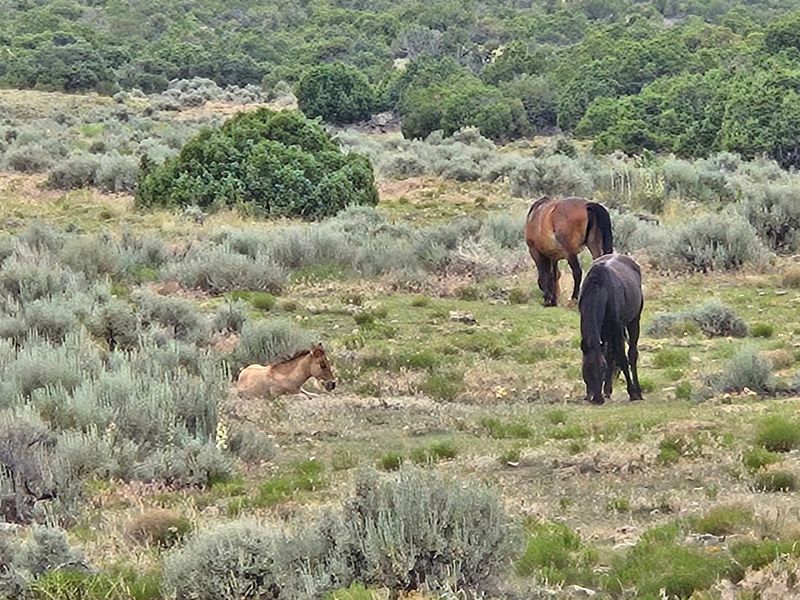
The Pryor Mountain Wild Horse Range is not just a place on a map. It is a legend with hoofprints.
Established in 1968, it was one of the first wild horse ranges formally protected in the United States.
The range straddles the Montana and Wyoming border, covering about 38,000 acres of canyon country, rocky ridges, and high desert terrain. The horses here are believed to have Spanish colonial ancestry, giving them a distinct look and a serious claim to American history.
BLM and NPS both have involvement in managing the range.
Getting here takes effort. Roads can be rough, especially after rain, so a high-clearance vehicle is strongly recommended.
The Bighorn Canyon National Recreation Area provides a good base and has visitor center resources to help you plan your route. Bring water, fuel up before you go, and allow more time than you think you need.
The remoteness is part of what makes it so rewarding.
Little Book Cliffs Wild Horse Range (Colorado)
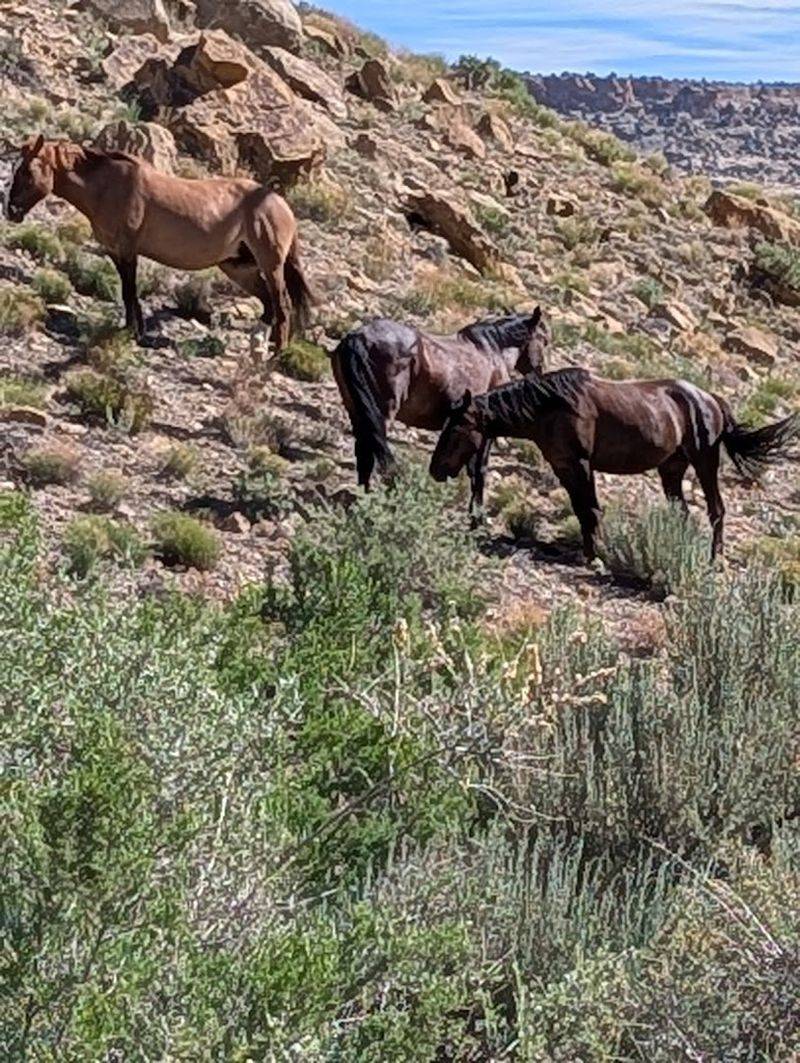
Not many places in Colorado were specifically set aside to protect wild horses, which makes Little Book Cliffs genuinely special. This range covers about 36,000 acres of canyon and mesa country just north of Grand Junction.
The terrain is rugged and scenic, with red rock formations and juniper-dotted slopes that look like a painting. Hiking is allowed, and several trails lead into the heart of the range where horse bands tend to roam.
The horses are divided into smaller bands, so sightings depend on where the groups have moved.
Spring Creek Basin is a popular entry point and offers some of the best access for visitors on foot. The BLM manages this area, and they occasionally post updates on herd locations, which is worth checking before your visit.
Cell service is limited out here, so download any maps in advance. Photographers love this spot because the open terrain makes framing a clean shot much easier than in dense woodland areas.
Sand Wash Basin Herd Management Area (Colorado)
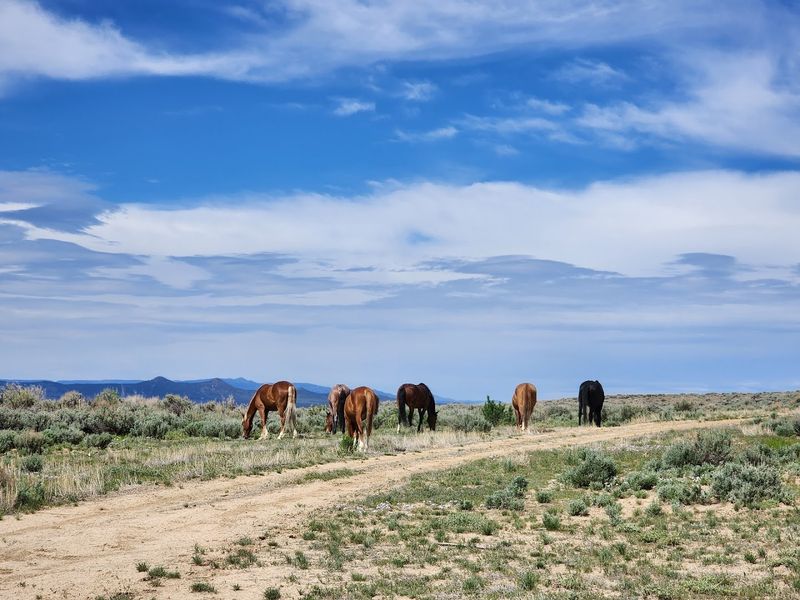
Sand Wash Basin is a photographer’s dream and a horse-lover’s paradise. The wide-open sagebrush and mesa terrain makes spotting wild horse bands dramatically easier than in areas with dense timber or rugged canyons.
Located in northwest Colorado near the town of Maybell, this HMA covers roughly 157,000 acres. The herd typically numbers between 150 and 350 horses, depending on management activities.
That is a lot of mustangs spread across a lot of landscape, so patience and binoculars are your best tools.
A popular viewing loop road allows visitors to drive through parts of the basin without needing a high-clearance vehicle in dry conditions. Mornings and evenings tend to offer the best sightings near water sources.
The area is remote, with minimal facilities, so fuel up and bring snacks. Rutting season in fall brings dramatic displays between stallions, making it one of the most exciting times to visit if you can handle the colder temperatures.
Onaqui Mountain Herd Management Area (Utah)
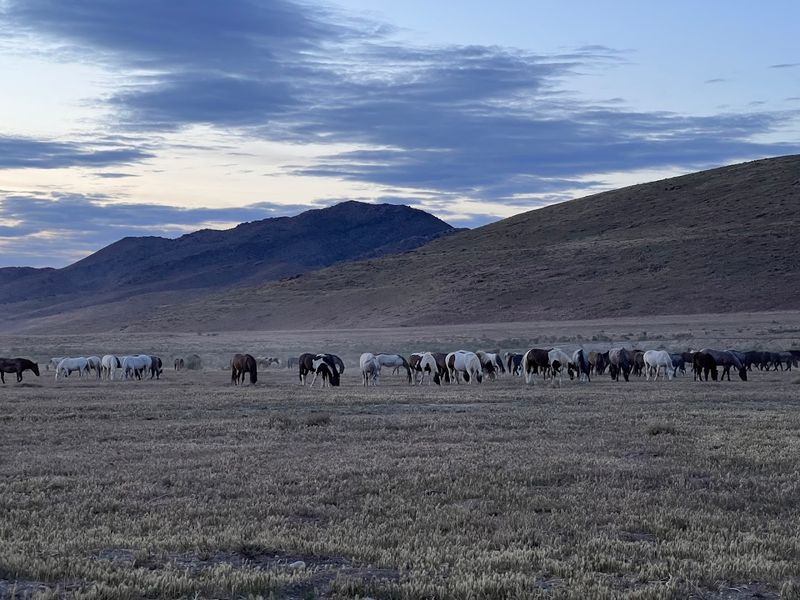
Utah is full of dramatic landscapes, but the Onaqui Mountain HMA adds something extra to the scenery: a well-known herd of wild horses that photographers have been chasing for years.
Located about 90 miles southwest of Salt Lake City in Tooele County, the Onaqui HMA is one of the most accessible wild horse areas in the state. The terrain is open high desert with mountain backdrops that make every photo look professionally composed.
The herd typically numbers in the low hundreds, though management gathers periodically affect population size.
Road conditions vary significantly by season, and some routes require a high-clearance vehicle after wet weather. Always check current BLM advisories before heading out.
Early morning visits near known water sources give you the best odds of a close sighting. The horses here have become somewhat accustomed to visitors, though they remain wild and unpredictable.
Respect their space, stay in your vehicle when possible, and let them set the terms of the encounter.
Lower Salt River (Tonto National Forest, Arizona)
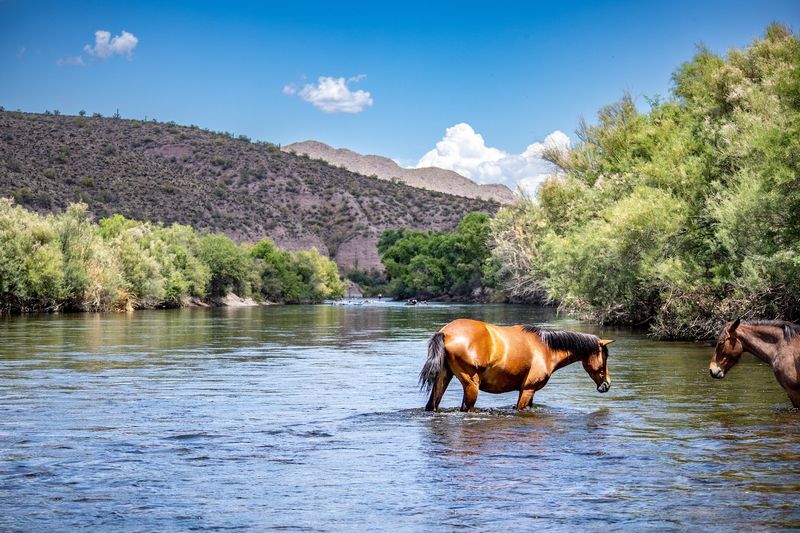
Wild horses and a desert river. That combination alone should be enough to get you in the car.
The Lower Salt River corridor in Tonto National Forest is one of Arizona’s most beloved wildlife viewing areas, and the horses are the undisputed stars of the show.
The horses are often spotted near the water, sometimes wading in or crossing the river entirely. Recreation sites along the Salt River Road provide easy pull-off spots for viewing without disturbing the animals.
Tubers and kayakers frequently share the river with the horses, which creates some genuinely memorable scenes.
Sightings vary by season and time of day, so multiple visits increase your chances. Summer mornings near the water are a reliable strategy.
The area is popular on weekends, so arriving early also helps you avoid the crowds. Horses here are protected under Arizona state law, so keep your distance and never approach them on foot.
The whole corridor is about 52 miles east of Phoenix.
Theodore Roosevelt National Park (North Dakota)
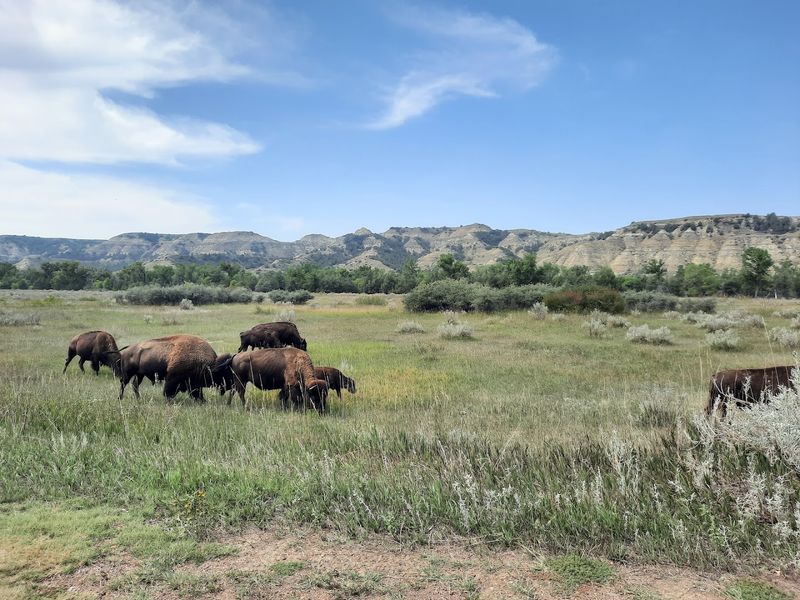
Most national parks do not manage free-roaming horse herds as part of their official landscape. Theodore Roosevelt National Park does, and that makes it genuinely one of a kind in the U.S. national park system.
The park spans the North Dakota Badlands in two units, South and North, both of which contain wild horses. The rugged buttes, grassy flats, and dramatic badlands scenery form a backdrop that looks like it belongs in a Western film.
Bison, elk, and prairie dogs share the landscape, making wildlife sightings almost constant.
Horses are frequently spotted from the scenic loop roads in both units, especially in the morning and evening hours. The South Unit near Medora is the most visited and easiest to access.
Rangers at the visitor center can often point you toward recent sightings. The park is open year-round, though winter visits require preparation for extreme cold.
Admission fees apply, and the drive alone is worth every cent of the entrance fee.
McCullough Peaks Wild Horse Herd Management Area (Wyoming)
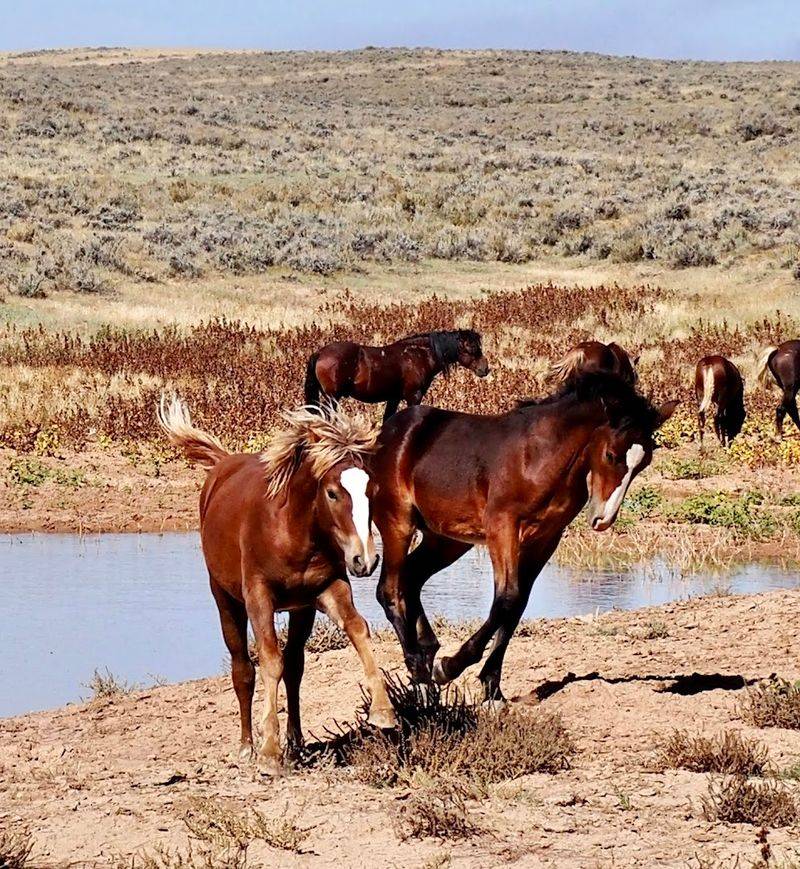
East of Cody, Wyoming, where the sky stretches wide and the wind has no reason to stop, the McCullough Peaks HMA gives you classic mustang country without the crowds of more famous destinations.
The BLM officially designates this as a wild horse herd management area, covering roughly 110,000 acres of open range. The herd typically numbers between 70 and 140 horses.
With that much land and that many horses, patient visitors usually come away with a sighting.
A gravel road runs through parts of the HMA, making it accessible without specialized equipment in good weather conditions. Bring binoculars and scan the ridgelines and flat areas, as horses often blend into the terrain better than you expect.
The area sits near Cody, which is a great base with hotels, restaurants, and the outstanding Buffalo Bill Center of the West nearby. Combining a museum day with a morning horse-spotting drive makes for an excellent two-day Wyoming adventure.
Kiger Herd Management Area (Oregon)
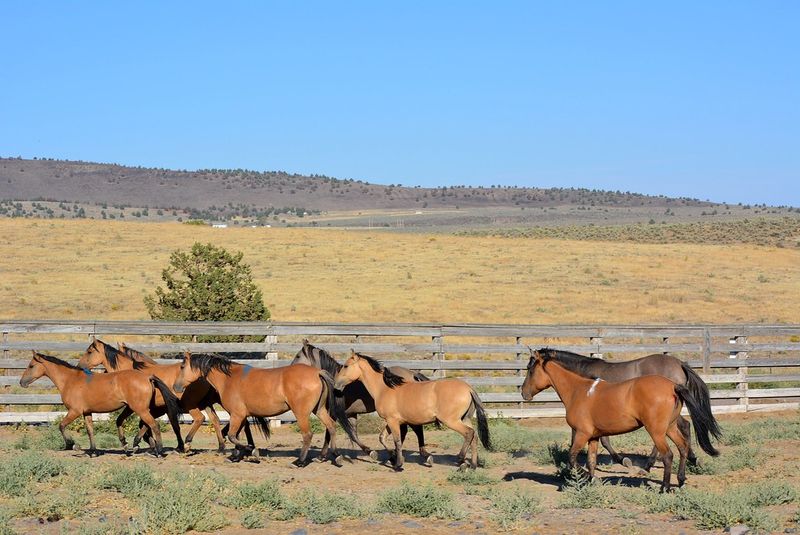
The Kiger mustangs have fans. Like, actual dedicated fans who travel from across the country to catch a glimpse of them.
These horses are known for their striking appearance and are often associated with Spanish-type traits, including a distinctive dun coloring and primitive markings.
The Kiger HMA is located in remote high desert terrain in Harney County, Oregon. It is not a quick weekend trip from most cities, which keeps the area quiet and the horses relatively undisturbed.
Roads can be rough and weather conditions change fast, so a solid vehicle and a detailed plan are non-negotiable.
The BLM periodically holds adoption events for Kiger mustangs, which are among the most sought-after wild horses in the country. Visiting the HMA in person requires preparation, but the payoff is seeing these horses in their natural landscape, unfiltered and unhurried.
Diamond, Oregon is the closest small community. Check BLM Oregon field office resources before your trip for current access conditions and herd location tips.
Pine Nut Mountains Herd Management Area (Nevada)
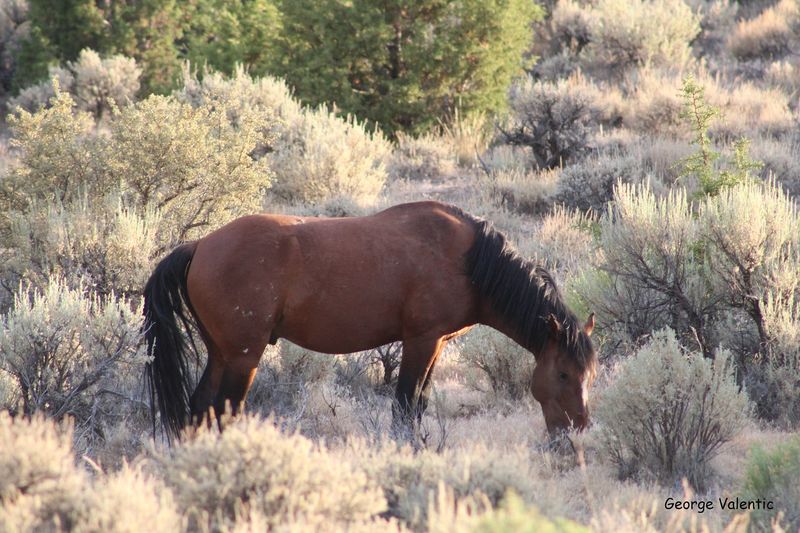
Nevada has more wild horses than any other state, and the Pine Nut Mountains HMA near Carson City is one of the most accessible entry points into that world. It sits close enough to civilization to reach easily but feels genuinely remote once you are out among the sagebrush.
The HMA covers a mix of public and private lands, so paying attention to boundaries is important. The BLM manages the wild horse habitat on public land portions, and staying on designated routes keeps you legal and keeps the horses undisturbed.
The herd here has a long history in the region, with horses having roamed these mountains for well over a century.
Carson City makes an excellent base, with full amenities just a short drive from the range. Early morning visits near water sources give you the strongest odds of a sighting.
The terrain is open enough that binoculars can cover a lot of ground quickly. Nevada’s wild horse culture runs deep here, and locals take genuine pride in the herds that call this landscape home.



