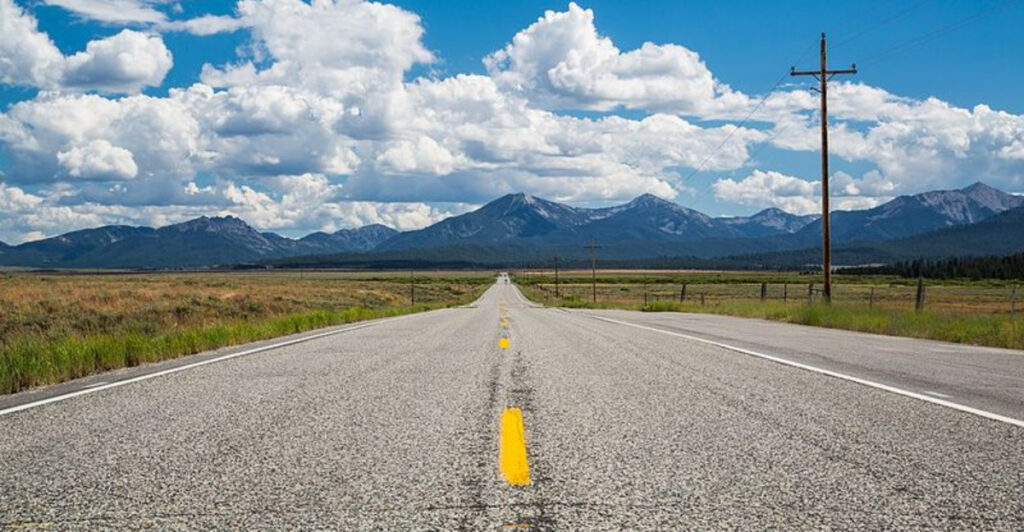
There is a highway in Idaho that most people have never heard of, and that is exactly what makes it so special. Running through some of the most dramatic mountain scenery in the American West, this road connects tiny towns, ancient forests, and rushing rivers in a way that feels almost cinematic.
On a quiet weekday, you might drive for thirty minutes without passing another car. This is not a highway that rushes you anywhere.
It rewards the curious traveler who is willing to slow down, pull over, and actually look around at what surrounds them. By the end of this article, you will have a complete picture of why this forgotten stretch of pavement deserves a spot on every road tripper’s bucket list, and why the loneliness of the drive is actually its greatest selling point.
What and Where Is ID-75
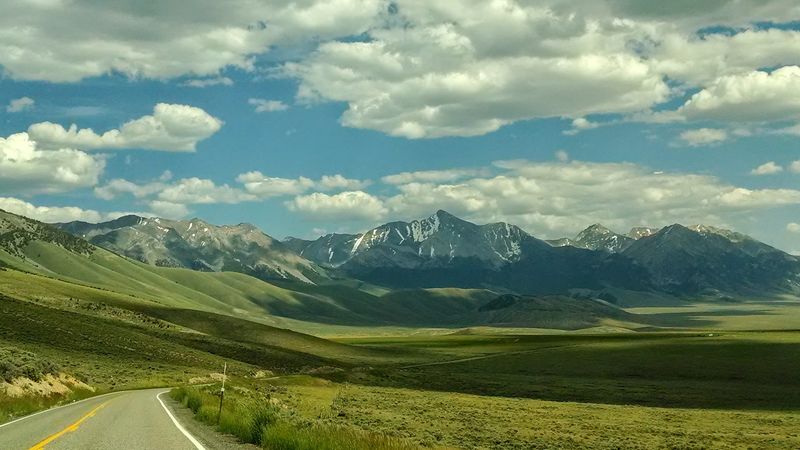
ID-75, also known as Idaho State Highway 75, runs roughly 161 miles through the heart of south-central Idaho. The highway stretches from the small city of Shoshone in Lincoln County in the south all the way up to Stanley in Custer County in the north, passing through the Wood River Valley and the Sawtooth National Recreation Area.
The coordinates at the geographic center of the route sit around 43.78 degrees north latitude and 114.55 degrees west longitude, placing it firmly in one of the most rugged and least populated parts of the entire state.
This is not a highway you accidentally stumble upon. Most people who drive it have sought it out on purpose, drawn by the promise of mountain scenery that rivals anything in Colorado or Montana.
The road earns every mile of that reputation.
The Wood River Valley Stretch
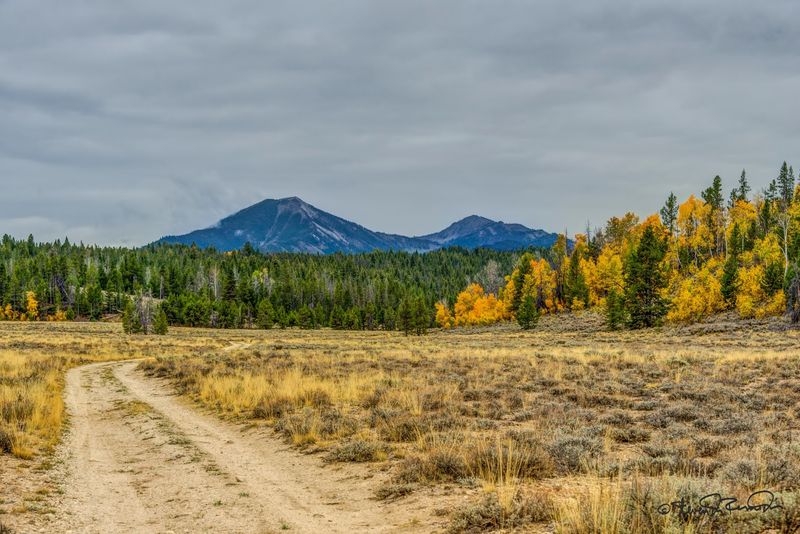
The southern section of ID-75 follows the Big Wood River through a wide, open valley that feels surprisingly lush compared to the desert terrain just a few miles to the south. The river runs alongside the road for a long stretch, giving drivers a constant companion of sparkling water and riverside cottonwood trees.
The valley is home to the famous resort town of Sun Valley and its neighbor Ketchum, which sit at around mile marker 150 on the highway. This part of the route has a polished, resort-town energy, with boutique shops, upscale restaurants, and well-maintained bike paths running parallel to the road.
Even with the resort gloss, the natural setting here is genuinely breathtaking. The mountains rise steeply on both sides of the valley, and on a clear morning, the snow on the higher peaks reflects the early light in a way that makes the whole drive feel like a reward.
The Town of Ketchum and Its Deep Roots
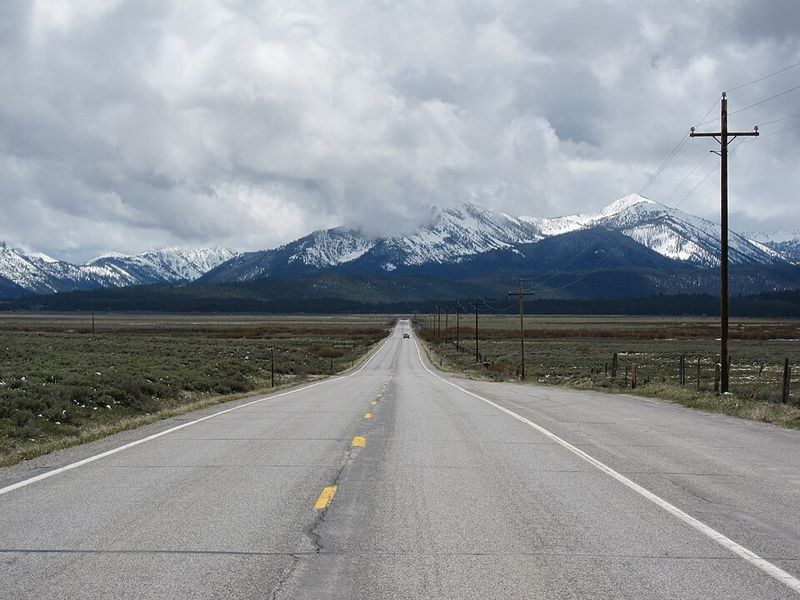
Ketchum is one of those rare small towns that feels genuinely lived-in rather than just staged for tourists. The town has a long history as a sheep-driving and silver-mining hub before it reinvented itself as a ski destination in the mid-20th century.
Ernest Hemingway spent his final years in Ketchum and is buried in the town cemetery, which is a quiet, unpretentious spot that feels very much in keeping with the man’s no-nonsense reputation. A memorial to him stands near Trail Creek, and it draws a steady stream of literary-minded visitors throughout the year.
The main street has a good mix of local diners, outdoor gear shops, and art galleries that cater to both serious mountaineers and casual weekend visitors. Ketchum does not try too hard to impress you, and that relaxed confidence is probably its most appealing quality as a stop along the highway.
Galena Summit and the View That Stops Traffic
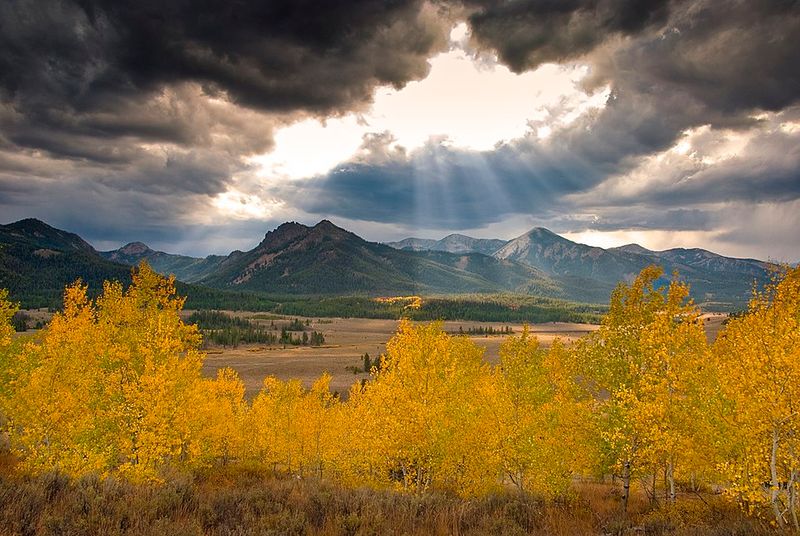
North of Ketchum, the highway begins a serious climb toward Galena Summit, which tops out at 8,701 feet above sea level. The drive up is a series of sweeping curves through open sagebrush slopes, and the view from the top is one of those moments that makes you genuinely glad you made the trip.
From the Galena Overlook, you can see the entire upper Wood River Valley spread out below you, with the jagged Sawtooth Range filling the horizon to the north. There is a small pullout with an interpretive sign that explains the geology and history of the area, and on a busy summer day, you will almost certainly find other travelers standing there with their phones out.
The descent from Galena Summit is equally dramatic, dropping quickly into the Salmon River drainage and opening up into the wide Sawtooth Valley. That transition from one watershed to another feels like crossing an invisible border into a completely different world.
The Sawtooth Valley and Its Quiet Grandeur
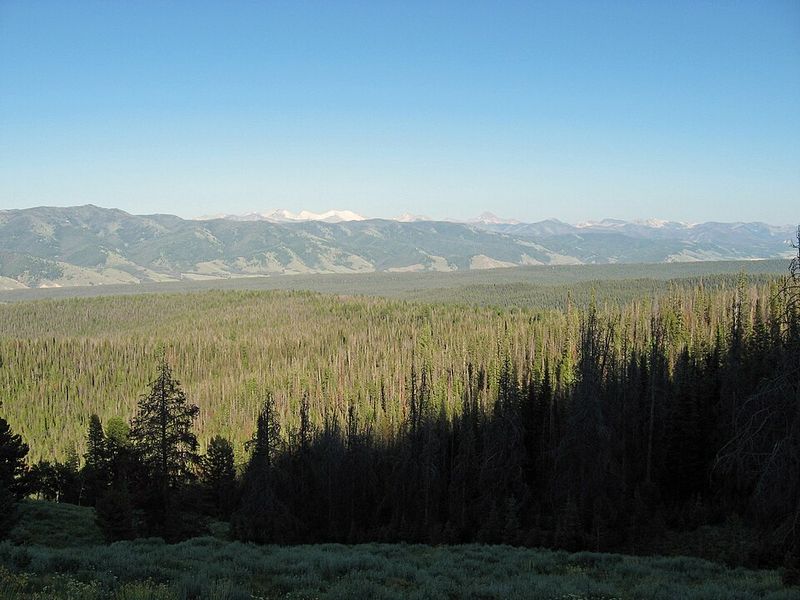
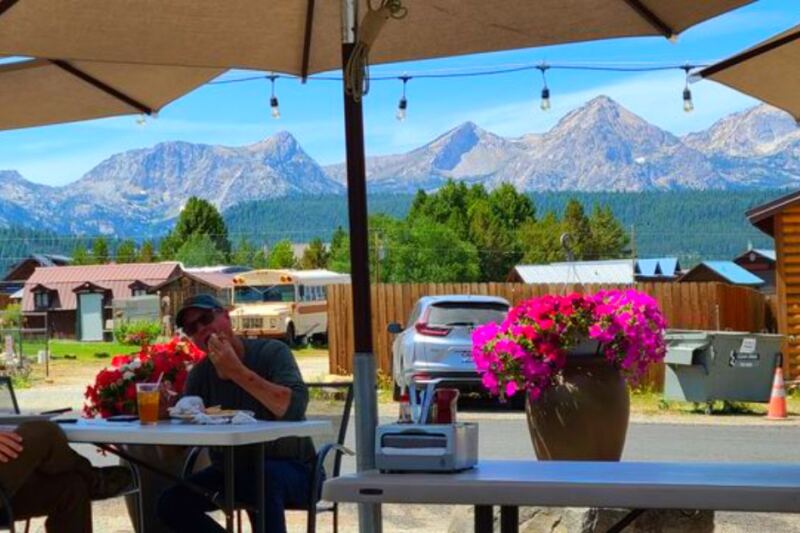
After Galena Summit, the road levels out into the Sawtooth Valley, a broad high-altitude basin sitting at around 6,500 feet. The valley is wide, flat, and surprisingly open, which makes the ring of jagged peaks surrounding it look even more dramatic by contrast.
The Salmon River is born here, starting as a small, clear stream that meanders through the meadows before growing into one of Idaho’s most celebrated whitewater rivers further downstream. In July and August, the meadows are carpeted with wildflowers, and pronghorn antelope are a common sight grazing along the roadside in the early morning hours.
There are very few buildings out here, which is part of the point. The Sawtooth National Recreation Area manages most of the surrounding land, keeping development to a minimum and preserving the valley’s raw, unhurried character.
Driving through it at sunset, with the peaks turning pink and orange, is a memory that sticks with you for a long time.
Stanley: The Tiny Town at the Top of the World
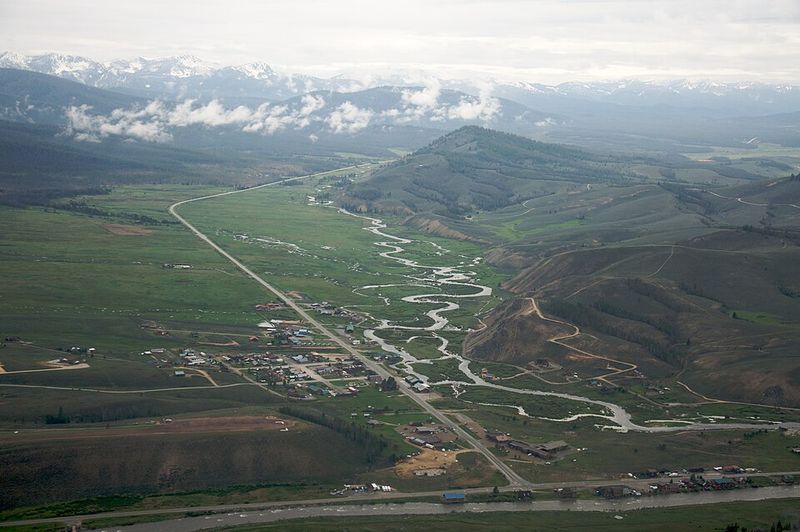
Stanley sits at the northern end of ID-75 at an elevation of about 6,256 feet, and with a permanent population of around 60 people, it regularly earns the title of one of the smallest incorporated towns in the entire United States. It also records some of the coldest winter temperatures in the lower 48 states, with readings that occasionally drop below minus 50 degrees Fahrenheit.
Despite its extreme climate, Stanley has a warm and welcoming character. The town has a handful of restaurants, a small grocery store, a few outfitter shops, and lodges that cater to rafters, hikers, and anglers who use Stanley as a base camp for adventures in the surrounding wilderness.
The community has a frontier spirit that feels authentic rather than performed. The locals here actually live this rugged lifestyle year-round, and spending even a short afternoon in Stanley gives you a genuine appreciation for what that kind of commitment to a place really looks like.
Salmon River Canyon: Where the Road Gets Wild
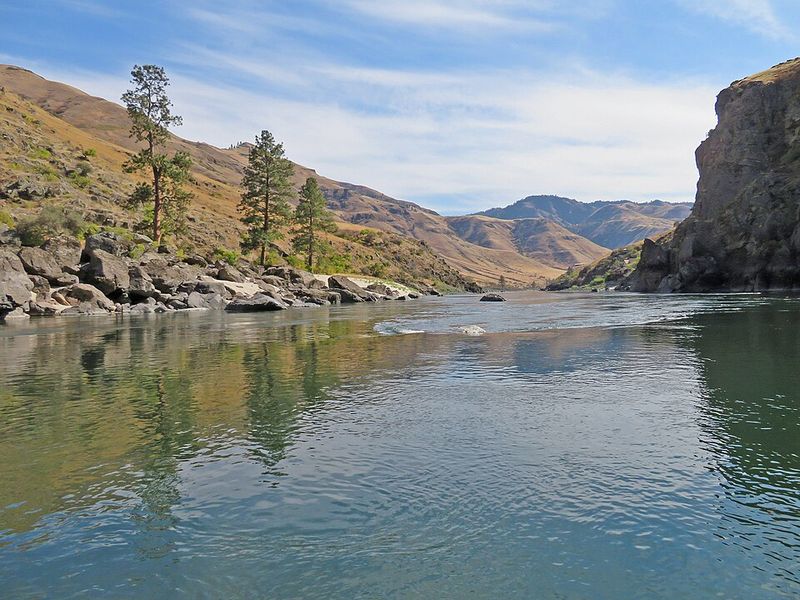
Between Stanley and the Salmon River Mountains, ID-75 follows the main Salmon River through a narrow, winding canyon that is one of the most visually intense stretches of the entire drive. The river runs fast and green here, squeezed between walls of granite and basalt that rise several hundred feet on either side.
The canyon section of the highway has very few pullouts, which forces you to keep moving and absorb the scenery at speed. That is actually fine, because the tight turns and close proximity to the rushing water make the drive itself feel like an activity rather than just a means of getting somewhere.
Rafting outfitters operate along this stretch of river throughout the summer, and you will often see groups of paddlers in brightly colored gear launching their boats from small sandy beaches just below the road. The energy of the canyon is contagious, and it is very hard to drive through without smiling.
Wildlife Watching Along the Route
ID-75 passes through some of Idaho’s most productive wildlife habitat, and the variety of animals you might encounter along the road is genuinely impressive. Pronghorn antelope are the most common large mammal sighting, especially in the Sawtooth Valley, where they graze in open meadows throughout the summer and fall.
Mule deer are plentiful along the entire length of the highway, and elk are regularly spotted in the forested sections north of Ketchum. Black bears are present in the region but are shy and rarely seen from the road, though early morning drivers occasionally catch a glimpse of one foraging near the tree line.
Bald eagles and osprey hunt along the Salmon River, and the Sawtooth Valley is excellent territory for watching raptors like red-tailed hawks and northern harriers. Driving slowly and keeping your eyes on the meadow edges rather than the road center is the best strategy for spotting wildlife without missing a turn.
Hiking Access Points Right Off the Highway
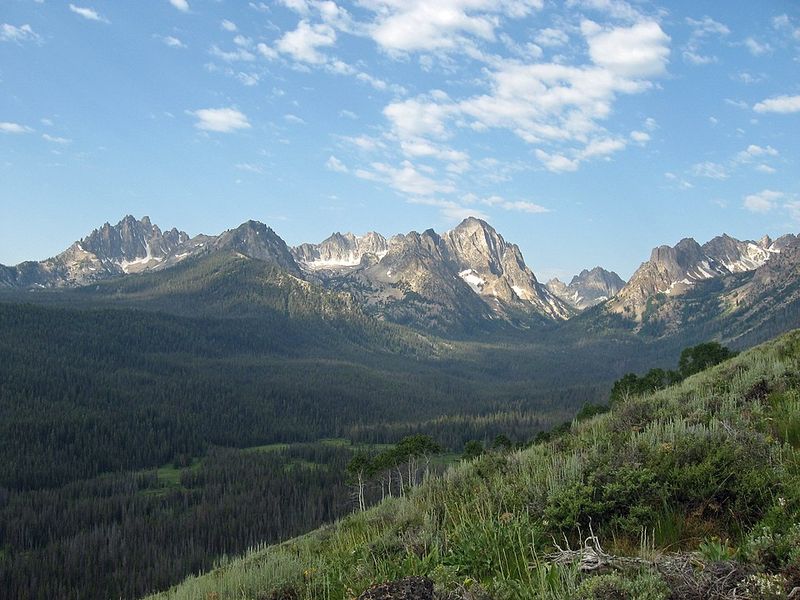
One of the best things about driving ID-75 is how many world-class hiking trails branch off directly from the highway with minimal effort. The Sawtooth National Recreation Area alone contains over 700 miles of maintained trails, and several of the most popular trailheads are literally roadside pullouts with a sign and a parking area.
The Alice Lake trailhead near Pettit Lake Road is one of the most beloved, leading hikers through dense forest and over a rocky ridge to a stunning glacially carved lake surrounded by peaks. The hike is about 12 miles round trip and involves around 2,200 feet of elevation gain, so it is a serious outing rather than a casual stroll.
For something shorter, the Fishhook Creek Trail near Stanley offers a gentler walk through meadows and along a clear mountain stream that feels completely separate from the bustle of the main road. You can be fully immersed in wilderness within five minutes of parking your car.
Fishing the Big Wood and Salmon Rivers
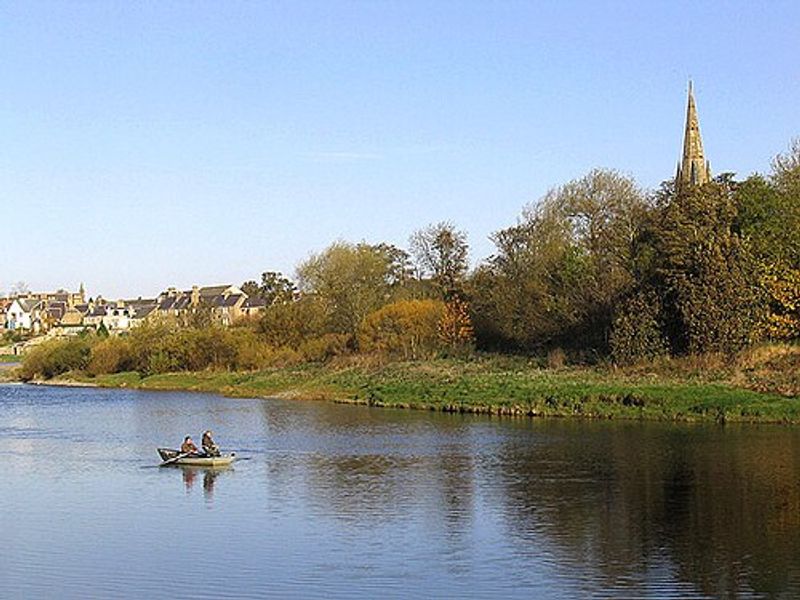
The rivers that run alongside ID-75 are some of the finest fly fishing destinations in the American West, and anglers travel from across the country to cast a line in these waters. The Big Wood River in the southern section of the drive holds healthy populations of brown and rainbow trout, and the stretches near Ketchum and Hailey are especially productive during the evening hatch in late summer.
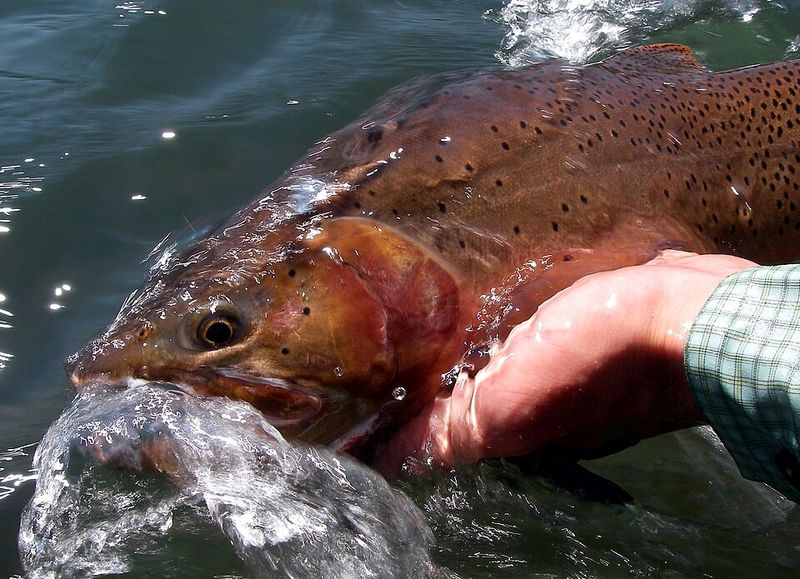
The upper Salmon River near Stanley is a blue-ribbon fishery that is carefully managed to protect its wild trout population. The water is crystal clear and cold, which makes sight fishing for large cutthroat trout a genuinely exciting challenge that requires both patience and precision.
Fishing licenses are required and are available at sporting goods stores in Ketchum and Stanley. Hiring a local guide is a smart investment if you are new to the area, since the guides know the best pools and the seasonal rhythms of the hatches in ways that no map can fully capture.
Best Time to Drive ID-75
The highway is technically open year-round, but the experience changes dramatically depending on the season. Summer, from late June through September, is the most popular time to drive, when the road is fully clear, all the campgrounds are open, and the wildflowers in the Sawtooth Valley are at their peak.
Fall is arguably the most beautiful season on this road. The aspen groves along the hillsides turn brilliant gold and orange in late September and early October, and the crowds thin out considerably compared to the summer rush.
Temperatures are cooler but very comfortable during the day, making it ideal for hiking and photography.
Winter driving on ID-75, particularly the section over Galena Summit, requires serious preparation. Snow chains or all-wheel drive are essential, and the summit can close temporarily during heavy storms.
Spring brings snowmelt and high rivers, which creates dramatic scenery but also means some campgrounds and trails remain closed well into May or even June.
Camping Options Along the Route
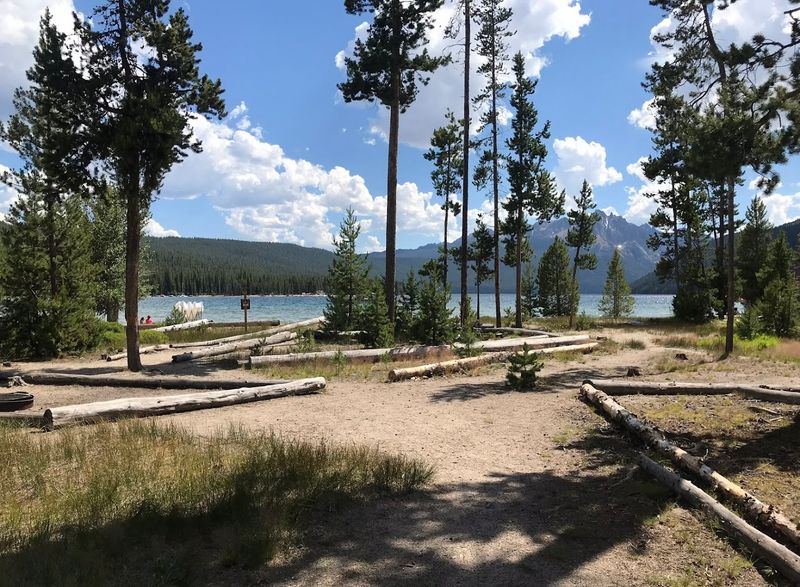
The Sawtooth National Recreation Area manages dozens of developed campgrounds along and near ID-75, ranging from primitive sites with just a fire ring and a picnic table to more developed sites with vault toilets and potable water. Redfish Lake Campground, located just off the highway near Stanley, is one of the most popular in the entire region and fills up fast on summer weekends.
Redfish Lake itself is a strikingly beautiful glacial lake with clear blue water and the Sawtooth peaks rising directly behind its far shoreline. The campground there has a lodge, a marina, and a visitor center, which makes it a comfortable base for exploring the surrounding trails and waterways.
For a quieter experience, the smaller campgrounds at Boundary and Outlet along Redfish Lake Creek offer more solitude with nearly the same scenery. Reservations through Recreation.gov are strongly recommended for any summer weekend visit, since walk-in sites at the popular campgrounds are almost never available after Thursday afternoon.
The History of the Route and the Region
The corridor that ID-75 follows today was used long before paved roads existed. The Shoshone-Bannock people traveled these valleys for thousands of years, following game migrations and seasonal food sources through the mountains.
The Wood River Valley was a significant route for indigenous travel between the Snake River Plain and the higher mountain country to the north.
The 1880s brought a silver mining boom to the region, with towns like Hailey and Bellevue growing rapidly as ore was pulled from the surrounding hills. Ketchum served as the end point of the Oregon Short Line Railroad, and thousands of sheep were driven through the Wood River Valley each season on their way to summer grazing lands in the mountains.
The construction of the modern highway formalized a route that had been used informally for decades. The designation of the Sawtooth National Recreation Area in 1972 changed the character of the northern section permanently, prioritizing conservation over development and setting the tone for what the road feels like today.
Photography Tips for the Drive
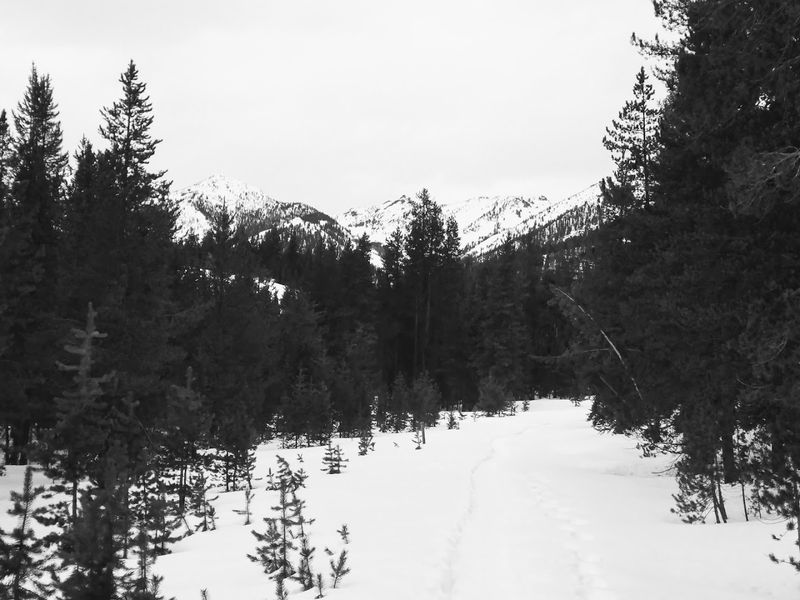
ID-75 is a photographer’s dream, but getting the best shots requires a bit of planning. The golden hour light in the Sawtooth Valley is exceptional, particularly in the early morning when low-angle sunlight rakes across the meadows and catches the peaks from the east.
Arriving at Galena Overlook about 30 minutes before sunrise gives you the best chance of catching that first light hitting the Sawtooth Range.
Redfish Lake is one of the most photographed spots in all of Idaho, and for good reason. The classic composition of the lake with the Sawtooth peaks reflected in the still morning water is best captured before 8 a.m., when wind typically picks up and disturbs the reflection.
A wide-angle lens is the most useful tool for the broad valley shots, while a telephoto lens pays off for wildlife photography in the meadows. Pulling over safely and cutting the engine before reaching for your camera is always the right move, both for safety and for not spooking any animals nearby.
Practical Tips Before You Hit the Road
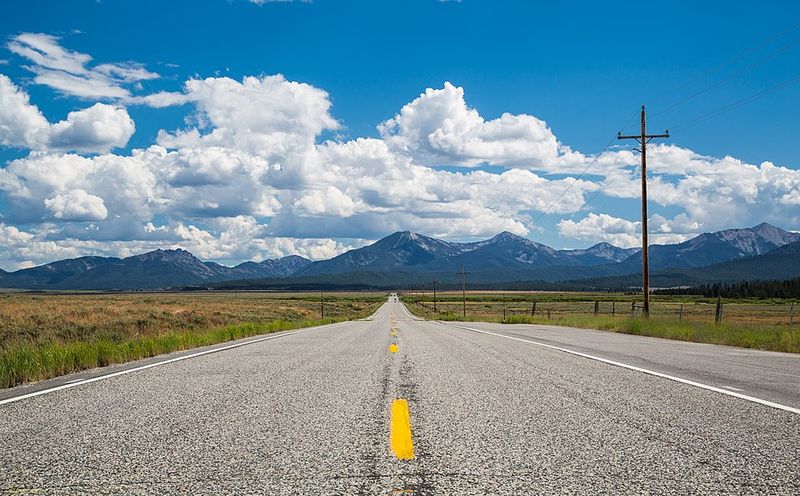
A few practical details can make the difference between a smooth drive and a frustrating one on ID-75. Gas stations are sparse north of Ketchum, so filling your tank before leaving town is a non-negotiable step.
Stanley has a gas station, but it is the only option for a long stretch, and the prices reflect that monopoly.
Cell service is unreliable along most of the route, particularly in the canyon sections and the Sawtooth Valley. Downloading offline maps before you leave is a smart precaution, and letting someone know your general itinerary is a sensible habit in areas this remote.
The speed limit drops frequently through the small communities along the route, and the curves north of Galena Summit demand full attention from the driver. This is not a highway for distracted driving.
Treat it with respect, take your time, and the road will give you back something genuinely worth remembering.
Share this story