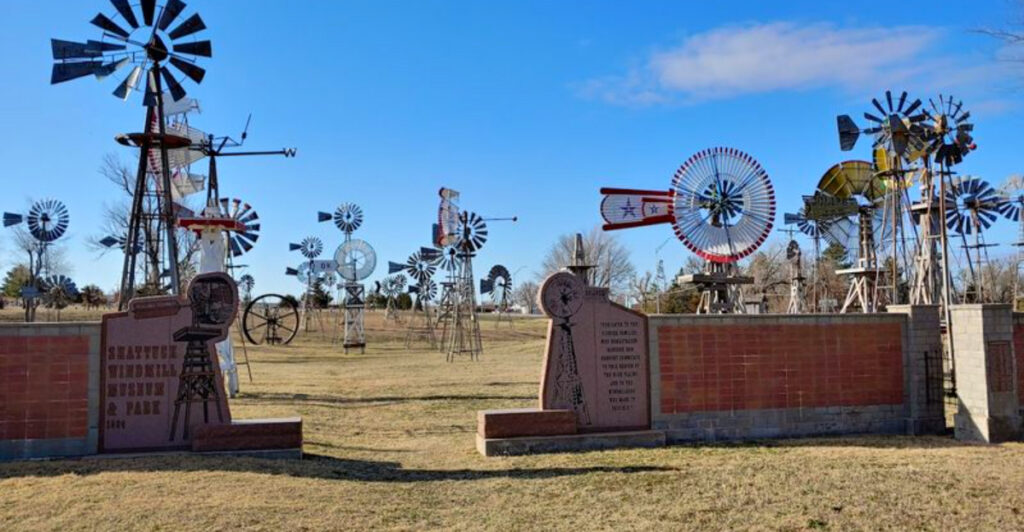
There is a spot in the Oklahoma panhandle region where dozens of windmills stand tall against a wide open sky, spinning and humming in the breeze like something out of a storybook. Most people drive right past it without a second glance, but the ones who stop almost always say it changed their whole road trip.
The Shattuck Windmill Museum is one of those rare places that surprises you completely, even when you think you already know what you are getting into. This article takes you through every corner of the museum, from its fascinating history to the little details that make it so worth the detour.
Where to Find This Windmill Wonderland
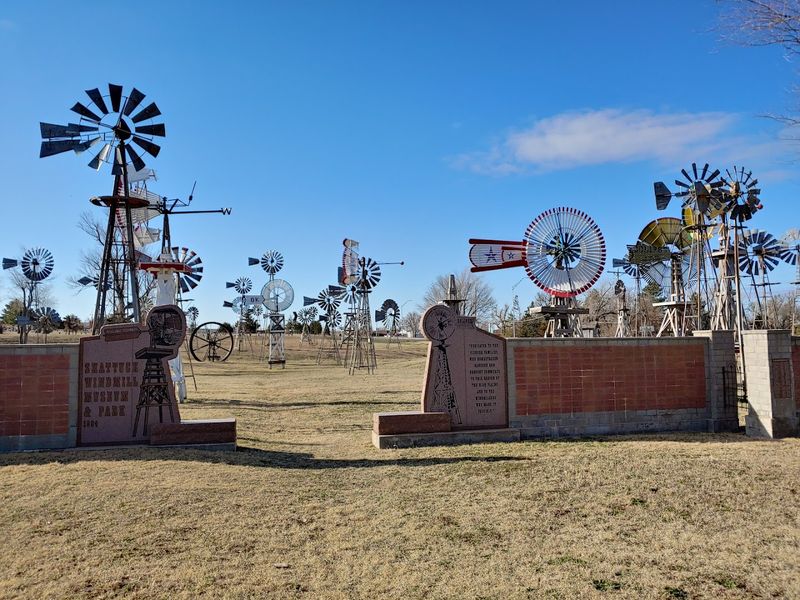
The address is 1201-1299 S Main St, Shattuck, OK 73858, and it sits right along the main road through town in Ellis County, northwestern Oklahoma. You can spot it from your car window without even trying, because the windmills practically announce themselves as you roll through town.
Shattuck is a small, quiet town in the Texas Panhandle border region of Oklahoma, and this museum is genuinely one of its biggest draws. The museum grounds are open 24 hours a day, seven days a week, which means you can visit at sunrise, midday, or even under a full moon if the mood strikes you.
The phone number on record is +1 580-938-5291, and more details are available at shattuckok.com/WindmillPark.html. Even if you are passing through on a long highway stretch, the museum is easy to reach by heading north on Highway 283 after exiting I-40.
Few surprises on a road trip beat the moment this place comes into view.
The Story Behind the Spinning Blades
Before electric pumps existed, windmills were not just interesting machines. They were survival tools that kept farms, ranches, and entire communities alive across the dry plains of Oklahoma and the surrounding region.
The Shattuck Windmill Museum was created to honor that legacy, preserving the machines that helped generations of pioneers and Native American communities access water in one of the driest parts of the country. The collection grew over time as donations came in from farms, estates, and private collectors across the United States.
Each windmill in the collection carries its own story, whether it once served a cattle ranch, a family homestead, or a small community well. The museum’s founders understood that these machines deserved more than a dusty corner of a barn.
They gave them a proper stage, set against the Oklahoma sky, where visitors can appreciate just how clever and essential these structures truly were. History has rarely looked this tall.
A Collection That Keeps Growing
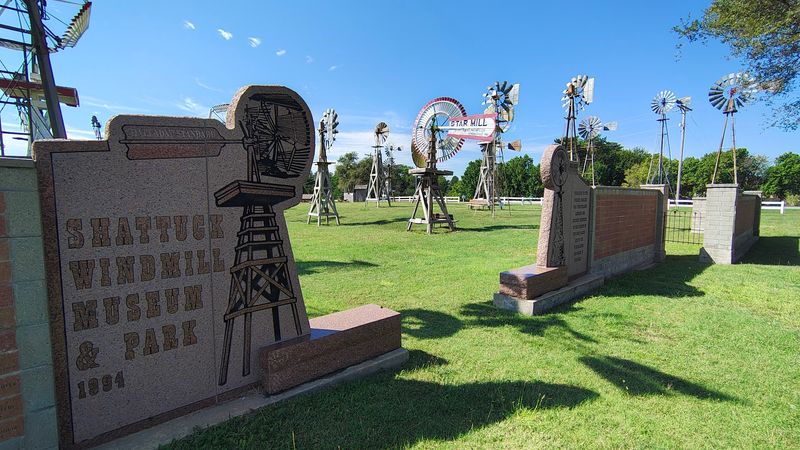
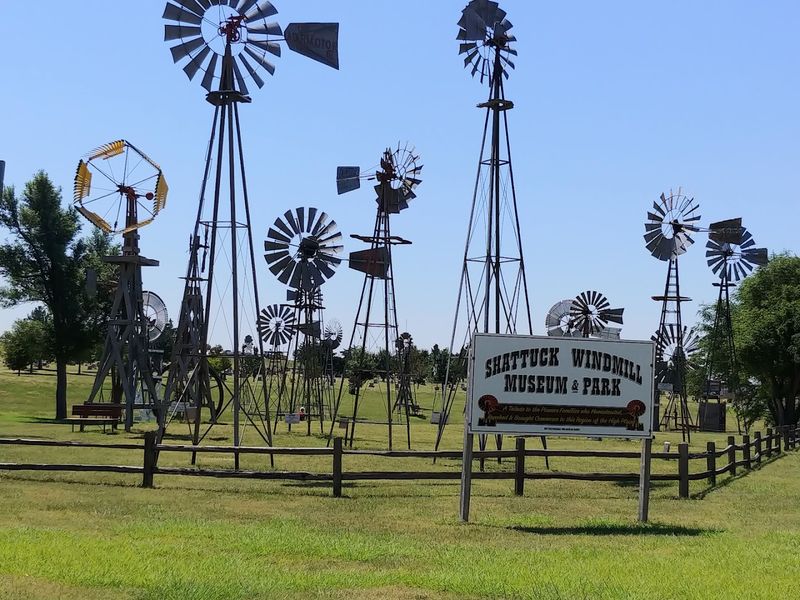
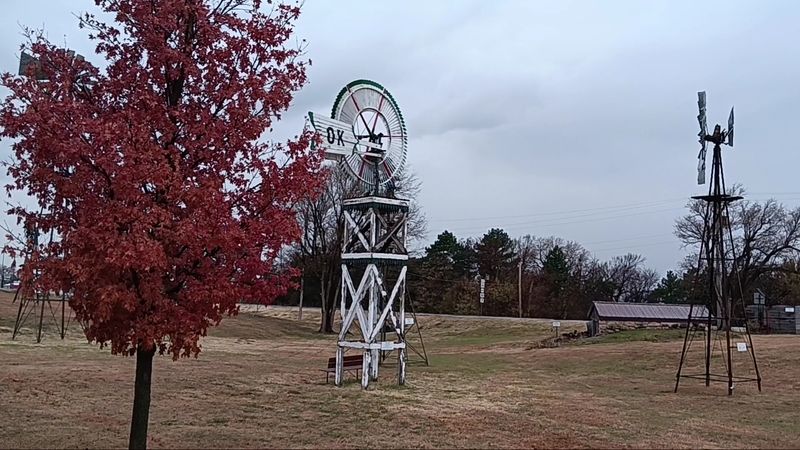
The outdoor display at the Shattuck Windmill Museum holds somewhere between 50 and 60 fully functional windmills, depending on the season and recent donations. That number is not a typo.
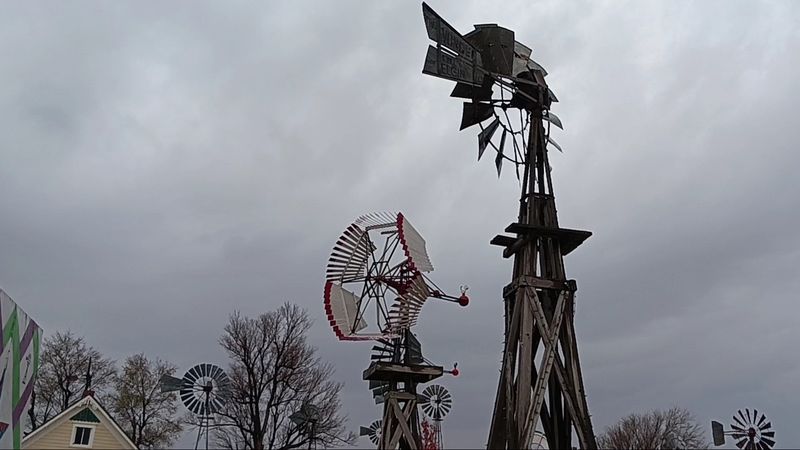
There are dozens of them, standing at various heights, built from different materials, and designed for different purposes.
Some are small and simple, made for a single household well. Others are towering steel structures that once served large cattle operations.
The variety is genuinely impressive, and you find yourself walking slowly just to take it all in without missing a single model.
What makes this collection stand out is that the windmills are kept in working condition. On a breezy Oklahoma afternoon, the whole park comes alive with spinning blades and soft mechanical sounds that fill the air around you.
It feels less like a museum and more like a living, breathing piece of agricultural history that never stopped moving. Bring your camera, because every angle offers something worth capturing.
The Sod House and Dugout Experience
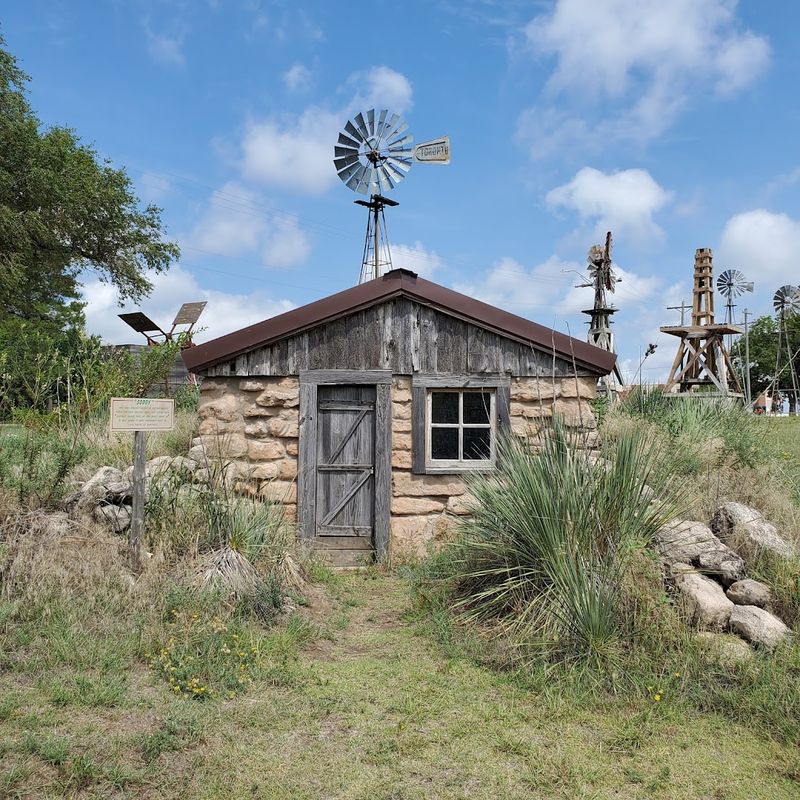
The windmills are the headliner here, but the Shattuck Windmill Museum offers more than just spinning blades. On the grounds, you can step inside a small farmhouse and a soddy, which is a traditional sod house built from packed earth and grass that early settlers used as shelter on the treeless plains.
The sod house at the museum gives you a real sense of how tough life was for the families who settled this part of Oklahoma. Knowing that a family of nine once lived in a structure like this, relying entirely on windmill-pumped water to survive, makes the whole visit feel much more personal and grounding.
The interiors are modest and simple, which is exactly the point. There are no fancy exhibits or dramatic lighting tricks inside.
Just the honest, unvarnished reality of frontier life, preserved so that modern visitors can spend a few quiet minutes understanding what it actually took to build a home on the Oklahoma plains. That kind of perspective is hard to find anywhere else.
The Indoor Exhibit Shed
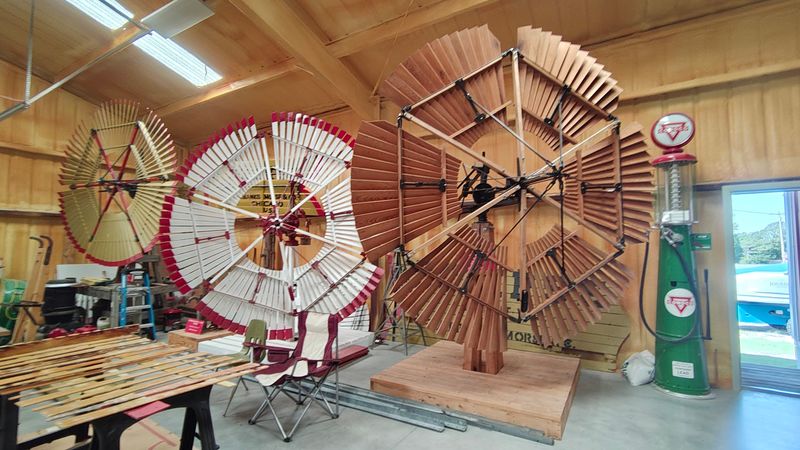
Right next to the main outdoor display, there is a large covered shed that holds even more pieces from the collection. Inside, you will find additional water pumps, windmill components, and related agricultural equipment that could not be left out in the open year-round.
The shed is a great place to slow down and look at the finer mechanical details up close. Out in the open field, the windmills are impressive for their scale.
Inside the shed, you start appreciating the craftsmanship and engineering that went into each individual part. Gears, rods, valves, and pump heads are arranged so you can actually see how everything connected and worked together.
For anyone with a mechanical mind, this part of the museum is genuinely fascinating. Even if you have never thought twice about how a pump works, the sheer ingenuity on display here earns your respect quickly.
The shed is also a nice shady retreat on a hot Oklahoma summer afternoon, giving your eyes and feet a break before heading back out to the main grounds. The details hiding in here are worth every extra minute.
Tuning In to History on 90.3 FM
One of the most clever features of the Shattuck Windmill Museum is something you access from your car. Tune your radio to 90.3 FM while you are on the grounds, and a recorded audio tour plays, walking you through the history of windmills, the museum’s story, and what you are looking at.
The broadcast runs for about five minutes and packs in a surprising amount of information. It covers the different windmill types, their uses across the American plains, and some background on how the collection came together.
It is a low-tech solution that works perfectly for an outdoor museum that stays open around the clock.
Even visitors who arrive late at night or during an off-hour when no staff is present can still get a proper introduction to the collection through the radio broadcast. It is one of those small, thoughtful touches that shows how much care has gone into making this museum accessible to everyone, no matter when they show up.
Pop on 90.3, roll down the windows, and let the history come to you.
The Friendly Faces Who Keep It Running
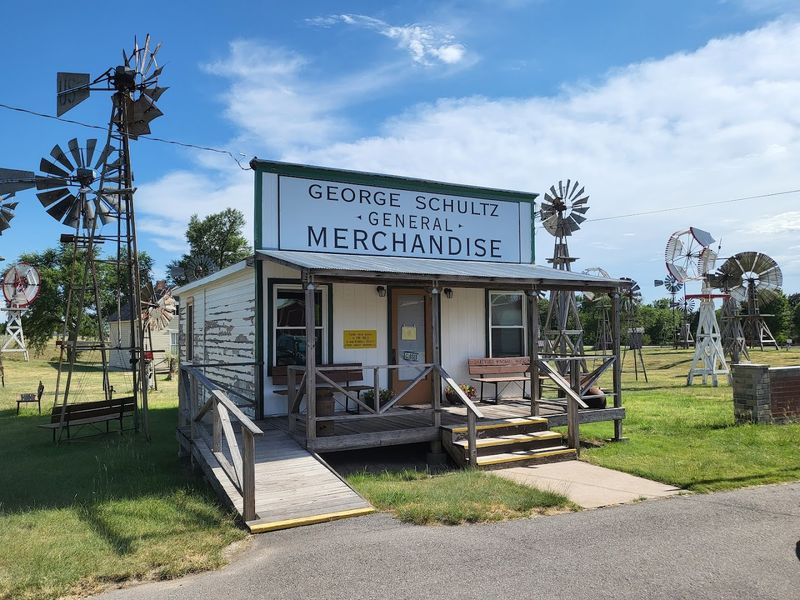
A museum is only as good as the people behind it, and the Shattuck Windmill Museum has some genuinely warm and knowledgeable staff. The curators and volunteers here have a real passion for what they are preserving, and it shows the moment they start talking.
On any given day, you might get a personal walking tour from someone who knows the history of each windmill intimately, including where it came from, how old it is, and what kind of operation it once served. That kind of firsthand knowledge turns a casual visit into something much more memorable.
The staff at the adjoining general merchandise store are equally helpful, ready to answer questions and point you toward the highlights you might otherwise miss. There is also a guest book on site where visitors from across the country write down where they came from, and flipping through it gives you a quick sense of how far people travel to see this place.
The warmth you get from the people here is not something you can manufacture. It is the real thing, and it makes every visit feel personal.
Free to Visit, Worth Every Penny
Here is something that might surprise you about the Shattuck Windmill Museum: admission is completely free. The museum runs entirely on donations, and there is a collection box on site where visitors can leave whatever they feel the experience was worth.
For a collection of this size and quality, that generosity is remarkable. Most roadside attractions charge a fee at the gate, and many deliver far less than what you find here.
The free access policy also means that families traveling on a tight budget can stop in without any hesitation, which feels very much in keeping with the community spirit of the place.
That said, the museum clearly costs money to maintain. Keeping 50-plus windmills in working order, staffing a visitor center, and maintaining the grounds all require real resources.
Dropping a few dollars in the donation box is a small way to make sure this place stays around for the next road-tripper who happens to pass through Shattuck. Think of it as paying forward a good experience to someone you have never met, which is a pretty satisfying way to spend a few dollars on a road trip.
Small Signs With Big Personality
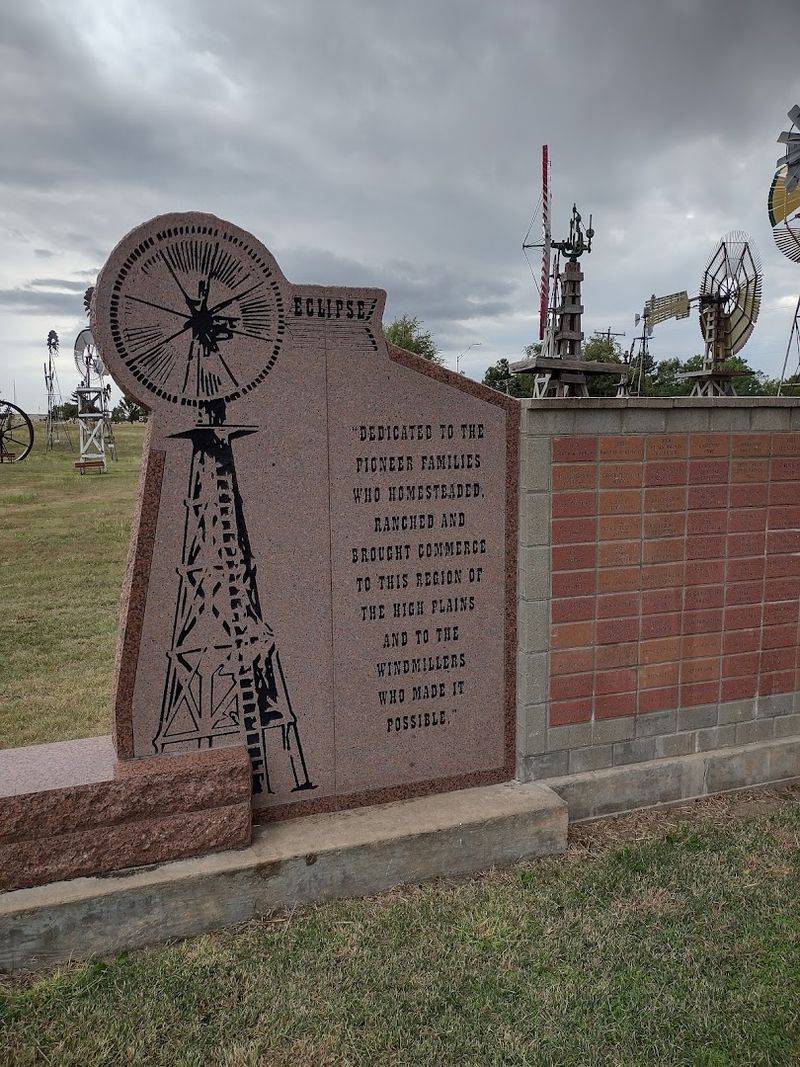
One of the most charming details at the Shattuck Windmill Museum is a set of small signs posted along the highway side of the property. The signs tell a simple story: the cows were thirsty, the sheep were thirsty too, and they all got their water when the wind blew.
It sounds simple, but those few words capture the entire point of the museum in a way that no lengthy placard ever could. Windmills were not decorative.
They were essential, and the signs remind you of that with a touch of warmth and humor that fits the rural Oklahoma setting perfectly.
Details like these show that the people behind the museum have a genuine sense of storytelling. They could have just lined up the windmills and called it done.
Instead, they added layers of personality and context that make the whole experience richer. The signs are also great for photos, and many visitors stop to snap a picture of them before even walking into the main grounds.
Sometimes the smallest touches leave the biggest impression, and these signs are proof of exactly that.
Practical Tips for Your Visit
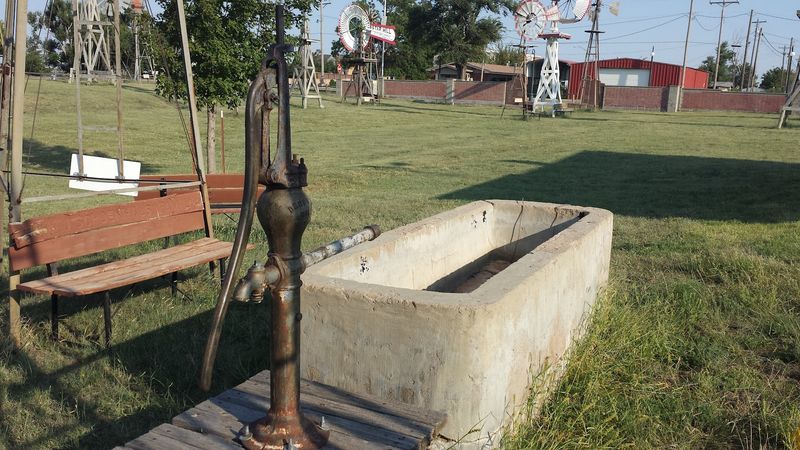
A few practical notes can make your visit to the Shattuck Windmill Museum significantly more comfortable. The grounds are outdoor and natural, which means the grass can carry stickers, those small spiky seed pods that love to attach themselves to socks and shoelaces.
Closed-toe shoes are a smart choice before you wander around the field.
The museum is open 24 hours a day, every day of the week, so there is no bad time to visit. That said, a daytime visit in mild weather gives you the best chance of catching the windmills in full spin and possibly meeting a knowledgeable staff member who can answer your questions in person.
There are benches and picnic tables on the grounds if you want to sit for a while and just listen to the windmills turning in the breeze. The gift shop carries souvenirs and T-shirts, and there is a restroom available on site.
A quick stop here can easily stretch into an hour once you start exploring all the corners of the property. Come ready to slow down, because this place rewards the visitors who are not in a hurry.
Share this story