The 1960s were a time of big change, bold ideas, and a generation that refused to stay quiet. A wave of artists, musicians, and activists embraced the hippie movement, spreading messages of peace, love, and freedom.
These celebrities didn’t just perform on stage; they lived the counterculture lifestyle and inspired millions of people around the world. From Woodstock to Haight-Ashbury, their names became forever tied to one of history’s most colorful and meaningful eras.
1. Janis Joplin
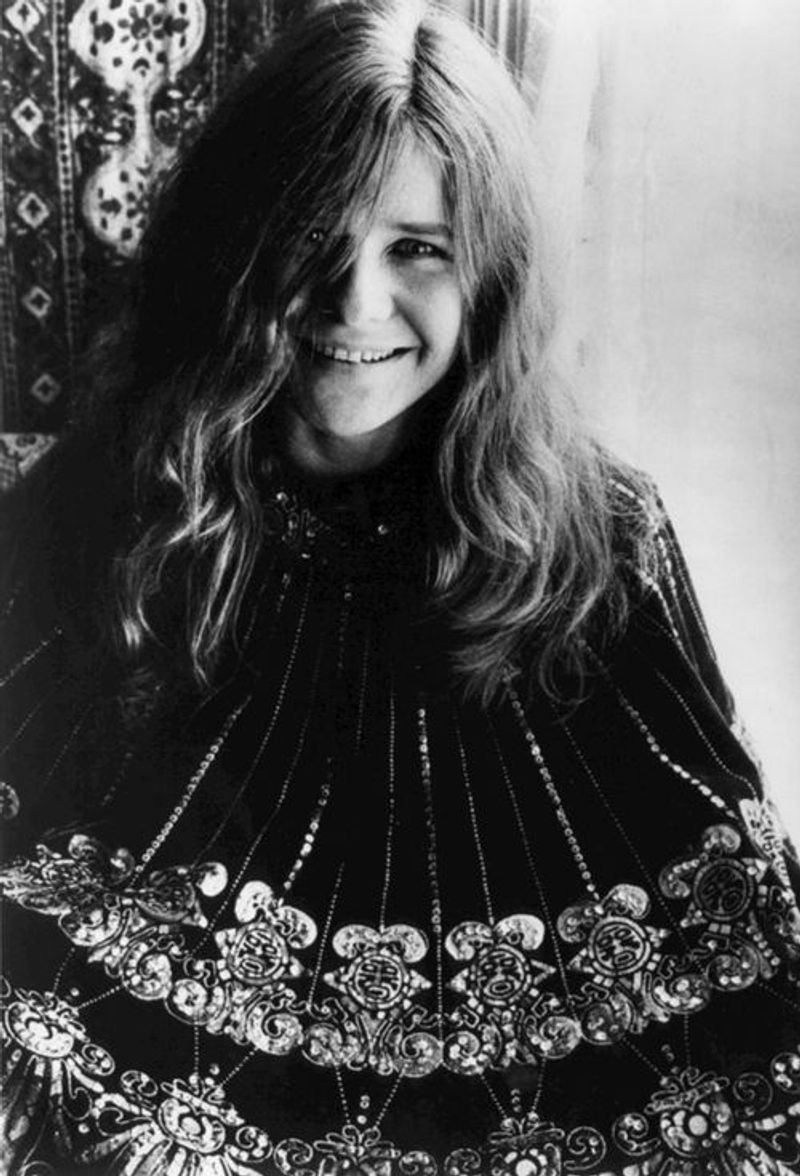
Few voices in rock history hit as hard and as honestly as Janis Joplin’s. Born in Port Arthur, Texas, she moved to San Francisco in the mid-1960s and quickly became a centerpiece of the Haight-Ashbury music scene.
Her raw, bluesy sound set her apart from everyone around her.
Joplin fronted Big Brother and the Holding Company before launching a solo career that produced unforgettable tracks like “Me and Bobby McGee” and “Piece of My Heart.” She wore flowing scarves, stacked bracelets, and feathered boas long before bohemian fashion became trendy. Her 1969 Woodstock performance is still considered one of the greatest live sets in music history.
Tragically, she passed away in October 1970 at just 27 years old. Her music, spirit, and unapologetic self-expression remain a powerful reminder of what the hippie era stood for.
2. Jimi Hendrix
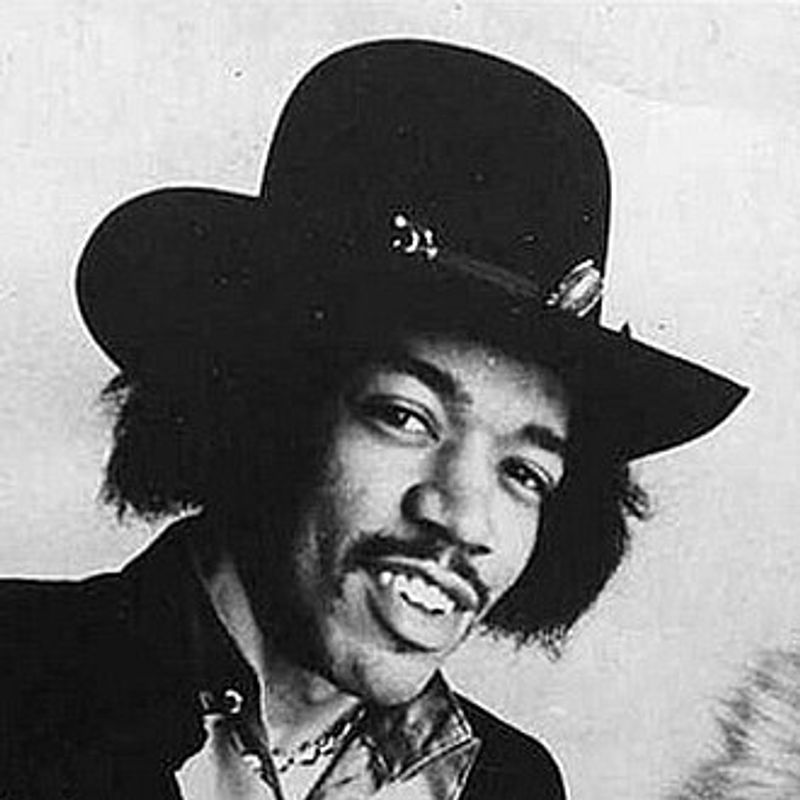
When Jimi Hendrix played the Star-Spangled Banner at Woodstock in August 1969, he turned a national anthem into a statement. The distorted notes weren’t just showmanship; they were a reflection of a country in turmoil and a generation demanding change.
That single performance became one of the most iconic moments of the entire decade.
Born in Seattle, Hendrix taught himself guitar and eventually made his way to London, where he exploded onto the music scene in 1966. His band, the Jimi Hendrix Experience, released “Purple Haze” and “All Along the Watchtower,” songs that defined psychedelic rock.
His style mixed blues, rock, and soul in ways nobody had heard before.
Hendrix was also a fashion icon, favoring military jackets, wide-brimmed hats, and bold prints. He passed away in September 1970, but his influence on music and counterculture has never faded.
3. John Lennon

John Lennon once said, “All you need is love,” and for millions of people, that phrase summed up everything the hippie movement believed in. As one-quarter of The Beatles, Lennon helped shape the soundtrack of the 1960s.
But his activism went far beyond writing chart-topping songs.
In 1969, Lennon and his partner Yoko Ono staged two famous “Bed-In for Peace” protests, first in Amsterdam and then in Montreal. The couple stayed in bed for days, inviting journalists in to discuss world peace instead of their honeymoon.
It was unconventional, creative, and very much in the spirit of the counterculture movement.
Lennon’s solo work, especially the song “Imagine” released in 1971, became a timeless anthem for peace. He used his fame as a platform to challenge war and promote unity.
His legacy continues to inspire activists and musicians around the world today.
4. Yoko Ono
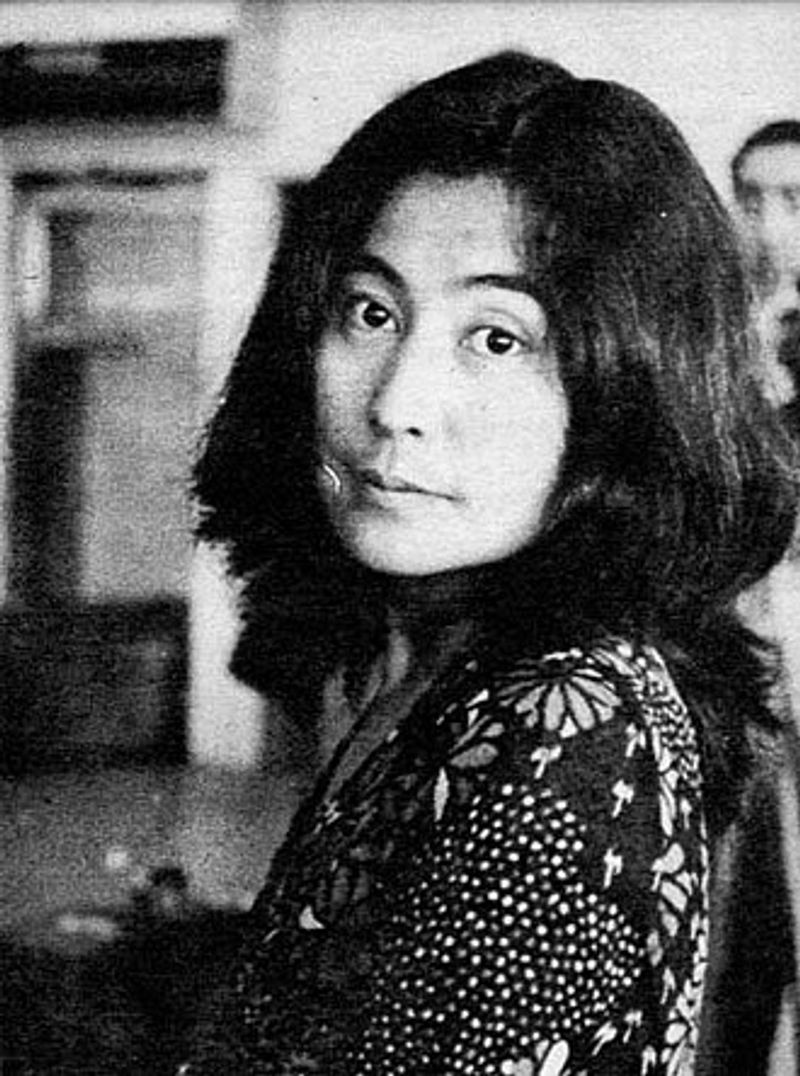
Long before she was known as John Lennon’s partner, Yoko Ono was already making waves in the art world. Born in Tokyo in 1933, she grew up in a wealthy family but chose a path of experimental art and radical ideas.
By the early 1960s, she was a respected figure in New York’s avant-garde scene.
Ono’s work challenged audiences to think differently about art, peace, and human connection. Her “Instruction Paintings” and interactive art pieces asked viewers to participate rather than just observe.
When she joined forces with Lennon, their combined energy became a symbol of the counterculture’s belief that creativity could change the world.
She co-organized several anti-war campaigns and used her platform to advocate for peace at every opportunity. Ono’s influence on conceptual art and activism remains significant.
Even today, she continues to create and speak out on issues of social justice and global harmony.
5. Grace Slick

Grace Slick walked onto the stage of the 1967 Monterey Pop Festival and made it very clear she was not there to blend in. As the lead singer of Jefferson Airplane, she had a voice that could cut through a crowd of thousands.
Her powerful delivery on songs like “Somebody to Love” and “White Rabbit” turned psychedelic rock into something both beautiful and rebellious.
Slick grew up in a comfortable suburban family but was drawn to the electric energy of San Francisco’s Haight-Ashbury neighborhood. She replaced the band’s original female vocalist in 1966 and immediately elevated their sound to a new level.
Jefferson Airplane became one of the defining bands of the Summer of Love in 1967.
Beyond music, Slick was outspoken about politics, feminism, and social change. She was unapologetically bold in an era when women in rock were still fighting for visibility and respect.
6. Jim Morrison
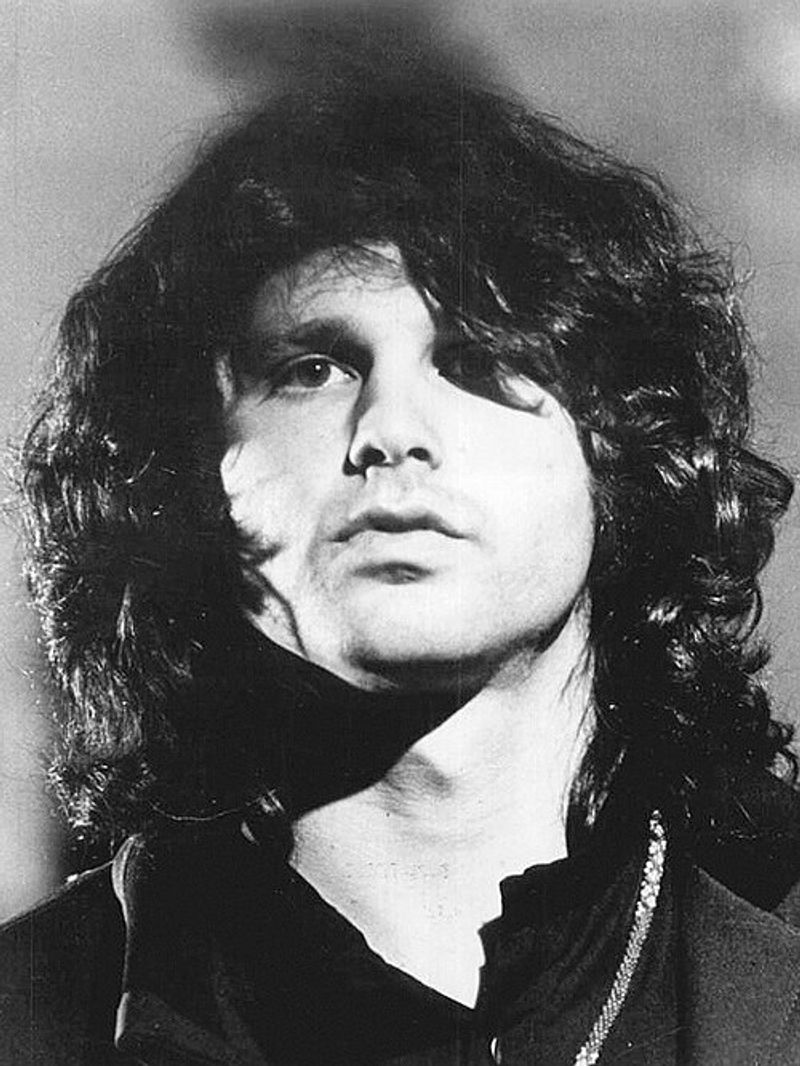
Jim Morrison didn’t just perform; he transformed the stage into something closer to a poetry reading mixed with a spiritual ritual. As the frontman of The Doors, he brought a dark, literary intensity to rock music that made him unlike any other figure of the hippie era.
He was as influenced by poet William Blake as he was by blues music.
Morrison grew up in a military family and studied film at UCLA before forming The Doors in Los Angeles in 1965. The band’s debut album in 1967 included the haunting hit “Light My Fire,” which reached number one on the charts.
Songs like “Break On Through” and “Riders on the Storm” showed his ability to blend poetry with rock.
He embraced the counterculture’s interest in altered states and spiritual exploration, though his lifestyle was often chaotic. Morrison passed away in Paris in July 1971 at just 27 years old.
7. Bob Dylan
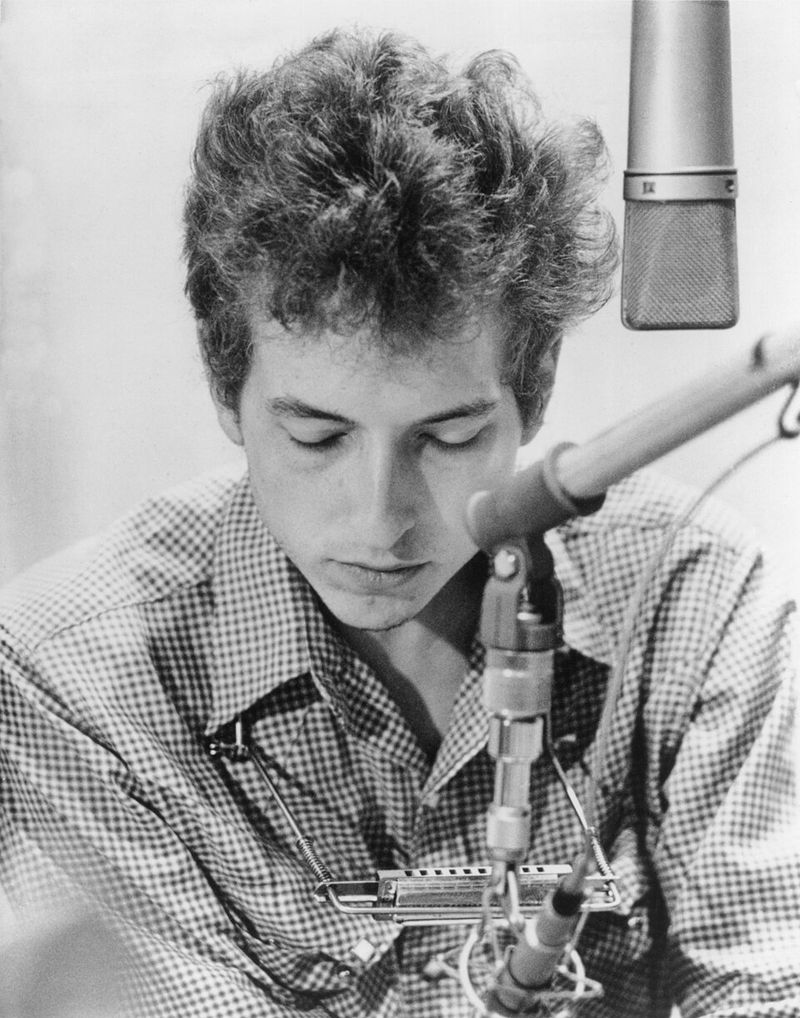
Bob Dylan never liked being put in a box, and the hippie label was no exception. He famously resisted being called the “voice of a generation,” yet his songs became the unofficial soundtrack of an entire movement.
That contradiction is part of what made him so fascinating to so many people.
Growing up in Hibbing, Minnesota, Dylan moved to New York City in 1961 and quickly became a star in the Greenwich Village folk scene. Songs like “Blowin’ in the Wind” and “The Times They Are A-Changin'” gave protesters powerful words to rally behind.
His shift to electric guitar at the 1965 Newport Folk Festival was one of the most controversial moments in music history.
Dylan won the Nobel Prize in Literature in 2016, a recognition that confirmed what his fans always knew: his writing went far beyond music. His impact on poetry, protest, and popular culture is truly unmatched.
8. Joan Baez
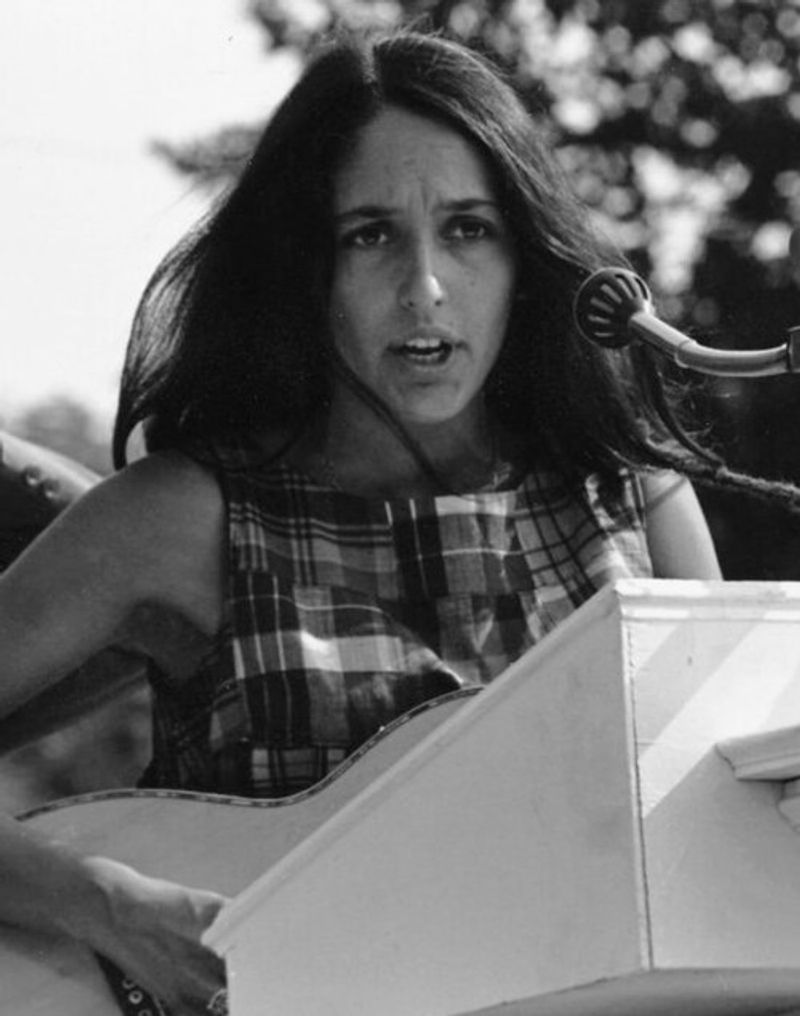
Joan Baez showed up at protests the same way other celebrities showed up at parties, willingly and often. Her commitment to civil rights and anti-war activism was genuine, not a publicity strategy.
She marched alongside Dr. Martin Luther King Jr. and was arrested multiple times for her involvement in nonviolent demonstrations.
Baez grew up in a Quaker household that emphasized peace and social responsibility, values that shaped everything she did as an adult. Her clear, crystalline soprano voice became one of the most recognized sounds of the 1960s folk revival.
She performed at the 1969 Woodstock Festival, opening the event on the first night with a solo acoustic set that moved the audience deeply.
Her relationship with Bob Dylan in the early 1960s brought both of them greater attention, though each carved out their own distinct legacy. Baez remained politically active well into the 21st century, never abandoning the causes she championed in her youth.
9. Country Joe McDonald
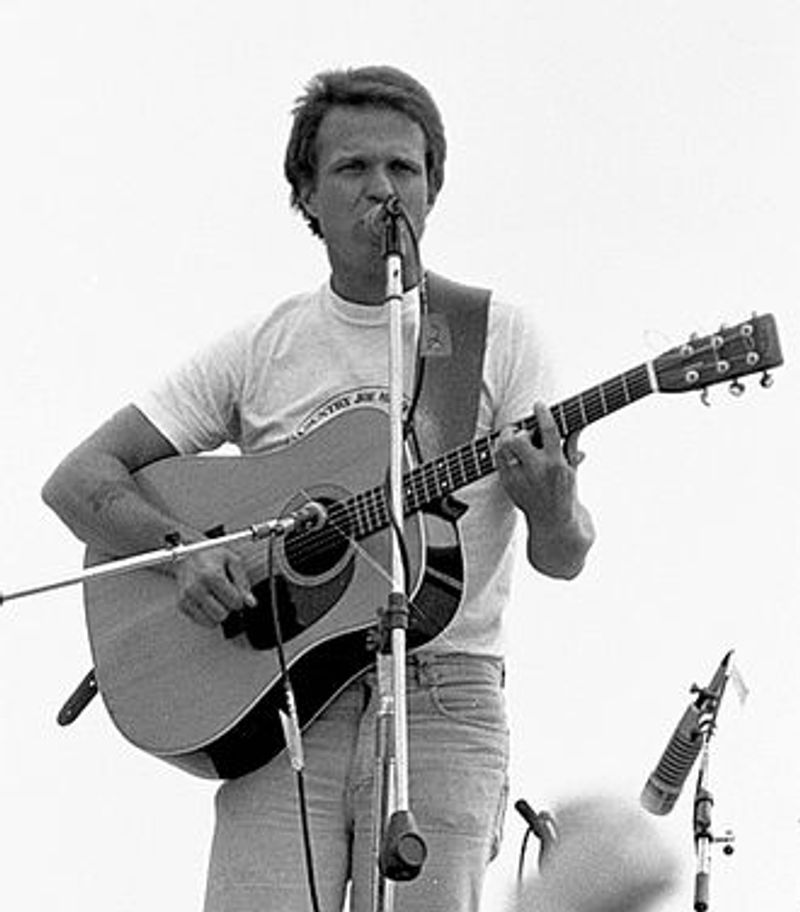
Country Joe McDonald gave Woodstock one of its most unforgettable moments when he led a crowd of 400,000 people in a call-and-response chant that spelled out a very colorful word before launching into his anti-Vietnam War song. It was outrageous, funny, and pointed all at once, which was exactly the kind of protest art the era celebrated.
McDonald formed Country Joe and the Fish in Berkeley, California, in 1965. The band became a fixture of the Bay Area music scene and blended folk, rock, and psychedelia in a way that felt both playful and politically charged.
Their song “I-Feel-Like-I’m-Fixin’-to-Die Rag” became one of the most recognized anti-war anthems of the entire decade.
McDonald served in the U.S. Navy before becoming one of the military’s sharpest critics through music.
His ability to use humor as a tool for serious political commentary made him a truly unique voice in the counterculture movement.
10. Ken Kesey
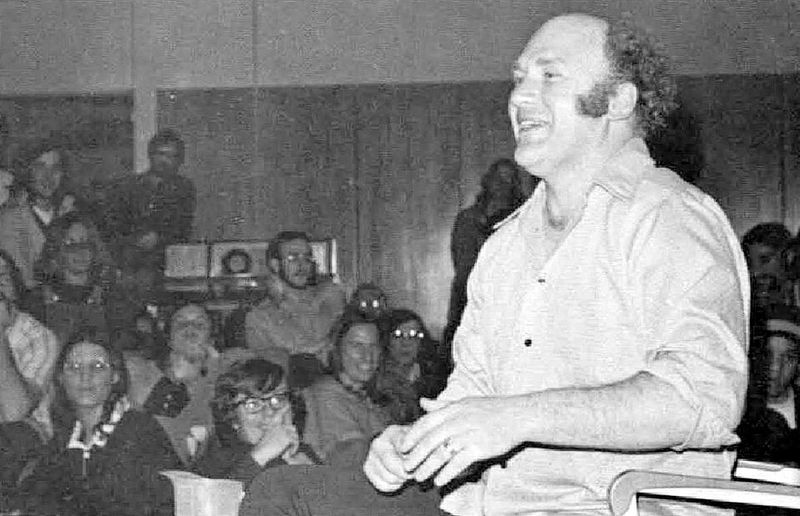
Ken Kesey proved that the hippie movement wasn’t just about music; it was also about storytelling, community, and pushing the boundaries of consciousness. His 1962 novel “One Flew Over the Cuckoo’s Nest” earned him literary fame, but it was what he did next that made him a legend of the counterculture.
In 1964, Kesey and his group of friends, known as the Merry Pranksters, loaded into a painted school bus named “Further” and drove across America. The trip was documented by filmmaker Ken Babbs and later chronicled in Tom Wolfe’s book “The Electric Kool-Aid Acid Test.” Along the way, they held “Acid Tests,” large gatherings that mixed music, light shows, and experimental experiences.
These events helped lay the groundwork for the psychedelic culture that would bloom fully by 1967. Kesey’s blend of literature, adventure, and communal living made him one of the most original thinkers the era produced.
11. Stephen Gaskin
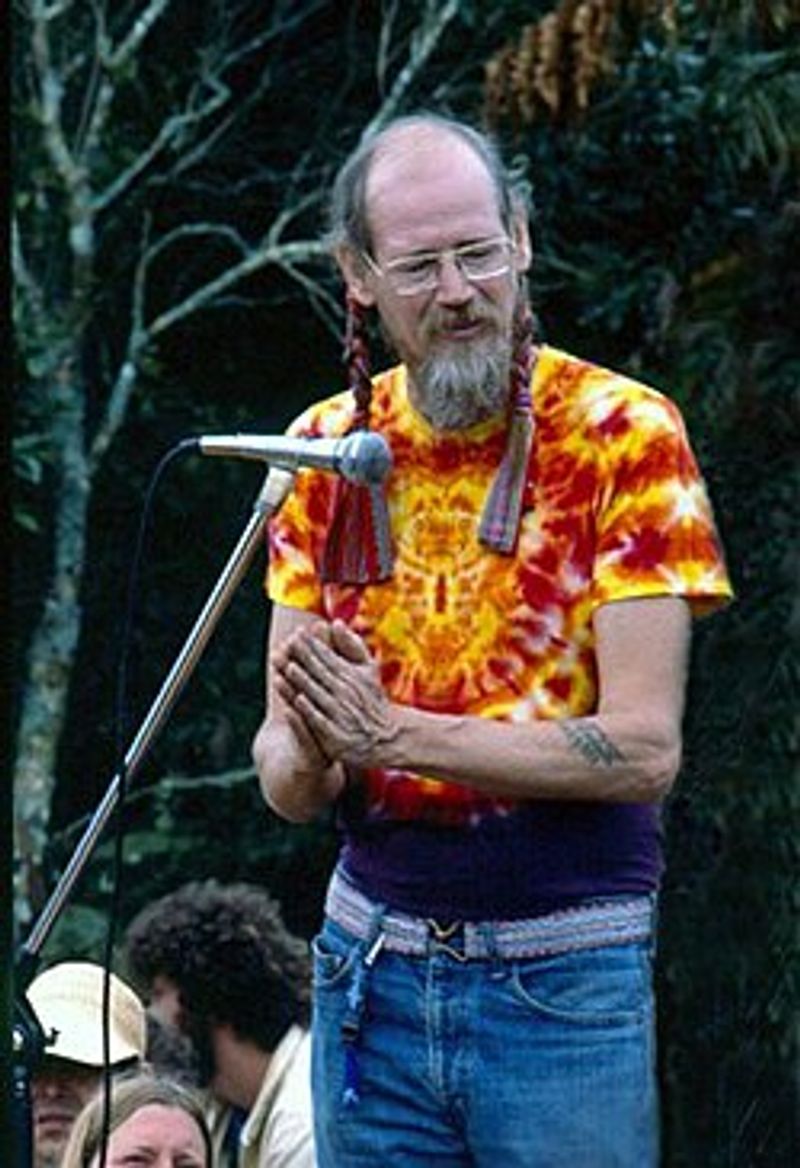
Stephen Gaskin was the kind of person who could hold a crowd of hundreds with nothing but his words and a genuine belief in a better world. Every Monday night in San Francisco’s Haight-Ashbury neighborhood, he led free public discussions called “Monday Night Class,” which drew thousands of young people looking for meaning beyond mainstream society.
Gaskin was a former Marine and English teacher at San Francisco State College who became deeply involved in the counterculture scene during the late 1960s. His talks combined spiritual philosophy, communal living ideals, and social responsibility in a way that resonated strongly with the hippie generation.
In 1971, he led a caravan of about 300 followers in school buses to Tennessee, where they founded The Farm, a commune that became one of the most studied and admired experiments in alternative community living in American history. The Farm still exists today as a cooperative community.
12. Lisa Law
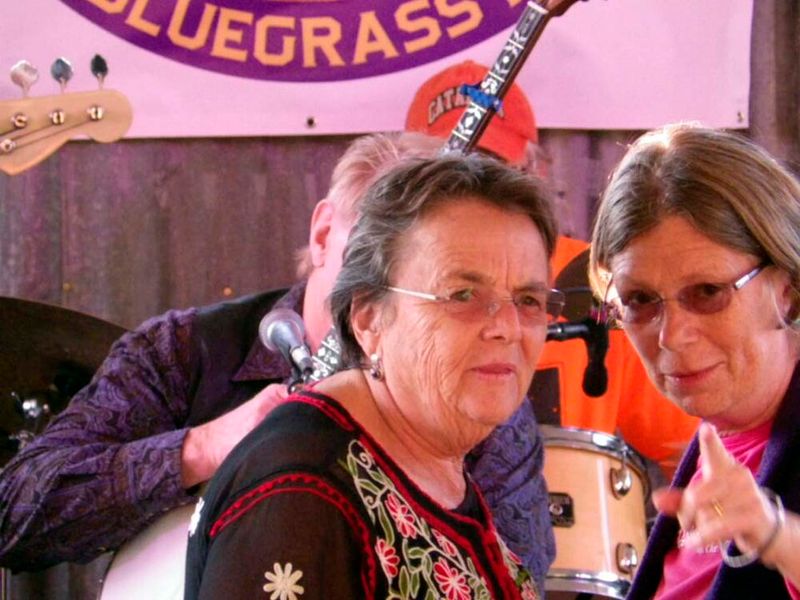
Some people lived the 1960s counterculture, and Lisa Law captured it. As a photographer embedded within the movement, she documented Woodstock, the Haight-Ashbury community, and dozens of other gatherings that defined the era.
Her images didn’t just record events; they preserved the feeling of a moment that changed American culture forever.
Law grew up in California and became involved in the counterculture through her connections to musicians and artists in the San Francisco Bay Area. Her photographs of Woodstock are among the most intimate and candid ever taken at the festival, showing the humanity behind the headlines.
She also helped organize food distribution at Woodstock, working with the Hog Farm collective led by Wavy Gravy.
Her work was later compiled in a book and documentary called “Flashing on the Sixties,” which introduced younger generations to the visual world of the hippie movement. Law remains one of its most dedicated and important chroniclers.
Share this story